
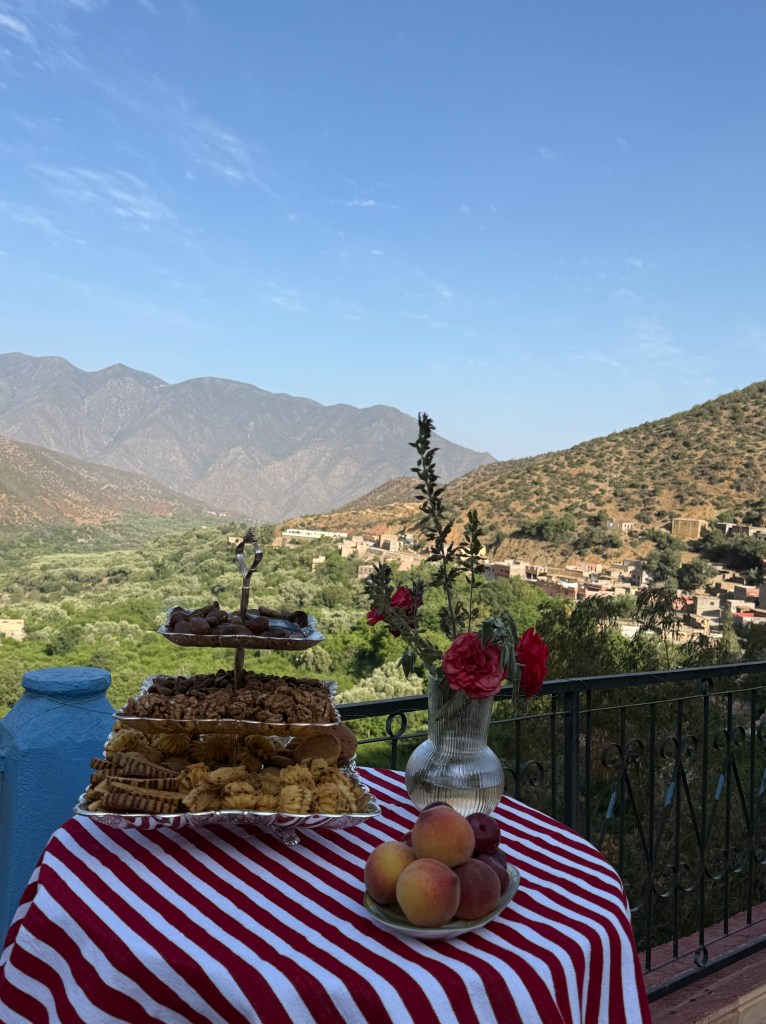
I rose early, the morning light barely touching the horizon, my mind still alive with the magic of the day before. It had been a tapestry of wonder – woven with vibrant culture, unexpected friendships, and unforgettable flavours – each moment more extraordinary than the last. Even as the world outside lay quiet, my thoughts danced with memories of a day that seemed endless in its gifts.
As-salamu alaykum (Peace be upon you), I greeted Haj Brahim as he was laying the table for breakfast and what a spread it was. Fresh coffee, boiled eggs, fresh bread, Amlou, which is Morocco’s beloved nut spread, traditionally made by blending roasted almonds, rich argan oil, and honey into a silky, nourishing paste. Its flavour is uniquely deep and nutty, perfect for dipping bread or drizzling over pancakes. In more affordable versions, peanuts often replace almonds, creating a spread that’s still delicious and widely enjoyed. Whether crafted with almonds or peanuts, Amlou captures the warmth and generosity of Moroccan hospitality in every spoonful.
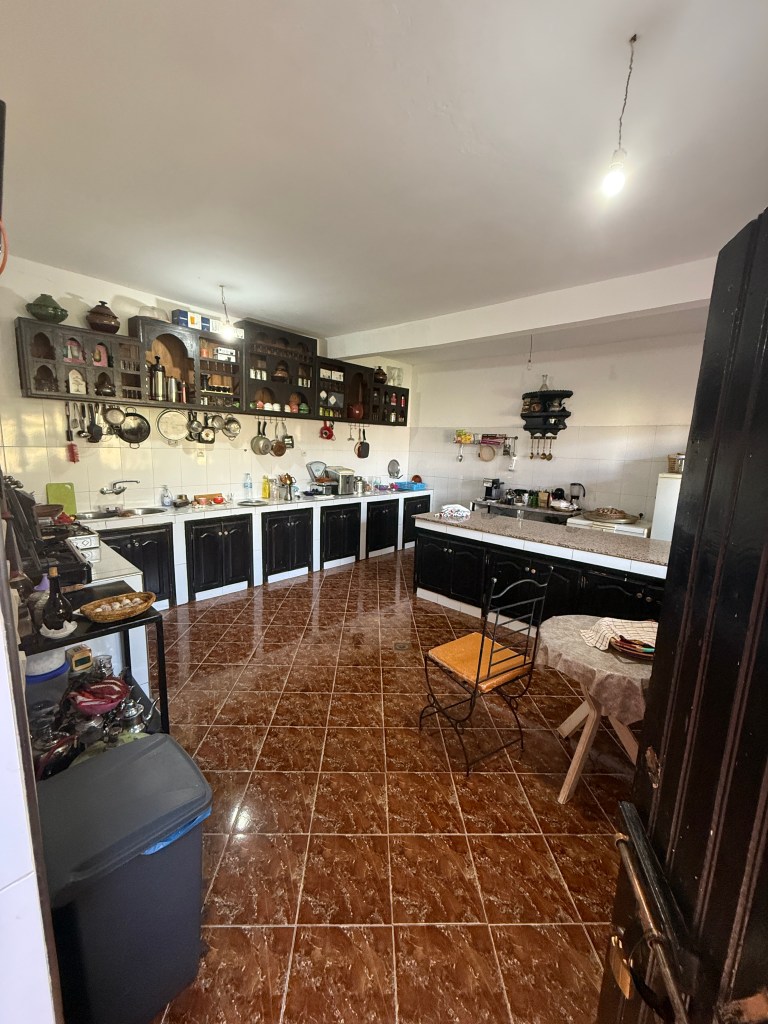

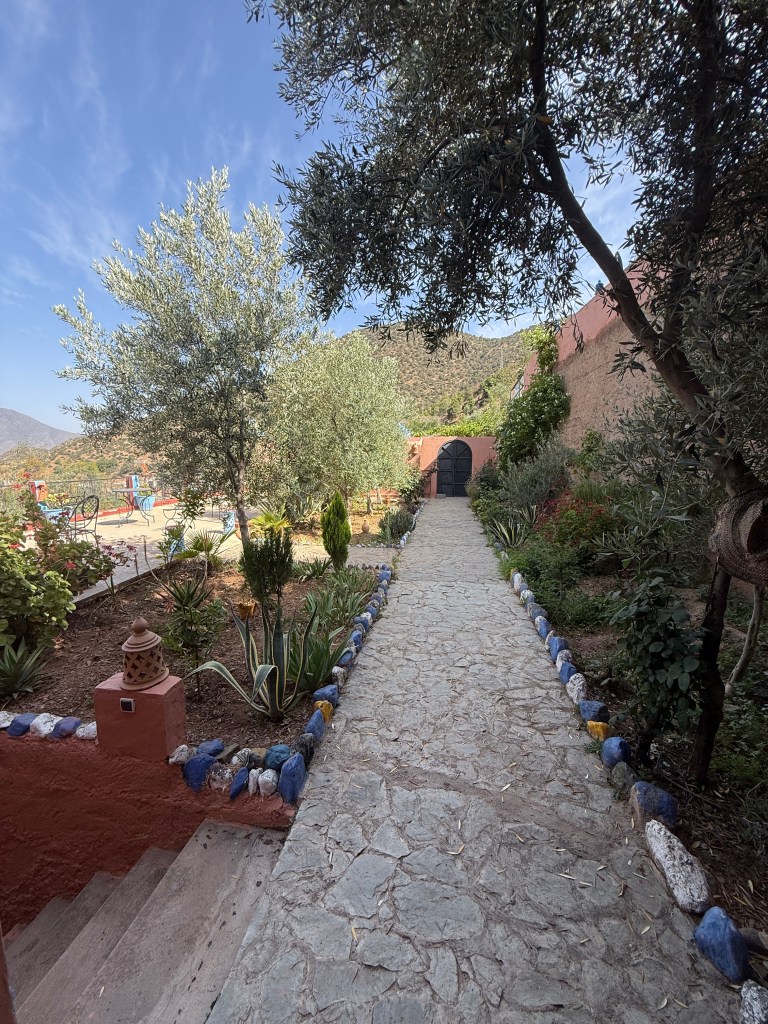
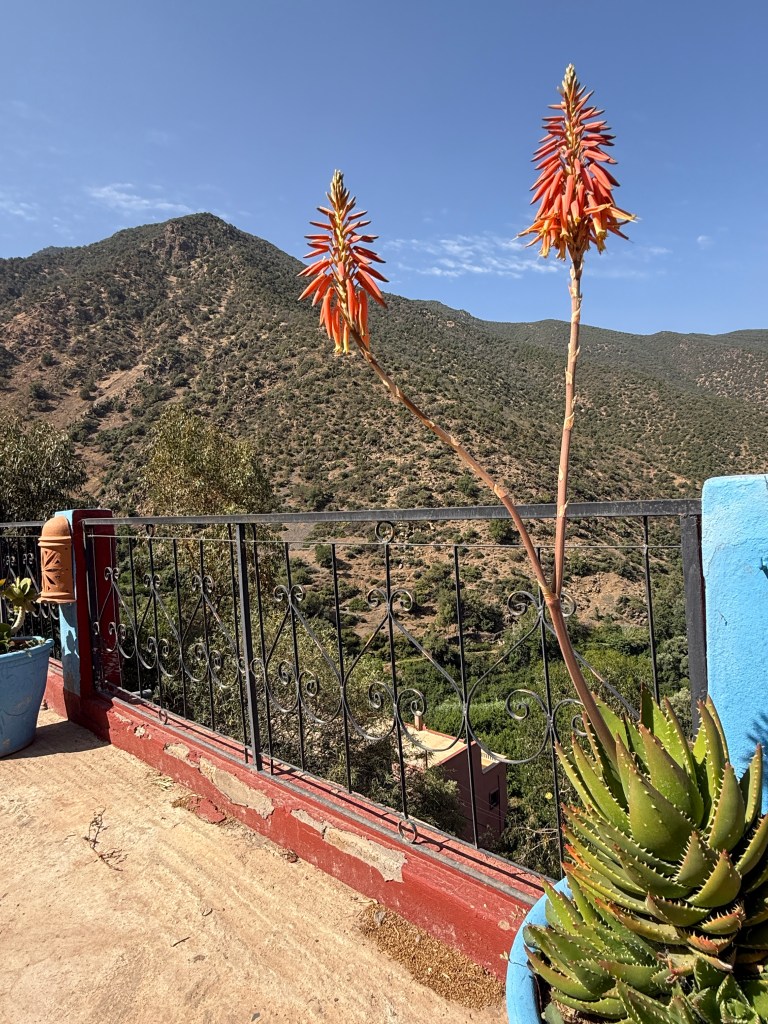
All too soon, the moment came to bid farewell. I could have lingered another day at Dar Tassa, nestled in the tranquil embrace of al-Houz province, where time seems to slow and every view invites reflection. But the road was calling – Essaouira awaited, with new adventures and promises yet to unfold. With a lingering handshake and heartfelt thanks to my new friend, Haj Brahim, we loaded our bags into the waiting 4×4. As we set off, winding eastward toward Marrakech, the memories of Dar Tassa – its warmth, its wonder, travelled with me, woven into the fabric of the journey ahead.
Our journey began with Hicham – pronounced “Hee-Sham” – whose warmth, quick wit, and expert driving made him an instant favourite. Leaving the rugged beauty of the High Atlas mountains behind, we made our way toward Marrakech, pausing for a delightful detour to gather fresh ingredients, enjoy a leisurely coffee, and meet Amanda’s charming husband and daughter. As we sipped and chatted, I discovered that Amanda’s husband shared my passion for music. I introduced him to the band Arena – a new discovery for him – and was delighted to see his immediate enthusiasm. There’s a special joy in sharing music and watching it spark a connection, and that simple moment felt truly brilliant.
As we cruised up the RN8 from Marrakech toward Essaouira in early June, the landscape gradually shifted from the ochre plains to a mosaic of cultivated fields and scrubby woodland. Along this route, we passed neat rows of cabbages and potatoes – common crops in the region at this time of year – thriving in the fertile, sun-warmed soil. Before long, the scenery became increasingly dotted with the gnarled, silvery-green forms of argan trees, their twisted branches a distinctive feature of the countryside between the western High Atlas foothills and the Atlantic coast. This is the heart of Morocco’s argan belt, where these ancient, drought-resistant trees grow almost exclusively, providing livelihoods for local communities and producing the prized oil found in both kitchens and cosmetics around the world. The approach to Essaouira is marked by these iconic argan groves, a living testament to the region’s unique natural and cultural heritage.

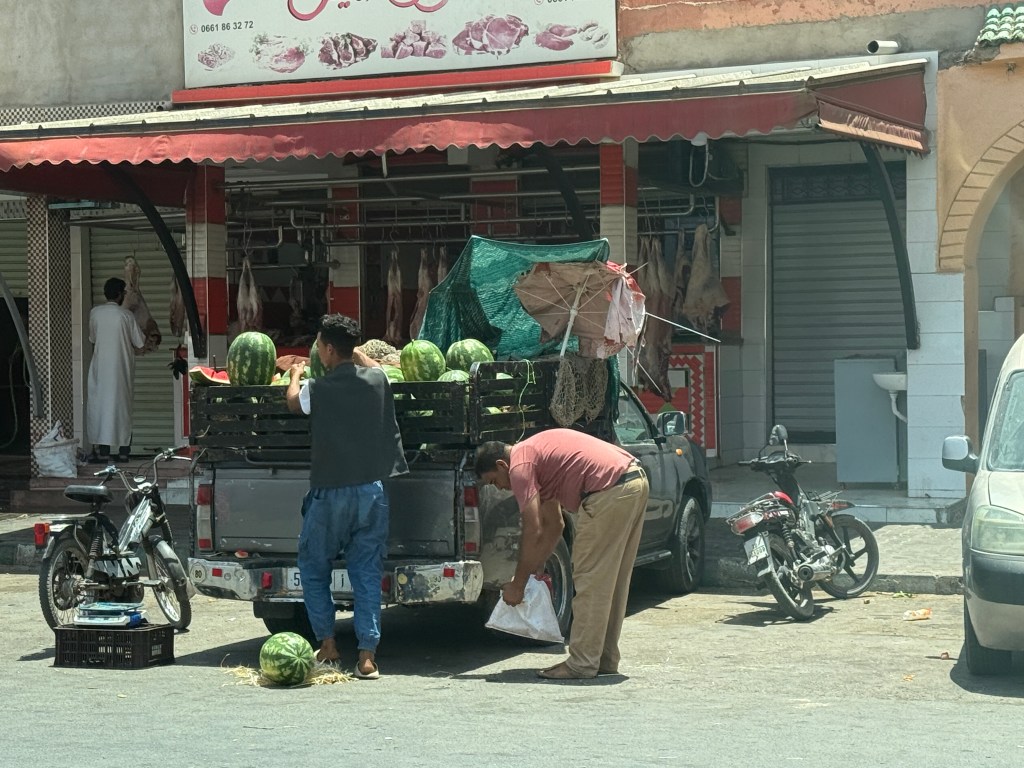
I was endlessly captivated by the rhythm of daily Moroccan life unfolding along the roadside – the fruit vendors arranging pyramids of vibrant produce, the butchers with their cuts of meat swaying gently in the cool shade, all framed by the golden sun. As we journeyed onward, small towns would suddenly emerge from the landscape, bustling with people immersed in their everyday routines. In the blink of an eye, these lively scenes slipped past our windows, growing smaller and softer in the rear view mirror, like fleeting glimpses into a thousand untold stories woven across the Moroccan countryside.
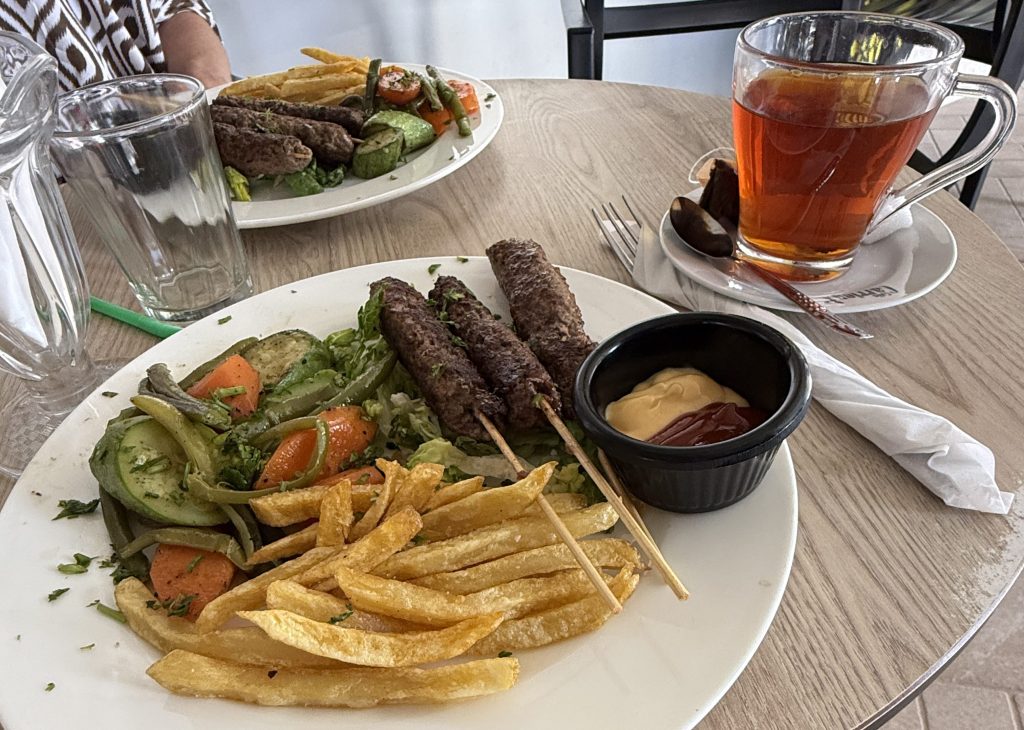
It was definitely time for some food when we pulled off the road just outside Sidi L Mokhtar, drawn to the welcoming glow of Café Restaurant Sahara, open around the clock. There, we savoured brochettes de viande hachée – Moroccan skewers of seasoned minced beef, grilled over hot coals until smoky and tender. Each tender bite was perfectly complemented by crisp frites and a vibrant medley of courgettes, carrots, and green beans, their colours bright against the plate. As we lingered over the meal, I sipped strong black tea, its warmth and depth the perfect companion to the flavours before me. In that simple roadside café, with good company and honest food, the spirit of Morocco felt wonderfully alive.

Next stop was Arganomade; Arganomade is a women-run argan oil cooperative near Essaouira, Morocco, renowned for its authentic, high-quality argan oil and traditional products like amlou and argan honey. Visitors can tour the cooperative to see the entire production process, from hand-cracking the nuts to pressing the oil, and learn about the sustainable, waste-free methods used. Buying directly from Arganomade supports local women with fair wages and economic independence, while ensuring you receive pure, genuine argan products. The cooperative offers a welcoming, educational experience and a meaningful connection to Morocco’s rich Berber heritage.
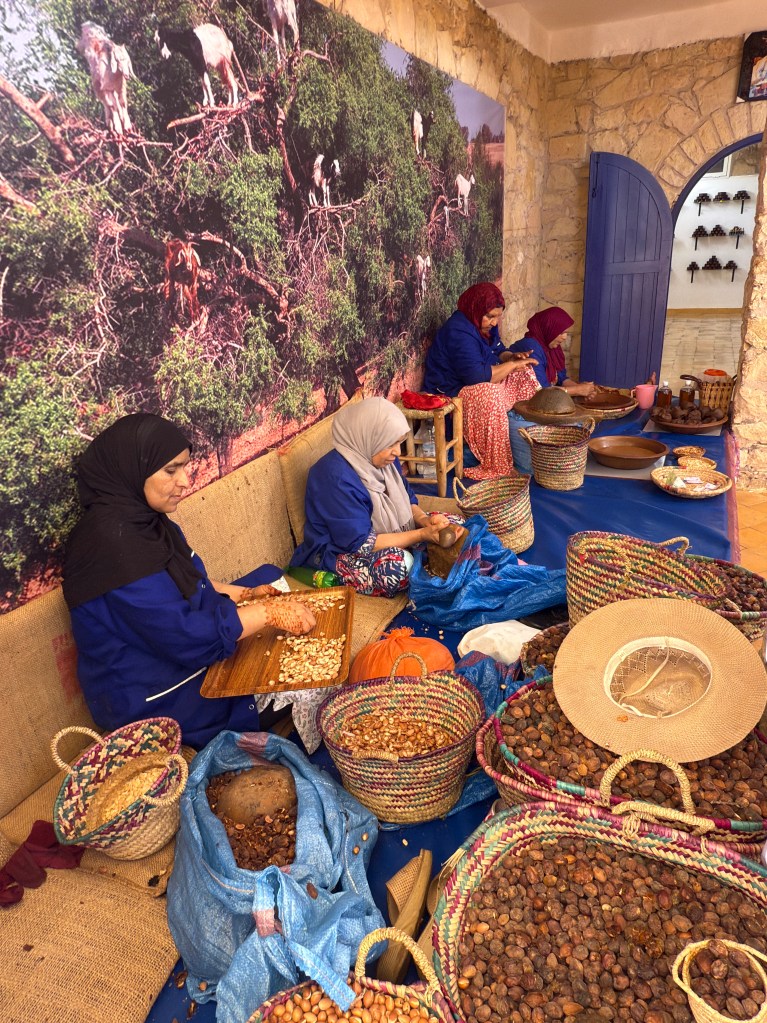

Argan oil is so costly because it’s truly rare and painstakingly crafted. The argan tree grows only in a small corner of Morocco, and each drop of oil is the result of hours of skilled, manual work – harvesting, cracking the hard nuts, and pressing the precious kernels. It takes around 40 kilograms of fruit and up to 20 hours to produce just one litre. Add to this the oil’s global demand and the fact that it supports local women’s cooperatives, and it’s easy to see why argan oil is often called “liquid gold.”
The making of argan oil is a meticulous, multi-step craft. First, the argan fruit is collected and sun-dried until the outer fleshy husk can be removed. Beneath lies a hard inner shell, which is cracked open by hand to reveal the small, precious kernels within. These kernels are then either gently roasted (for culinary oil) or left raw (for cosmetic oil), before being slowly cold-pressed to release the golden oil. Each stage, from husk to kernel to oil, is carried out with care, yielding a product as rare as it is exquisite.
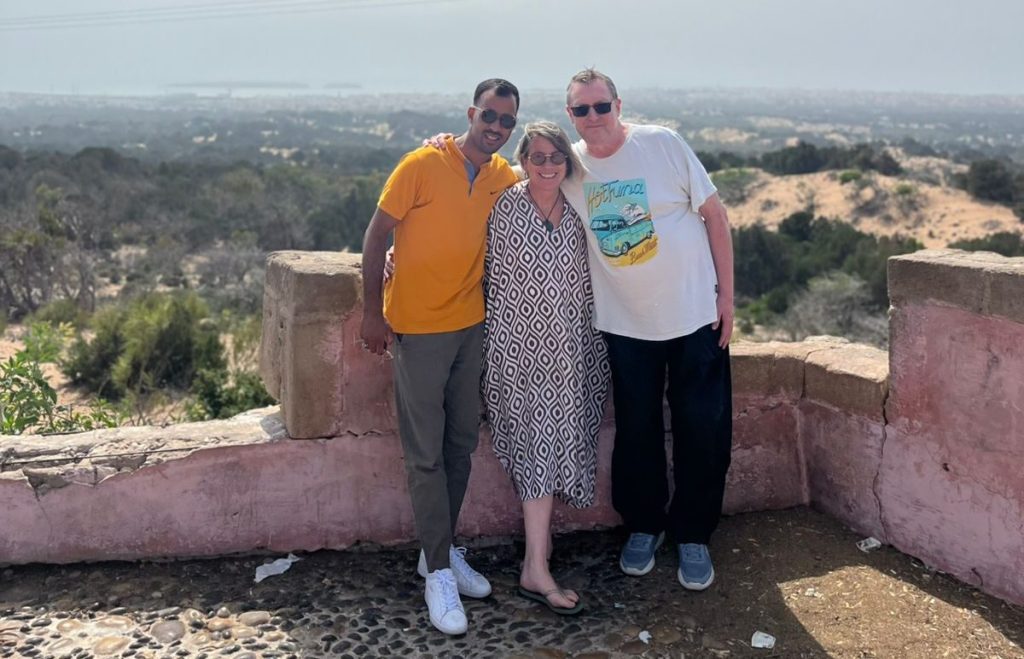
As we approached Essaouira it was warm but misty, we had a photo stop at the The best panoramic viewpoint overlooking Essaouira known locally as the “Panorama d’Essaouira” or “Belvédère d’Essaouira,”. It’s found on a hill along the N1 road just a few kilometres outside the city. This popular stop offers sweeping views of the medina, the historic ramparts, and the Atlantic coastline, making it a favourite for travellers and tour groups arriving from Marrakech. While it doesn’t have an official monument or sign, simply asking for the panoramic viewpoint or “belvédère” will lead you to this breath-taking vantage point for that iconic first glimpse of Essaouira from above.

In the mid-19th century, Essaouira’s bastions faced the thunder of European warships, most notably during the French bombardment of 1844, when cannons like this one stood ready to defend the city from attack. Today, as I framed my photograph down the length of an old gun barrel, fishing boats dotted the distant sea – peaceful silhouettes where once hostile ships might have loomed. The contrast between the tranquil life of fishermen and the city’s dramatic, war-torn past is a vivid reminder of Essaouira’s enduring spirit.
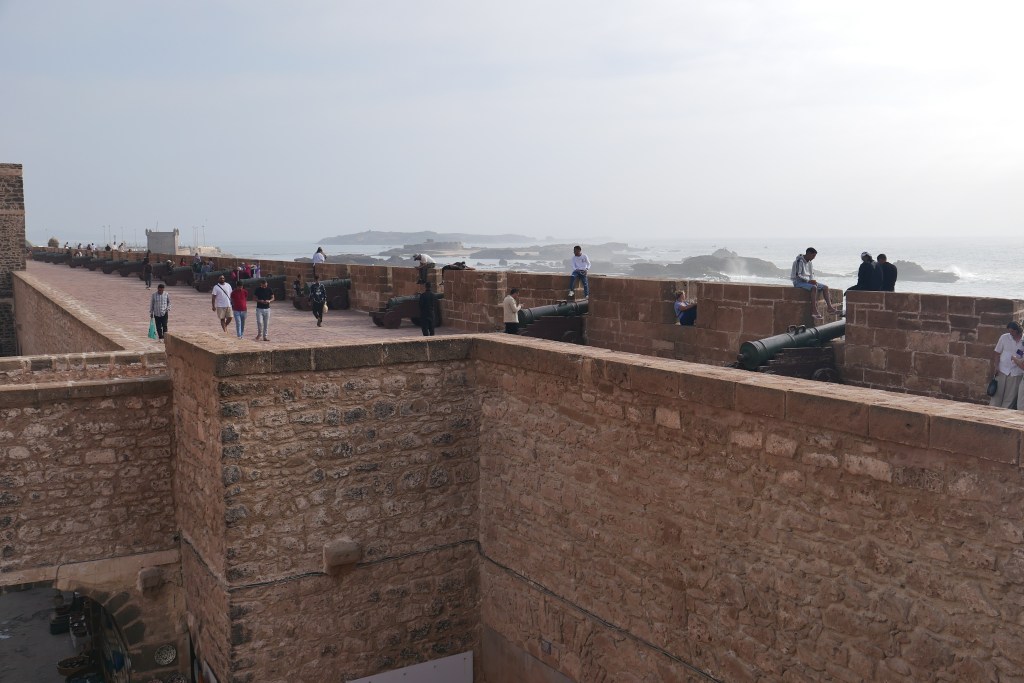
Disappointed by the lack of decent guidebooks on Essaouira, I took matters into my own hands and had crafted a personal guide, brimming with must-see locations – each chosen for its history, culinary allure, photogenic charm, or simply as a window into daily Moroccan life. My list included the windswept Skala de la Ville, its cannons overlooking the Atlantic just a ten-minute stroll from Riad Malaika; the lively Moulay Hassan Square, perfect for people-watching and only five minutes away; and the bustling fish market, a sensory feast less than fifteen minutes on foot. With dinner reserved for 21:00 at Butterfly Space, a vibrant local restaurant at 16 rue Laalouj just around the corner from my riad, I set out to explore Essaouira’s treasures, each step promising a new story and a deeper connection to this enchanting coastal city.
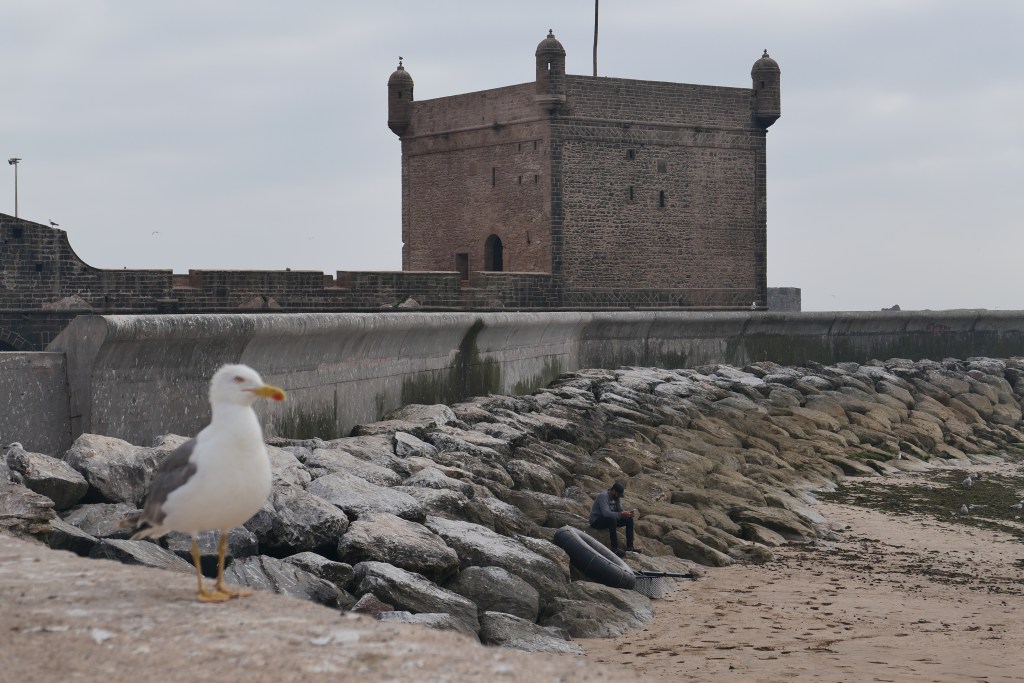

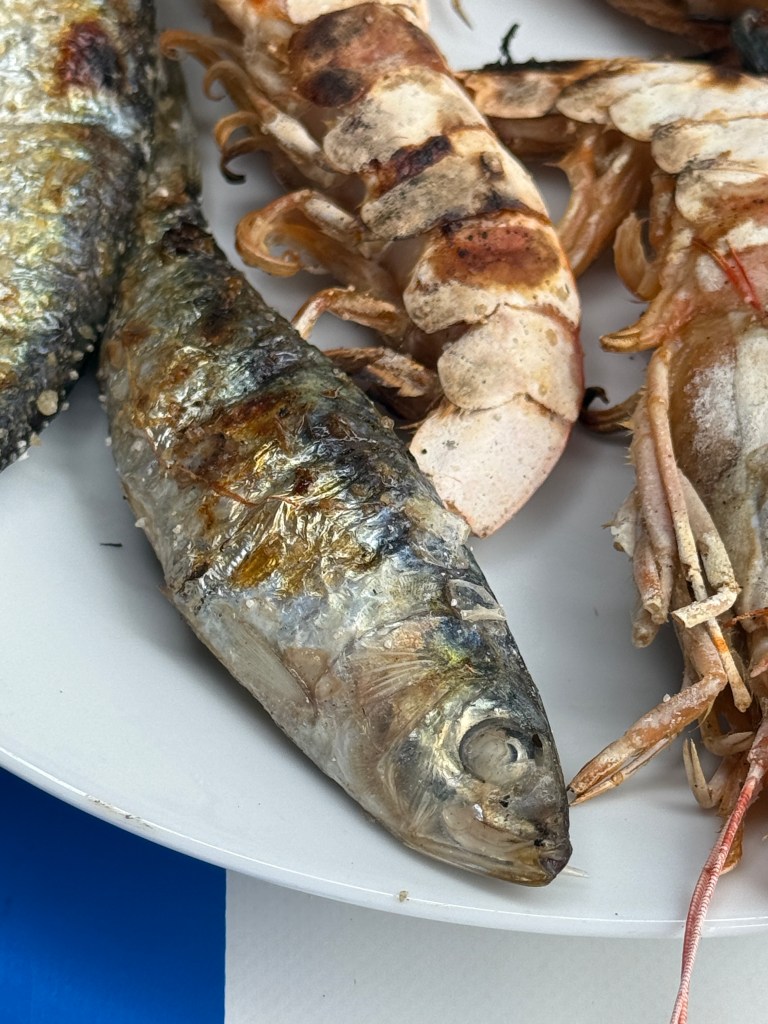
Essaouira’s port is the city’s beating heart – a place where centuries of maritime history, multicultural exchange, and daily life converge. From dawn, fishermen haul in their catch of sardines, red prawns, and lobster, while the air fills with the irresistible aroma of street food: fish grilled over charcoal and seasoned with chermoula, served simply with cumin and harissa. The port’s bustling fish market is a sensory feast, where locals and visitors gather at communal tables to share the freshest seafood, echoing the city’s tradition of breaking bread together, something Amanda and I did the following day.


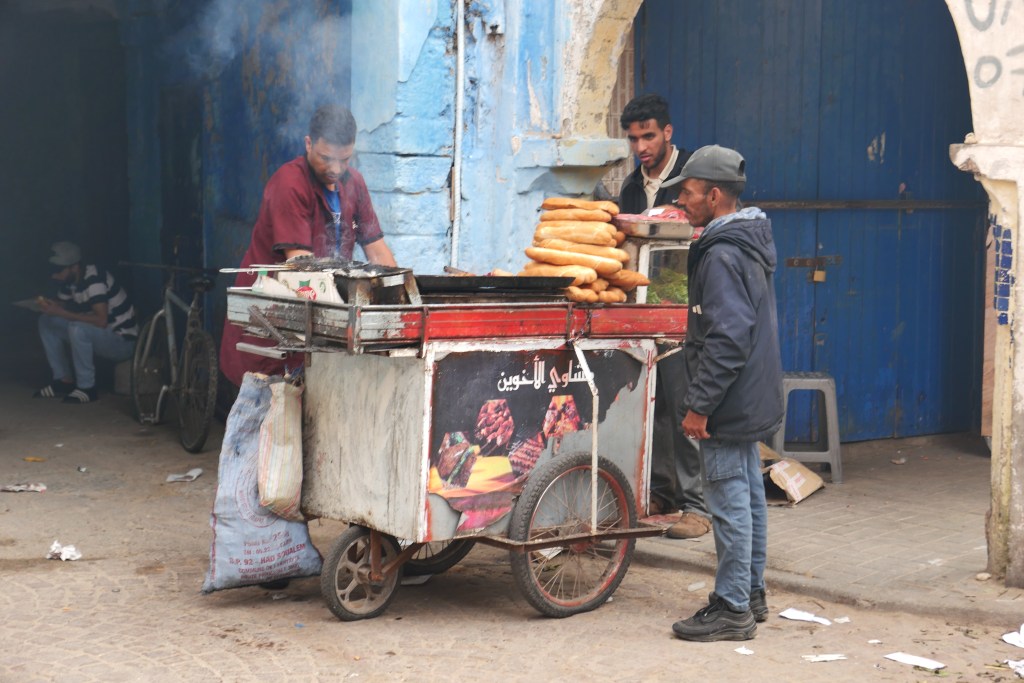
Beyond the port, Essaouira’s medina and markets are alive with colour and energy. Vendors in the souks offer everything from msemen (flaky flatbread) and sweet chebakia to fragrant spices and hand-carved thuya woodwork. Bab Marrakech’s market square is a hub for street food – grilled brochettes, merguez sausages, and spongy baghrir pancakes – while the artisan quarters overflow with textiles, ceramics, and silver jewellery. These markets are more than places to shop; they are living museums of Essaouira’s cultural blend, where Berber, Jewish, Arab, and European influences meet in every bite and every bargain.
The port’s significance reaches far beyond commerce. Its blue boats, built with traditional Berber techniques, are iconic symbols of the city, and its ramparts – lined with cannons bearing Spanish and Dutch crests – speak of a dramatic past. Today, the port and its markets remain the soul of Essaouira, a crossroads where the rhythms of the sea, the sizzle of street food, and the vibrant pulse of local life come together in a uniquely Moroccan harmony.
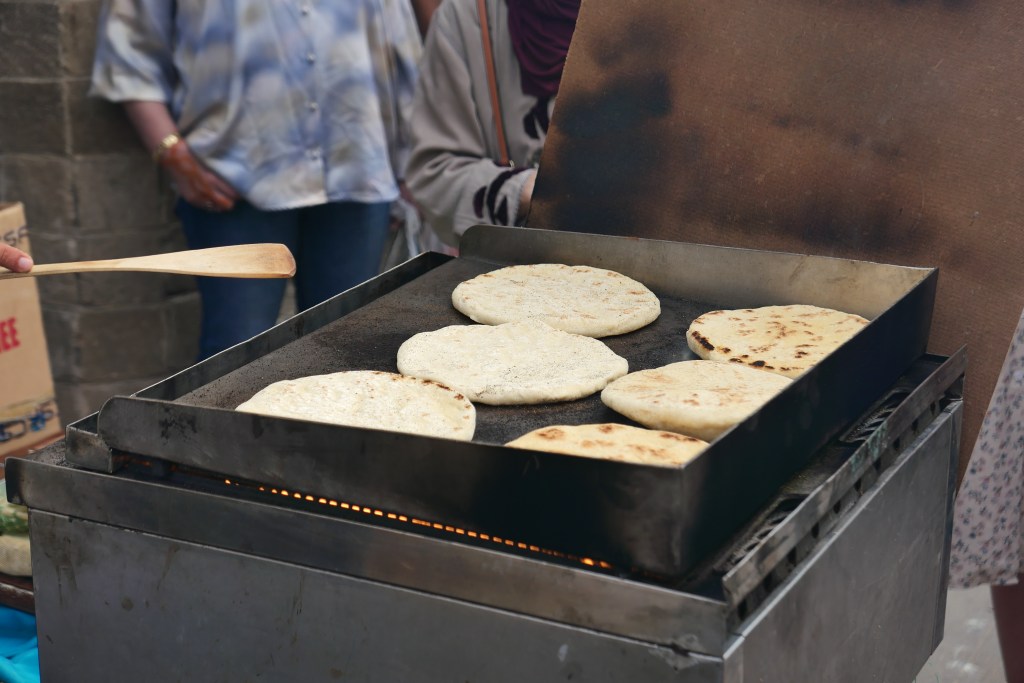
The medina of Essaouira is a living symphony, its winding blue-and-white lanes alive with the pulse of daily life. I wandered through this enchanting maze, eager to capture its every nuance – the salt-laden sea breeze mingling with the scent of spices, the laughter of children darting between market stalls, and the hypnotic rhythm of artisans shaping thuya wood into treasures. I paused to watch street vendors expertly ladle batter onto hot plates, conjuring up golden baghrir pancakes, their honeycomb surfaces glistening in the afternoon light. Every corner offered a new vignette: a fisherman mending his nets, a weaver at her loom, the gentle hum of conversation beneath the ancient ramparts.

Respectful of local traditions, I moved quietly, letting the city’s soul seep into my own. As the sun dipped lower, painting the medina in warm, golden tones, I felt my feet ache and my hunger grow insistent. Drawn by the promise of a good meal and the comforting glow of Butterfly Space just around the corner, I made my way through the bustling streets. Though it was only 19:00, I was ravenous—ready to feast not just on the food, but on the magic and spirit of Essaouira itself, a city that sings in every stone, every scent, and every smile..
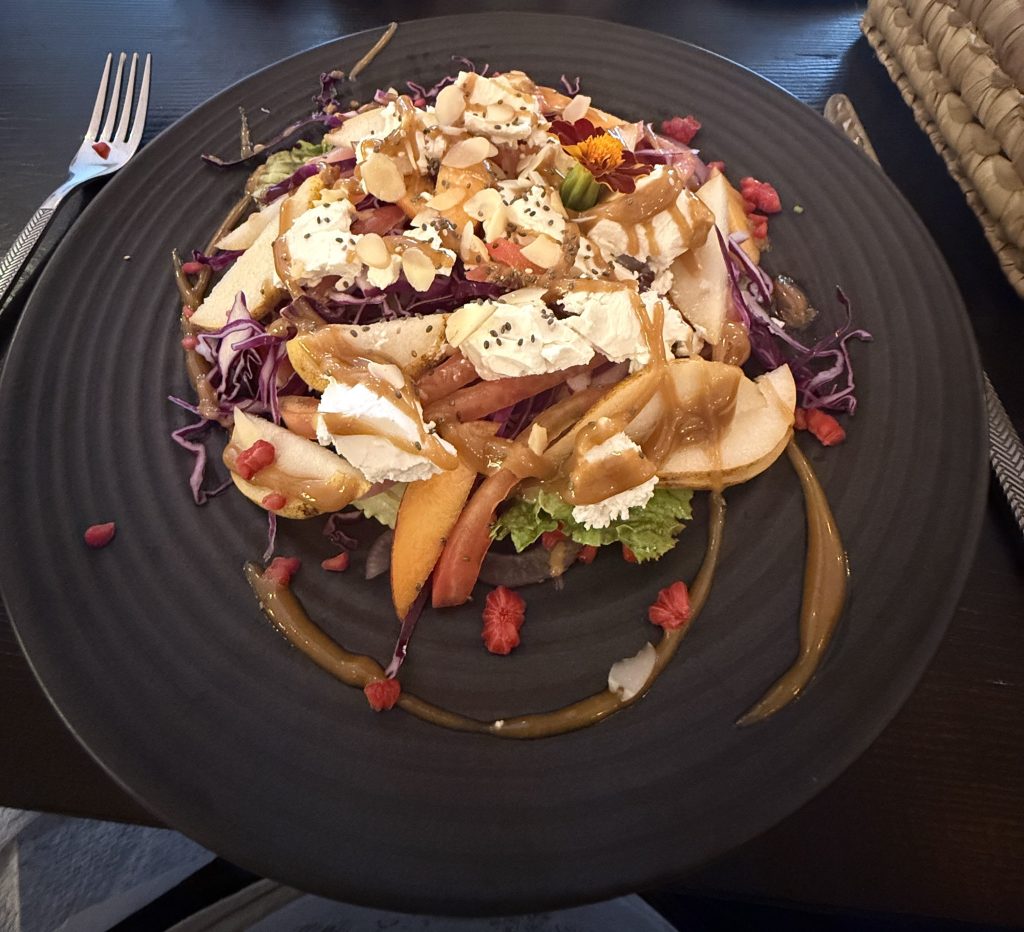
Thinking about the days ahead, my mind danced with possibilities – Essaouira’s reputation for culinary delight had already set my expectations soaring. Butterfly Space welcomed my spontaneous change of plans with effortless grace, and soon I found myself at a table, anticipation building. My meal began with a goat cheese and honey salad that arrived with the grandeur of a main course.
The plate was a vibrant canvas: crisp lettuce and ribbons of red cabbage mingled with juicy slices of pear, each bite crowned with creamy, tangy goat cheese and drizzled with golden honey. Scattered throughout were bursts of sharp-sweet raspberry and a generous sprinkling of toasted nuts, adding both crunch and complexity. Every forkful was a revelation – fresh, harmonious, and utterly satisfying. In that moment, I knew without doubt: Essaouira had worked its magic once again, serving up the best salad I have ever tasted!
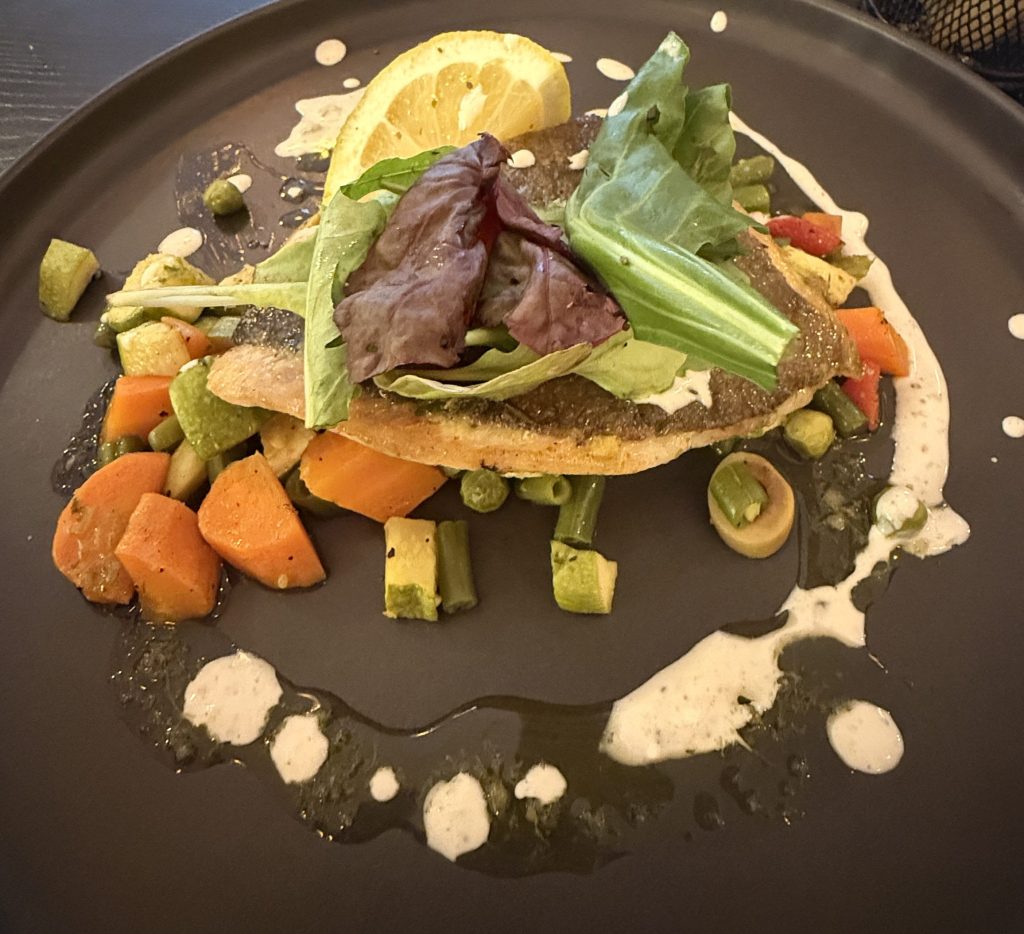
The main course I chose was a fillet of John Dory – delicate in flavour and simply presented – accompanied by a colourful array of vegetables and a generous portion of potatoes, cut finer than classic fries and served in a charming chip basket. As a devoted fish lover who often cooks it at home, I noticed the fillet was just a touch overdone for my preference, though it remained thoroughly pleasant. Perhaps I’m being overly particular; at the equivalent of just £13, it was exceptional value for such a prized fish. Out of curiosity, I later researched John Dory prices in the UK and found that a dish like this would easily cost more than two and typically over three times as much at most reputable restaurants. All in all, it was a memorable meal—one that spoke to the honest, unpretentious charm of Essaouira’s dining scene.

As I wandered back to Riad Malaika, the gentle evening breeze carried with it the echoes of the past two days – though time seemed to blur, stretching with the richness of each experience. My mind drifted through sunlit alleyways, the laughter in the medina, the sizzle of street food, and the salt tang of the Atlantic air. I found myself replaying the warmth of every encounter: the genuine smiles, the easy generosity, and the infectious good humour of the Moroccan people in Essaouira. Had it really been just two days? It felt as if I had stepped into a story that had always been waiting for me, woven from kindness, colour, and the timeless rhythm of the city by the sea.
…………………………..Until next time…………………l8ers………………..
 Julian Rolfe