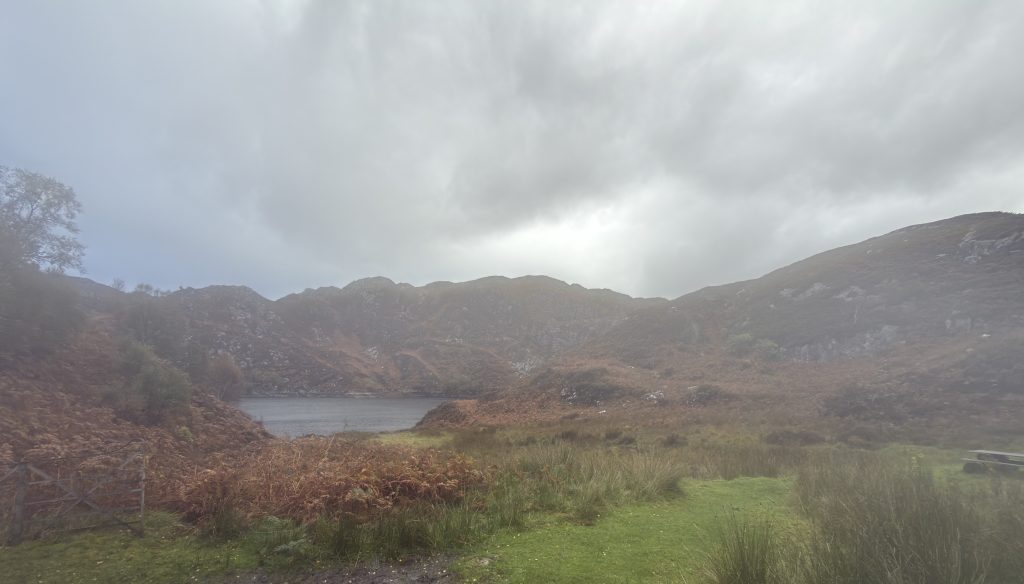
Rain, Rituals and 5,000 Years of Secrets (Part 3)

Day Three – Rain, Rituals and Five Thousand Years of Secrets

Kitchen in the Wild: The Long Way to Eilean Shona

A Rather Damp Start to Five Thousand Years of History

Wednesday morning, 6:30am.

I was wide awake, excited and ready to go. After months spent researching Scotland’s ancient past, and finally arriving in Kilmartin the previous evening, today was the day I’d been particularly looking forward to, first things first, however. A cup of tea.

Pulling back the curtains revealed that Scotland had thoughtfully arranged some traditional weather for the occasion.

It was absolutely pissing down!

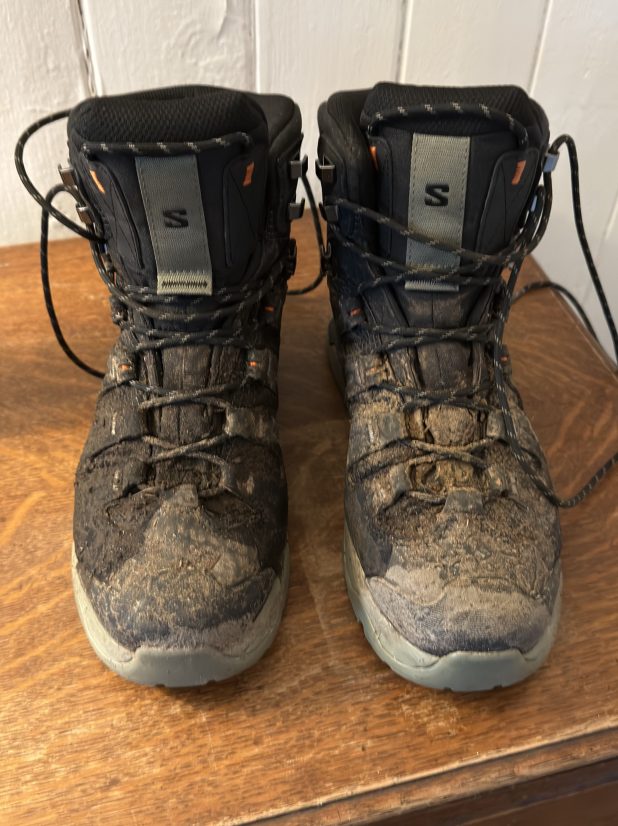
Not a gentle Highland mist, nor the occasional romantic shower drifting across the glen. Proper, persistent rain. The sort that makes you question the wisdom of leaving a perfectly comfortable bed, particularly when your day’s itinerary involves wandering around wet fields looking at large rocks.

Still, I’d travelled several hundred miles, produced a professionally printed guide of more than 55 pages and spent countless evenings investigating ancient burial practices, mysterious standing stones, prehistoric migrations and the origins of early Scottish civilisation, I wasn’t about to be defeated by a bit of water.

Tea consumed, camera equipment gathered and waterproofs brought into service, it was time to go hunting stones.

Kilmartin Glen – Where Five Thousand Years of History Lie Beneath Your Feet

There is something quite extraordinary about Kilmartin Glen.

At first glance, it’s a beautiful stretch of Argyll countryside: rolling green fields, woodland, low hills and the occasional scattered farmhouse. But look a little closer and the landscape begins to reveal something altogether more remarkable.

Within a relatively small area lie hundreds of archaeological sites, including burial cairns, standing stones, stone circles, fortified settlements and mysterious rock carvings. Some date back more than 5,000 years. To put that into perspective, people were constructing ceremonial and burial monuments here during the Neolithic period, long before the Roman Empire existed and centuries before the great pyramids of Egypt were built.

And unlike an archaeological collection housed neatly behind glass in a museum, much of Kilmartin’s extraordinary history remains out in the landscape, where successive generations left their mark. You can walk between monuments, study enormous stones and, in some cases, peer into burial chambers constructed by communities whose names, languages and beliefs have long since disappeared.

The remarkable thing is that nobody left an instruction manual.

Archaeologists can learn a great deal from their tools, pottery, burial practices and surviving monuments, but precisely what many of their ceremonies meant, why particular locations were chosen and what significance they attached to certain arrangements of stones remains tantalisingly uncertain.

Which, naturally, makes the whole business considerably more intriguing.

Who Were These People, and Where Did They Come From?

One question had particularly occupied me during my pre-trip research.

Who exactly were the people responsible for constructing these extraordinary monuments?

Were they descendants of Scotland’s earliest hunter-gatherers? Had they arrived from elsewhere? And how did communities living in what we now regard as a relatively remote corner of Scotland come to share ideas, materials and artistic traditions with people living hundreds, sometimes thousands, of miles away?

Modern archaeology, particularly the extraordinary advances made through ancient DNA analysis, has begun to reveal a much more complicated picture.

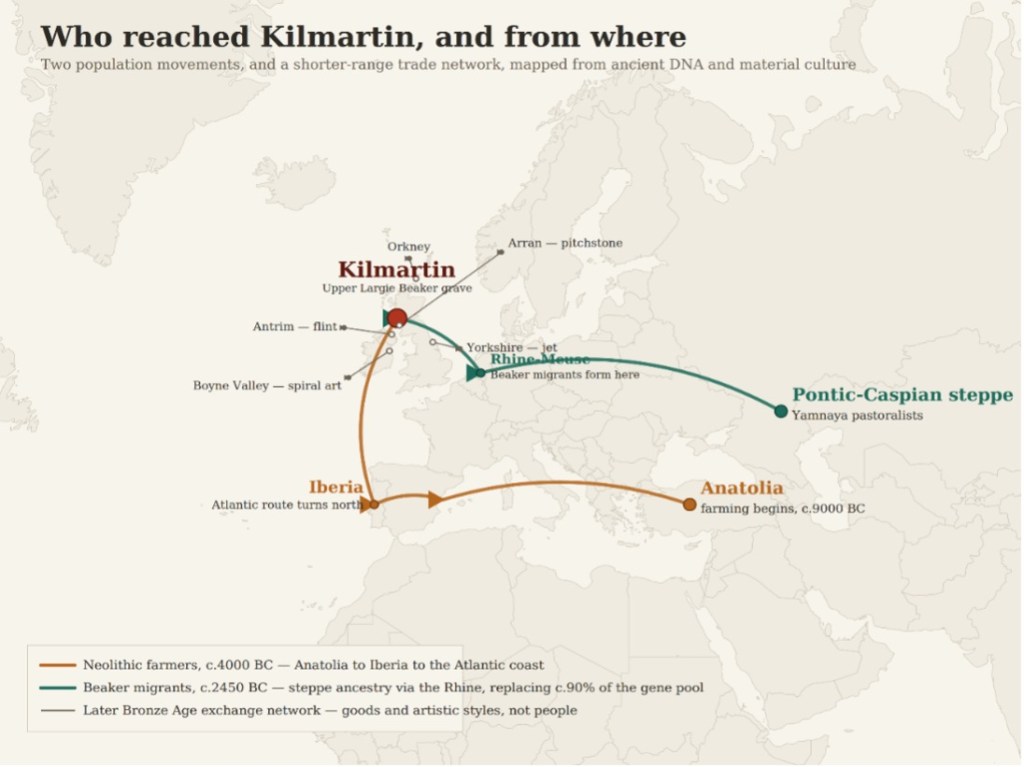
The first great transformation came around 4000 BC, with the arrival of Neolithic farming communities in Britain.

Their deeper ancestry can be traced to early farming populations originating in Anatolia, part of modern-day Turkey, from where agriculture gradually spread across Europe. One important route followed the Mediterranean and Atlantic seaboard through Iberia and western Europe before eventually reaching Britain.

These newcomers brought a fundamentally different way of life. Farming, domesticated animals, pottery and the construction of substantial ceremonial and burial monuments increasingly became part of a landscape previously occupied by communities dependent primarily upon hunting, fishing and gathering.

They also brought different ways of honouring their dead, some of which survive in the great stone monuments we’re still attempting to understand today, but that wasn’t the end of the story.

Around 2450 BC, Britain began experiencing another major population transformation associated with the arrival of people belonging to the Bell Beaker cultural phenomenon. These migrants had strong genetic connections with populations in north-western continental Europe, particularly around the Lower Rhine, and carried substantial ancestry ultimately derived from pastoralist populations of the Pontic-Caspian steppe.

And here’s where things become particularly interesting.

Ancient DNA research indicates that, over the centuries following their arrival, approximately 90% of Britain’s earlier Neolithic genetic ancestry was replaced. That’s an extraordinary demographic change. It doesn’t mean 90% of Kilmartin’s inhabitants suddenly vanished, but it does demonstrate just how profoundly migration altered the population of prehistoric Britain over successive generations.

The Beaker period also saw changing burial customs, including a greater emphasis on individual burials accompanied by carefully selected possessions, alongside developments in pottery, metalworking and wider material culture.

Suddenly, the landscape of Kilmartin begins to make considerably more sense, its monuments weren’t all constructed at once, nor necessarily by people sharing identical customs, ancestry or beliefs. The glen developed over many centuries, reflecting successive generations and changing ideas about life, death and remembrance.

And it wasn’t only people who travelled.

Prehistoric communities were connected through surprisingly extensive networks of exchange. Materials such as Arran pitchstone, Irish flint and Yorkshire jet moved considerable distances, while artistic ideas and symbolic traditions also spread between communities.

The remarkable spiral carvings associated with Ireland’s Boyne Valley, for example, form part of a much wider Atlantic prehistoric artistic tradition. Such connections don’t necessarily prove that the same people travelled between every location, but they demonstrate that these communities were far from isolated. The map brings these different strands together: two major population movements separated by around 1,500 years, followed by wider networks through which materials, skills and ideas circulated.

I found this particularly fascinating.

Here was a landscape that successive communities, living thousands of years apart, continued to recognise as somewhere important enough to bury their dead, construct monuments and leave their mark upon the stone.

What made this particular glen so significant?

That’s the question I’d come to explore.

And here I was, several thousand years later, standing in the Scottish rain with a camera, a printed guide and the considerable advantage of a hire car, at least I didn’t have to walk here from Anatolia!

Dunchraigaig Cairn – The Deer Beneath the Stone

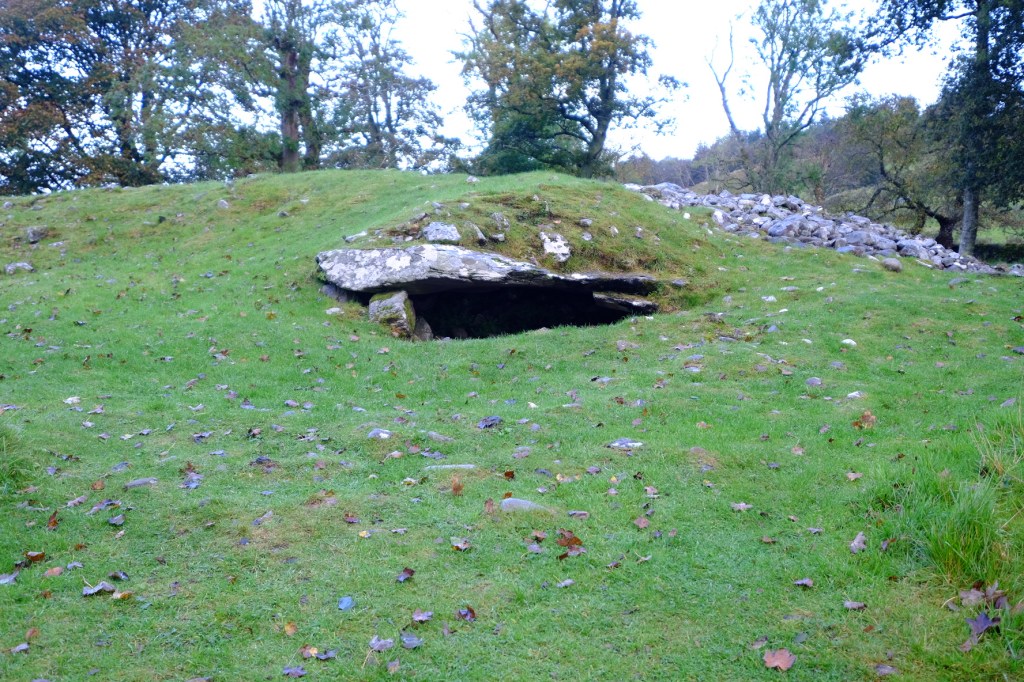
One of the places I’d been particularly keen to explore was Dunchraigaig Cairn, a prehistoric burial monument that has yielded one of Scotland’s most remarkable archaeological discoveries.

And from a distance, it doesn’t exactly announce itself.

A low, grass-covered mound, scattered stones and a small opening beneath an enormous slab of rock. Without knowing its history, you might easily pass it by, yet concealed beneath that great capstone is something extraordinary.

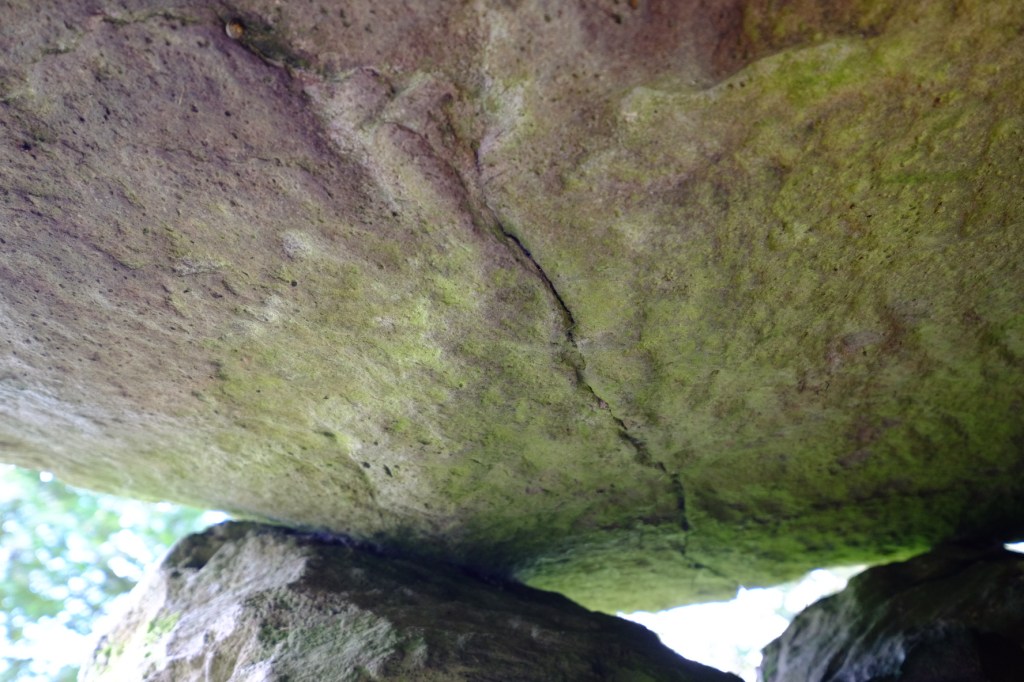
In 2021, prehistoric animal carvings were identified on the underside of the capstone. Five figures, including two magnificent adult red deer stags, thought to date from the Early Bronze Age, around 4,000 years ago.

These are the earliest known prehistoric animal carvings discovered in Scotland.

What makes the find particularly unusual is that prehistoric Scottish rock art is overwhelmingly abstract. Cup marks, concentric rings and geometric arrangements are relatively familiar features of the landscape, but recognisable representations of animals are exceptionally rare.

Here, hidden beneath a burial monument, someone had taken the trouble to depict creatures that must have held some significance in their world.

And I was determined to see them.

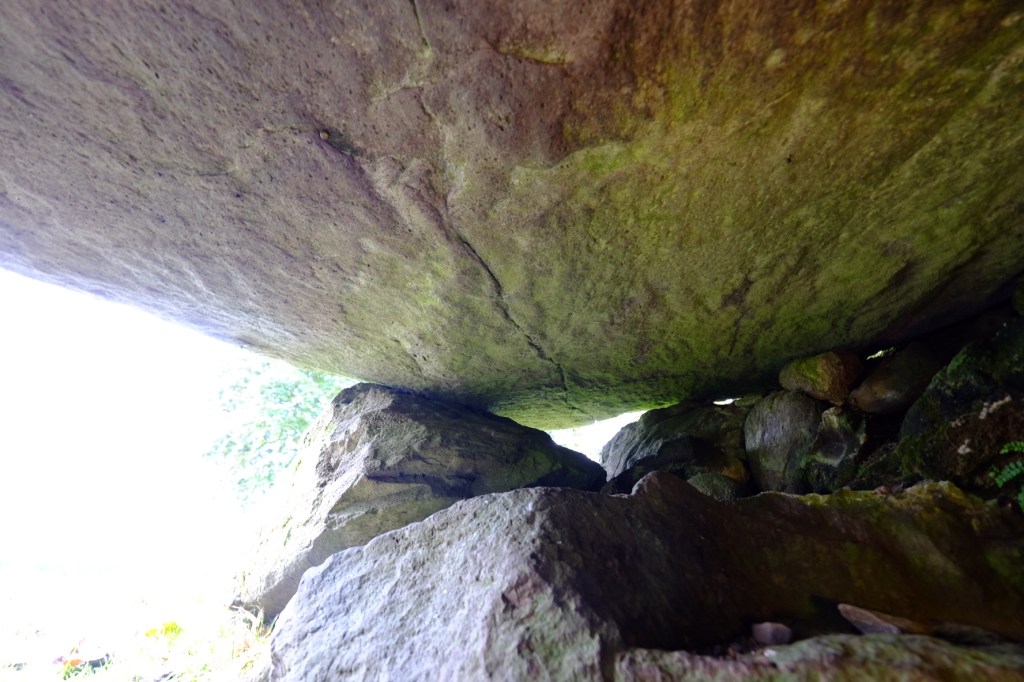
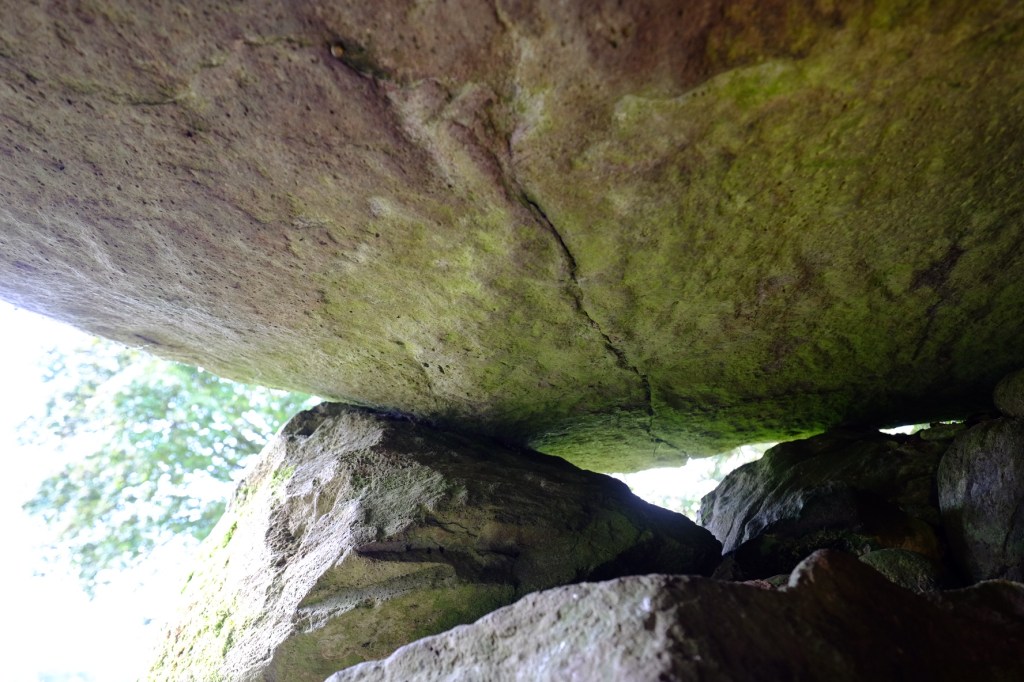
This proved considerably more challenging than anticipated, especially with the considerable downpour and position of the markings meaning some body dexterity was required beyond normal human capability.

The entrance isn’t exactly designed with the comfort of modern visitors in mind, and photographing the underside of an enormous prehistoric stone while negotiating a confined space, damp rocks and a rather awkward camera angle requires a degree of physical improvisation.

Not to mention the fact that the carvings themselves are extraordinarily difficult to distinguish.

The figures were created by painstakingly pecking and working the stone’s surface. Thousands of years of weathering, however, have left their outlines so faint that ordinary photography struggles to reveal them.

Researchers subsequently used high-resolution 3D scanning and digital surface-enhancement techniques to identify and document the individual animals.

The most remarkable is a large red deer stag, affectionately nicknamed the Fabulous Stag, whose sweeping antlers and anatomical details reveal a surprisingly accomplished understanding of the animal.

Interestingly, the carvings are positioned so that the larger stags appear upside down when viewed from inside the burial chamber today. The precise circumstances in which they were created, and whether the stone was decorated before being incorporated into the monument, remain subjects of archaeological interpretation.

The discovery raises some fascinating questions.

Were these animals associated with hunting, social status, spiritual beliefs or something altogether different? Did they hold a particular significance for the people buried here?

We simply don’t know.

But imagine someone thousands of years ago, carefully working the image of a deer into this enormous slab of rock. Not a casual afternoon’s doodling, but a deliberate act requiring considerable time, skill and effort.

And here I was, around four millennia later, attempting to photograph the result with a digital camera while trying not to become permanently wedged beneath the monument.

Progress, of sorts.

My own photographs didn’t reveal the carvings quite as successfully as I’d hoped, so I’ve included a published archaeological reference image to illustrate what is actually concealed within the stone.

Comparing the two gives some idea of just how remarkable the discovery is. Without the benefit of specialist lighting and modern archaeological imaging, these ancient animals might easily have remained unnoticed.

Standing beside what initially appears to be little more than a collection of weathered rocks in a Scottish field, it’s extraordinary to think that someone left these images here thousands of years ago.

And that, perhaps, is what makes Kilmartin so captivating, the more closely you look, the more the landscape begins to reveal.

And I’d barely started hunting stones.

Nether Largie – Standing in the Company of Giants

My next encounter with Kilmartin’s prehistoric inhabitants was only a short distance away, at the Nether Largie Standing Stones.

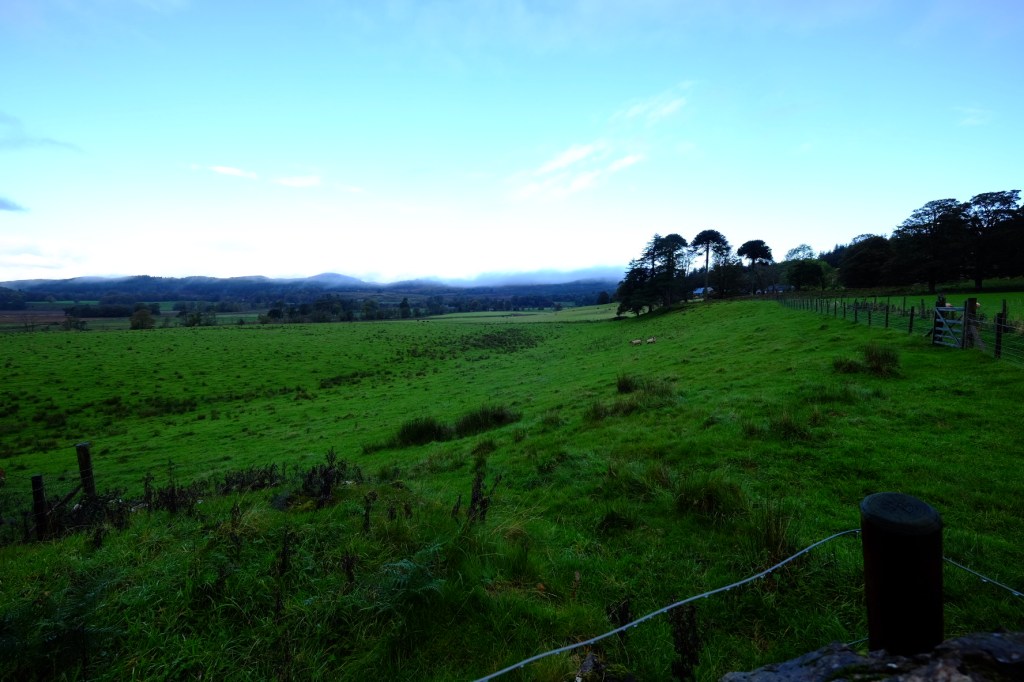
By now, the Scottish weather had begun to show a little mercy. The rain was easing, although the ground remained thoroughly saturated, and the surrounding fields had acquired that almost impossibly vivid shade of green that Scotland seems able to produce without the assistance of Photoshop.

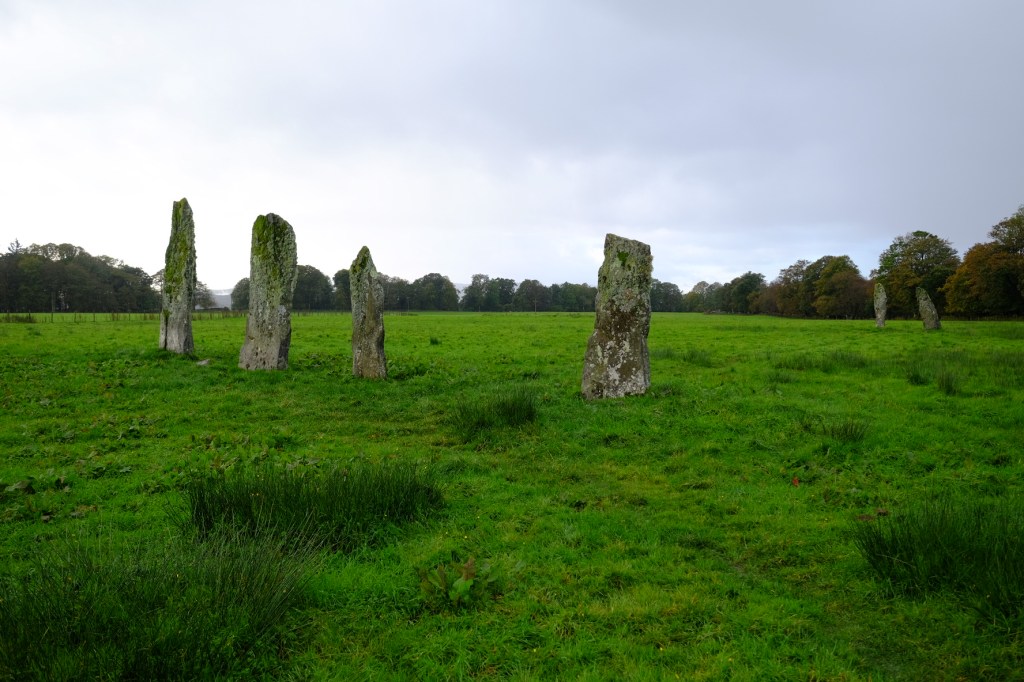
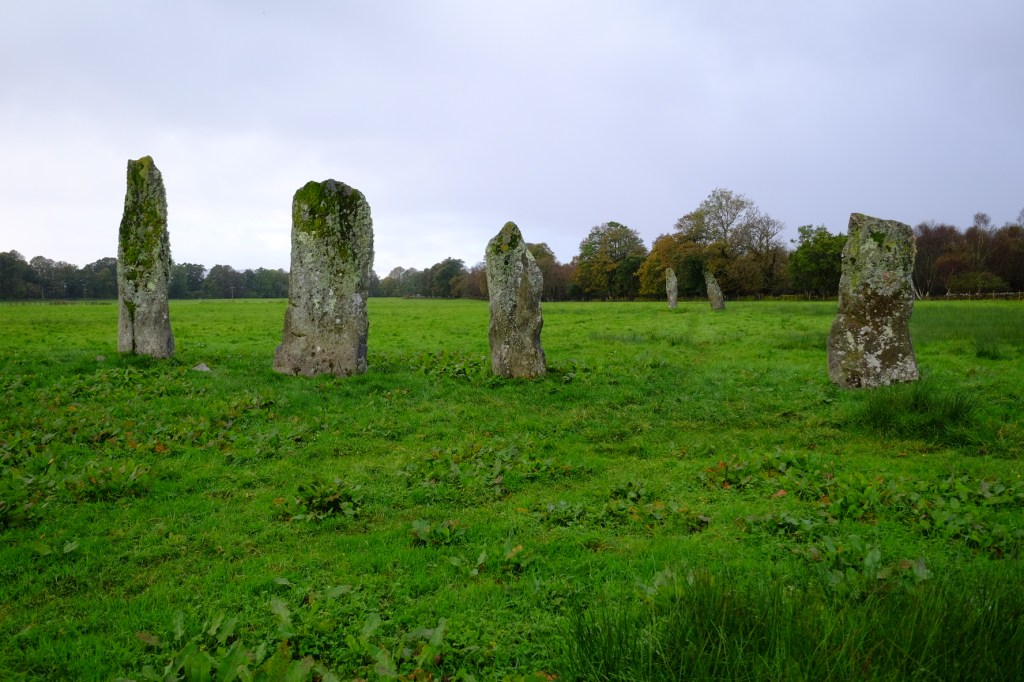
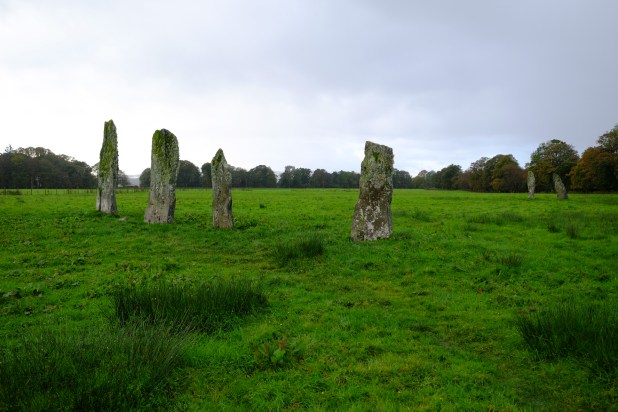
And there, rising out of the grass, stood six enormous stones.

Four form an arrangement rather like a rough X, with another two standing slightly apart. Weathered, irregular and covered in extraordinary patches of moss and lichen, they command attention despite the apparent simplicity of their construction.

Thought to have been erected during the Middle Bronze Age, roughly 3,000 years ago, these monuments belong to a later chapter of Kilmartin’s prehistoric story than some of the great Neolithic ceremonial sites nearby.

Their precise purpose remains uncertain.

Were they territorial markers, gathering places or monuments associated with religious and ceremonial activities? Various astronomical alignments have also been proposed, although interpreting prehistoric intentions from arrangements of stone requires a certain amount of caution.

Whatever their purpose, somebody went to considerable trouble to select, transport and erect these massive slabs, long before the invention of anything resembling a convenient hydraulic lifting device.

And they weren’t simply left standing without further attention.

Ancient Marks – Leaving Something for Posterity

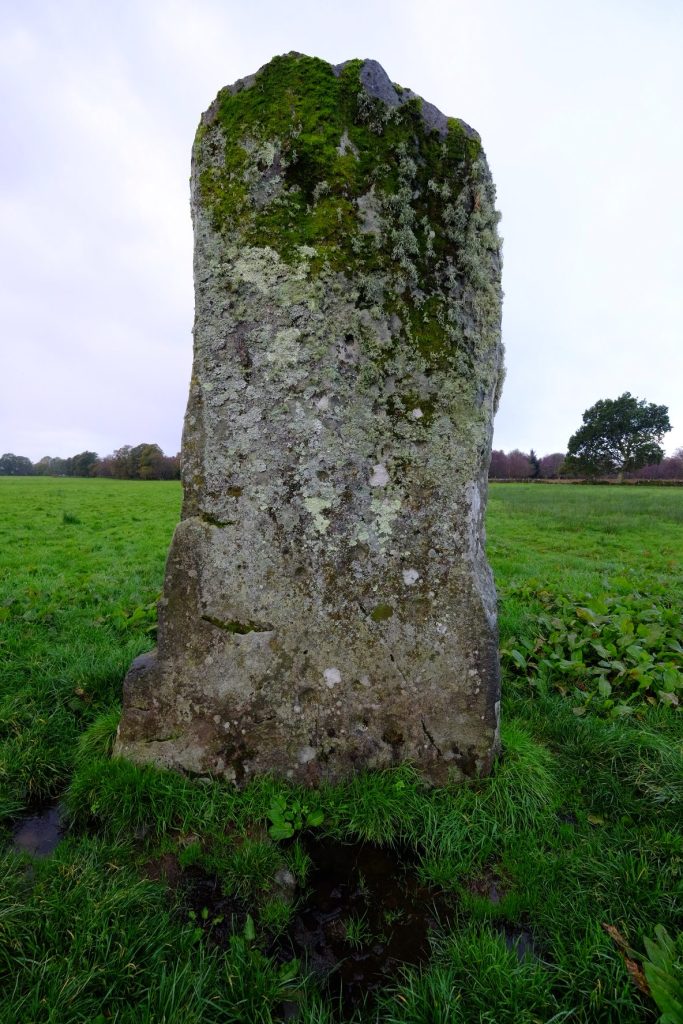
Moving closer to one of the larger stones, I became fascinated by its surface.

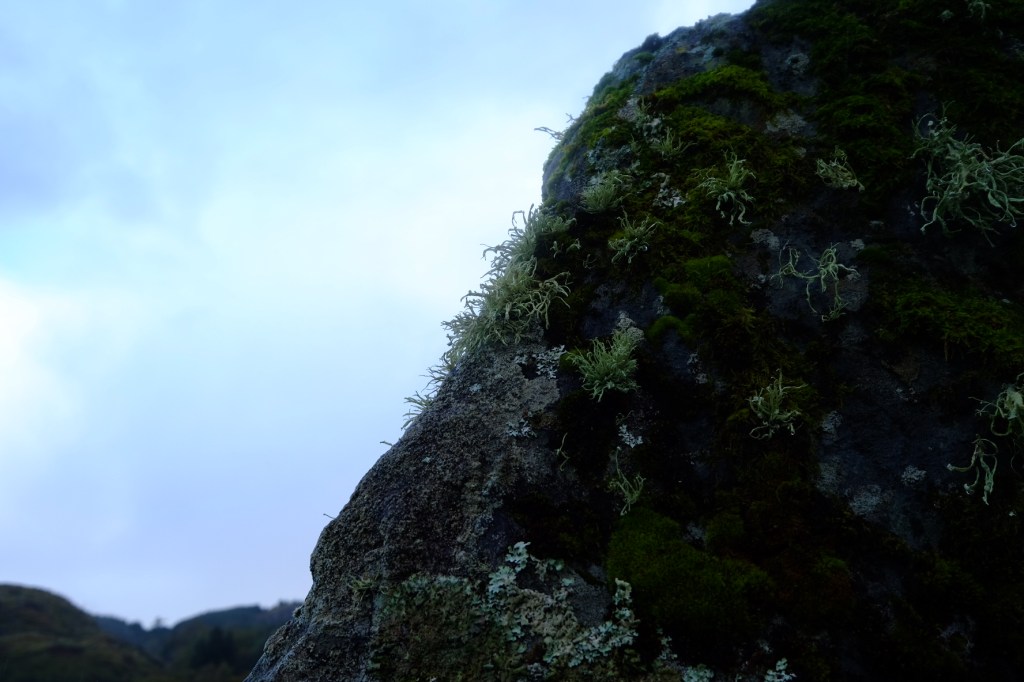
What appeared from a distance to be little more than weathered rock revealed a wonderfully complicated landscape of its own. Great colonies of pale grey lichen spread across the stone, contrasting with brilliant green moss clinging to its upper edges and crevices.

And then there were the small hollows.

Some of the Nether Largie stones bear prehistoric carvings known as cup marks, occasionally accompanied by concentric rings. These were created by repeatedly striking or pecking the rock with a harder stone, gradually forming shallow depressions in its surface.

Simple enough in appearance, but their significance is anything but straightforward.

Similar carvings appear throughout prehistoric Britain and Ireland, particularly in landscapes associated with Neolithic and Bronze Age activity. Some are found on exposed rock surfaces, others on standing stones and burial monuments.

Were they symbolic representations of celestial bodies, markers of significant places, expressions of spiritual beliefs, or something entirely different?

Nobody knows for certain.

Not every hollow in an ancient stone is necessarily prehistoric artwork, of course. Natural weathering can produce remarkably convincing imitations. But the confirmed carvings at Nether Largie add another intriguing layer to an already extraordinary monument.

What particularly appealed to me was the contrast between the immense age of the stone and the delicate living organisms now covering its surface.

Thousands of years of human history, slowly being reclaimed by nature.

And considerably more successful than anything I’ve ever attempted to grow in the garden.

Looking out across the surrounding countryside, the setting itself was magnificent. Great green fields stretched towards distant hills, their upper slopes partially concealed beneath a low blanket of cloud.

It was easy to understand why people might have considered this landscape special, even if the exact reasons behind their extraordinary monuments remain beyond our reach.

There was, however, something else nearby that I’d been particularly keen to explore.

And this one involved considerably more stones.

Temple Wood – A Circle of Life, Death and Mystery

A short distance from Nether Largie lies Temple Wood, one of the most fascinating prehistoric monuments in the glen.

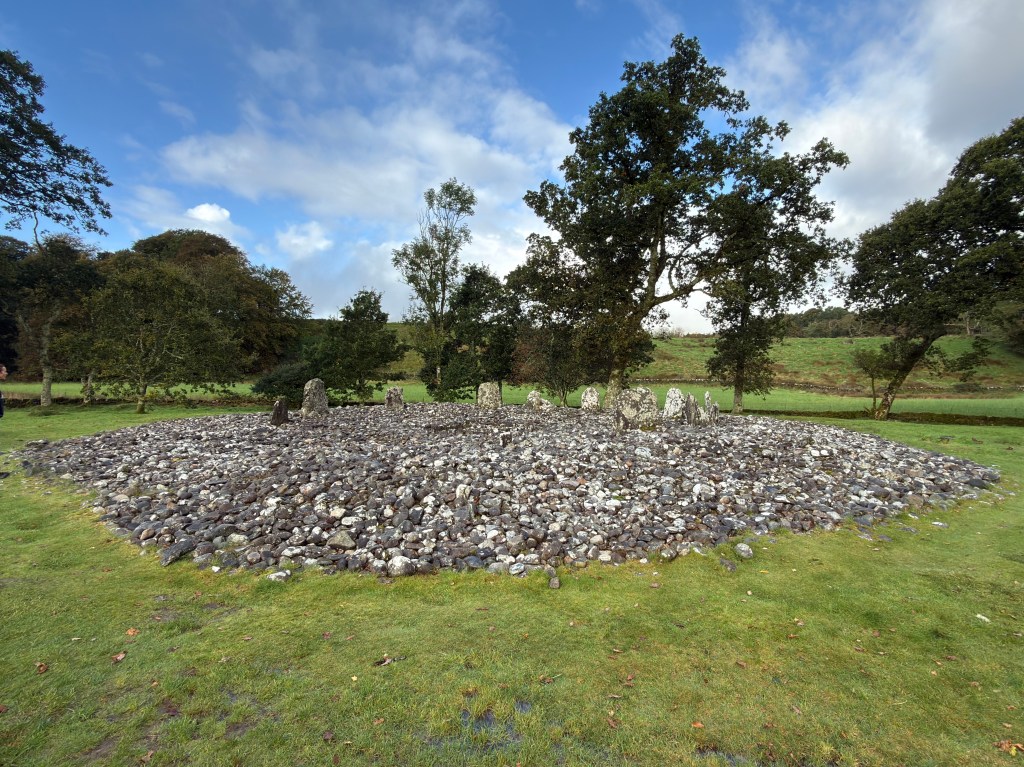
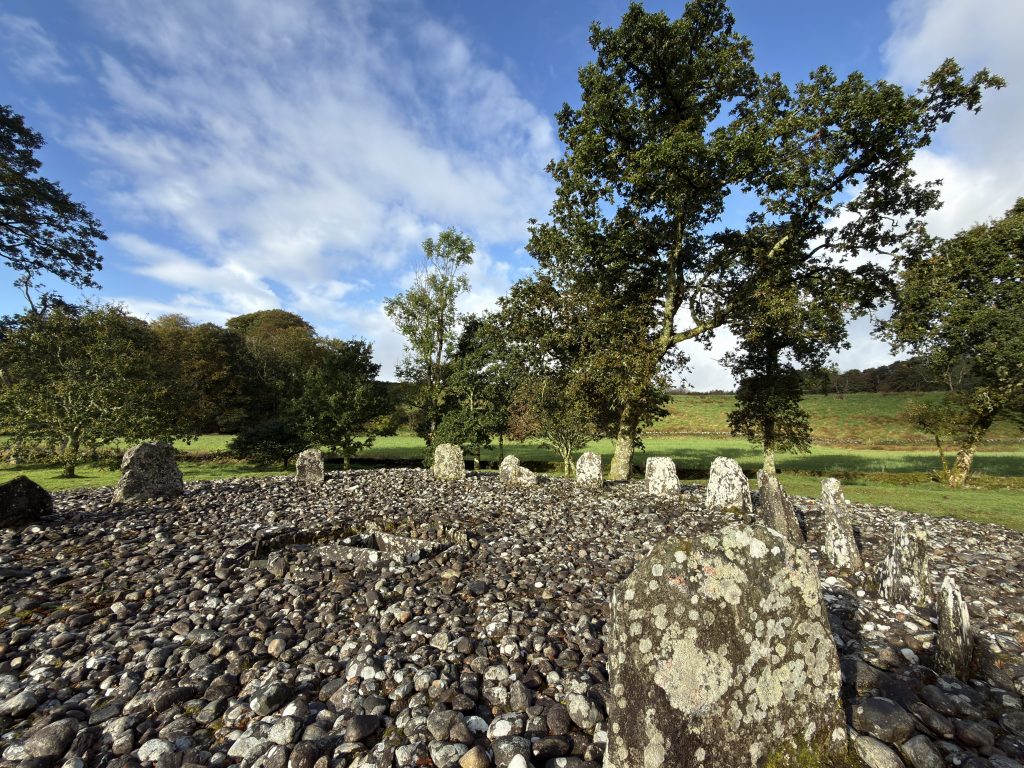
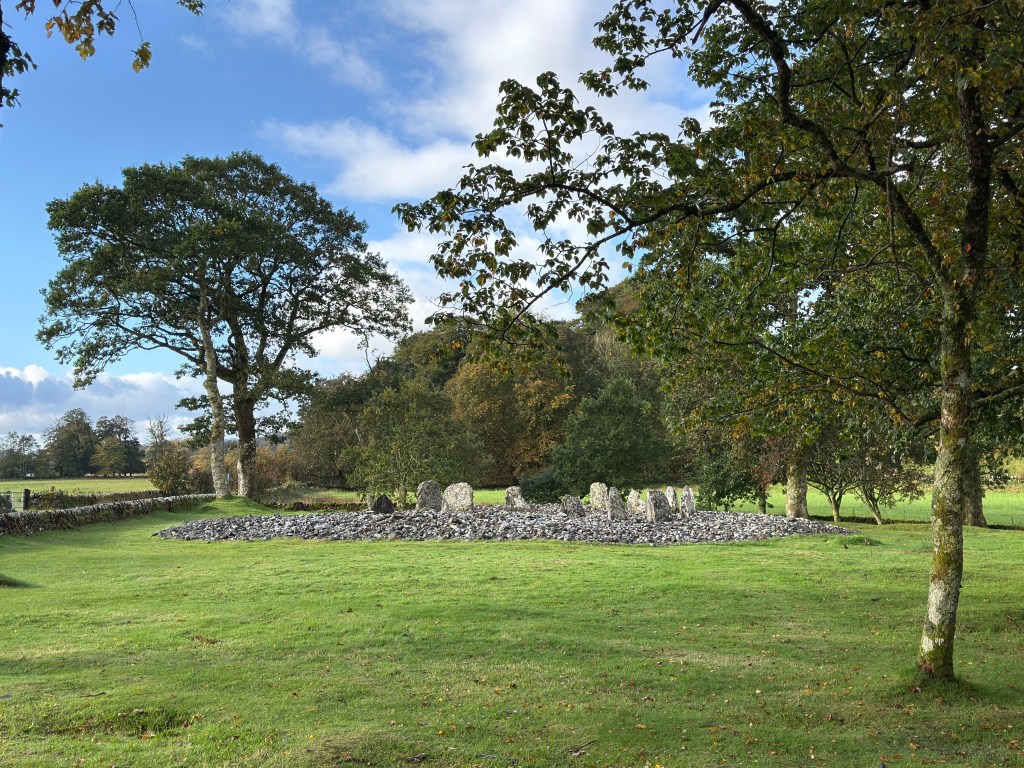
At first sight, it appears to be a great circular arrangement of weathered stones emerging from a broad bed of rounded cobbles, with mature trees and beautiful countryside providing a wonderfully atmospheric backdrop.

But the site is considerably more complicated than it initially appears.

Temple Wood contains the remains of two prehistoric circles, commonly referred to as the northern and southern circles, whose development stretches across approximately two thousand years.

The earliest known activity began around 3500–3000 BC, when a circle of timber posts was constructed at the northern site. This was subsequently replaced, or at least partly replaced, by stone. Around 3000 BC, a larger oval arrangement of approximately 22 upright stones was established to the south-west.

What makes Temple Wood particularly interesting is that its purpose appears to have changed over time.

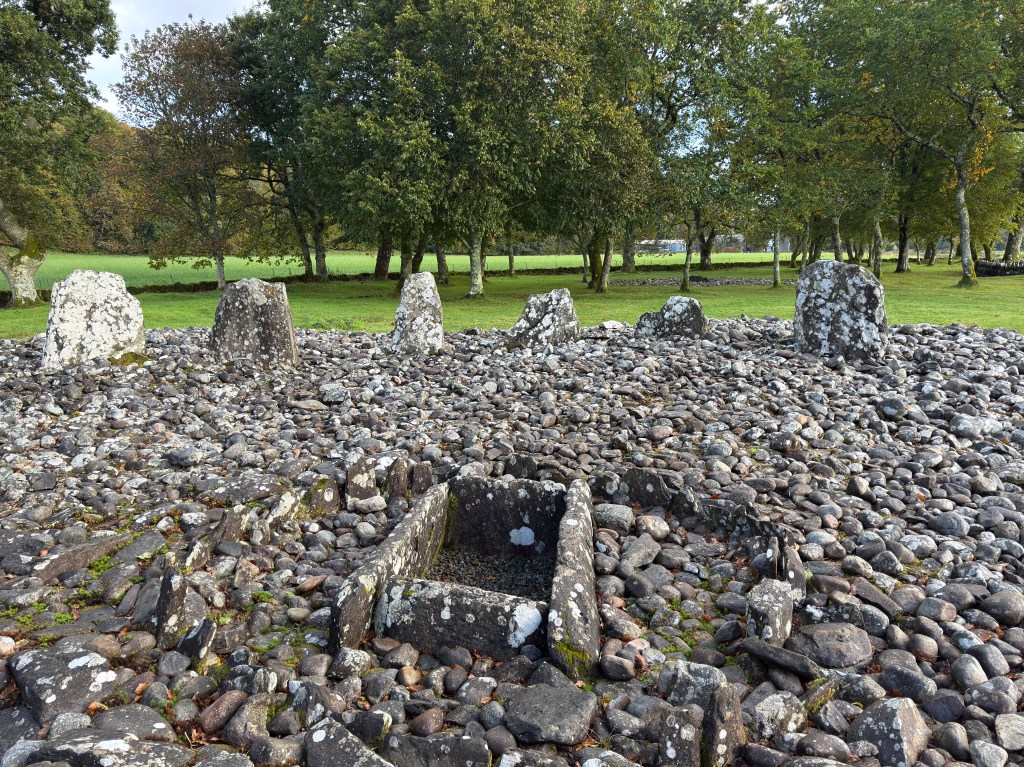
Initially associated with ceremonial activity, the southern circle was gradually modified. Low slabs were inserted between the standing stones, restricting physical access while still allowing people to see inside. Later, during the Bronze Age, burial cists were incorporated into and around the monument, and much of the circle was eventually filled with a great accumulation of stones.

In other words, what we see today isn’t simply an ancient stone circle.

It’s the surviving result of generations of activity, alteration and remembrance, with each successive community leaving something of its own behind.

The exposed cist is particularly fascinating.

Essentially a small stone-built coffin, it provides a tangible connection with the funerary purpose the site eventually acquired. Excavations at Temple Wood revealed burial-related objects including pottery, flint arrowheads and mineral pigments such as red and yellow ochre.

Remarkably, the only surviving human remain recovered from within the southern circle was a child’s tooth.

A very small fragment of an individual life, preserved within an enormous monument constructed and modified over centuries.

There’s something rather moving about that.

Temple Wood also contains some extraordinary prehistoric artwork. One of its standing stones bears a carved spiral motif reminiscent of designs found in Irish passage-grave art, providing another intriguing connection with those wider Atlantic traditions discussed earlier.

By now, the weather had undergone something of a transformation. The rain had given way to patches of blue sky, and sunlight was beginning to break through the clouds, illuminating the stones and surrounding trees. The change in atmosphere was wonderful. Here was a place that had witnessed thousands of years of human activity, whose builders had disappeared into prehistory, yet whose monument continued to command attention.

What ceremonies took place here? What did these stones represent to the people who first erected them? And why did successive generations continue to return?

We may never know all the answers.

But I suspect the people responsible would have been quietly pleased to discover that, five thousand years later, someone was still wandering around their creation, taking photographs and wondering what on earth they had been up to. My morning amongst the stones had been everything I’d hoped for.

It was, however, approaching the time when archaeology needed to make way for another important human tradition.

Lunch.

Oban – A Return to Civilisation, With Seafood

Leaving Kilmartin behind, I continued north towards Oban.

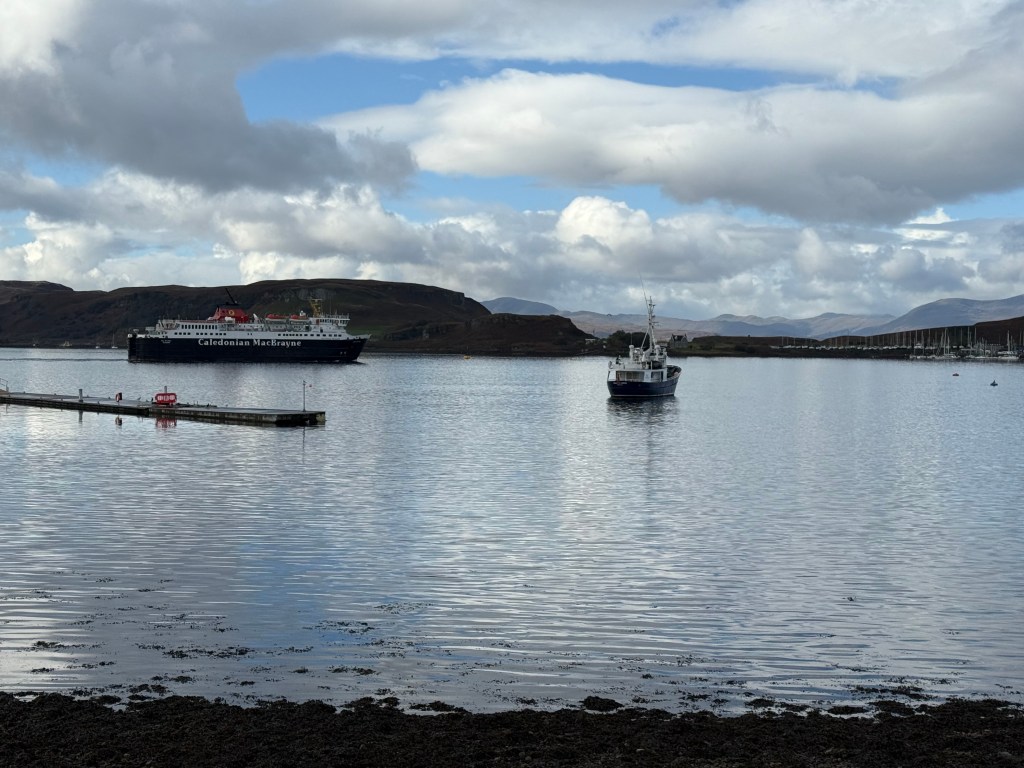
After a morning spent amongst burial chambers, standing stones and the remnants of prehistoric ceremonies, arriving in this bustling little harbour town felt like stepping forward several thousand years in one rather enjoyable journey. Often described as the Gateway to the Isles, Oban occupies a magnificent position on Scotland’s west coast, its sheltered bay providing an important departure point for ferries serving the Hebridean islands.

And there, crossing the water against a backdrop of distant hills and enormous billowing clouds, was one of Caledonian MacBrayne’s unmistakable ferries.

The harbour was a delightful mixture of working boats, pleasure craft and island ferries, with the surrounding hills providing a wonderfully dramatic setting. I spent some time wandering along the waterfront, taking in the atmosphere and enjoying the fact that, for once, the weather appeared to be cooperating.

Oban has long been associated with fishing, maritime trade and tourism, and there’s something particularly appealing about a town where the sea remains such an obvious part of everyday life. It also seemed an entirely appropriate place to investigate the local seafood.

Having devoted the morning to studying prehistoric burial practices, I thought a change of subject might be beneficial.

Ee-Usk – A Rather Welcome Lunch

After a morning spent exploring the resting places of Scotland’s prehistoric inhabitants, I decided it was time to concentrate on something considerably more appetising.

Lunch was at Ee-Usk, a seafood restaurant overlooking Oban’s bustling harbour. With the waters of the bay, fishing boats and ferries providing the backdrop, it seemed an entirely appropriate setting to sample some of Scotland’s wonderful seafood.

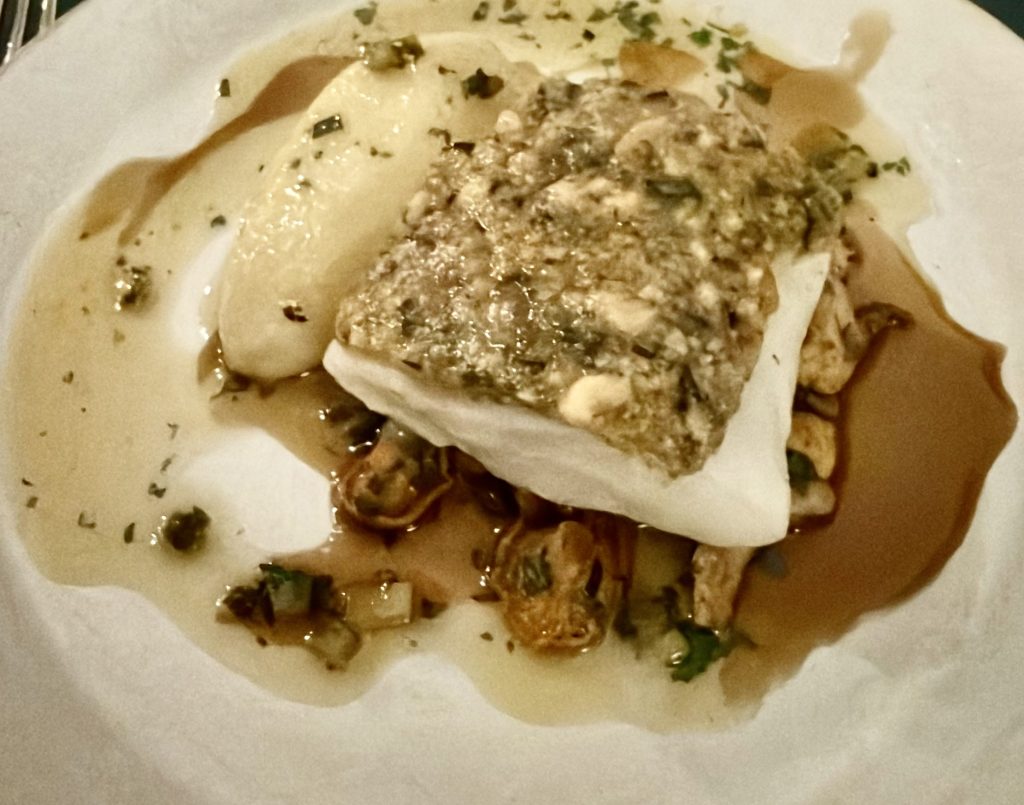
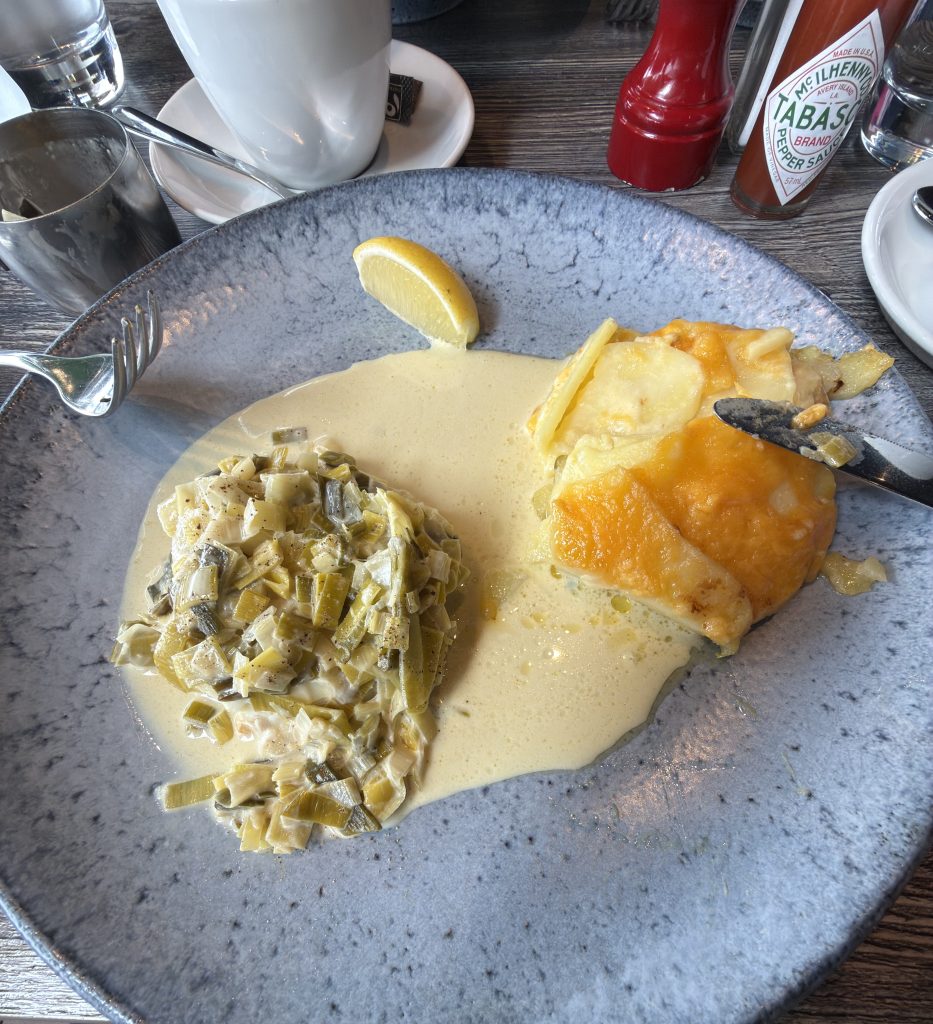
My choice was the oven-baked halibut, accompanied by creamed leeks and potato gratin.

What arrived was a gloriously comforting plate of food. A generous fillet of halibut, its delicate white flesh beautifully cooked, accompanied by a substantial potato gratin with a golden, bubbling cheese topping. Alongside sat a generous helping of finely sliced leeks, softened in cream, with a rich, buttery sauce bringing everything together.

Halibut is a particularly lovely fish. Its firm, almost meaty texture allows it to retain its structure during cooking, yet when treated properly, the flesh separates into wonderfully moist, delicate flakes. Its flavour is mild and subtly sweet, making it an excellent partner for the richness of the accompanying cream.

The leeks provided their gentle onion sweetness, while the gratin contributed a welcome contrast of textures: a lightly golden surface giving way to soft layers of potato beneath. A squeeze of lemon cut through the richness beautifully.

This wasn’t food designed to challenge your understanding of modern gastronomy or leave you searching the plate for the principal ingredient. It was excellent produce, sympathetically cooked, generously served and thoroughly satisfying.

Exactly what I needed.

After spending the morning investigating how prehistoric communities honoured their dead, I was now paying considerably more attention to how the living should be fed.

And Ee-Usk had provided a rather compelling answer.

Oban – Whisky, Architecture and a Little Victorian Ambition

Suitably restored, I continued my wander around the town.

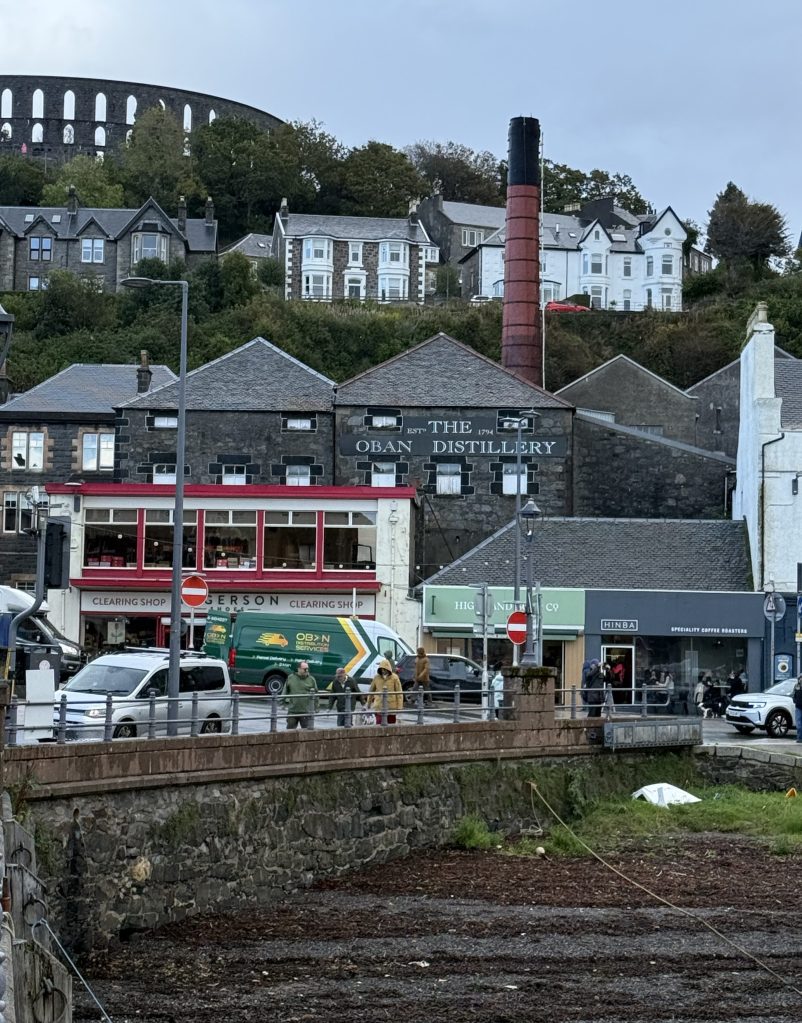
One of Oban’s most recognisable landmarks is its historic distillery, sitting remarkably close to the centre of town, with its distinctive chimney rising above the surrounding buildings.

Established in 1794, Oban Distillery predates much of the modern town that subsequently developed around it.

It’s rather unusual to find a working malt whisky distillery occupying such a central position in a bustling coastal settlement, but the arrangement provides a wonderful reminder of the town’s commercial past. High above the distillery stands another of Oban’s most distinctive features: McCaig’s Tower.

Looking rather like somebody started constructing a Roman Colosseum on top of a Scottish hillside before deciding that the budget had become a little ambitious, the enormous circular structure was commissioned by local banker John Stuart McCaig during the 1890s.

His intention was partly to provide employment for local stonemasons during the quieter winter months, while also creating an enduring monument to his family. The original plans were rather grander than the structure that survives today, incorporating additional towers, galleries and commemorative statues.

McCaig died in 1902, and the ambitious project was never completed.

Nevertheless, what remains is one of Scotland’s more extraordinary Victorian follies, and undoubtedly gives Oban a skyline unlike almost anywhere else. An unfinished monument to personal ambition overlooking a town that had already given me an excellent lunch.

I rather liked the place, but it was time to continue north, as there was another historic structure waiting along the coast, and this one was perched on an island.

Castle Stalker – A Fortress, a Feud and a Rather Familiar Film Location

Continuing north from Oban along the coast towards Appin, the landscape became increasingly spectacular. The road passed between wooded slopes, tidal inlets and magnificent stretches of water, with distant mountains rising beyond the shoreline. And then, across the waters of Loch Laich, appeared one of the most photogenic castles in Scotland.

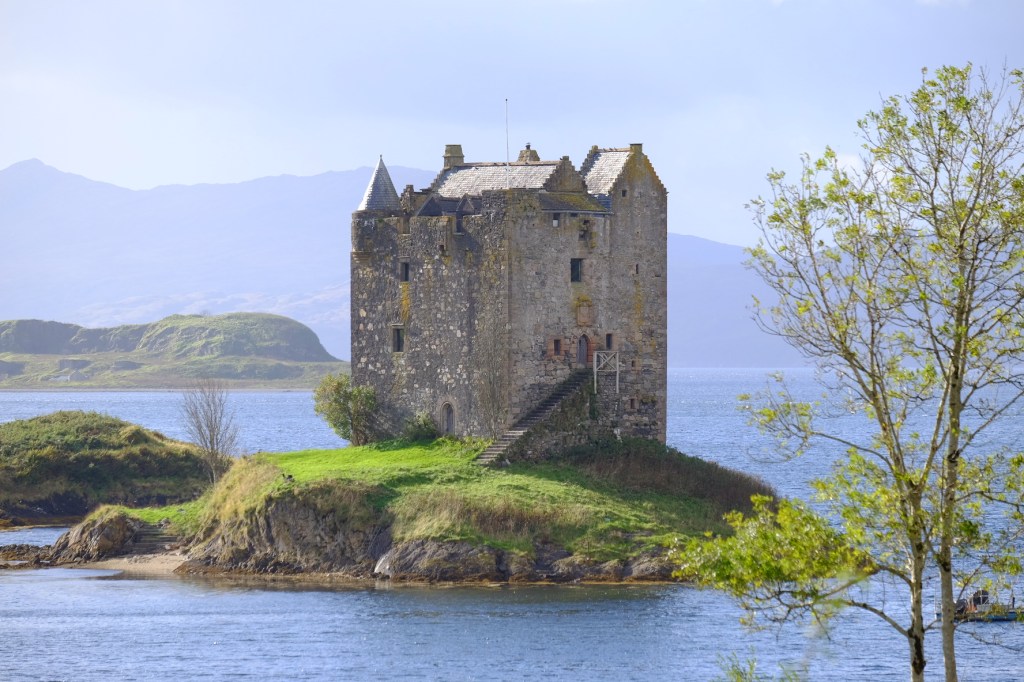
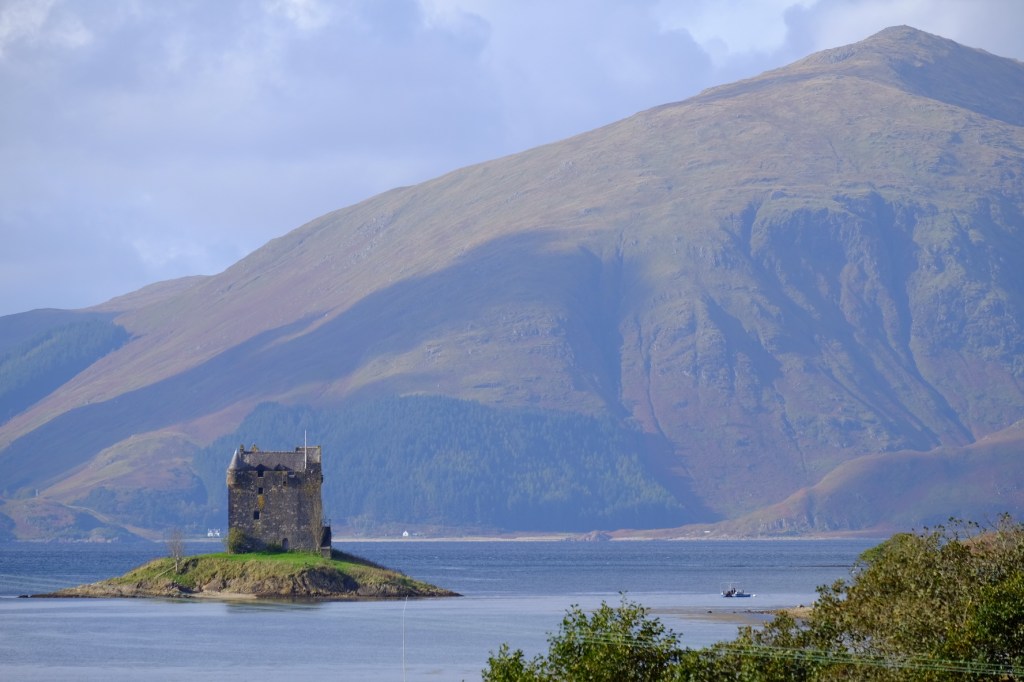
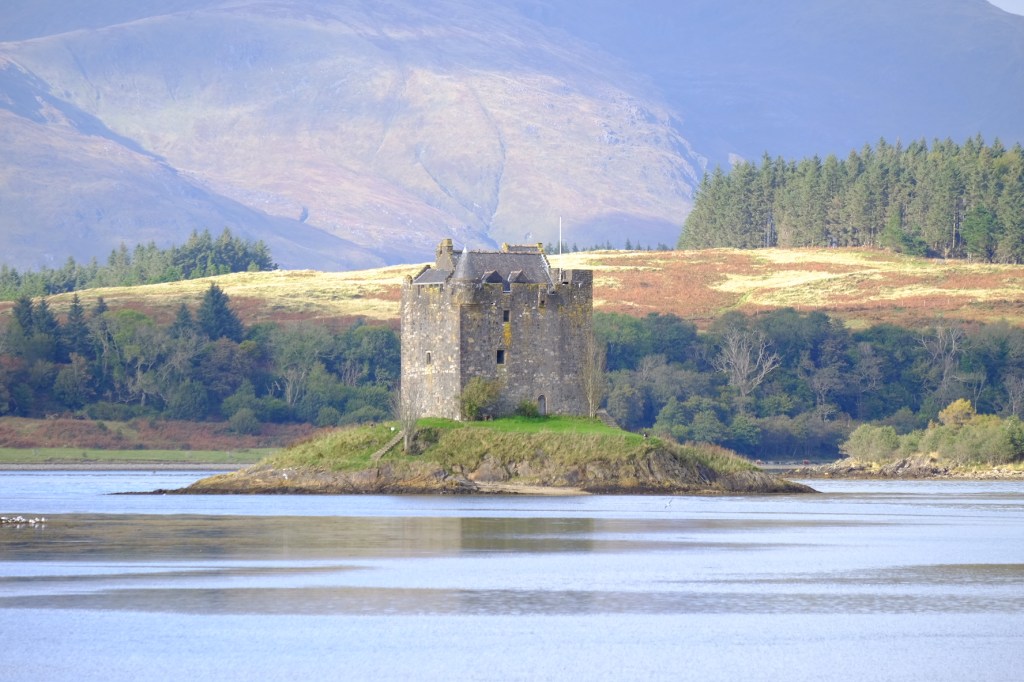
Castle Stalker stands on a tiny tidal island, its imposing stone tower rising above the water against a backdrop of forested hills and Highland mountains.

It’s one of those views that looks almost too perfectly Scottish to be real.

A medieval tower house, a small island, spectacular scenery and, on this particular afternoon, just enough changing sunlight to make the whole arrangement look as though somebody had organised the weather specifically for my camera. The castle’s origins are associated with the MacDougalls, who are believed to have established a small fortified structure here during the early fourteenth century.

The lands later passed to the Stewarts of Appin, and the present tower house is generally associated with Sir John Stewart of Lorn during the fifteenth century. Like so many Highland strongholds, its history is full of shifting loyalties, family rivalries, political intrigue and the occasional unfortunate disagreement settled with considerably more than a strongly worded letter.

One particularly dramatic episode concerns Sir John Stewart himself, who was fatally wounded outside Dunstaffnage Castle in 1463 by an adversary associated with the MacDougalls. According to the traditional account, he survived long enough to marry the mother of his son, thereby legitimising the child who would become the first chief of the Stewarts of Appin.

A wedding day that could hardly be described as going entirely according to plan.

Castle Stalker subsequently passed between the Stewarts and Campbells before eventually falling into disrepair. Thankfully, twentieth-century restoration secured its survival, leaving us with the wonderfully atmospheric building visible today. And if the castle looks vaguely familiar, there’s another reason. It appeared in the closing sequence of the 1975 film Monty Python and the Holy Grail, portraying the gloriously named “Castle Aaargh”.

A building with centuries of clan warfare, murder and political intrigue behind it, ultimately achieving additional fame thanks to a group of comedians searching for the Holy Grail.

History does occasionally have a rather wonderful sense of humour.

I spent a little time photographing the castle from the mainland, trying different compositions as the light shifted across the water and surrounding hills. The closer view reveals just how substantial the tower is, while the wider photograph captures what makes its setting so extraordinary. It was another of those places where the photograph almost takes itself.

Almost.

By now, I’d travelled from prehistoric burial monuments to a bustling harbour town and onwards to one of Scotland’s most evocative medieval castles, all in the space of a few hours.

And the day’s journey was far from over.

The road north was calling, and somewhere ahead lay the extraordinary landscapes of the western Highlands. Five thousand years of prehistory in the morning, fifteenth-century clan warfare in the afternoon.

Not bad for a Wednesday.

The Corran Ferry – Five Minutes to Another World

Leaving Castle Stalker behind, I continued north along the shores of Loch Linnhe towards the Corran Ferry. By now, the afternoon was moving on, and although I’d packed an extraordinary amount into the day, there was still some distance to cover before reaching my overnight accommodation in Acharacle.

The Corran Ferry provides a vital link between Nether Lochaber and Ardgour, carrying vehicles and passengers across the narrowest part of Loch Linnhe. The crossing itself is wonderfully short, approximately five minutes, but it saves drivers a lengthy diversion around the head of the loch via Fort William.

There’s something rather satisfying about driving straight onto a ferry, switching off the engine and allowing somebody else to take responsibility for forward progress, even if only for a few minutes. The route has provided a crossing between these shores for centuries. In earlier times, it formed part of the wider network of routes used by travellers, traders and cattle drovers moving through the western Highlands.

Today, it remains an essential connection for the communities of Ardnamurchan, Morvern and Ardgour, whose otherwise remote location makes the ferry considerably more important than its short journey might suggest.

And for me, it felt like crossing a threshold.

The busy roads and familiar trappings of civilisation were beginning to disappear, replaced by increasingly narrow stretches of tarmac, wooded hillsides and extraordinary glimpses of the surrounding mountains.

Scotland was becoming distinctly more Scottish.

Strontian – An Unexpected Contribution to the Periodic Table

Continuing west, the road eventually brought me to Strontian, a small village at the head of Loch Sunart. I’d included it in my route partly because of its history and partly because it provided a convenient point on the journey towards Acharacle. In fairness, there wasn’t a great deal happening to encourage an extended visit, but Strontian does have one rather extraordinary claim to fame.

It gave its name to a chemical element.

During the early eighteenth century, deposits of lead ore were discovered in the surrounding hills, prompting the development of a mining industry and the establishment of the village to accommodate its workers. In the late 1780s, scientists studying an unusual mineral associated with the mines discovered that it behaved differently from other substances then known to chemistry.

Further investigation established that it contained a previously unrecognised chemical element, subsequently named strontium after the village. The mineral itself became known as strontianite, while Sir Humphry Davy eventually isolated the metal in 1808. Rather impressively, this modest Highland settlement had managed to secure itself a permanent place on the periodic table.

Strontium compounds are perhaps best known today for producing the brilliant red colour in fireworks and signal flares. So, if you’ve ever admired a spectacular red firework illuminating the night sky, you can thank this little corner of Scotland for the name of the element responsible.

Sadly, Strontian itself wasn’t putting on anything quite so spectacular during my brief visit. other than a shop, cafe and public toilet so with no obvious reason to linger, I continued towards Acharacle, leaving the village to its rather distinguished scientific legacy.

Into Moidart – Where the Landscape Takes Over

The next stretch of the journey was beautiful.

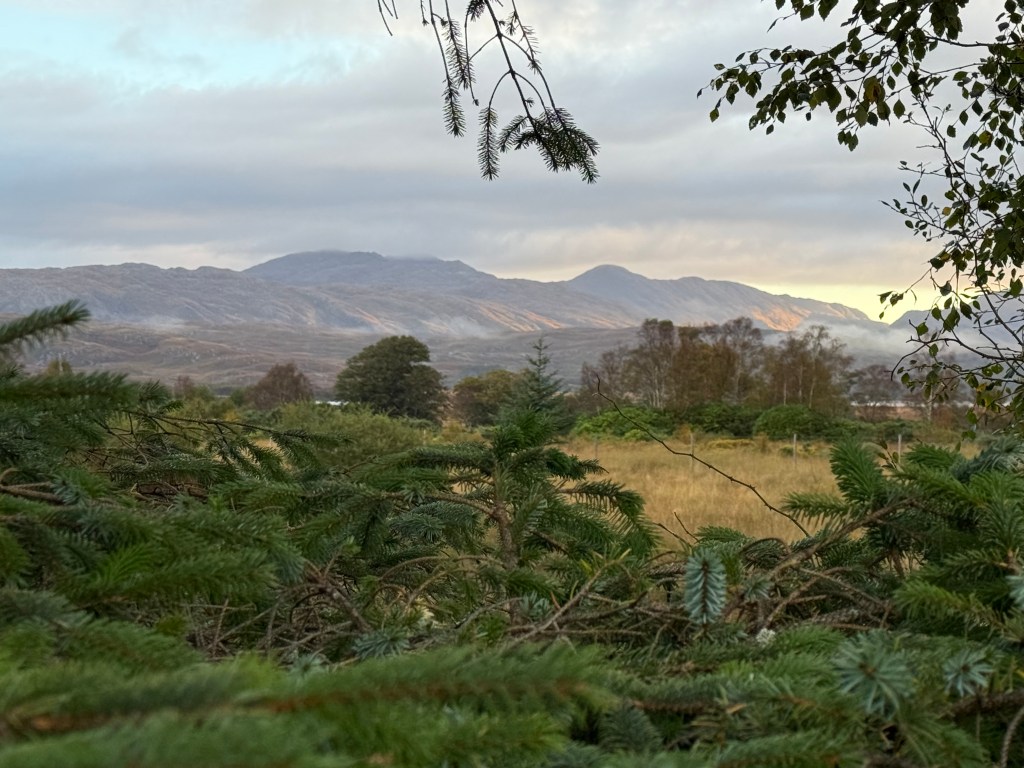
The road wound westwards through woodland, past scattered houses and across an increasingly remote landscape. The mountains rose beyond the trees, their upper slopes disappearing beneath layers of cloud, while occasional breaks in the weather allowed the low evening sunlight to illuminate the hillsides.

This was the Scotland I’d been imagining throughout those months of preparation.

Not simply magnificent scenery, but a landscape where geography had shaped centuries of human history. Mountains, sea lochs and narrow coastal approaches had influenced where people settled, traded, fought and constructed their strongholds.

And nowhere was that relationship more apparent than at my next photographic opportunity.

Castle Tioram – The Fortress Guarding Loch Moidart

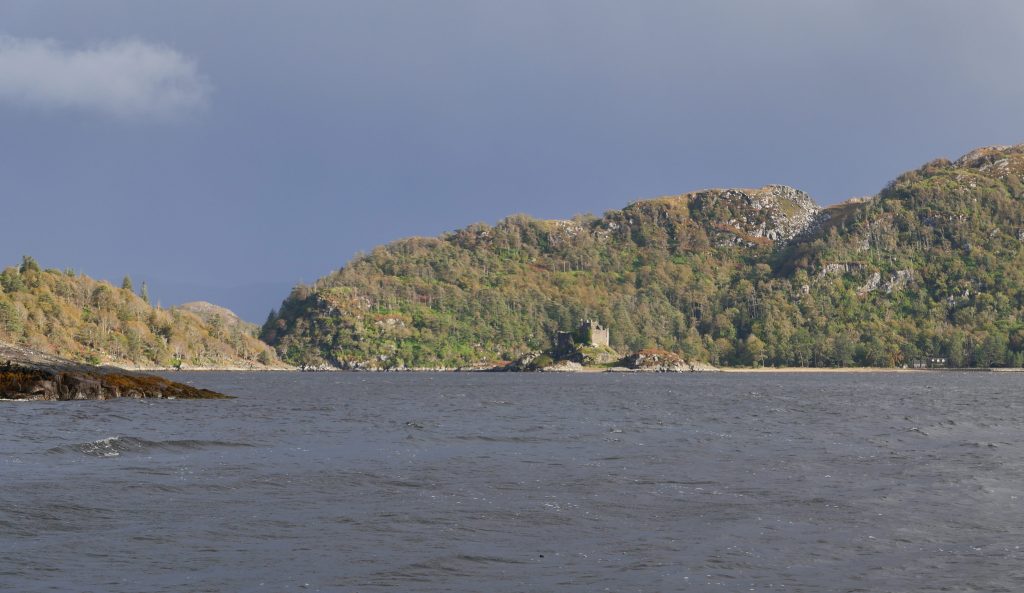
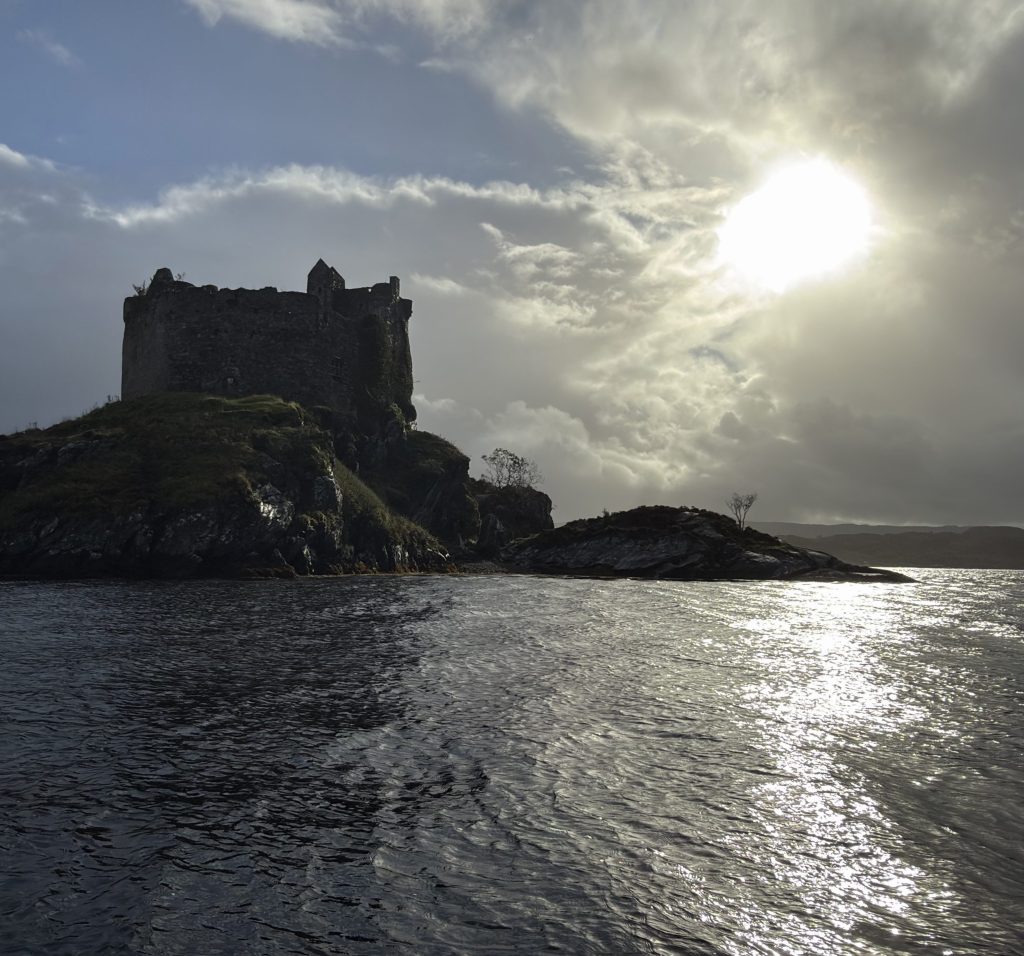
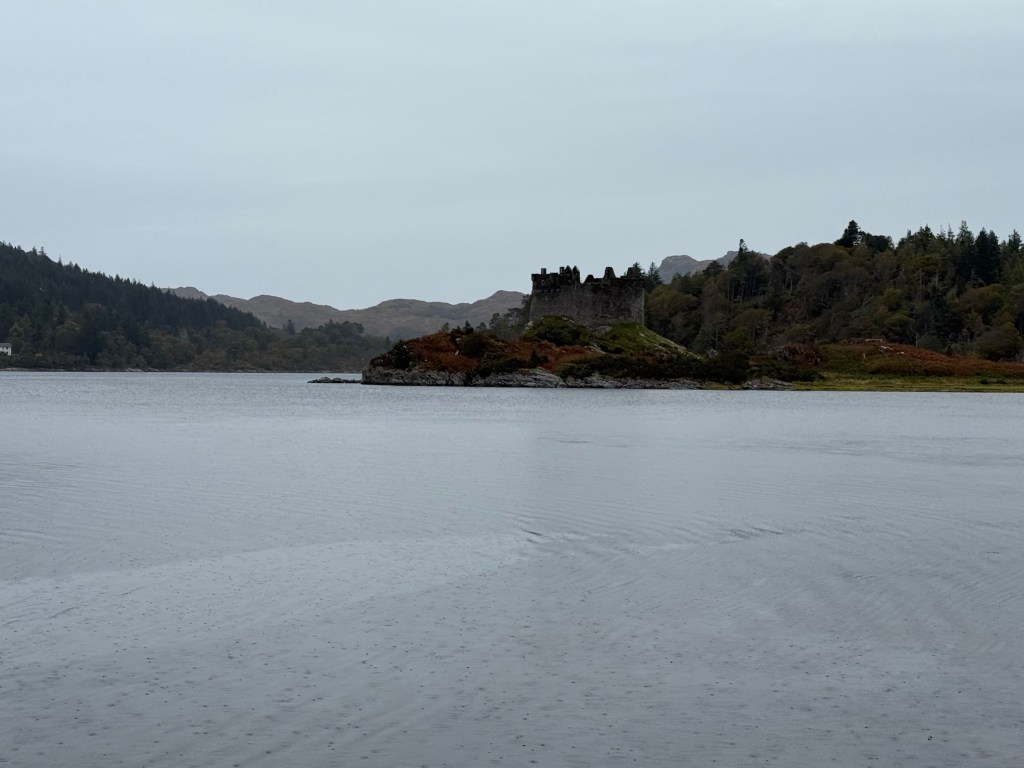
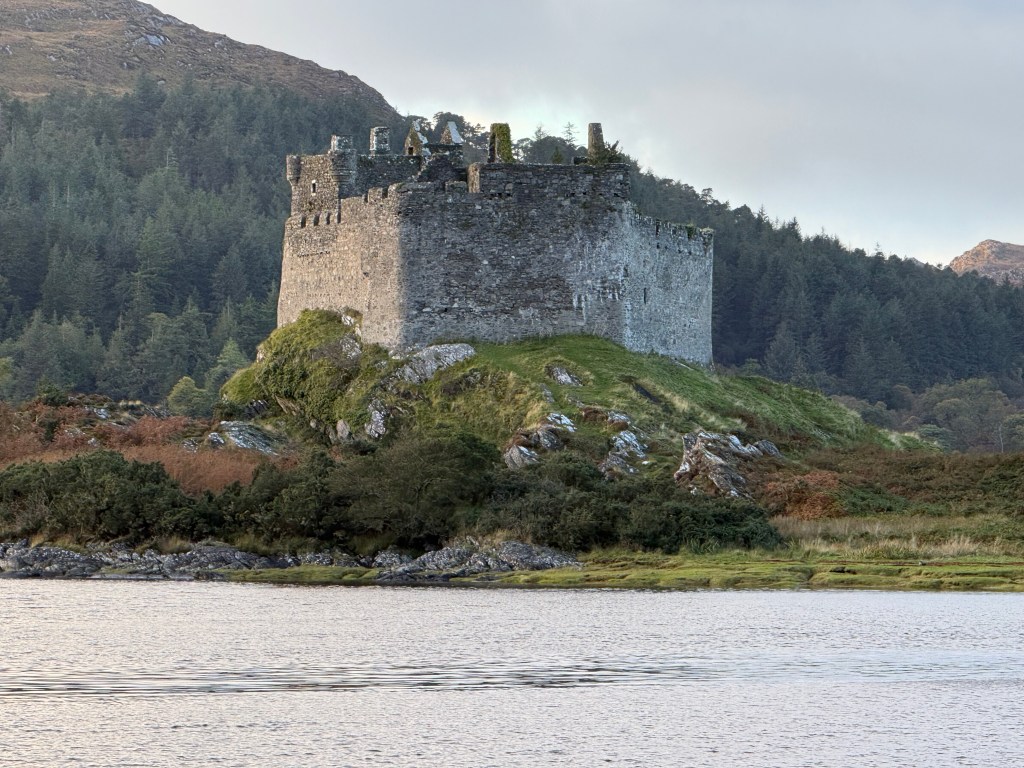
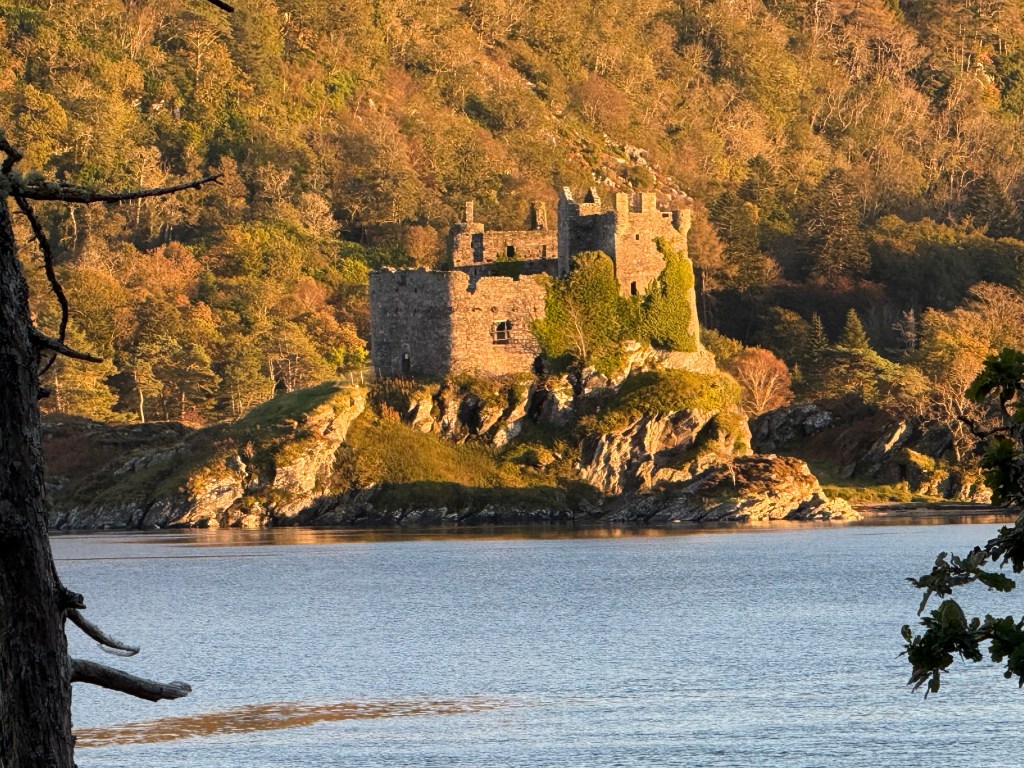
I’d been particularly keen to catch sight of Castle Tioram, another remarkable medieval stronghold, standing on the tidal island of Eilean Tioram at the meeting of the River Shiel and Loch Moidart.

The location is extraordinary.

The castle occupies a rocky outcrop overlooking the waterways that once provided an important route between the sea and the settlements further inland. Its position allowed those controlling it to oversee movement through this strategically significant part of the western Highlands.

The surviving structure dates largely from the thirteenth century onwards and became one of the principal strongholds of the MacDonalds of Clanranald.

This was territory steeped in clan politics, shifting alliances and the recurring struggle for influence over the western Highlands and Islands.

Castle Tioram played a central role in that story for centuries, serving as a residence and administrative centre for the Clanranald chiefs. Its eventual abandonment is traditionally associated with the Jacobite rising of 1715, when Allan MacDonald of Clanranald is said to have set fire to the castle to prevent it falling into government hands.

The historical record confirms that the castle was burned in 1715, although, as with so many Highland stories, the circumstances have acquired a little additional colour through generations of retelling.

Today, its roofless walls and weathered stonework make it one of the most atmospheric ruins in the region. And there was another reason I found this particular castle so compelling. Beyond it lay Loch Moidart and Eilean Shona, the island that had been the real destination of this extraordinary journey from the beginning.

After months spent studying photographs, planning routes and imagining what lay ahead, I was finally approaching the place itself.

Although, before the island adventure could begin, there was still the small matter of finding somewhere to sleep.

Loch Shiel Hotel – Almost There

My destination for the evening was the Loch Shiel Hotel in Acharacle, a traditional Highland hotel close to the southern end of Loch Shiel. After a day that had begun in the pouring rain amongst prehistoric monuments, continued through Oban and its excellent seafood, and involved enough medieval castles to satisfy even the most enthusiastic student of Scottish history, I was more than ready to call it a day.

The hotel was perfectly situated for the next stage of the journey, and arriving in the fading evening light brought a welcome sense of having finally reached the western Highlands.

But the adventure was already beginning to take shape beyond the mainland.

The Advance Party – Kitchen in the Wild Gets Underway

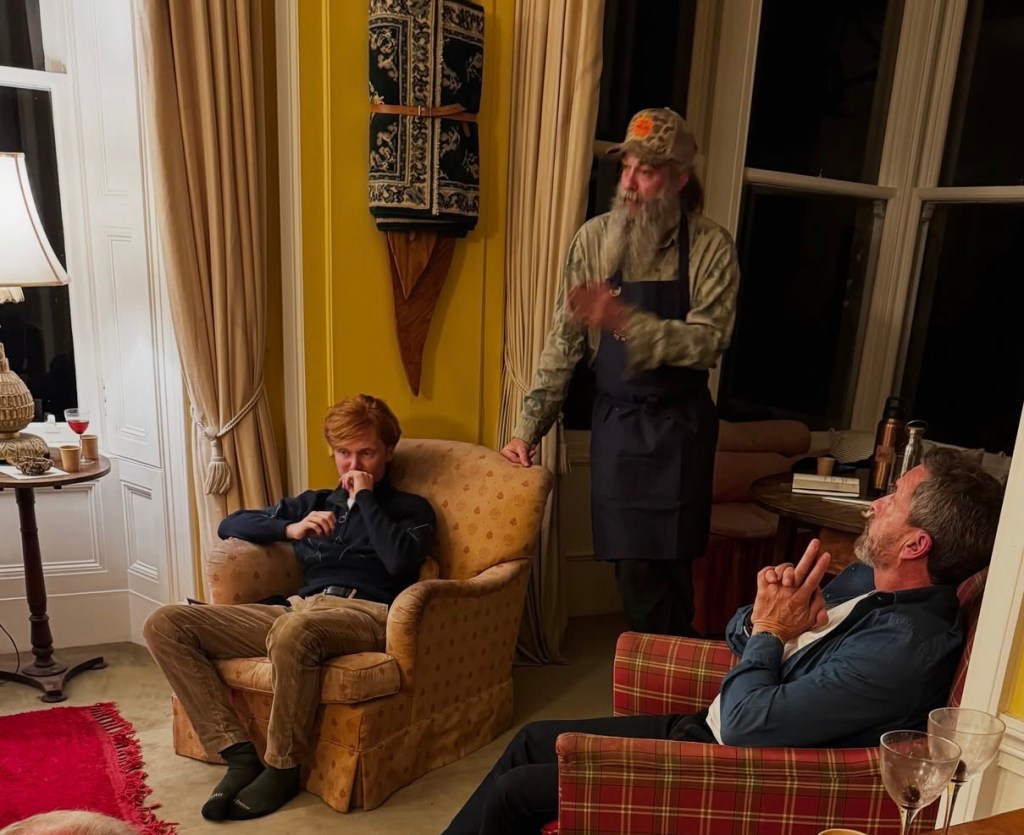
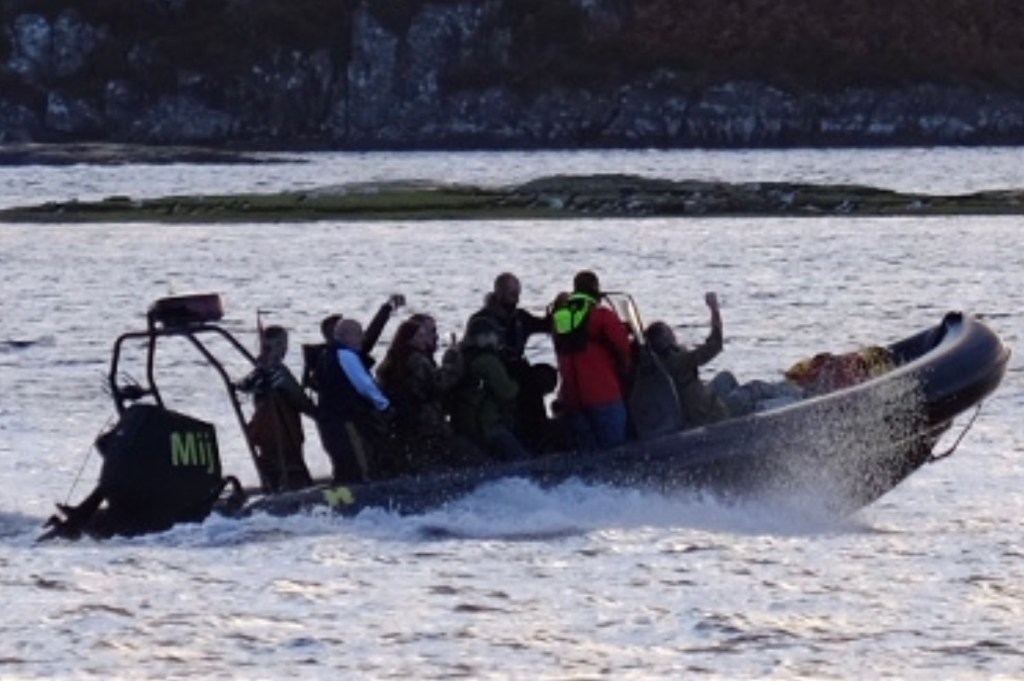
One of the more exciting moments of the evening was catching sight of the advance party involved in preparing our forthcoming Kitchen in the Wild adventure.

There they were, heading across the water, already engaged in the considerable business of getting everything ready for the main event, and what an event it promised to be.

Kitchen in the Wild had chosen Eilean Shona for its October 2026 Scottish adventure, bringing together a small group of food enthusiasts for several days of cooking, exploring and celebrating the extraordinary natural produce of Scotland’s west coast.

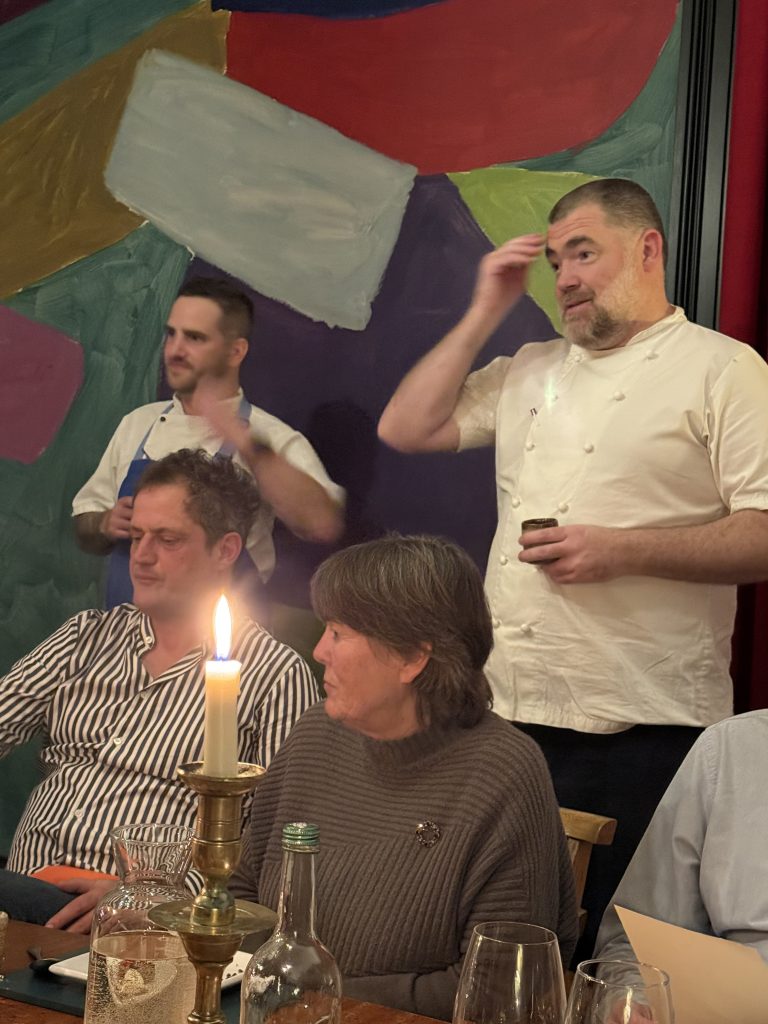
Joining host and chef Valentine Warner was special guest Nathan Outlaw, one of Britain’s most respected seafood chefs, whose two Michelin-starred restaurants in Port Isaac have established an exceptional reputation for allowing outstanding fish and shellfish to take centre stage.

The programme also included mixologist extraordinaire Nick Strangeway, co founder of the infamous St. John in London, Jon Spiteri and natural-history illustrator Anna Koska, alongside local guides and experts.

The prospect of exploring this remote island, surrounded by magnificent coastal scenery and an abundance of exceptional natural ingredients, had been occupying my thoughts ever since that original email landed in my inbox back in March 2025.

And now, seeing some of the team making their preparations, the whole thing suddenly felt very real indeed.

The anticipation was building.

Rather wonderfully, after travelling through thousands of years of Scottish history, I was now looking forward to something altogether more immediate.

What was for dinner?

And I suspected that, from this point onwards, things were going to become considerably more interesting.

The End of a Rather Extraordinary Wednesday

By the time I settled in at Loch Shiel Hotel for the evening, I had plenty to reflect upon.

I’d begun the day in Kilmartin, contemplating the lives and beliefs of people who had inhabited Scotland thousands of years before recorded history.

I’d crawled around beneath an ancient burial monument attempting to photograph prehistoric deer, wandered amongst enormous standing stones, explored a ceremonial landscape that had evolved over centuries and enjoyed an excellent seafood lunch overlooking Oban’s busy harbour.

Then came medieval strongholds, a ferry crossing, a village named after a chemical element and a magnificent drive through some of the finest scenery Scotland has to offer.

Not a bad day’s work.

And the weather, having started with what appeared to be a personal vendetta against my camera equipment, had eventually decided to cooperate. Kitchen in the Wild wasn’t due to begin until 4:30pm the following afternoon, which meant I still had the best part of Thursday to indulge my curiosity before joining everyone.

Naturally, I’d already planned how to fill it.

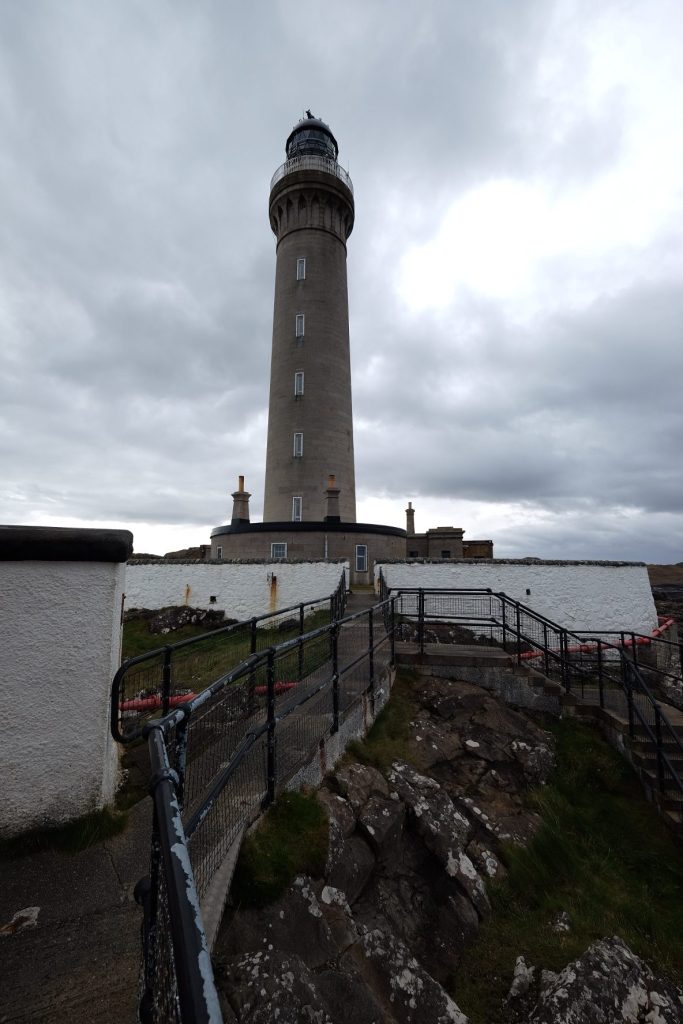
There was the small matter of a journey out to Ardnamurchan Lighthouse, perched at the most westerly point of mainland Britain, together with a few other places I’d earmarked during my research. After all, it would have been positively irresponsible to travel this far into the Highlands and not investigate a little further.

So, one more morning of exploration before exchanging the hire car and carefully printed itineraries for boats, island life, exceptional food and the company of a group of people who shared a common enthusiasm for all things edible. Nineteen months after that first email, the adventure I’d originally signed up for was almost upon me.

But first, there was a lighthouse to find.

And knowing Scotland, probably another opportunity to test the waterproofs.

…………………. Until Next Time ………….. L8ers …………….

A Little Bombay Before Several Thousand Years of Scotland (Part 2)

Day Two – Bombay Breakfast, Vikings and the Road to Ancient Scotland

After a thoroughly enjoyable first evening in Glasgow, Tuesday morning arrived, and with it the prospect of finally putting my meticulously researched Scottish itinerary into action. First, however, there was the rather important matter of breakfast.

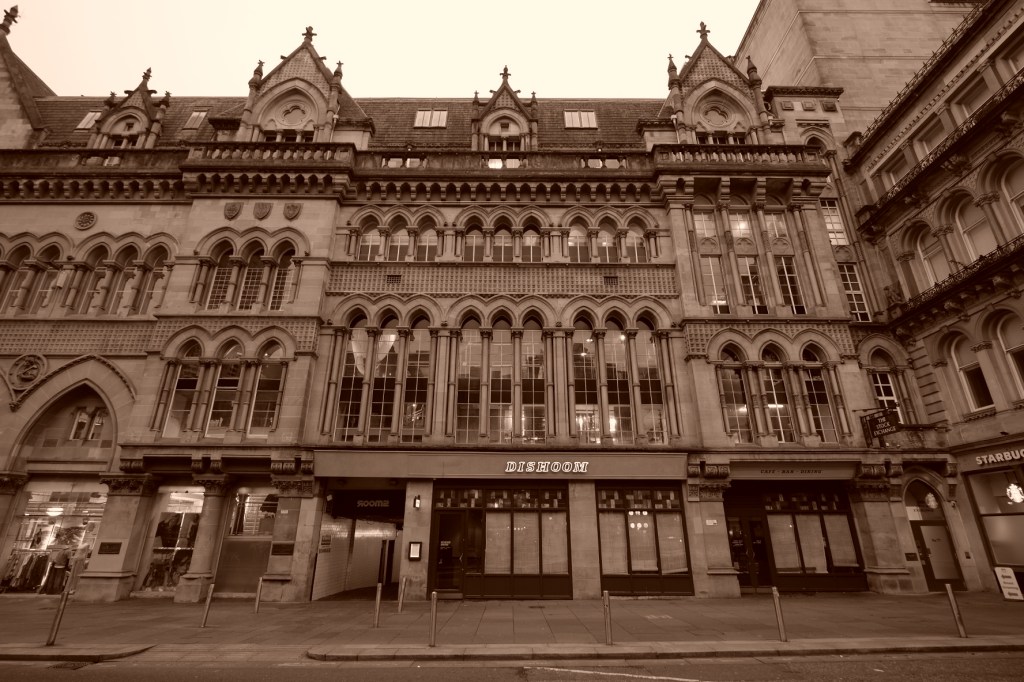
I’d already earmarked Dishoom, conveniently located around a 10-minute walk from the AC Hotel by Marriott. Their Bombay-inspired breakfast offering had caught my attention during my pre-trip research, and I thought it would make a splendid start to the day. I had purchased the book by the same title some time back and was thoroughly inspired by the stories within.

A little Indian influence in Scotland before heading off in search of prehistoric burial chambers, ancient standing stones and centuries of clan warfare. Why not?

Dishoom occupies part of Glasgow’s magnificent former Stock Exchange building, an extraordinary piece of Victorian architecture that makes quite an impression before you’ve even stepped through the door.

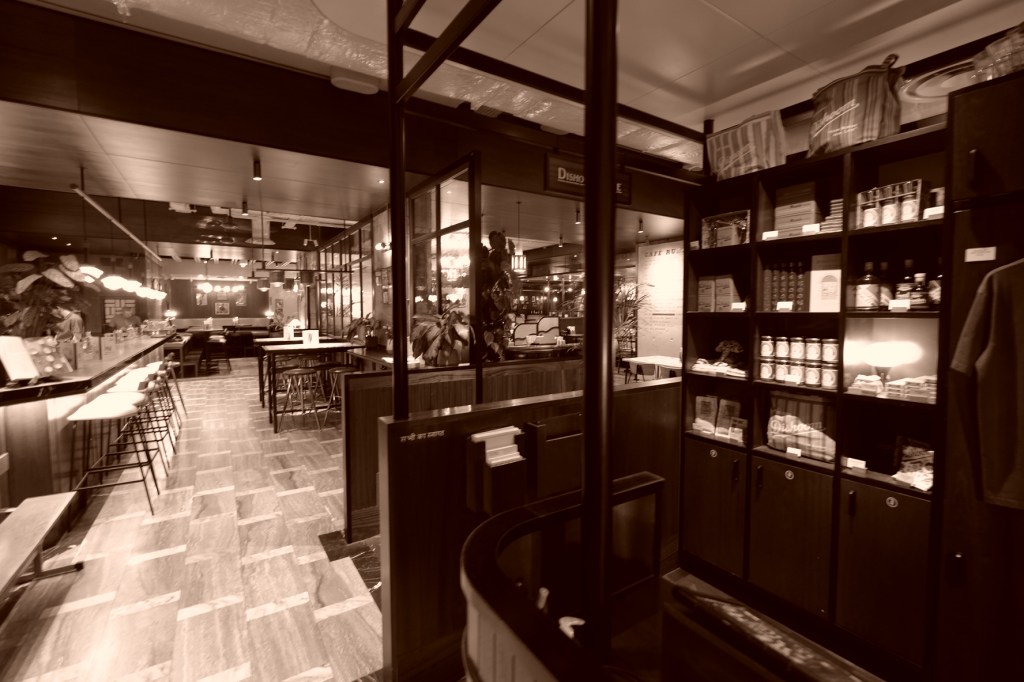
Inside, the atmosphere was warm and inviting, with its wonderfully eclectic mixture of old-fashioned furniture, patterned tables, framed photographs and the unmistakable character of a Bombay café.

Dishoom draws its inspiration from the Irani cafés that became such an important part of Bombay’s social and culinary history. Established largely by Persian immigrants, these were places where people from different communities and backgrounds could gather over tea, food and conversation. Once numerous, the original cafés have steadily declined in number, making Dishoom’s affectionate interpretation of them rather appealing. It certainly made a change from the usual hotel breakfast buffet.

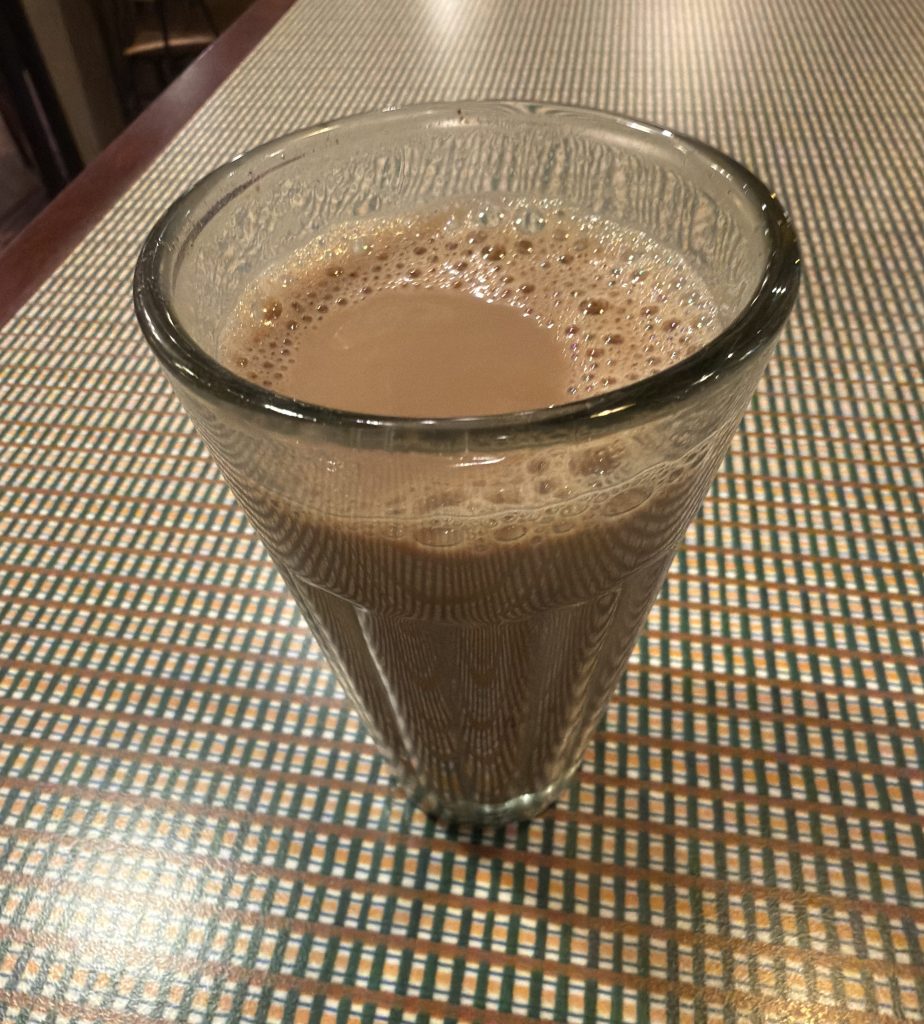
Naturally, there had to be chai.

Served in a simple glass, rich, warming and beautifully aromatic, it was just the thing to get the morning underway. There’s something wonderfully comforting about Indian chai, the combination of strong tea, milk, sweetness and warming spices producing a drink that feels considerably more indulgent than an ordinary cup of tea.

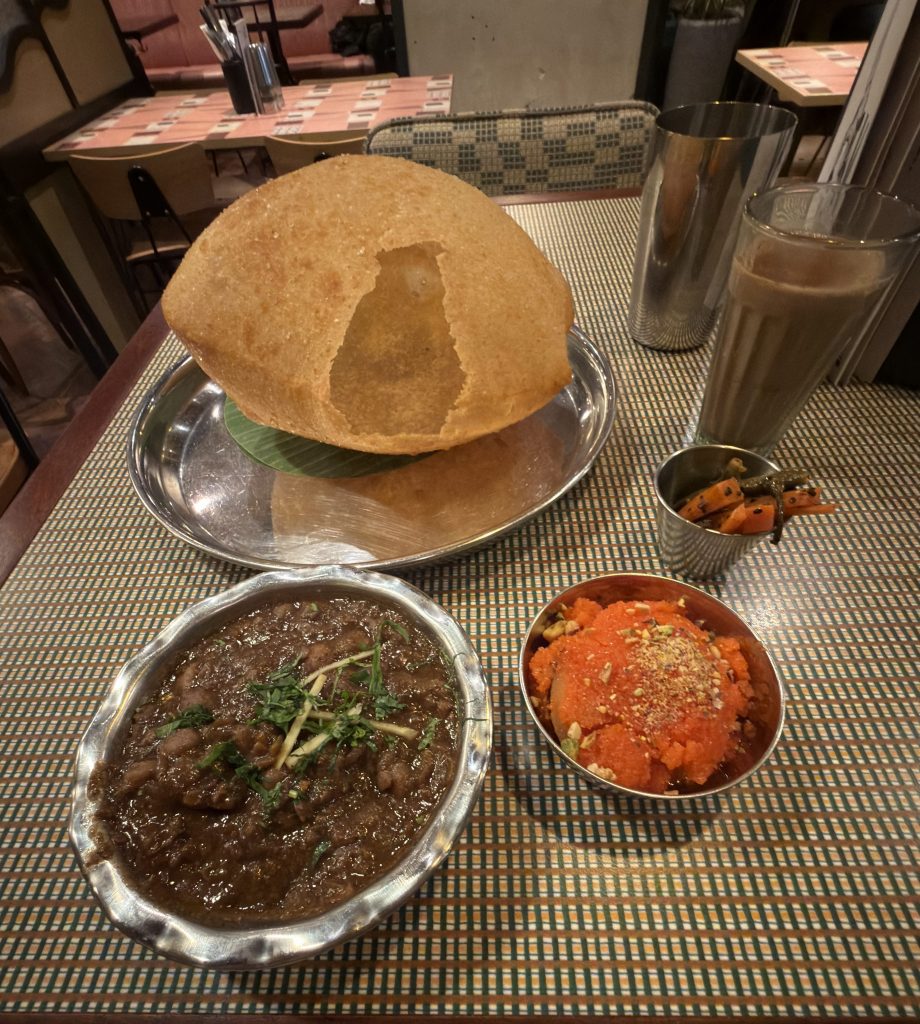
Breakfast itself was a wonderfully colourful affair. A richly spiced chickpea preparation, accompanied by a magnificent puffed puri, pickles and a portion of sweet halwa, Chole Puri Halwa, the chef’s favourite according to the menu.

The puri was quite a spectacle, arriving inflated like an edible balloon, its delicate golden shell practically demanding to be broken into.

The combination of savoury, spicy and sweet made for a rather interesting start to the day. A little of the chickpea curry scooped up with the bread, followed by something sweeter, another sip of chai, and suddenly the prospect of an ordinary bowl of cornflakes seemed deeply uninspiring.

Suitably fortified, it was time to turn my attention from Bombay to something rather older, as I was leaving a pristine paper cup was thrust in my hand, Chai to take-away, now that was service.

Glasgow Cathedral – Where the City’s Story Began

Suitably fortified by my rather splendid breakfast at Dishoom, it was time to check out of the hotel and get the adventure properly underway. A swift checkout was followed by the slightly less swift process of extracting the hire car from the multi-storey car park, whose narrow ramps and unforgiving concrete walls seemed designed to test both my driving skills and the limits of the rental insurance.

Car and driver eventually emerging unscathed, I set off for my next destination: Glasgow Cathedral.

This was somewhere I’d particularly wanted to explore. My pre-trip research into Scotland’s religious history, folklore and considerably darker past had revealed that Glasgow’s magnificent medieval cathedral had rather more stories to tell than its imposing architecture alone might suggest.

The cathedral is dedicated to St Kentigern, better known as St Mungo, Glasgow’s patron saint and a man whose story is an intriguing mixture of early Christianity, royal scandal and some fairly improbable miracles.

According to tradition, Mungo was born around the sixth century, the son of Princess Teneu (also known as Thenew), daughter of a British king, and a nobleman named Owain. His arrival into the world was apparently not universally celebrated. His mother, having become pregnant outside marriage, was condemned by her father and, according to later accounts, cast adrift in a boat without oars. Against considerable odds, she survived, eventually reaching the Firth of Forth, where Mungo was born.

Not perhaps the most conventional start to a distinguished ecclesiastical career.

The young Kentigern was subsequently raised under the protection of St Serf, traditionally associated with Culross, who is said to have given him the affectionate name Mungo, commonly interpreted as ‘dear one’.

He eventually travelled west, establishing a Christian community beside the Molendinar Burn, on the site associated with today’s cathedral. Around this early religious settlement, a community developed that would, over the centuries, become the great city of Glasgow.

But it’s the legends surrounding Mungo that make him particularly interesting.

His exploits are immortalised in Glasgow’s coat of arms, which features four rather unusual symbols: a bird, a tree, a bell and a fish carrying a ring in its mouth.

The bird represents a robin supposedly restored to life by the young Mungo after it had been killed by jealous fellow pupils. The tree recalls an occasion when he miraculously rekindled a sacred fire using a branch after the original flames had been extinguished. The bell is associated with his religious authority and a traditional story connecting it to Rome.

Then there’s the fish.

According to the legend, a queen of Strathclyde had lost a precious ring, which her suspicious husband subsequently demanded she produce. With her position becoming increasingly uncomfortable, she appealed to Mungo for assistance. He instructed a fish to be caught from the River Clyde, and there, rather conveniently, in the mouth of a salmon, was the missing ring.

A remarkable piece of divine intervention, although one suspects the salmon might have had a slightly different interpretation of events.

These stories survive largely through medieval religious biographies, most notably one written by Jocelin of Furness in the twelfth century, some 500 years after Mungo’s lifetime. They’re wonderful examples of Scotland’s early Christian folklore rather than events we can confidently establish as historical fact.

What is far more tangible is the magnificent cathedral itself.

Mungo is traditionally believed to have been buried here around AD 612, and his shrine became an important destination for medieval pilgrims. The great Gothic building we see today was developed largely during the twelfth and thirteenth centuries, with Bishop Jocelin initiating major expansion work in 1181.

Remarkably, Glasgow Cathedral is the only medieval cathedral on the Scottish mainland to have survived the Reformation with its principal structure intact, although its Catholic furnishings were subsequently removed.

So here I was, standing in a building whose origins stretched back to a sixth-century saint, whose supposed miracles still decorate the city’s official coat of arms, and whose final resting place helped give birth to Glasgow itself.

Not bad for a man whose career apparently began with resurrecting a robin.

And what a building it is.

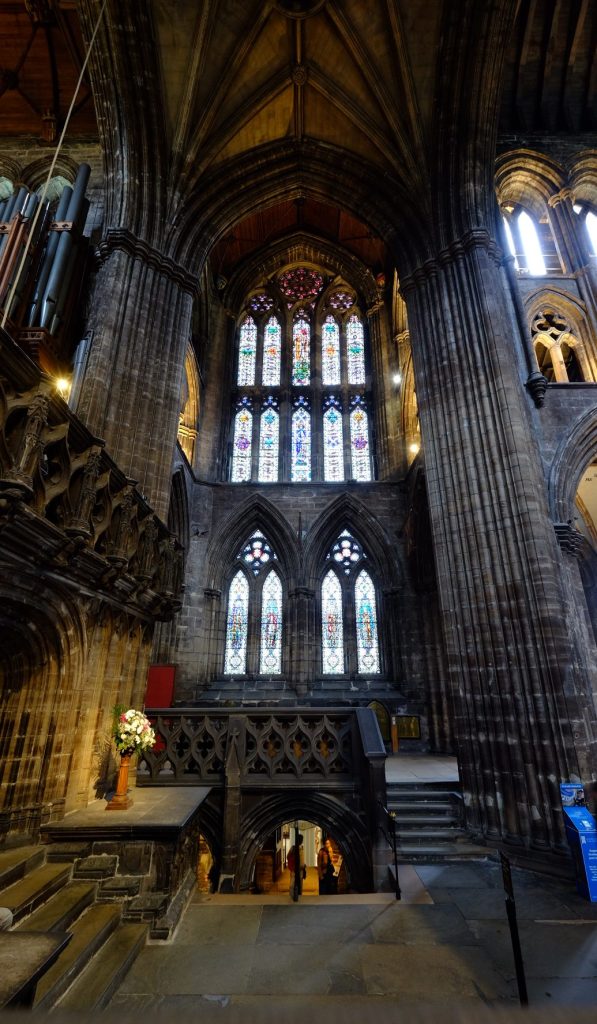
Stepping inside, your eyes are immediately drawn upwards. Great stone columns rise into pointed arches, intricate details emerge from the shadows and the sheer scale of the place makes you wonder quite how medieval craftsmen achieved such extraordinary results without the benefit of modern machinery.

What makes Glasgow Cathedral particularly remarkable is its survival. The Scottish Reformation of 1560 transformed the country’s religious landscape, bringing an end to papal authority and fundamentally changing the way people worshipped. Many medieval churches and cathedrals subsequently lost their furnishings, religious imagery and, in some cases, their very existence.

Glasgow, however, was fortunate. The cathedral survived substantially intact, although its Catholic furnishings and decoration did not escape the changes. Its continued use as a place of Protestant worship helped preserve one of Scotland’s finest examples of medieval Gothic architecture.

A rather impressive survivor, considering Scotland’s occasional enthusiasm for dismantling anything associated with the previous administration.

A Little Colour Amongst the Ancient Stones

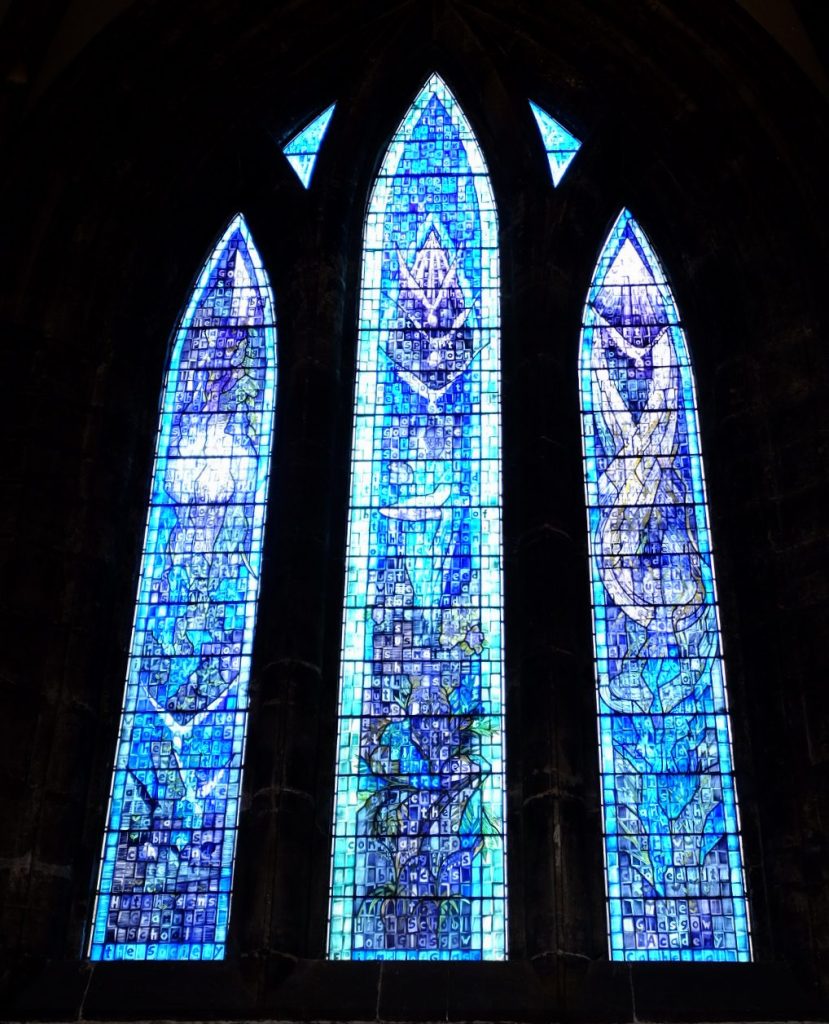
One of the things that particularly caught my attention was the stained glass. Set against centuries-old dark stonework, the extraordinary intensity of the colours creates an almost theatrical effect, especially when the light catches them.

Perhaps the most striking was a magnificent arrangement of brilliant blue windows, their modern design contrasting beautifully with the medieval architecture surrounding them.

Interestingly, much of the stained glass we see in Glasgow Cathedral today is relatively modern. The Reformation had swept away the medieval glazing, and although Victorian stained glass was introduced during the nineteenth century, much of this was subsequently replaced during the twentieth century.

The result is a fascinating combination of medieval craftsmanship and contemporary artistic expression, centuries apart but somehow entirely at home together.

I particularly liked the contrast. The building itself speaks of an age when faith was central to almost every aspect of daily life, while the windows demonstrate that even a cathedral approaching 900 years of age can accommodate something new.

Faith, Folklore and a Rather Dangerous Time to Be Different

My interest in Glasgow Cathedral wasn’t entirely architectural, however.

During the months leading up to this trip, I’d spent considerable time exploring Scotland’s darker religious history, particularly the relationship between Christianity, traditional folk beliefs and the persecution of those accused of witchcraft.

For centuries, Scotland’s communities had lived with a fascinating mixture of Christian teachings and much older beliefs. Fairies, healing charms, sacred wells, supernatural encounters and folk remedies were woven into everyday life, especially in rural communities. These weren’t necessarily regarded as contradictory beliefs by the people practising them. A person might attend church on Sunday and still seek assistance from a local healer, carry a protective charm or avoid a particular hillside after dark for fear of disturbing its otherworldly inhabitants.

Following the Reformation, however, religious authorities increasingly sought to regulate such practices, and the passing of Scotland’s Witchcraft Act in 1563 made witchcraft a capital offence.

The consequences could be devastating.

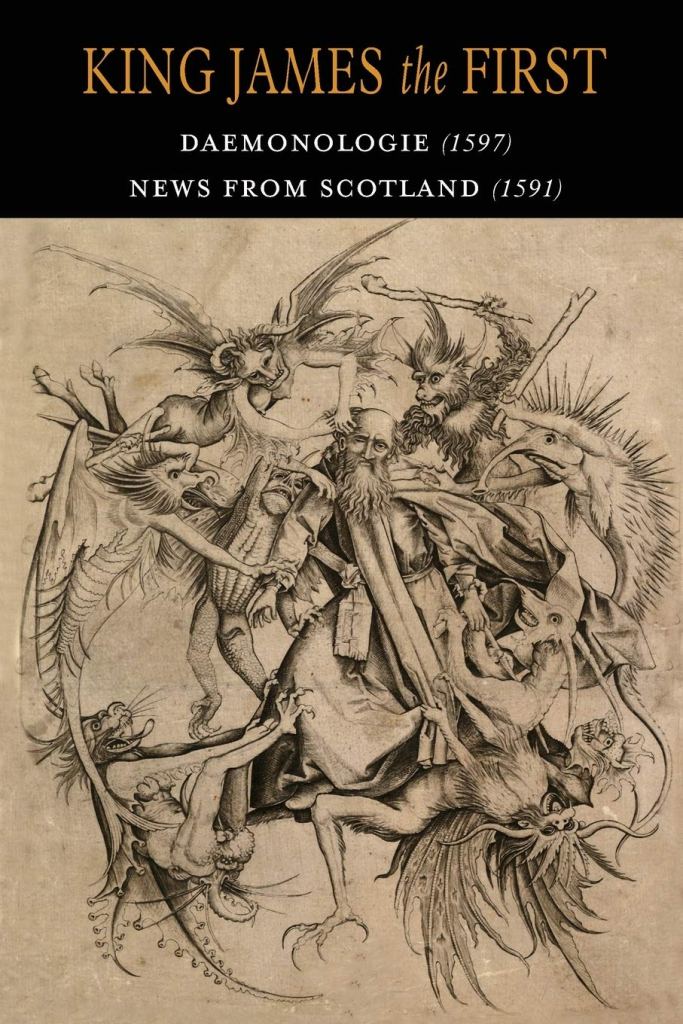
Scotland experienced several major periods of witch-hunting during the late sixteenth and seventeenth centuries. Accusations were frequently driven by local disputes, illness, misfortune, suspicion and fear, with women disproportionately represented among those prosecuted. Even King James VI developed something of an obsession with the subject, publishing his treatise Daemonologie in 1597, in which he argued for the reality of witchcraft and the need to suppress it.

An unfortunate time to fall out with the neighbours, particularly if your herbal remedies were more successful than the local physician’s.

Standing inside the cathedral, I found myself thinking about the extraordinary changes in belief that had taken place within these walls. The same building had witnessed medieval Catholic worship, the upheavals of the Reformation and the emergence of a very different religious Scotland.

And just outside, amongst the weathered gravestones, was a reminder that not everyone in sixteenth-century Glasgow was preoccupied with witches and the supernatural.

Some were attempting to drag medicine into the modern world.

Doctor Peter Low – A Man Ahead of His Time

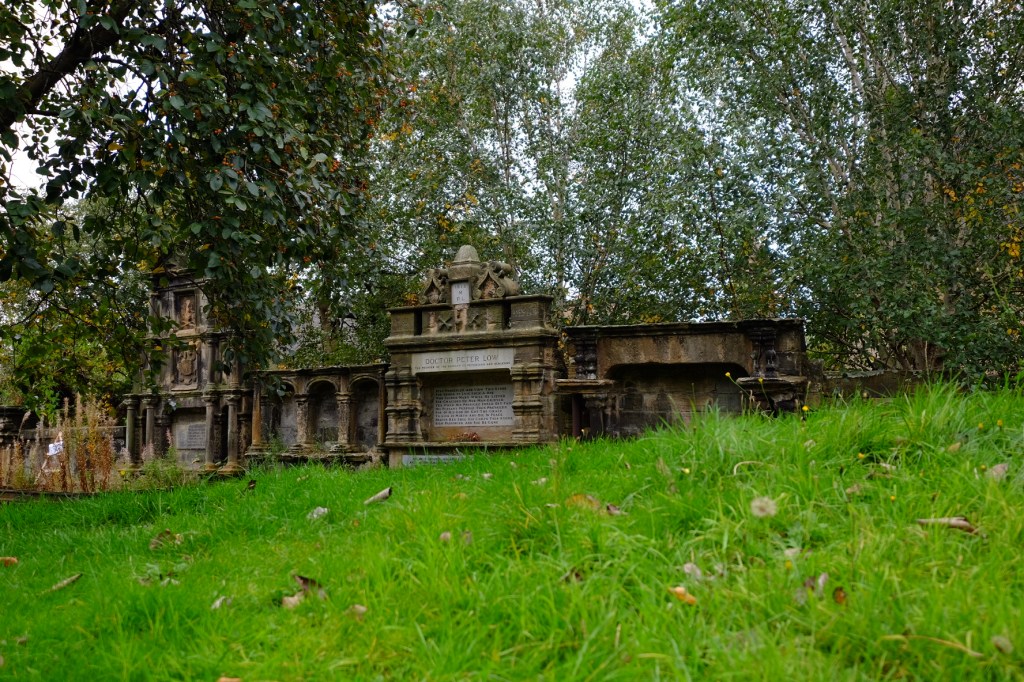
Among the monuments near the cathedral is an impressive memorial to Doctor Peter Low, a rather remarkable Scottish surgeon whose contribution to medicine deserves considerably wider recognition.

Born around the middle of the sixteenth century, Low spent time studying and practising surgery in France before eventually settling in Glasgow. In 1597 he published The Whole Course of Chirurgerie, an important surgical textbook that helped bring together contemporary medical and surgical knowledge in the English language.

Two years later, in 1599, he secured a royal charter from James VI establishing what would eventually become the Royal College of Physicians and Surgeons of Glasgow.

His ambition was to improve medical standards and ensure that those practising surgery and medicine were properly examined and qualified.

This was no small undertaking in an age when medical treatment could be something of a lottery, and the distinction between a trained practitioner, an enthusiastic barber and someone armed with a collection of questionable remedies wasn’t always reassuringly clear.

Low’s original organisation also had responsibility for examining and regulating practitioners, including surgeons and apothecaries, and its foundation represented an important step towards the professional medical institutions we recognise today.

His memorial is an intriguing survivor, tucked away amongst the older stones, and a reminder that Glasgow was developing a serious intellectual and scientific identity long before the Industrial Revolution transformed it into one of Britain’s great commercial cities.

What I particularly enjoyed was the historical contrast.

Here was a city in which religious authorities were grappling with witchcraft and supernatural beliefs while pioneering individuals such as Peter Low were simultaneously attempting to establish more rigorous standards in medicine.

Faith, fear, folklore and emerging science, all occupying much the same period of history.

Scotland in the sixteenth century was certainly never dull.

But fascinating as Glasgow had been, the clock was ticking. I still had an ambitious itinerary ahead of me, and after yesterday’s aviation-related disruption, I was determined to recover at least a little of my carefully prepared schedule.

It was time to leave the city behind.

Next stop, Dumbarton Rock, where the history was considerably older, the defences rather more imposing and the Vikings had once made themselves spectacularly unwelcome.

Leaving Glasgow – The Road to Dumbarton

With my exploration of Glasgow Cathedral complete, it was time to leave the city behind and begin the journey west.

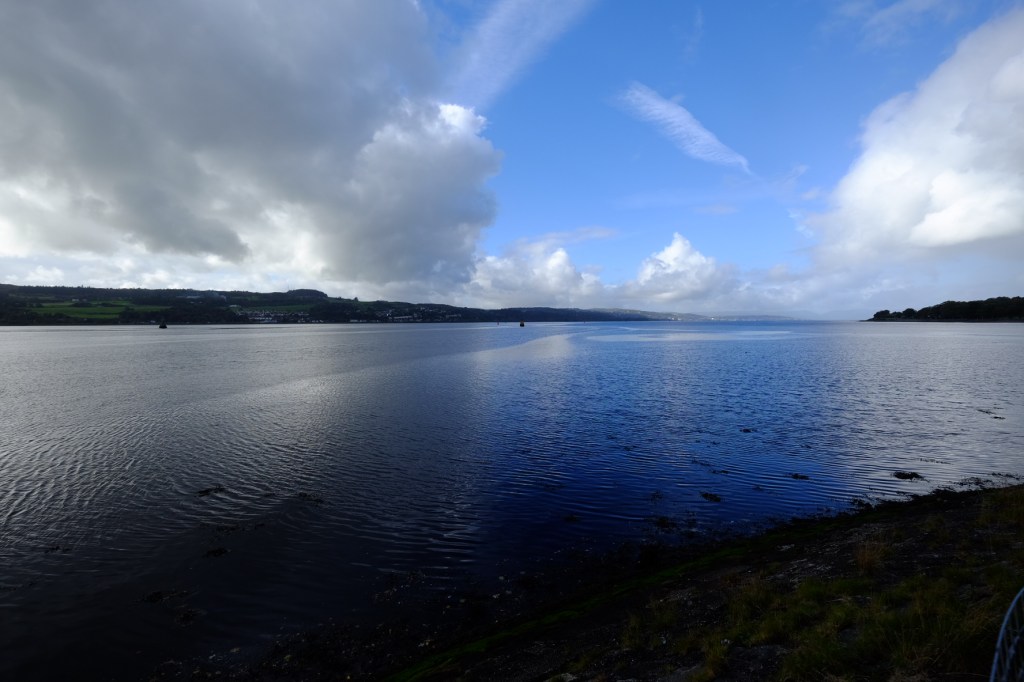
The drive towards Dumbarton provided a fascinating transition. Glasgow’s imposing Victorian buildings, busy streets and industrial heritage gradually gave way to a more open landscape, with the River Clyde becoming an increasingly prominent feature.

For centuries, the Clyde was the lifeblood of Glasgow’s prosperity. Its banks were once lined with shipyards, engineering works and heavy industry, producing some of the finest ships in the world. At its peak, the river was synonymous with Scottish industrial ambition, its shipbuilders helping Glasgow earn its reputation as the Second City of the Empire.

But heading west, the industrial landscape begins to soften. The river broadens, the surrounding hills become increasingly prominent and the sense of approaching a rather different Scotland begins to take hold.

And then, rising dramatically from the landscape, comes Dumbarton Rock.

It’s difficult to miss.

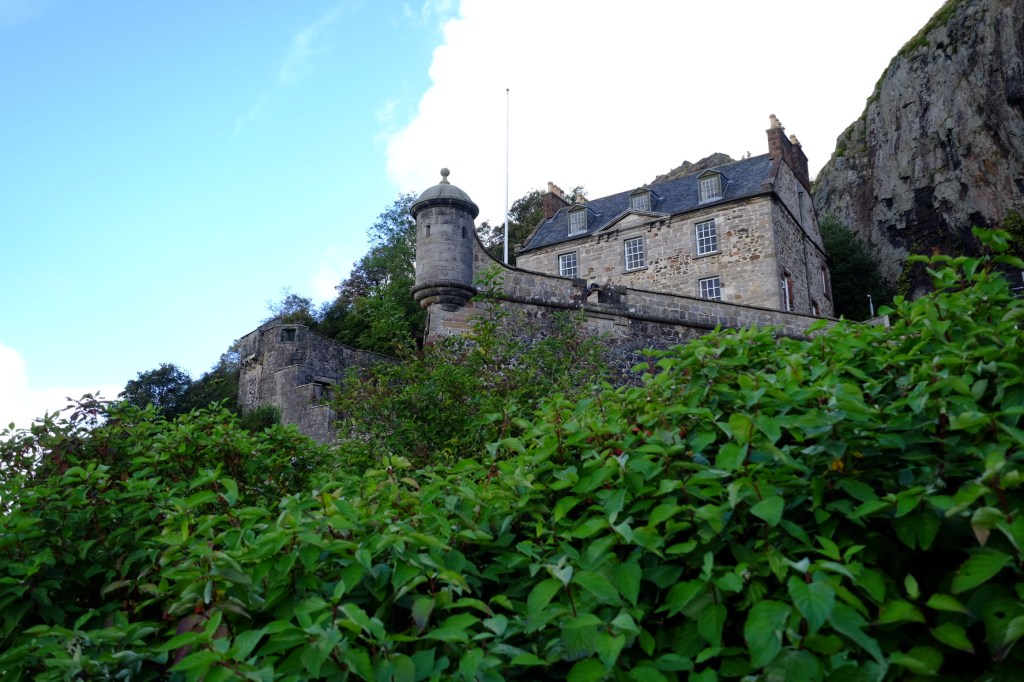
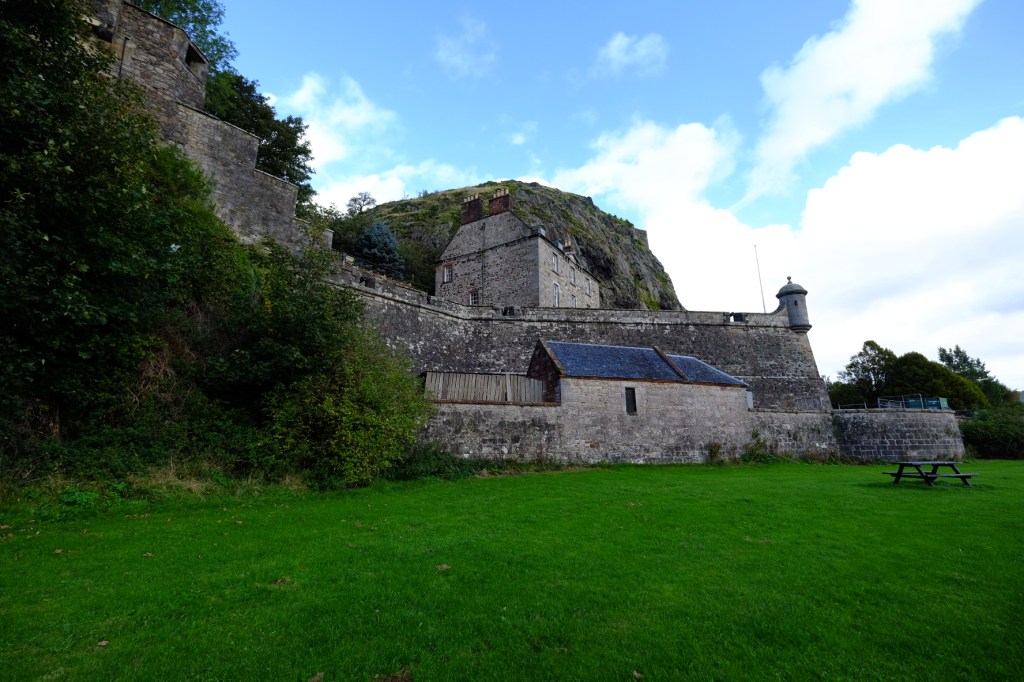
An enormous volcanic outcrop towering above the surrounding countryside, with the remains of one of Scotland’s most historically significant fortifications perched upon it.

Dumbarton Castle – Before Scotland Was Scotland

Dumbarton Rock is a remarkable place, and one I’d been particularly looking forward to photographing.

Long before the medieval castle was established, this great volcanic stronghold was known as Alt Clut, meaning ‘Rock of the Clyde’, and served as the principal fortified centre of the ancient Brittonic kingdom of Strathclyde.

Its position is extraordinary. Rising steeply above the confluence of the Rivers Clyde and Leven, the rock provided an almost naturally impregnable defensive position, commanding the surrounding landscape and an important route into Scotland’s interior.

In AD 870, however, even these formidable natural defences proved insufficient.

Viking forces led by Olaf and Ivar laid siege to Dumbarton Rock in an assault that reportedly lasted four months. Eventually the fortress fell, and according to contemporary Irish annals, the invaders returned to Dublin with an enormous quantity of treasure and captives, carried aboard a fleet said to number some 200 ships.

One can only imagine the reception committee.

The site subsequently became an important royal stronghold, with Alexander II developing the medieval castle during the thirteenth century as Scottish and Norwegian interests competed for influence along the western seaboard.

Its later history reads like a condensed account of Scotland’s political turbulence.

William Wallace was brought here following his capture in 1305 before being handed over to the English. In 1548, the five-year-old Mary, Queen of Scots, was sheltered within its defences before sailing to France. Then, in 1571, during the civil wars surrounding Mary’s reign, the castle was captured in an extraordinary night assault by Thomas Crawford of Jordanhill, whose men scaled the supposedly impregnable rock.

A Viking siege, medieval kings, William Wallace, Mary, Queen of Scots and an audacious military assault.

Not bad for one rather substantial lump of volcanic rock.

A Photographer’s Patience – Somewhat Tested

I was particularly keen to get a decent photograph of the castle, ideally capturing the great rock and its fortifications without too much modern-day interference.

Unfortunately, I wasn’t alone.

A group of people appeared to be conducting a dog-training session in precisely the area I had earmarked for my photographs.

Now, I have absolutely nothing against dogs. Or, for that matter, people training them. But I do have a particular dislike of people appearing in photographs of historic buildings, especially when I’m attempting to capture something that has stood for hundreds of years.

There’s something faintly irritating about composing a photograph of a magnificent medieval fortress, imagining Viking longships approaching along the Clyde, only to have someone in a fluorescent jacket wander into the foreground clutching a bag of dog treats.

Not quite the historical atmosphere I had in mind.

I spent a little time moving around, adjusting the composition and waiting patiently for suitable gaps in the canine activities.

Eventually, I managed to capture the views I wanted, although it did require rather more patience than I’d anticipated.

I suspect the Vikings had an easier time organising their invasion.

With Dumbarton duly photographed, it was time to continue the journey, there was, however, a small problem, I was getting hungry.

The Great Lunchtime Expedition – Or How Not to Find Lunch

I’d already identified a couple of potentially interesting places to stop for something to eat, so finding lunch shouldn’t have presented much of a challenge, famous last words!

The first was a Vietnamese establishment that had caught my attention during my research. I had visions of wonderfully fragrant broths, fresh herbs, perhaps a bánh mì with crisp pickled vegetables and a little chilli. Something light, interesting and full of flavour. Unfortunately, what I discovered bore rather little resemblance to the Vietnamese experience I’d been anticipating.

Burgers and baps appeared to be the order of the day.

Now, there’s absolutely nothing wrong with a decent burger, but when you’ve mentally prepared yourself for the flavours of Vietnam, a bap comes as something of an anticlimax, never mind, time for plan B.

The second establishment looked promising, and I approached with renewed optimism, only to discover that it was closed on Tuesdays, naturally, today was Tuesday.

Two attempts, no lunch!

For someone who’d spent months researching medieval castles, prehistoric monuments, Scottish folklore and the finer points of Highland clan warfare, my inability to locate a decent sandwich was becoming mildly embarrassing, clearly, the 55-page guide had overlooked something important.

Out came the phone for a little emergency culinary research, and before long I’d found something that looked considerably more promising. There was just one slight complication, it meant heading back towards Glasgow. Not exactly the most efficient use of a carefully constructed itinerary, but there are times when culinary considerations must take precedence over geographical common sense. Besides, I’d already lost Stirling Castle to yesterday’s fog. I wasn’t about to lose Tuesday’s lunch to a burger and a locked door.

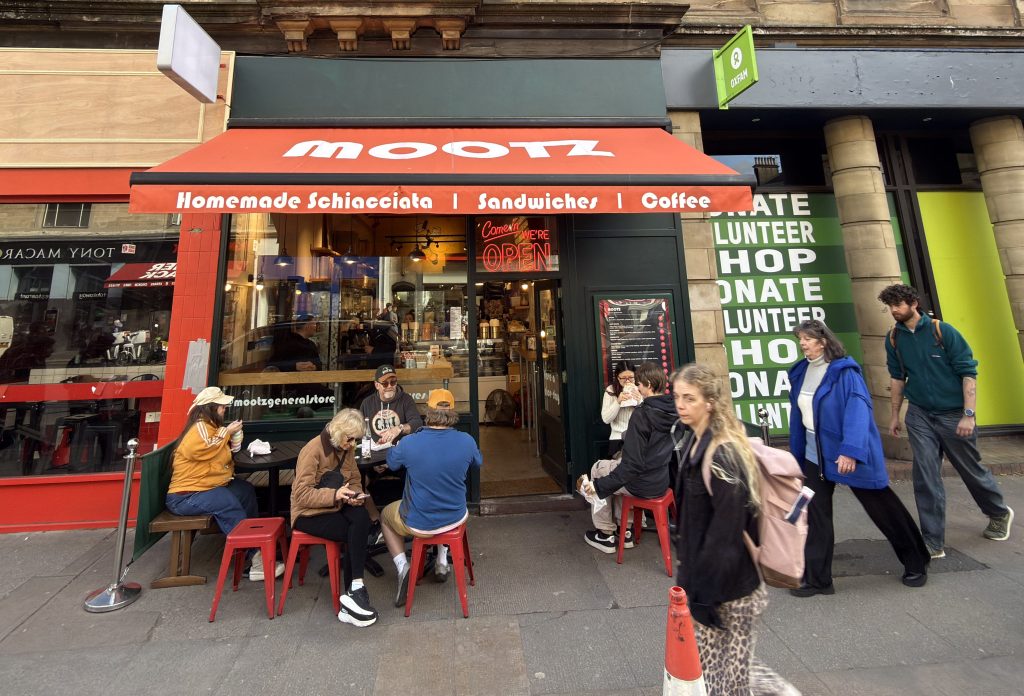
And that was how I discovered “Mootz”.

Mootz – Now That’s a Sandwich!

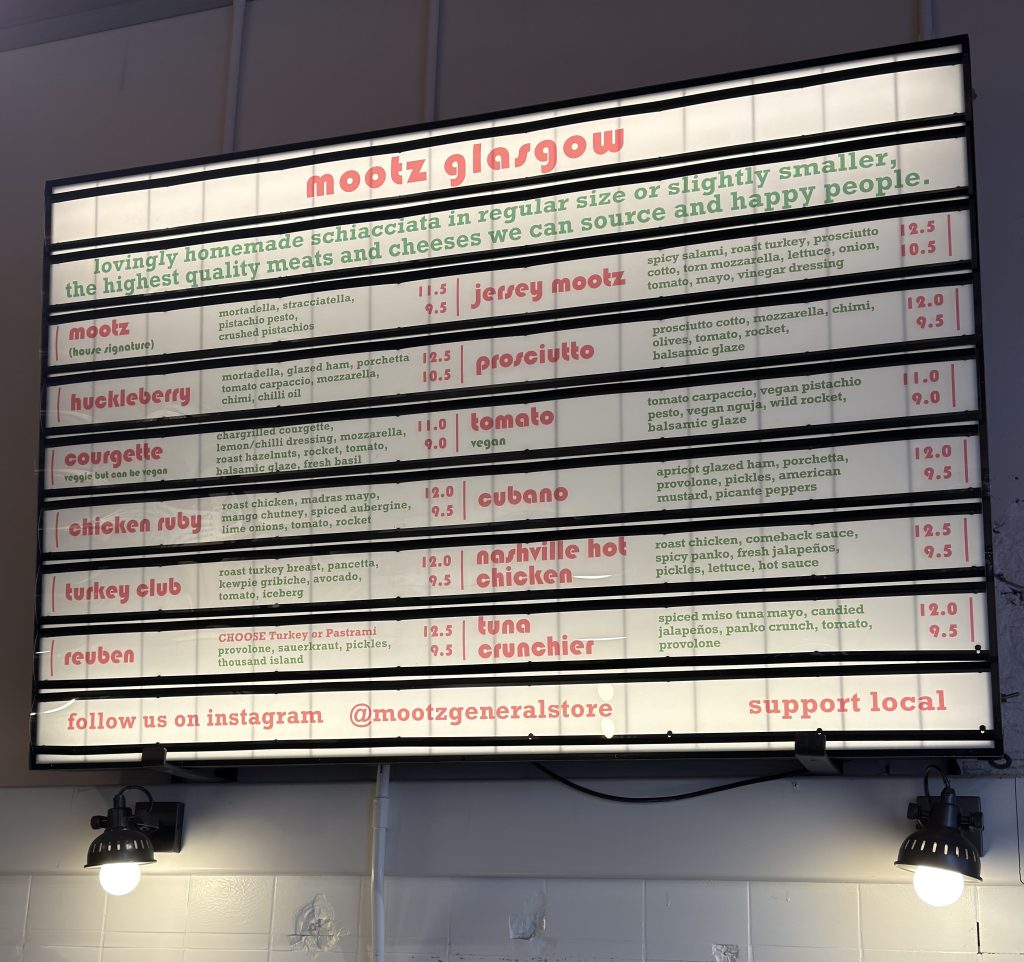
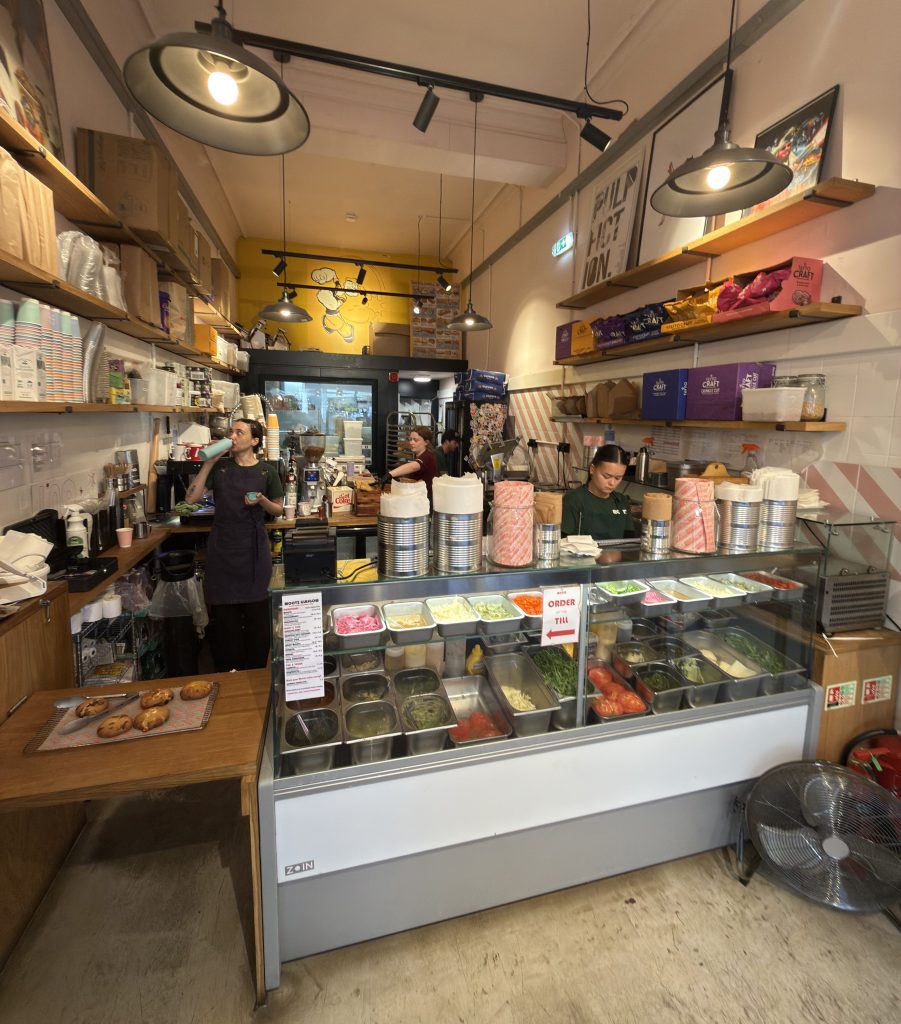
Mootz specialises in freshly prepared Italian “schiacciata” sandwiches, and one look at the menu suggested my little detour might prove rather worthwhile.

Schiacciata, originating in Tuscany, is a wonderful olive-oil-enriched flatbread, with a beautifully golden exterior and a light, airy interior. When made properly, it provides the perfect foundation for a generously filled Italian sandwich, and generous appeared to be something of a speciality here.

The menu was full of tempting combinations featuring mortadella, prosciutto, stracciatella, mozzarella, pistachio pesto and assorted other delicious ingredients.

The signature Mootz caught my attention: mortadella, stracciatella, pistachio pesto and crushed pistachios.

A beautifully simple combination, allowing the individual ingredients to shine. The richness of mortadella, the wonderfully creamy stracciatella and the distinctive nutty flavour of pistachio all wrapped in that magnificent bread.

It looked substantial, to say the least.

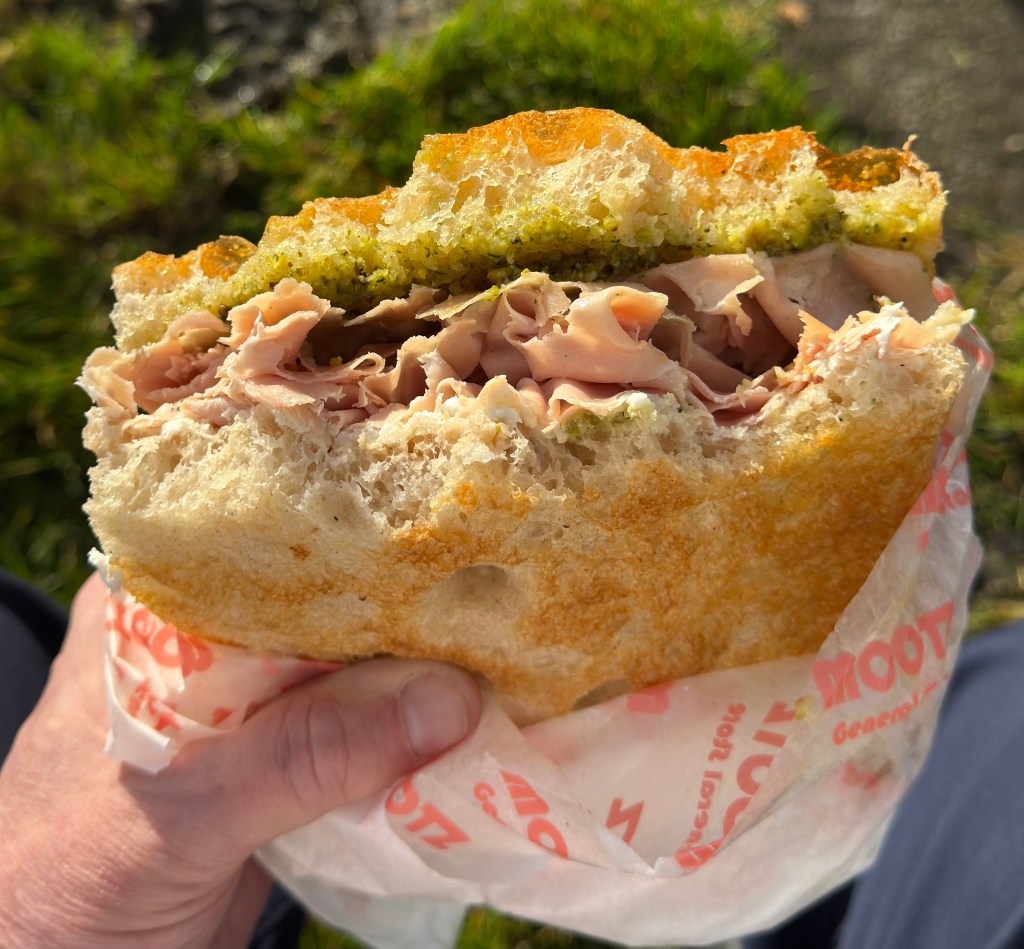
But, after considerable deliberation, I settled on the Huckleberry, a rather magnificent creation consisting of pistachio mortadella, apricot-glazed ham, porchetta, tomato carpaccio, mozzarella, chimichurri and chilli oil, all generously packed between two substantial slices of freshly baked schiacciata.

This wasn’t so much a sandwich as a carefully engineered construction project.

With my precious cargo safely aboard, it was time to leave Glasgow behind for the second time that day.

I had a particular destination in mind for lunch. Somewhere considerably more scenic than a city-centre pavement, and somewhere I could finally test another of my recent acquisitions.

My little portable espresso machine was about to earn its place in the luggage.

Loch Lomond – An Island with a History of Its Own

Heading north along the A82, the urban landscape gradually disappeared, replaced by wooded hillsides, distant mountains and increasingly impressive views across Loch Lomond.

The loch is the largest freshwater lake in Great Britain by surface area, extending for approximately 36 kilometres from its southern reaches towards the Highland mountains. Its character changes dramatically along its length. To the south, the water is broad and comparatively gentle, scattered with numerous islands, while farther north the mountains close in and the landscape takes on a much wilder appearance.

One island in particular had caught my attention during the pre-trip research.

Inchmurrin.

At approximately 120 hectares, Inchmurrin is the largest freshwater island in the British Isles, and, naturally, it has a rather interesting history.

Named after St Mirin, the early Christian saint associated with Paisley, the island was once an important possession of the Earls of Lennox. During the fourteenth century, a castle was established near its southern end, providing the powerful Lennox family with a secluded island stronghold. Its history became entangled with the political turbulence surrounding Scotland’s medieval aristocracy and the Stewart dynasty. The castle eventually fell into ruin, but its remains survive as another reminder that Scotland’s beautiful landscapes frequently conceal a more complicated past.

I rather liked the idea of an island within a loch, with its own castle, history and centuries of intrigue. And, of course, there was something particularly appropriate about encountering it while travelling towards another island altogether, Eilean Shona, where the culinary part of this adventure was still waiting for me.

But that was a few days away.

For now, I had lunch to consider, and the landscape was becoming increasingly spectacular.

Rest and Be Thankful – A Rather Appropriate Place for Lunch

Continuing along Loch Lomond towards Tarbet, I turned left onto the A83, heading west into the magnificent landscape of the Arrochar Alps. Here the road begins to climb through Glen Croe, winding between imposing mountain slopes towards one of Scotland’s most wonderfully named locations: the Rest and Be Thankful.

The name originates from the eighteenth-century military road constructed through the glen as part of a wider network intended to improve military access through the Highlands.

The old route involved a considerable climb, and travellers reaching the summit were encouraged to stop and appreciate their achievement. An inscription commemorating repairs undertaken by the 93rd Regiment in 1768 helped preserve the wonderfully simple sentiment.

Rest and Be Thankful

Considering the view, it seemed only polite to comply. This was where I finally stopped for my rather delayed lunch.

Surrounded by towering mountains, with the dramatic sweep of Glen Croe stretching away below, I unwrapped my magnificent Mootz sandwich.

And what a setting I’d chosen.

The landscape was spectacular, with great banks of cloud drifting across the mountains, occasional bursts of sunlight illuminating the slopes and the ever-present possibility of the weather deciding to provide a little additional entertainment.

After two failed attempts to find lunch, an unscheduled return towards Glasgow and rather more driving than anticipated, the sandwich tasted all the better for the effort.

The combination of ingredients was inspired. Delicate, silky mortadella provided a lovely richness, complemented by the sweetness of the apricot-glazed ham and the deeper, savoury character of the porchetta. Fresh mozzarella brought a welcome creaminess, while the finely sliced tomato added moisture and a little acidity to balance the cured and roasted meats.

Then came the chimichurri, that wonderfully vibrant herb-based sauce, cutting through the richness with its fresh, garlicky sharpness, while the chilli oil delivered a gentle background warmth.

And holding this magnificent collection together was the schiacciata itself. Golden and lightly crisp on the outside, wonderfully soft and airy within, with that distinctive olive oil character that makes good Italian flatbread such a pleasure to eat.

It was an absolute triumph of contrasting flavours and textures: rich, sweet, savoury, creamy, fresh and just a little spicy, with each ingredient contributing something rather than simply competing for attention.

Sometimes the simplest things are the most enjoyable.

Although I wasn’t quite finished.

Espresso in the Wild – The Inaugural Field Test

Now came another important moment in the adventure.

The first proper outdoor test of my new Outin portable espresso machine.

I’d bought this clever little rechargeable device specifically for the trip, imagining freshly made espresso in some wonderfully remote Scottish setting. Now here I was, surrounded by Highland mountains, armed with my GRIND coffee capsules and absolutely no need to locate a coffee shop.

For those unfamiliar with it, the Outin is a compact battery-operated espresso maker capable of heating water and extracting coffee without requiring mains electricity. It accepts compatible capsules or ground coffee, making it particularly appealing for travelling, camping or finding yourself miles from the nearest decent café.

A little water, a capsule, a press of the button and the machine set about producing a proper espresso.

There’s something immensely satisfying about enjoying good coffee somewhere like this.

No queue, no barista asking for your name and, perhaps most importantly, no paper cup informing you that you’re having an inspirational day.

Just an Italian sandwich, freshly extracted espresso and one of the finest views Scotland could offer.

Civilisation, I decided, is more a state of mind than a geographical location, the name of the viewpoint seemed particularly appropriate.

After my slightly ridiculous lunchtime expedition, I was indeed resting, and extremely thankful.

The Road to Kilmartin – Lochs, Puffers and Five Thousand Years of History

With lunch finally enjoyed and the coffee experiment declared a success, it was time to pack away my little mobile coffee shop and continue west.

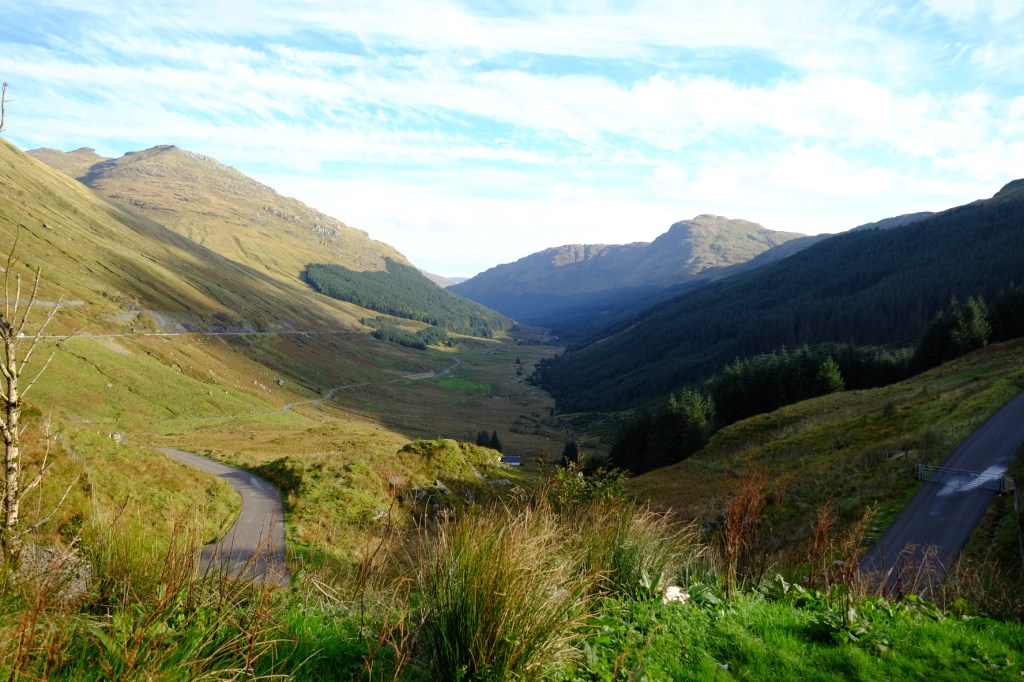
The road carried me deeper into Argyll, where the landscape seemed determined to become more spectacular around every corner. The towering mountains gradually softened into wooded hillsides, great stretches of water appeared between the trees, and the late afternoon sunshine was beginning to cast that wonderful golden light across the countryside.

I was also becoming increasingly aware that my camera was rather interfering with my carefully planned timetable. Every bend seemed to reveal another scene demanding attention.

Not that I was complaining.

A Brief Encounter with Loch Fyne

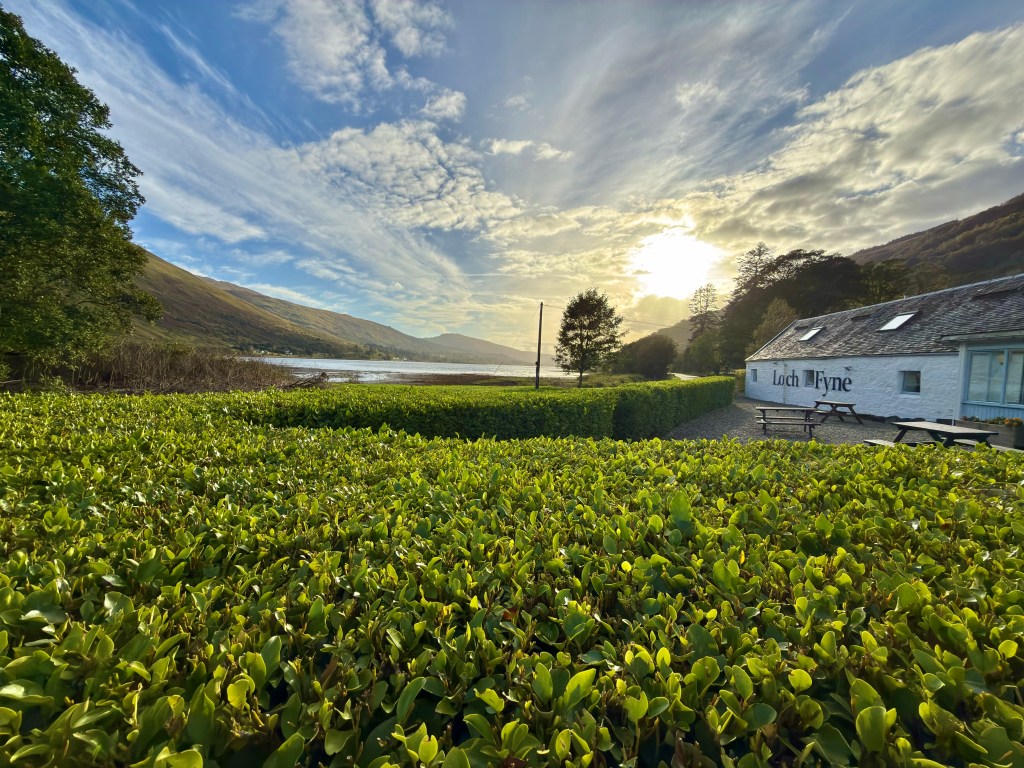
One particularly lovely stop was beside Loch Fyne, where I pulled in near the famous Loch Fyne Oyster Bar.

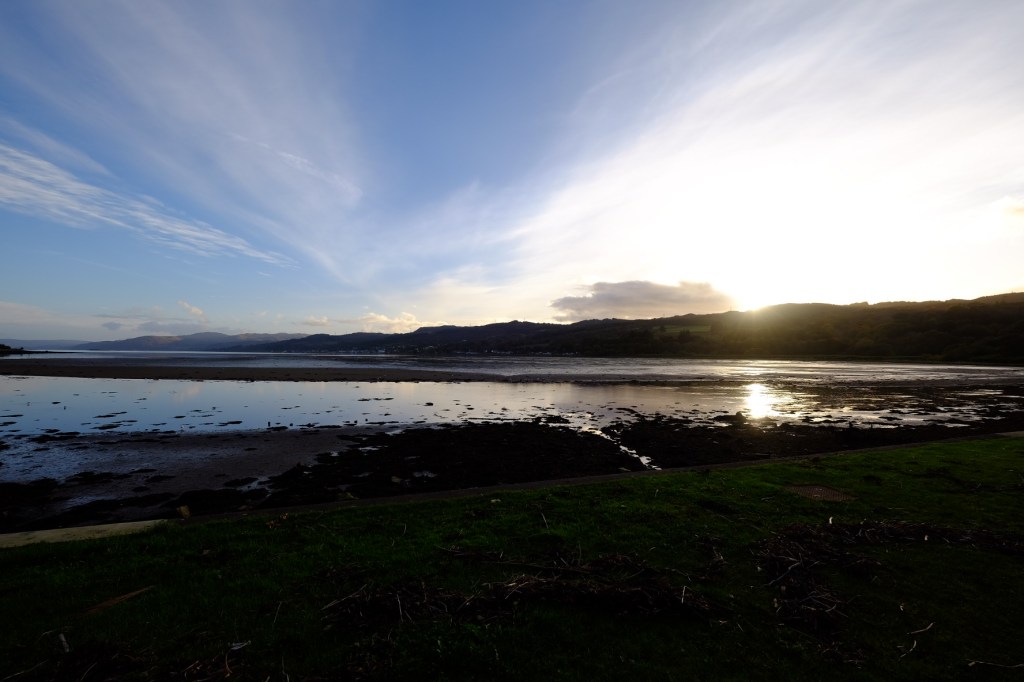
With the sun beginning to sink behind the surrounding hills, the view was magnificent. The loch stretched away into the distance, its waters reflecting the warm evening light, while great sweeps of cloud filled the sky overhead.

Loch Fyne is Scotland’s longest sea loch, extending for around 40 miles inland from the Sound of Bute. Its sheltered waters have long supported fishing and shellfish production, and its oysters are particularly celebrated.

The Loch Fyne Oyster Bar itself grew out of a small roadside business established in the late 1970s, helping bring the region’s exceptional seafood to a much wider audience.

Under different circumstances, this would have warranted a considerably longer investigation. Possibly involving oysters. Almost certainly involving something else from the menu.

Unfortunately, time was marching on, and having already travelled rather further than originally intended in pursuit of a sandwich, I thought it prudent not to embark on another culinary expedition.

A few photographs, a moment to enjoy the view, and I was on my way.

The Vital Spark – A Little Maritime Nostalgia

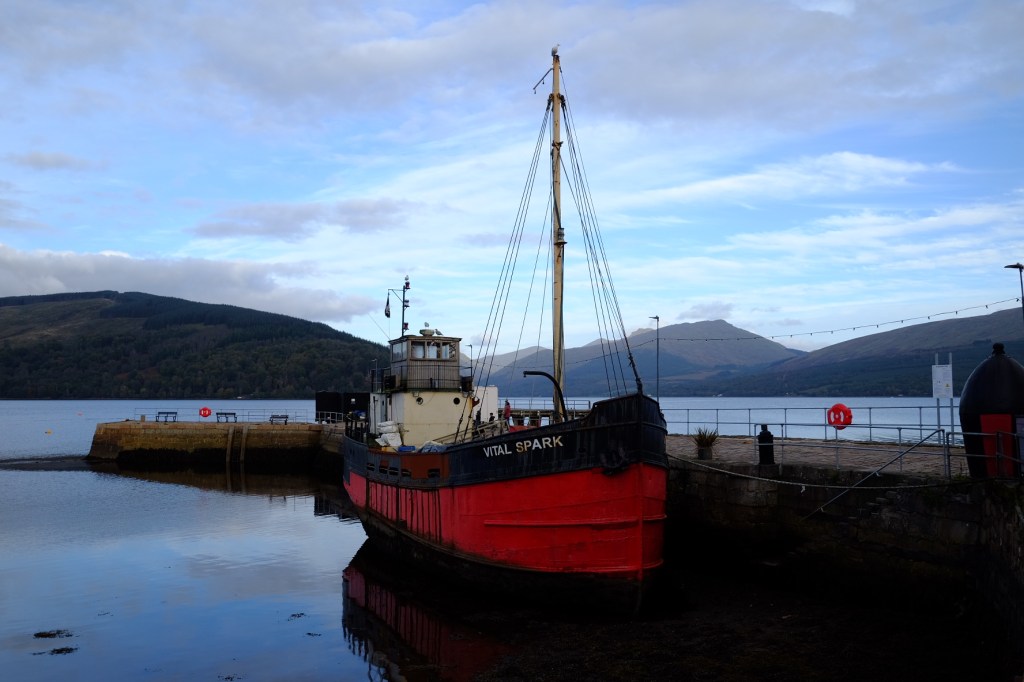
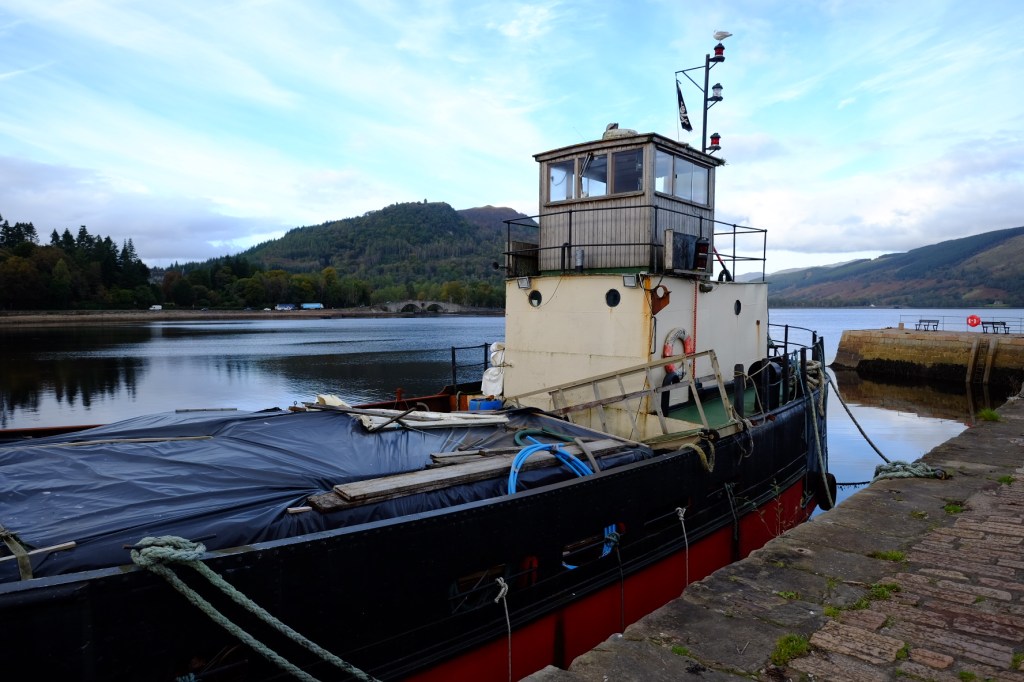
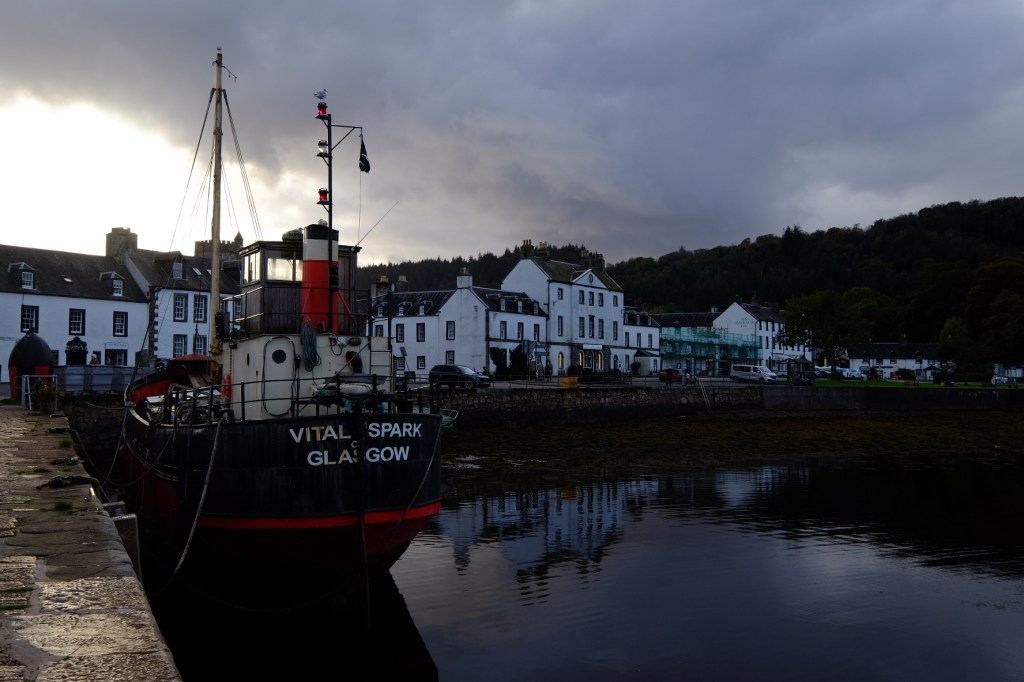
Continuing towards Inveraray, another unexpected photographic opportunity presented itself in the form of a wonderful old vessel named Vital Spark, her distinctive red-and-black hull standing out beautifully against the waters of Loch Fyne.

The name immediately evokes Scotland’s famous Clyde puffers, those sturdy little steam-powered cargo vessels that once carried essential supplies from the Clyde to the remote communities of the western Highlands and islands.

Coal, food, building materials, whisky barrels and almost anything else required by isolated settlements travelled aboard these remarkably versatile boats. Their shallow draught and flat bottoms allowed them to reach small harbours and even beach themselves where proper docking facilities were unavailable.

The puffers also became immortalised through Neil Munro’s fictional character Para Handy, the gloriously self-important skipper of the Vital Spark, whose adventures and frequent misunderstandings became a much-loved part of Scottish literature and television.

A captain whose confidence in his own abilities was, shall we say, not always entirely justified.

And this particular Vital Spark has quite a history of her own.

Built in 1944 as VIC 72, a wartime naval victualling vessel, she subsequently spent decades working as a cargo boat around Scotland’s western islands under several different names. Eventually brought to Inveraray in 2001, she was renamed Vital Spark in 2006 in honour of Neil Munro’s much-loved fictional puffer.

Although originally steam-powered, she was later converted to diesel, so she’s not quite the traditional steam puffer her appearance might suggest. Nevertheless, her working-boat character and distinctive profile make her a wonderful surviving reminder of the vessels that once provided a lifeline to Scotland’s remote coastal communities.

Not bad for a lady approaching her 82nd birthday.

There was something wonderfully atmospheric about her sitting quietly against the pier, with the wooded hills and calm waters of Loch Fyne providing a magnificent backdrop.

Quite how Para Handy would have coped with my increasingly revised itinerary is anyone’s guess, although I suspect he’d have found a perfectly reasonable explanation for every delay, preferably one that involved blaming somebody else.

And speaking of waterways, my next photographic diversion was waiting a little farther along the road.

Crinan – A Shortcut Through Scotland

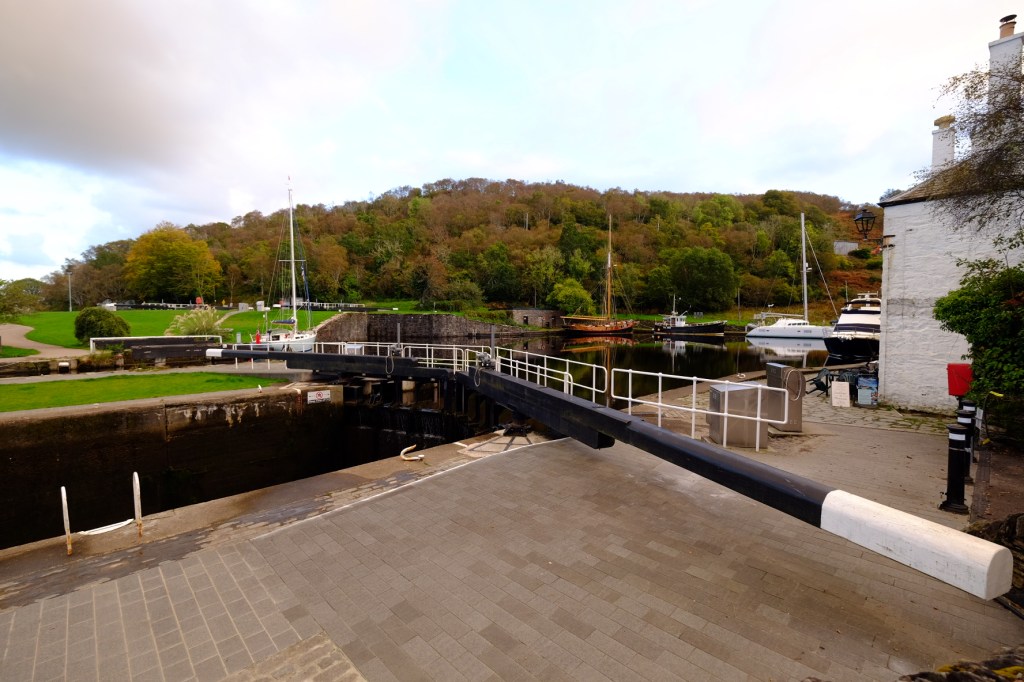
As the afternoon slipped towards evening, I made my way to Crinan, a beautiful little settlement overlooking the Sound of Jura and the western entrance to the Crinan Canal.

By now, the light was changing rapidly. The sky had taken on soft shades of gold and blue, the rocky shoreline was beautifully silhouetted against the water, and distant islands appeared almost suspended beneath the clouds.

It was the sort of scene that makes you forget you’ve been driving for most of the day.

The canal itself has a fascinating history. Designed by the great civil engineer John Rennie and opened in 1801, it provides a nine-mile navigable shortcut between Ardrishaig on Loch Fyne and Crinan on the Sound of Jura.

Before its construction, vessels travelling between the Clyde and the western islands faced the considerably longer and potentially hazardous journey around the Mull of Kintyre.

The canal, with its 15 locks, transformed that journey, becoming an important commercial route for fishing vessels, cargo boats and, later, the Clyde puffers.

Not surprisingly, it acquired the rather splendid description of Britain’s most beautiful shortcut.

Standing beside the quiet harbour, looking at the boats, old stonework and canal locks, it wasn’t particularly difficult to understand why.

There was a lovely stillness about the place. Boats rested in the sheltered basin, their masts rising against the wooded hills, while the old lock gates and surrounding buildings provided a glimpse of the canal’s working past.

After the bustle of Glasgow, the dog-training activities at Dumbarton and the unexpected lunchtime expedition, Crinan felt wonderfully peaceful.

I could easily have spent considerably longer here, exploring the shoreline and photographing the changing light, but there was one small problem.

I still hadn’t reached my hotel.

Kilmartin – At Last!

A short drive later, I finally arrived in Kilmartin.

And, almost on cue, the weather decided that I’d enjoyed quite enough sunshine for one day.

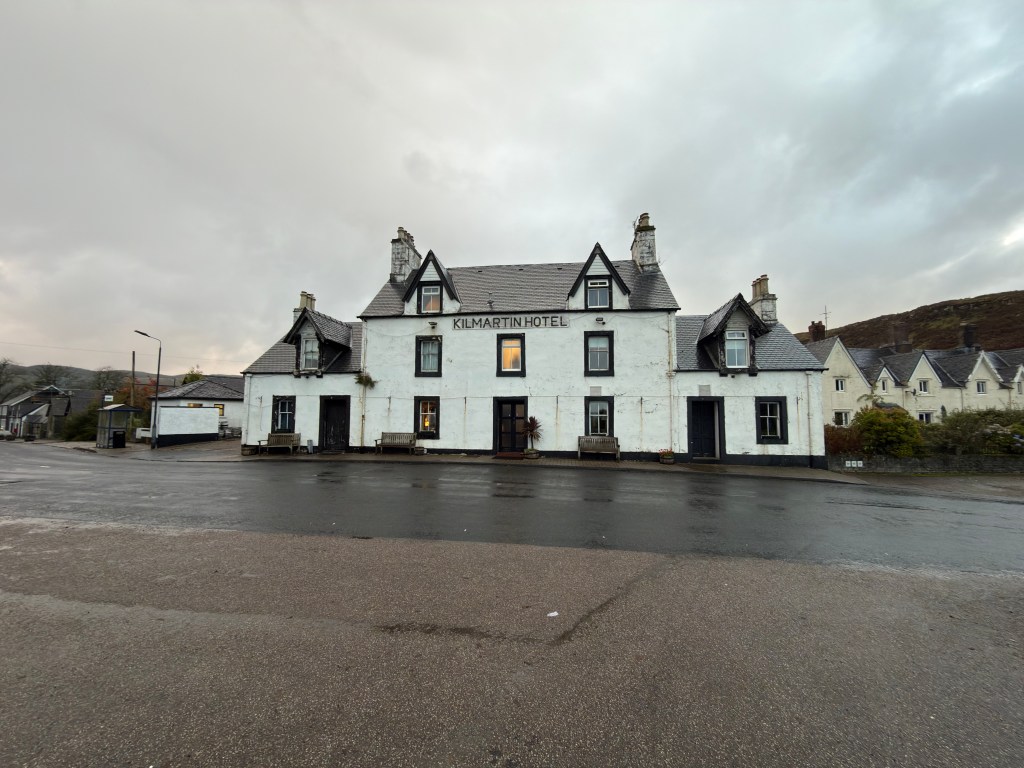
The sky had turned decidedly grey, the roads were wet, and there stood the wonderfully traditional white frontage of the Kilmartin Hotel, looking rather inviting after a long day’s travelling.

I’d made it.

The hotel sits in the heart of a landscape I’d spent months researching, surrounded by one of Britain’s most remarkable collections of prehistoric monuments. Within just a few miles are ancient burial cairns, standing stones, stone circles and mysterious cup-and-ring carvings, many dating back thousands of years.

There is also Dunadd, once an important royal centre of the Gaelic kingdom of Dál Riata, where a footprint carved into the rock is traditionally associated with the inauguration of early Scottish kings. From prehistoric ceremonial landscapes to the emergence of early Scottish kingship, an astonishing amount of history is concentrated in this relatively small corner of Argyll.

And here I was, finally in the middle of it.

After months of research, countless maps, historical investigations and enough printed material to suggest I was preparing a doctoral thesis rather than a holiday, the real exploration was about to begin.

There was, however, something rather satisfying about simply arriving.

Looking back over the day, I’d managed to squeeze in a Bombay-inspired breakfast, an extraordinary medieval cathedral, a pioneering surgeon, Viking invasions, a rather unsuccessful search for lunch, one magnificent Italian sandwich, an espresso overlooking the Highlands, Loch Fyne, a characterful old puffer and a beautiful evening beside the Crinan Canal.

Not bad for a Tuesday.

But the ancient stones, mysterious burial chambers and several thousand years of Scottish history would have to wait until morning. For now, I had a hotel to check into, a camera to put away and, quite possibly, a well-earned glass of something Scottish to contemplate.

Five thousand years of history weren’t going anywhere overnight.

At least, I sincerely hoped not.

………………… Until Next Time ………………. L8ers ………………………
Wild Scotland: Witches, Whisky, Ancient Stones & Michelin Stars (Part 1)

It all started in March 2025 with an email landing in my inbox. The subject line? Kitchen in the Wild. Now, that got my attention.

I’d been on one of their adventures to Norway back in 2023 and had an absolute blast, so naturally, I was intrigued. But this one promised something rather special. An island off the west coast of Scotland, with none other than Nathan Outlaw, a chef with two Michelin stars, joining us as a special guest. Well, things were looking interesting already!

Apparently, it had taken the organisers 15 months to track down the perfect location, and from the description, it sounded as though they’d struck gold. Remote enough to escape the modern world, with no light pollution, meaning skies bursting with stars. Wildlife in abundance, a forager’s paradise and a fisherman’s heaven. Scallops, crabs, oysters and lobsters, all practically queuing up to be ‘thermidored’.

A remote Scottish island, spectacular scenery, incredible seafood and a two-Michelin-starred chef thrown into the mix. What could possibly go wrong?

Or, more to the point, where do I sign?

One year and seven months later, departure day had finally arrived. Of course, I’d hardly been sitting around twiddling my thumbs in the meantime. What started as a simple idea to add a few days of exploration before the main event had developed into something of a historical obsession, culminating in a professionally printed, full-colour guide running to more than 55 pages. Some people buy a guidebook. Apparently, I have to write my own.

Scotland, as I was discovering, has rather more to offer than spectacular scenery, whisky and the occasional deep-fried Mars bar. Beneath those beautiful Highland landscapes lies a history that is as fascinating as it is frequently bloody. Ancient kingdoms, warring clans, ruined castles, witchcraft, superstition and enough murder and betrayal to keep a television scriptwriter employed for life. I was hooked.

My research had taken me down several rather unexpected rabbit holes. There were the great Highland clans, particularly the Campbells, MacDonalds and Stewarts, whose centuries of feuding, shifting allegiances and occasional enthusiasm for slaughter had helped shape the Scotland we know today. Then came the darker world of witchcraft and folklore: accusations of sorcery, fairy beliefs, folk healers and the persecution of supposed witches. Following Scotland’s Witchcraft Act of 1563, such accusations could carry the death penalty. An unfortunate time to be a little eccentric, particularly if your neighbours didn’t like you.

But perhaps the most intriguing discovery was Kilmartin Glen in Argyll, an extraordinary landscape where the story of human settlement stretches back thousands of years. Here, long before the Highland clans were fighting over castles and territory, prehistoric communities were constructing elaborate burial cairns, carving mysterious cup-and-ring symbols into rock and raising enormous standing stones. Some of these monuments are around 5,000 years old, older even than Stonehenge’s famous stone circle. Their precise purpose, and whether particular alignments held ceremonial or astronomical significance, continues to fascinate archaeologists. Whatever the answers, our ancestors were clearly up to something rather more ambitious than simply finding somewhere to park a large rock.

The more I read, the longer my list of places to visit became. Castles appeared on the itinerary, followed by ancient burial grounds, standing stones and sites associated with Scotland’s darker folklore. Before long, my modest little detour had developed into a full-blown historical expedition. I had maps, routes, background notes and enough printed material to suggest I might be planning an archaeological dig rather than a culinary holiday.

And so, with the research complete, the guides printed and a hire car waiting in Glasgow, the first few days were all mapped out. I would be heading west, into Argyll, following a trail through centuries of Scottish history before eventually making my way towards the remote island and the culinary adventure that had started this whole thing.

First, though, there were a few castles to investigate, some ancient stones to ponder and several thousand years of history to catch up on.

Nathan Outlaw and the lobsters would have to wait.

Monday Morning – Best-Laid Plans

It was five o’clock on Monday morning. My intended 3:30 start had somehow passed me by, and I stirred to check the time. Today was the day. A 10:10 flight to Glasgow and the culmination of months of planning, research and anticipation. I was excited, although perhaps not quite as organised as my meticulously prepared itinerary might suggest!

Fortunately, the taxi arrived on time, and I was soon heading towards Heathrow, looking forward to a few days of independent exploration before joining a group of like-minded people whose common passion was food.

The journey, however, had other ideas.

Unusual fog conditions had apparently scattered aircraft and their respective crews far and wide, resulting in our eventual arrival at Glasgow Airport more than two hours behind schedule.

Not a major disaster, you might think. But I’d put together a rather ambitious timetable of places to visit, with Stirling Castle first on the list. By the time I’d collected the hire car, it was obvious that Stirling would have to wait. I had a dinner reservation that evening, and there are some things in life that simply cannot be compromised.

A change of plan was required. Fortunately, Glasgow was somewhere I’d wanted to explore anyway, and with a little rearranging, I could still make something of the afternoon.

Chocolate, Coffee and Other Essentials

First on the revised itinerary was Bare Bones Chocolate, a small artisan chocolate maker in the heart of Glasgow that I’d first discovered watching Rick Stein on television. He’d visited their operation, been suitably impressed and subsequently cooked using their chocolate. Naturally, this warranted further investigation.

I’d already sampled some through mail order and was rather taken with it, so the opportunity to visit in person was too good to miss.

Founded by Cameron and Lara, Bare Bones is a fascinating little business built around a simple philosophy: exceptional chocolate begins with exceptional cacao, and the people who grow it deserve just as much consideration as those who eventually get to eat it.

Their approach is genuinely bean-to-bar, meaning they undertake the entire chocolate-making process themselves, starting with the raw cacao beans rather than buying in ready-made chocolate to melt down and repackage. Everything is produced in their Glasgow workshop in small batches of around 30kg, with an almost obsessive attention to detail.

Cameron, a mechanical engineer by background, has even modified and developed some of the equipment used in production, including a Giesen coffee roaster adapted specifically for cacao. There’s something wonderfully appealing about that level of dedication.

And then there’s the cacao itself.

Rather than blending beans from numerous unidentified sources to achieve a standardised chocolate flavour, Bare Bones celebrates single-origin cacao, allowing the distinctive characteristics of individual growing regions to shine through. Much like wine or speciality coffee, the variety of cacao, where it’s grown, the surrounding environment and how it’s fermented and dried all influence the finished flavour.

Take their Madagascan chocolate, for example. The beans originate in the Sambirano region in the northwest of Madagascar, where cacao grows beneath the shade of tropical fruit trees. The resulting 70% dark chocolate has distinctive fruity characteristics, with notes of raspberries, cherries and maple syrup.

Their Honduran milk chocolate, meanwhile, offers something quite different, with flavours reminiscent of raisins, fudge and double cream. Then there’s cacao from the Dominican Republic, where Bare Bones works with beans supplied through ÖKO Caribe, an organisation supporting farmers through agricultural training, improved growing practices and more stable prices.

This is chocolate with provenance, character and a story behind it, rather than simply a percentage printed on a wrapper.

The production process is equally interesting. After roasting, the beans are cracked, their outer husks removed and the remaining cacao nibs slowly ground with a little cocoa butter and sugar in a traditional stone grinder known as a melanger.

This process can take up to 72 hours, gradually refining the texture and mellowing some of the sharper flavours. The chocolate is then allowed to age for two or three weeks before being tempered, giving the finished bar that lovely glossy appearance and distinctive snap when broken.

Rather more involved than opening a large bag of chocolate buttons!

Environmental responsibility is also clearly part of their thinking. Their cacao is sourced from farms and cooperatives, with an emphasis on organically grown produce and relationships that recognise the importance of the growers. In Madagascar, for instance, the cooperative supplying their cacao has been involved in initiatives encouraging shade-grown cultivation, protecting the surrounding rainforest habitat and reducing soil erosion.

Even the packaging has been carefully considered. The colourful outer boxes are produced from recycled paper, including recycled coffee cups, while the inner wrappers are plant-based and compostable. All their packaging is designed to be recyclable or compostable after use.

I rather like that. If you’re going to produce something special, why not consider the whole journey, from the farmer growing the cacao to the wrapper left behind after you’ve thoroughly enjoyed the contents?

Another attraction, particularly for a dark chocolate enthusiast like myself, is their refreshingly short ingredient lists. No soya lecithin, vegetable fats or unnecessary additives, just carefully selected ingredients and a great deal of patience.

Dark chocolate also has another interesting attribute. Cocoa contains naturally occurring plant compounds called flavanols, which have been studied for their effects on blood vessel function and circulation. Although the quantity retained varies considerably depending on how chocolate is processed, I feel this provides an entirely reasonable scientific justification for enjoying a square or two of particularly good dark chocolate.

Possibly three. Best not to leave the research half-finished. There was, however, another reason for my interest.

For this adventure I’d acquired an Outin rechargeable portable espresso machine, a rather clever little battery-operated device capable of producing a very respectable espresso without the need for a kitchen, mains electricity or a barista. Perfect for a trip involving remote Scottish landscapes.

My plan was to pair some excellent single-origin chocolate with a freshly extracted espresso, preferably somewhere overlooking a magnificent Highland loch. I’d also packed some home-compostable Nespresso-compatible pods from GRIND, having enjoyed their coffee in the Heathrow business lounge earlier that morning.

Wilderness is all very well, but there’s absolutely no reason to lower one’s standards.

Glasgow – A City with a Rather Colourful Past

Chocolate interests satisfied, I continued exploring.

One of the things that had become apparent during my pre-trip research was just how much history lies beneath the surface of Glasgow. The city is perhaps better known for its industrial heritage, magnificent Victorian architecture and mercantile wealth, but dig a little deeper and there’s a considerably darker, and occasionally rather amusing, story waiting to be discovered.

Glasgow Cross was a particularly interesting place to start.

Dominating the junction stands the magnificent seven-storey Tolbooth Steeple, dating from the 1620s and now standing somewhat forlornly on its own. Originally, it formed part of a much larger building housing the Town Clerk’s office, council chambers, courts and city prison.

It was, in effect, the administrative and judicial heart of Glasgow, where civic decisions were made and justice dispensed. Sometimes rather enthusiastically.

Witches, thieves and murderers all passed through the Tolbooth’s judicial machinery, with public executions forming a particularly grim chapter in the city’s history.

Not everyone incarcerated there had an entirely miserable time, however.

The debtors apparently developed something resembling an exclusive gentlemen’s club, electing their own ‘provost’ and establishing rules governing their little community. They even attempted to prevent the jailer from admitting anyone they considered unsuitable.

One regulation from 1789 required prisoners fortunate enough to regain their freedom to treat their fellow inmates to a shilling’s worth of liquor.

Imagine being released from prison only to discover you still had to buy everyone a round before you could leave!

Outside the Tolbooth, the paved area known as the ‘plainstanes’ became a fashionable gathering place for Glasgow’s wealthy merchants, particularly the Tobacco Lords. These gentlemen, enriched by Glasgow’s transatlantic tobacco trade and its connections to the economy of slavery, were apparently rather fond of displaying their prosperity, parading around in scarlet cloaks, powdered wigs and carrying gold-topped canes.

Subtlety clearly wasn’t fashionable.

Glasgow Cross was also a major communications and transport hub, with stagecoaches arriving from Edinburgh and London, bringing travellers, newspapers and news from the wider world.

As Glasgow expanded westwards, the old Tolbooth gradually lost its importance. The remaining main building was finally demolished in 1921, leaving its extraordinary steeple standing alone, a reminder of the days when Glasgow Cross was the beating heart of the city.

A City That Wears Its Art on Its Walls

Wandering through the surrounding streets, something else caught my attention: Glasgow’s remarkable collection of street art.

Now, I appreciate that graffiti can be a divisive subject, but some of what I encountered was on an entirely different level. Huge, colourful murals occupied entire sides of buildings, transforming otherwise unremarkable streets and forgotten corners into an enormous open-air gallery.

What began as a Glasgow City Council initiative in 2008 to brighten neglected spaces developed into something considerably more ambitious, with the official City Centre Mural Trail launching in 2014.

Artists including Smug, Rogue One and Ejek have helped establish Glasgow as a city where art isn’t necessarily confined to galleries, museums or somewhere requiring an admission ticket.

One of the most striking examples is Smug’s extraordinary depiction of St Mungo, Glasgow’s patron saint, on High Street. The saint is portrayed as a modern-day figure holding a robin, a reference to one of the miracles traditionally associated with him.

Elsewhere, an enormous girl peers through a magnifying glass on Mitchell Street, while a magnificent collection of Scottish wildlife occupies a building on Ingram Street.

There’s humour here, but also history and some powerful social commentary.

The Strathclyde University Wonderwall, covering more than 1,000 square metres, celebrates the university’s achievements, while another mural pays tribute to Charles Rennie Mackintosh, one of Glasgow’s most celebrated creative talents.

Other works carry a more contemporary message. Bow Down, Honour the Roots, created by the Fearless Collective during the COP26 climate conference in 2021, depicts Indigenous people from the Amazon alongside imagery celebrating cultural identity and environmental protection.

What I particularly enjoyed was the element of surprise. Turn a corner, wander down an unfamiliar street, and you might suddenly find yourself confronted by an enormous work of art.

Unlike the great Victorian buildings that have stood for generations, street art is constantly evolving. Murals appear, others disappear, buildings change and the city continues to reinvent itself.

There’s something rather wonderful about that.

From Ancient Glasgow to Modern Glasgow – and Dinner

Time was passing rather quickly, and I was discovering that Glasgow deserved considerably more attention than my hastily rearranged afternoon could possibly provide. It was definitely somewhere I wanted to return to. My research had already uncovered countless places beyond the usual visitor attractions, and I’d barely scratched the surface.

But enough sightseeing. It was time to eat.

I’d booked a table at the highly recommended Ardnamurchan, a restaurant specialising in Scottish produce, and one whose menu I’d been examining with considerable enthusiasm for months. The walk there was pleasant, if slightly damp, and revealed yet another side of the city.

The weathered stone and historic architecture gradually gave way to a more contemporary Glasgow. Neon signs, unfamiliar brands and fast-food outlets competed for attention, sometimes with remarkably similar establishments positioned right next door to one another.

An interesting contrast to the world of powdered wigs, gold-topped canes and debtors demanding a farewell drink.

Ardnamurchan – A Taste of Scotland

Ardnamurchan celebrates traditional Scottish ingredients, showcasing the country’s exceptional natural larder, both animal and vegetable, with a particular emphasis on quality and provenance.

Having studied the menu for months, I was rather looking forward to this.

Stepping through the door, I was immediately encouraged by how busy it was. A Monday evening, and the restaurant was already buzzing. Always a promising sign.

The welcome was wonderfully warm, and the delicious aromas drifting from the kitchen immediately set me trying to identify what was being cooked.

I have a habit of mentally dissecting dishes before I’ve even seen them. A waft of something roasting, a hint of seafood, perhaps a reduction bubbling away somewhere. It’s rather like trying to read the menu through your nose.

Decisions made I settled down and started to think about the week ahead, the day had been delayed, Heathrow business lounge had been a godsend, filtering the masses waiting to escape was a respite and the facilities, food and drink had been exemplary, ‘GRIND’ coffee being of particular interest, I had some off their home-compostable Nespresso® compatible pods with my Outin expresso machine in my case.

Being a fond favourite of mine, Scallops was the obvious 1st choice, I did look at the other options

Settling down with the menu, I finally had a moment to reflect on the day.

It certainly hadn’t gone entirely to plan. Stirling Castle had been sacrificed to the aviation gods, and my carefully constructed itinerary had required some fairly rapid surgery. On the positive side, I’d discovered rather more of Glasgow than originally intended, acquired some excellent chocolate and made it to dinner in one piece.

Even Heathrow’s business lounge had played its part, providing a welcome refuge from the delayed departure, with excellent facilities, food and drink. The GRIND coffee had been a particular highlight, and I still had those pods tucked away ready for my portable espresso machine. But now there were more important decisions to make.

Being a particular favourite of mine, scallops were the obvious first choice. I did study the other starters, naturally, but sometimes the heart knows what it wants.

And mine was firmly set on the scallops.

Dinner, a Little Indulgence and Plans for Tomorrow

The menu was a wonderful celebration of Scotland’s natural larder, and choosing wasn’t entirely straightforward. The hand-dived Hebridean scallops were particularly tempting, paired on the menu with crisp pork belly, burnt apple chutney, fresh apple, pickled shallots and an Inch’s cider cream. A combination that seemed designed specifically to test my ability to resist ordering them.

For the main course, however, there was considerably less deliberation. Ardnamurchan Estate Wild Venison Pavé, served with redcurrant jus, buttered fondant potato, braised chicory, sweet mustard gel and carrot and apricot purée. Now that sounded rather special.

And when it arrived, it certainly looked the part.

The venison was beautifully presented, generously portioned and cooked a magnificent pink, with a lovely caramelised exterior. The rich, glossy redcurrant jus brought everything together, while the sweetness of the carrot and apricot purée provided a welcome contrast to the game. The braised chicory offered a slightly bitter counterpoint, and that golden fondant potato, crisp on the outside and wonderfully soft within, was a little triumph in its own right.

A glass of red wine completed proceedings rather nicely.

What a delightful way to end a day that had started rather earlier than intended and hadn’t exactly followed the carefully prepared script. The food was excellent, the atmosphere warm and welcoming, and Ardnamurchan had delivered precisely what I’d hoped for: wonderful Scottish ingredients treated with care, confidence and just enough imagination to make the experience memorable.

I left feeling very content indeed. Although, looking back at the dessert menu, I did notice something called Tablet Choc Ice, featuring homemade Scottish tablet, chocolate ice cream, popping candy and white chocolate. Perhaps a compelling reason for a return visit!

A Damp Walk and Tomorrow’s Adventure

The walk back to the AC Hotel by Marriott was pleasant, if a little damp. Glasgow’s streets glistened under the evening lights, and the city had taken on a rather different character from the bustling place I’d explored earlier in the day.

I was reflecting on just how much I’d enjoyed Glasgow. What had initially felt like a frustrating disruption to the itinerary had turned into a thoroughly enjoyable afternoon and evening. Sometimes the unexpected diversions are every bit as rewarding as the carefully planned destinations.

Tomorrow, however, was another matter.

The historical expedition I’d spent so many months researching was finally about to begin in earnest. There were ancient landscapes to explore, castles to discover and several thousand years of Scottish history waiting for my attention. With the hire car collected, my ridiculously comprehensive printed guides ready and the camera batteries charged, I was determined to make the most of the days ahead. But first, breakfast.

Hopefully, tomorrow’s itinerary would prove slightly more resilient than today’s.

And if not, at least I’d be starting it properly fed.

………………… Until next time ………………. L8ers …………………………..
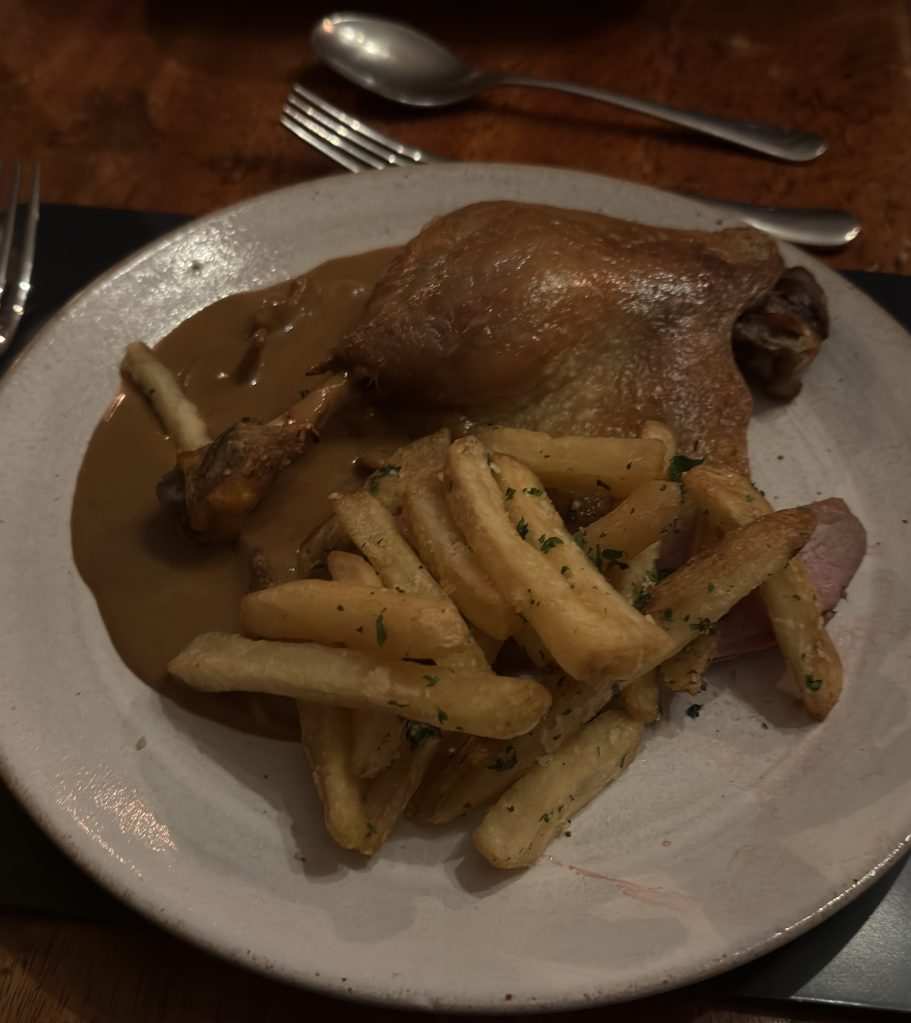
Cooking With The Amazing Valentina Harris At Richard Bertinets’ Cookery School

We had just returned home from an unforgettable family adventure in Tunisia, joined by our son and his childhood best friend. Throughout our stay, Tunisian hospitality enveloped us, and we delighted in extraordinary local cuisine while soaking up the golden North African sunlight. During the trip, I broke from our routine for a day and spent treasured hours with a local family, wandering through vibrant markets and discovering the art of preparing traditional dishes – the experience offered a genuine glimpse into everyday Tunisian life. Free from work distractions after removing all notifications from my phone, I fully savoured these moments with loved ones.

Back at home, an intriguing email awaited in my personal inbox, gently signalling my return from the warmth and vibrancy of Tunisia to familiar surroundings.

On Tuesday, September 16, 2025, 1:17 pm, The Bertinet Kitchen <bertinet@bertinet.com> wrote:

Hello 

We do hope you are well.

We have places available on the following fantastic class and we wondered if you would like to join us:- 

Regional Italian Cooking – A Day in Sicily with Valentina Harris Saturday 20th September 10am 

Here are some details about the course:-

Throughout this course, Valentina will share her extensive knowledge and passion for Italian cooking, guiding you through a variety of authentic recipes that showcase the unique flavours and ingredients from the largest Mediterranean island of Sicily.

You can expect to delight in dishes along with Valentina’s impressive knowledge and anecdotes in this hands on cooking class with the best of Italian produce to the fore.  The menu is based around a traditional Italian feast with antipasto, primi, secondi, contorno and dolce, with dishes including zuppetta di cozze (little mussel soup), zucca in agrodolce alla Siciliana (sweet and sour Sicilian pumpkin), scaloppine al marsala and a gelato alla nocciola with hazelnut meringues.

This course promises to enhance your culinary skills and inspire your love for Italian cuisine. You will emerge armed with knowledge, recipes, skill, and plenty of tips for cooking an array of delectable Italian dishes.

Valentina is our regular Italian tutor and has taught at the Kitchen for many years. She is a noted and much loved authority on Italian cooking and author of over 60 books on Italian cookery including Pasta Galore and Italian Regional Cooking, a culinary tour of Italy.  She appears regularly on TV, including her own series Italian Regional Cookery.

What a stroke of luck – the email arrived on Tuesday afternoon, and the cookery class was set for that Saturday at Richard Bertinet’s renowned school in Bath. Over time, courses at The Bertinet Kitchen have provided me with opportunities to learn from a diverse line-up of acclaimed chefs, each bringing their own unique approach and expertise.

My connection with Richard was further deepened at Kitchen on the Edge of the World in Norway in 2023, where he was among the many talented professionals leading workshops and inspiring fellow participants. Experiences like these – whether in Bath or on distant shores – have broadened my appreciation for food, learning, and the sense of community that comes from sharing it all together.

Italian food has always held a special place in my heart – especially the soulful, regional dishes that define each area beyond just pizza, unless I’m lucky enough to be dining in Italy itself, in Naples, the Pizza’s traditional home. My first true overseas cooking adventure took me to captivating Puglia in 2013, where I stayed for a week, at the enchanting organic farm Masseria Montenapoleone.

There, days unfolded amidst the beauty of the olive groves and historic stone walls, exploring the time-honoured rhythms of Italian family life. I rolled my own pasta under the guidance of my passionate host, visited local artisans crafting mozzarella, burrata, and ricotta using centuries-old techniques, and witnessed the pride that goes into every bottle of olive oil.

Each meal we prepared or ate – whether in the kitchen, at a sun-dappled table, or during lively market outings – became an invitation to share in traditions that are equal parts hospitality, flavour, and joy. The experience not only deepened my appreciation for Puglian cuisine but also left me with memories as rich and enduring as the land itself.

Sicilian cuisine was not familiar to me, so the opportunity to spend time with an expert was not to be missed, I quickly responded with a ‘yes please’.

Stepping through the doors of The Bertinet Kitchen for my eleventh visit, I felt the familiar excitement settle in. Upstairs, the inviting shop brimmed with beautiful kitchen tools. books and artisan treats, while downstairs the school buzzed with energy, ready for a new day of learning.

Jen, the ever-enthusiastic head of the kitchen team, had orchestrated every detail with ease, and Valentina was there to greet us with her signature warmth and expertise. The kitchen itself – bright, fully equipped, and set for discovery – welcomed each guest with an array of refreshments, including Richard’s legendary homemade bread and preserves, a testament to the school’s love of real food and hospitality.

As I introduced myself to the group I’d be spending the day with, there was a sense of camaraderie from the outset, everyone united by a shared anticipation for learning, laughter, and unforgettable flavours. Each visit somehow feels even more special than the last

Valentina Harris welcomed us with her trademark warmth and a storyteller’s flair – qualities honed over decades as one of Britain’s true ambassadors for authentic Italian cuisine. With roots tracing back to the Sforza dynasty of Milan and a childhood steeped in the flavours and rituals of her Anglo-Italian family,

Valentina truly embodies the living spirit of Italy at the table. Her deep respect for tradition is matched by extraordinary expertise, evident in her authorship of more than 50 acclaimed books covering the rich tapestry of Italian cooking. As a chef, educator, and broadcaster, she has left an indelible mark on food lovers across the world.

Beyond her impressive career in food media and teaching, Valentina has played an important role in empowering women in the culinary professions. The London chapter of Les Dames d’Escoffier – an international philanthropic organization dedicated to supporting women in food, beverage, and hospitality – was launched by Dame Sue Carter with essential contributions from Valentina and Marianne Fitzpatrick (Lumb) in 2010. Through her work with the chapter, Valentina continues to foster professional growth and camaraderie, mentoring culinary talent and celebrating the achievements of women in the industry.

During our Sicilian cookery day, Valentina’s guidance transformed a hands-on class into a memorable exploration of regional cuisine. She led us through a heartfelt menu celebrating the flavours of Sicily: Zuppetta di Cozze, a delicate little mussel soup; crisp Polpette di Funghi; fiery L’Arrabbiata; sweet-and-sour Zucca in Agrodolce; and comforting Riso e Melanzane alla Palermitana. The meal finished with cloud-like Spumette di Nocciola and silky hazelnut gelato. Each explanation brought Italian hospitality to life, turning recipes into living acts of memory, generosity, and shared celebration.

A day spent at The Bertinet Kitchen is always a joy, but this occasion was exceptional in both flavour and fellowship. Valentina Harris brought every recipe to life, weaving together stories from her rich culinary heritage with practical lessons and approachable expertise. The array of Sicilian dishes we prepared showcased the inventive contrasts and traditions of the region – nowhere more striking than the pairing of fiery L’Arrabbiata with the sweet-and-sour Zucca in Agrodolce.

The Riso e Melanzane alla Palermitana was a genuine highlight – a harmonious layering of silky aubergine, tender rice, vibrant tomato sauce and melting cheese. Each bite offered a blend of savoury depth, subtle sweetness, and creamy richness, the ingredients melding together to create a dish that was both comforting and bursting with flavour. Its appeal lay in the balance of texture and taste: the smoky aubergine and bright tomato perfectly complemented by the indulgent cheese and fragrant rice – a celebration of Sicilian home cooking at its most delicious.

After those vibrant, savoury courses, dessert was an event in itself: Valentina led us through crafting spumette di nocciola – light hazelnut meringues – and a silky hazelnut gelato made by toasting hazelnuts, making a praline with caramel and the nuts, cooling, and then blitzing before adding to a velvety crème anglaise base. The roasty sweetness of the gelato, paired with the delicate meringues, closed the meal with pure Sicilian spirit and unmistakable finesse.

The entire experience was a reminder of the thoughtful environment Richard Bertinet and his team foster at the school: a place where learning is hands-on, the ingredients shine, and every dish becomes a celebration of skill and community. Sharing the table over such memorable fare, with laughter and conversation flowing (and plenty of matching wine), gave the day lasting resonance.

As I look ahead to next month’s adventure at Rick Stein’s Cookery School in Padstow, the lessons and inspiration gathered from this brilliant Sicilian feast at Bertinet’s will travel with me – reinforcing just how rewarding it is to cook, taste, and learn in great company.

………………………………….Until next time L8ers………………………………..

نهار زين طيبنا مع عايلة تونسية في سوسة A Beautiful Day Cooking With a Tunisian Family in Sousse

I rose before dawn, the gentle promise of a Tuesday awakening, the fourth day of my fifth journey to Tunisia – a country whose sun-drenched memories began for me on my twenty-first birthday. While others celebrated with fleeting parties and the haze of hangovers, I chose a week wrapped in the golden warmth of 27 to 30 degrees, wandering timeless corridors beneath El Jem’s ancient arches and tracing cinematic dreams at the Star Wars set at Matmata. There’s a quiet magic here; each return only deepens my fascination for this mystical country.

Our hotel was north of Port El Kantaoui, the port had just been completed the 1st time I travelled here nearly 40 years ago, we were staying in Sousse, but visited the port on one of our days out.

Port El Kantaoui, just north of Sousse, stands as one of Tunisia’s most ambitious tourism projects—a meticulously planned resort born from a vision to transform the nation’s appeal for international visitors. Inspired by the allure of Western Mediterranean marinas, its creation in the late 1970s drew on chic Moorish design and an artificial harbour as the centrepiece, instantly setting it apart from the more traditional hospitality found in Sousse’s city centre.

Before Port El Kantaoui, Sousse’s hotels primarily catered to classic beachgoers and travellers eager to soak up local sights, but this integrated resort marked a turning point—ushering in an era of luxury, modern amenities, and a distinctively European flavour in Tunisian tourism. The impact on the region has been profound: not only did it redefine the local hotel scene and create thousands of new tourism jobs, but it also established Sousse as a year-round destination for package holidays and marina lifestyles.

Today, Port El Kantaoui’s elegant streets and bustling quays continue to attract visitors seeking a fusion of North African warmth and Mediterranean sophistication.

I was welcomed by the delightful Nabil at 09:30, with booking and communication made effortless thanks to Tunisian Flavour – a true pleasure from start to finish. My culinary day was private, just for me, although there’s always the option to join a group if that suits your style. As someone whose enthusiasm sometimes overflows, I cherish the chance to immerse myself in tours or classes alone, allowing me to absorb every moment.

After parking, and before we entered the storied lanes of the Medina, I was invited to select the day’s menu from a dazzling list of thirty Tunisian dishes. The decision set the tone for our adventure. Among the offerings was Tajine Malsouka – a much-loved treasure of Tunisian cuisine, reminiscent of a quiche but wrapped in delicate malsouka pastry, crisped to golden perfection and filled with a savoury mixture of chicken, lamb, eggs, cheese, and fresh herbs. Another tempting choice was Nwasser, a cherished Tunisian pasta delicately cut into tiny squares, steamed until perfectly tender, and often served beneath a blanket of succulent chicken in rich tomato sauce, with chickpeas and vibrant vegetables woven through. That lingering moment of selecting my dishes before entering the Medina set a gentle rhythm for the day – one shaped by flavour, tradition, and the warmth of shared experience.

My menu reflected my longing for authenticity. Ojja was to be the star: beloved in Tunisia, this dish features eggs gently poached in a fiery tomato sauce, with green peppers, onions, and plenty of harissa. Most famously paired with merguez sausages, ojja brings together the hearty notes of cumin, paprika, and garlic, bubbling away until perfect for scooping up with crusty bread – a true celebration of Tunisian home cooking.

And because I couldn’t resist, I shared my fondness for brik, the iconic crispy treat I once saw Keith Floyd cook on TV at the El Jem amphitheatre – Nabil kindly offered to show me how to make it a special extra.

For my second choice, I selected Kafteji: a classic Tunisian street food where fried potatoes, tomatoes, peppers, pumpkin, and sometimes zucchini are chopped together, mixed with eggs, and seasoned with cumin, coriander, and a touch of harissa. Served with warm bread, Kafteji is both rustic and comforting – a staple of Tunisian kitchens and snack bars, enjoyed any time of day and loved for its bold, colourful flavours.

The shopping trip into the heart of the Medina was nothing short of epic. Stepping into a world alive with colour and scent, I found myself surrounded by piles of freshest herbs – dill, mint, coriander, parsley – each leaf and sprig bursting with promise and flavour. Much like my adventures through the hidden corners of Morocco, I purposefully wandered beyond the tourist trail with Nabil to where real life unfolded: bustling market stalls, vendors calling with pride, the air thick with the fragrance of earth and spice.

Shopping where locals shop, I revelled in the ritual of tasting, smelling, and with Nabil, carefully selecting ingredients, seeking only the most vibrant and perfect for the dishes ahead. There is an undeniable thrill to browsing food markets – each stall a feast for the senses, every display telling a story. Familiar greens mingled with new discoveries, the market’s energy and abundance filling me with delight. It was just brilliant, the kind of experience that cooks up lifelong memories alongside the day’s recipes.

If there is one ingredient that always seems more vibrant and irresistible when travelling, it’s the tomato. Abroad, their sun-ripened sweetness and fragrance surpass anything I’ve tasted at home – I simply cannot get enough. During my stay at the hotel, juicy, crimson tomatoes found their way onto my plate at least twice a day, an essential centrepiece in salads bursting with authentic flavour – so unlike the pale, bland offerings I’ve grown used to back in the U.K.

The market was overflowing with them: plump and glistening, heaped in glorious abundance, the scent hanging thick in the air. Each tomato promised the taste of sunshine and earth, a simple perfection that felt almost impossible to capture outside these travels.

We continued our journey through the winding alleys of the Medina, stopping at vibrant market stalls to gather the day’s essential ingredients. Each pause brought another burst of colour and aroma – bright herbs, fresh vegetables, spices so fragrant they lingered in the air. The rhythm of local life pulsed around us, every purchase infused with intention and excitement for the cooking to come.

After the market, we retraced our steps to the car, our bags now heavy with promise. Yet the adventure wasn’t done: on the way to Nabil’s home, we visited a delightful series of specialist shops, each one a treasure trove in its own right. There, we picked up freshly made harissa, fiery and aromatic, plump merguez sausages, and glistening olives. These final, carefully chosen ingredients would tie the meal together, their flavours echoing the spirit of Tunisia – generous, bold, and unforgettable.

After a short drive, we arrived at Nabil’s family home where I was introduced to his wife and professional chef Nisaf, my guide for the cooking lessons to follow – the home was a tranquil oasis enveloped in greenery and the gentle shade of leafy trees. The house exuded a cool serenity, with its inviting patio and comfortable chairs set out to savour the softness of the Tunisian breeze. The sheltered garden offered a quiet escape, promising a sense of peace and familial warmth.

Stepping inside, I was welcomed not as a guest, but as a long-awaited member of the household – greeted by genuine smiles and a hospitality that felt deeply rooted in Tunisian tradition. A table was thoughtfully being prepared with refreshments, an offering that was both generous and heart warming. In this private sanctuary, I felt a true sense of privilege, as if I were rediscovering distant family after many seasons apart.

Bread and deep green extra virgin olive oil graced the table – did you know Tunisia’s olive groves span nearly a third of the country and place it among the world’s top five producers. Renowned for organic, flavourful oils like Chemlali and Chetoui, Tunisia’s harvest is largely exported and garners global acclaim, its reputation now standing proudly beside Spain, Italy, and Turkey.

Alongside were figs and bssisa – a beloved Tunisian staple made from roasted grains and legumes, ground and blended with spices, then enriched with olive oil or milk into a nourishing paste or drink. Steeped in tradition and family ritual, bssisa embodies the essence of Tunisian hospitality, uniting generations through its wholesome flavours and generous spirit. Harissa was there too, the ever-present, fiery chilli paste crafted from sun-dried peppers, garlic, olive oil, and aromatic spices – a condiment that captures the vibrant soul of Tunisian cuisine. Completing the spread, coffee gently scented with rose petal essence offered fragrant, delicious comfort.

The spacious family kitchen was ready for an afternoon of discovery. Here, I was welcomed into the secrets of time-honoured Tunisian cooking, sharing those cherished moments that make one feel utterly at home, if only for a sweet, fleeting afternoon—the anticipation humming with the promise of unforgettable memories.

So, back to my menu, Ojja, Kafteji and Brik, a selection of dishes unknown to me (with the exception of Brik. Nisaf was going to show me how to create this traditional Tunisian dishes and I was excited to learn some new techniques.

Ojja

Ojja is a deeply traditional Tunisian dish with humble roots in home kitchens, reflecting the fusion of Berber, Arab, and Mediterranean culinary influences over centuries. Its signature mix of eggs, tomato, peppers, harissa, and spicy merguez sausage embodies the bold flavours of Tunisia, while adaptations vary regionally and by family. The dish is regarded as a cornerstone of authentic Tunisian comfort food, celebrated for its ability to adapt and unite diverse tastes and ingredients.

Kafteji

Kafteji, now a Tunisian staple found in street stalls and home kitchens, began as a creative way to use available vegetables – potatoes, peppers, tomatoes, pumpkin—chopped and fried, mixed with eggs, and spiced generously. Its preparation style, where all ingredients are diced and mixed, is reflected in its name, derived from the Arabic for “chopped”. While some elements may echo Mediterranean and even Turkish traditions, kafteji’s evolution and widespread popularity are distinctly Tunisian, symbolizing hospitality, creativity, and the communal pleasures of everyday meals.

Brik

Brik’s origins are a tapestry of influences: its ultra-thin pastry (warqa or malsouka) and fried fillings likely evolved from Turkish börek – introduced via the Ottoman Empire – while the classic runny egg filling may owe its presence to Andalusian Jews who arrived in Tunisia after the 15th-century expulsion from Spain. Over centuries, brik became a uniquely Tunisian delicacy, made with potato, egg, seafood, or meat, and featured at holidays, Ramadan, and festive gatherings. Its enduring appeal lies in Tunisia’s layering of culinary traditions, each bite echoing the country’s role as a crossroads of Mediterranean culture.

The artistry of Tunisian cooking reveals itself dish by dish, beginning with the bold flavors of ojja. The process starts by pricking merguez sausages with a fork and cooking them separately with some chopped dried chilli, allowing their spicy oils to seep out and deepen their flavour as they brown. Once done, the sausages are set aside, their aromatic fat reserved.

In the same pan, onions and garlic gently sauté in olive oil, joined by chopped green peppers that brighten and sweeten as they cook. Tomatoes and harissa follow, mingling with cumin and coriander until a rich, fiery sauce develops. The browned merguez rounds, glistening with their own juices, are folded back in, and finally eggs are cracked into the bubbling sauce, their whites barely set, yolks golden and just runny. Scooped up with fresh bread, ojja embodies the heart of a Tunisian gathering.

Moving across the kitchen, the creation of kafteji is a celebration of color and texture. Potatoes and squash are sliced thin and fried separately, each piece taking on a golden, crisped edge. Peppers and chilies are fried in turn, then all the vegetables come together in a medley on a broad platter. Fried eggs are then laid across the surface and everything is cut into enticing strips, mingling vegetable and egg in a fragrant jumble. This dish, which is always served for sharing – is wholesome, rustic, full of sunshine and very tasty.

Brik provides the theatrical finale. Each delicate sheet of pastry (malsouka, which we purchased freshly made at the Medina) is filled with a little seasoned tuna placed at its centre, some Tuna. chopped Parsley and a little chopped Onion along with the freshest egg available. The pastry is folded to envelop its filling, with quick, sure hands, and lowered carefully into shimmering hot oil. In just moments, the brik crisps and blisters to a golden finish, the egg inside barely set with a runny yolk. Served immediately, with a wedge of lemon ( and for me Harissa, I love the stuff), brik is crisp yet delicate, a Tunisian delight both sumptuous and fleeting – capturing the very soul of the country’s spirited home cooking.

We drank from traditional white and blue Tunisian terracotta mugs – slightly porous and beautifully handcrafted. The clay kept our drinks deliciously cool, even in the midday warmth, each sip a simple pleasure that echoed centuries of Tunisian craftsmanship and refreshment.

Nisaf was nothing short of magical – a chef imbued with talent and generosity, guiding each step with a graceful confidence that made every new technique feel within reach. With Nabil’s able hands and his effortless translation between languages, learning was transformed into pure delight; culinary secrets became stories, and the kitchen itself pulsed with laughter and the easy rhythm of shared discovery. As we finally sat down to savour the feast we’d created, each bite shimmered with the flavours of Tunisia, rich with memory and promise. I left the table not only filled with the most delicious food, but also with a new treasury of knowledge and inspiration – thirty genuine recipes tucked eagerly into my bag, ready to carry the vibrance of Tunisian cuisine into my own kitchen, time and time again.

After I arrived back to the U.K. I was invited to join a Sicilian Cookery Session at Richard Bertinets Cookery School in Bath which I will be writing about soon.

………………………………. Until Next Time…………………….. L8ers

From Farm to Table and Gallery to Gift—A Moroccan Day of Indulgence and Inspiration (Day 5)

I awoke and blinked into the golden Moroccan light, hardly believing it was already Wednesday, the last full day in Essaouira. Since stepping off the plane the previous Saturday, the world I’d left behind had melted away: work, customers, endless problem-solving, even the distant rumblings of the world economy, all had faded into irrelevance. This journey had done its magic, untangling the knots of daily life and filling the space with colour, flavour, and discovery.

Each sunrise brought new marvels, and I found myself immersed in the rhythms of Morocco, its vibrant markets, ancient traditions, and the intoxicating pulse of its cuisine. Guiding me through it all was Amanda: not just my personal guide and masterful chef, but a kindred spirit whose passion for Morocco’s culture and food opened doors I never knew existed. With every shared meal and story, I felt a sense of wonder grow, a reminder that travel, at its best, is a gentle awakening to beauty, friendship, and the joy of being fully present in the world.

Making a rich saffron hollandaise is one of life’s true pleasures, luxurious, golden, and deeply satisfying. I’ve had the delight of whisking it to silkiness a few times before, most memorably at Rick Stein’s Cookery School in Padstow, where it crowned a beautiful ‘tronçon’ of turbot. This morning in Essaouira, the sauce would take centre stage once again. Earlier in the week, we had cured some trout in a vivid blend of beetroot, salt, and sugar, and now it was ready for its moment: breakfast as an event. Slices of the jewel-toned trout were paired with creamy avocado and a perfectly poached egg, all generously draped in that opulent saffron hollandaise and finished with a satisfying crack of fresh black pepper. Each bite was a celebration—of technique, of flavour, and of the sheer joy of starting the day with something extraordinary.

Way back in 2013, I found myself in Puglia, at Masseria Montenapoleone, an organic farm nestled in the sun-drenched heart of southern Italy. It was my very first cooking vacation and the spark that ignited countless culinary adventures to come. There, I learned the subtle art of using flowers not just for beauty, but to create a vibrant, bio-diverse environment: drawing the so-called “unwanted” plant eaters away from crops, while inviting in the pollinators and beneficial insects that keep nature in balance. Akal, here in Morocco, is very much a kindred spirit—an eco-farm that weaves flowers into every aspect of its philosophy. At Akal, the blooms aren’t just guardians of the fields; they’re also an integral part of the tasting experience, gracing the table and infusing the most imaginative, flavourful menus with colour and fragrance. Dining here is more than a meal—it’s a celebration of nature’s harmony, and a reminder of how the smallest details can transform the way we taste the world.

Our lunchtime destination was no more than 15 minutes drive, Domaine Du Val D’Argan. Domaine du Val d’Argan is a remarkable testament to vision, perseverance, and the unique character of Moroccan terroir. Founded by Charles Melia, a seasoned winemaker with deep roots in both France and Morocco, the vineyard sits just outside Essaouira, where the Atlantic winds sweep over limestone and clay soils, echoing the Rhône valley’s own mistral. What began as a retirement dream became a pioneering adventure: Melia cleared stony ground by hand, planted the first Rhône varietals, and patiently learned to coax vines to thrive on the edge of the desert, sheltering them from fierce sun and wind with natural methods and organic care.

Today, Val d’Argan is a landscape of lush vine rows bordered by sorghum and eucalyptus, where dromedaries still help tend the land and the cellar holds the promise of Morocco’s finest vintages. The wines—ranging from bright, aromatic whites to robust reds and elegant rosés—capture the sun, wind, and wild spirit of their setting. Visiting the domaine is more than a tasting; it’s an immersion in a story of resilience and passion, where every glass reflects not only the land’s bounty but also the quiet determination of its founder. This is a vineyard where French tradition and Moroccan landscape meet, yielding wines—and memories—that are truly one of a kind.

I found myself ‘in the moment’ once again, shaded beneath the branches of an ancient olive tree at Domaine du Val d’Argan. Plates of freshly prepared food appeared in a steady, generous procession, vivid salads bursting with local flavour, a fragrant tagine, and turkey roasted on kebab skewers, each dish a celebration of Moroccan abundance. Glasses of the estate’s wines flowed freely, each one a new discovery.

The “Gazelle de Mogador” in white, red, and rosé offered a taste of the Atlantic’s easy elegance, while the Val d’Argan range echoed the vineyard’s Rhône heritage, capturing the region’s sun and wind in every sip. Yet it was the Perle Grise that truly captured the spirit of the place for me, a wine as pale as morning light, delicately aromatic, with hints of citrus blossom and wild herbs, perfectly refreshing beneath the olive canopy. As the afternoon stretched on, a rich chocolate dessert arrived, rounding out a meal that was both relaxed and luxurious. At Domaine du Val d’Argan, the artistry of winemaking and the generosity of Moroccan hospitality come together in a setting as memorable as the wines themselves, a place where every glass tells a story, and every moment lingers long after the last sip. It was time to head back to Essaouira for some last minute exploration.

As we entered the medina, the air shimmered with the ethereal tones of a young man playing a handpan, his fingers coaxing otherworldly melodies from the spaceship-like drum that echoed off the ancient stone walls.

As the sun dips toward the Atlantic, the ancient medina of Essaouira began to pulse with an energy that is both timeless and electric, the unmistakable prelude to the Gnaoua World Music Festival. For a few magical days each year, the city’s labyrinthine alleys and windswept squares become a living stage, as hypnotic rhythms and haunting melodies spill from every doorway and rooftop. The air grows thick with the deep, trance-inducing thrum of the guembri, the metallic clatter of krakebs, and the soaring call-and-response of Gnaoua singers, their music weaving a spell that draws locals and travellers alike into its embrace.

Founded in 1998, the festival is a vibrant celebration of Gnaoua culture, descendants of West African slaves who brought with them a mystical musical tradition rooted in healing, spiritual trance, and communal memory. Over the years, the festival has blossomed into a global gathering, where Gnaoua masters share the stage with jazz virtuosos, blues legends, and musicians from every corner of the world. This fusion of sounds creates a heady, intoxicating atmosphere, where ancient African rhythms meet flamenco, reggae, rock, and Sufi chants, all under the open Moroccan sky.

The festival is more than a concert—it’s a living tapestry of history, spirituality, and artistic exchange. The music, once used in sacred rituals to heal and connect with the divine, now fills Essaouira’s medina with a sense of unity and celebration. For a few unforgettable nights, the city becomes a crossroads of cultures, a place where the boundaries between audience and performer, past and present, seem to dissolve in the intoxicating swirl of sound and spirit.

This stunning plate ( a present for my best friend and wife forever ), is a true testament to Moroccan artistry, its surface alive with intricate geometry and vibrant colour. Crafted in the traditional style of Fez, the design radiates from a central starburst, each petal meticulously hand-painted in shades of emerald green, saffron yellow, and soft rose. Delicate crosshatching and fine black lines create a mesmerizing lattice, while the outer border is woven with interlocking patterns that speak of centuries-old craftsmanship. The plate’s symmetry and precision are captivating, drawing the eye inward and inviting contemplation of the skill and patience required to create such a piece. More than just a vessel, it is a celebration of heritage, a beautiful reminder of Morocco’s rich ceramic traditions and the enduring allure of handmade work.

In the heart of Essaouira’s medina, you’ll often come across what locals call the “magic box”, a beautifully crafted container made from the region’s prized thuya wood. Native to Morocco’s coastal forests and especially abundant around Essaouira, ‘thuya’ wood is renowned for its rich, swirling grain, warm hue, and natural, cedar-like fragrance

Artisans here have honed their craft for generations, turning thuya burl into intricate puzzle boxes, lidded spheres, and inlaid treasures, each one polished to a satiny sheen and finished with lemon oil to enhance its natural luster. These boxes are more than just souvenirs; they’re a testament to Essaouira’s heritage of marquetry and woodworking, a tradition dating back to the 19th century when sultans commissioned decorative objects and furniture from the city’s master craftsmen.

Whether used to store spices, trinkets, or secrets, a thuya wood “magic box” from Essaouira is a piece of living history, fragrant, tactile, and always a little mysterious, as if it holds a story all its own. Our son loves his…
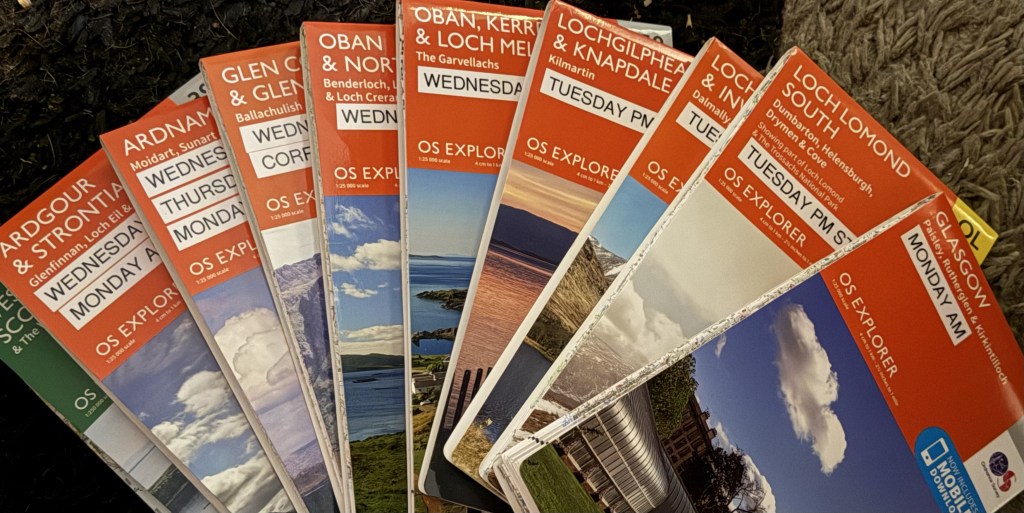
………………………………..Until Next Time………………………….L8ers

The Poetry of Taste and Light – Rustic Eggs, Sea’s Bounty, and Essaouira’s Golden Hour (Day 4)

While Linda at So Morocco and Amanda at Ourika Organic Kitchen curated the heart of my journey, I relished the freedom to tweak and tailor the experience as inspiration struck (within practical limits, of course). My own research came in handy, too, at Riad Malaika, I was handed a wonderfully handy pocket map, a small gesture that made a world of difference. With it tucked in my pocket, navigating the winding lanes and hidden corners on my second afternoon and evening became a pleasure rather than a puzzle, allowing me to explore with confidence and uncover even more of Essaouira’s magic.

Khlii, also spelled khlea (Arabic: الخليع), is a centuries-old Moroccan method of preserving meat, deeply rooted in the country’s Berber heritage. Developed long before refrigeration, this technique allowed families to store meat in Morocco’s arid climate, ensuring a supply of protein throughout the year, especially after major festivals like Eid al-Adha. The tradition is believed to have originated in Fes, which is still considered the “Capital of Khlii,” before spreading across Morocco and North Africa. The Berbers are credited with introducing this preservation method, which has become an integral part of Moroccan culinary culture, symbolizing both resourcefulness and the art of slow, careful food preparation.

Khlii is typically made from beef or lamb, though camel is sometimes used in southern Morocco. The process begins by cutting the meat into long strips and marinating it in a chermoula—a blend of spices such as cumin, coriander, garlic, and sometimes vinegar and olive oil. The marinated meat is then sun-dried for several days, intensifying its flavor and reducing moisture. Once dried, the meat (now called gueddid) is slowly simmered in a mixture of animal fat (suet) and olive oil, sometimes with added water, until it becomes tender and fully infused with the spices. After cooking, the meat is packed into containers and completely submerged in the rendered fat, which acts as a seal and preservative. Properly stored in a cool, dry place, khlii can last for up to two years at room temperature, making it a reliable pantry staple.

Khlii is more than just a preserved meat; it is a symbol of Moroccan resilience and culinary ingenuity. Traditionally, families would prepare large quantities annually, especially in cities like Fes and Marrakesh, ensuring a supply of protein-rich food throughout the year. In modern Morocco, khlii is considered a delicacy, often enjoyed for its deep, concentrated flavor. It is most famously served with eggs for breakfast, but also finds its way into tagines, soups, salads, and even flatbreads. The rich, smoky aroma and robust taste of khlii evoke nostalgia and a sense of connection to Moroccan heritage, making it a cherished ingredient in both rural and urban kitchens.

Khlii (khlea) with eggs was our Moroccan breakfast for this morning, combining rich, spiced preserved lamb with fresh eggs. The khlii is gently heated in its own fat until fragrant, then eggs are cracked in, either left whole or lightly scrambled. Served hot with Moroccan bread, it’s was a deeply tasty and satisfying way to start the day, bringing together centuries-old tradition and everyday comfort.

After our savoury breakfast, I remembered the generous box of Moroccan pastries we’d bought, when better to indulge? They paired perfectly with a strong black coffee. My favourite was the mhencha, the coiled, wheel-like pastry stuffed with almond paste and delicately scented with orange blossom. Its crisp, golden layers gave way to a rich, nutty filling, utterly delicious and the ideal sweet finish to a memorable morning meal.

The allure of a fish cataplana begins with the stock, a foundation as soulful as the Atlantic breeze. This was the next cooking ‘event’ of the week.

Into a heavy pot, we tumbled thick slices of onion and carrot, their natural sweetness coaxed out as they softened in a shimmer of olive oil. Sliced garlic joined the mix, releasing its gentle perfume and promising warmth in every spoonful. Then came the fish heads and the mighty prawn heads, their briny richness destined to deepen the broth. A bouquet garni of fresh parsley stems was nestled in, a green promise of freshness to balance the sea’s intensity.

Amanda explained the importance of each step, building layer upon layer of delicate flavour. As everything mingled, a generous splash of white wine and a bold dash of cognac were poured in, sending up a fragrant steam, herbaceous, oceanic, and just a little bit wild.

The stock simmered quietly, drawing out every nuance, while anticipation built for the next act: the union of seafood, saffron, and fresh herbs in the cataplana’s embrace. This was more than a recipe, it was a slow, joyful unfolding of aromas and textures, a celebration of the coast in every breath.

While the stock quietly worked its magic, we built another essential layer: onions and ripe tomatoes, sautéed together until soft and jammy, forming a rustic, sun-bright base for the cataplana. When it was time to assemble, the seafood came next, plump prawns and tender squid nestled into the tomato-onion mixture, with thick pieces of bass carefully arranged on top at the very end, ensuring they would steam gently and stay perfectly tender, never overcooked.

A pinch of saffron, along with fresh parsley, promised both colour and aroma. We let everything simmer gently, no need for a dramatic lid or staged photo, just honest, attentive cooking, letting the ingredients speak for themselves as the kitchen filled with the unmistakable scent of the sea and southern sunshine.

To bring balance and a touch of contrast to the soft, yielding seafood and the rich, sun-drenched base, a simple pleasure was in order: bread. A fresh baguette was sliced into generous rounds, destined to become golden and crisp. The slices sizzled in a pan with plenty of butter, a splash of olive oil keeping the richness in check and lending a gentle fruitiness.

Once burnished and fragrant, each piece was rubbed with cut garlic, the warmth coaxing out its mellow bite. The result—crunchy, aromatic toasts—was the perfect counterpoint, ready to soak up the cataplana’s juices and elevate the meal with a satisfying, rustic crunch. Sometimes, it’s these simple touches, shared in good company, that make a feast truly memorable.

Earlier in the day, the clear, bright blue skies signaled the perfect opportunity for an evening visit to the observation point overlooking Essaouira. Keeping in mind the logistics with our driver, we set out promptly at 19:45 to capture the magic of the moment.

As a photography enthusiast, I brought along my trusted gear: a Fuji XT-1, a Leica D-Lux 7, and of course, the ever-reliable iPhone 16 Pro Max. The XT-1 was set to auto mode, snapping a picture every 20 seconds for up to 20 shots, carefully nestled on the stone wall atop a protective blanket. The Leica was mounted on a sturdy tripod, ready for precise framing, while the iPhone was at hand for spontaneous shots amidst the action.

Despite the rather windy conditions, I was ecstatic with the results, capturing the essence of Essaouira’s evening glow with reasonable clarity and artistry.

……………………Until next time………………L8ers…………………….

From Golden Maakouda to Ocean’s Bounty, and Couscous Steeped in Time: Savouring the Soul of Essaouira – (Day 3)

I’d arrived in Essaouira the afternoon before, the Atlantic breeze ushering me through the medina’s winding lanes. My carossa – the quiet, determined man with his battered two-wheeled cart struggled to find Riad Malaika, its entrance hidden deep within a shadowed alley where not even the afternoon sun could reach. After a few wrong turns, some good-natured directions from locals, and a laugh at our shared confusion, we finally found the heavy wooden door. The riad welcomed me with its cool, tranquil courtyard, a secret oasis in the heart of the city.

Later, as dusk settled over Essaouira, I found myself alone at Butterfly Space. The hum of conversation and the clatter of cutlery were a gentle backdrop to my solitary meal, a plate of something vibrant and local, each bite a quiet celebration of arrival. The flavours lingered, weaving themselves into my first memories of the city.

That night, the riad wrapped me in its calm, the world outside fading into silence behind ancient walls.

At first light, the stillness was broken by a wild chorus of seagulls wheeling above the rooftops, their cries echoing through the medina and tugging me from sleep. Essaouira was waking, and so was I, drawn from dreams by the restless energy of the Atlantic and the city’s salt air. It was Monday, I think, though Morocco has a way of making days blur together. A new day had begun, one filled with promise, the memory of a solitary feast, and the wild, joyful chorus of seagulls overhead.

Breakfast was a delight, a celebration of Moroccan hospitality, almost too generous for the modest table. Jewel-like dried fruits and nuts waited beneath a glass-topped container, inviting discovery with every lift of the lid.

There was fresh bread, still warm and fragrant, perfect for scooping up the star of the morning: Amlou, that magical blend of roasted almonds, golden argan oil, and honey, rich and nutty, its flavour lingering long after each bite.

A single slice of crispy French toast, likely cut from a baguette, added a subtle sweetness and crunch, a golden accent among the morning’s offerings.

A variant of traditional Harcha, the rustic semolina cake, brought a tender, savoury note, its edges just crisp enough to satisfy. A glass of fresh fruit juice, vibrant and cool, stood alongside a beautifully prepared fruit salad, each piece glistening as if kissed by the morning sun.

Black tea, deep and fragrant, was served simply in a cup, its warmth and aroma a gentle comfort, mingling with the scents of homemade jam and honey from tiny pots nearby. A one-egg omelette completed the spread, a quiet companion to the abundance around it, and a reminder that simplicity can be its own luxury.

It was a breakfast to savour slowly, each element a note in a harmonious Moroccan morning, welcoming, generous, and filled with the promise of the day ahead.

As I carried my case down to reception, a gentle summons awaited me, Amanda, my guide and chef, and our driver had just arrived at the city’s edge. The hotel’s own carossa expertly appeared, his two-wheeled cart gliding through the labyrinthine corridors of the medina with a grace born of years navigating these ancient stones. We emerged at the medina’s threshold, where our new driver, Adil, greeted us with a beaming smile; kind, gentle, and unfailingly polite, his calm presence a welcome anchor amid the lively swirl of Moroccan traffic, which always seems to dance somewhere between chaos and choreography.

With my bags stowed in the 4×4, Amanda and I slipped back into the medina’s embrace, eager to explore its secrets and gather fresh produce for the day’s adventures. The morning air was alive with possibility as we wandered between sunlit alleys and cool shadows, pausing to admire the vibrant displays of local shops.

Our first stop, the legendary Pâtisserie Driss, was shuttered for Eid al-Adha, the sweet scent of celebration lingering in the air even as the doors remained closed. Undeterred, we wandered on and soon discovered Pâtisserie Boujemaa, its windows brimming with confections that sparkled like jewels in the morning light.

Stepping inside felt like entering a world of Moroccan enchantment, orange blossom and honey perfuming the air, trays laden with cornes de gazelle, glossy chebakia, crumbly ghoriba, and crisp briouats. Each pastry was a testament to Morocco’s centuries-old tradition of hospitality and artistry. For just 150 dirhams, we left with a full kilogram of these sweet treasures, each bite a celebration in itself, some sweet treats for rest of the week.

We wound our way through the medina’s twisting corridors until we reached one of the main thoroughfares, where our first snack stop awaited: maakouda. We enjoyed them just as they were, fresh from the fryer, golden and crisp, with no need for accompaniments. Eaten plain, the gentle warmth of turmeric and cumin took centre stage, allowing the comforting flavours of these humble potato fritters to truly shine. There’s a special charm in the simplicity of Moroccan street food, and with each bite of maakouda, we tasted that perfect balance of spice and tradition.

Shopping in Morocco is a true adventure for the senses. Here, the focus is on flavour rather than flawless appearance; tomatoes, courgettes, and carrots may not look perfect, but their taste is unbeatable. We delved deep into the medina, venturing into bustling corners where few travellers stray, on a mission to gather ingredients for our culinary explorations. This was a foodie holiday, after all, and Amanda, an exceptionally talented chef, was eager to discover every hidden gem. In one shop, chickens clustered together in a large open box, a scene both fascinating and distinctly local. The vegetable stalls were overflowing with vibrant produce, and we selected earthy beetroots for a trout cure back at the villa, along with fresh courgettes and carrots for the couscous we’d prepare later. Wandering through these tucked-away markets was both fun and eye-opening, the abundance of vegetables, the lively atmosphere, and the remarkably low prices all added to the magic of our Moroccan shopping adventure.

We settled in for a good half hour over a glass of steaming mint tea at a tiny café nestled beside a lively market stall, where great tubs of glossy olives in every shade of green and purple caught our eye. The stall was a paradise for any food lover; mounds of spicy green and red harissa, generous portions of rich, aromatic khlii (Moroccan preserved lamb), and an ever-changing parade of locals stopping by for their daily essentials.

As we lingered over our sweet atay b’naanaa, the air alive with the mingled scents of herbs and spices, we soaked in the vibrant scene. For anyone curious, atay b’naanaa simply means “mint tea” in Moroccan Arabic – atay is tea, and naanaa is mint, so there’s no banana involved, just a fragrant blend of green tea, fresh spearmint, and sugar. Here, at the heart of the medina, surrounded by the raw ingredients of Moroccan cuisine, each sip of tea felt like a celebration, a leisurely pause and a perfect window into daily life before our next culinary adventure.

After the excitement of selecting fresh fish and prawns from the morning’s catch and savouring them perfectly grilled over charcoal, we spent a wonderful few hours exploring the medina’s winding alleys. The markets brimmed with vibrancy, tubs overflowing with glossy olives, heaps of fiery harissa, and generous servings of khlii, all set to the backdrop of everyday Moroccan bustle. Laden with ingredients and inspired by the sights and scents around us, we set off for our next destination: La Fromagerie, an artisan goat’s cheese maker, where we hoped to discover yet another delicious facet of Morocco’s culinary heritage.

Leaving the bustle of Essaouira behind, we set out on a scenic 13-mile journey along the N8, turning onto the R301 as the landscape unfurled before us. Hidden well back from the road, La Fromagerie emerged like a serene oasis—so peaceful that the distant hum of traffic vanished completely. The air was fragrant with blooms from lush gardens, and vibrant flowers framed the entrance, setting the tone for what felt like a secret retreat.

We were welcomed with a fascinating tour of the goat cheese production unit, where the day’s fresh milk was being transformed into creamy rounds of artisan cheese. The resident goats, content and curious, grazed nearby, while chickens scratched in the shade, supplying eggs for the kitchen. It was a beautiful glimpse into the rhythms of living off the land—a place where sustainability and tradition go hand in hand.

The meal at La Fromagerie was a true celebration of local flavours and craftsmanship. We began with a tasting of goat’s cheeses at varying stages of maturity, each one offering its own subtle character and creamy tang. Next came a delightful starter: a round of grilled cheese, its molten centre wrapped in a delicate bread crust and crowned with a tangle of sprouting pulses, simple yet utterly irresistible. Layers of silky aubergine followed, perfectly cooked and infused with just a whisper of tomato and chilli, each bite a harmonious balance of earthiness and warmth. To finish, we savoured ‘lamb mechoui‘, tender, succulent, and deeply flavourful, a dish that lingered long in the memory. Every course was a testament to the art of rustic Moroccan cooking, and together they made for a lunch that was nothing short of perfect.

For those tempted to linger, La Fromagerie also offers charming rooms for an overnight stay, inviting guests to fully immerse themselves in this tranquil corner of rural Morocco.

On our way to Amanda’s villa, we couldn’t resist a stop at Carrefour, a ritual I love when traveling. There’s something fascinating about wandering foreign supermarket aisles, comparing the range of products and prices to those back home. Carrefour’s shelves were stocked with a surprising array of international treats and local staples.

The alcohol section was particularly impressive, boasting a wide selection of beers, wines, and spirits, a reminder of Morocco’s cosmopolitan side. Imported goods, as expected, came at a premium; seeing familiar British biscuits and condiments with their price tags in dirhams was both amusing and eye-opening. The meat counter, however, was nearly bare, a quiet testament to Eid Al-Adha, when families gather and butchers take a holiday. Only a few spicy Merguez sausages remained, hinting at the usual bustle of the market. Visiting a Moroccan hypermarket like Carrefour is more than just shopping, it’s a cultural experience, revealing the rhythms of daily life and the interplay between tradition and modernity.

Our home base for days three to five was Amanda’s beautiful villa outside Essaouira, a whitewashed haven with an airy, open-plan design that struck the perfect balance between light and cool comfort. The spacious kitchen, complete with a generous cooking top and ample prep space, was a dream for any food lover. Outside, a welcoming dining area invited us to linger over meals in the fresh air, while the thoughtful architecture let sunlight pour in without letting the heat intrude. It was the ideal setting for my first Moroccan cooking lesson: couscous, a true labour of love.

Preparing traditional Moroccan couscous with organic, coarse, dark grains is a soulful ritual, steeped in centuries of culinary tradition. It all begins in a wide, shallow gsaa bowl, where the couscous is gently sprinkled with water, a pinch of salt, and a golden drizzle of olive oil. With practiced, gentle hands, the grains are softly rubbed and rolled, their earthy aroma rising as each one is lovingly coated and separated. After a patient rest, the couscous is heaped into the top of a couscoussier, where it steams above a bubbling pot of homemade broth, fragrant with onions, garlic, and a medley of aromatics, perhaps a pinch of saffron or Ras el Hanout. Once the steam has worked its magic, the couscous is tipped out, allowed to cool just enough, and then gently hand rubbed again, breaking up clumps and coaxing the grains to lightness.

This meditative cycle of steaming and gentle hand rubbing is repeated three times, each round drawing out the couscous’s tender, fluffy character without ever becoming sticky. No further water is added after the first step; it is the steam, the touch, and the patience that transform the grains. For the final steaming, we nestled quartered courgettes into the simmering broth, letting their subtle sweetness and fresh green flavor infuse the steam and mingle with the couscous above. When the grains were finally ready, we finished them with a generous knob of butter, folding it through so every grain glistened and carried just a hint of richness.

To serve, we spooned over the meltingly soft onions and vegetables from the broth, then crowned the couscous with golden pieces of fried monkfish, their delicate flavour providing a wonderful contrast to the subtle, fragrant grains. The result was a dish that felt deeply rooted in Moroccan tradition, yet uniquely our own, capturing the spirit of hospitality and the joy of sharing something truly special at the table.

Whilst the couscous was going through its patient, time-honoured ritual, we turned our attention to another culinary experiment I’d long wanted to try: beetroot-cured trout. Earlier that day in Essaouira, we’d picked up some earthy, jewel-toned beetroots, their deep colour promising both flavour and drama. With a quick blitz in the blender, we combined the beetroot with equal measures of salt and sugar, creating a vivid, fragrant cure. We nestled the trout fillets flesh-side down in this mixture, ensuring every surface was in contact with the cure, and left them to work their magic overnight. By the following day, after a gentle rinse to remove the excess salt, we’d have slices of beautifully cured trout, vibrant in colour and delicately seasoned. There’s a special satisfaction in weaving new ideas into a tapestry of tradition, and this little project felt like the perfect companion to our day of slow, soulful cooking.

At last, it was time to sit down and savour the fruits of our labour. Glancing at the timestamps on my photos, I realised we had started at 17:57 and finished at 22:20, a full 4 hours and 23 minutes devoted to creating what was, without a doubt, the tastiest couscous I have ever eaten. The subtle lessons learned along the way were priceless: no shortcuts, no quick-cook grains, just patience, gentle hands, and respect for tradition. The result was light, fluffy, and full of flavour, healthy, satisfying, and a fitting finale to another long day of Moroccan adventure. There’s a special kind of joy in sharing a meal that has been crafted with care, and this couscous was a true celebration of time well spent.

Shukran bzaaf ʿla had nhar zwin, Allah yʿtik sseha ya Chef Amanda!

…………………………….Until next time………………….. L8ers……………………………..

Between Mountains and Medina: The Road to Riad Malaika and the Women of Argan (Day 2)

I rose early, the morning light barely touching the horizon, my mind still alive with the magic of the day before. It had been a tapestry of wonder – woven with vibrant culture, unexpected friendships, and unforgettable flavours – each moment more extraordinary than the last. Even as the world outside lay quiet, my thoughts danced with memories of a day that seemed endless in its gifts.

As-salamu alaykum (Peace be upon you), I greeted Haj Brahim as he was laying the table for breakfast and what a spread it was. Fresh coffee, boiled eggs, fresh bread, Amlou, which is Morocco’s beloved nut spread, traditionally made by blending roasted almonds, rich argan oil, and honey into a silky, nourishing paste. Its flavour is uniquely deep and nutty, perfect for dipping bread or drizzling over pancakes. In more affordable versions, peanuts often replace almonds, creating a spread that’s still delicious and widely enjoyed. Whether crafted with almonds or peanuts, Amlou captures the warmth and generosity of Moroccan hospitality in every spoonful.

All too soon, the moment came to bid farewell. I could have lingered another day at Dar Tassa, nestled in the tranquil embrace of al-Houz province, where time seems to slow and every view invites reflection. But the road was calling – Essaouira awaited, with new adventures and promises yet to unfold. With a lingering handshake and heartfelt thanks to my new friend, Haj Brahim, we loaded our bags into the waiting 4×4. As we set off, winding eastward toward Marrakech, the memories of Dar Tassa – its warmth, its wonder, travelled with me, woven into the fabric of the journey ahead.

Our journey began with Hicham – pronounced “Hee-Sham” – whose warmth, quick wit, and expert driving made him an instant favourite. Leaving the rugged beauty of the High Atlas mountains behind, we made our way toward Marrakech, pausing for a delightful detour to gather fresh ingredients, enjoy a leisurely coffee, and meet Amanda’s charming husband and daughter. As we sipped and chatted, I discovered that Amanda’s husband shared my passion for music. I introduced him to the band Arena – a new discovery for him – and was delighted to see his immediate enthusiasm. There’s a special joy in sharing music and watching it spark a connection, and that simple moment felt truly brilliant.

As we cruised up the RN8 from Marrakech toward Essaouira in early June, the landscape gradually shifted from the ochre plains to a mosaic of cultivated fields and scrubby woodland. Along this route, we passed neat rows of cabbages and potatoes – common crops in the region at this time of year – thriving in the fertile, sun-warmed soil. Before long, the scenery became increasingly dotted with the gnarled, silvery-green forms of argan trees, their twisted branches a distinctive feature of the countryside between the western High Atlas foothills and the Atlantic coast. This is the heart of Morocco’s argan belt, where these ancient, drought-resistant trees grow almost exclusively, providing livelihoods for local communities and producing the prized oil found in both kitchens and cosmetics around the world. The approach to Essaouira is marked by these iconic argan groves, a living testament to the region’s unique natural and cultural heritage.

I was endlessly captivated by the rhythm of daily Moroccan life unfolding along the roadside – the fruit vendors arranging pyramids of vibrant produce, the butchers with their cuts of meat swaying gently in the cool shade, all framed by the golden sun. As we journeyed onward, small towns would suddenly emerge from the landscape, bustling with people immersed in their everyday routines. In the blink of an eye, these lively scenes slipped past our windows, growing smaller and softer in the rear view mirror, like fleeting glimpses into a thousand untold stories woven across the Moroccan countryside.

It was definitely time for some food when we pulled off the road just outside Sidi L Mokhtar, drawn to the welcoming glow of Café Restaurant Sahara, open around the clock. There, we savoured brochettes de viande hachée – Moroccan skewers of seasoned minced beef, grilled over hot coals until smoky and tender. Each tender bite was perfectly complemented by crisp frites and a vibrant medley of courgettes, carrots, and green beans, their colours bright against the plate. As we lingered over the meal, I sipped strong black tea, its warmth and depth the perfect companion to the flavours before me. In that simple roadside café, with good company and honest food, the spirit of Morocco felt wonderfully alive.

Next stop was Arganomade; Arganomade is a women-run argan oil cooperative near Essaouira, Morocco, renowned for its authentic, high-quality argan oil and traditional products like amlou and argan honey. Visitors can tour the cooperative to see the entire production process, from hand-cracking the nuts to pressing the oil, and learn about the sustainable, waste-free methods used. Buying directly from Arganomade supports local women with fair wages and economic independence, while ensuring you receive pure, genuine argan products. The cooperative offers a welcoming, educational experience and a meaningful connection to Morocco’s rich Berber heritage.

Argan oil is so costly because it’s truly rare and painstakingly crafted. The argan tree grows only in a small corner of Morocco, and each drop of oil is the result of hours of skilled, manual work – harvesting, cracking the hard nuts, and pressing the precious kernels. It takes around 40 kilograms of fruit and up to 20 hours to produce just one litre. Add to this the oil’s global demand and the fact that it supports local women’s cooperatives, and it’s easy to see why argan oil is often called “liquid gold.”

The making of argan oil is a meticulous, multi-step craft. First, the argan fruit is collected and sun-dried until the outer fleshy husk can be removed. Beneath lies a hard inner shell, which is cracked open by hand to reveal the small, precious kernels within. These kernels are then either gently roasted (for culinary oil) or left raw (for cosmetic oil), before being slowly cold-pressed to release the golden oil. Each stage, from husk to kernel to oil, is carried out with care, yielding a product as rare as it is exquisite.

As we approached Essaouira it was warm but misty, we had a photo stop at the The best panoramic viewpoint overlooking Essaouira known locally as the “Panorama d’Essaouira” or “Belvédère d’Essaouira,”. It’s found on a hill along the N1 road just a few kilometres outside the city. This popular stop offers sweeping views of the medina, the historic ramparts, and the Atlantic coastline, making it a favourite for travellers and tour groups arriving from Marrakech. While it doesn’t have an official monument or sign, simply asking for the panoramic viewpoint or “belvédère” will lead you to this breath-taking vantage point for that iconic first glimpse of Essaouira from above.

In the mid-19th century, Essaouira’s bastions faced the thunder of European warships, most notably during the French bombardment of 1844, when cannons like this one stood ready to defend the city from attack. Today, as I framed my photograph down the length of an old gun barrel, fishing boats dotted the distant sea – peaceful silhouettes where once hostile ships might have loomed. The contrast between the tranquil life of fishermen and the city’s dramatic, war-torn past is a vivid reminder of Essaouira’s enduring spirit.

Disappointed by the lack of decent guidebooks on Essaouira, I took matters into my own hands and had crafted a personal guide, brimming with must-see locations – each chosen for its history, culinary allure, photogenic charm, or simply as a window into daily Moroccan life. My list included the windswept Skala de la Ville, its cannons overlooking the Atlantic just a ten-minute stroll from Riad Malaika; the lively Moulay Hassan Square, perfect for people-watching and only five minutes away; and the bustling fish market, a sensory feast less than fifteen minutes on foot. With dinner reserved for 21:00 at Butterfly Space, a vibrant local restaurant at 16 rue Laalouj just around the corner from my riad, I set out to explore Essaouira’s treasures, each step promising a new story and a deeper connection to this enchanting coastal city.

Essaouira’s port is the city’s beating heart – a place where centuries of maritime history, multicultural exchange, and daily life converge. From dawn, fishermen haul in their catch of sardines, red prawns, and lobster, while the air fills with the irresistible aroma of street food: fish grilled over charcoal and seasoned with chermoula, served simply with cumin and harissa. The port’s bustling fish market is a sensory feast, where locals and visitors gather at communal tables to share the freshest seafood, echoing the city’s tradition of breaking bread together, something Amanda and I did the following day.

Beyond the port, Essaouira’s medina and markets are alive with colour and energy. Vendors in the souks offer everything from msemen (flaky flatbread) and sweet chebakia to fragrant spices and hand-carved thuya woodwork. Bab Marrakech’s market square is a hub for street food – grilled brochettes, merguez sausages, and spongy baghrir pancakes – while the artisan quarters overflow with textiles, ceramics, and silver jewellery. These markets are more than places to shop; they are living museums of Essaouira’s cultural blend, where Berber, Jewish, Arab, and European influences meet in every bite and every bargain.

The port’s significance reaches far beyond commerce. Its blue boats, built with traditional Berber techniques, are iconic symbols of the city, and its ramparts – lined with cannons bearing Spanish and Dutch crests – speak of a dramatic past. Today, the port and its markets remain the soul of Essaouira, a crossroads where the rhythms of the sea, the sizzle of street food, and the vibrant pulse of local life come together in a uniquely Moroccan harmony.

The medina of Essaouira is a living symphony, its winding blue-and-white lanes alive with the pulse of daily life. I wandered through this enchanting maze, eager to capture its every nuance – the salt-laden sea breeze mingling with the scent of spices, the laughter of children darting between market stalls, and the hypnotic rhythm of artisans shaping thuya wood into treasures. I paused to watch street vendors expertly ladle batter onto hot plates, conjuring up golden baghrir pancakes, their honeycomb surfaces glistening in the afternoon light. Every corner offered a new vignette: a fisherman mending his nets, a weaver at her loom, the gentle hum of conversation beneath the ancient ramparts.

Respectful of local traditions, I moved quietly, letting the city’s soul seep into my own. As the sun dipped lower, painting the medina in warm, golden tones, I felt my feet ache and my hunger grow insistent. Drawn by the promise of a good meal and the comforting glow of Butterfly Space just around the corner, I made my way through the bustling streets. Though it was only 19:00, I was ravenous—ready to feast not just on the food, but on the magic and spirit of Essaouira itself, a city that sings in every stone, every scent, and every smile..

Thinking about the days ahead, my mind danced with possibilities – Essaouira’s reputation for culinary delight had already set my expectations soaring. Butterfly Space welcomed my spontaneous change of plans with effortless grace, and soon I found myself at a table, anticipation building. My meal began with a goat cheese and honey salad that arrived with the grandeur of a main course.

The plate was a vibrant canvas: crisp lettuce and ribbons of red cabbage mingled with juicy slices of pear, each bite crowned with creamy, tangy goat cheese and drizzled with golden honey. Scattered throughout were bursts of sharp-sweet raspberry and a generous sprinkling of toasted nuts, adding both crunch and complexity. Every forkful was a revelation – fresh, harmonious, and utterly satisfying. In that moment, I knew without doubt: Essaouira had worked its magic once again, serving up the best salad I have ever tasted!

The main course I chose was a fillet of John Dory – delicate in flavour and simply presented – accompanied by a colourful array of vegetables and a generous portion of potatoes, cut finer than classic fries and served in a charming chip basket. As a devoted fish lover who often cooks it at home, I noticed the fillet was just a touch overdone for my preference, though it remained thoroughly pleasant. Perhaps I’m being overly particular; at the equivalent of just £13, it was exceptional value for such a prized fish. Out of curiosity, I later researched John Dory prices in the UK and found that a dish like this would easily cost more than two and typically over three times as much at most reputable restaurants. All in all, it was a memorable meal—one that spoke to the honest, unpretentious charm of Essaouira’s dining scene.

As I wandered back to Riad Malaika, the gentle evening breeze carried with it the echoes of the past two days – though time seemed to blur, stretching with the richness of each experience. My mind drifted through sunlit alleyways, the laughter in the medina, the sizzle of street food, and the salt tang of the Atlantic air. I found myself replaying the warmth of every encounter: the genuine smiles, the easy generosity, and the infectious good humour of the Moroccan people in Essaouira. Had it really been just two days? It felt as if I had stepped into a story that had always been waiting for me, woven from kindness, colour, and the timeless rhythm of the city by the sea.

…………………………..Until next time…………………l8ers………………..

Earthquakes, Amazigh and Souks – An Adventure in Morocco (Day 1)

It was the dawn of January 2025, and a restless energy stirred within me. Work had been exhilarating -truly rewarding – but the relentless pace of the past few months left my mind yearning for a change of scenery. I count myself incredibly fortunate to have a family who not only understands my passions but celebrates them. As a gesture of gratitude, they gift me an annual passport to adventure: a chance to slip away on my own and immerse myself in new cultures and flavours. This cherished tradition began in 2013 with a soul-stirring journey to Puglia, and each year since, it has become my way to recharge, reflect, and rediscover the world – and myself.

In the early hours of September 8, 2023, the tranquil mountain communities near Dar Tassa were shaken to their core by Morocco’s most powerful earthquake in over a century. Centered in Al-Haouz province, this magnitude 6.9 quake unleashed violent tremors that tore through the High Atlas, toppling centuries-old homes and flattening entire villages nestled along rugged slopes.

The devastation was profound: roads became impassable, isolating survivors and delaying the arrival of aid, while families – many of whom depended on livestock and small-scale tourism, were left to sift through rubble in search of loved ones and remnants of their lives. In these remote valleys, where poverty and resilience intertwine, the earthquake’s scars run deep, marking a tragedy that will shape the region’s future for generations. There were at least 30 deaths in the village of Tassaouirgane, my 1st stop on my next food and culture trip.

I usually take great pride in crafting my own journey – my last adventure to Venice was a labour of love that unfolded over more than a year of meticulous planning. This time, however, I didn’t have the luxury of endless months; I was determined to set out in May or June. After hours of scouring the internet, a handful of enticing options emerged. Morocco had already captured my imagination based on a previous trip, but finding someone I could trust to meet my exacting standards was another matter entirely. I pour not just money, but precious vacation time and anticipation into these escapes, so choosing the right partner was essential. In the end, my decision hinged on responsiveness and intuition – who replied swiftly, and who truly understood what I was seeking?

So Morocco are a small, independent UK registered ‘Moroccan’ Holiday company providing high-quality, private tours of Morocco. Looking through the itineraries I found the kind of ‘vibe’ I was looking for so I quickly fired off an email to see what could be done within my budget, the response was impressive both in speed and content.

By mid January the contract was sealed, a few emails, a couple of adjustments and the itinerary was set. I booked my flights to make sure that I could get to Morocco and back, and now had a 5 day two centre trip, with my own driver (actually two), and the continued services of one Amanda (Chef/Guide), and wow, was she something extra extra special as all will become clear. The trip aligned with the end of Eid al-Adha.

Eid al-Adha, the Festival of Sacrifice, is a radiant celebration of faith, compassion, and unity observed by Muslims worldwide. Marking the culmination of the Hajj pilgrimage, it honours Prophet Ibrahim’s devotion and willingness to sacrifice, reminding us of the virtues of selflessness and gratitude. Families gather in joy, sharing festive meals and acts of charity, weaving together tradition and togetherness in a spirit of peace and generosity.

Linda, the owner of So Morocco also has a couple of other Morocco focussed businesses, Walking with Nomads and My Nomadic Kitchen each of their experiences promises a truly unique “off-grid” adventure, either venturing into the Sahara, or new food learning opportunities, from comprehensive showcase meal lessons to quick spice mix demos and snack preparations for your next picnic lunch. Experience the authenticity of Moroccan cooking by preparing meals over hot coals, savouring the flavours in their most natural state. .

The range of options is wonderfully diverse—spanning different locations, budgets, durations, and activities – yet every journey is designed to be sustainable in nature and gentle in its impact. Whether you find yourself living alongside nomadic tribes, learning from rural craftspeople, connecting with remote cooperatives, or engaging with pioneering professionals, environmental conservation remains at the heart of every trip. The impact is multi-layered, nurturing Morocco’s delicate natural heritage with genuine respect and care.

I’d be honoured to introduce you to Haj Brahim our host for the 1st evening, owner of Dar Tassa. The title “Haj” (also spelled “Hajj” or “El-Haj”) in the name Haj Brahim is a mark of deep respect in many Muslim cultures, including Morocco, signifying that Brahim has completed the sacred pilgrimage to Mecca – one of the Five Pillars of Islam and a profound spiritual achievement. Adding “Haj” before a name honours both religious devotion and community esteem.

After the pilgrimage, men are called “Haj” and women “Hajja,” followed by their given name. The name “Brahim” is the Arabic form of Abraham, a revered prophet in Islam, Judaism, and Christianity, symbolizing faith and devotion. Thus, “Haj Brahim” means “Abraham, who has performed the Hajj,” reflecting both spiritual accomplishment and a name rich in tradition. He was a beautiful kind soul that had spent 30 years in the UK, and had a brilliant sense of humour.

Nestled in a tranquil corner of Toubkal National Park, just over an hour from Marrakech, Dar Tassa is an eco-friendly mountain retreat whose name – “The Home of Motherly Love” – captures the warmth and welcome that awaits every guest.

Framed by soaring Atlas peaks and wild, unspoiled nature, this charming guesthouse offers a haven from city life, blending modern comforts with the timeless hospitality of the Berber people. Floor-to-ceiling windows flood the interiors with light and breath-taking mountain views, while the soothing fountain at its heart invites quiet reflection. Whether you seek gentle strolls through the valley, exhilarating alpine adventures, or simply a peaceful terrace to savour traditional Moroccan cuisine, Dar Tassa is a doorway to both relaxation and discover – a place where “marhaba” is not just a greeting, but a way of life.

As we arrived, Haj Brahim greeted us with a warm smile and a gesture steeped in tradition “hleb b tmar” (حليب بالتمر) or “halib bil tmar”- a glass of cool, creamy milk accompanied by plump, sweet dates. This simple offering, cherished by the Amazigh as a symbol of welcome and blessing, was his way of sharing both hospitality and heritage. In that gentle moment, the spirit of the mountains and the generosity of their people were beautifully, deliciously revealed.

I was shown to my room – Studio Toukbal – the finest suite available, boasting a breath-taking view that swept down the valley, a panorama so stunning it felt almost otherworldly. After a delicious lunch – one so memorable I forgot to photograph it in my eagerness for the adventures ahead – I began my afternoon with a captivating demonstration: the art of crafting a unique, traditional bread.

In the High Atlas Mountains, the Amazigh – Morocco’s indigenous Berber people – bake their beloved ‘tanort’ bread in a clay wood-fired oven called a ‘takat’. This rustic flat round loaf, enriched with aromatic fennel seeds, is a hallmark of Amazigh hospitality. The name “Amazigh” means “free people,” and their bread, with its golden crust and fragrant, smoky flavour, beautifully embodies the warmth and enduring spirit of their mountain culture. It was delicious.

Amanda, the extremely gifted New Zealand chef who has called Morocco home for over twenty-three years, welcomed me into the Dar Tassa kitchen in Tassaouirgane with genuine warmth and expertise. Against the backdrop of the Atlas foothills, she showed me how to craft a goat tagine, using her own homemade, organic ras el hanout – a fragrant blend of rose petals and mountain spices.

As the tagine started to simmer, Amanda’s stories of embracing Amazigh traditions and sustainable living mingled with the rich aromas, making the experience a true celebration of Moroccan heritage and her remarkable culinary journey. It was 16:23 when we started the cooking process, placing the Tagine on its stand, known as a majmar (مِجْمَر) which in Moroccan Arabic literally means a brazier or charcoal burner.

As the Tagine simmered gently, filling the air with the promise of rich, layered flavours, Haj Brahim invited us to stroll through the village -a place marked by both the scars of the 2023 earthquake and the resilience of its people. Wandering the quiet paths, we witnessed not only the visible traces of destruction but also the heartfelt efforts to rebuild and restore the community’s spirit. On this poignant afternoon, at the close of the Muslim festival, I hesitated to take lots of photographs, sensing that no image could truly convey the emotional weight of what we experienced. Some moments, I realized, are best preserved in memory, where their true significance quietly endures. The image above vividly reveals the volcanic past, with the distinctive shapes of ancient molten rock visible near the centre at the top.

Bejloud, also known as Boujloud or Bilmawen, is a vibrant Amazigh (Berber) festival celebrated in Morocco after Eid al-Adha. Participants, often young men, dress in the pelts of sheep or goats sacrificed for Eid, don masks or paint their faces, and parade through the streets with music, dance, and playful antics. Sometimes called “Morocco’s Halloween,” Bejloud has roots in pre-Islamic rituals celebrating nature’s cycles and the balance of good and evil. The festival blends theatrical performance, social commentary, and communal blessing, as those in costume interact with the crowd, believed to ward off evil spirits and bring good fortune. Today, Bejloud remains a cherished tradition, uniting communities in joy and connecting them to Morocco’s rich cultural heritage.

As we wandered through Tassaourigane, we were greeted with warmth at every turn – villagers celebrating, children laughing and fleeing the playful ‘men with horns’, and joy filling the streets. Out of respect, I took just one photograph, with our host’s permission, capturing a home that had in some way, only just weathered the 2023 earthquake.

Soon, a local youth leader and his brothers, known to our host, beckoned us in for coffee. We followed them into a simple home with visible cracks, fixed with mortar, where we sat together on a large open terrace soaking in the setting sun behind us, and taking in the genuine hospitality of these humble, kind-hearted people, a memorable experience never to forget.

It was time to carry on the walk, our Tagine was cooking and we still had some places to see. I am going to leave the afternoon in the air, the village of Ouirgane is beautiful, and at the start of the Jebel Toukbal trail, I subsequently discovered a close friend, an artist had stayed there, in the same Dar Tassa in 2009.

Just as we were about to gather around the table and savour our Tagine, a sense of anticipation filled the air. The security cameras flickered to life, revealing lights weaving their way along the path. From the terrace, we glimpsed flashlights bobbing in the darkness, heard voices approaching, and caught the distant, hypnotic beat of a drum. Haj Brahim turned to us with a smile and asked if we would welcome visitors. With eager hearts, we agreed—and in that moment, we were graced with the magic of Bejloud. Before our eyes, the ancient celebration unfolded: vibrant costumes, rhythmic drumming, and spirited dancing transformed the night into a living tapestry of tradition. The hand-beaten drums echoed through the air, drawing us into the heart of Moroccan culture. It was a truly unforgettable experience, a rare and wonderful gift that connected us to the soul of the community.

As our newfound friends melted into the night, their laughter and the distant pulse of Bejloud drums lingering on the breeze, a gentle calm settled over us. It was time to gather and savour the Goat Tagine, which had been quietly simmering since 16:23, its rich aroma weaving through the air like a promise. After five and a half hours, the meat was impossibly tender, yielding at the slightest touch. By the soft glow of evening, the three of us shared the meal in the timeless tradition – no knives or forks, only the crisp, smoky tafernout bread to cradle each fragrant morsel. The food was exquisite, but it was the moment itself – bathed in warmth, tradition, and quiet wonder – that made it truly magical.

……………………………………Until next time…………………………..L8ers