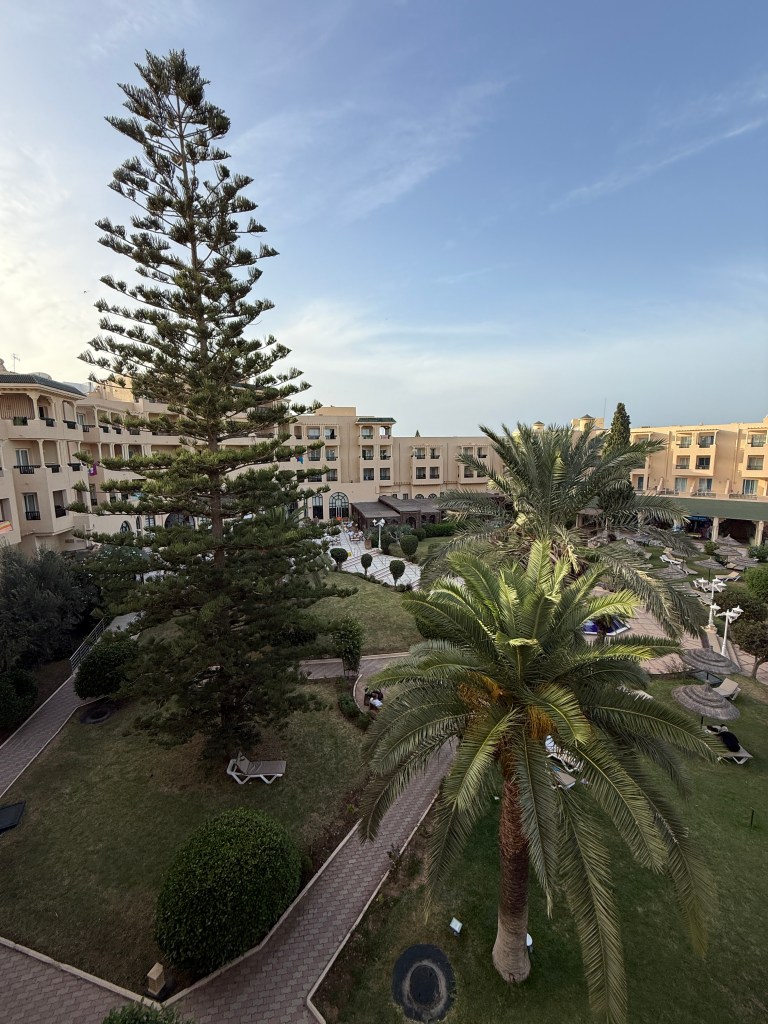
I rose before dawn, the gentle promise of a Tuesday awakening, the fourth day of my fifth journey to Tunisia – a country whose sun-drenched memories began for me on my twenty-first birthday. While others celebrated with fleeting parties and the haze of hangovers, I chose a week wrapped in the golden warmth of 27 to 30 degrees, wandering timeless corridors beneath El Jem’s ancient arches and tracing cinematic dreams at the Star Wars set at Matmata. There’s a quiet magic here; each return only deepens my fascination for this mystical country.
Our hotel was north of Port El Kantaoui, the port had just been completed the 1st time I travelled here nearly 40 years ago, we were staying in Sousse, but visited the port on one of our days out.
Port El Kantaoui, just north of Sousse, stands as one of Tunisia’s most ambitious tourism projects—a meticulously planned resort born from a vision to transform the nation’s appeal for international visitors. Inspired by the allure of Western Mediterranean marinas, its creation in the late 1970s drew on chic Moorish design and an artificial harbour as the centrepiece, instantly setting it apart from the more traditional hospitality found in Sousse’s city centre.
Before Port El Kantaoui, Sousse’s hotels primarily catered to classic beachgoers and travellers eager to soak up local sights, but this integrated resort marked a turning point—ushering in an era of luxury, modern amenities, and a distinctively European flavour in Tunisian tourism. The impact on the region has been profound: not only did it redefine the local hotel scene and create thousands of new tourism jobs, but it also established Sousse as a year-round destination for package holidays and marina lifestyles.
Today, Port El Kantaoui’s elegant streets and bustling quays continue to attract visitors seeking a fusion of North African warmth and Mediterranean sophistication.

I was welcomed by the delightful Nabil at 09:30, with booking and communication made effortless thanks to Tunisian Flavour – a true pleasure from start to finish. My culinary day was private, just for me, although there’s always the option to join a group if that suits your style. As someone whose enthusiasm sometimes overflows, I cherish the chance to immerse myself in tours or classes alone, allowing me to absorb every moment.
After parking, and before we entered the storied lanes of the Medina, I was invited to select the day’s menu from a dazzling list of thirty Tunisian dishes. The decision set the tone for our adventure. Among the offerings was Tajine Malsouka – a much-loved treasure of Tunisian cuisine, reminiscent of a quiche but wrapped in delicate malsouka pastry, crisped to golden perfection and filled with a savoury mixture of chicken, lamb, eggs, cheese, and fresh herbs. Another tempting choice was Nwasser, a cherished Tunisian pasta delicately cut into tiny squares, steamed until perfectly tender, and often served beneath a blanket of succulent chicken in rich tomato sauce, with chickpeas and vibrant vegetables woven through. That lingering moment of selecting my dishes before entering the Medina set a gentle rhythm for the day – one shaped by flavour, tradition, and the warmth of shared experience.

My menu reflected my longing for authenticity. Ojja was to be the star: beloved in Tunisia, this dish features eggs gently poached in a fiery tomato sauce, with green peppers, onions, and plenty of harissa. Most famously paired with merguez sausages, ojja brings together the hearty notes of cumin, paprika, and garlic, bubbling away until perfect for scooping up with crusty bread – a true celebration of Tunisian home cooking.
And because I couldn’t resist, I shared my fondness for brik, the iconic crispy treat I once saw Keith Floyd cook on TV at the El Jem amphitheatre – Nabil kindly offered to show me how to make it a special extra.
For my second choice, I selected Kafteji: a classic Tunisian street food where fried potatoes, tomatoes, peppers, pumpkin, and sometimes zucchini are chopped together, mixed with eggs, and seasoned with cumin, coriander, and a touch of harissa. Served with warm bread, Kafteji is both rustic and comforting – a staple of Tunisian kitchens and snack bars, enjoyed any time of day and loved for its bold, colourful flavours.

The shopping trip into the heart of the Medina was nothing short of epic. Stepping into a world alive with colour and scent, I found myself surrounded by piles of freshest herbs – dill, mint, coriander, parsley – each leaf and sprig bursting with promise and flavour. Much like my adventures through the hidden corners of Morocco, I purposefully wandered beyond the tourist trail with Nabil to where real life unfolded: bustling market stalls, vendors calling with pride, the air thick with the fragrance of earth and spice.
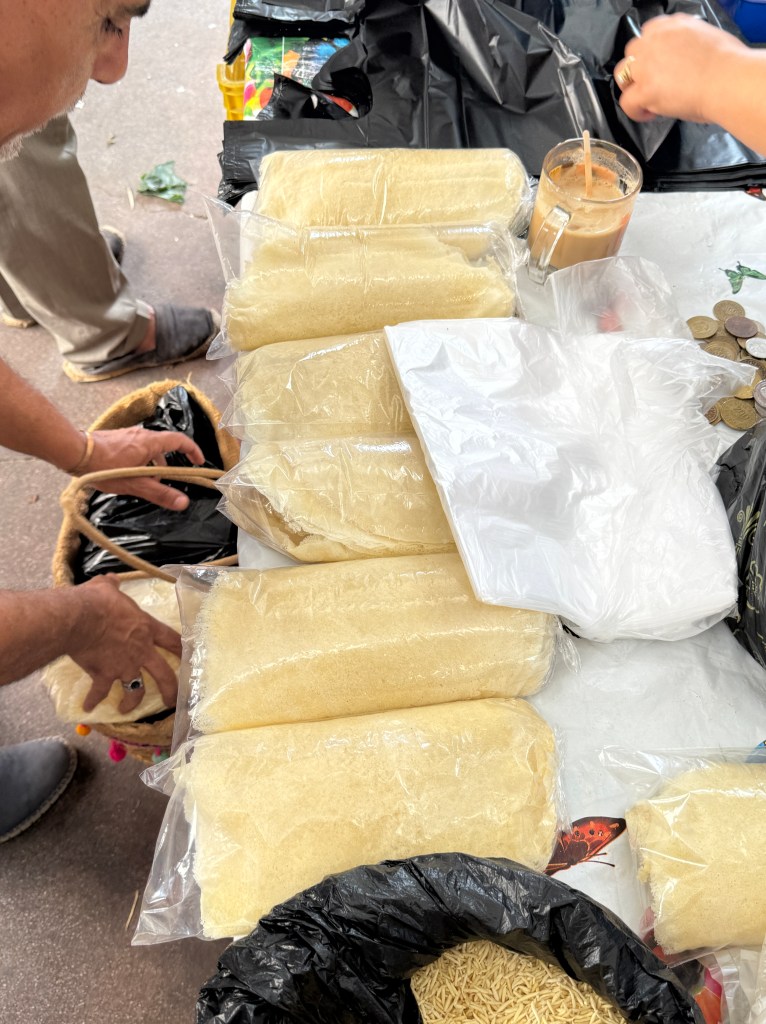
Shopping where locals shop, I revelled in the ritual of tasting, smelling, and with Nabil, carefully selecting ingredients, seeking only the most vibrant and perfect for the dishes ahead. There is an undeniable thrill to browsing food markets – each stall a feast for the senses, every display telling a story. Familiar greens mingled with new discoveries, the market’s energy and abundance filling me with delight. It was just brilliant, the kind of experience that cooks up lifelong memories alongside the day’s recipes.
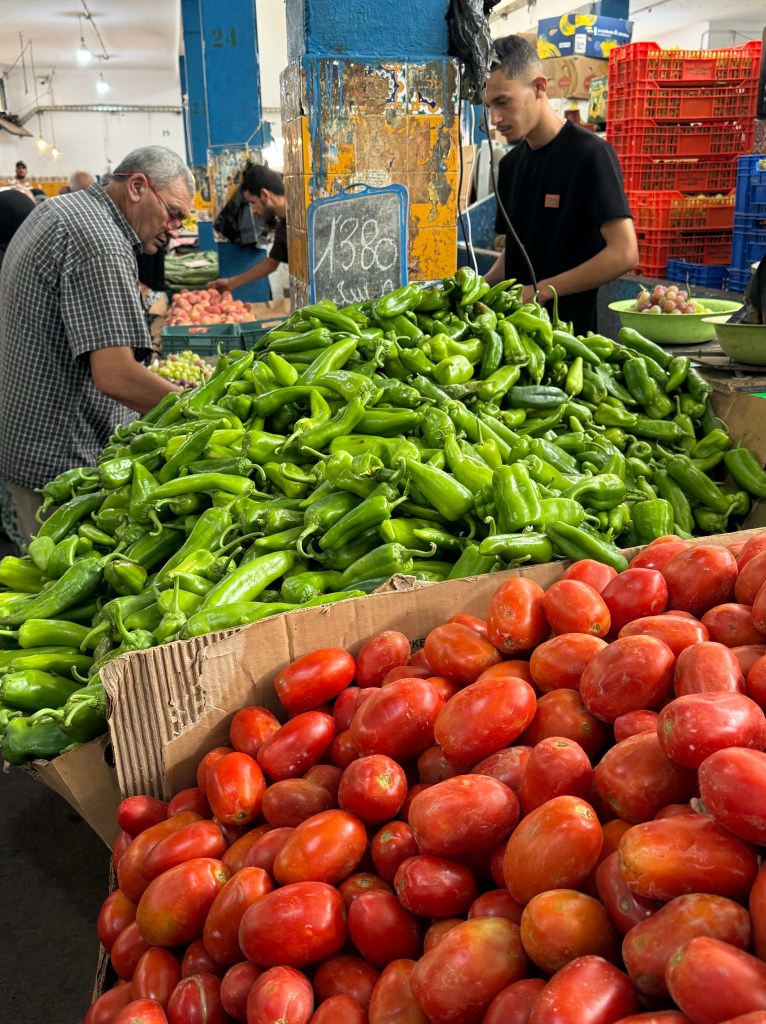
If there is one ingredient that always seems more vibrant and irresistible when travelling, it’s the tomato. Abroad, their sun-ripened sweetness and fragrance surpass anything I’ve tasted at home – I simply cannot get enough. During my stay at the hotel, juicy, crimson tomatoes found their way onto my plate at least twice a day, an essential centrepiece in salads bursting with authentic flavour – so unlike the pale, bland offerings I’ve grown used to back in the U.K.

The market was overflowing with them: plump and glistening, heaped in glorious abundance, the scent hanging thick in the air. Each tomato promised the taste of sunshine and earth, a simple perfection that felt almost impossible to capture outside these travels.

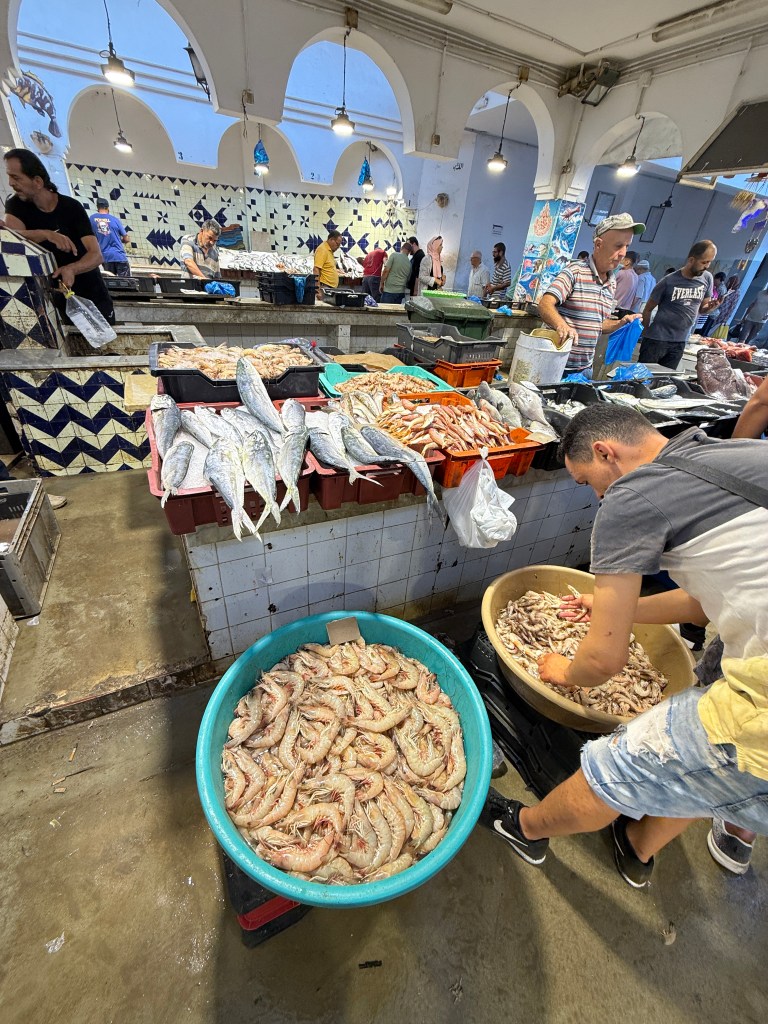
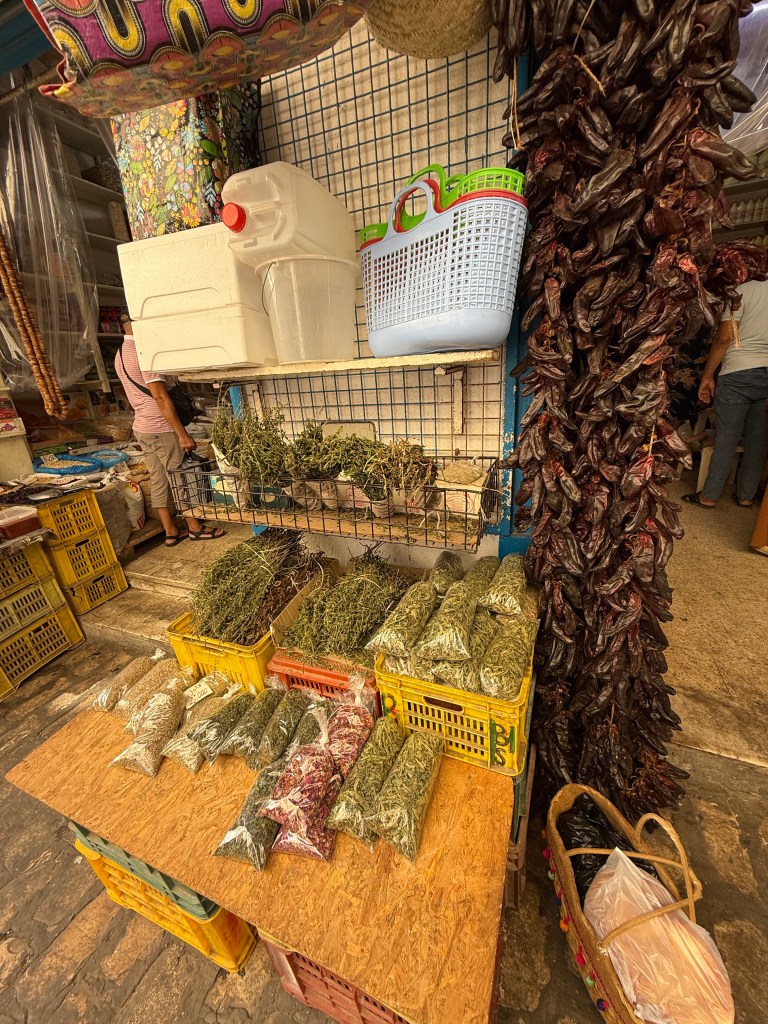

We continued our journey through the winding alleys of the Medina, stopping at vibrant market stalls to gather the day’s essential ingredients. Each pause brought another burst of colour and aroma – bright herbs, fresh vegetables, spices so fragrant they lingered in the air. The rhythm of local life pulsed around us, every purchase infused with intention and excitement for the cooking to come.
After the market, we retraced our steps to the car, our bags now heavy with promise. Yet the adventure wasn’t done: on the way to Nabil’s home, we visited a delightful series of specialist shops, each one a treasure trove in its own right. There, we picked up freshly made harissa, fiery and aromatic, plump merguez sausages, and glistening olives. These final, carefully chosen ingredients would tie the meal together, their flavours echoing the spirit of Tunisia – generous, bold, and unforgettable.
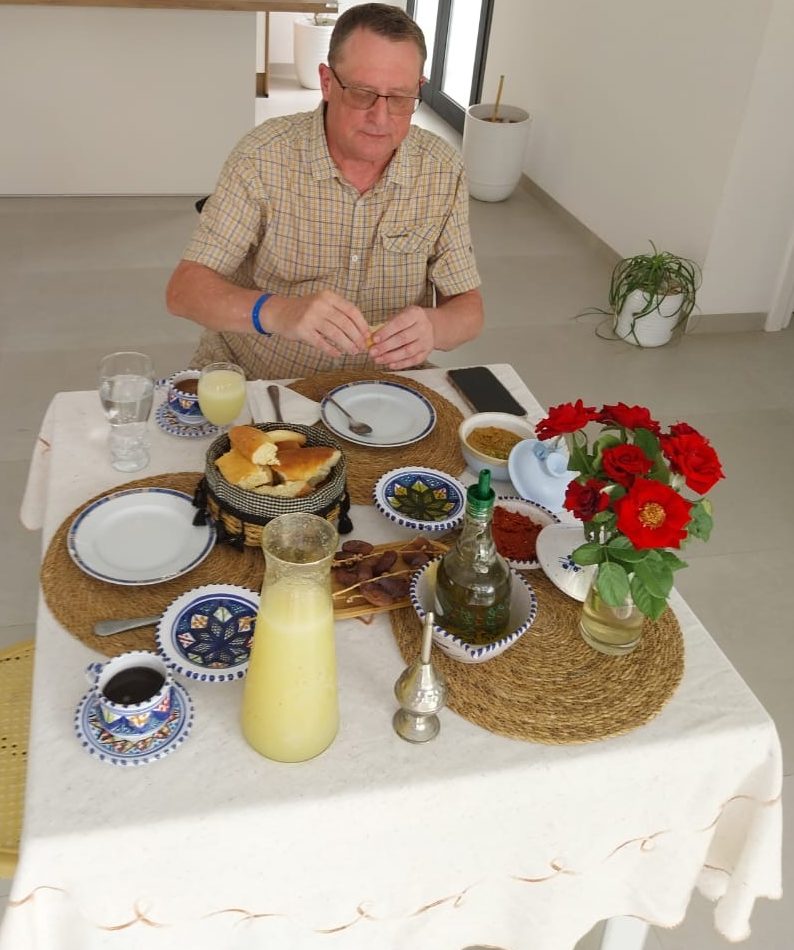
After a short drive, we arrived at Nabil’s family home where I was introduced to his wife and professional chef Nisaf, my guide for the cooking lessons to follow – the home was a tranquil oasis enveloped in greenery and the gentle shade of leafy trees. The house exuded a cool serenity, with its inviting patio and comfortable chairs set out to savour the softness of the Tunisian breeze. The sheltered garden offered a quiet escape, promising a sense of peace and familial warmth.
Stepping inside, I was welcomed not as a guest, but as a long-awaited member of the household – greeted by genuine smiles and a hospitality that felt deeply rooted in Tunisian tradition. A table was thoughtfully being prepared with refreshments, an offering that was both generous and heart warming. In this private sanctuary, I felt a true sense of privilege, as if I were rediscovering distant family after many seasons apart.
Bread and deep green extra virgin olive oil graced the table – did you know Tunisia’s olive groves span nearly a third of the country and place it among the world’s top five producers. Renowned for organic, flavourful oils like Chemlali and Chetoui, Tunisia’s harvest is largely exported and garners global acclaim, its reputation now standing proudly beside Spain, Italy, and Turkey.
Alongside were figs and bssisa – a beloved Tunisian staple made from roasted grains and legumes, ground and blended with spices, then enriched with olive oil or milk into a nourishing paste or drink. Steeped in tradition and family ritual, bssisa embodies the essence of Tunisian hospitality, uniting generations through its wholesome flavours and generous spirit. Harissa was there too, the ever-present, fiery chilli paste crafted from sun-dried peppers, garlic, olive oil, and aromatic spices – a condiment that captures the vibrant soul of Tunisian cuisine. Completing the spread, coffee gently scented with rose petal essence offered fragrant, delicious comfort.
The spacious family kitchen was ready for an afternoon of discovery. Here, I was welcomed into the secrets of time-honoured Tunisian cooking, sharing those cherished moments that make one feel utterly at home, if only for a sweet, fleeting afternoon—the anticipation humming with the promise of unforgettable memories.

So, back to my menu, Ojja, Kafteji and Brik, a selection of dishes unknown to me (with the exception of Brik. Nisaf was going to show me how to create this traditional Tunisian dishes and I was excited to learn some new techniques.
Ojja
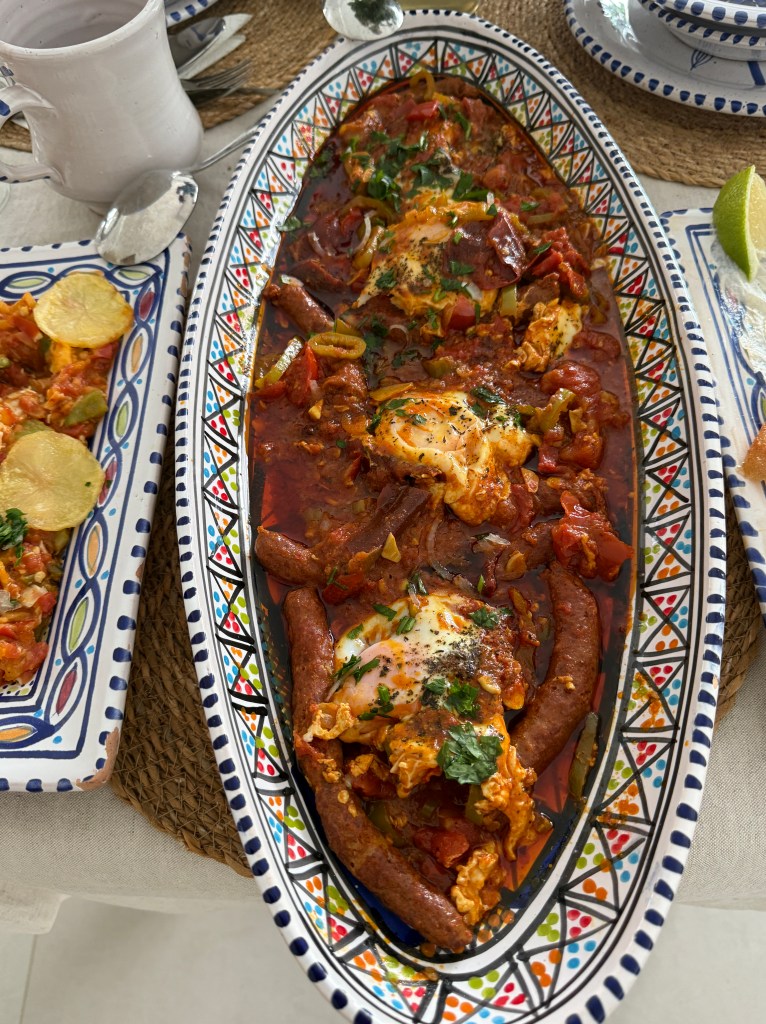
Ojja is a deeply traditional Tunisian dish with humble roots in home kitchens, reflecting the fusion of Berber, Arab, and Mediterranean culinary influences over centuries. Its signature mix of eggs, tomato, peppers, harissa, and spicy merguez sausage embodies the bold flavours of Tunisia, while adaptations vary regionally and by family. The dish is regarded as a cornerstone of authentic Tunisian comfort food, celebrated for its ability to adapt and unite diverse tastes and ingredients.
Kafteji

Kafteji, now a Tunisian staple found in street stalls and home kitchens, began as a creative way to use available vegetables – potatoes, peppers, tomatoes, pumpkin—chopped and fried, mixed with eggs, and spiced generously. Its preparation style, where all ingredients are diced and mixed, is reflected in its name, derived from the Arabic for “chopped”. While some elements may echo Mediterranean and even Turkish traditions, kafteji’s evolution and widespread popularity are distinctly Tunisian, symbolizing hospitality, creativity, and the communal pleasures of everyday meals.
Brik

Brik’s origins are a tapestry of influences: its ultra-thin pastry (warqa or malsouka) and fried fillings likely evolved from Turkish börek – introduced via the Ottoman Empire – while the classic runny egg filling may owe its presence to Andalusian Jews who arrived in Tunisia after the 15th-century expulsion from Spain. Over centuries, brik became a uniquely Tunisian delicacy, made with potato, egg, seafood, or meat, and featured at holidays, Ramadan, and festive gatherings. Its enduring appeal lies in Tunisia’s layering of culinary traditions, each bite echoing the country’s role as a crossroads of Mediterranean culture.
The artistry of Tunisian cooking reveals itself dish by dish, beginning with the bold flavors of ojja. The process starts by pricking merguez sausages with a fork and cooking them separately with some chopped dried chilli, allowing their spicy oils to seep out and deepen their flavour as they brown. Once done, the sausages are set aside, their aromatic fat reserved.
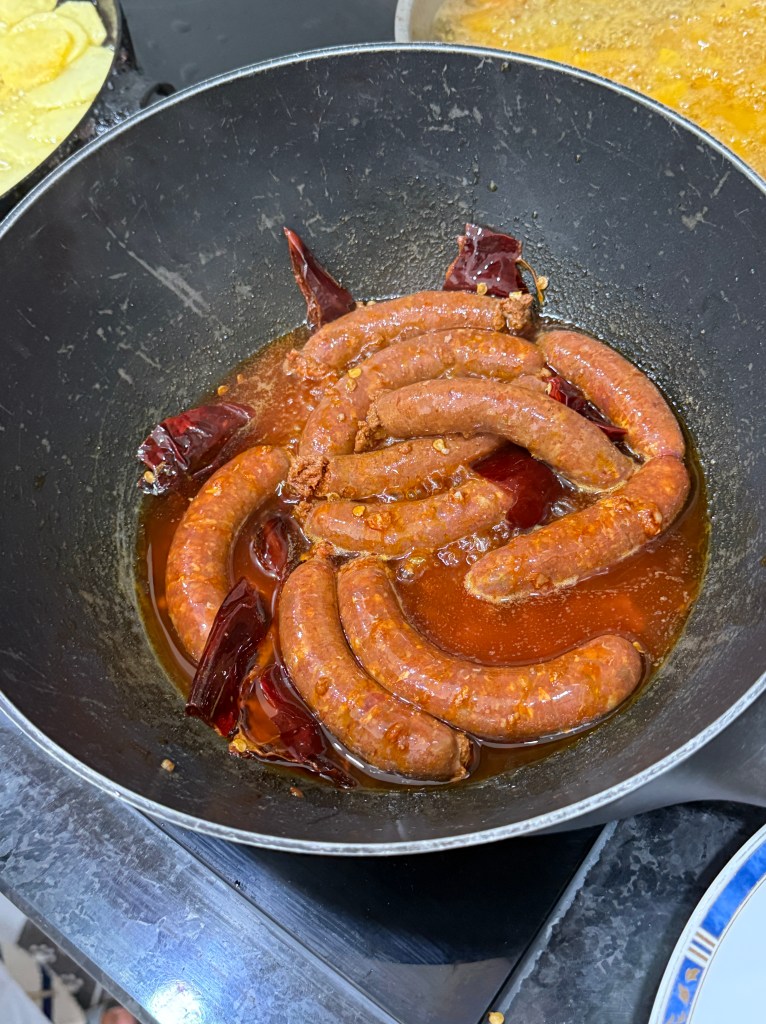

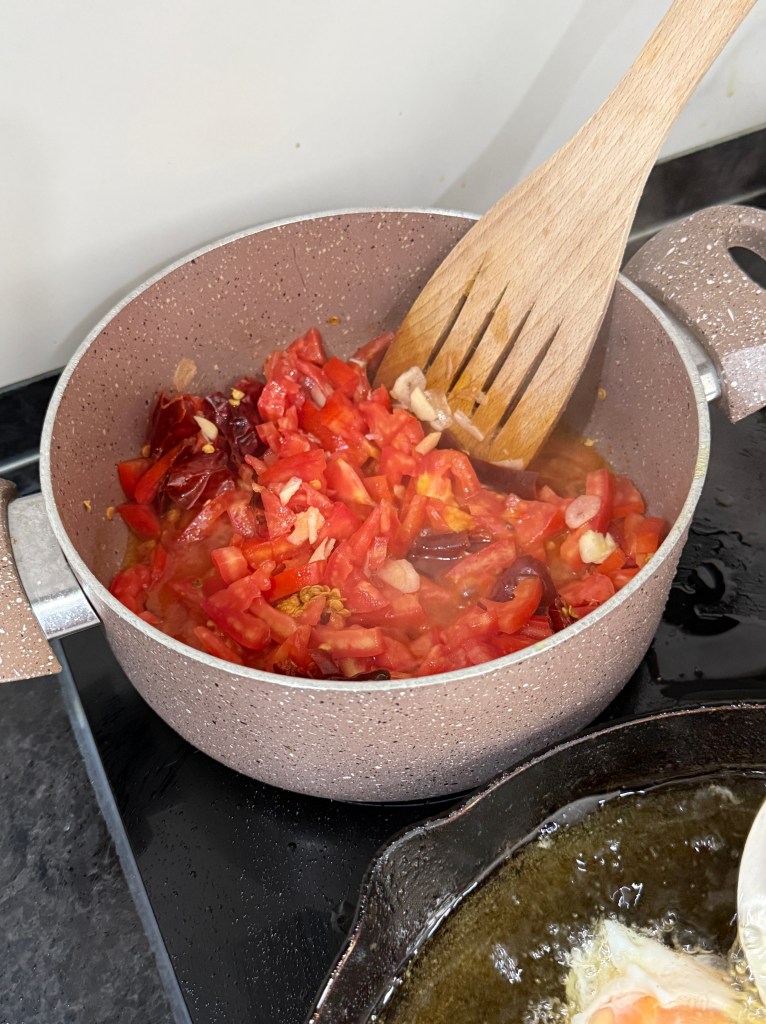

In the same pan, onions and garlic gently sauté in olive oil, joined by chopped green peppers that brighten and sweeten as they cook. Tomatoes and harissa follow, mingling with cumin and coriander until a rich, fiery sauce develops. The browned merguez rounds, glistening with their own juices, are folded back in, and finally eggs are cracked into the bubbling sauce, their whites barely set, yolks golden and just runny. Scooped up with fresh bread, ojja embodies the heart of a Tunisian gathering.
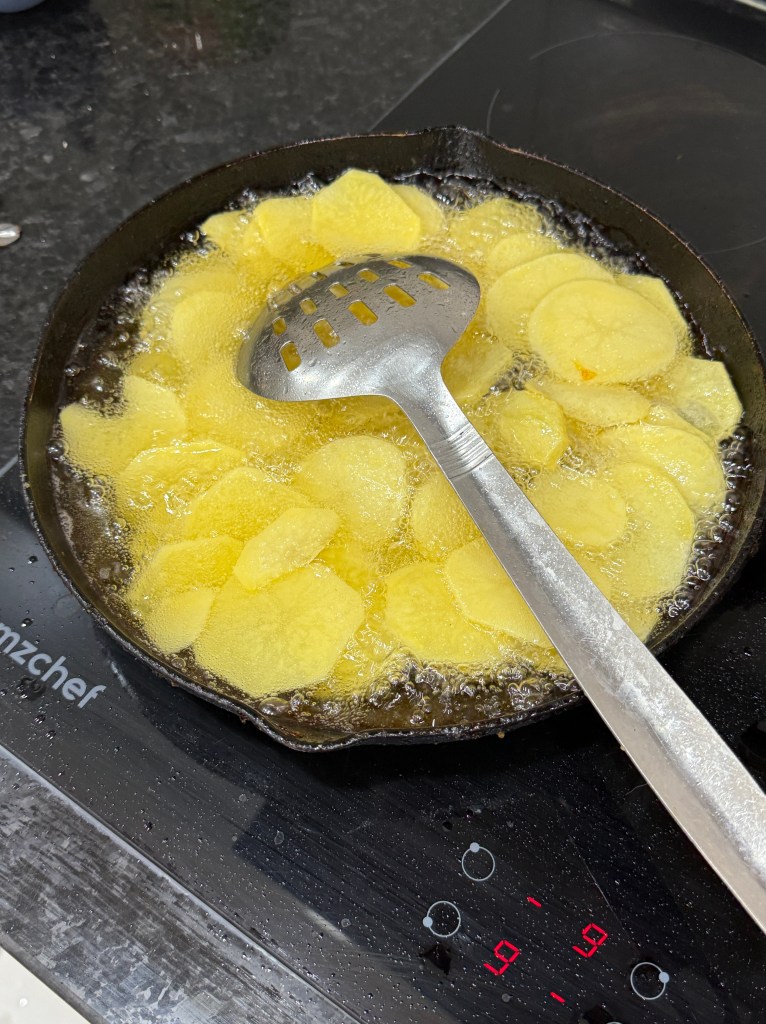

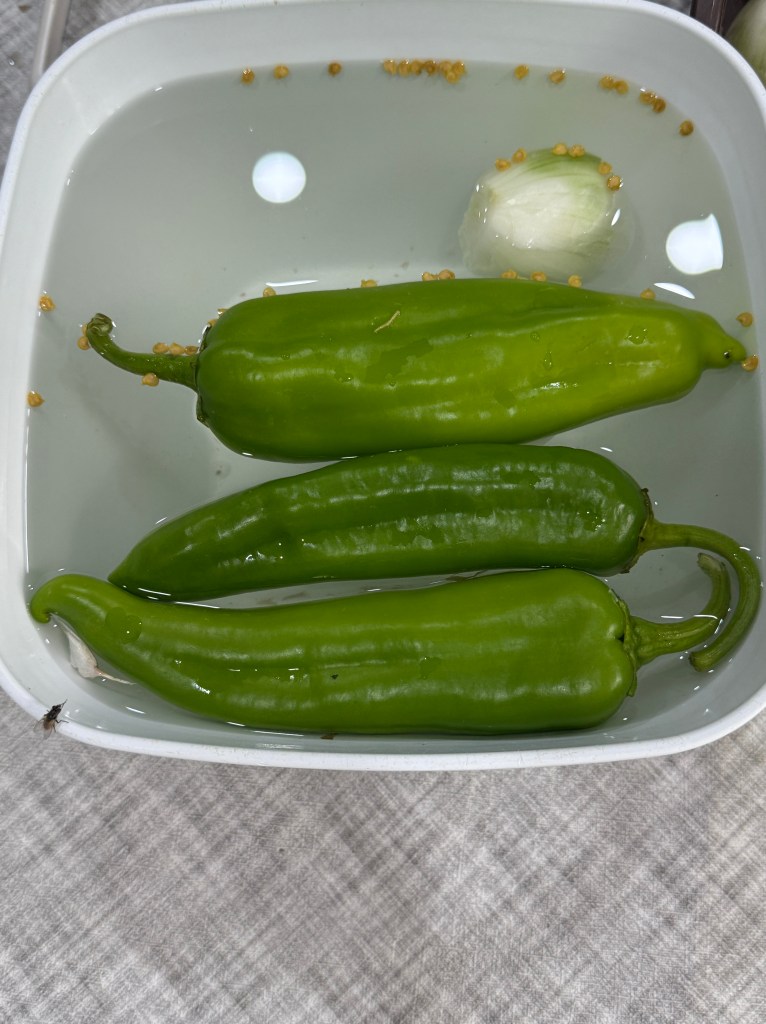
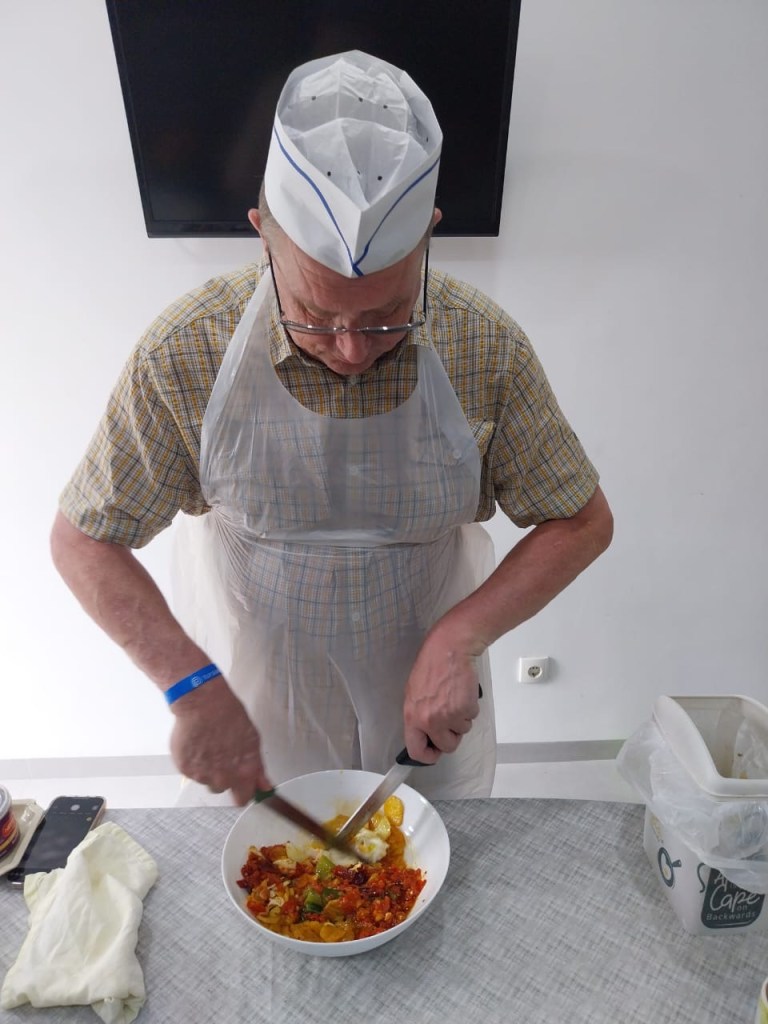
Moving across the kitchen, the creation of kafteji is a celebration of color and texture. Potatoes and squash are sliced thin and fried separately, each piece taking on a golden, crisped edge. Peppers and chilies are fried in turn, then all the vegetables come together in a medley on a broad platter. Fried eggs are then laid across the surface and everything is cut into enticing strips, mingling vegetable and egg in a fragrant jumble. This dish, which is always served for sharing – is wholesome, rustic, full of sunshine and very tasty.
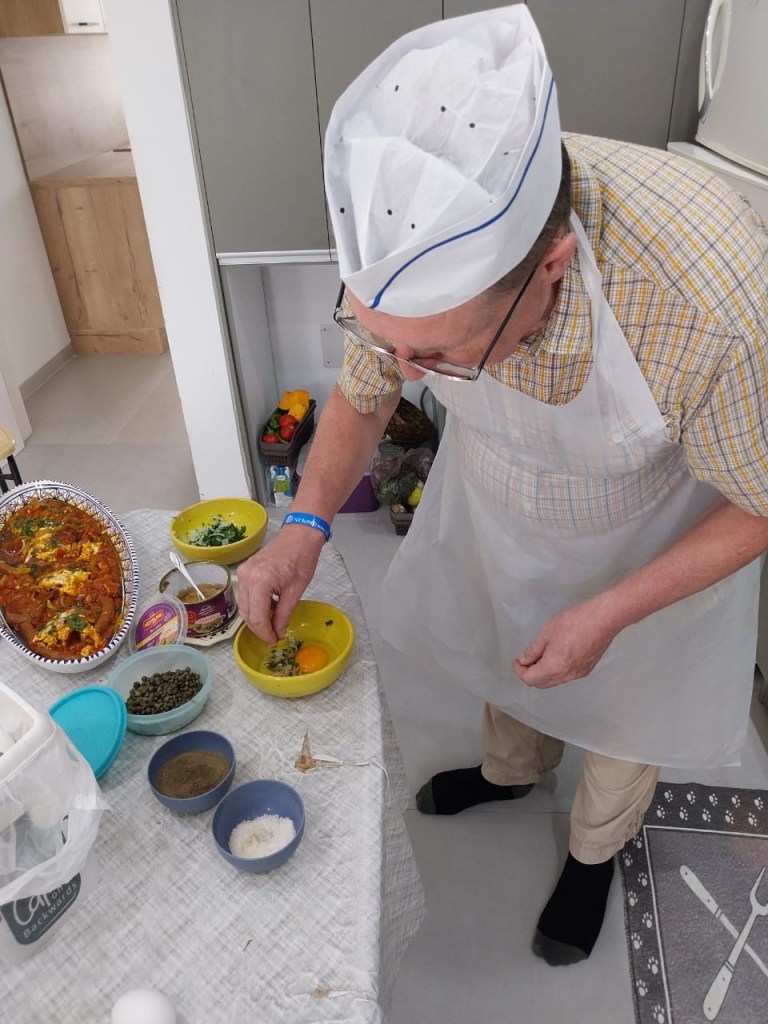
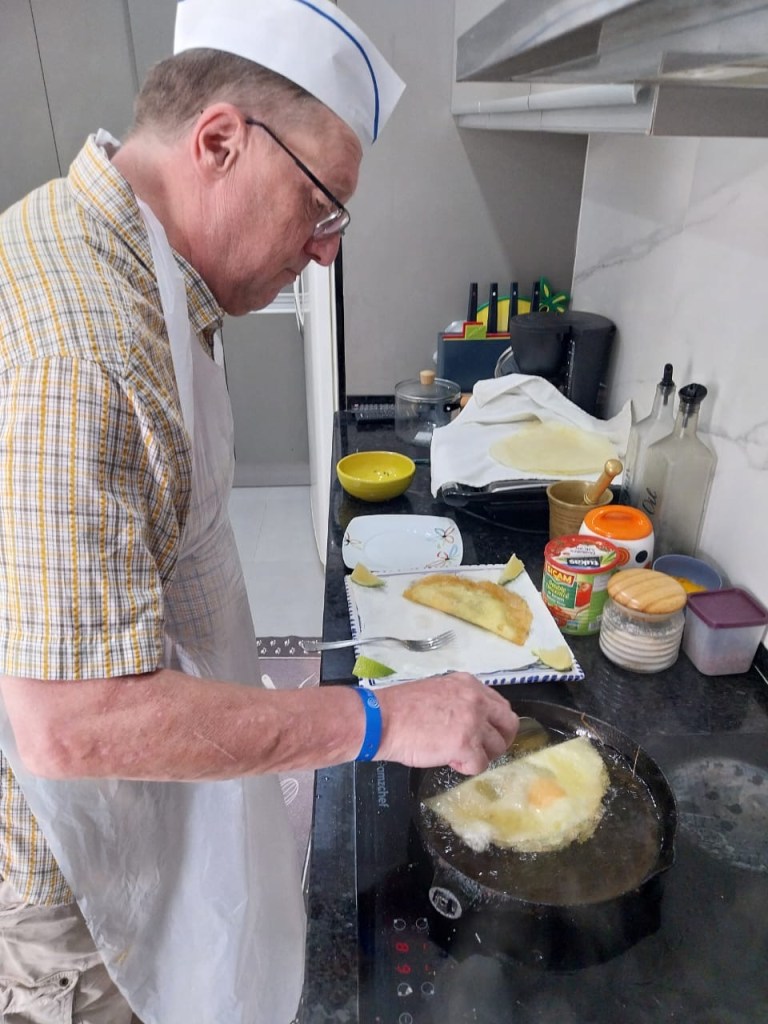
Brik provides the theatrical finale. Each delicate sheet of pastry (malsouka, which we purchased freshly made at the Medina) is filled with a little seasoned tuna placed at its centre, some Tuna. chopped Parsley and a little chopped Onion along with the freshest egg available. The pastry is folded to envelop its filling, with quick, sure hands, and lowered carefully into shimmering hot oil. In just moments, the brik crisps and blisters to a golden finish, the egg inside barely set with a runny yolk. Served immediately, with a wedge of lemon ( and for me Harissa, I love the stuff), brik is crisp yet delicate, a Tunisian delight both sumptuous and fleeting – capturing the very soul of the country’s spirited home cooking.
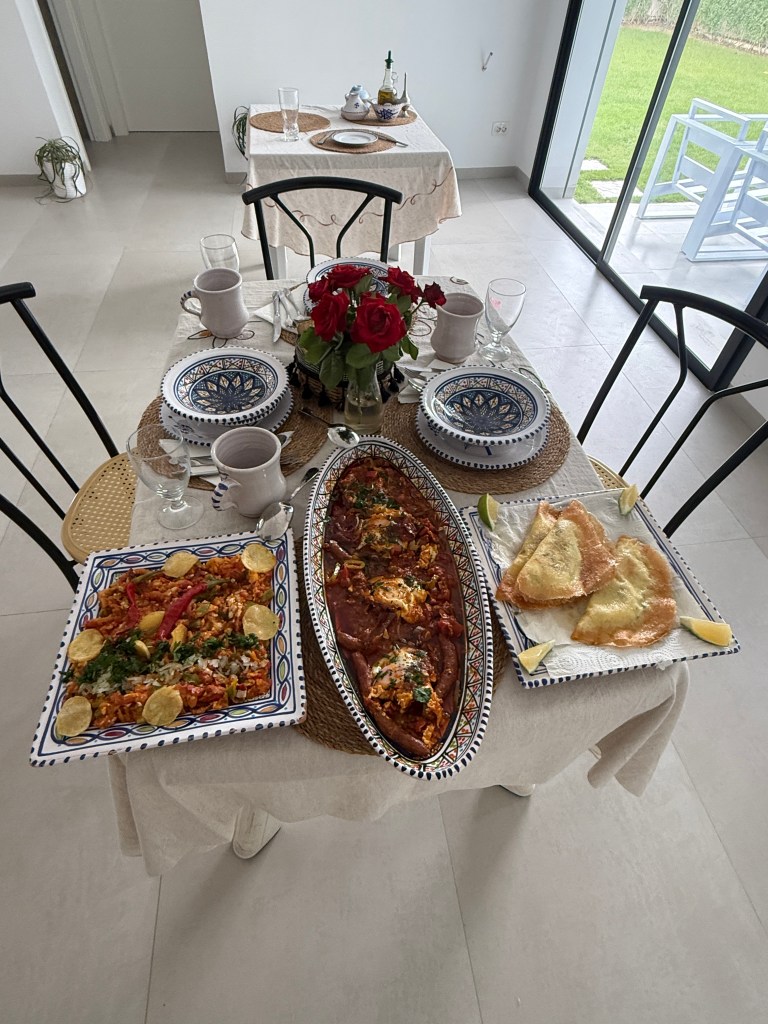
We drank from traditional white and blue Tunisian terracotta mugs – slightly porous and beautifully handcrafted. The clay kept our drinks deliciously cool, even in the midday warmth, each sip a simple pleasure that echoed centuries of Tunisian craftsmanship and refreshment.
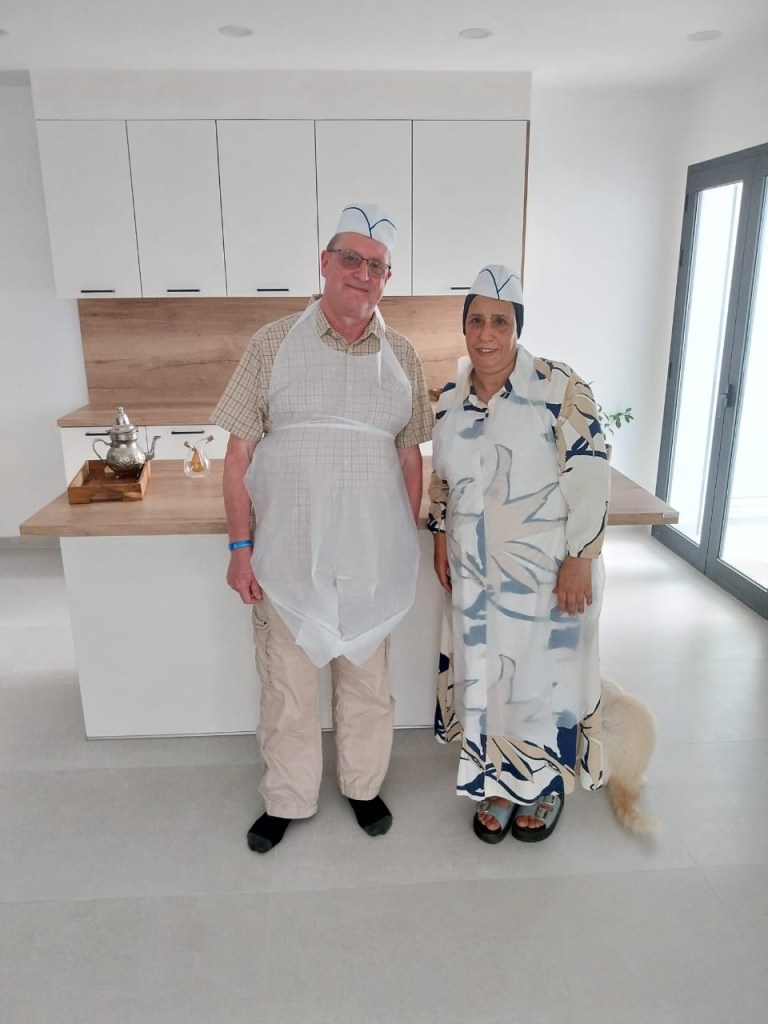
Nisaf was nothing short of magical – a chef imbued with talent and generosity, guiding each step with a graceful confidence that made every new technique feel within reach. With Nabil’s able hands and his effortless translation between languages, learning was transformed into pure delight; culinary secrets became stories, and the kitchen itself pulsed with laughter and the easy rhythm of shared discovery. As we finally sat down to savour the feast we’d created, each bite shimmered with the flavours of Tunisia, rich with memory and promise. I left the table not only filled with the most delicious food, but also with a new treasury of knowledge and inspiration – thirty genuine recipes tucked eagerly into my bag, ready to carry the vibrance of Tunisian cuisine into my own kitchen, time and time again.
After I arrived back to the U.K. I was invited to join a Sicilian Cookery Session at Richard Bertinets Cookery School in Bath which I will be writing about soon.
………………………………. Until Next Time…………………….. L8ers
 Julian Rolfe