
 I have been taking a break from the blog and cooking in general to recharge the culinary batteries, and try and seek new inspiration from a number of foodie sources including books, cookery competitions on T.V. and researching produce and concepts.
I will apologise upfront, this is not a simple or quick recipe, it was prepared over nearly 3 days but, broken down in stages the amount of time actually spent in the kitchen is only a few hours!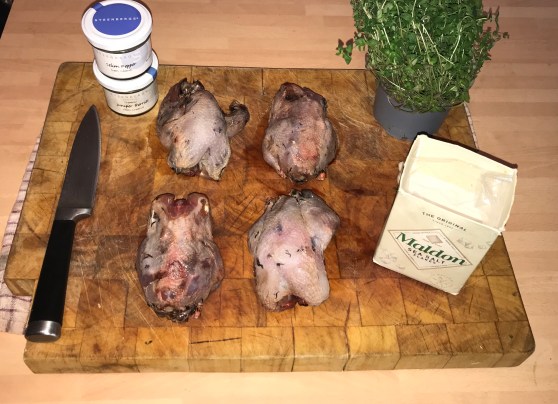 This dish is inspired by an entry in the book NOPI, by Yotam Ottolenghi and Ramael Scully. Its a gorgeous book, full of dishes from the restaurant of the same name but subtly simplified to make them more accessible, but nonetheless they are still complicated.
Having read the recipe, description and processes my mind started to wander and think about my interpretation of what seemed a very tasty, but complex Filo Pie, with its origins from Morocco and the Savoury/Sweet Pastilla.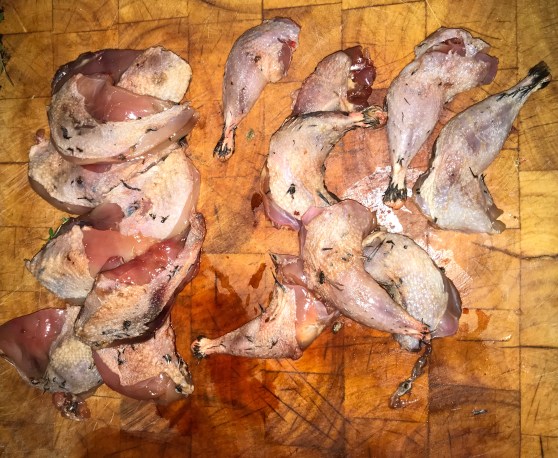 Our family LOVES game, especially Partridge and a recent trip to our local meat supplier Casey Fields Farm Shop in Ashampstead had allowed the purchase of a few birds which were really fantastic value for money. The plan was to section the birds, roast the carcass, make a Partridge Stock and confit the meat.
 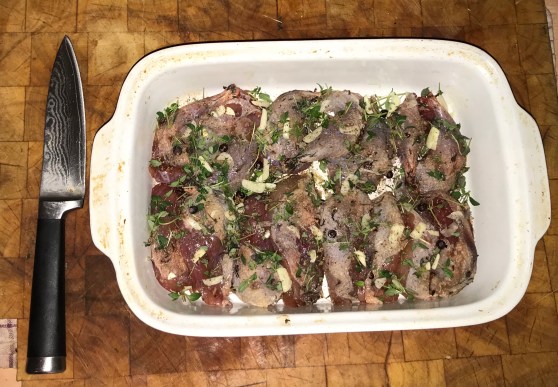 The work was planned to start on a Friday evening, but due to over running work wise I started on the Saturday morning, I have done some butchery over the years so the sectioning was done pretty quickly and I soon had a pile of breasts and legs which were placed in a dish with Garlic (about 3 chopped cloves), Juniper Berries (about 10, crushed), Maldon Salt (2 Tablespoons) and Selim Pepper (from Steenbergs), and some Fresh Thyme and covered with cling film before sticking the in the fridge until the following Morning.
 The carcass’s were placed in a roasting dish, treated with Olive oil, Fresh Thyme and Maldon Sea Salt, before placing in a 160 degree (fan) over for about 2 hours to cook. After 75 minutes I put a halved red Onion in as the birds finished roasting.
 Once the roasting was complete, the carcass’s were put in a large pot along with the aromats and about 5 litres of water. I looked at the recipe for guidance as to flavours, it used Chicken Stock so I added some dried Porcini Mushrooms, Tomatoes, the roast Onion, Peppercorns, Star Anise and a ‘faggot’ of herbs, Bay, Parsley and Coriander. I didn’t add Salt until later, and to taste, and then sieved the stock removing all the solids, that was the Partridge Stock done!
 First thing on the following Sunday morning I was up early and got the Partridge Breasts and Legs cooking, after washing off the Salt and marinade ingredients, at about 115-120 degrees, in plain oil. Ovens differ so you want to see the ‘occasional’ bubble rising to the surface and may need to adjust the above temperature a bit.
 I let the meat cool down in the Oil for about an hour before removing, covering and sticking in the fridge whilst other stages were completed. The original recipe called for a layer of ‘Catalan Spinach’, which needed some Pine Nuts to be roasted and coated in Smoked Paprika, which only took a few minutes. There was also a Sweet/Sharp component made from some currants, steeped in warm Sherry Vinegar and Brandy until plump.


As you can see, there is quite a lot to do, a number of processes to complete and some great flavours being developed with the home made stock and various elements of the dish. The stock was just the base for the intense and complex flavoured sauce that the Confit meat was going to be added to. Caramelised Onions and various other flavours were added to a pan and cooked down before adding some of the stock, which was then left to simmer for about an hour or so! If you want the recipe then the book NOPI is where to get it from , it’s a great investment for any keen cook. I used the recipe as a guide as I wasn’t using Chicken, so missed some of the stages that were not needed.
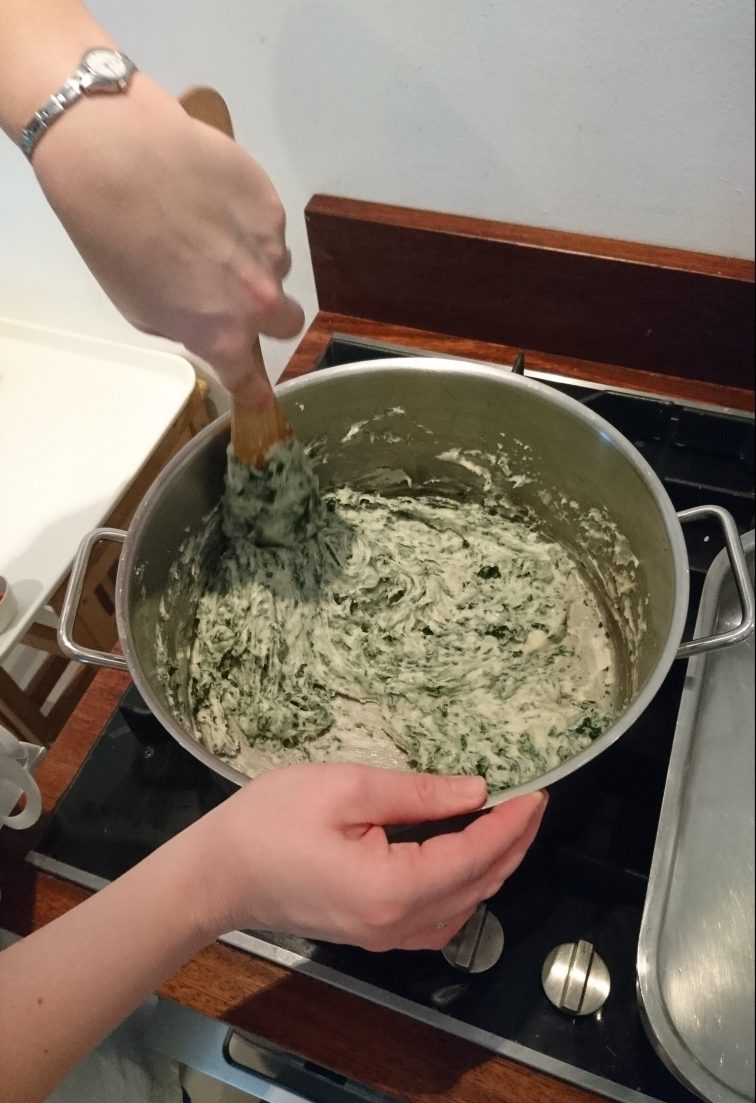
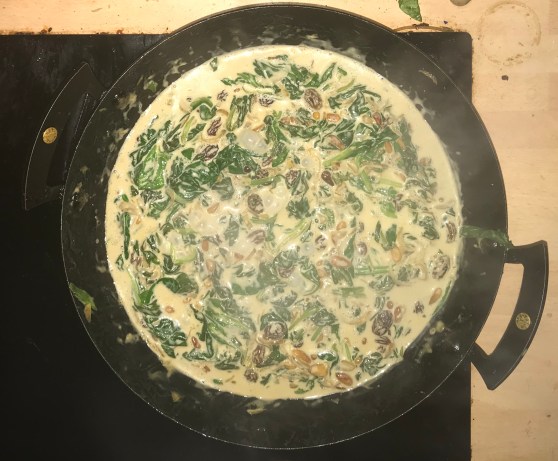 The second layer of the Pastilla was the “Catalan Spinach’, a creamy cooked down delicious combination of the Pine Nuts and Currants, Garlic along with Spinach and Double Cream. You need to ensure the mix is not too wet, otherwise the final result may make the dish soggy.
  So, we have sectioned some Partridge, Roast the carcass’s and made a tasty stock, salted and marinaded the Legs and Breasts, and then done the confit treatment. Prepared the various ingredients for the Catalan Spinach and started to make the final sauce for the meat. Give yourself a MASSIVE pat on the back and SMILE, I certainly did!!
 Again I did not follow the recipe and strained the sauce, then reduced it added salt and kept tasting until I felt it was rich and velvety. I picked the meat off the legs and pulled the breast apart into small pieces and then added the sauce to coat, not drench the meat.
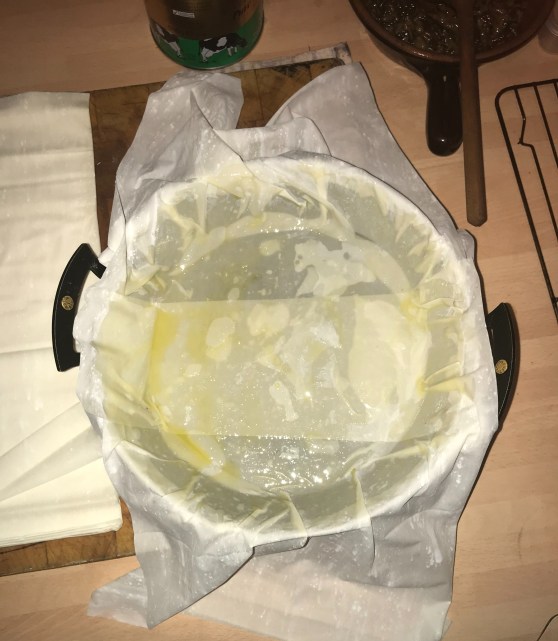 We are almost done, and now its Filo time! I have two ‘favourite’ pan’s, from Netherton Foundry in Shropshire, they are made of spun iron, very robust and made to last. The ‘Prospector’ pan was to be my cooking vessel for the Pastilla (I used my Netherton frying pan to complete the sauce) so started by brushing some melted Ghee on the base (to help crisp the pastry), before layering several sheets of Filo pastry at 180 degrees to each other, slathering more Ghee on each layer as you can see above. Its quite delicate so be gentle with your brush as it can tear!
 I used about 8 sheets of Filo for the size of pan I was using, overlapping each time to create overhangs that could be played back over, and then filled with the Partridge layer, you can see from the picture above that the mixture is not too wet, but the meat is well coated nonetheless. The Spinach layer was added on top of this.
 Finally, lay a sheet in the middle of the Pastilla and gentle tuck the sides all around your pan, as you can see above. Your tucking in a blanket before gently bring the outer layers back over the top, brushing Ghee on each layer as its sealed, and you should end up with something similar to the picture below. Give yourself ANOTHER pat on the back!
 Breaking down the dish into various stages slightly simplifies the cooking but it’s still a challenging dish to make and to be honest, I was pretty tired after what was a 2 day cooking event! I made things more difficult but choosing to use a Partridge Confit and kept double checking the processes to make sure nothing was missed, and where adjustments were made, everything was on track. The Pastilla needs to cook in the over for about 45 mins to 1 hour.
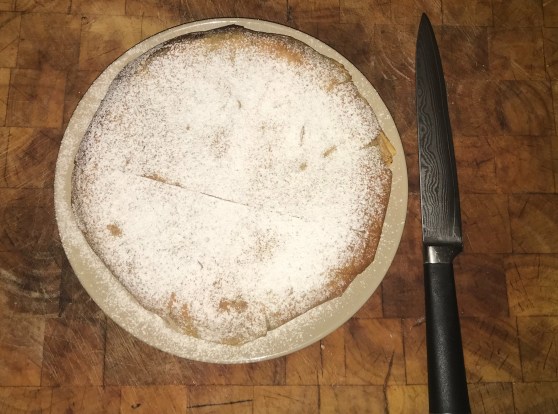 Pastilla is a Sweet/Savoury dish so needs finishing with a coating of icing sugar after it has been turned out of the pan (so the bottom is on the top). What was it like, my chief taster was very sceptical and was not sure that it was going to be any good, dead wrong, it was absolutely delicious and quite a surprise. We had some Harissa roasted Butternut Squash and a Cous Cous Salad with Feta, Pomegranate and Herbs and felt very satisfied.
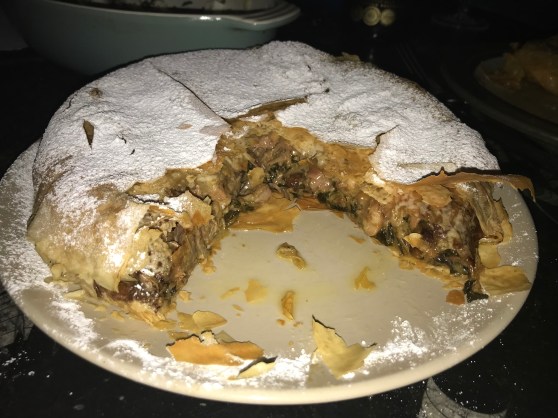 So here is my Confit Partridge Pastilla, yes its a bit of work but break into stages and even I managed it, take a leap of faith and have a go yourself.
I’m off to Argentina in a few weeks for a trip with my employer and if there is anything good food wise to write about, it will get posted shortly after.
………………………..Until next time L8ers……………………………

 The weather was miserable as I jumped onboard the train to Bath Spa station, on arrival the sun was shinning out of The Bertinet Cookery School as Spanish Chef Supremo Omar Allibhoy was in town, teaching 12 eager cookery enthusiasts and I was on the list!
 We were going to prepare several dishes from different parts of Spain and at the end sit down on the communal table and ‘feast’, which is always a pleasant and fitting end to several hours graft in the kitchen! On the menu was Gazpacho de Sandia (chilled Watermelon soup), Higaditos al Jerez Dulce (Chicken Livers with Sweet Sherry and Spices), Arroz Melosos de Seta (Paella with Mushrooms and Cod),
 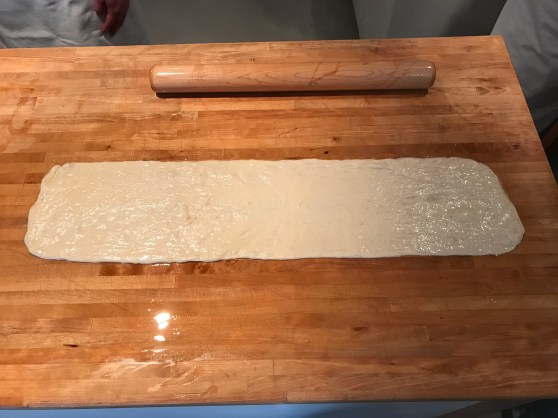 Blimey, apart from the really tasty and slightly un-familiar menu some new techniques to get to grips with, we started on the Mallorcan dessert. An enriched dough was made using an ‘industrial’ grade mixer purely due to the quantity we were making, you could do this in a Kenwood or Kitchen Aid quite easily. We had to get the gluten working hard so this was not a 5 minute process, once done (about 10-15 minutes), the dough was left to rest whilst we worked on the other dishes.
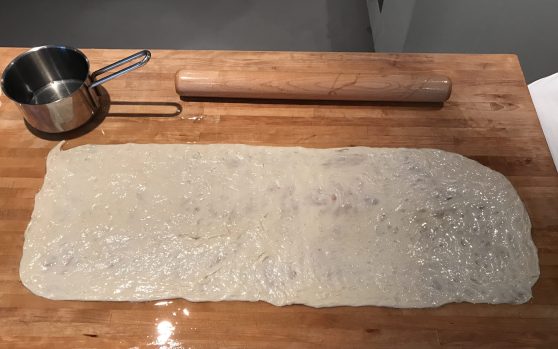 As we followed through the menu, Omar spent lots of time explaining some of the interesting facts about Spanish Cuisine, it’s ‘subtle’ not in your face and I personally think it’s a shame that a vast number of tourists only seem to focus on fast food chains and ‘British fry up’s’, Spain has so much more to offer if you make a little effort.
 The
The  We had some prepared Stock on the hob which was going to be used to make the Paella dish. This was not a traditional ‘dry’ Paella so familiar to tourists but a ‘sloppy’ one even beyond the wetness of a Risotto.
 So, we are making a dessert and then add
  Who loves Chicken Livers? Surprisingly Omar put his hand up as he asked the question. Fine in Parfait and pâté but cooked, nope, except this way. This was to be an appetizer to get the taste buds singing before the Gazpacho. Marinated in some ‘special’ ingredients you can find the recipe in Omar’s new book
  Rather than just show and tell, Omar was also hands-on, assisting and guiding all 12 of us during the 5-6 hours of cooking we were to complete before sitting down and eating our efforts. He was very enthusiastic and great fun, telling us more about his experiences in the restaurant industry and giving us hints and tips as we prepared each dish.
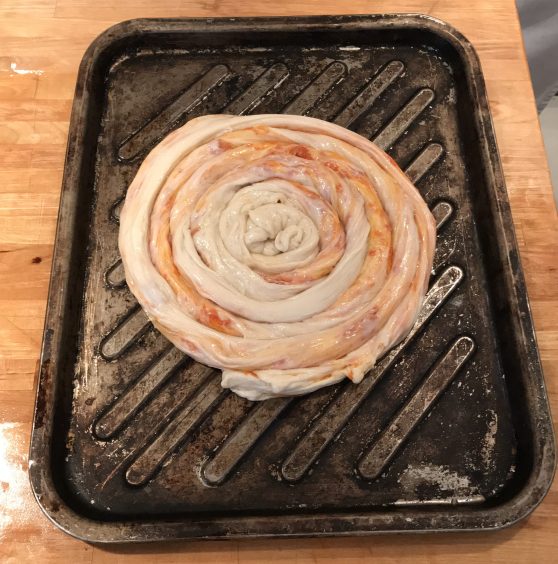 You have to stretch the Ensaidmada before ‘gently’ coiling and allowing to prove for a couple of hours, traditionally this would be done overnight to develop more flavour but our time was limited. Once risen it goes into a hot oven until a deep brown, not the light golden colour we are normally used to when baking.
 Ignore the ‘rustic’ look of the Chicken Livers, they were to die for, absolutely delightful, tangy, sweet and soft. We served them on some toasted Sour Dough and decided to crack open the wine at the same time as dinner was nearly ready and quick taster of these would get us over the line.
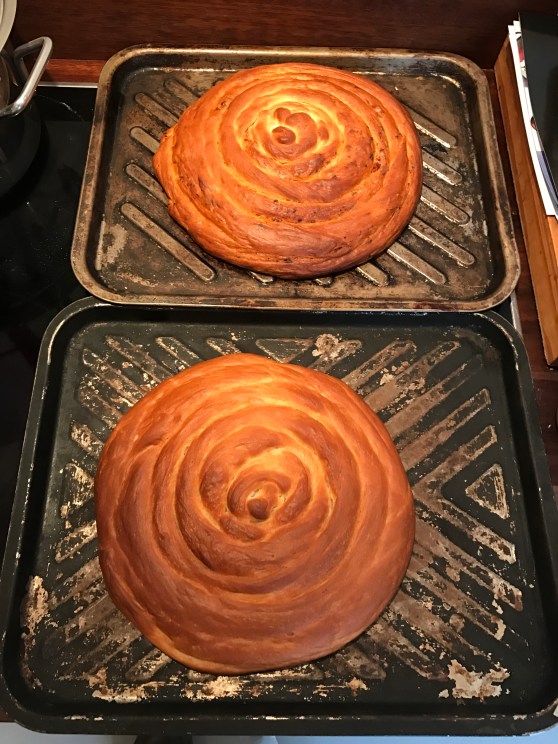 The Ensaidmada’s were ready in about 19 minutes at 190deg, the top one is the savoury version, you can seen small pieces of Sobrasada speckled on the surface. The Gazpacho was probably the easiest dish we made, assemble the ingredients and whizz in a blender. Adding Melon was unusual but it was not long before we sat done and started tasting, chatting and talking about the techniques we had learnt and discussing food in general.
 The Gazpacho was delicious, it was quite hot in the cookery school so a cool refreshing slightly sweet starter did the job perfectly. Bomba Rice is very picky, you HAVE to get the timings correct otherwise you end up with over cooked grains that are like sludge. Shortly after finishing our starter the Arroz Melosos De Seta was ready for the final ingredient to be added, Salt Cod. This only needed a few minutes and we were ready to serve.
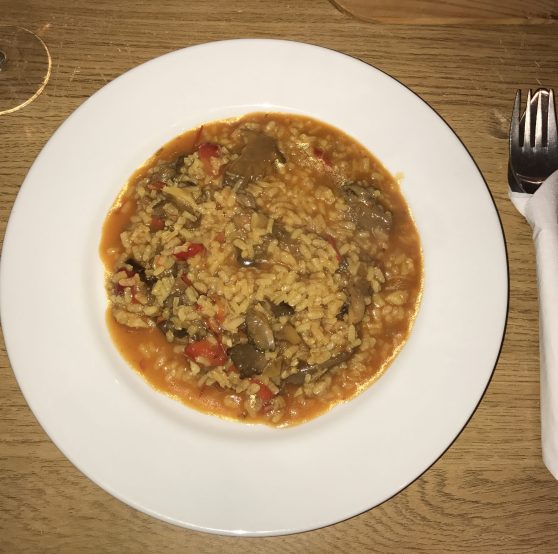 You can see the slightly ‘sloppy’ nature of the dish in the picture above. It is supposed to be like this, wetter than a Risotto it did taste subtle and was also delicious, the Paprika creating warmth and smokiness, the mushrooms meatiness and the Rice had textures but probably not the al dente described in Italian Cuisine, it was slightly beyond that stage.
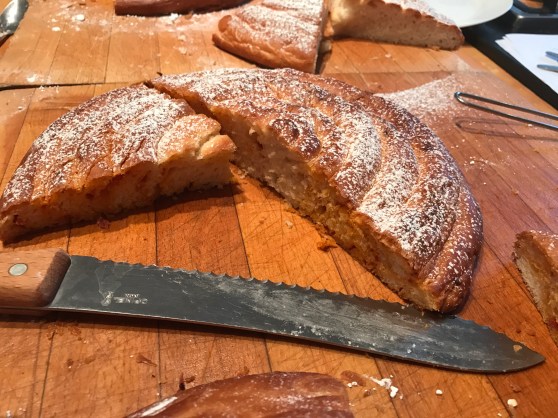 Once the Ensaidmada is cooked both versions are given a good coating of Icing sugar. The savoury version might be considered a bit like the Moroccan Pastilla dish, Pigeon Pie with Cinnamon and Icing Sugar in Filo Pastry, but in this case we are using Sobrasada which is a cured spicy Pork. It was unusually delicious again, difficult to describe unless you can taste it yourself.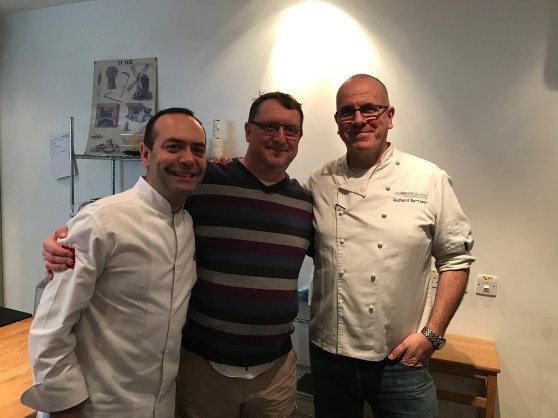
 The course was fully booked, 12 of us with good mix of people of all ages and nice to see some other guys on a cookery course for a change. There were some friendly faces from previous events that many of us new, it was a bit like a school or family reunion and in no time at all we were all chatting about food and looking forward to settling down and getting stuck in.
 Things started with an introduction and a couple of demonstrations. After being told about
  We learnt a few hints and tips but you will have to try and get on a course to find out the tricks of the trade. Trying to manipulate a
 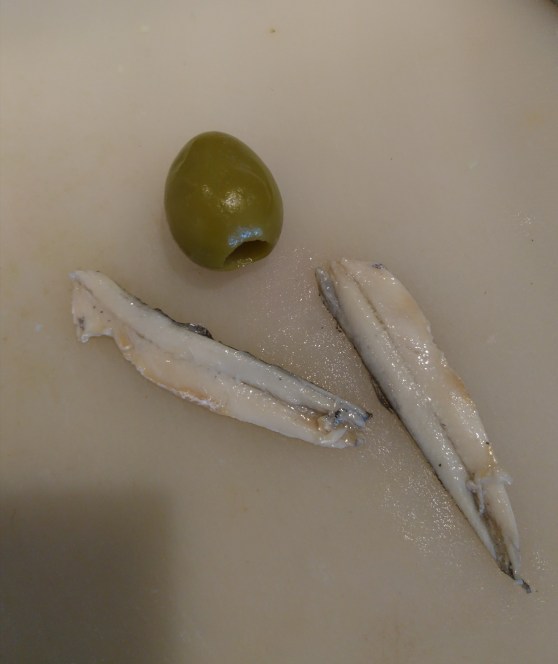 San Sebastián appears to have a lot going for it, apart from the Michelin starred restaurants it is one of the most famous destinations in Spain, which looking at the annual rain chart seems rather surprising! Along with some quality restaurants the area is also famous for
 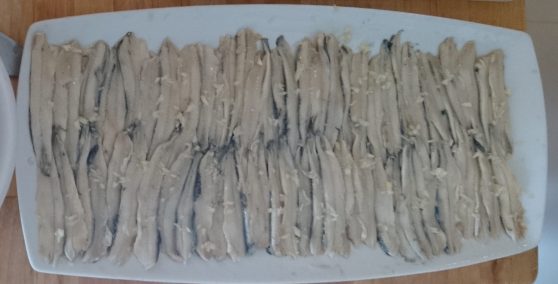 We had a couple of Boquerone left (actually loads, José had bought along a big tub!) so also prepared some marinated, sprinkled with finely chopped Garlic and given a good douse in Extra Virgin Olive Oil which were divine on some of Richards famous bread, given a quick toast and sprinkle of Olive Oil too. We had a quick taster during one of the famous coffee breaks (well, more than a taster actually as they were delicious).
 To make this Cookery School so good, apart from having an awesome range of regular and guest Chefs, Richard Bertinet has a well organised and experienced team of smiley happy people who are on hand to help, guide, advise, fetch, clean, make me Earl Grey Tea and the others coffee! and fill in where we need to get things done.
 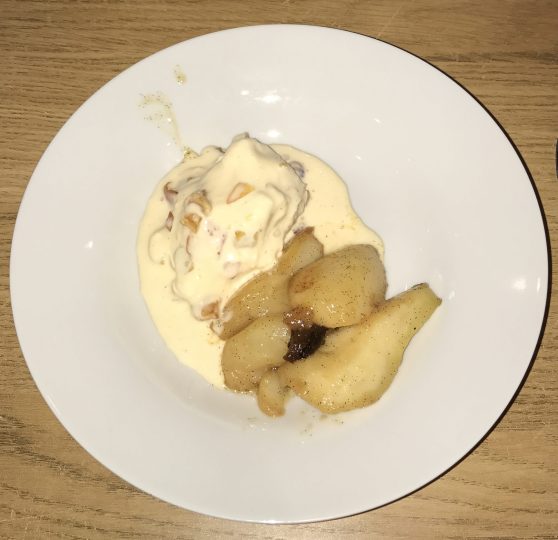 Dessert was to be an absolutely delicious Caramelised Vanilla Pear Dish with Hazelnut Ice Cream and as we had to keep an eye on other dishes, two of the team made sure the Ice Cream was finished and the Hazelnut praline was suitably ‘crunched’ (sorry, these two lovely ladies were new and I did not get their names!). We were split up up into 3 groups of four for the day and ours decided to sneak in some of Richards famous Rum soaked Dates to add a bit of ‘zing’ to the dessert and glad we did too, very very tasty.
 José Pizzaro, what a absolutely lovely teacher and thoroughly decent chap. As we were preparing the dishes (7 if you include the Pintxos) he would come round and assist, guide and chat, always with a big smile and lots of encouragement. During the numerous times he showed us particular techniques he prompted us to ask whatever questions we liked, and we certainly learnt a lot about his background, coming to England over 16 years ago and the restaurant trade in general.
 So, on the menu today is;
 The Day at the school always finishes with a communal meal, everyone sitting down to enjoy the labours of the day, copious amounts of wine on flow (unless you are driving like me) and chatting about the food, what we had learnt, what course we were going to book next etc. This was my Sixth visit, others had been on over 10 courses, it’s very good indeed.
 The last time I cooked Monkfish was in 2015, whilst in France at the French House Party Cookery School. Having checked back, Médallions de Lotte Safrantées, Arlequin du Jardin was on the menu, Medallions of Monkfish with Saffron & Seasonal Vegetables, you can see the results below. Our teacher was a Michelin starred Chef, I have the pleasure of his company again this year in May, very exciting.
 Being the start of the new year, trying to find some ‘healthier’ lighter dishes has been on the agenda which can be difficult when the weather is cold and blustery, nights draw in quickly and the tendency is to focus on Stews, Casseroles which are heartier and more fulfilling.
 Whichever Fish you decide to use, it needs marinating for at least 2 hours. Smoked Paprika, Garlic, Sherry Vinegar, Oregano, Cumin, Pepper and Salt along with a bit of water make up the marinade, Spanish Flavours which add a delicious piquancy.
 You can also work on the sauce beforehand, frying some thinly sliced button mushrooms in Olive Oil and a little butter before adding a small amount of Vegetable Stock Cube and a dash of water to dissolve it. The sauce was a ‘cook by andaza’ or estimation, something taught to me by Sumayya Usmani who wrote the very successful cookery book ‘Under the Tamarind Tree’. I had the great pleasure to attend a couple of her day courses, great fun and a real insight into the foods of Pakistan and the lesser known parts of ‘Middle Earth’.
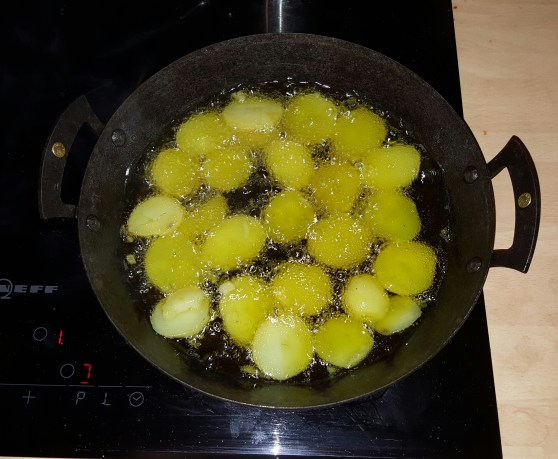 The Potatoes had cooled and skins removed, boiling with the skins on definitely imparts a better favour and is my preferred technique for mash as well as fried. I used Olive Oil from Puglia, Organic and great value for money from Riverford Organic, and delivery is free if ordered with a Veg box!
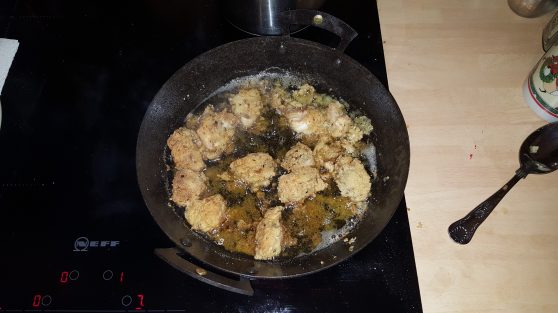 Almost done, The Fish needs draining and dredging in Semolina before frying in the Olive Oil. You may have noticed I have only used one pan for this recipe, my new friend the
 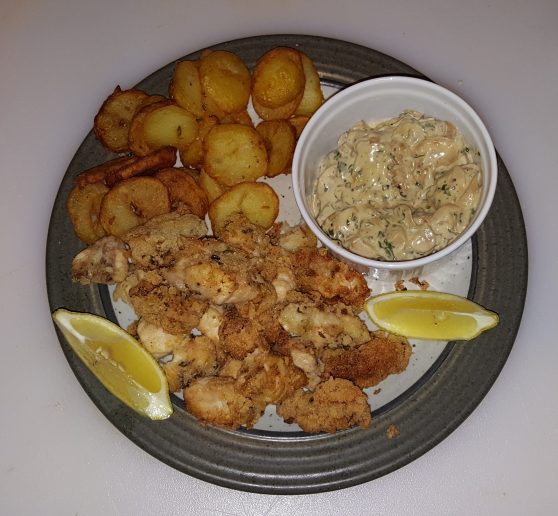 Yes, I know I need to work on my presentation a lot (unlike my previous attempt at the top of the page), but the meal was very tasty indeed. I opted to serve the sauce in a ramekin as it was a bit neater, it really worked with the Monkfish (the bosses words, not mine). This dish is easy to make, very very tasty and quite light, and could be served with a salad of Red Onion and Tomatoes if you can get some decent ones with a bit of flavour this time of year.
 It’s been a tough week, mostly due to a nasty virus and being off food which for a ‘foodie’ is somewhat challenging. Our induction hob recently gave up on us, and it has taken some time to get a new one sorted, we’ve been using a portable gas stove with those ‘hair spray like’ blue cylinders in the interim which has been interesting!
 Another reason for picking this recipe is that I wanted to try a new pan I had just purchased from
  Once you have browned the Beef to seal, put to one side and start work on the Onion and Carrot, I added a small leek to my dish as I had one that needed using up and thought it would add another dimension and increase our 5 a day intake.
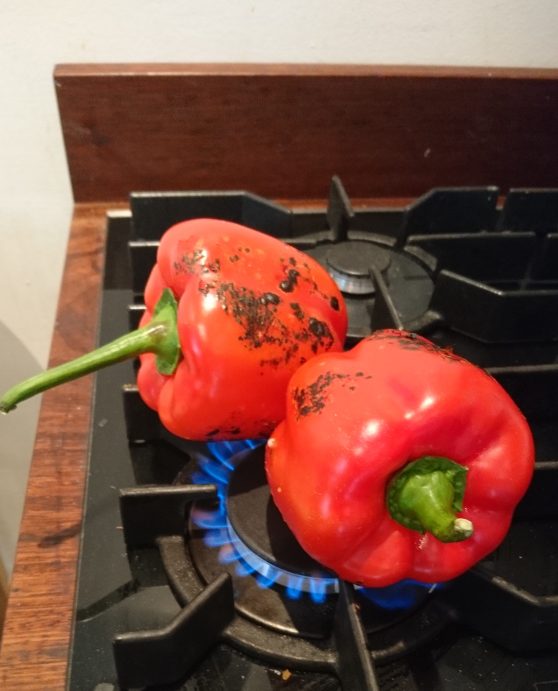
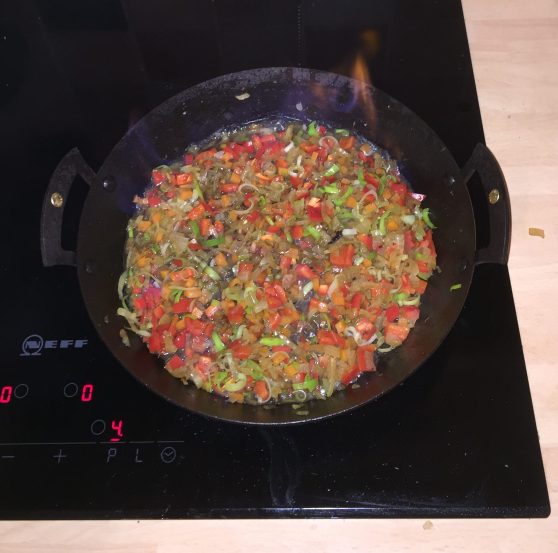 The vegetables need a decent glug of Cognac, 150ml if you are cooking for 6 – 8 people. I did vary the recipe slightly, the leeks were not in the original, and I used one of those long sweet peppers usually stuffed which I finely chopped, and also a teaspoon of sweet pimentón to the mix.
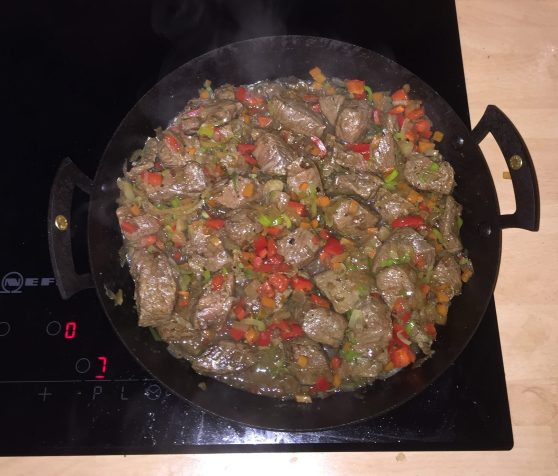 Add the Beef to the Vegetable mixture and carefully mix, the Sukalki is going to be braising for 3 – 3 1/2 hours slowly, once you have added some Beef stock to the pan. To accompany the dish I decided to prepare some ‘rustic’ Garlic Bread. Largish ‘chunks’ of bread, rough cut Garlic, LOTS of Olive Oil and seasoned well with Maldon Sea Salt and Pepper.
 The smells that were coming out of the kitchen were making both me and the boss very hungry. I hadn’t eaten much during the week due to the bug so I was really looking to eating something simple but wholesome and hopefully tasty.
 Towards the end of the braising, you need to add some Potatoes, a waxy variety that does not break up. This, to me is always a bit of challenge as potatoes don’t obey the instructions in cookery books and the cooking time depends on so many variables. Mine were sliced about 5 c.m. thick and needed a good 45 – 50 minutes to get to a point of perfect, just soft. Finally some Pea’s are added at the end to finish things off.

 I need to start this quick blog with an apology! Some time ago (last year), the lovely people at Steenbergs sent me a sample box which included a small jar of
 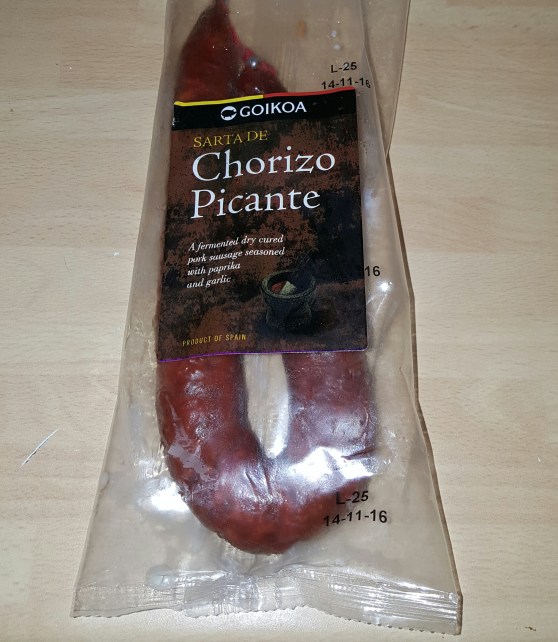 So the 1st stage (for me), was to get some Olive Oil into a pan and start to fry the
 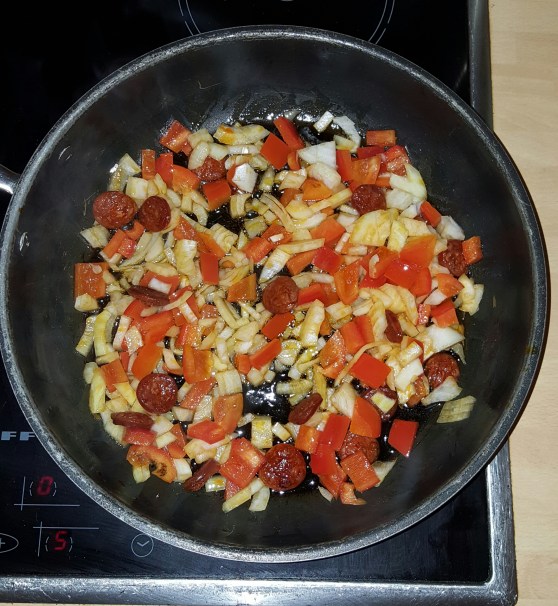 Now add the chopped Pepper and fry for a couple of minutes then the Onion. You can see the Red Chorizo flavour doing its stuff on the Onions above. You want to soften things so allow about 5 – 8 minutes for this stage on a medium heat. The next few stages (in my humble opinion), are where you need to take a lot of care with the timing.
 For me, the knack with this dish is to make sure each element is cooked to its best, but nothing is overcooked, we have Chicken, Prawns and Rice which all cook for different times to get right and so some thought needs to go into what we do and when.
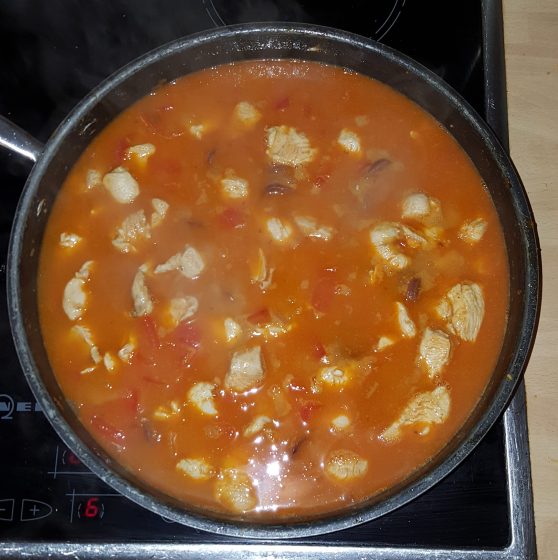 Now add the Rice, stir a bit, then add the Chicken Stock and mix again. Check for seasoning at this point, mine needed some more salt, taste again and check it’s right. DON’T mix anymore from now on. We want to be as original as possible, apparently the finished dish should have ‘holes’ in the surface and a crispy base (I didn’t manage this and suspect I could have used a higher heat), stirring will prevent this from happening and you could end up with mushy Rice.
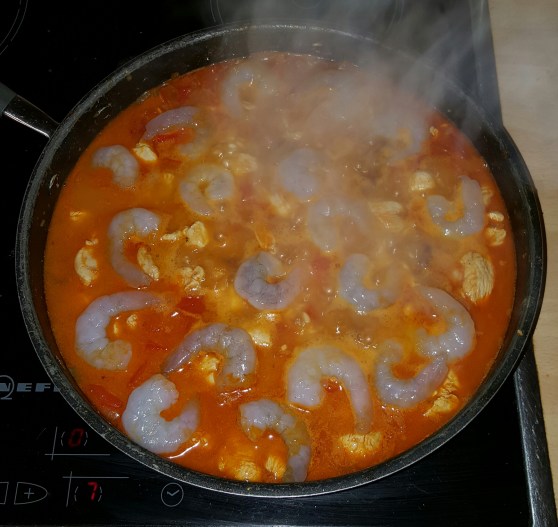 Finally, add the prawns and push them down slightly so they are as covered as much as possible, the heat needs to be reduced to a medium simmer at this point so the Rice can ‘sponge’ up the stock and other flavours, if you remember the Rice only needed 18 minutes to cook so at this point, I needed another 14 minutes for the dish to be ready.
 When the 14 minutes is up turn off the heat, cover the dish with tea towels and leave for another 5 minutes and get your plates etc. ready. You can see the final results above, I forgot to take a ‘piccy’ of the plated results as it was just too tasty to leave alone!!





 Julian Rolfe