The Poetry of Taste and Light – Rustic Eggs, Sea’s Bounty, and Essaouira’s Golden Hour (Day 4)

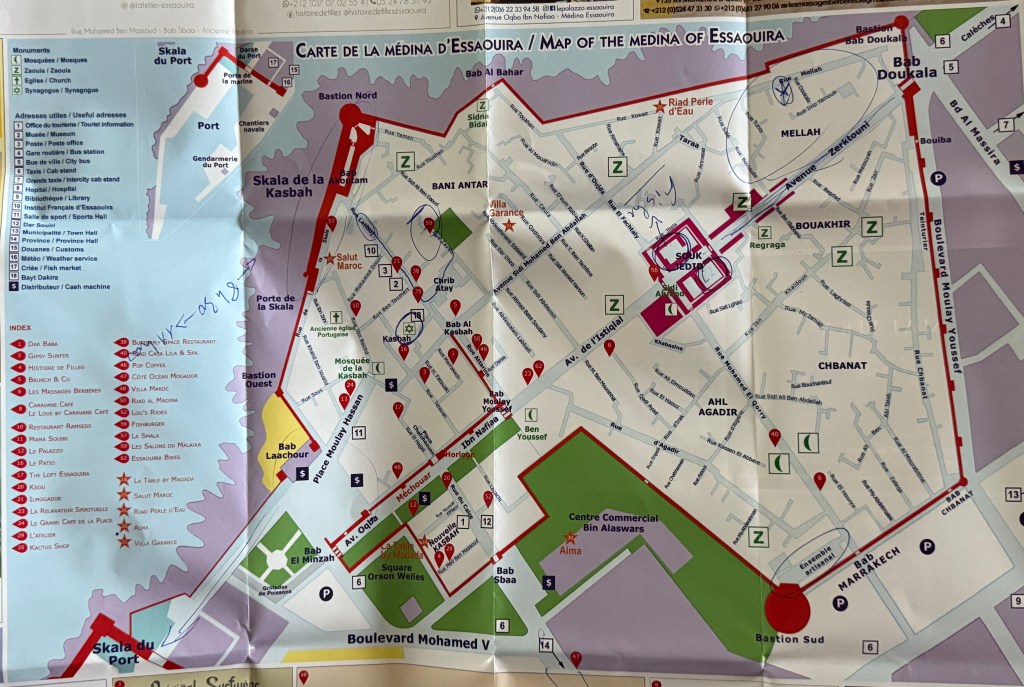
While Linda at So Morocco and Amanda at Ourika Organic Kitchen curated the heart of my journey, I relished the freedom to tweak and tailor the experience as inspiration struck (within practical limits, of course). My own research came in handy, too, at Riad Malaika, I was handed a wonderfully handy pocket map, a small gesture that made a world of difference. With it tucked in my pocket, navigating the winding lanes and hidden corners on my second afternoon and evening became a pleasure rather than a puzzle, allowing me to explore with confidence and uncover even more of Essaouira’s magic.
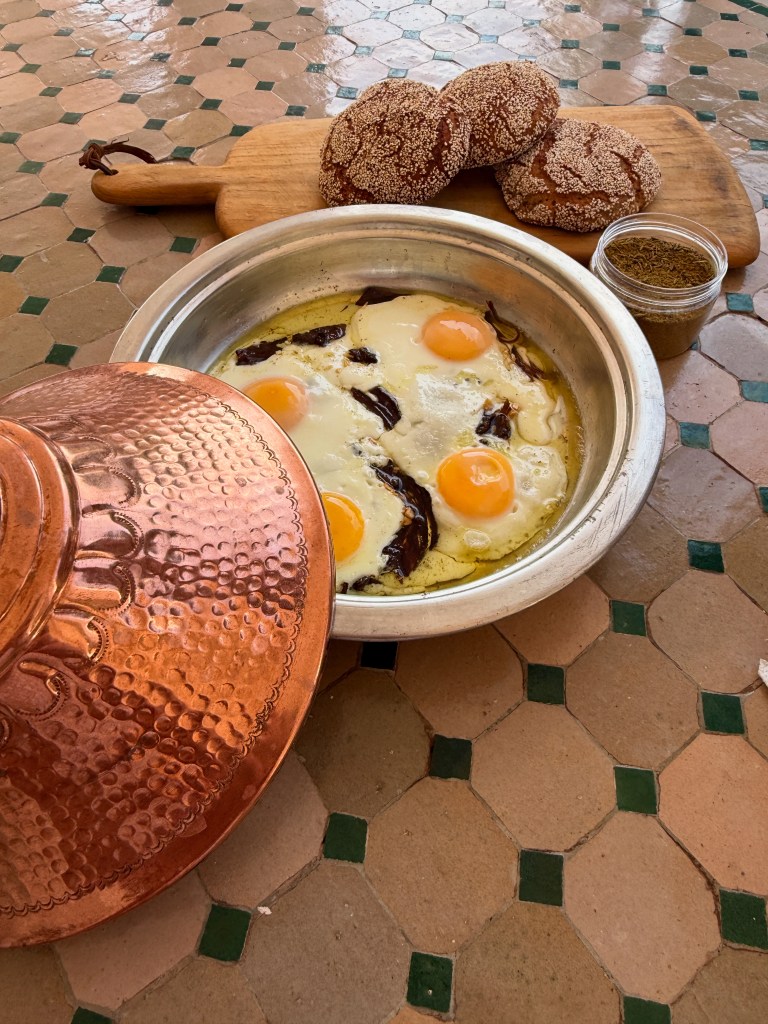
Khlii, also spelled khlea (Arabic: الخليع), is a centuries-old Moroccan method of preserving meat, deeply rooted in the country’s Berber heritage. Developed long before refrigeration, this technique allowed families to store meat in Morocco’s arid climate, ensuring a supply of protein throughout the year, especially after major festivals like Eid al-Adha. The tradition is believed to have originated in Fes, which is still considered the “Capital of Khlii,” before spreading across Morocco and North Africa. The Berbers are credited with introducing this preservation method, which has become an integral part of Moroccan culinary culture, symbolizing both resourcefulness and the art of slow, careful food preparation.

Khlii is typically made from beef or lamb, though camel is sometimes used in southern Morocco. The process begins by cutting the meat into long strips and marinating it in a chermoula—a blend of spices such as cumin, coriander, garlic, and sometimes vinegar and olive oil. The marinated meat is then sun-dried for several days, intensifying its flavor and reducing moisture. Once dried, the meat (now called gueddid) is slowly simmered in a mixture of animal fat (suet) and olive oil, sometimes with added water, until it becomes tender and fully infused with the spices. After cooking, the meat is packed into containers and completely submerged in the rendered fat, which acts as a seal and preservative. Properly stored in a cool, dry place, khlii can last for up to two years at room temperature, making it a reliable pantry staple.

Khlii is more than just a preserved meat; it is a symbol of Moroccan resilience and culinary ingenuity. Traditionally, families would prepare large quantities annually, especially in cities like Fes and Marrakesh, ensuring a supply of protein-rich food throughout the year. In modern Morocco, khlii is considered a delicacy, often enjoyed for its deep, concentrated flavor. It is most famously served with eggs for breakfast, but also finds its way into tagines, soups, salads, and even flatbreads. The rich, smoky aroma and robust taste of khlii evoke nostalgia and a sense of connection to Moroccan heritage, making it a cherished ingredient in both rural and urban kitchens.

Khlii (khlea) with eggs was our Moroccan breakfast for this morning, combining rich, spiced preserved lamb with fresh eggs. The khlii is gently heated in its own fat until fragrant, then eggs are cracked in, either left whole or lightly scrambled. Served hot with Moroccan bread, it’s was a deeply tasty and satisfying way to start the day, bringing together centuries-old tradition and everyday comfort.
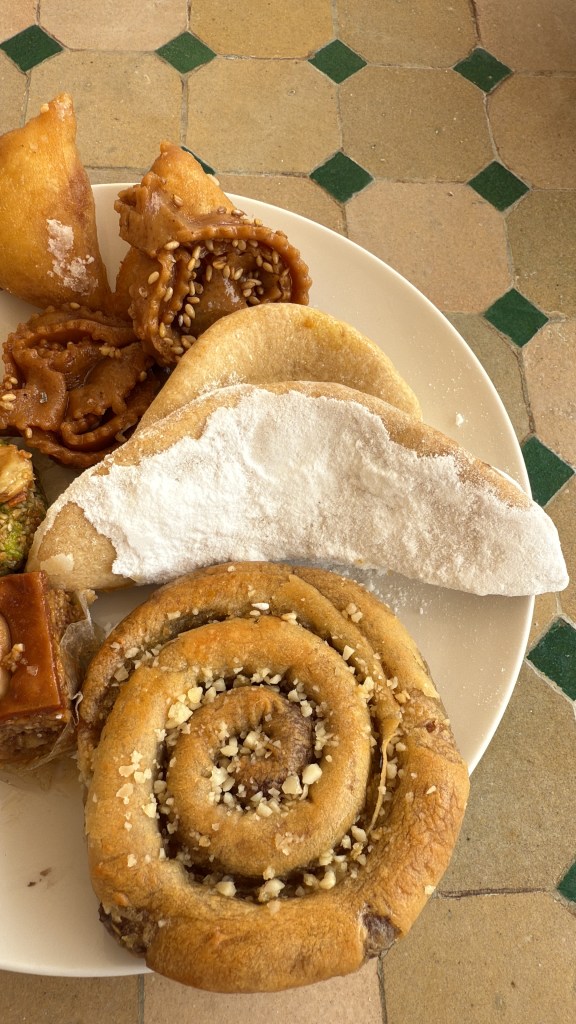
After our savoury breakfast, I remembered the generous box of Moroccan pastries we’d bought, when better to indulge? They paired perfectly with a strong black coffee. My favourite was the mhencha, the coiled, wheel-like pastry stuffed with almond paste and delicately scented with orange blossom. Its crisp, golden layers gave way to a rich, nutty filling, utterly delicious and the ideal sweet finish to a memorable morning meal.

The allure of a fish cataplana begins with the stock, a foundation as soulful as the Atlantic breeze. This was the next cooking ‘event’ of the week.

Into a heavy pot, we tumbled thick slices of onion and carrot, their natural sweetness coaxed out as they softened in a shimmer of olive oil. Sliced garlic joined the mix, releasing its gentle perfume and promising warmth in every spoonful. Then came the fish heads and the mighty prawn heads, their briny richness destined to deepen the broth. A bouquet garni of fresh parsley stems was nestled in, a green promise of freshness to balance the sea’s intensity.

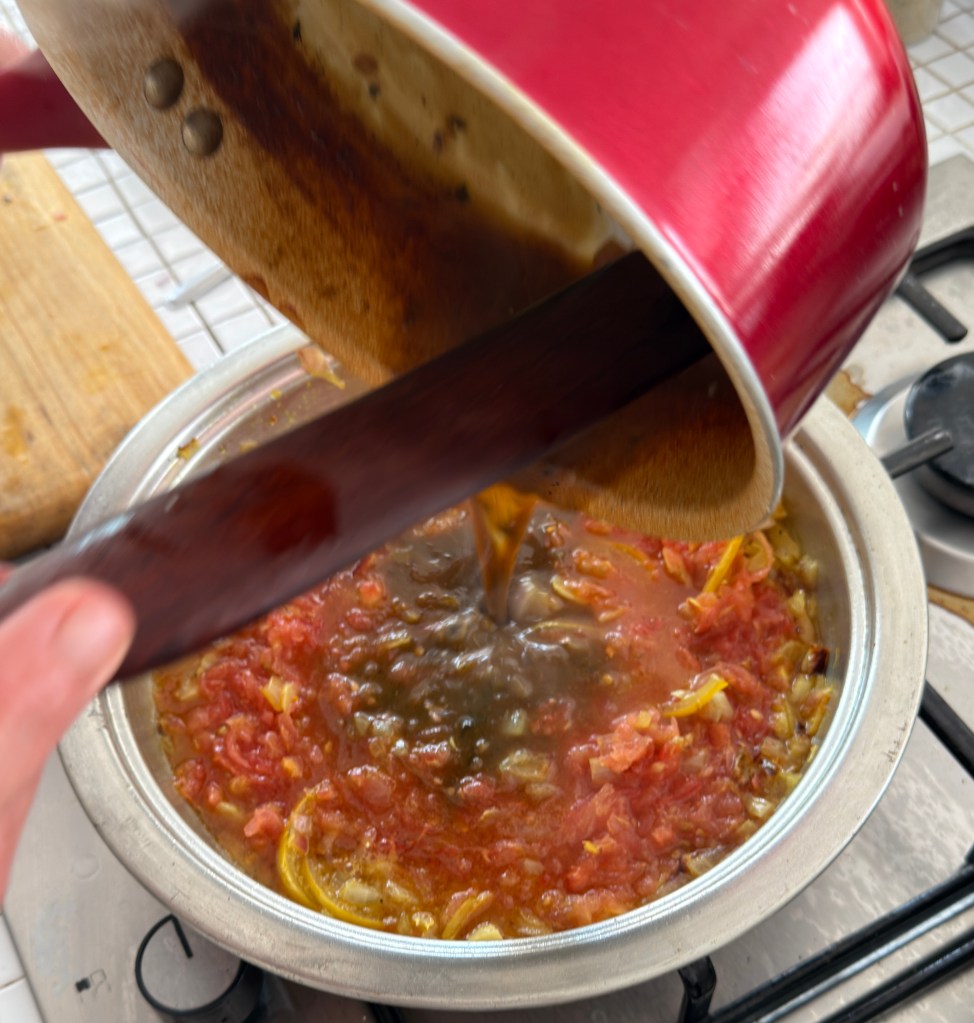
Amanda explained the importance of each step, building layer upon layer of delicate flavour. As everything mingled, a generous splash of white wine and a bold dash of cognac were poured in, sending up a fragrant steam, herbaceous, oceanic, and just a little bit wild.

The stock simmered quietly, drawing out every nuance, while anticipation built for the next act: the union of seafood, saffron, and fresh herbs in the cataplana’s embrace. This was more than a recipe, it was a slow, joyful unfolding of aromas and textures, a celebration of the coast in every breath.
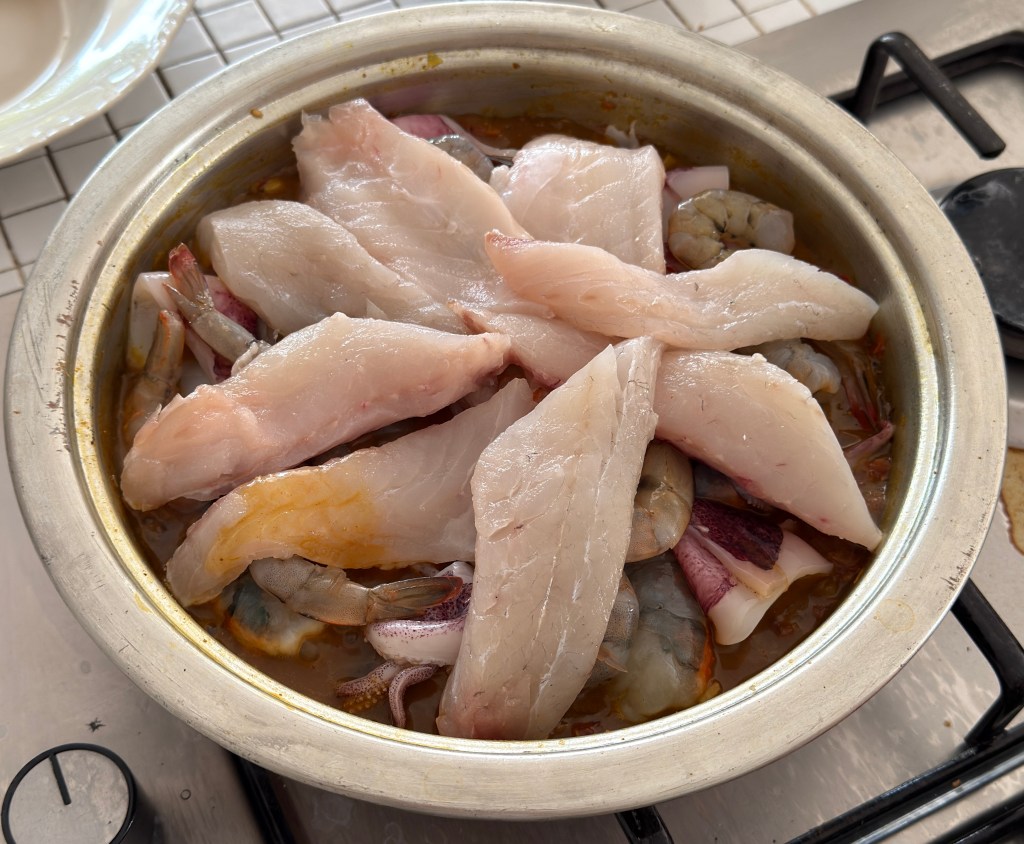
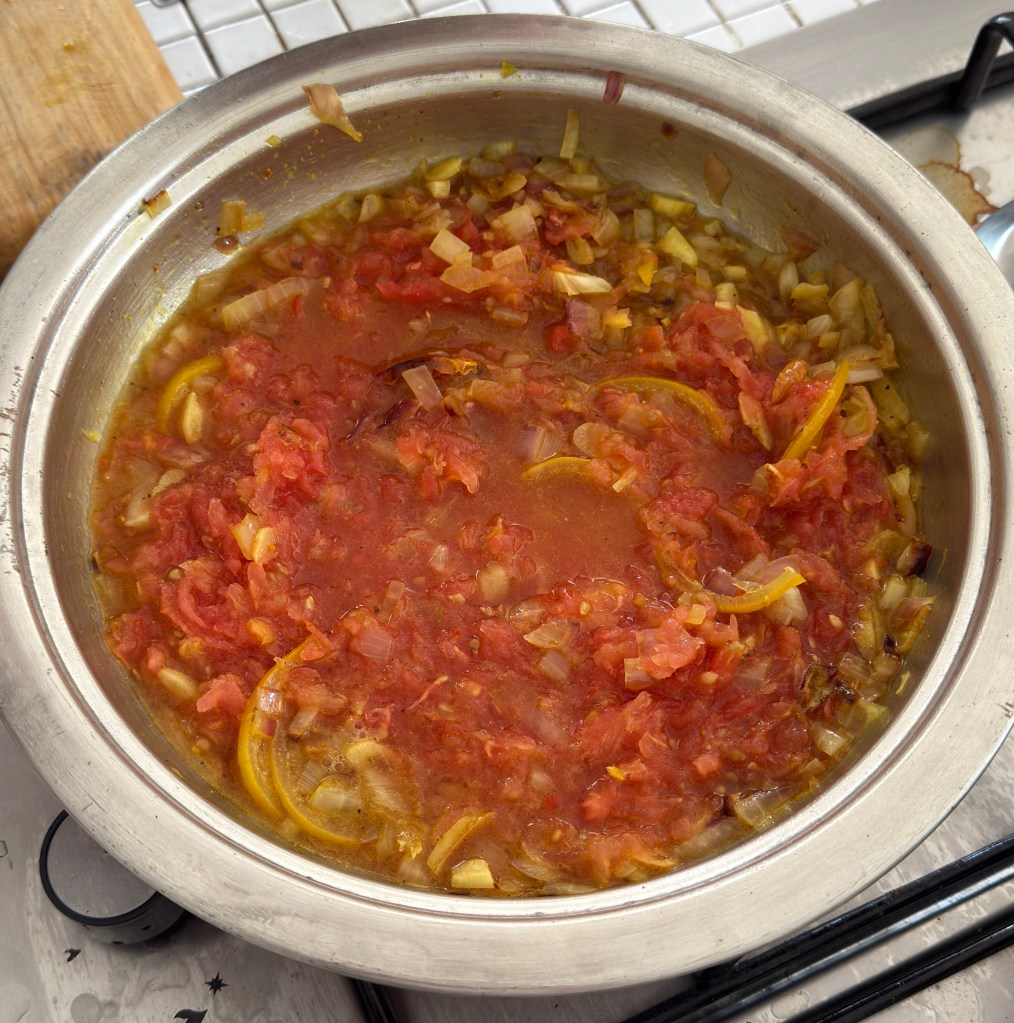
While the stock quietly worked its magic, we built another essential layer: onions and ripe tomatoes, sautéed together until soft and jammy, forming a rustic, sun-bright base for the cataplana. When it was time to assemble, the seafood came next, plump prawns and tender squid nestled into the tomato-onion mixture, with thick pieces of bass carefully arranged on top at the very end, ensuring they would steam gently and stay perfectly tender, never overcooked.

A pinch of saffron, along with fresh parsley, promised both colour and aroma. We let everything simmer gently, no need for a dramatic lid or staged photo, just honest, attentive cooking, letting the ingredients speak for themselves as the kitchen filled with the unmistakable scent of the sea and southern sunshine.
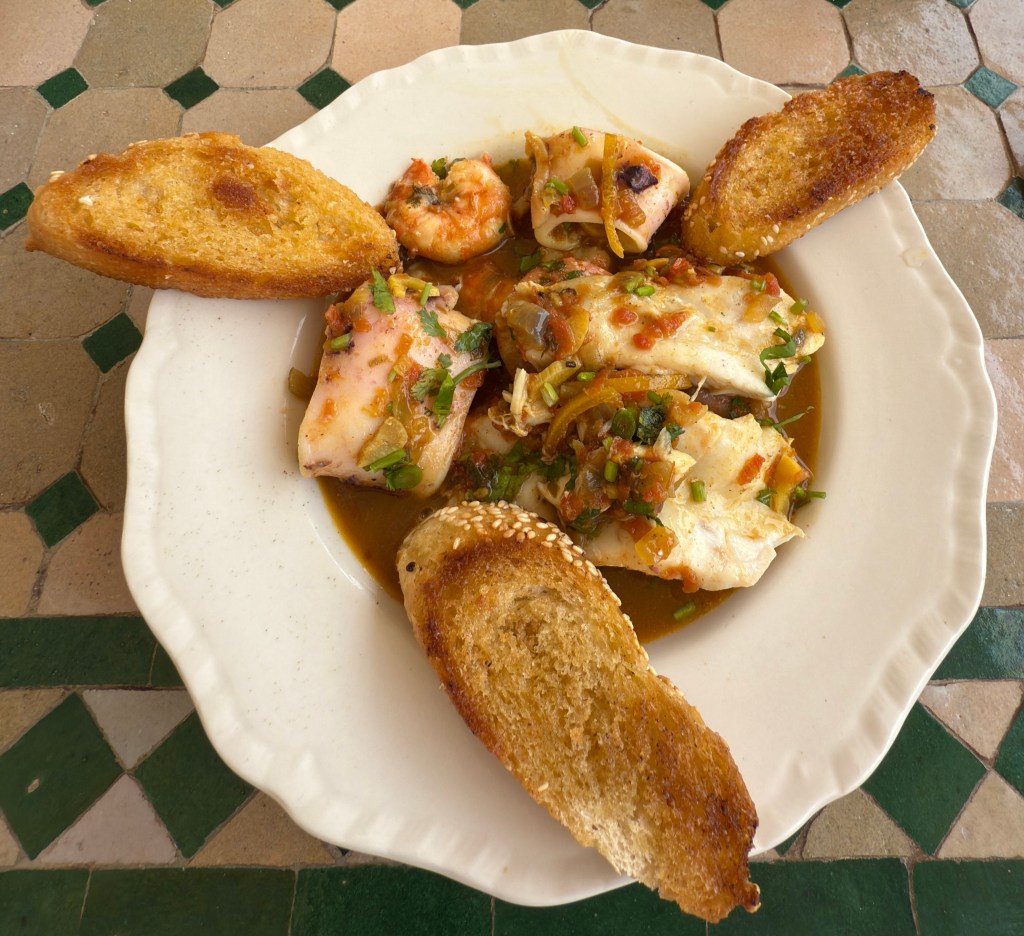
To bring balance and a touch of contrast to the soft, yielding seafood and the rich, sun-drenched base, a simple pleasure was in order: bread. A fresh baguette was sliced into generous rounds, destined to become golden and crisp. The slices sizzled in a pan with plenty of butter, a splash of olive oil keeping the richness in check and lending a gentle fruitiness.

Once burnished and fragrant, each piece was rubbed with cut garlic, the warmth coaxing out its mellow bite. The result—crunchy, aromatic toasts—was the perfect counterpoint, ready to soak up the cataplana’s juices and elevate the meal with a satisfying, rustic crunch. Sometimes, it’s these simple touches, shared in good company, that make a feast truly memorable.

Earlier in the day, the clear, bright blue skies signaled the perfect opportunity for an evening visit to the observation point overlooking Essaouira. Keeping in mind the logistics with our driver, we set out promptly at 19:45 to capture the magic of the moment.

As a photography enthusiast, I brought along my trusted gear: a Fuji XT-1, a Leica D-Lux 7, and of course, the ever-reliable iPhone 16 Pro Max. The XT-1 was set to auto mode, snapping a picture every 20 seconds for up to 20 shots, carefully nestled on the stone wall atop a protective blanket. The Leica was mounted on a sturdy tripod, ready for precise framing, while the iPhone was at hand for spontaneous shots amidst the action.

Despite the rather windy conditions, I was ecstatic with the results, capturing the essence of Essaouira’s evening glow with reasonable clarity and artistry.

……………………Until next time………………L8ers…………………….

Huevos Rotos or Huevos Estrellados – Depends who is driving!

This quick recipe was inspired by a new book that dropped through the letterbox last week. Morito is a Tapas/Meze restaurant in London’s Exmouth Market, Clerkenwell, and sits next to its bigger family member Moro. Both are owned by Sam and Sam Clark and have books published to match their food inspiration, Morito being the most recent.

WP_20140511_15_57_42_ProA similar recipe is also in Omar Allibhoy’s Tapas Revolution, hence the title of this post, in ‘Morito’ its Broken Eggs, in ‘Tapas Revolution’ it’s Crashed Eggs. This dish won’t take two days to make, but is delicious served with some crusty bread.

WP_20140511_16_10_56_Pro

You can see all the ingredients in the 1st picture, this is enough for 2 people. To start with, peel and cut your potatoes into approximately 1 inch chunks and place in a bowl, we are going to marinade for a couple of hours with a good glug of Olive oil, 2 Garlic gloves, sprigs of Rosemary and Thyme that have been lightly crushed to release their flavours and some Maldon Sea Salt.

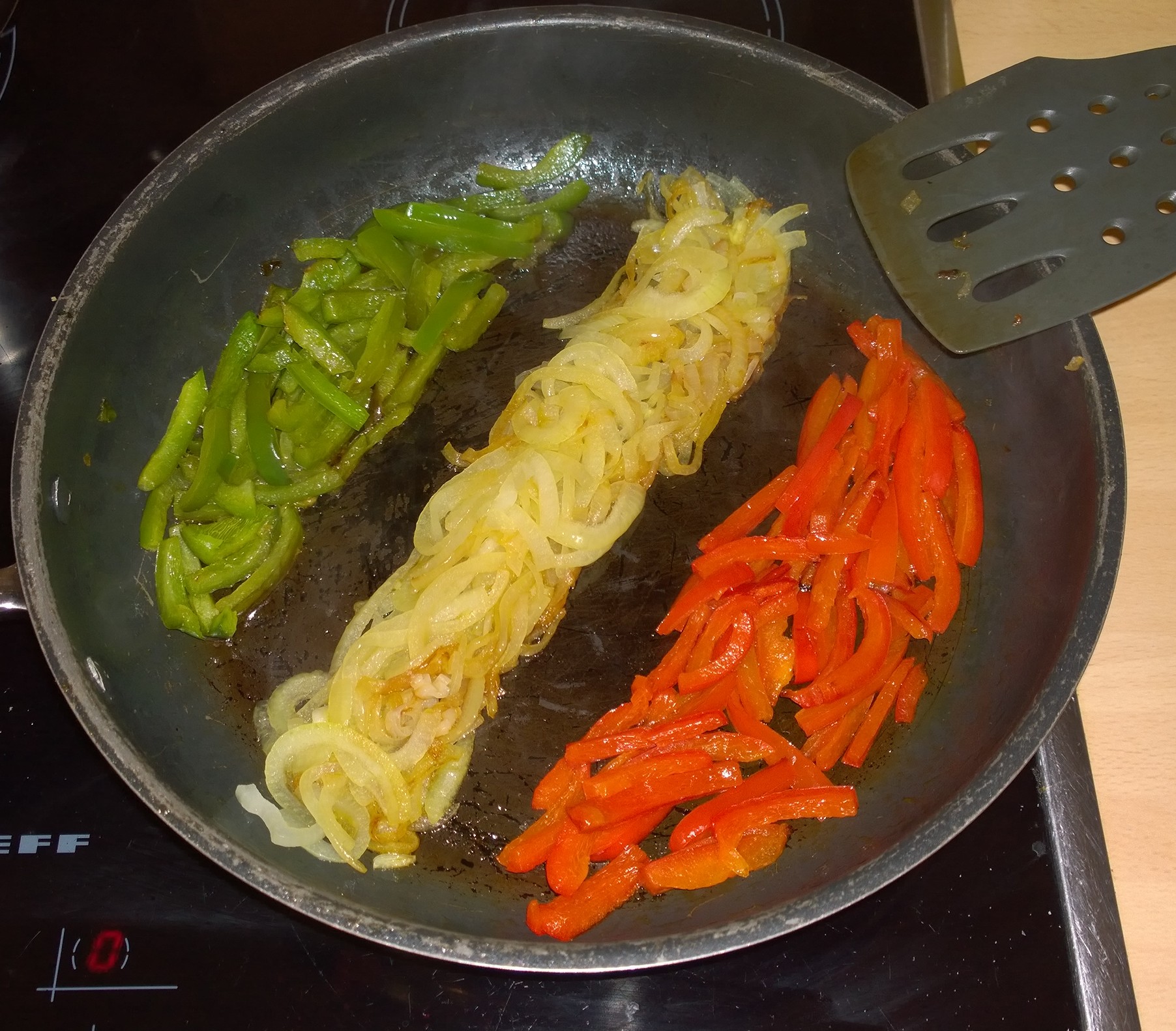
WP_20140511_19_25_32_ProAfter a couple of hours we are ready to slice the Onion and Peppers, and gently fry until soft, about 8 – 10 minutes. Different colour peppers seem to cook at different speeds, this adds varying elements of texture and makes the dish even more interesting.

WP_20140511_19_53_00_ProThe next stage is to remove the Peppers from the heat, and in a separate pan, fry the Potatoes gently in Olive Oil until tender and slightly crispy on the outside, while they are cooking you can slice you Chorizo into 1 cm lengths and add them half way through so they can release some of their spicy oil in the potatoes. Then add the Onions and Peppers so they can warm through, we are almost done!

WP_20140511_19_58_21_ProNow for the Rotos or Estrellados moment, break three Eggs into a cup and drop into the mixture from a height, the Yolks should break on impact, remove the pan from the heat and stir gently, you want the residual heat from the mixture to just cook the Eggs. If you think you need to return the pan to the heat for a bit longer then do so, but you want the eggs just cooked and soft.

WP_20140511_20_05_09_ProPut a pile on the middle of a plate, and sprinkle some chopped fresh Parsley, you can finish the dish of with some Salt, if you think its needed and some freshly ground Black Pepper, I also added a couple of Tomato slices and some Rosemary and served with some Bread.

That’s it, a quick a tasty simple dish that full of flavour and really simple to cook.

Enjoy…….

Till next time, L8ers.


π, No not that one, Pie! My take on an Egyptian Neolithic period or New Stone Age food!

Hi peeps, it’s Sunday, I’ve finished work until the 6th January and don’t need an excuse to get in the kitchen. We had planned to have Chicken on Saturday night, but instead went for a Cheese Fondue as I wanted to do something a little special, and Roast Chicken and all the trimmings so close to Christmas just didn’t seem right.

WP_20131221_16_23_33_Pro

I absolutely love a good Pie, but getting one is really challenging, I believe the best are ones made with love and care in your own home, by your own hands and fresh as a daisy!  I am sure there are good Pie’s available but quite often my eating habits change within the space of five minutes, so here is my take on something that first surfaced in 9500BC!

WP_20131222_11_40_31_Pro

For me a good Pie is made of the best ingredients you can get (or afford), in this case an excellent Free Range Chicken from our favourite supplier, no added ANYTHING! You also need a quality stock to make a sauce, the carcass of the Chicken is the base of this, with some aromatics such as Thyme, Rosemary, Parsley, Peppercorns and a Star Anise.

WP_20131222_12_09_52_Pro

I roasted the Chicken on the Saturday evening,  put half a head of Garlic in the cavity along with a halved Clementine, rubbed Olive Oil all over the skin and seasoned with Salt and Pepper. Roasting took 1 hour 20 minutes in my case, I then covered the beast with a couple of layers of foil, and a towel and let cool for a good couple of hours. Transfer the Chicken to the fridge, covering with greaseproof paper and foil to keep all those flavours where they need to be! DON’T clean the roasting dish, you are going to use it in the morning so cover with some foil to keep any nasties out.

The stock is simmering as I am writing this blog entry.

Earlier this morning I stripped the carcass of its meat and put the carcass back in the same roasting dish I used last night, adding to the flavour with the juices and crispy bits. Also in the dish went a stick of celery and a carrot, cut into chunks, and two onions cut in half with their skins still on, then into a 180deg oven (160 deg fan) for 1 hour.

Once roasted put into a stock pot if you have one, or a large saucepan along with about 4 pints of water, a bunch of Parsley, 2 sprigs of Thyme, a sprig of Rosemary, 10 Black Peppercorns (Lampung in my case), 5 White Peppercorns (I used Muntok) and one Star Anise. The Stock needs to gently simmer for 4 hours, skimming any impurities of the surface as you go.WP_20131222_15_07_42_Pro

After 4 hours, remove the stock from the heat and filter through a sieve, the aromas filling the kitchen were….CHICKEN! You can see a small amount of fat on the surface, this can be removed when the stock has cooled down if you want too.

WP_20131222_13_23_17_Pro

Whilst the stock is simmering, you can attack the Pâte Feuilletée or Puff Pastry. I know the shop bought stuff is apparently good, but this was to be a special pie and so an excuse to have a go myself. I followed the instructions of the well renowned Richard Bertinet, in his book Pastry, which I mentioned in the last blog.

There are a number of stages to go through, with chilling between each so allow yourself enough time (you could go and buy some but it won’t be the same!)

WP_20131222_14_50_10_Pro

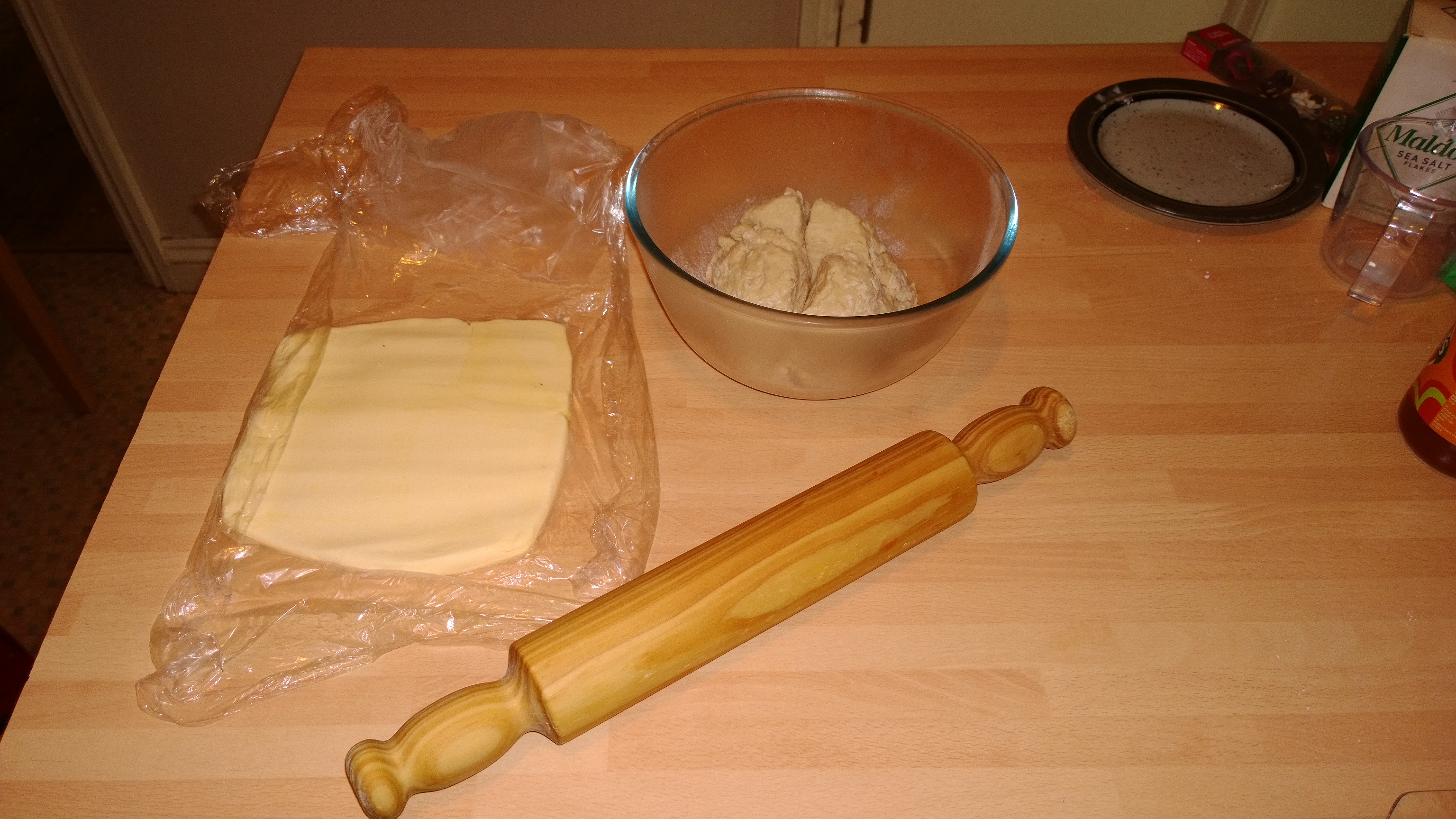
This is my attempt after I had added ice cold water to the flour, and knocked ten tons of, no, only joking, flattened the butter between two sheets of cling film. After another chill in the fridge, the butter will be incorporated into the flour mix in layers.

WP_20131222_16_03_25_Pro

There a two ways of folding to create Puff Pastry, Double Book and Single. Double Book is where you take each end and fold it into the middle. Single is where you fold ONE end in, and the other overlaps.  Just for a challenge I went for single, which requires 6 folds and 1/2 hour resting in the fridge after each (Its not a fast process!). This is mine after fold three, the finger dimples are intentional to enable you to remember where you are!

WP_20131222_16_08_20_Pro

In between the puff pastry process you can start to prepare the filling. You need Onions, Garlic, Button Mushrooms, Butter, Flour, Stock, Roast Chicken (chopped) and frozen Peas; Salt and Pepper to taste, Herbs de Provence or whatever flavourings you fancy. I included a small amount of Chilli to provide a background warmth.

Chop the Onions and fry gently in some Butter and Olive Oil until translucent, then add the Garlic (crushed or chopped) and continue to cook. Quarter the button Mushrooms and add, cooking for at least 5 minutes then the Roast Chicken and a tablespoon or so of Flour, and continue to cook, then about 300 ml of the freshly prepared Chicken Stock. Gently simmer for about 15 mins and towards the end, chuck in about 3 handfuls of frozen peas and remove from the heat. It should look like the above.

WP_20131222_17_55_55_Pro

To accompany ‘The Pie’ was going to be one of my all time favourite potato dishes, Gratin Dauphinoise. Layers of Potato, Garlic, Salt & Pepper and grated Nutmeg, filled with double cream and cooked slowly until golden and bubbling. Its a very rich and flavoursome dish that can be a meal in its own right.

WP_20131222_18_13_47_Pro

I topped mine with grated Grana Padano Italian hard Cheese which i deemed acceptable as the dish is from the Dauphiné area of France, near the Italian border, you could also use Gruyere as an alternative.

Back to the Pastry and we are almost done. We are now at turn six of the single turn method.

WP_20131222_18_21_48_Pro

When you cut the Pastry you can see the thin wafer like layers of Butter, we are going to make a Flat Pie and you need to make the lid slightly larger than the base to cover the filling.

WP_20131222_18_33_09_Pro

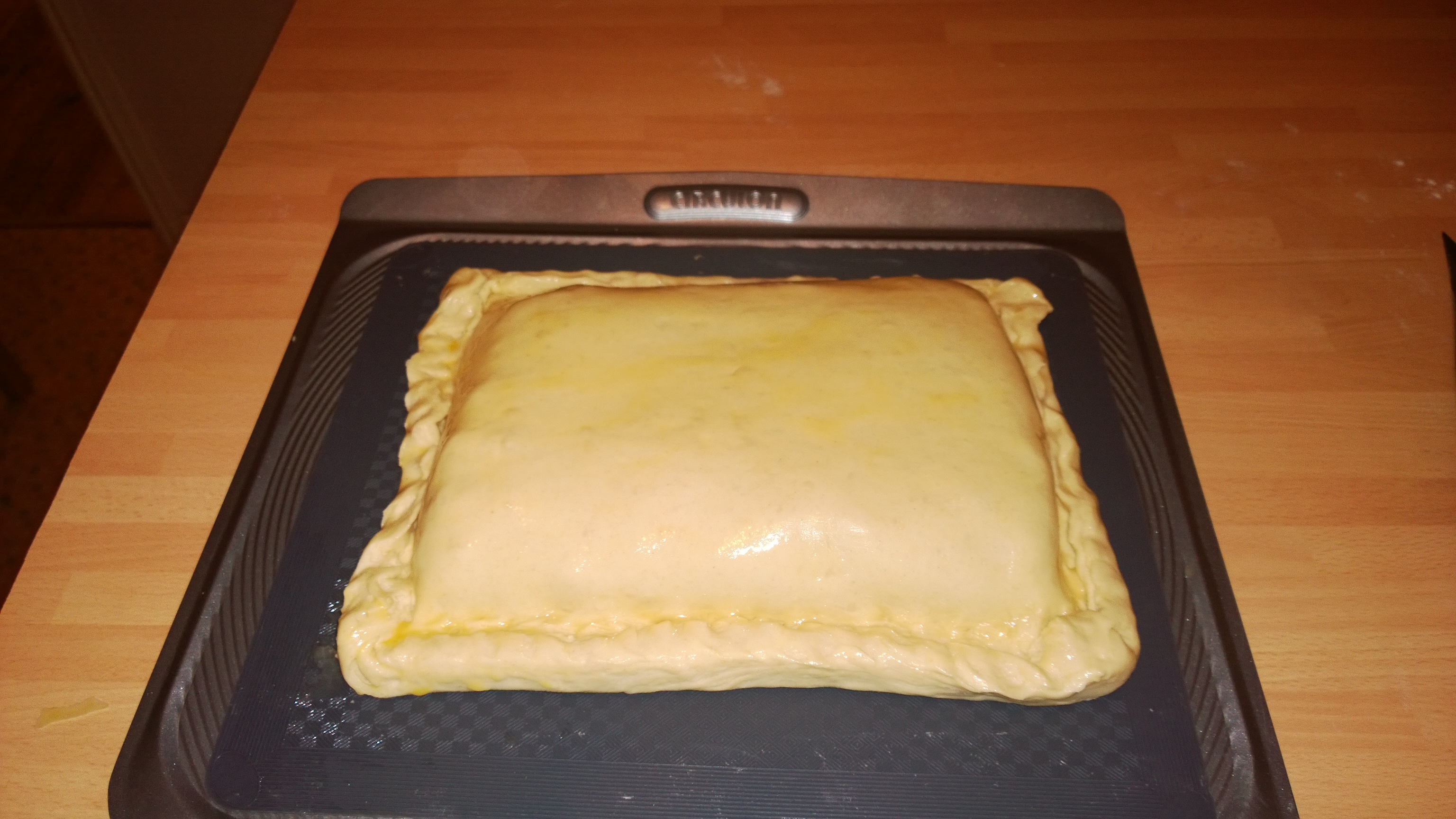
Once you have the base rolled out to a thickness of a slightly less than a pound coin, brush egg wash  about an inch around the edge, pile in the chilled filling and place the lid on top. To seal the edges I used the thumb and two finger method to crimp the edge, and then rolled like a Cornish Pasty edge, nothing was escaping this bad boy!

WP_20131222_18_37_41_Pro

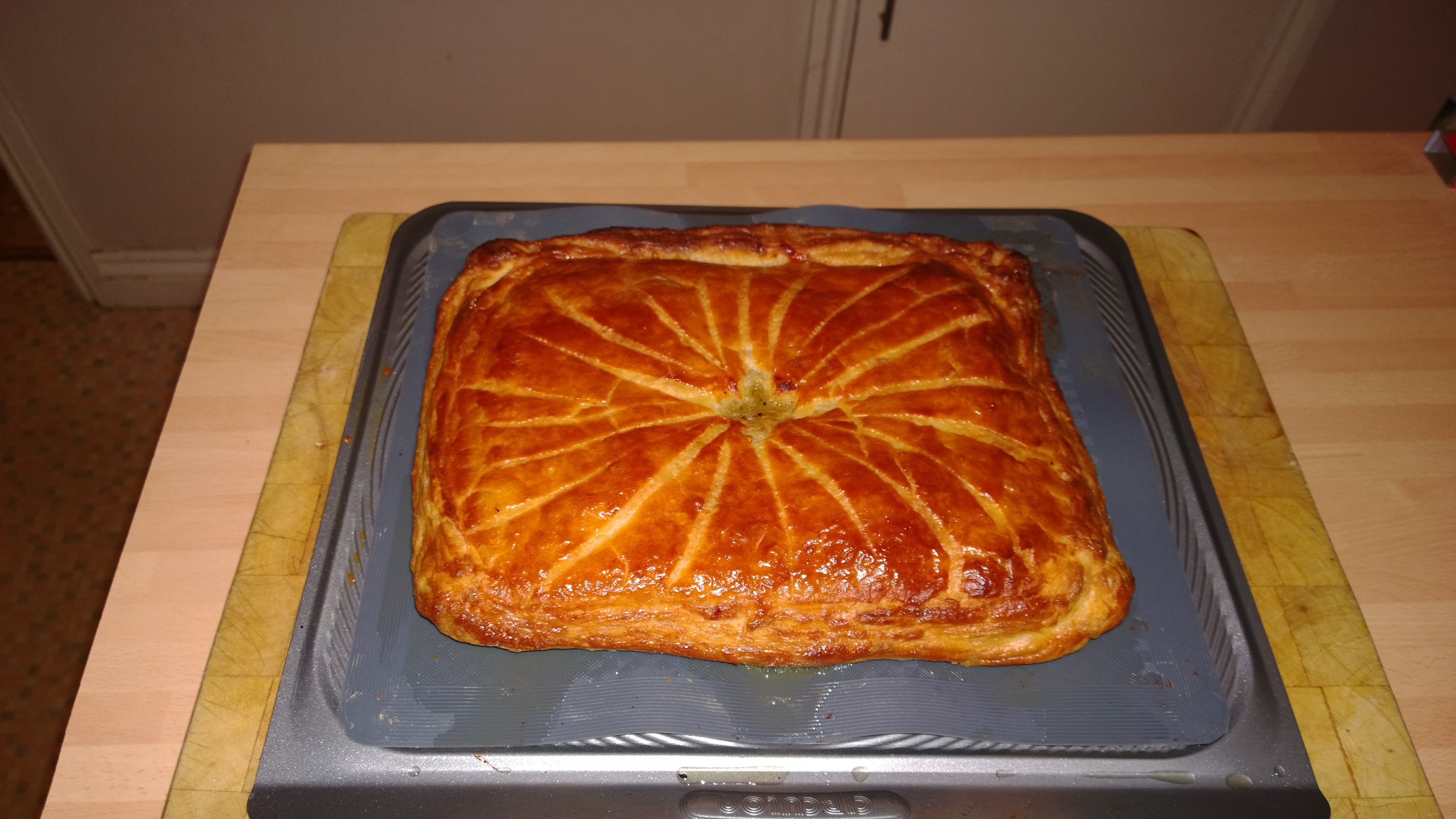
Brush the lid with egg wash and put in the fridge to relax for 10 mins. The take it out the fridge, egg  wash it again (this will help it go a deep brown colour) and using the BACK of a sharp knife, gently make curve patterns from the centre to the edge. If you don’t do this after the egg wash, you will loose the pattern. You can also make an incision in the centre to let some of the steam out during cooking.

WP_20131222_19_46_18_Pro

Approximately 45 minutes in a 180deg oven and you should end up with something like the above, be brave and turn the heat up a little during the last 10-15 mins, you want a deep brown and nearly caramelised colour and finish. The pastry should be flaky and crispy, the filling succulent and flavoursome.

WP_20131222_19_59_46_Pro

I also fancied another favourite, Green Beans & Pancetta, cooked beans, rolled in the salty Italian Bacon and fried quickly for a few minutes to crisp up.

The Boss is generally not to fussed about pies, until she tried this one, it was stunning, tasty and there is plenty left over for tea on Monday. So here it is, my take on a Pie, you could use Beef or Pork if you don’t like Chicken, just make the appropriate Stock base to match the filling.

As an aside, I use a Camera Phone for the pictures on my Blog. Those very kind people at Nokia gave me the Lumia 1020 last week, a 41 Megapixel beast with Carl Zeiss lense, the pictures on this entry were taken on the new Nokia.

Previous entries were on either the Nokia 920, BlackBerry Z10 or Samsung S4. (Maybe you can guess what my day job might be?) Maybe you can see the difference, i’m not the best photographer or stylist but try to make the images ‘real’.

Hope you all have a very Happy Christmas.

L8ers….