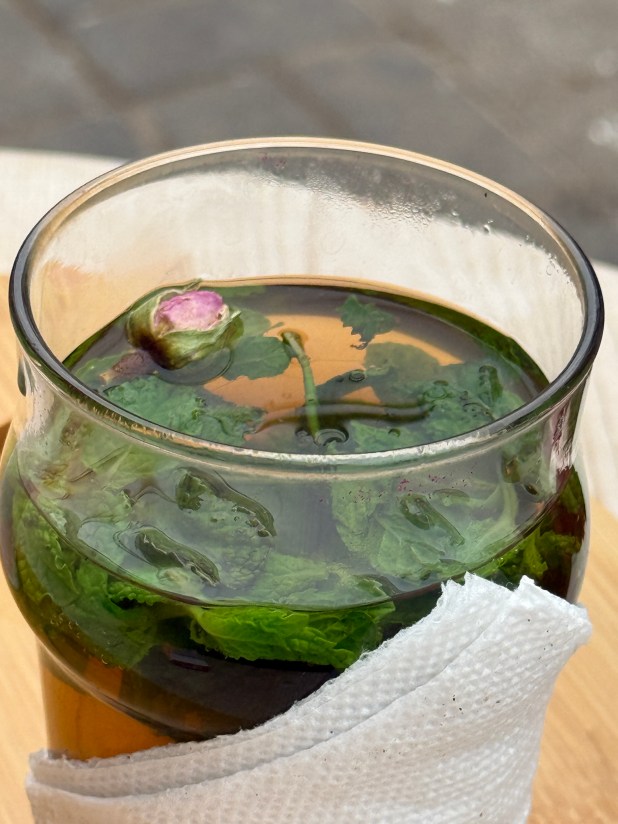
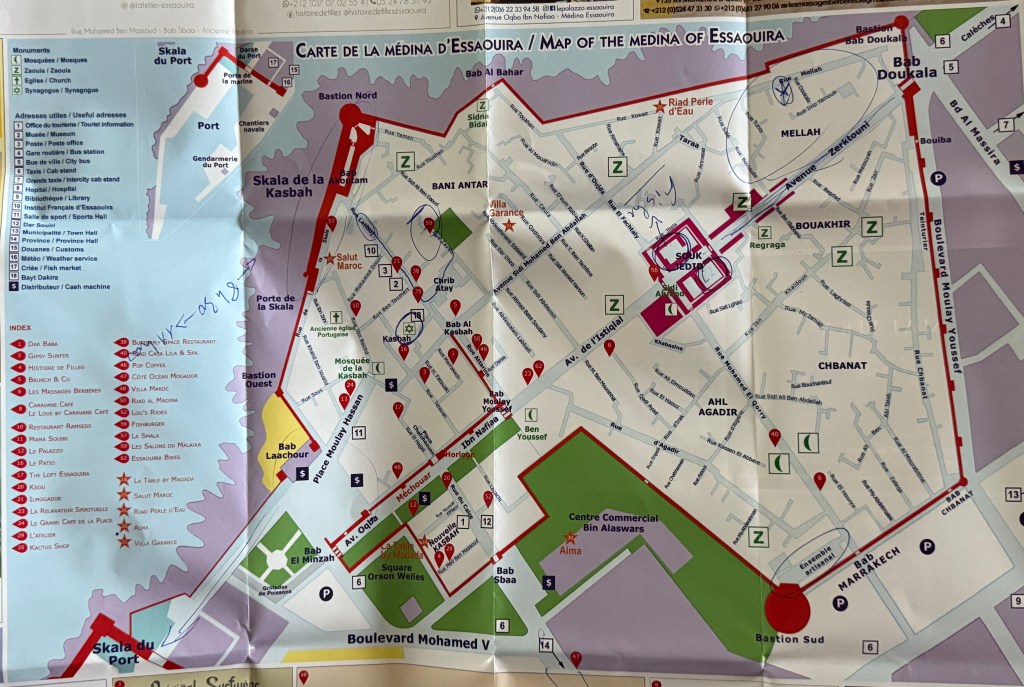
While Linda at So Morocco and Amanda at Ourika Organic Kitchen curated the heart of my journey, I relished the freedom to tweak and tailor the experience as inspiration struck (within practical limits, of course). My own research came in handy, too, at Riad Malaika, I was handed a wonderfully handy pocket map, a small gesture that made a world of difference. With it tucked in my pocket, navigating the winding lanes and hidden corners on my second afternoon and evening became a pleasure rather than a puzzle, allowing me to explore with confidence and uncover even more of Essaouira’s magic.
Khlii, also spelled khlea (Arabic: الخليع), is a centuries-old Moroccan method of preserving meat, deeply rooted in the country’s Berber heritage. Developed long before refrigeration, this technique allowed families to store meat in Morocco’s arid climate, ensuring a supply of protein throughout the year, especially after major festivals like Eid al-Adha. The tradition is believed to have originated in Fes, which is still considered the “Capital of Khlii,” before spreading across Morocco and North Africa. The Berbers are credited with introducing this preservation method, which has become an integral part of Moroccan culinary culture, symbolizing both resourcefulness and the art of slow, careful food preparation.
Khlii is typically made from beef or lamb, though camel is sometimes used in southern Morocco. The process begins by cutting the meat into long strips and marinating it in a chermoula—a blend of spices such as cumin, coriander, garlic, and sometimes vinegar and olive oil. The marinated meat is then sun-dried for several days, intensifying its flavor and reducing moisture. Once dried, the meat (now called gueddid) is slowly simmered in a mixture of animal fat (suet) and olive oil, sometimes with added water, until it becomes tender and fully infused with the spices. After cooking, the meat is packed into containers and completely submerged in the rendered fat, which acts as a seal and preservative. Properly stored in a cool, dry place, khlii can last for up to two years at room temperature, making it a reliable pantry staple.
Khlii is more than just a preserved meat; it is a symbol of Moroccan resilience and culinary ingenuity. Traditionally, families would prepare large quantities annually, especially in cities like Fes and Marrakesh, ensuring a supply of protein-rich food throughout the year. In modern Morocco, khlii is considered a delicacy, often enjoyed for its deep, concentrated flavor. It is most famously served with eggs for breakfast, but also finds its way into tagines, soups, salads, and even flatbreads. The rich, smoky aroma and robust taste of khlii evoke nostalgia and a sense of connection to Moroccan heritage, making it a cherished ingredient in both rural and urban kitchens.
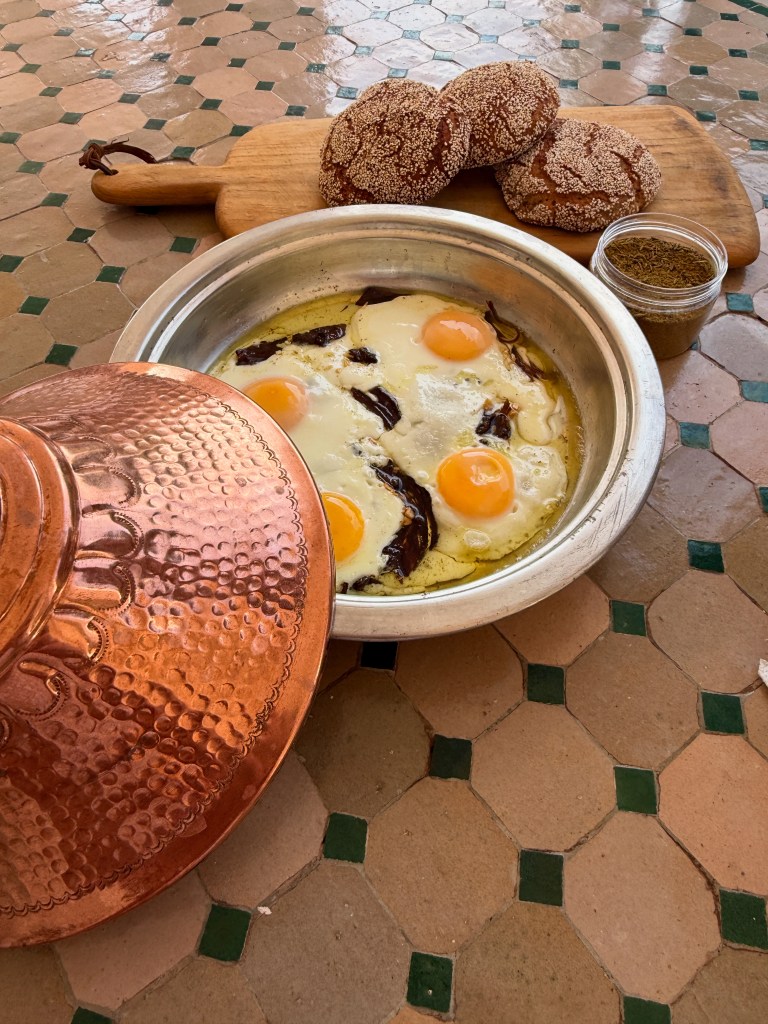
Khlii (khlea) with eggs was our Moroccan breakfast for this morning, combining rich, spiced preserved lamb with fresh eggs. The khlii is gently heated in its own fat until fragrant, then eggs are cracked in, either left whole or lightly scrambled. Served hot with Moroccan bread, it’s was a deeply tasty and satisfying way to start the day, bringing together centuries-old tradition and everyday comfort.
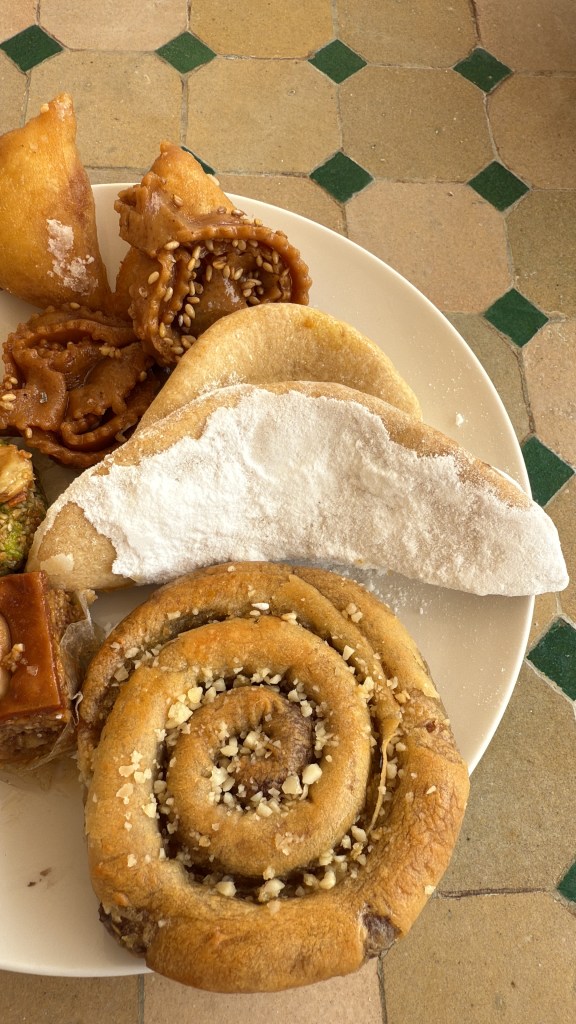

After our savoury breakfast, I remembered the generous box of Moroccan pastries we’d bought, when better to indulge? They paired perfectly with a strong black coffee. My favourite was the mhencha, the coiled, wheel-like pastry stuffed with almond paste and delicately scented with orange blossom. Its crisp, golden layers gave way to a rich, nutty filling, utterly delicious and the ideal sweet finish to a memorable morning meal.


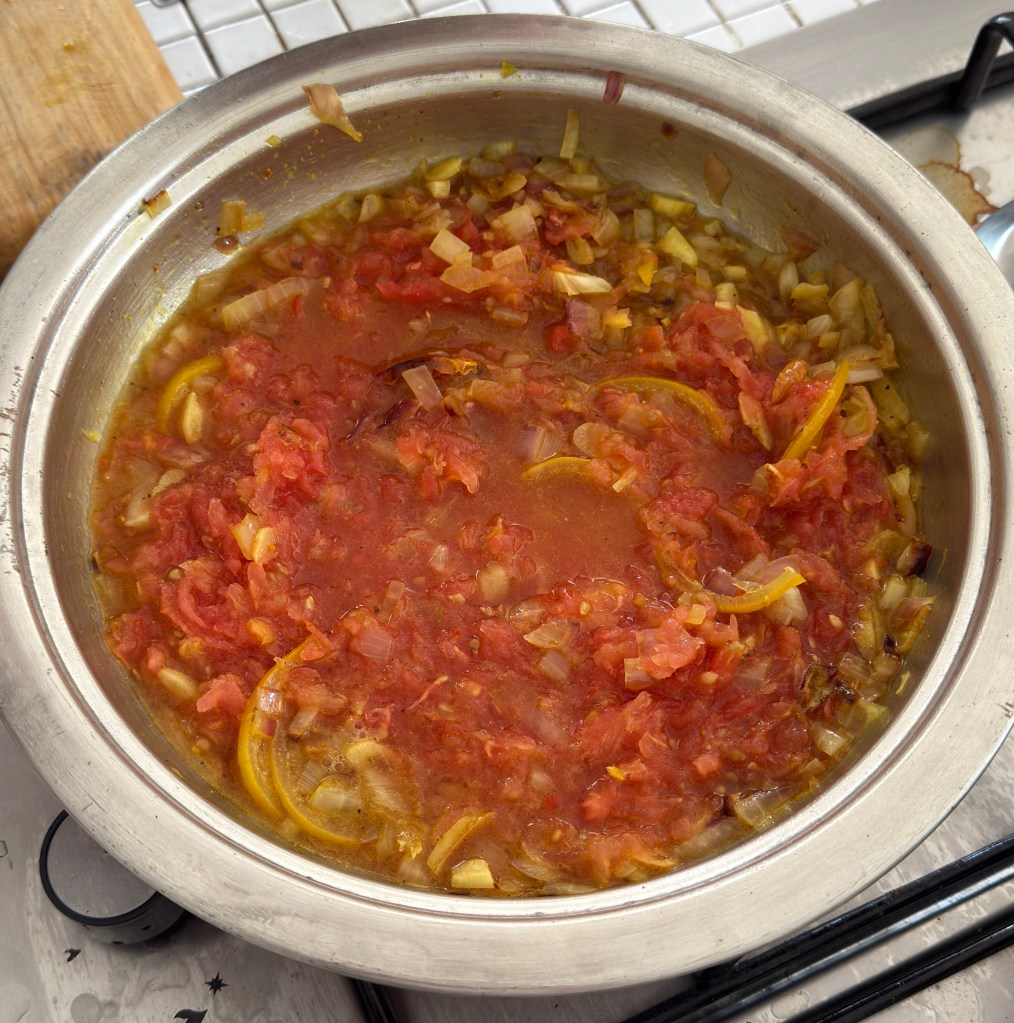
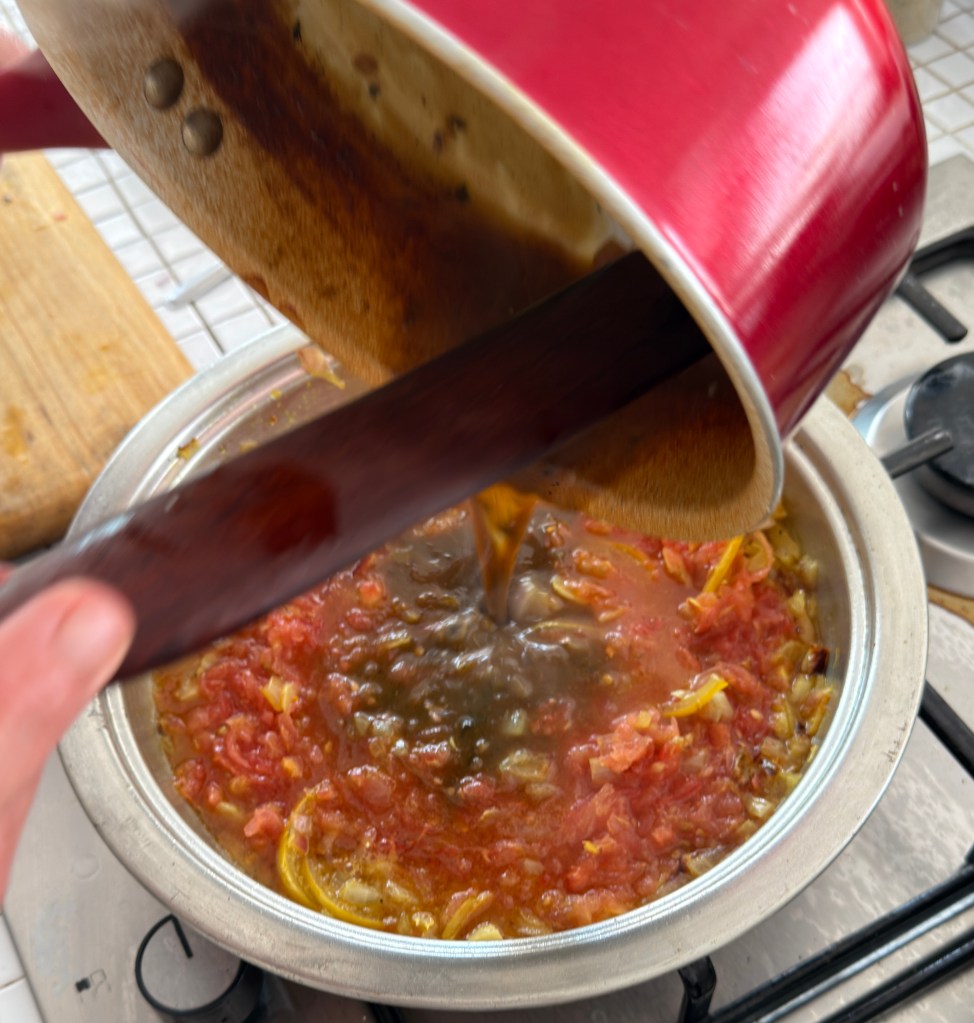

The allure of a fish cataplana begins with the stock, a foundation as soulful as the Atlantic breeze. This was the next cooking ‘event’ of the week.
Into a heavy pot, we tumbled thick slices of onion and carrot, their natural sweetness coaxed out as they softened in a shimmer of olive oil. Sliced garlic joined the mix, releasing its gentle perfume and promising warmth in every spoonful. Then came the fish heads and the mighty prawn heads, their briny richness destined to deepen the broth. A bouquet garni of fresh parsley stems was nestled in, a green promise of freshness to balance the sea’s intensity.
Amanda explained the importance of each step, building layer upon layer of delicate flavour. As everything mingled, a generous splash of white wine and a bold dash of cognac were poured in, sending up a fragrant steam, herbaceous, oceanic, and just a little bit wild.
The stock simmered quietly, drawing out every nuance, while anticipation built for the next act: the union of seafood, saffron, and fresh herbs in the cataplana’s embrace. This was more than a recipe, it was a slow, joyful unfolding of aromas and textures, a celebration of the coast in every breath.
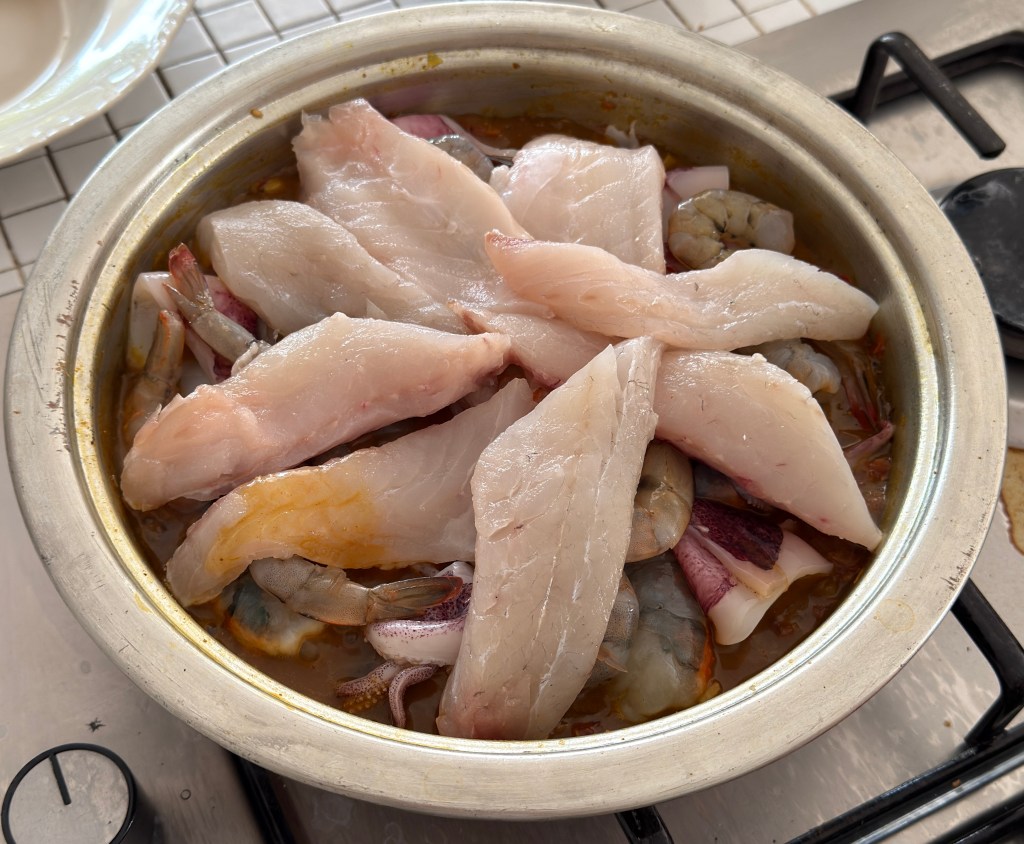
While the stock quietly worked its magic, we built another essential layer: onions and ripe tomatoes, sautéed together until soft and jammy, forming a rustic, sun-bright base for the cataplana. When it was time to assemble, the seafood came next, plump prawns and tender squid nestled into the tomato-onion mixture, with thick pieces of bass carefully arranged on top at the very end, ensuring they would steam gently and stay perfectly tender, never overcooked.
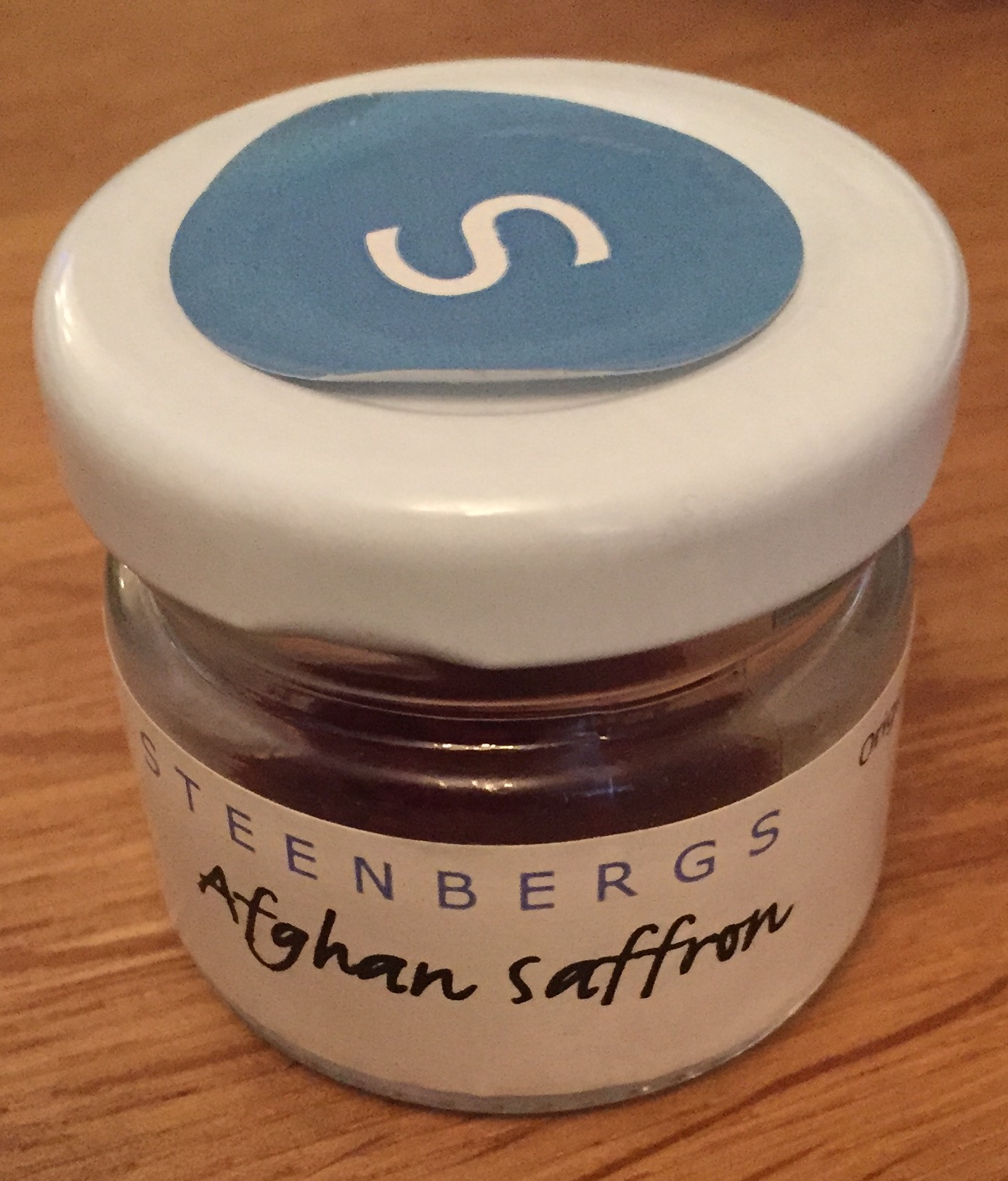
A pinch of saffron, along with fresh parsley, promised both colour and aroma. We let everything simmer gently, no need for a dramatic lid or staged photo, just honest, attentive cooking, letting the ingredients speak for themselves as the kitchen filled with the unmistakable scent of the sea and southern sunshine.
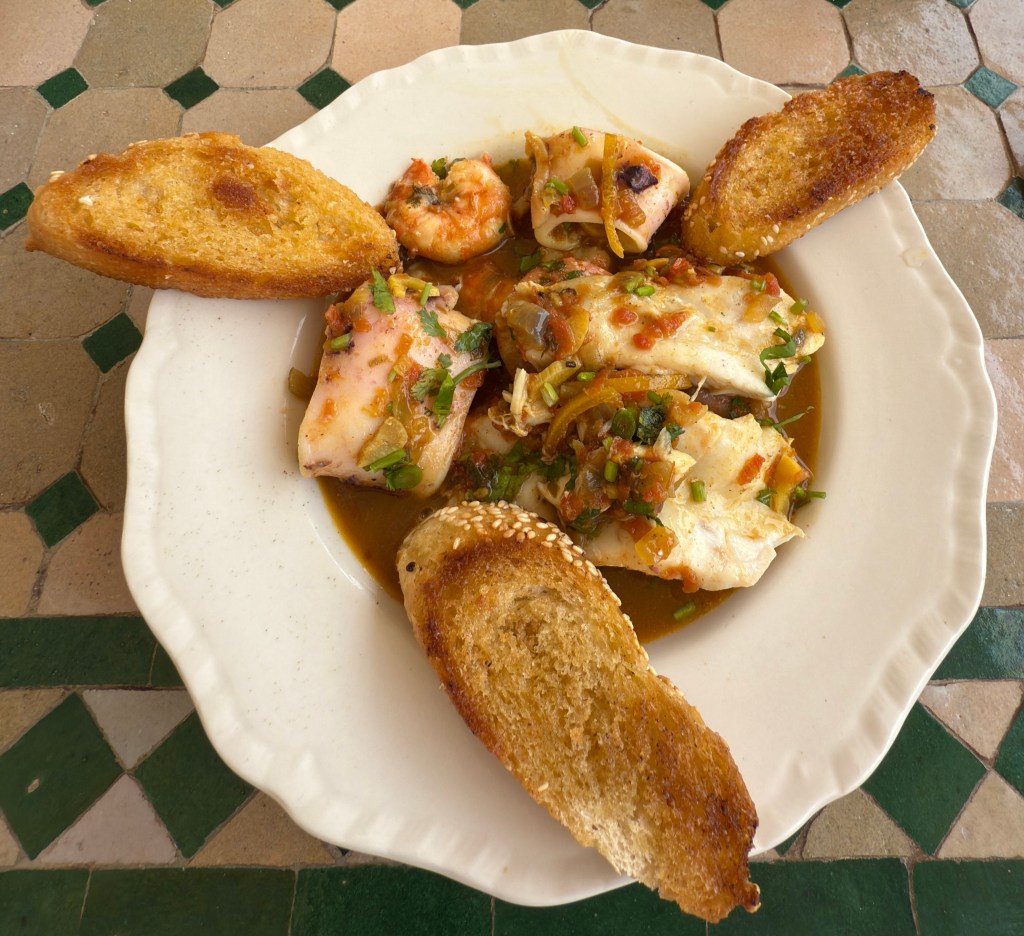
To bring balance and a touch of contrast to the soft, yielding seafood and the rich, sun-drenched base, a simple pleasure was in order: bread. A fresh baguette was sliced into generous rounds, destined to become golden and crisp. The slices sizzled in a pan with plenty of butter, a splash of olive oil keeping the richness in check and lending a gentle fruitiness.
Once burnished and fragrant, each piece was rubbed with cut garlic, the warmth coaxing out its mellow bite. The result—crunchy, aromatic toasts—was the perfect counterpoint, ready to soak up the cataplana’s juices and elevate the meal with a satisfying, rustic crunch. Sometimes, it’s these simple touches, shared in good company, that make a feast truly memorable.






Earlier in the day, the clear, bright blue skies signaled the perfect opportunity for an evening visit to the observation point overlooking Essaouira. Keeping in mind the logistics with our driver, we set out promptly at 19:45 to capture the magic of the moment.
As a photography enthusiast, I brought along my trusted gear: a Fuji XT-1, a Leica D-Lux 7, and of course, the ever-reliable iPhone 16 Pro Max. The XT-1 was set to auto mode, snapping a picture every 20 seconds for up to 20 shots, carefully nestled on the stone wall atop a protective blanket. The Leica was mounted on a sturdy tripod, ready for precise framing, while the iPhone was at hand for spontaneous shots amidst the action.
Despite the rather windy conditions, I was ecstatic with the results, capturing the essence of Essaouira’s evening glow with reasonable clarity and artistry.
……………………Until next time………………L8ers…………………….

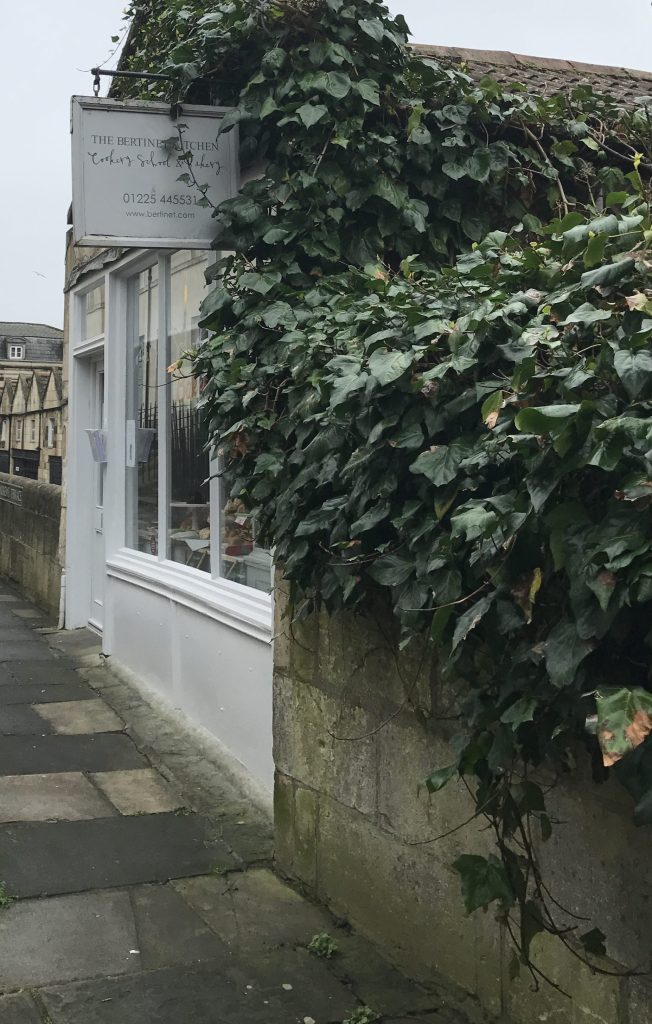 The weather was miserable as I jumped onboard the train to Bath Spa station, on arrival the sun was shinning out of The Bertinet Cookery School as Spanish Chef Supremo Omar Allibhoy was in town, teaching 12 eager cookery enthusiasts and I was on the list!
 We were going to prepare several dishes from different parts of Spain and at the end sit down on the communal table and ‘feast’, which is always a pleasant and fitting end to several hours graft in the kitchen! On the menu was Gazpacho de Sandia (chilled Watermelon soup), Higaditos al Jerez Dulce (Chicken Livers with Sweet Sherry and Spices), Arroz Melosos de Seta (Paella with Mushrooms and Cod),
 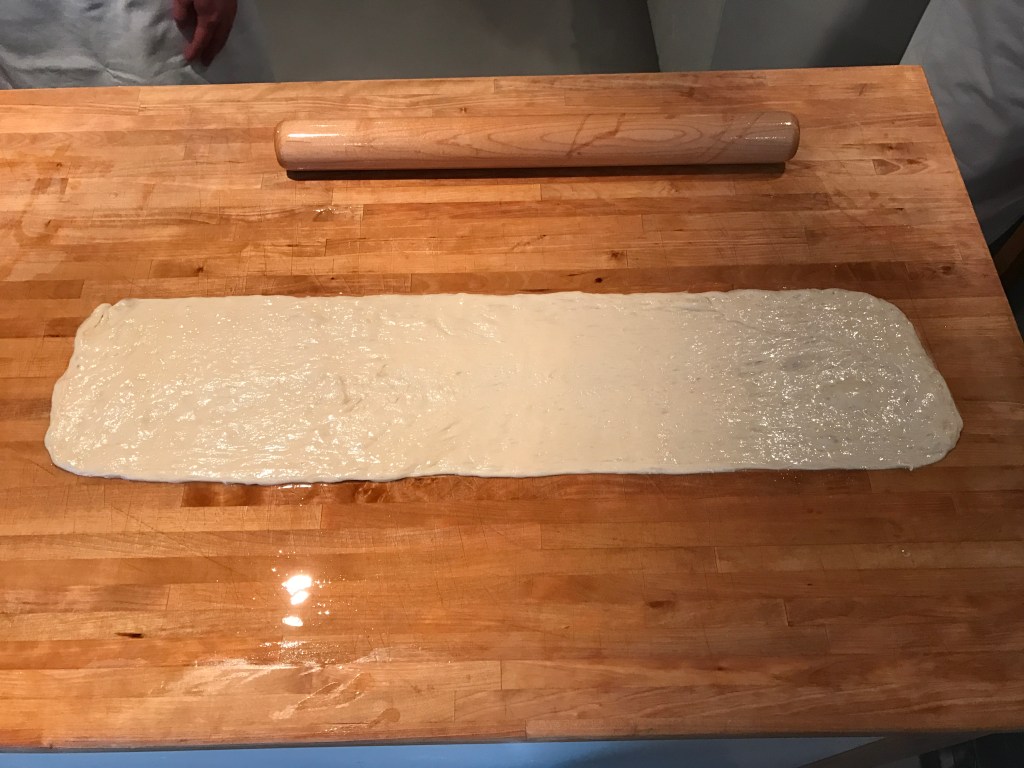 Blimey, apart from the really tasty and slightly un-familiar menu some new techniques to get to grips with, we started on the Mallorcan dessert. An enriched dough was made using an ‘industrial’ grade mixer purely due to the quantity we were making, you could do this in a Kenwood or Kitchen Aid quite easily. We had to get the gluten working hard so this was not a 5 minute process, once done (about 10-15 minutes), the dough was left to rest whilst we worked on the other dishes.
 As we followed through the menu, Omar spent lots of time explaining some of the interesting facts about Spanish Cuisine, it’s ‘subtle’ not in your face and I personally think it’s a shame that a vast number of tourists only seem to focus on fast food chains and ‘British fry up’s’, Spain has so much more to offer if you make a little effort.
 The
The  We had some prepared Stock on the hob which was going to be used to make the Paella dish. This was not a traditional ‘dry’ Paella so familiar to tourists but a ‘sloppy’ one even beyond the wetness of a Risotto.
 So, we are making a dessert and then add
  Who loves Chicken Livers? Surprisingly Omar put his hand up as he asked the question. Fine in Parfait and pâté but cooked, nope, except this way. This was to be an appetizer to get the taste buds singing before the Gazpacho. Marinated in some ‘special’ ingredients you can find the recipe in Omar’s new book
  Rather than just show and tell, Omar was also hands-on, assisting and guiding all 12 of us during the 5-6 hours of cooking we were to complete before sitting down and eating our efforts. He was very enthusiastic and great fun, telling us more about his experiences in the restaurant industry and giving us hints and tips as we prepared each dish.
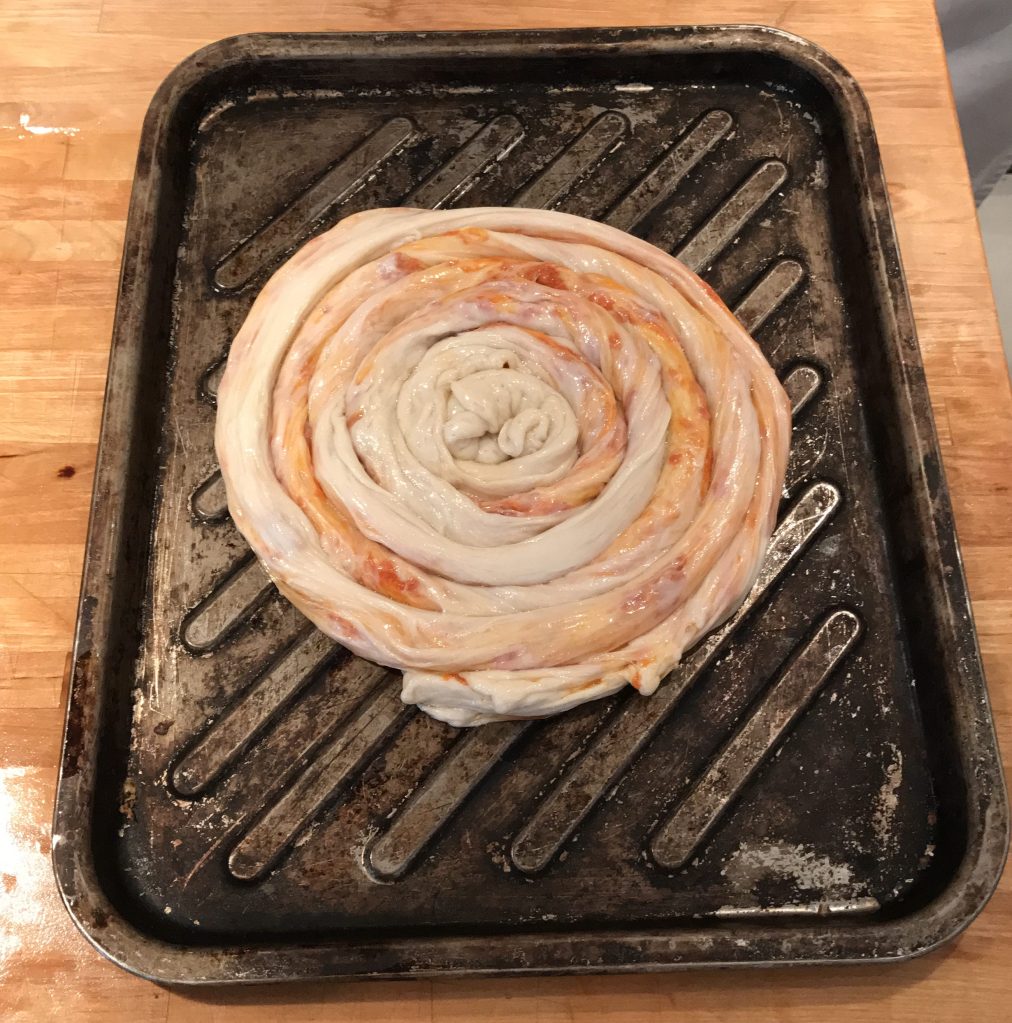 You have to stretch the Ensaidmada before ‘gently’ coiling and allowing to prove for a couple of hours, traditionally this would be done overnight to develop more flavour but our time was limited. Once risen it goes into a hot oven until a deep brown, not the light golden colour we are normally used to when baking.
 Ignore the ‘rustic’ look of the Chicken Livers, they were to die for, absolutely delightful, tangy, sweet and soft. We served them on some toasted Sour Dough and decided to crack open the wine at the same time as dinner was nearly ready and quick taster of these would get us over the line.
 The Ensaidmada’s were ready in about 19 minutes at 190deg, the top one is the savoury version, you can seen small pieces of Sobrasada speckled on the surface. The Gazpacho was probably the easiest dish we made, assemble the ingredients and whizz in a blender. Adding Melon was unusual but it was not long before we sat done and started tasting, chatting and talking about the techniques we had learnt and discussing food in general.
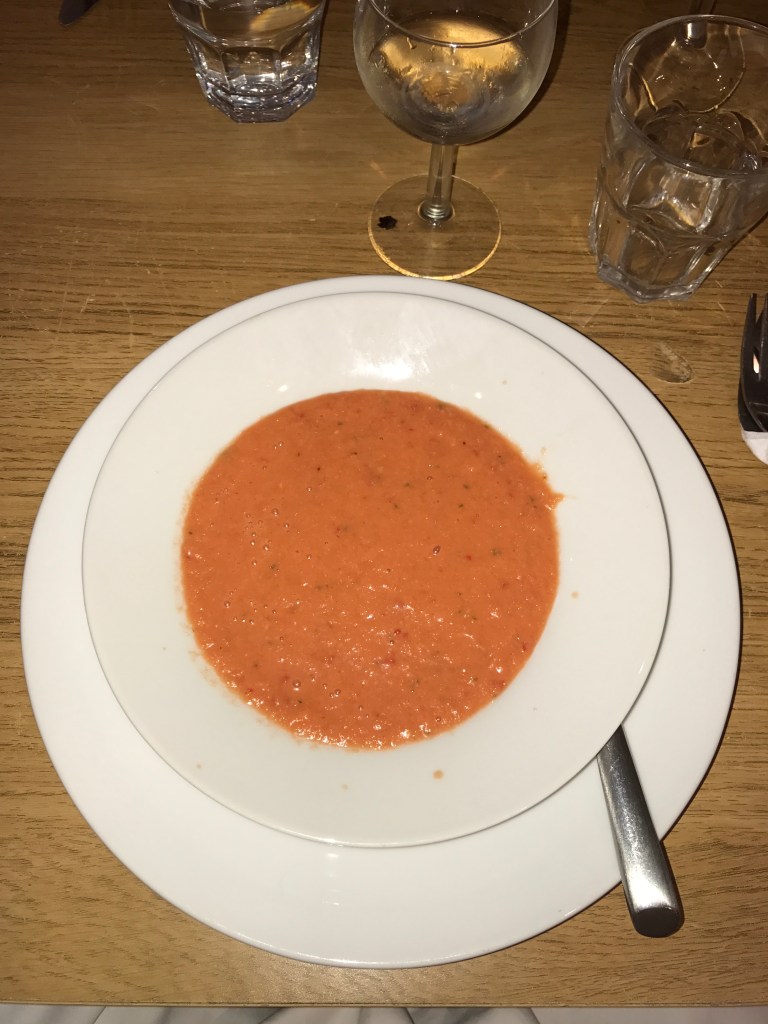 The Gazpacho was delicious, it was quite hot in the cookery school so a cool refreshing slightly sweet starter did the job perfectly. Bomba Rice is very picky, you HAVE to get the timings correct otherwise you end up with over cooked grains that are like sludge. Shortly after finishing our starter the Arroz Melosos De Seta was ready for the final ingredient to be added, Salt Cod. This only needed a few minutes and we were ready to serve.
 You can see the slightly ‘sloppy’ nature of the dish in the picture above. It is supposed to be like this, wetter than a Risotto it did taste subtle and was also delicious, the Paprika creating warmth and smokiness, the mushrooms meatiness and the Rice had textures but probably not the al dente described in Italian Cuisine, it was slightly beyond that stage.
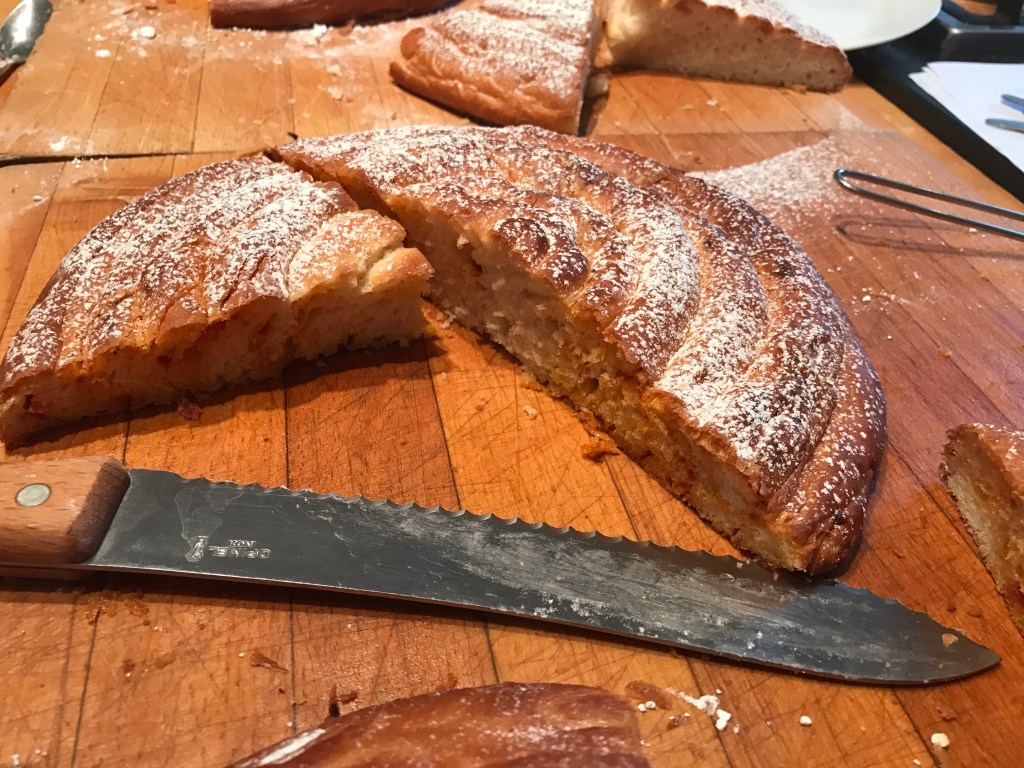 Once the Ensaidmada is cooked both versions are given a good coating of Icing sugar. The savoury version might be considered a bit like the Moroccan Pastilla dish, Pigeon Pie with Cinnamon and Icing Sugar in Filo Pastry, but in this case we are using Sobrasada which is a cured spicy Pork. It was unusually delicious again, difficult to describe unless you can taste it yourself.
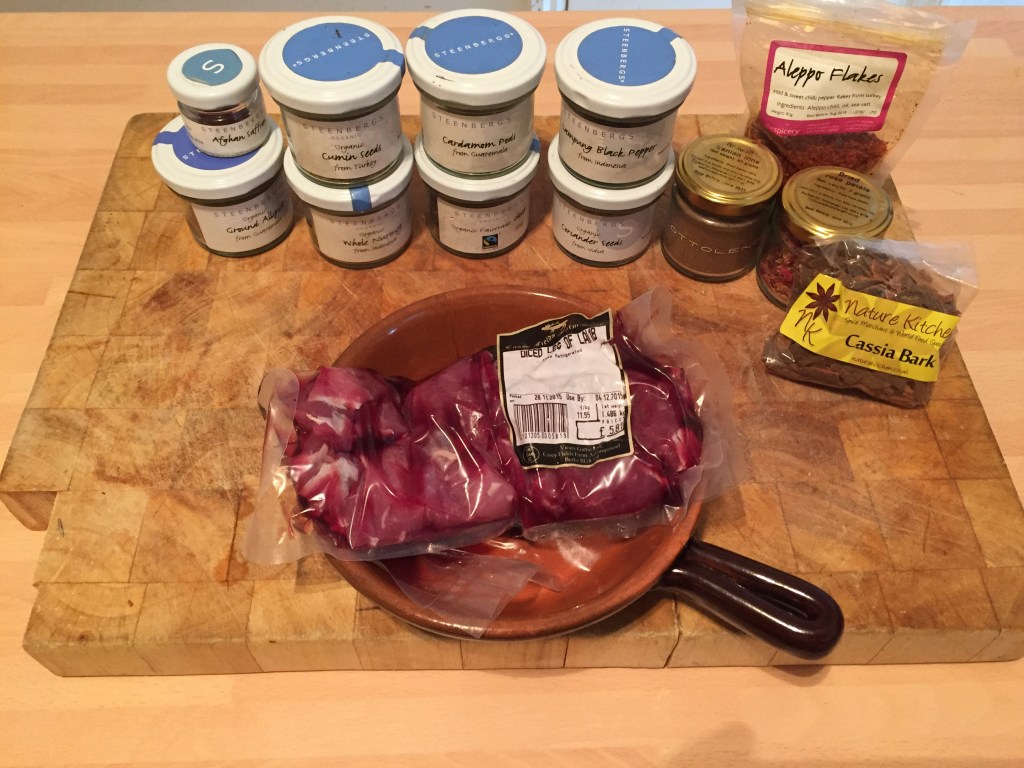

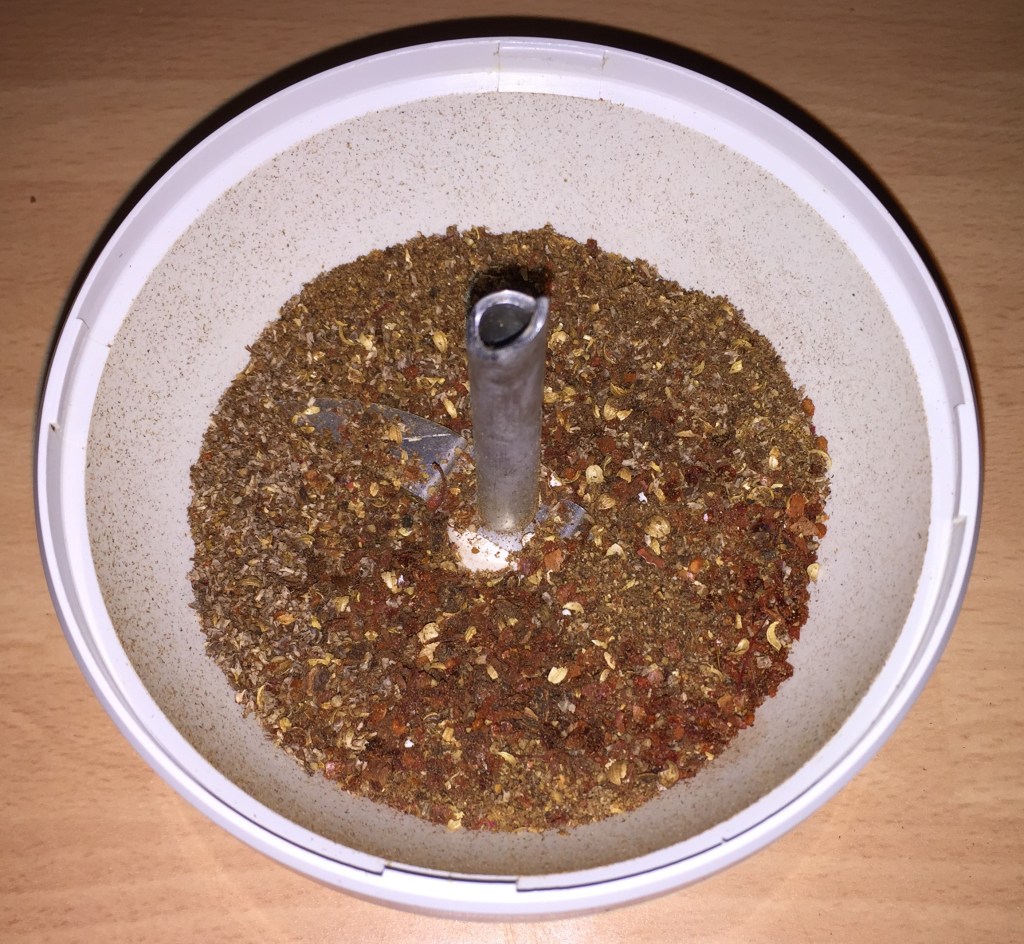

 After marinating, the Lamb is browned in a frying pan in some olive oil, and put into a dish with 250 mls of HOT Vegetable Stock mixed with 2 tsp of tomato puree then into a 130 deg (centigrade) fan oven for 2 1/2 – 3 hours! I covered mine with tinfoil for the first couple of hours, and removed the foil allowing the stock to reduce for the last hour or so. You will need to keep and eye on it and stir from time to time to make sure things don’t dry out.
 The 1 day session was awesome, we all learnt loads and despite my fears of piping and making a complete fool of myself, the end results were really very good (according to wife and family who can consume more sugar in a day than I can in a month)! Some of the end product are pictured above, I managed a couple all day!
 I am not sure how the Lime managed to get into the picture earlier, you need to add Lemon Juice to taste, a good squeeze or two and for salt, I used some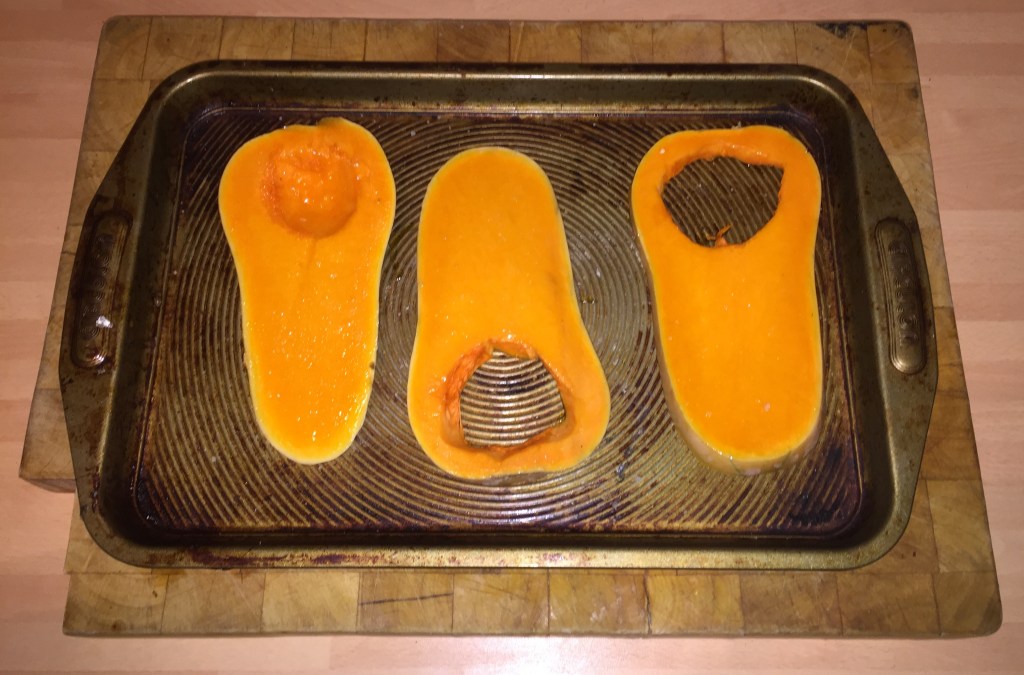


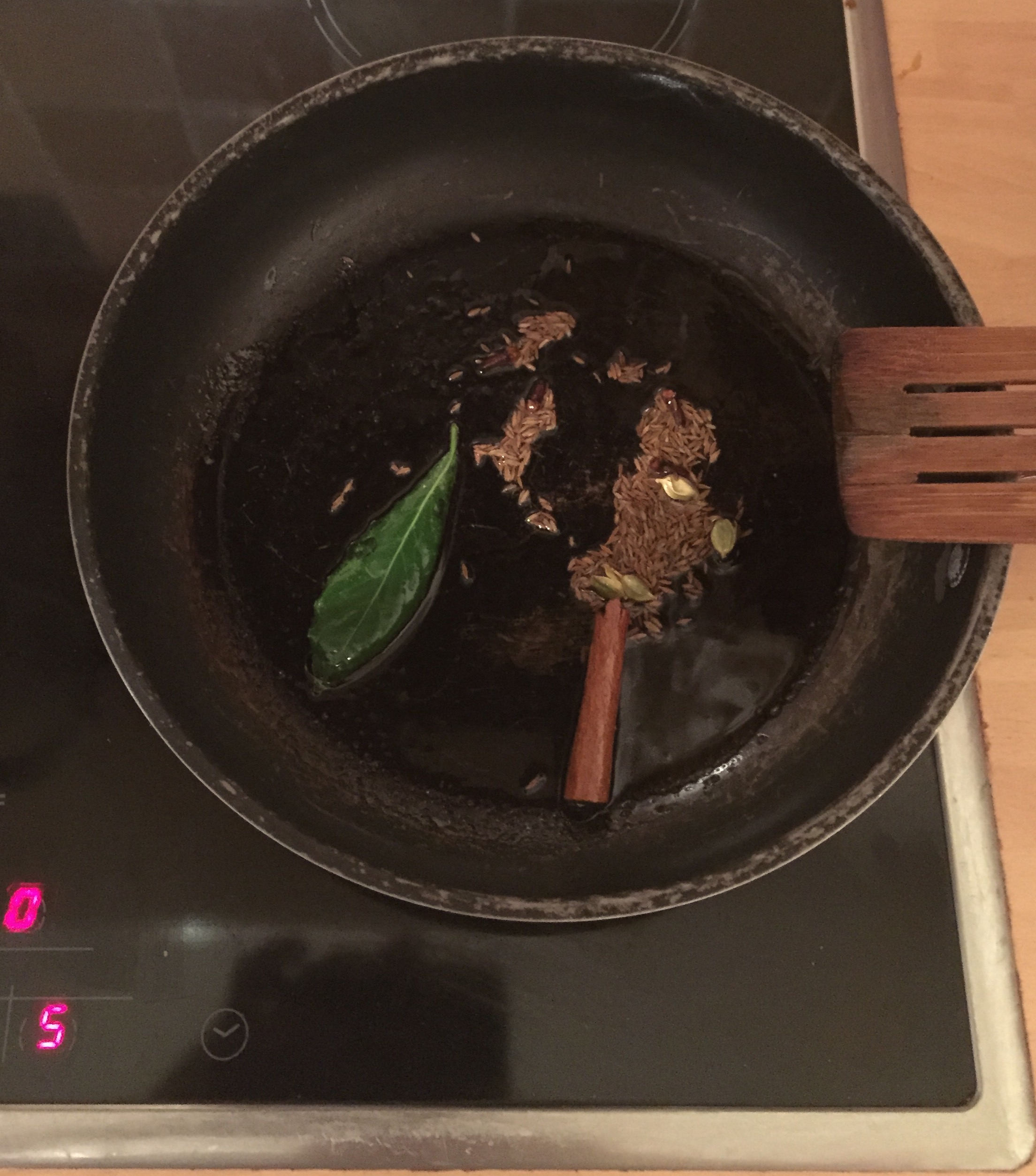
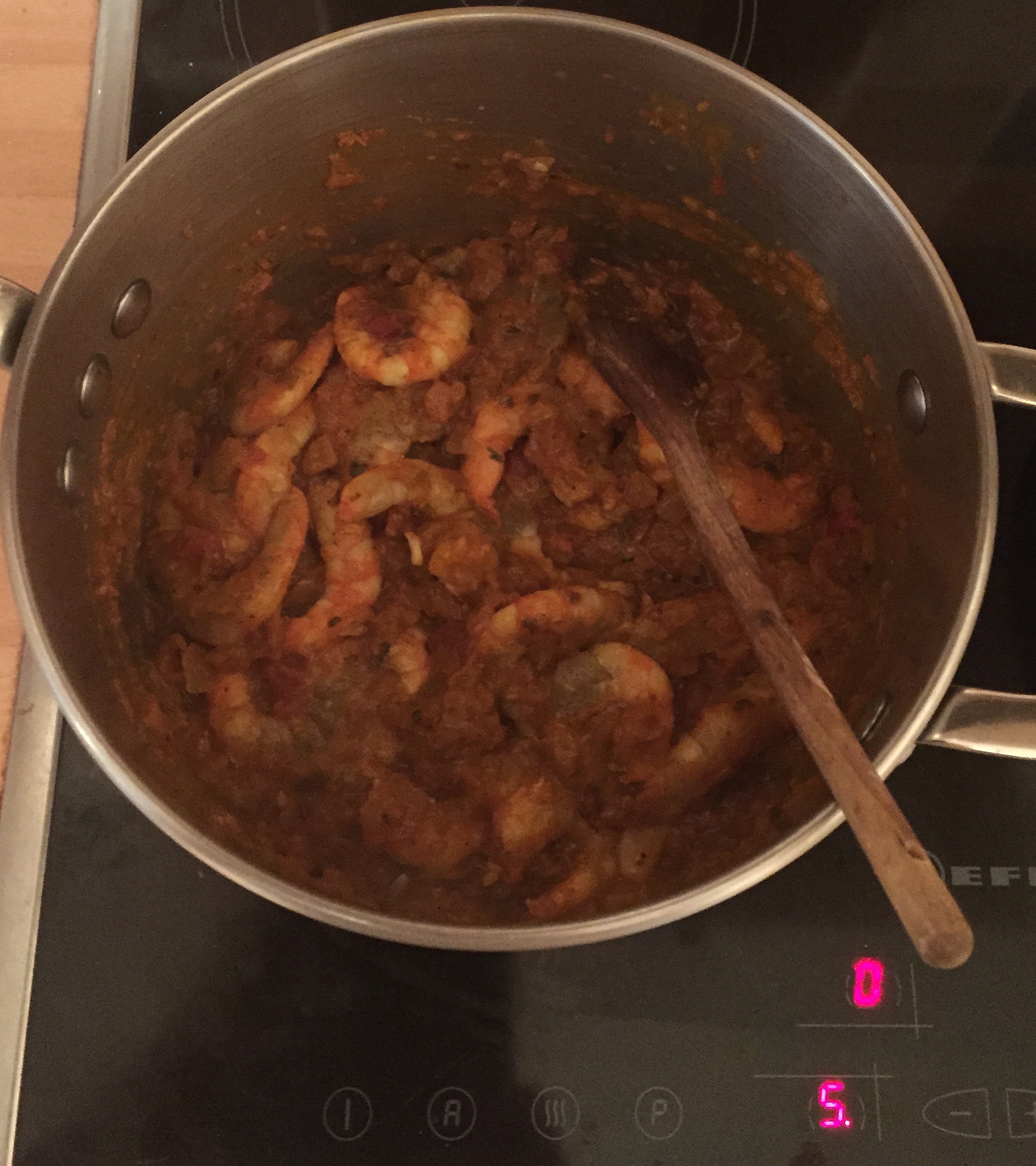
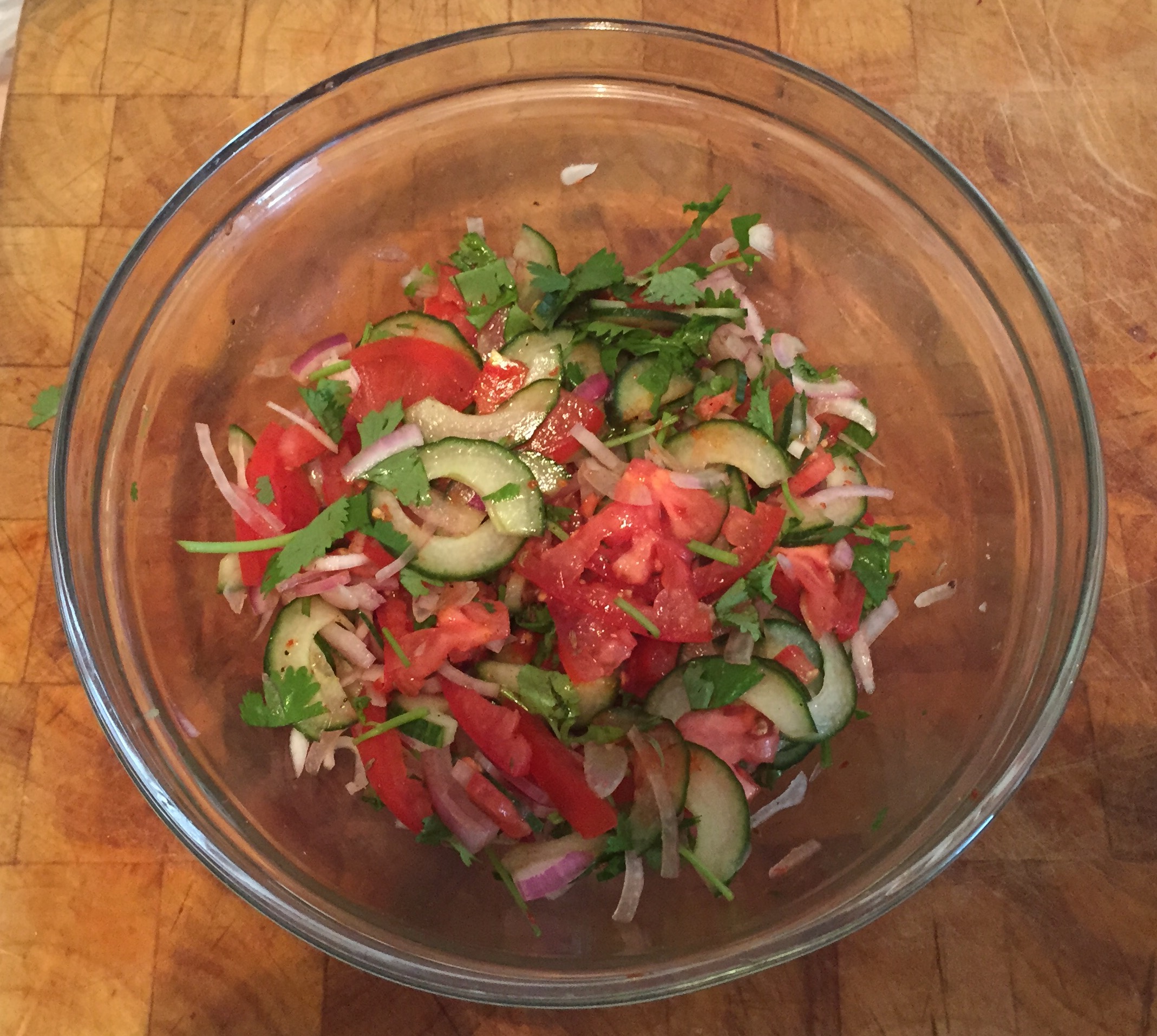
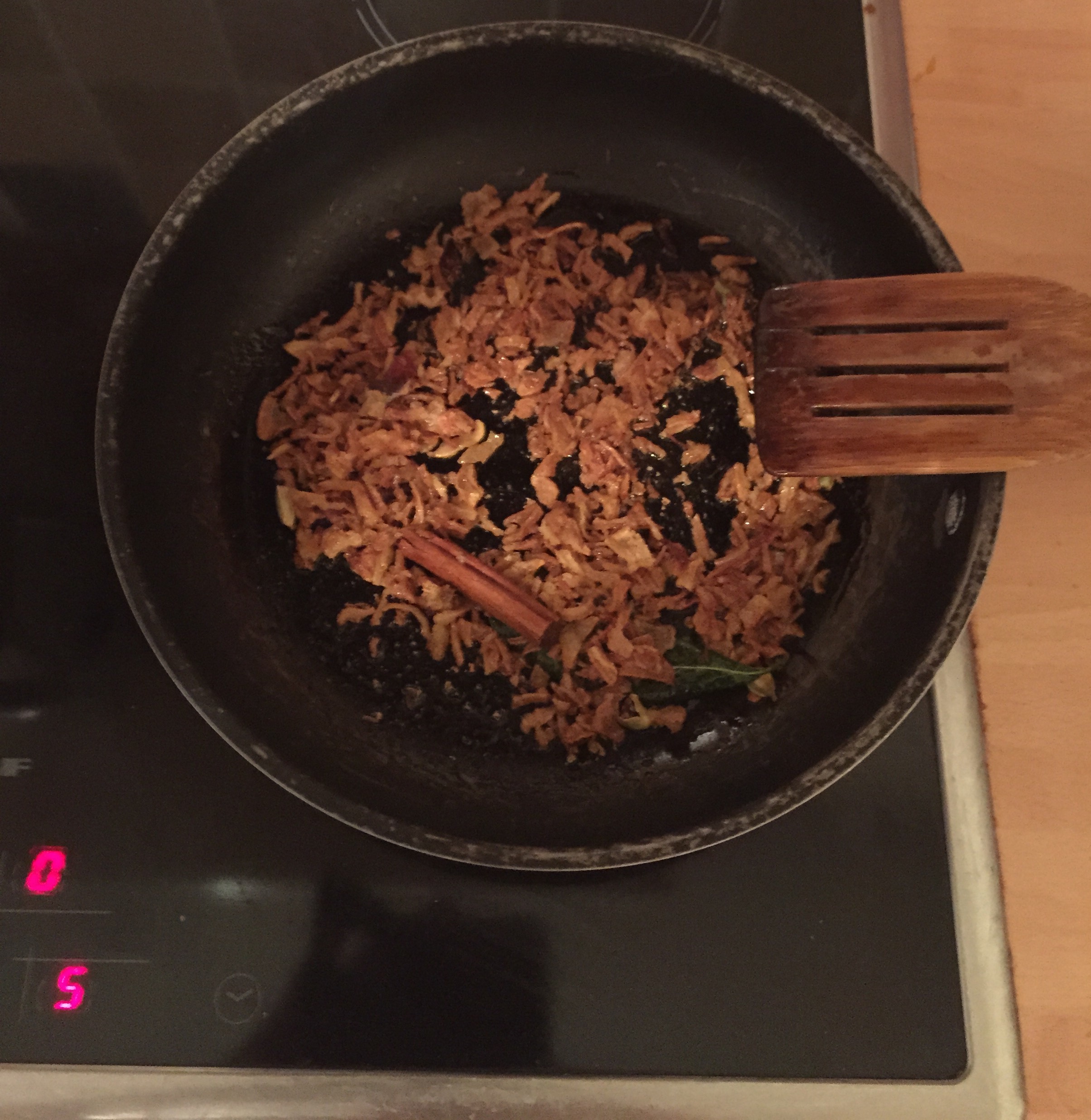
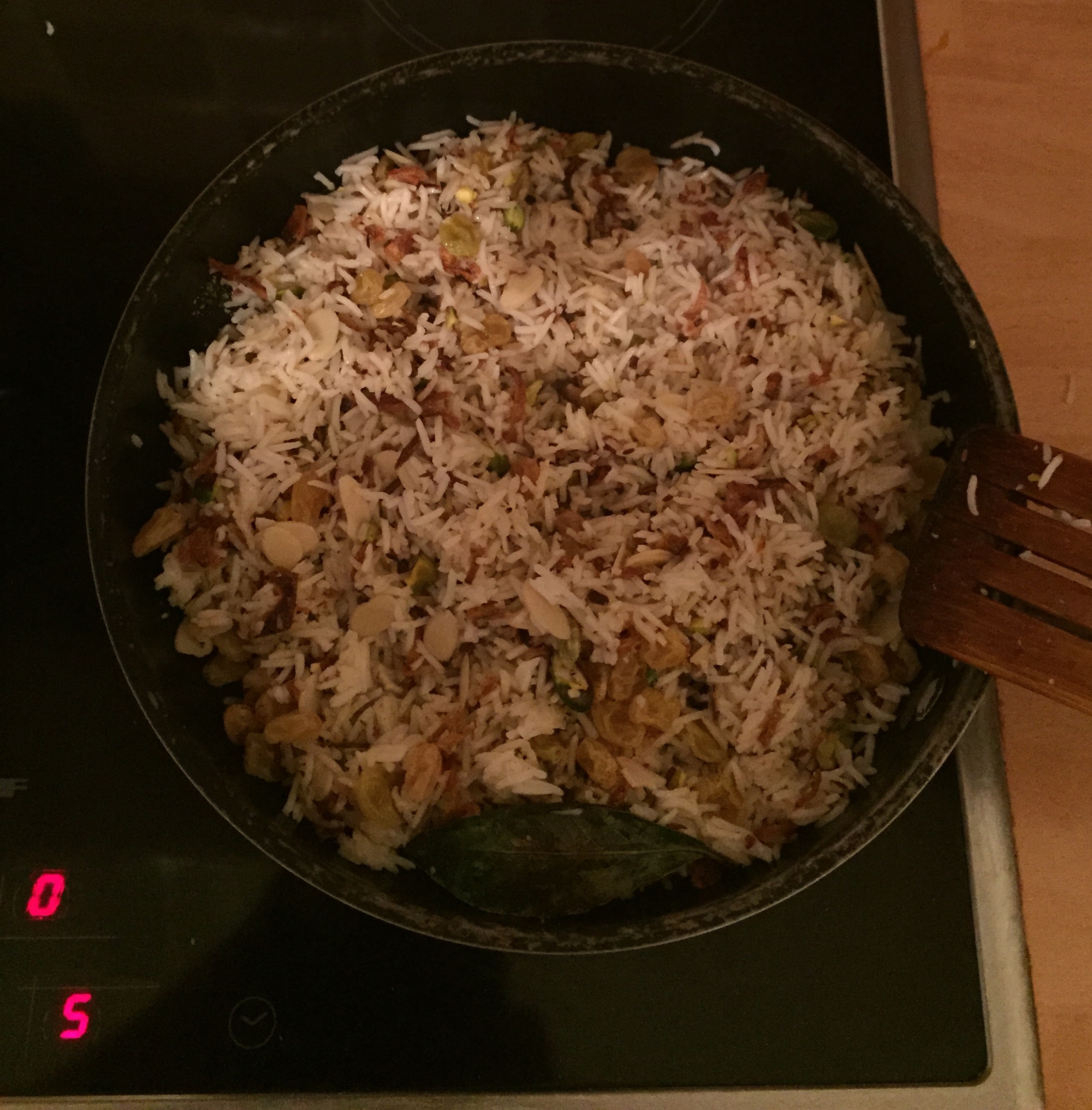



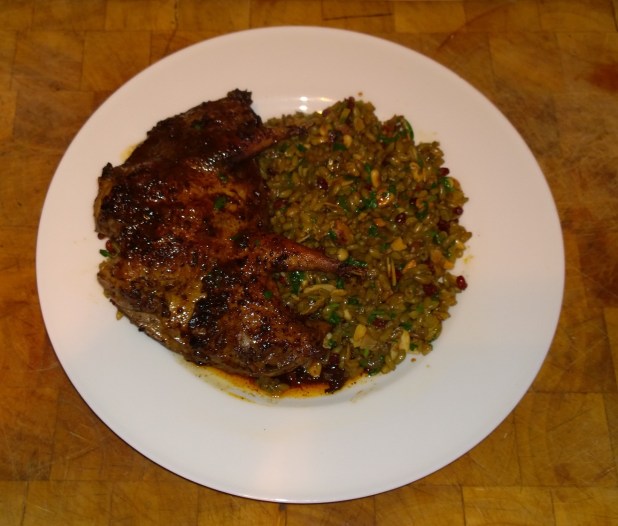


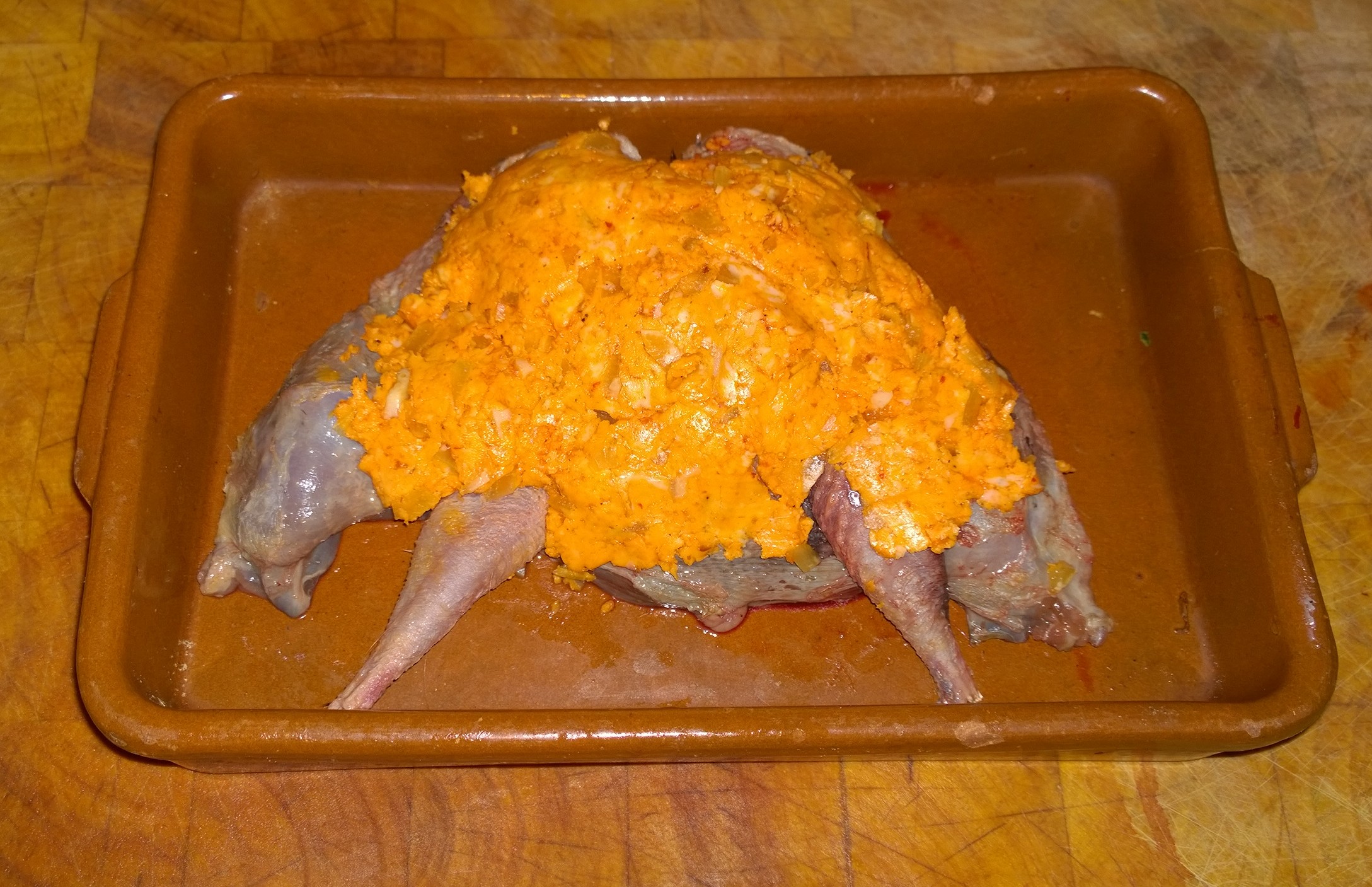

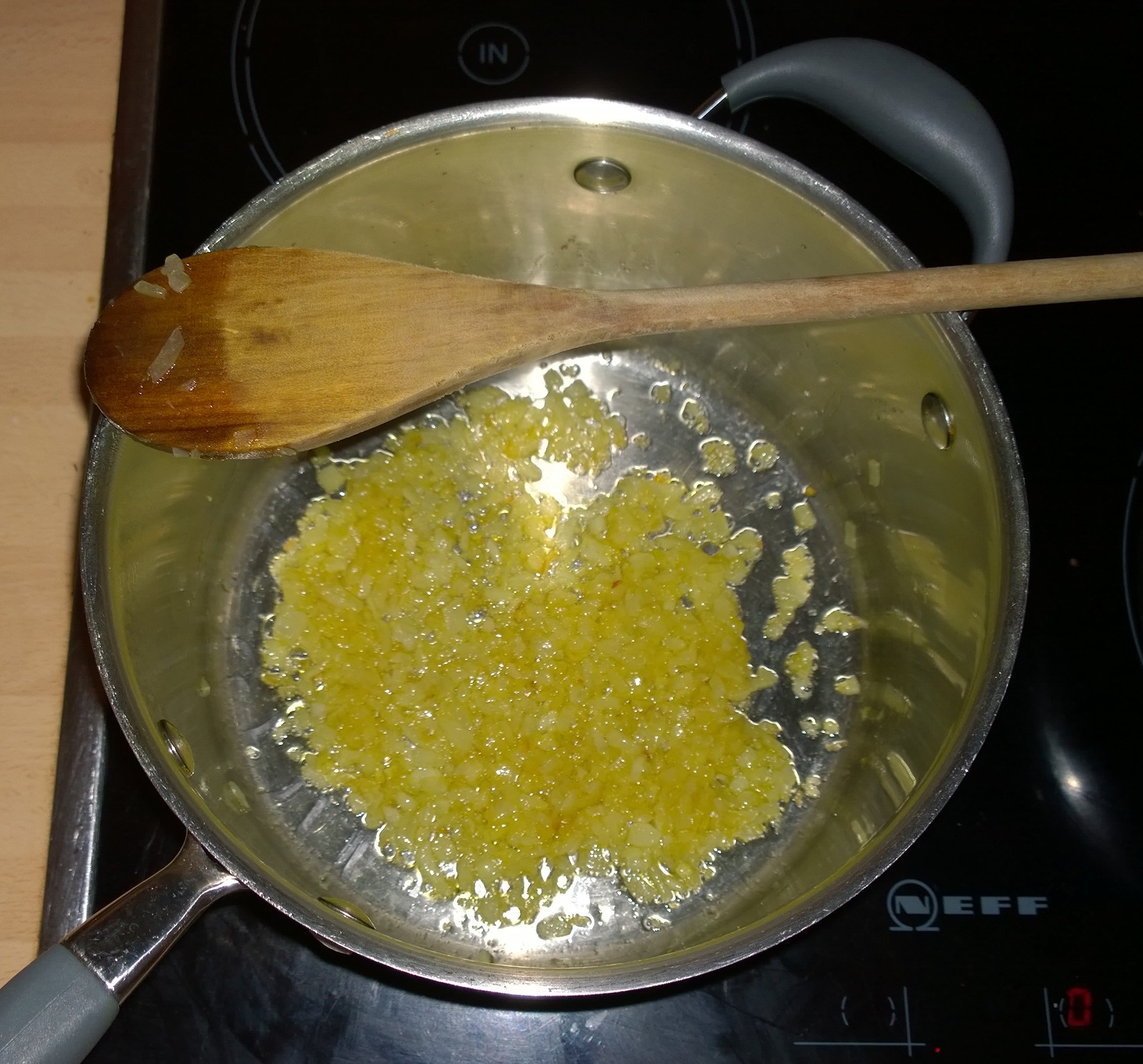


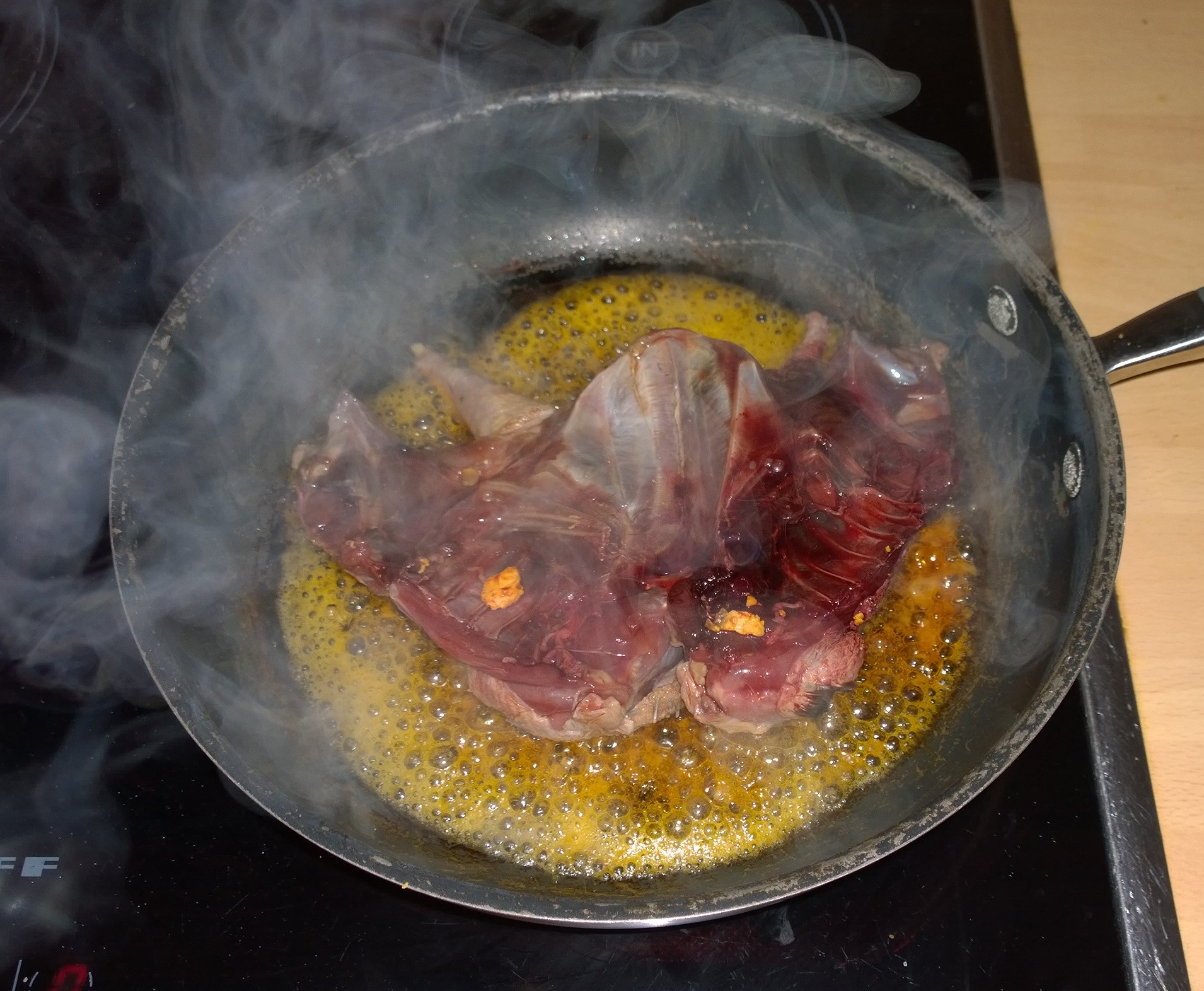
 I sometimes think of Bejewelling as similar to tempering a Dhal! You have a base of Rice or Grains (or Lentils in the case of Dhal), and add some punchy fresh flavours at the last minute. So a minute or so before you are going to serve up, add the other 1/4 thinly sliced Preserved Lemon, the other Garlic Clove, Grated, and the toasted Nuts and Barberries, you are just warning them all through at the last minute. Finally stir in a handful of fresh coriander leaf, finely chopped and a good drizzle of Pomegranate Molasses.




 Julian Rolfe
