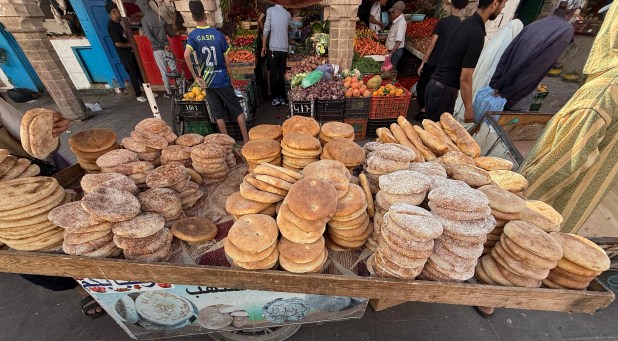
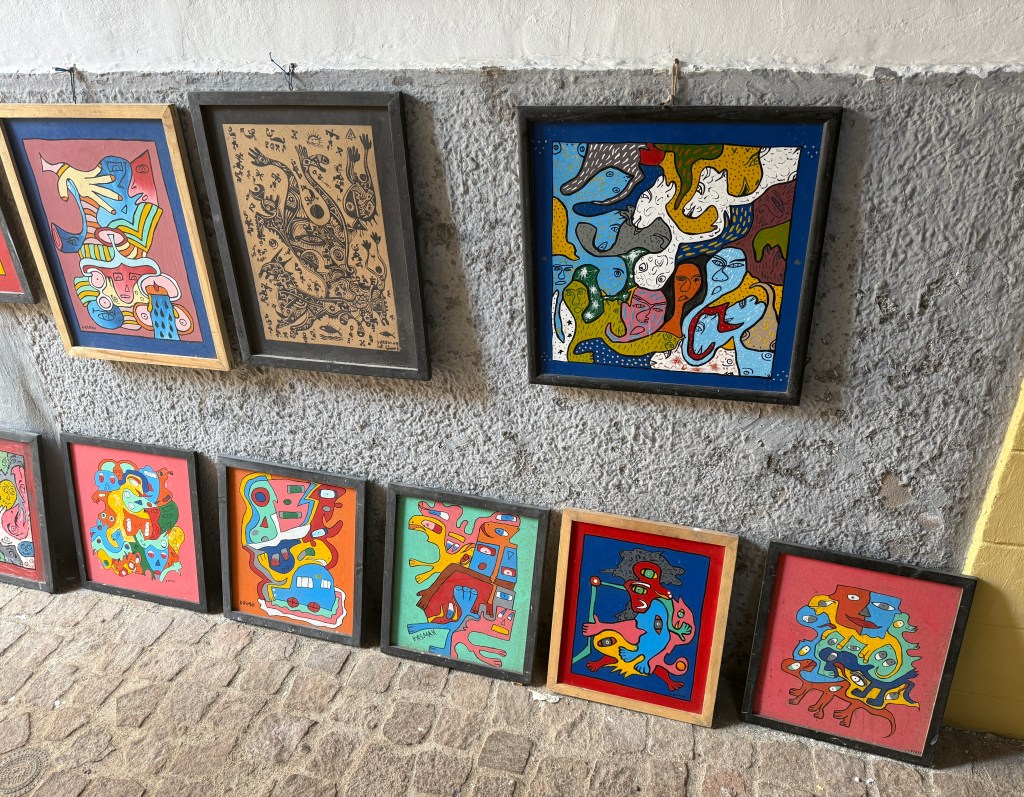
I awoke and blinked into the golden Moroccan light, hardly believing it was already Wednesday, the last full day in Essaouira. Since stepping off the plane the previous Saturday, the world I’d left behind had melted away: work, customers, endless problem-solving, even the distant rumblings of the world economy, all had faded into irrelevance. This journey had done its magic, untangling the knots of daily life and filling the space with colour, flavour, and discovery.
Each sunrise brought new marvels, and I found myself immersed in the rhythms of Morocco, its vibrant markets, ancient traditions, and the intoxicating pulse of its cuisine. Guiding me through it all was Amanda: not just my personal guide and masterful chef, but a kindred spirit whose passion for Morocco’s culture and food opened doors I never knew existed. With every shared meal and story, I felt a sense of wonder grow, a reminder that travel, at its best, is a gentle awakening to beauty, friendship, and the joy of being fully present in the world.
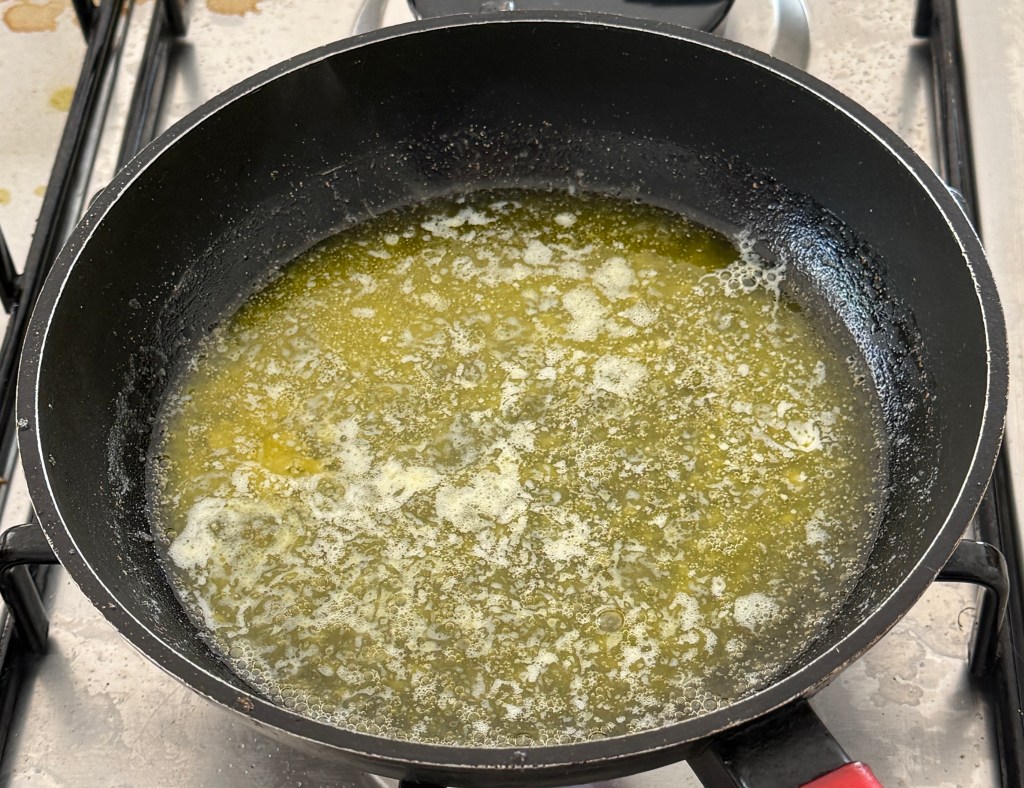
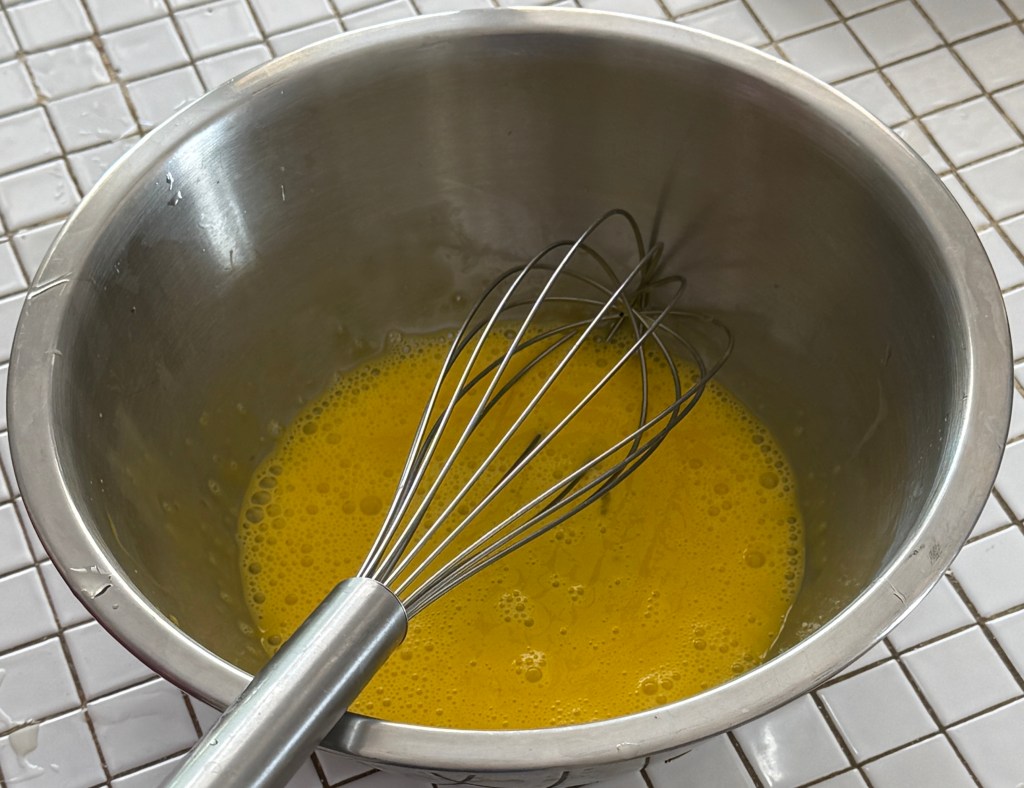
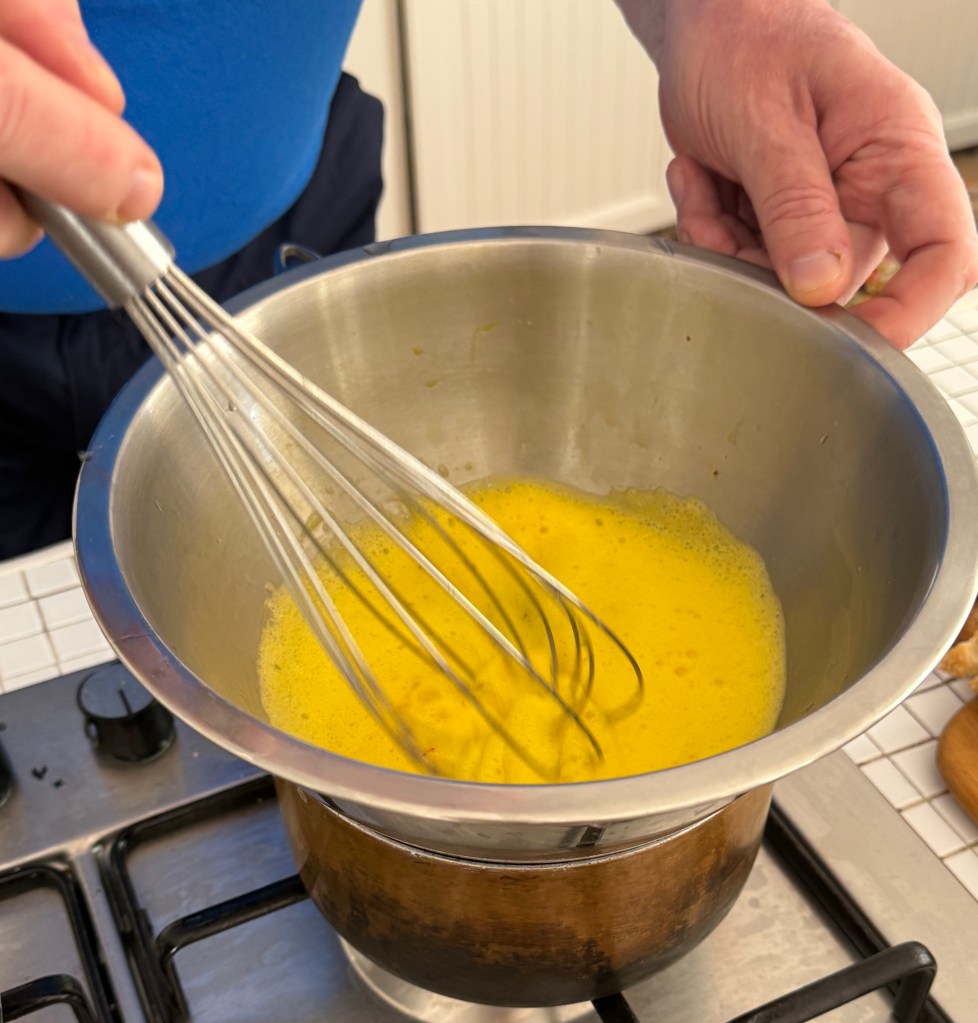

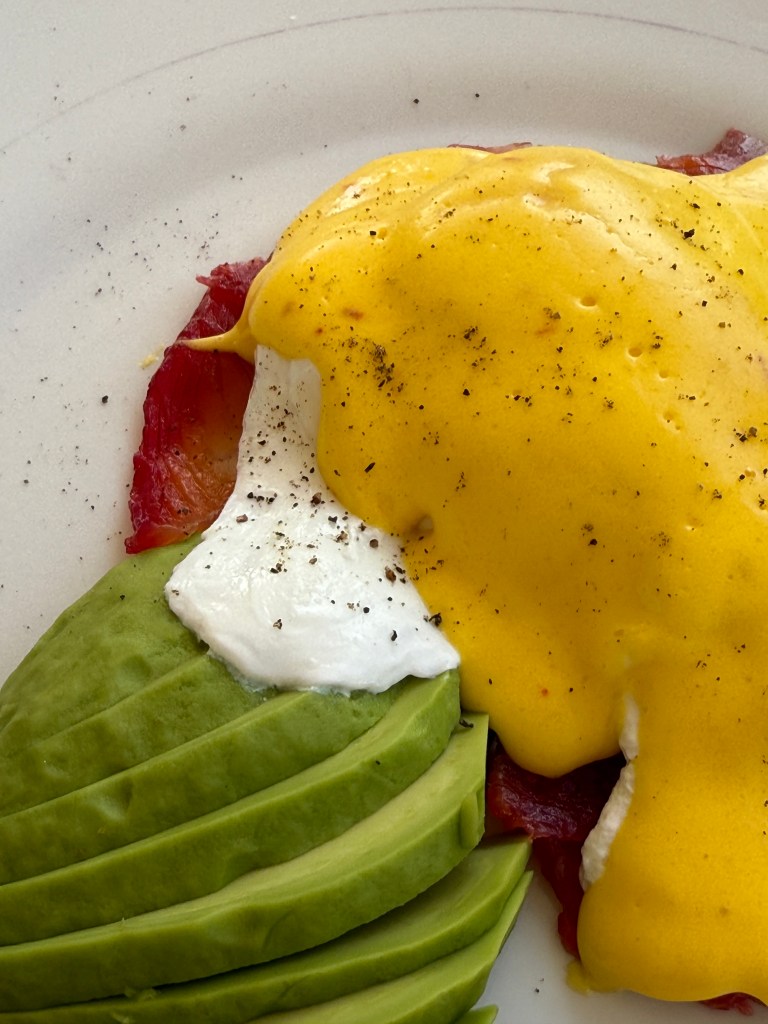
Making a rich saffron hollandaise is one of life’s true pleasures, luxurious, golden, and deeply satisfying. I’ve had the delight of whisking it to silkiness a few times before, most memorably at Rick Stein’s Cookery School in Padstow, where it crowned a beautiful ‘tronçon’ of turbot. This morning in Essaouira, the sauce would take centre stage once again. Earlier in the week, we had cured some trout in a vivid blend of beetroot, salt, and sugar, and now it was ready for its moment: breakfast as an event. Slices of the jewel-toned trout were paired with creamy avocado and a perfectly poached egg, all generously draped in that opulent saffron hollandaise and finished with a satisfying crack of fresh black pepper. Each bite was a celebration—of technique, of flavour, and of the sheer joy of starting the day with something extraordinary.
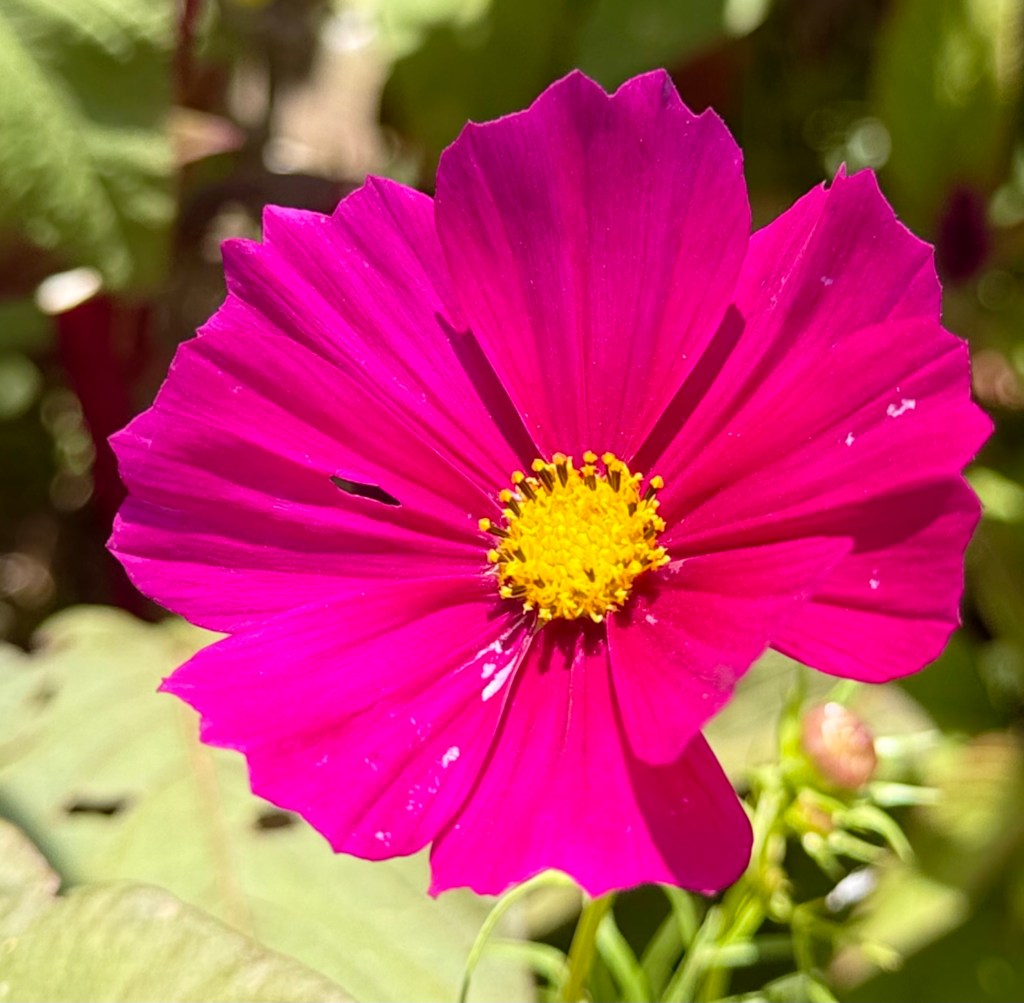


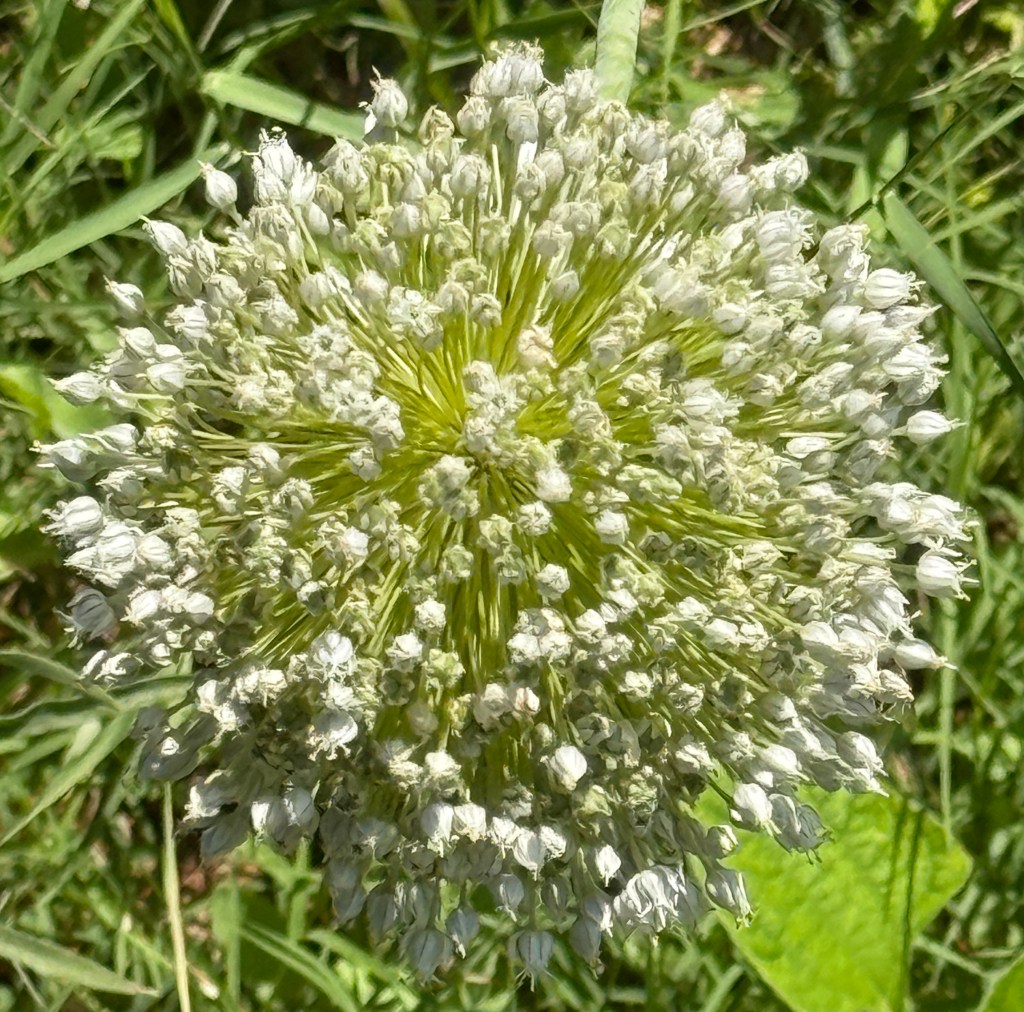

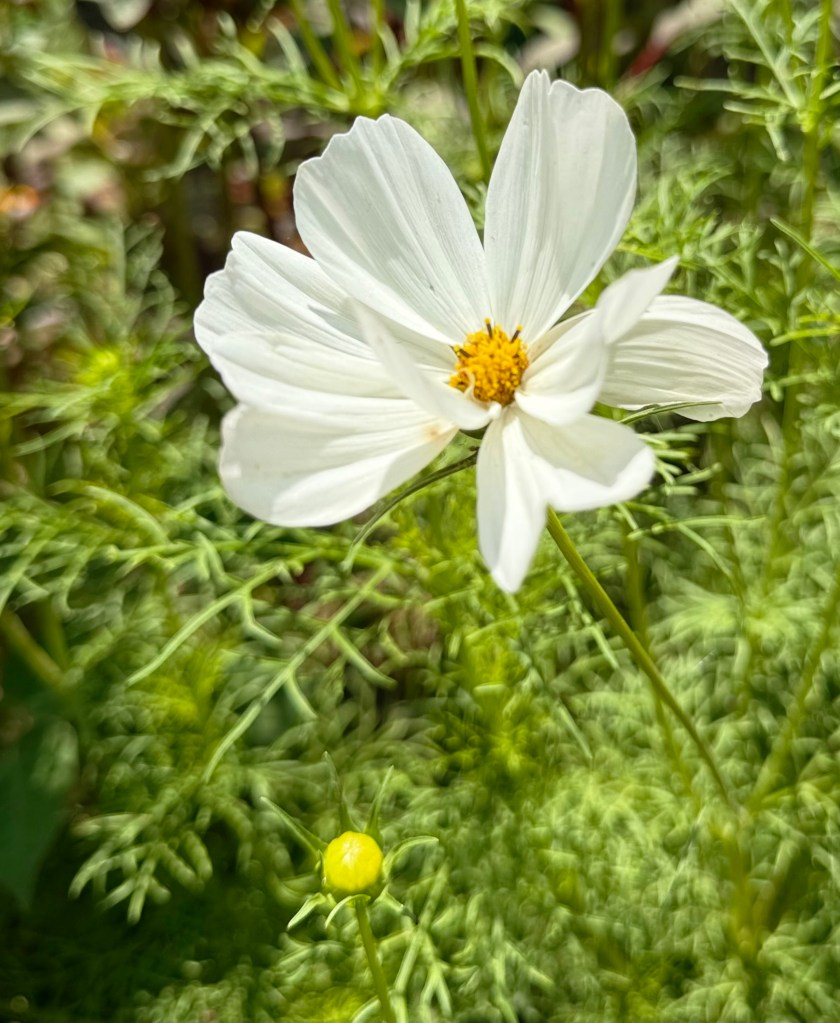
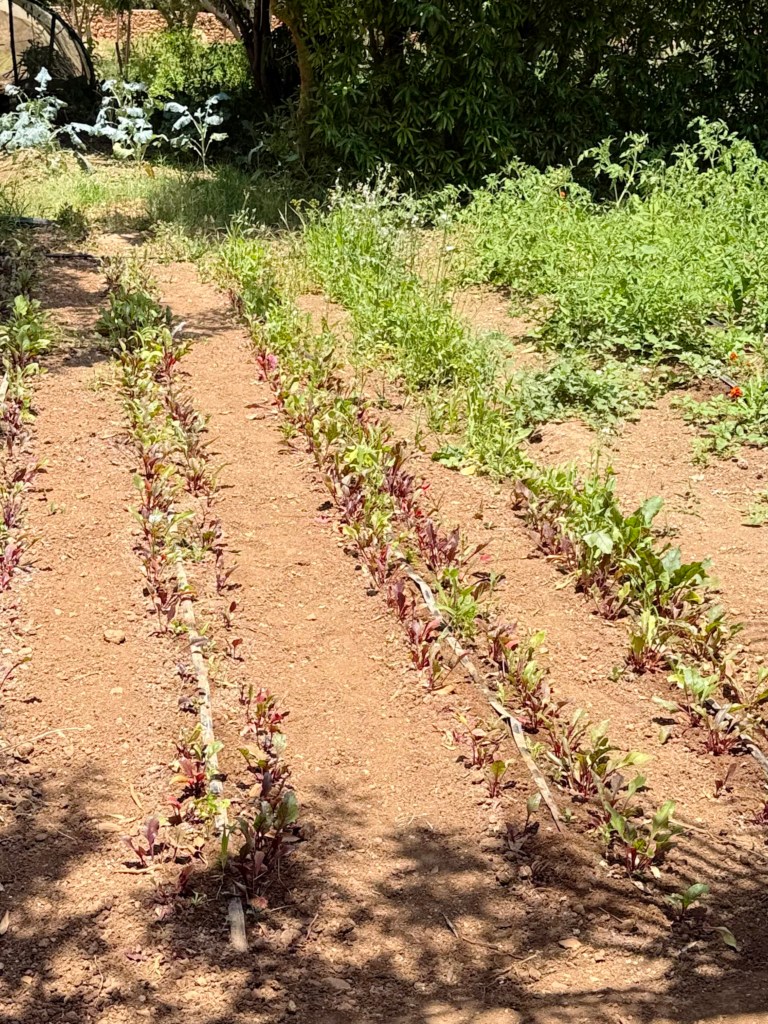
Way back in 2013, I found myself in Puglia, at Masseria Montenapoleone, an organic farm nestled in the sun-drenched heart of southern Italy. It was my very first cooking vacation and the spark that ignited countless culinary adventures to come. There, I learned the subtle art of using flowers not just for beauty, but to create a vibrant, bio-diverse environment: drawing the so-called “unwanted” plant eaters away from crops, while inviting in the pollinators and beneficial insects that keep nature in balance. Akal, here in Morocco, is very much a kindred spirit—an eco-farm that weaves flowers into every aspect of its philosophy. At Akal, the blooms aren’t just guardians of the fields; they’re also an integral part of the tasting experience, gracing the table and infusing the most imaginative, flavourful menus with colour and fragrance. Dining here is more than a meal—it’s a celebration of nature’s harmony, and a reminder of how the smallest details can transform the way we taste the world.
Our lunchtime destination was no more than 15 minutes drive, Domaine Du Val D’Argan. Domaine du Val d’Argan is a remarkable testament to vision, perseverance, and the unique character of Moroccan terroir. Founded by Charles Melia, a seasoned winemaker with deep roots in both France and Morocco, the vineyard sits just outside Essaouira, where the Atlantic winds sweep over limestone and clay soils, echoing the Rhône valley’s own mistral. What began as a retirement dream became a pioneering adventure: Melia cleared stony ground by hand, planted the first Rhône varietals, and patiently learned to coax vines to thrive on the edge of the desert, sheltering them from fierce sun and wind with natural methods and organic care.
Today, Val d’Argan is a landscape of lush vine rows bordered by sorghum and eucalyptus, where dromedaries still help tend the land and the cellar holds the promise of Morocco’s finest vintages. The wines—ranging from bright, aromatic whites to robust reds and elegant rosés—capture the sun, wind, and wild spirit of their setting. Visiting the domaine is more than a tasting; it’s an immersion in a story of resilience and passion, where every glass reflects not only the land’s bounty but also the quiet determination of its founder. This is a vineyard where French tradition and Moroccan landscape meet, yielding wines—and memories—that are truly one of a kind.
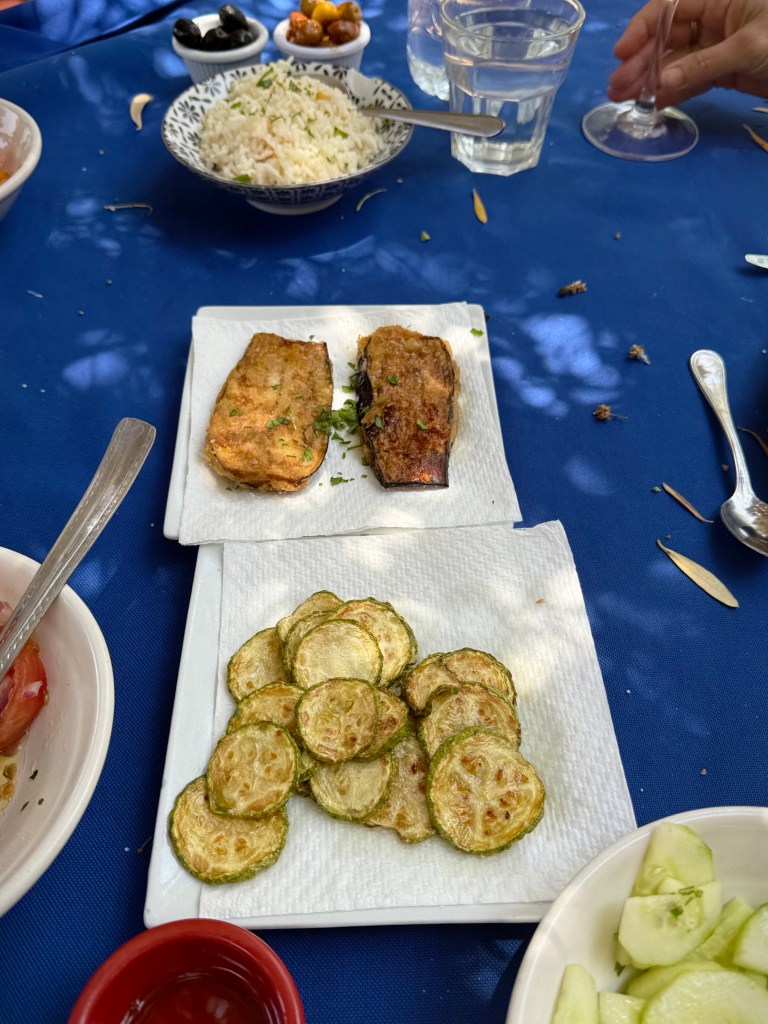
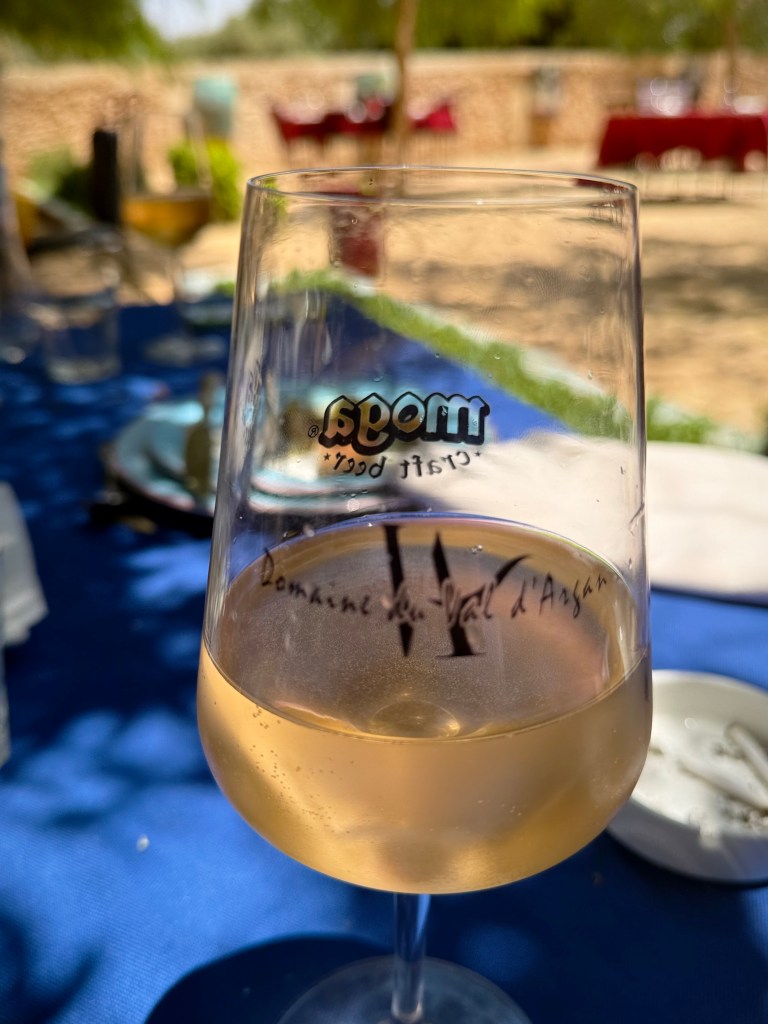
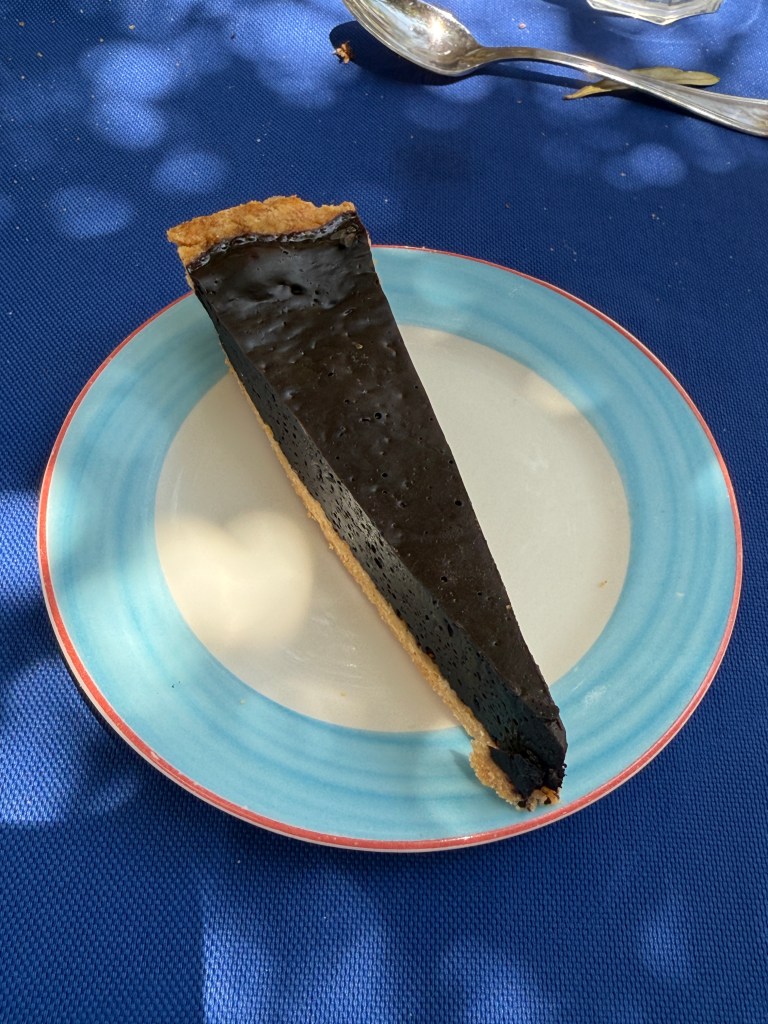
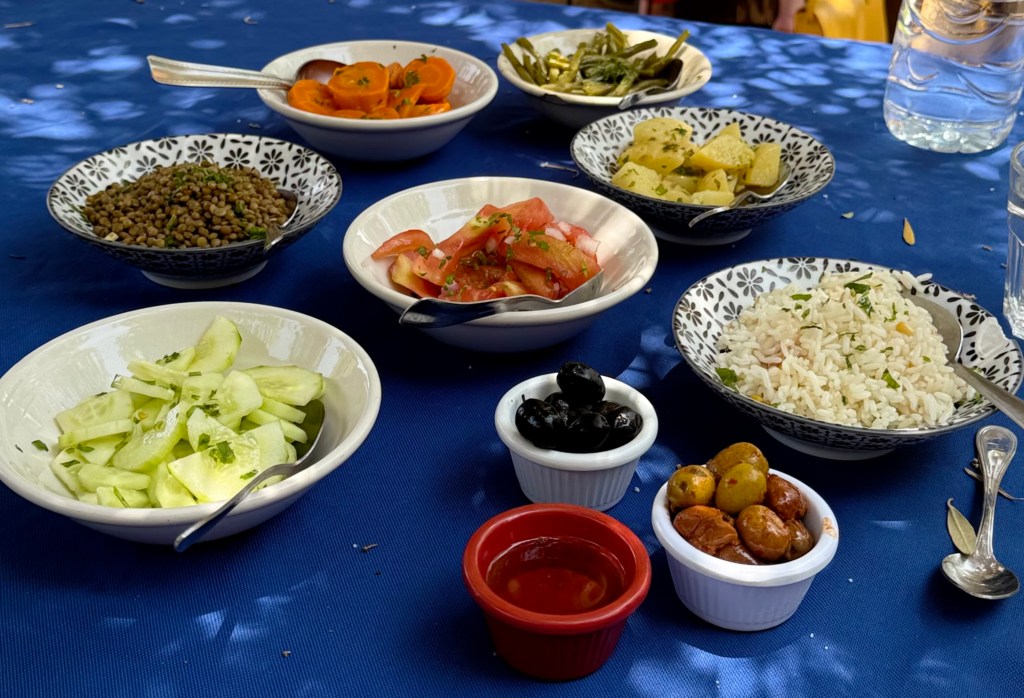
I found myself ‘in the moment’ once again, shaded beneath the branches of an ancient olive tree at Domaine du Val d’Argan. Plates of freshly prepared food appeared in a steady, generous procession, vivid salads bursting with local flavour, a fragrant tagine, and turkey roasted on kebab skewers, each dish a celebration of Moroccan abundance. Glasses of the estate’s wines flowed freely, each one a new discovery.
The “Gazelle de Mogador” in white, red, and rosé offered a taste of the Atlantic’s easy elegance, while the Val d’Argan range echoed the vineyard’s Rhône heritage, capturing the region’s sun and wind in every sip. Yet it was the Perle Grise that truly captured the spirit of the place for me, a wine as pale as morning light, delicately aromatic, with hints of citrus blossom and wild herbs, perfectly refreshing beneath the olive canopy. As the afternoon stretched on, a rich chocolate dessert arrived, rounding out a meal that was both relaxed and luxurious. At Domaine du Val d’Argan, the artistry of winemaking and the generosity of Moroccan hospitality come together in a setting as memorable as the wines themselves, a place where every glass tells a story, and every moment lingers long after the last sip. It was time to head back to Essaouira for some last minute exploration.
As we entered the medina, the air shimmered with the ethereal tones of a young man playing a handpan, his fingers coaxing otherworldly melodies from the spaceship-like drum that echoed off the ancient stone walls.
As the sun dips toward the Atlantic, the ancient medina of Essaouira began to pulse with an energy that is both timeless and electric, the unmistakable prelude to the Gnaoua World Music Festival. For a few magical days each year, the city’s labyrinthine alleys and windswept squares become a living stage, as hypnotic rhythms and haunting melodies spill from every doorway and rooftop. The air grows thick with the deep, trance-inducing thrum of the guembri, the metallic clatter of krakebs, and the soaring call-and-response of Gnaoua singers, their music weaving a spell that draws locals and travellers alike into its embrace.
Founded in 1998, the festival is a vibrant celebration of Gnaoua culture, descendants of West African slaves who brought with them a mystical musical tradition rooted in healing, spiritual trance, and communal memory. Over the years, the festival has blossomed into a global gathering, where Gnaoua masters share the stage with jazz virtuosos, blues legends, and musicians from every corner of the world. This fusion of sounds creates a heady, intoxicating atmosphere, where ancient African rhythms meet flamenco, reggae, rock, and Sufi chants, all under the open Moroccan sky.
The festival is more than a concert—it’s a living tapestry of history, spirituality, and artistic exchange. The music, once used in sacred rituals to heal and connect with the divine, now fills Essaouira’s medina with a sense of unity and celebration. For a few unforgettable nights, the city becomes a crossroads of cultures, a place where the boundaries between audience and performer, past and present, seem to dissolve in the intoxicating swirl of sound and spirit.
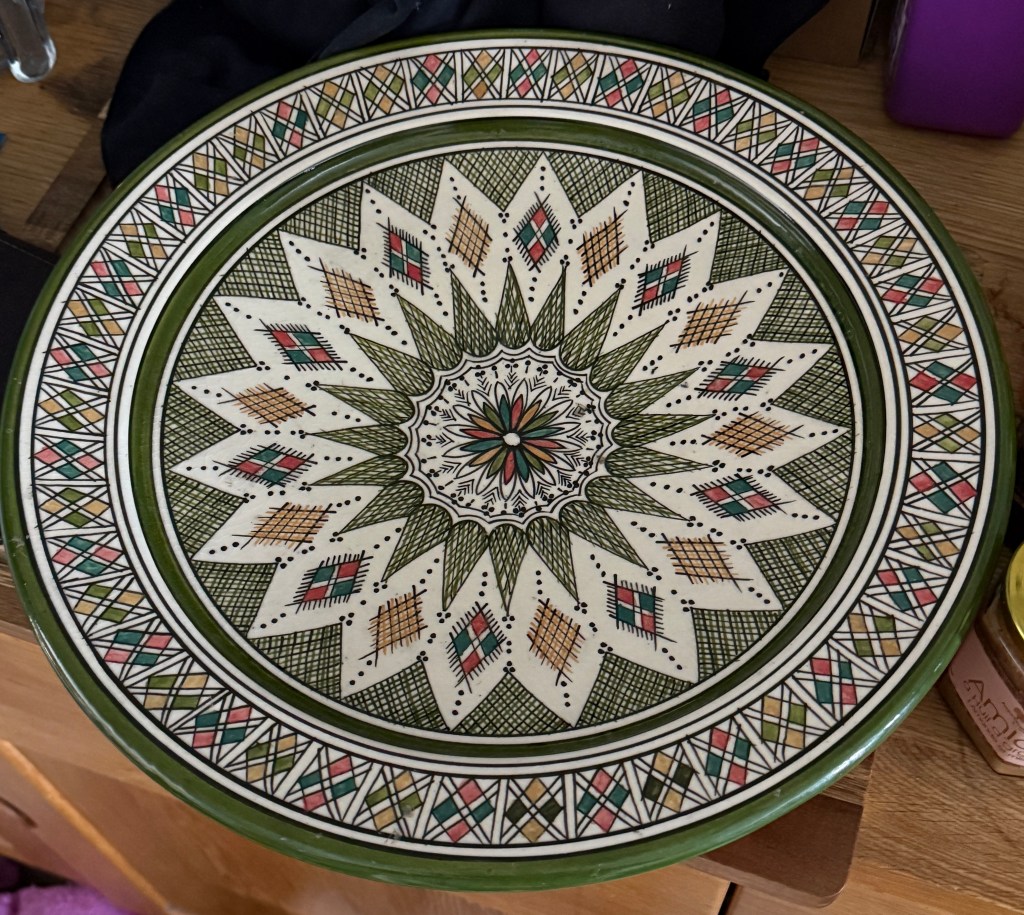
This stunning plate ( a present for my best friend and wife forever ), is a true testament to Moroccan artistry, its surface alive with intricate geometry and vibrant colour. Crafted in the traditional style of Fez, the design radiates from a central starburst, each petal meticulously hand-painted in shades of emerald green, saffron yellow, and soft rose. Delicate crosshatching and fine black lines create a mesmerizing lattice, while the outer border is woven with interlocking patterns that speak of centuries-old craftsmanship. The plate’s symmetry and precision are captivating, drawing the eye inward and inviting contemplation of the skill and patience required to create such a piece. More than just a vessel, it is a celebration of heritage, a beautiful reminder of Morocco’s rich ceramic traditions and the enduring allure of handmade work.
In the heart of Essaouira’s medina, you’ll often come across what locals call the “magic box”, a beautifully crafted container made from the region’s prized thuya wood. Native to Morocco’s coastal forests and especially abundant around Essaouira, ‘thuya’ wood is renowned for its rich, swirling grain, warm hue, and natural, cedar-like fragrance
Artisans here have honed their craft for generations, turning thuya burl into intricate puzzle boxes, lidded spheres, and inlaid treasures, each one polished to a satiny sheen and finished with lemon oil to enhance its natural luster. These boxes are more than just souvenirs; they’re a testament to Essaouira’s heritage of marquetry and woodworking, a tradition dating back to the 19th century when sultans commissioned decorative objects and furniture from the city’s master craftsmen.
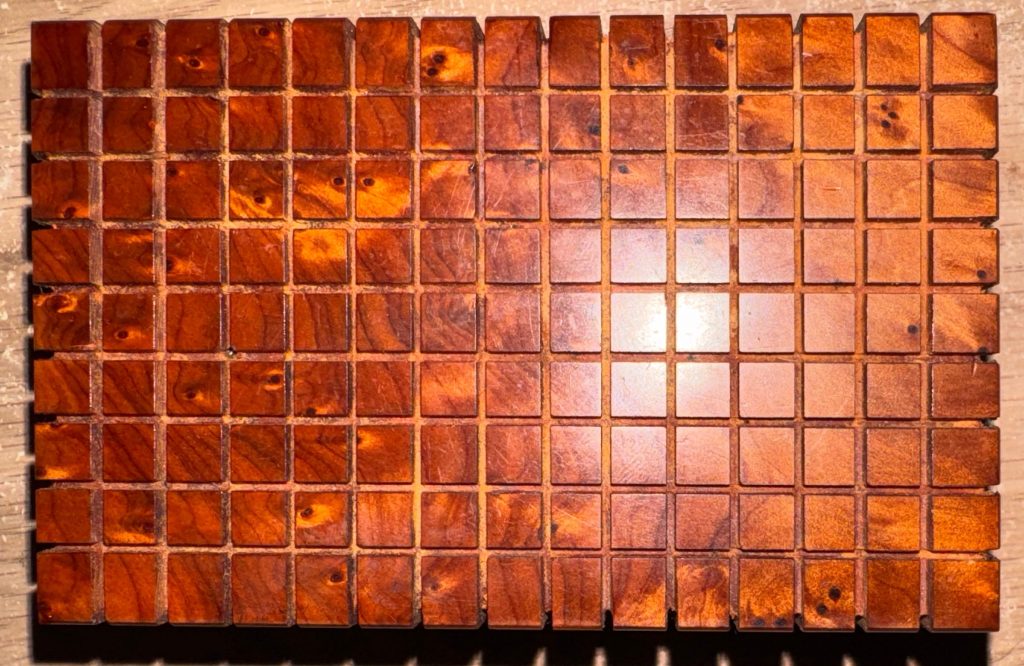
Whether used to store spices, trinkets, or secrets, a thuya wood “magic box” from Essaouira is a piece of living history, fragrant, tactile, and always a little mysterious, as if it holds a story all its own. Our son loves his…

………………………………..Until Next Time………………………….L8ers





 I have been taking a break from the blog and cooking in general to recharge the culinary batteries, and try and seek new inspiration from a number of foodie sources including books, cookery competitions on T.V. and researching produce and concepts.
 This dish is inspired by an entry in the book
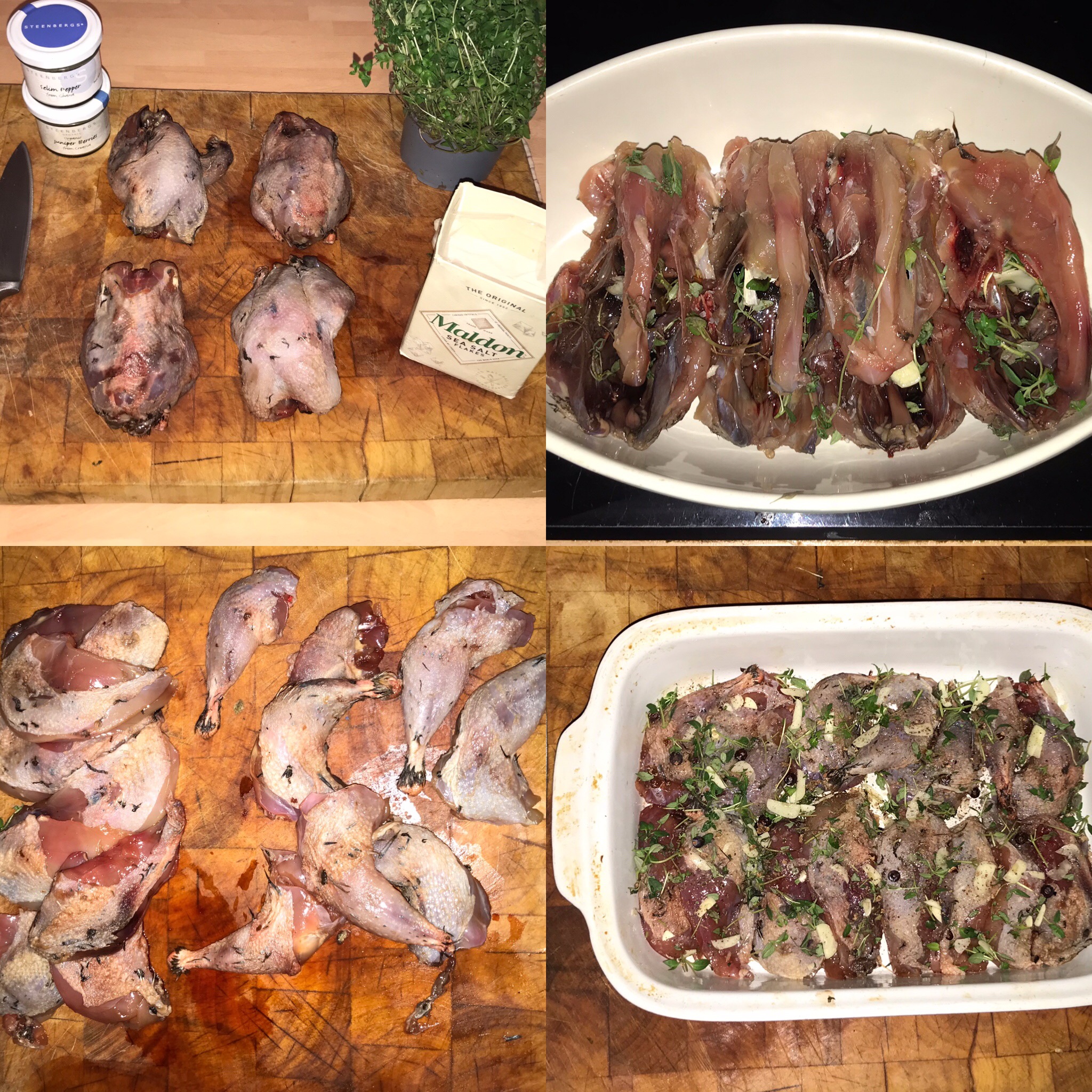
  Our family LOVES game, especially Partridge and a recent trip to our local meat supplier
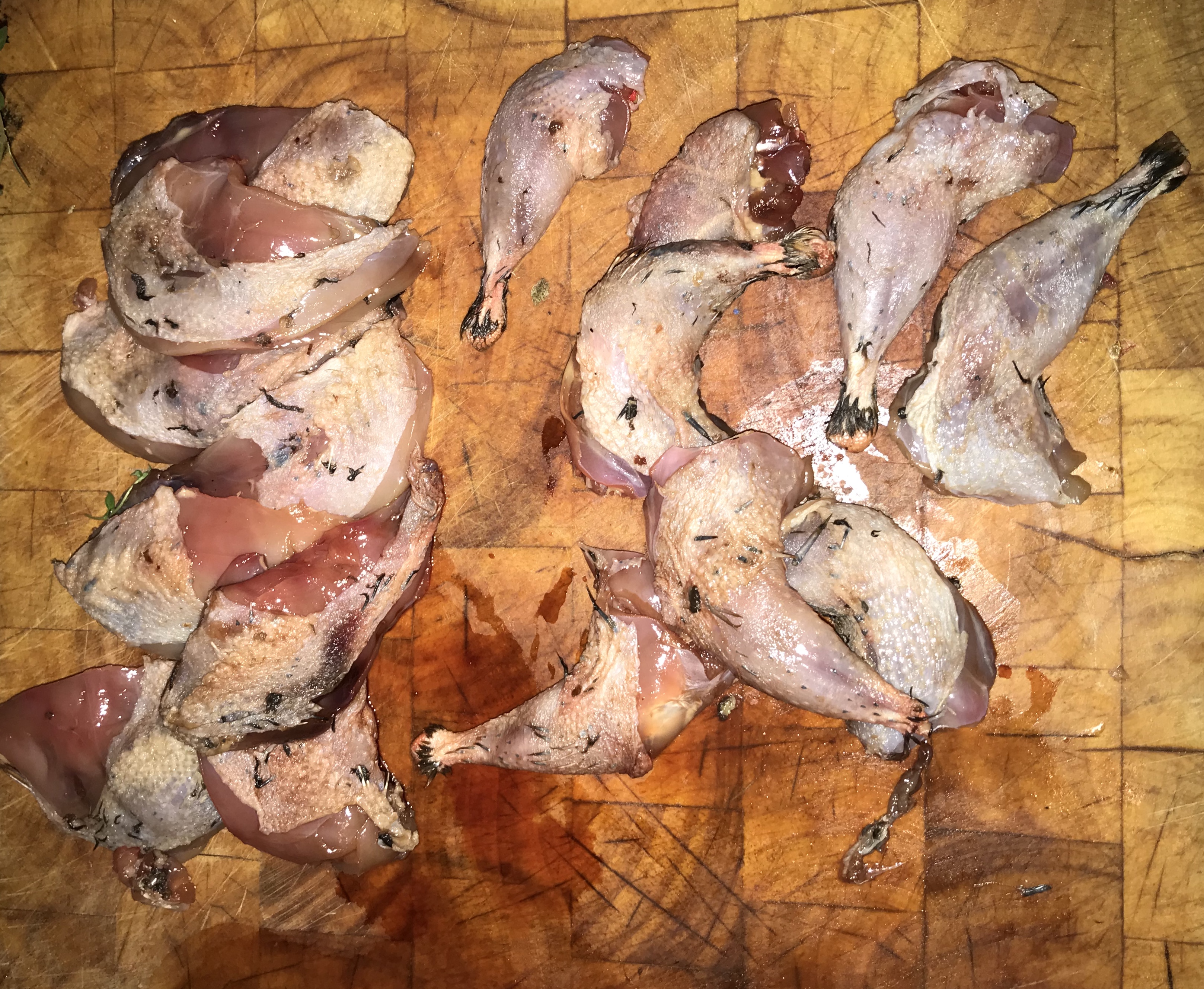
  The work was planned to start on a Friday evening, but due to over running work wise I started on the Saturday morning, I have done some butchery over the years so the sectioning was done pretty quickly and I soon had a pile of breasts and legs which were placed in a dish with Garlic (about 3 chopped cloves), Juniper Berries (about 10, crushed), Maldon Salt (2 Tablespoons) and
  The carcass’s were placed in a roasting dish, treated with Olive oil, Fresh Thyme and Maldon Sea Salt, before placing in a 160 degree (fan) over for about 2 hours to cook. After 75 minutes I put a halved red Onion in as the birds finished roasting.
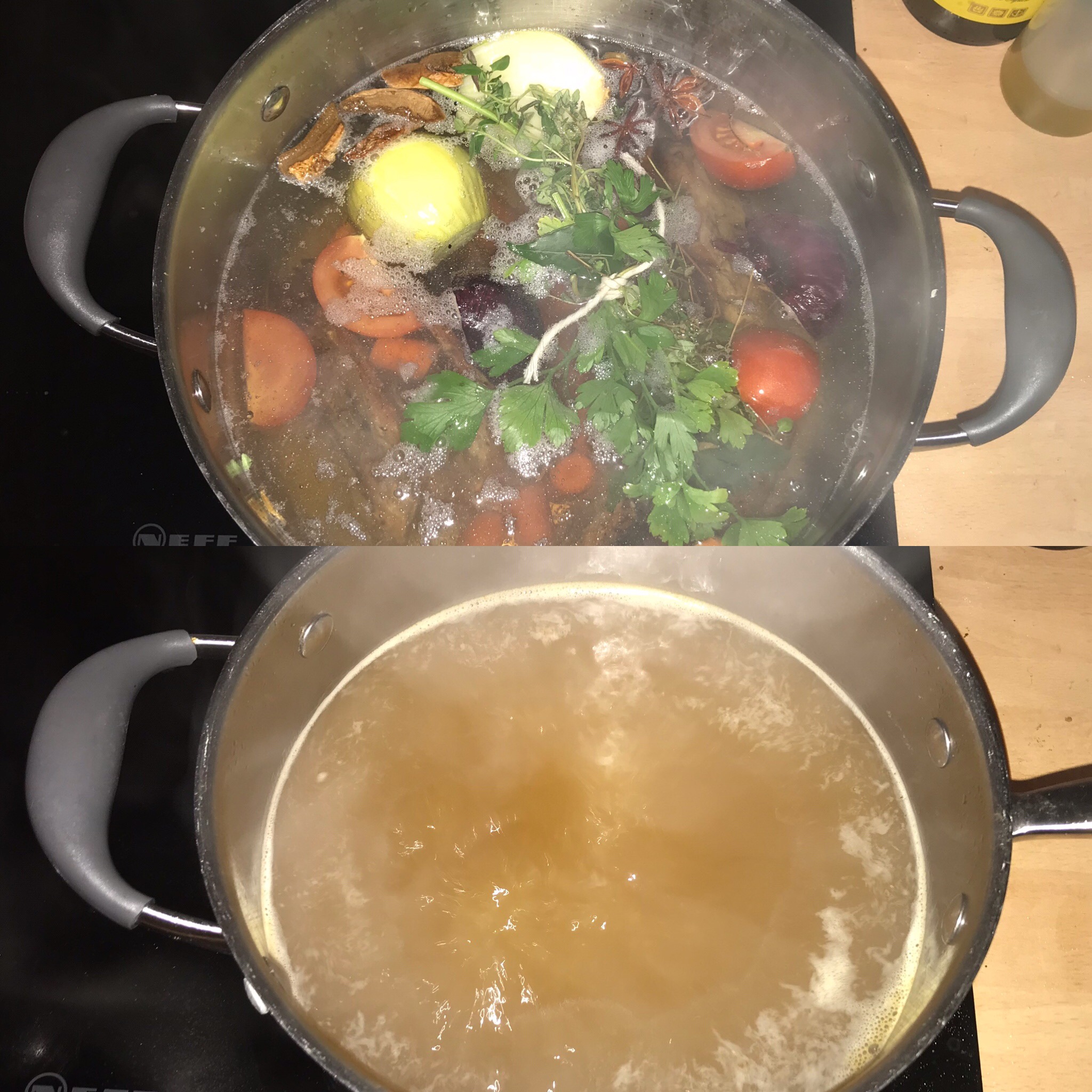 Once the roasting was complete, the carcass’s were put in a large pot along with the aromats and about 5 litres of water. I looked at the recipe for guidance as to flavours, it used Chicken Stock so I added some dried Porcini Mushrooms, Tomatoes, the roast Onion, Peppercorns, Star Anise and a
 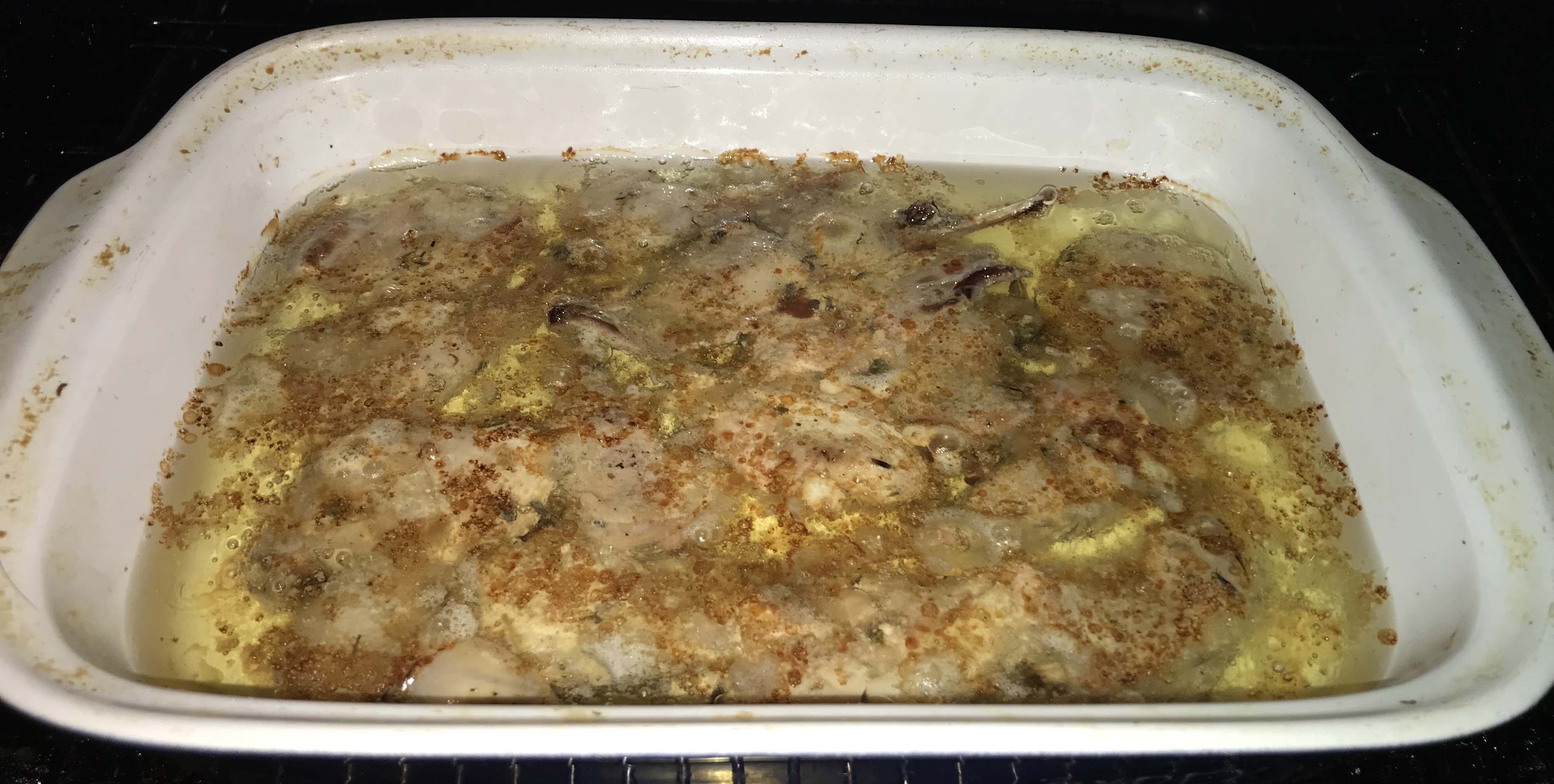 First thing on the following Sunday morning I was up early and got the Partridge Breasts and Legs cooking, after washing off the Salt and marinade ingredients, at about 115-120 degrees, in plain oil. Ovens differ so you want to see the ‘occasional’ bubble rising to the surface and may need to adjust the above temperature a bit.
 I let the meat cool down in the Oil for about an hour before removing, covering and sticking in the fridge whilst other stages were completed. The original recipe called for a layer of ‘Catalan Spinach’, which needed some Pine Nuts to be roasted and coated in Smoked Paprika, which only took a few minutes. There was also a Sweet/Sharp component made from some currants, steeped in warm Sherry Vinegar and Brandy until plump.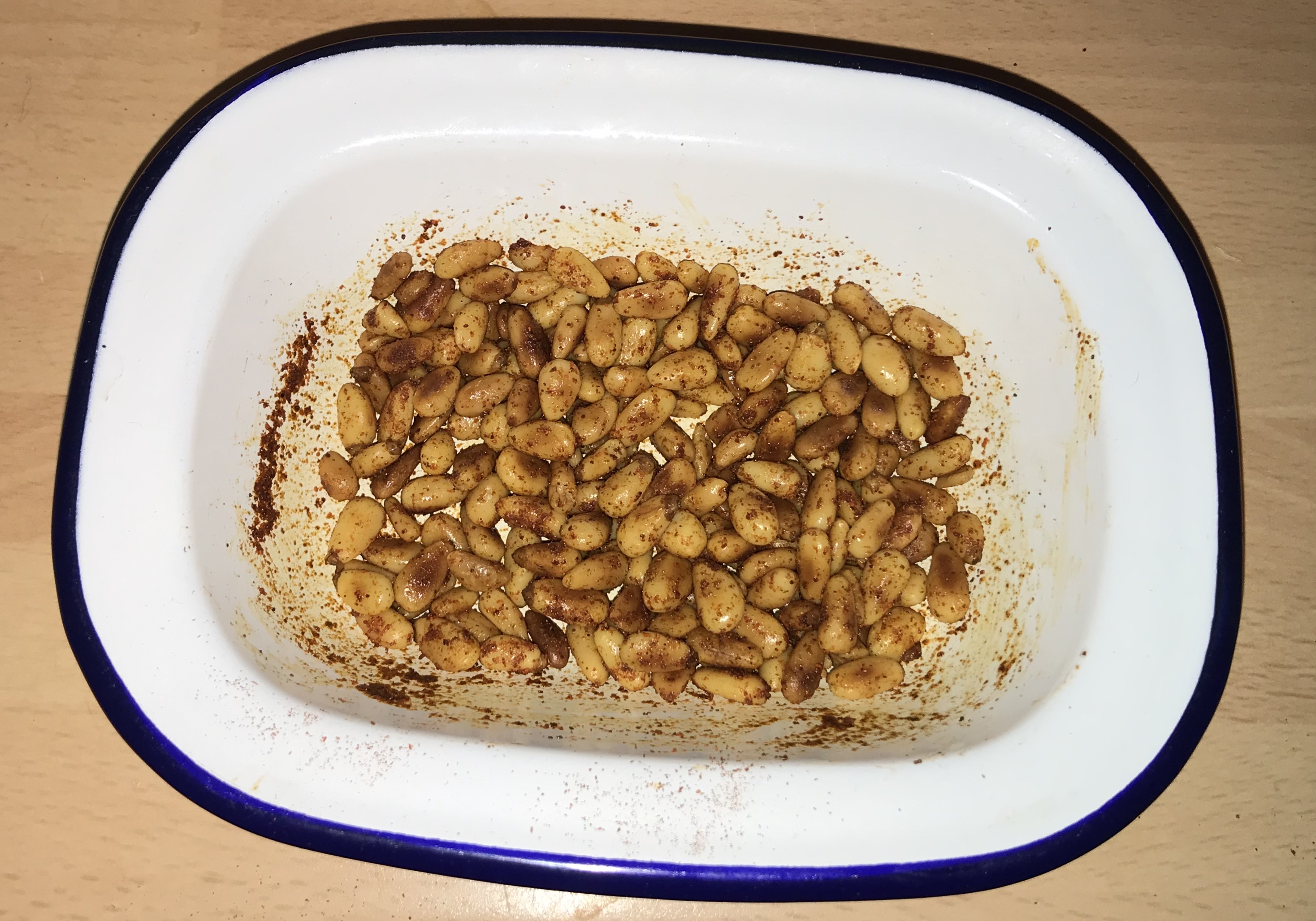

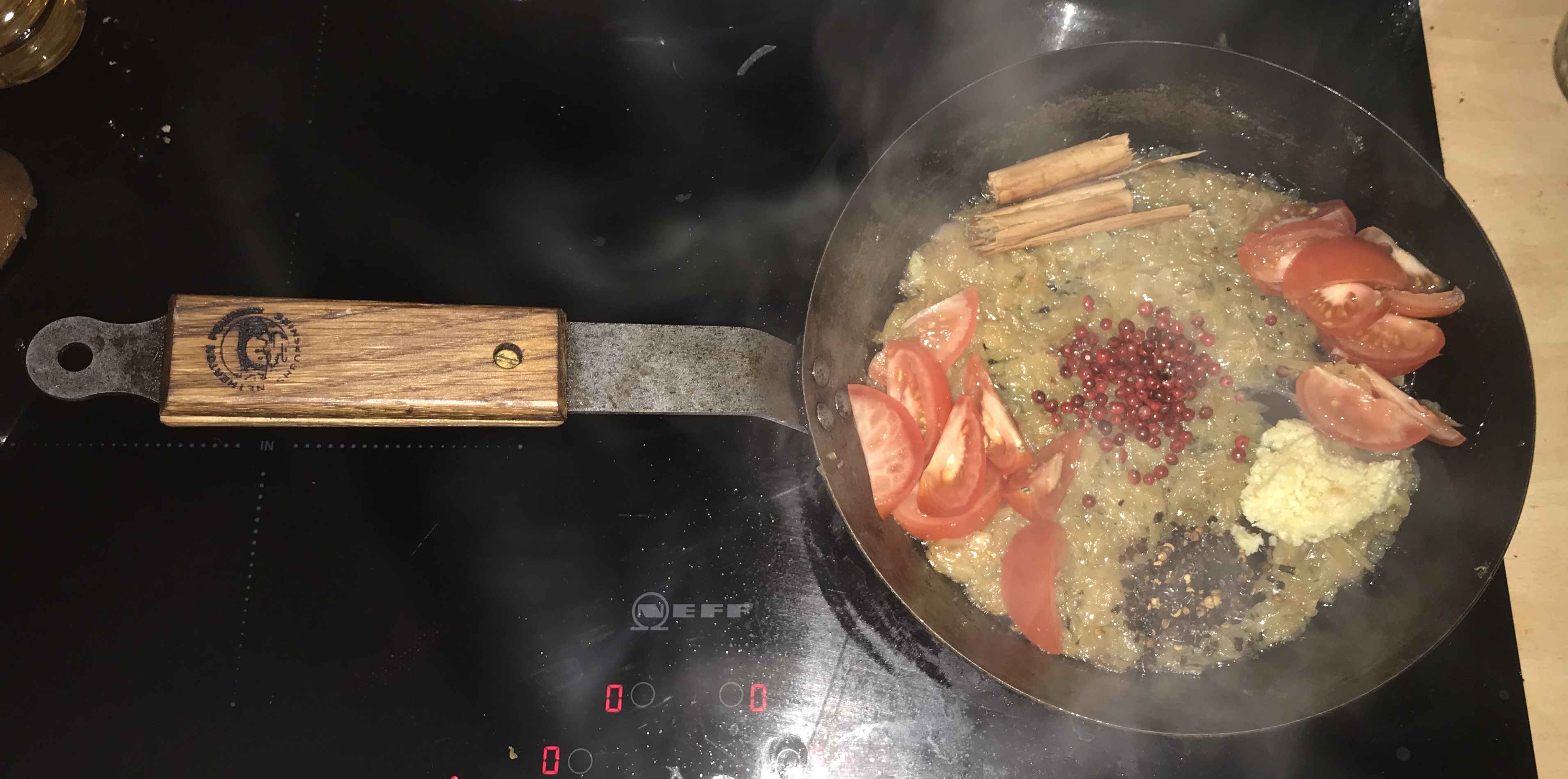 The stock was just the base for the intense and complex flavoured sauce that the Confit meat was going to be added to. Caramelised Onions and various other flavours were added to a pan and cooked down before adding some of the stock, which was then left to simmer for about an hour or so! If you want the recipe then the book NOPI is where to get it from , it’s a great investment for any keen cook. I used the recipe as a guide as I wasn’t using Chicken, so missed some of the stages that were not needed.
 The second layer of the Pastilla was the “Catalan Spinach’, a creamy cooked down delicious combination of the Pine Nuts and Currants, Garlic along with Spinach and Double Cream. You need to ensure the mix is not too wet, otherwise the final result may make the dish soggy.
 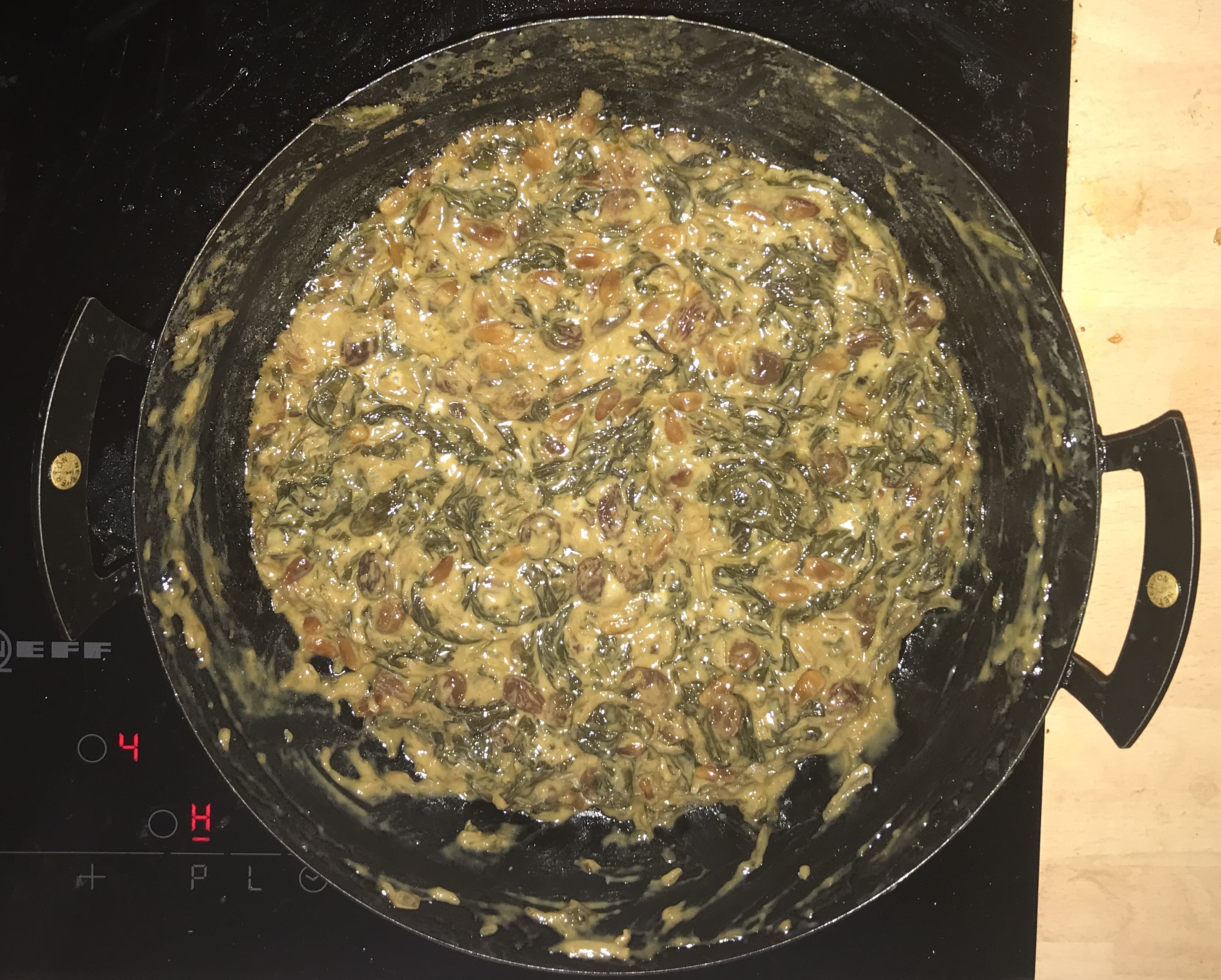 So, we have sectioned some Partridge, Roast the carcass’s and made a tasty stock, salted and marinaded the Legs and Breasts, and then done the confit treatment. Prepared the various ingredients for the Catalan Spinach and started to make the final sauce for the meat. Give yourself a MASSIVE pat on the back and SMILE, I certainly did!!
 Again I did not follow the recipe and strained the sauce, then reduced it added salt and kept tasting until I felt it was rich and velvety. I picked the meat off the legs and pulled the breast apart into small pieces and then added the sauce to coat, not drench the meat.
 We are almost done, and now its Filo time! I have two ‘favourite’ pan’s, from
  I used about 8 sheets of Filo for the size of pan I was using, overlapping each time to create overhangs that could be played back over, and then filled with the Partridge layer, you can see from the picture above that the mixture is not too wet, but the meat is well coated nonetheless. The Spinach layer was added on top of this.
 Finally, lay a sheet in the middle of the Pastilla and gentle tuck the sides all around your pan, as you can see above. Your tucking in a blanket before gently bring the outer layers back over the top, brushing Ghee on each layer as its sealed, and you should end up with something similar to the picture below. Give yourself ANOTHER pat on the back!
 Breaking down the dish into various stages slightly simplifies the cooking but it’s still a challenging dish to make and to be honest, I was pretty tired after what was a 2 day cooking event! I made things more difficult but choosing to use a Partridge Confit and kept double checking the processes to make sure nothing was missed, and where adjustments were made, everything was on track. The Pastilla needs to cook in the over for about 45 mins to 1 hour.
 Pastilla is a Sweet/Savoury dish so needs finishing with a coating of icing sugar after it has been turned out of the pan (so the bottom is on the top). What was it like, my chief taster was very sceptical and was not sure that it was going to be any good, dead wrong, it was absolutely delicious and quite a surprise. We had some Harissa roasted Butternut Squash and a Cous Cous Salad with Feta, Pomegranate and Herbs and felt very satisfied.
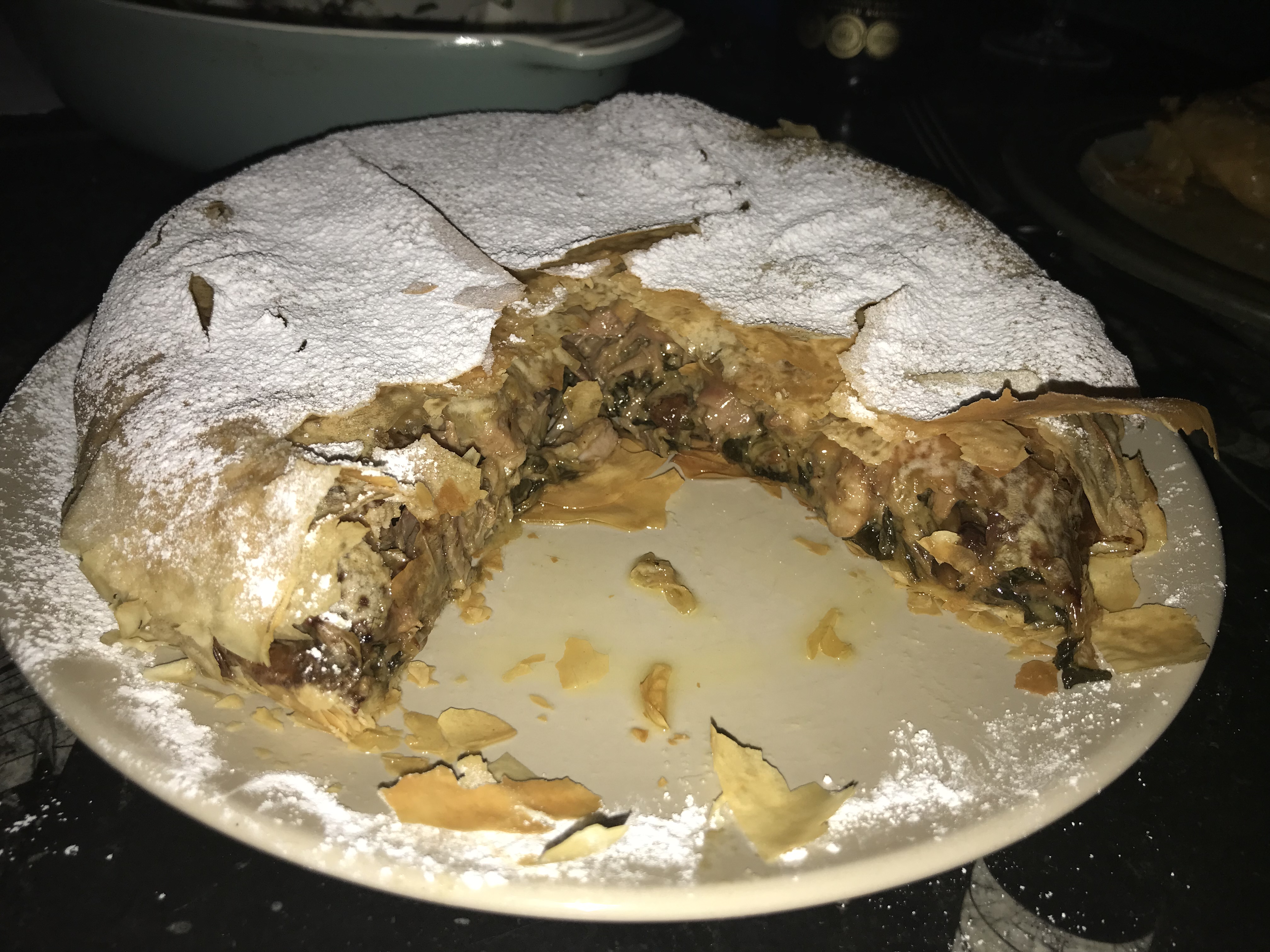 So here is my Confit Partridge Pastilla, yes its a bit of work but break into stages and even I managed it, take a leap of faith and have a go yourself.
 January has been very difficult, Flu has been the significant event and I think I have seen Floyd cooking in India, The Far East, France, Italy and South Africa to name but a few! There is a common thread in many of the recipes he shows, the
 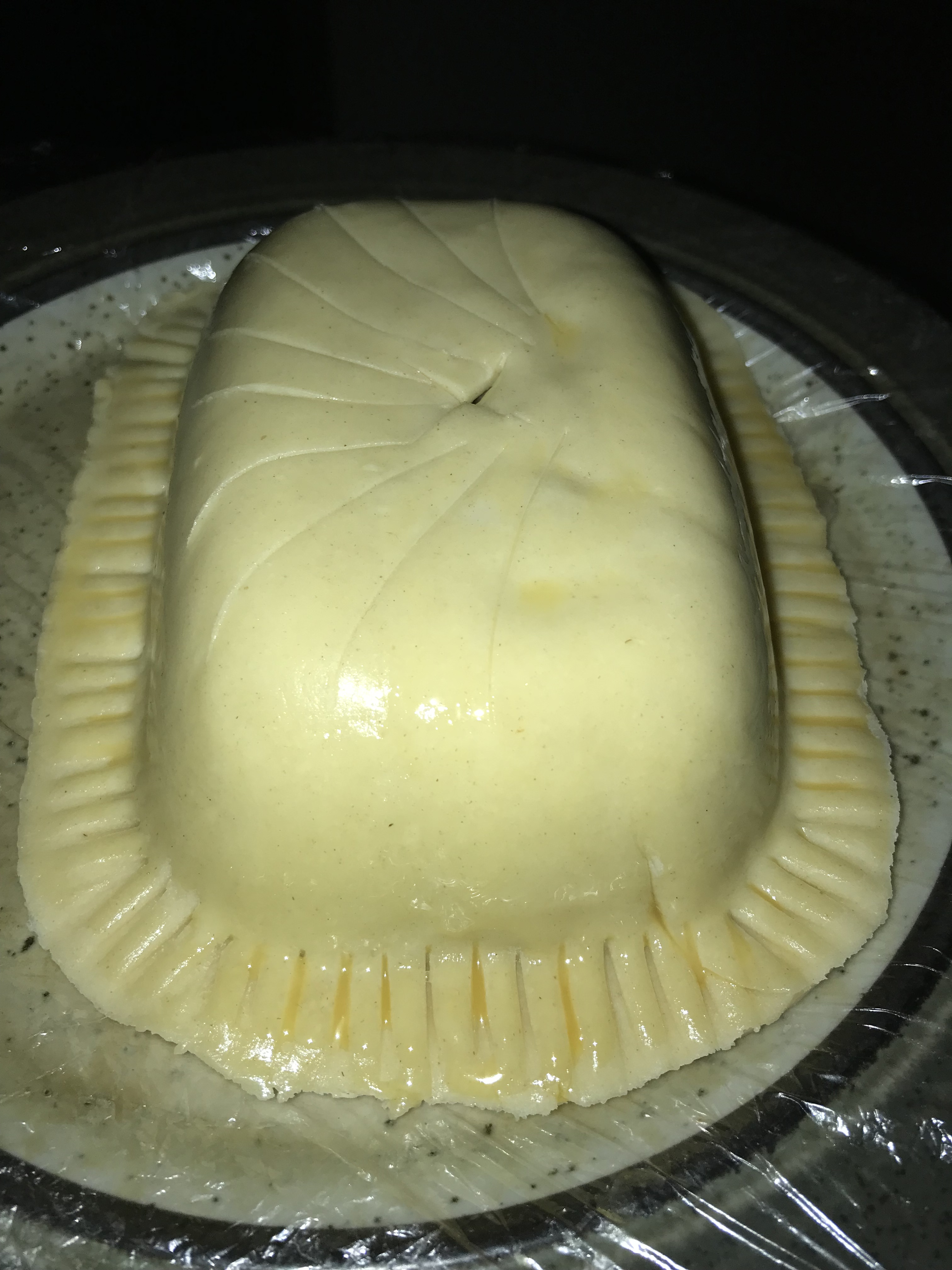 To shape the Pie I used one of those White Enamel tins, lined with some cling film after I had rubbed some oil over the surface, the Pastry was then laid into the dish on the film, add the (cooled) filling and cover. The Pie can then be (gently) lifted out, inverted and the edges sealed with a fork, It worked a treat as you can see above adding an Egg Wash to brown before cooking.
 Stuffed Mediterranean Vegetables are another one of those dishes that can be ergh, nice or amazing. I’ve done them a few times but decided to see what could be done with some refinement and playing with flavours. Previously I have only done a Pepper version as they are easy, just cut the top off and bake with a filling, job done.
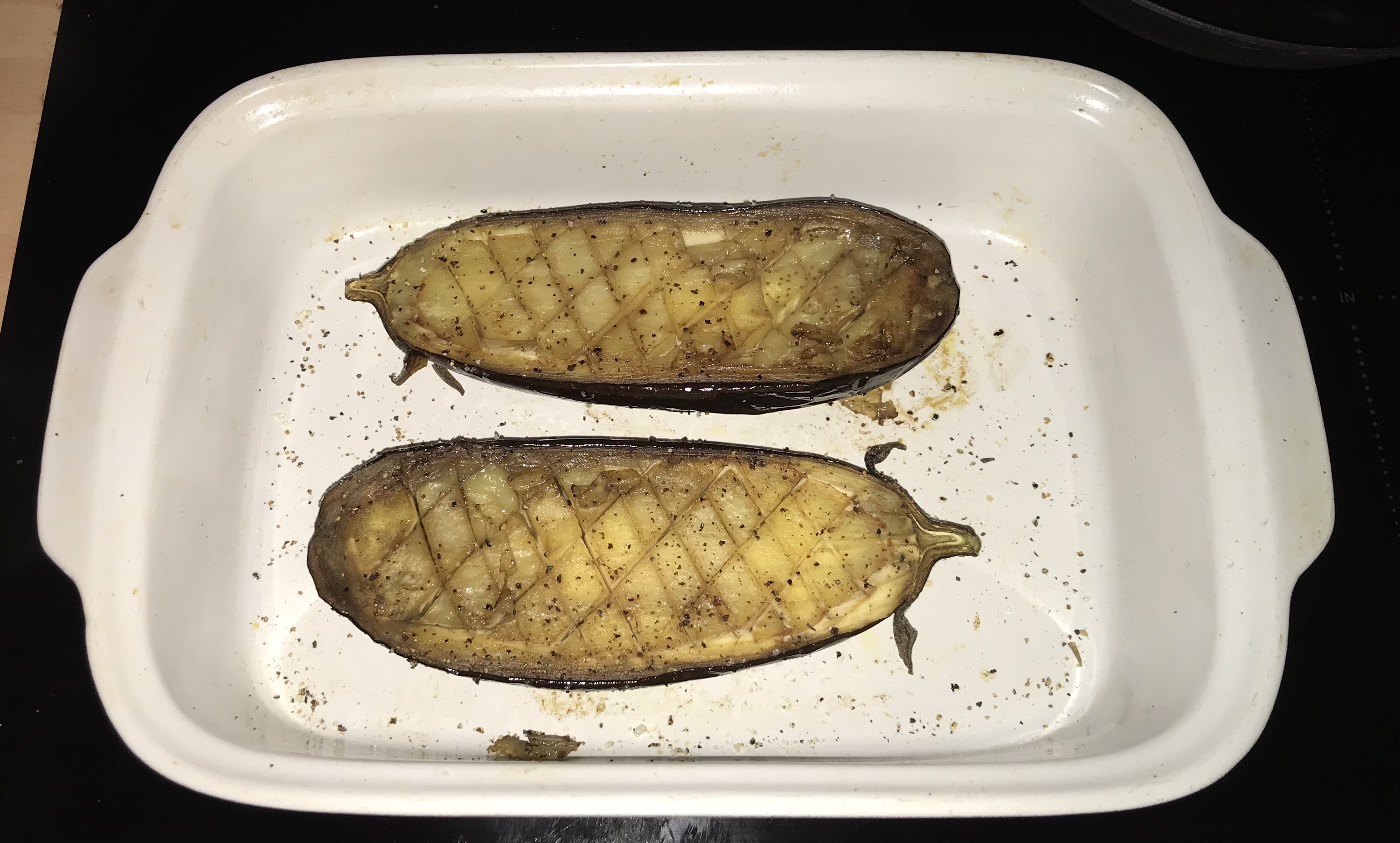
 Let’s introduce the Aubergine into the recipe and look at the process of baking and using the centre as part of the stuffing. I used the paring (small) knife to gently cut around the edge of the Aubergine about 1 cm in, you can see in the top right picture, then carefully cutting a criss-cross pattern using the larger knife, remembering the shape and altering the depth as you cut, the middle is deeper than the edge!
 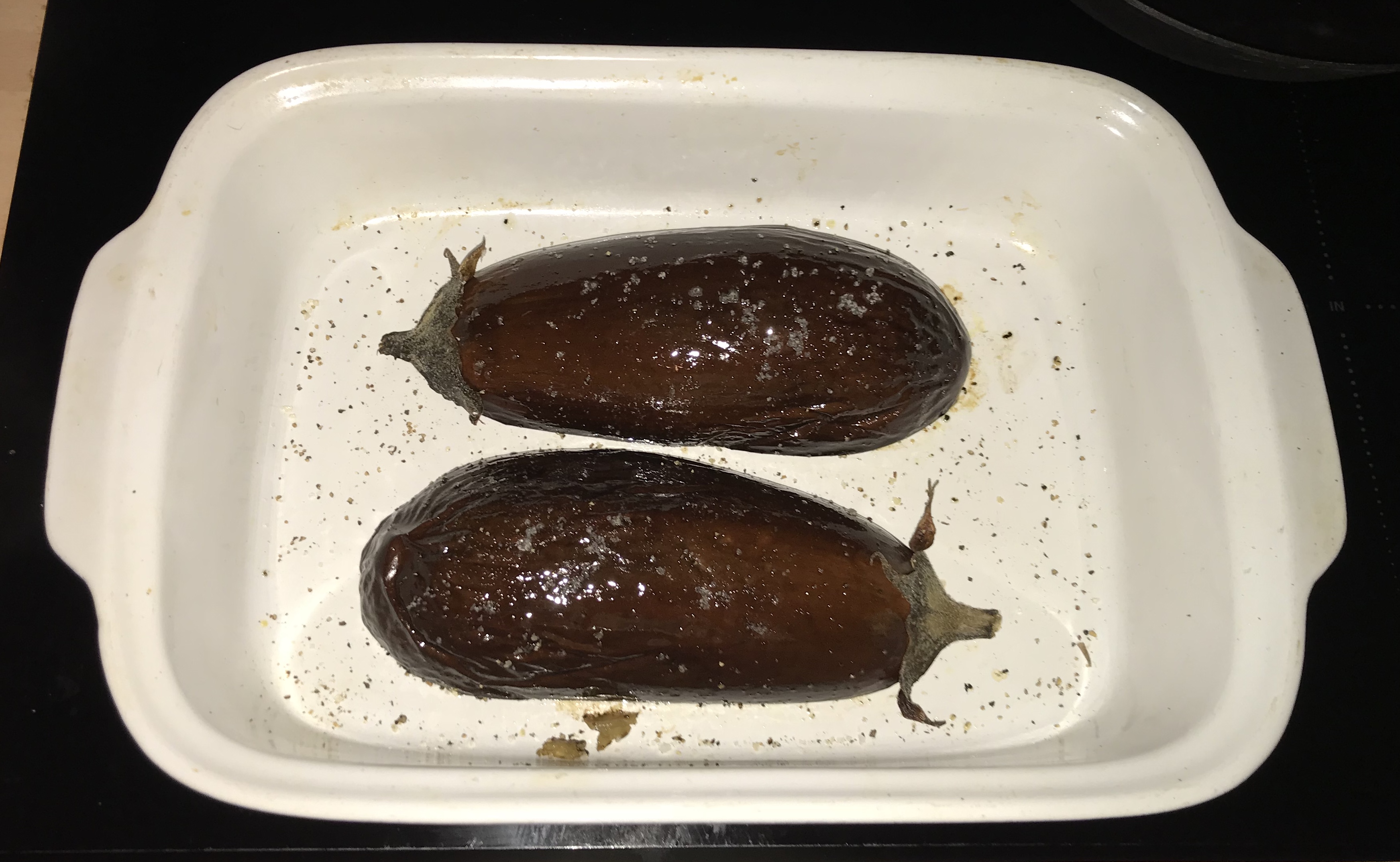 Brushing liberally with Olive or Rapeseed Oil and seasoning with Salt and Pepper they were baked for about 30 minutes at 180 degrees. I turned them over flat side down and gave them another 15 minutes after another brushing of Oil as the top did not seem cooked, you can see the final result below. You then need to carefully scrape out the cooked centre and chop, ready to add to the filling later.
 So we now start with the Mirepoix again, this time I swapped an Onion for a large Shallot, which is a bit sweeter. Add the Lamb and brown, some Garlic to taste, the chopped Aubergine, some Tomato Paste. Going for a Middle Eastern angle further enhancements included Rose Harissa, Coriander, Cumin and Preserved Lemon finely sliced and some chopped Mint and Coriander Leaf. Texture came with some toasted Pine Nuts.
 The lamb mixture can then be used to fill the hollowed out Aubergine and in my case Red Pepper’s with the tops and pith/seeds removed, then baked in the over for about 35-40 minutes.
 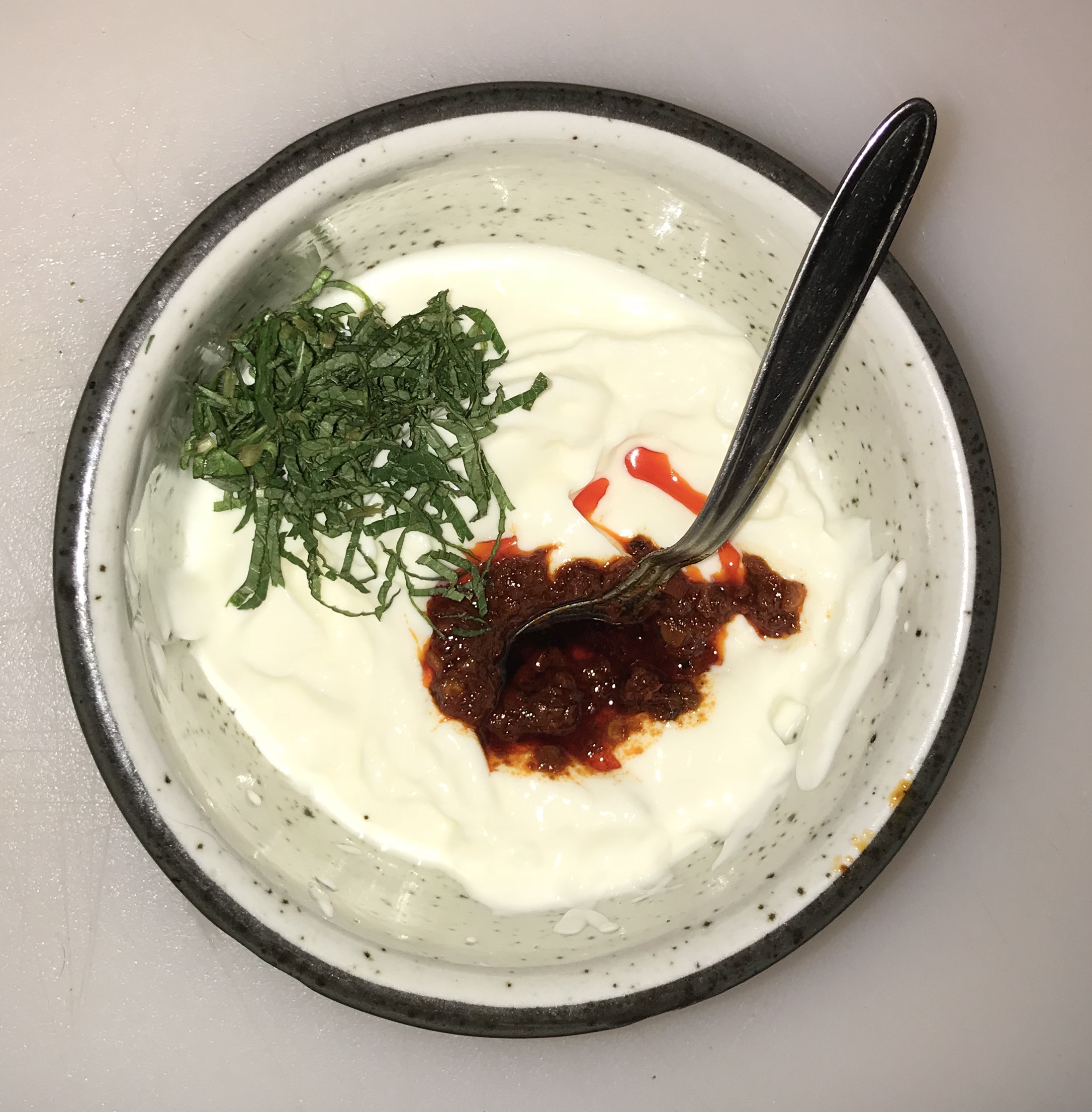 Served with some Greek Yoghurt with added Rose Harissa and chopped Mint its absolutely delicious and worthy of any dinner table as you can see below.
 A new book came through the letterbox and hit the floor over Christmas,
  Firstly, a baked Potato which I always start by piercing all over with a fork, and then rubbing butter all over the skin to ensure a crisp finish, followed by a sprinkling of Sea Salt.
 I had some red Romano Peppers in the Organic Veg Box so started to think about a nice Piquant Sauce to make, so popped one in the oven to roast for about 15 minutes, this makes removing the hard indigestible skin easy and heightens their sweetness.
 A couple of pieces Cod had been removed from the Freezer earlier and popped in the Microwave to cook, not ideal but time meant that it was the easiest thing to do and as the Fish was going to be mixed with Potato it was the way I went on this occasion. Once cooked it was mixed in with the scooped out potato and Ras-Al-Hanut spice added along with Salt and Pepper to season.
 Once the Mirepoix/Pepper/Tomato mix was cooked it went into the Ninja processor and got a good whiz as you can seen above.
 The Potato Skins were fried to make them crispy again, and then filled with the Potato?fish mixture before being topped with the Breadcrumbs/Cheese and going in the oven to finish. The sweet (piquant is more appropriate) Pepper Sauce was gently warmed on the hob and we were soon ready to serve.
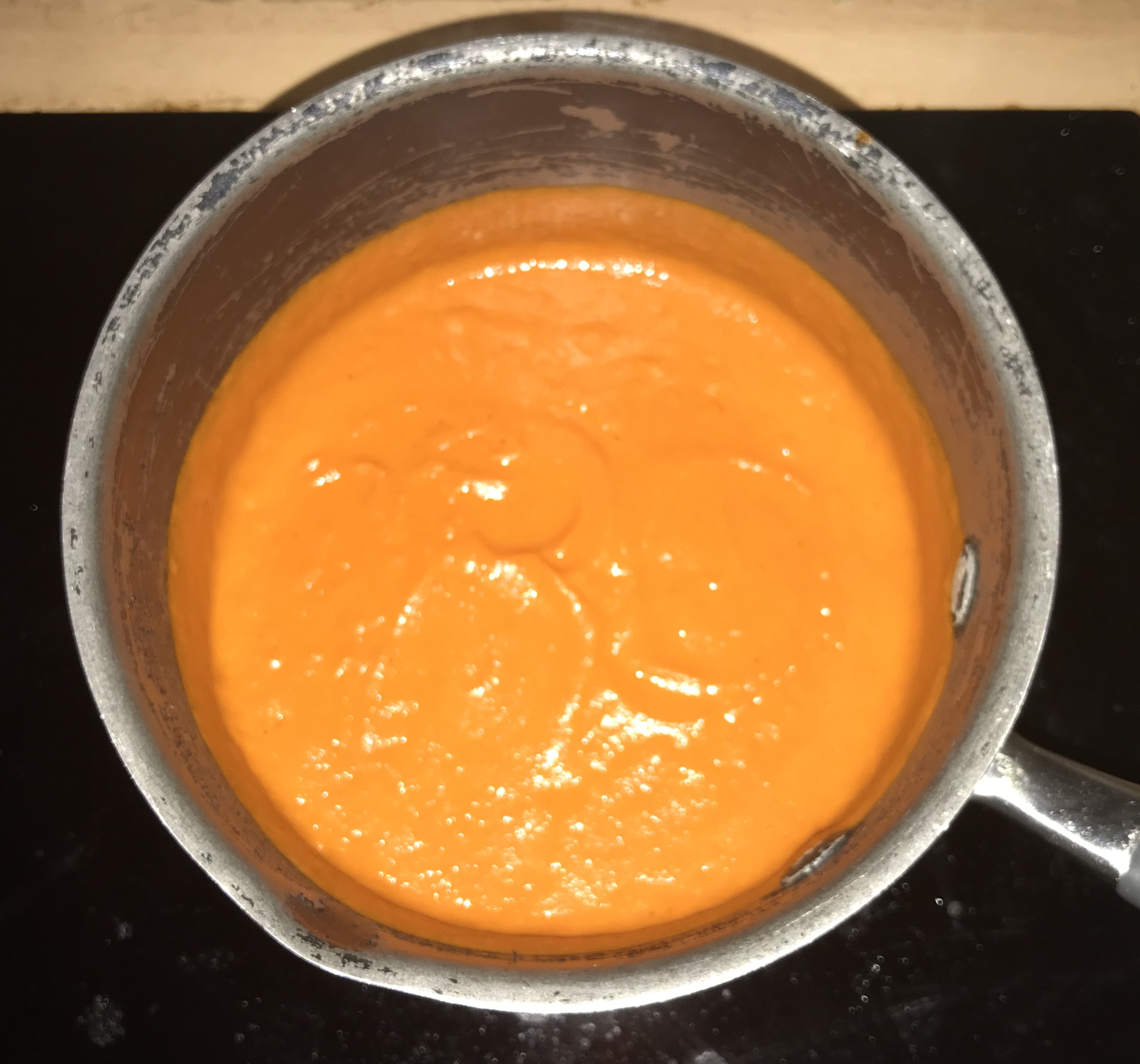 So what started out as a John Waite dish (which I do intent to make), turned out as my own version with a quite spicy Sweet Pepper Sauce, with the crispy Potato and Fish filled skins it tasted delicious.
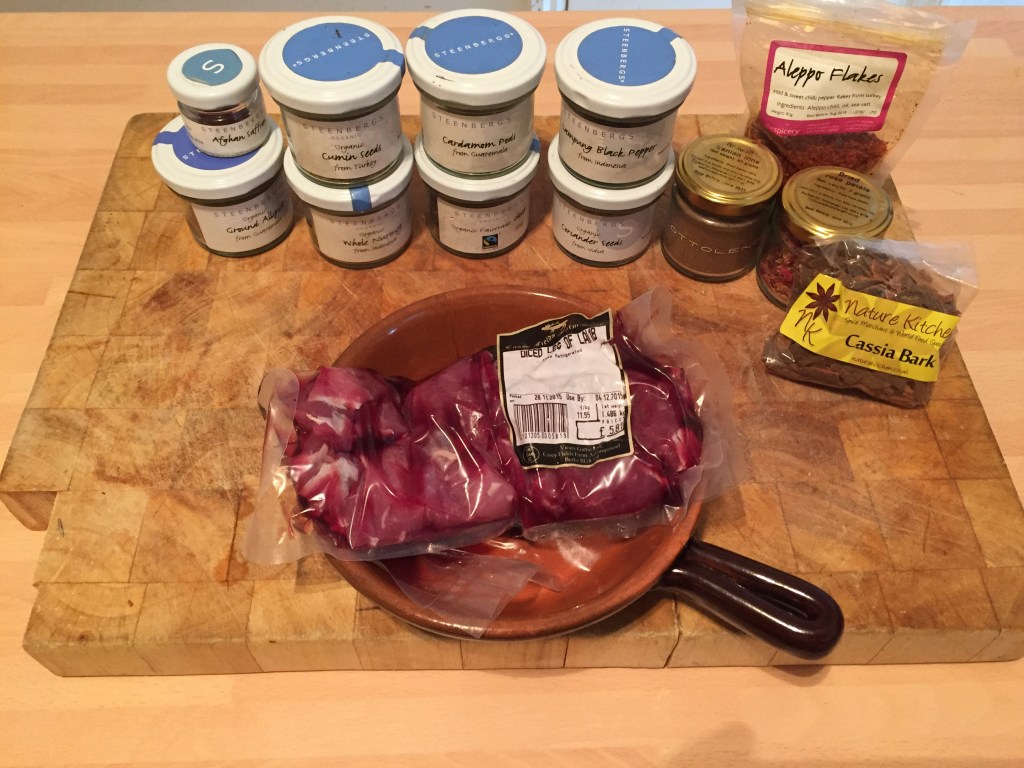

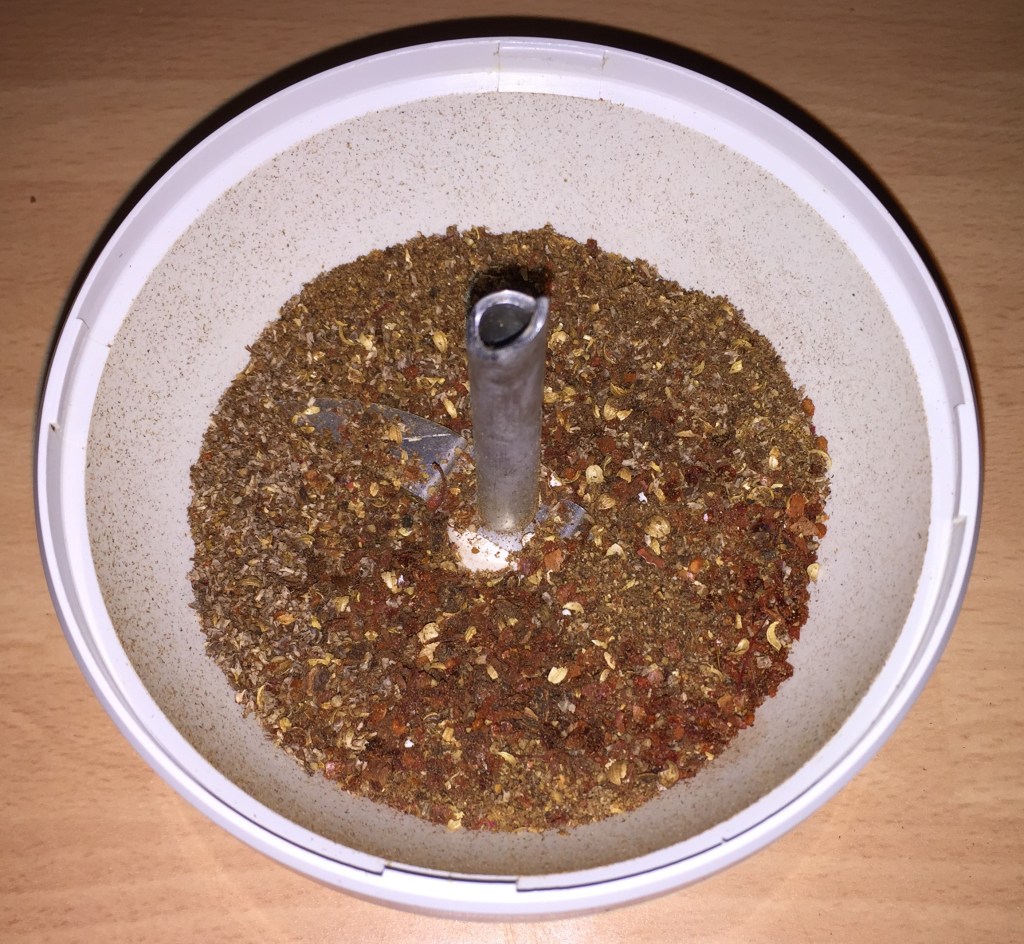

 After marinating, the Lamb is browned in a frying pan in some olive oil, and put into a dish with 250 mls of HOT Vegetable Stock mixed with 2 tsp of tomato puree then into a 130 deg (centigrade) fan oven for 2 1/2 – 3 hours! I covered mine with tinfoil for the first couple of hours, and removed the foil allowing the stock to reduce for the last hour or so. You will need to keep and eye on it and stir from time to time to make sure things don’t dry out.
 The 1 day session was awesome, we all learnt loads and despite my fears of piping and making a complete fool of myself, the end results were really very good (according to wife and family who can consume more sugar in a day than I can in a month)! Some of the end product are pictured above, I managed a couple all day!
 I am not sure how the Lime managed to get into the picture earlier, you need to add Lemon Juice to taste, a good squeeze or two and for salt, I used some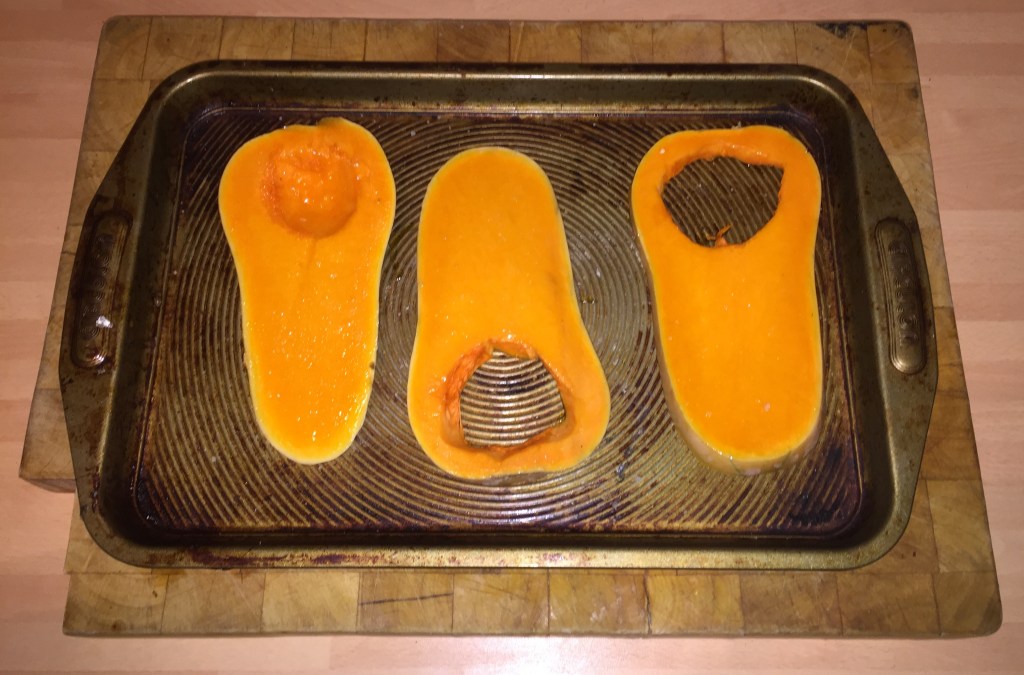


![WP_20150804_15_24_36_Pro[1]](https://julianrolfe.com/wp-content/uploads/2015/08/wp_20150804_15_24_36_pro1-e1438787635655.jpg)
![WP_20150804_15_46_09_Pro__highres[1]](https://julianrolfe.com/wp-content/uploads/2015/08/wp_20150804_15_46_09_pro__highres1-e1438788782888.jpg)
![WP_20150804_16_06_43_Pro[1]](https://julianrolfe.com/wp-content/uploads/2015/08/wp_20150804_16_06_43_pro1.jpg)

![WP_20150804_20_34_45_Pro[1]](https://julianrolfe.com/wp-content/uploads/2015/08/wp_20150804_20_34_45_pro1.jpg)
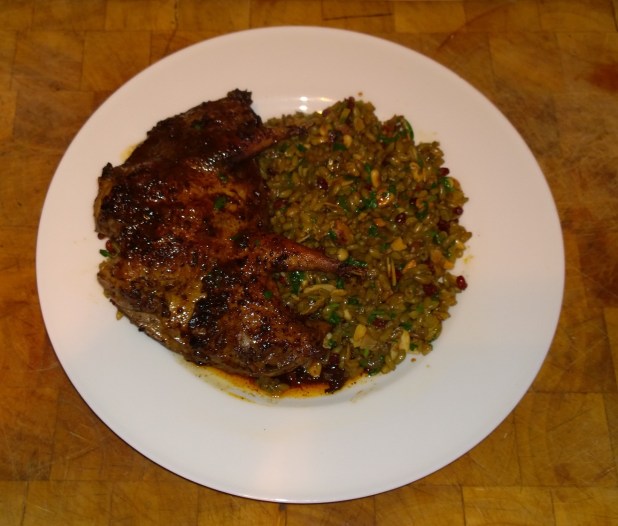



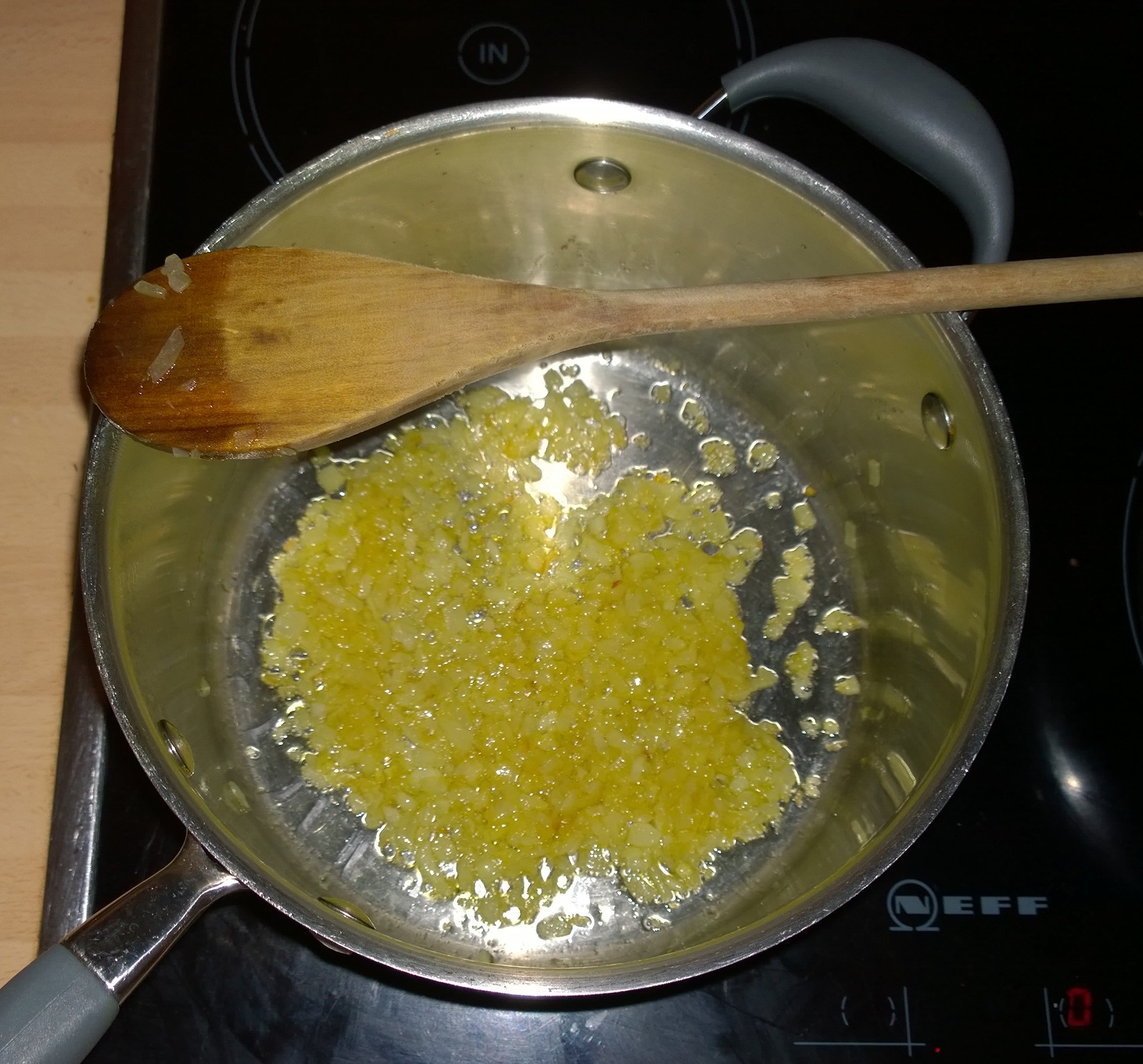


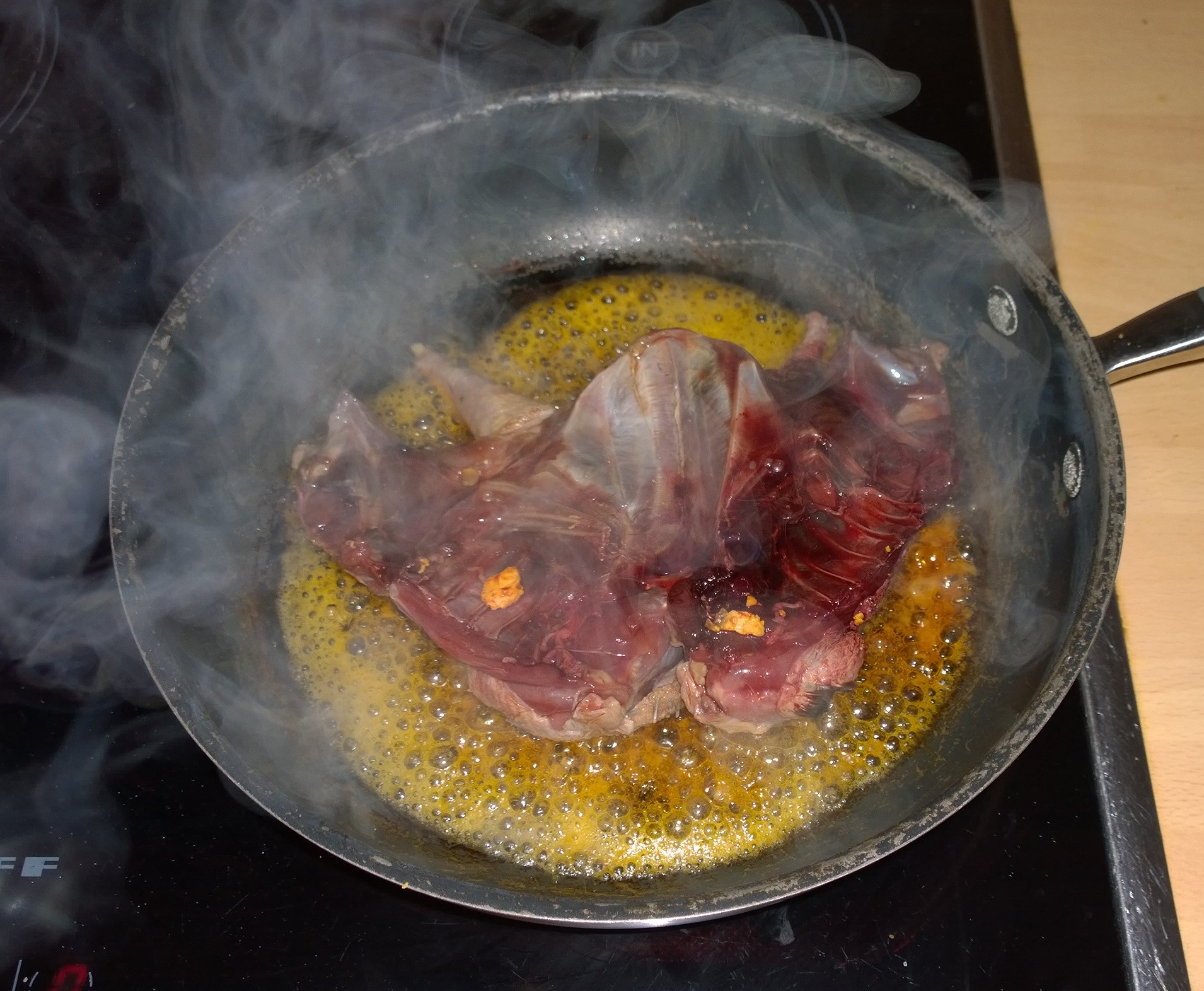
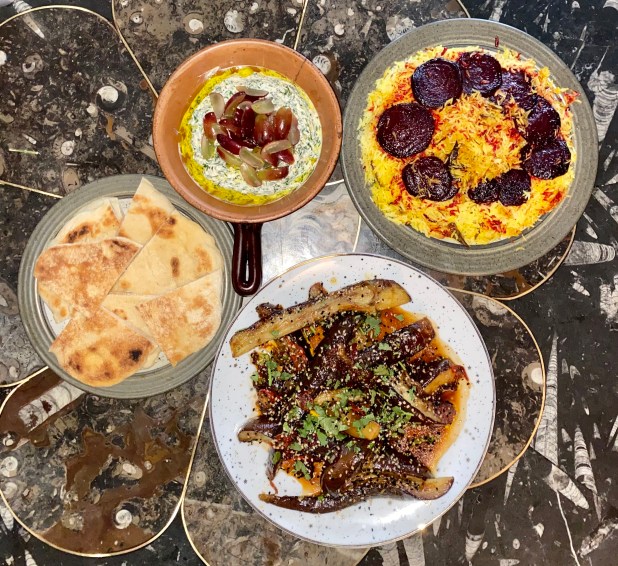
 I sometimes think of Bejewelling as similar to tempering a Dhal! You have a base of Rice or Grains (or Lentils in the case of Dhal), and add some punchy fresh flavours at the last minute. So a minute or so before you are going to serve up, add the other 1/4 thinly sliced Preserved Lemon, the other Garlic Clove, Grated, and the toasted Nuts and Barberries, you are just warning them all through at the last minute. Finally stir in a handful of fresh coriander leaf, finely chopped and a good drizzle of Pomegranate Molasses.
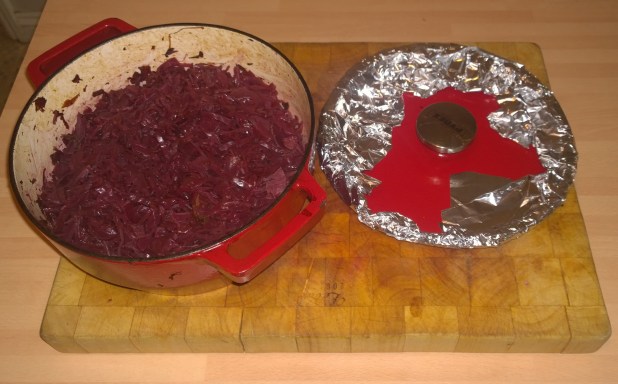

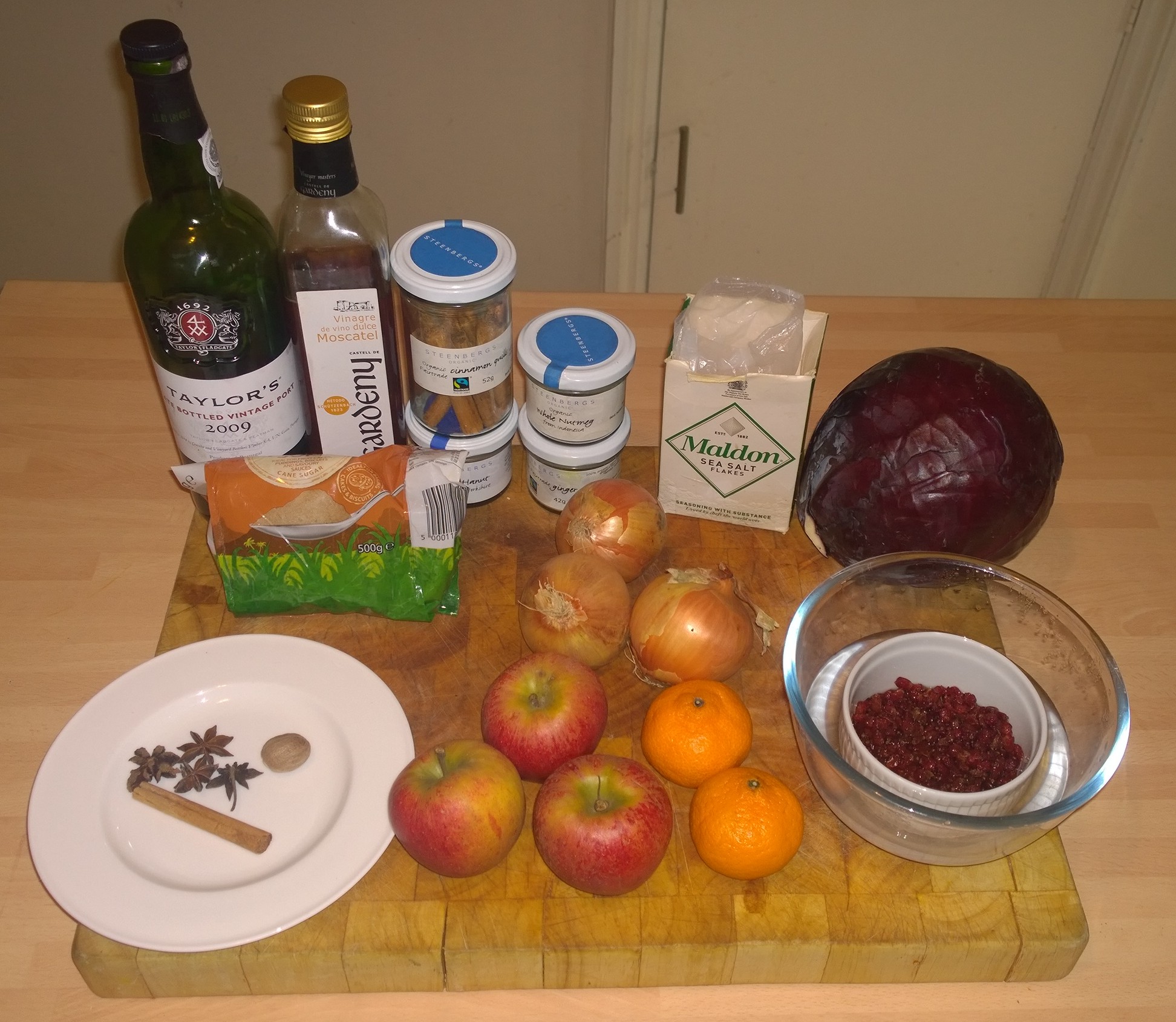







 Julian Rolfe