Day Four – To the Edge of Britain, Then Into the Wild

Thursday 8 October 2026 | Ardnamurchan, Ancient Volcanoes and the Long-Awaited Journey to Eilean Shona

Nineteen Months, Several Guidebooks and a Slightly Excessive Amount of Planning

Thursday morning and the day had finally arrived. After nineteen months of anticipation, countless hours researching Scotland’s history, geography and culinary possibilities, and a considerable amount of time spent wondering whether I really needed another map, today was the day I would finally join Kitchen in the Wild on Eilean Shona. The official rendezvous wasn’t until about 4:00pm, however, which presented something of an opportunity. An entire morning and early afternoon to explore, naturally, I’d planned accordingly.

Those who know me will appreciate that I rarely approach a journey armed with nothing more than a vague sense of direction and a willingness to see what happens. My preparations had involved researching historic buildings, plotting possible routes, investigating ancient settlements, comparing viewpoints and producing my own rather substantial printed travel guide.

This was supplemented by a small library of Ordnance Survey Explorer maps, several books on Scottish castles, archaeology and Highland history, and enough supplementary reading material to suggest I was preparing for a fairly demanding examination.
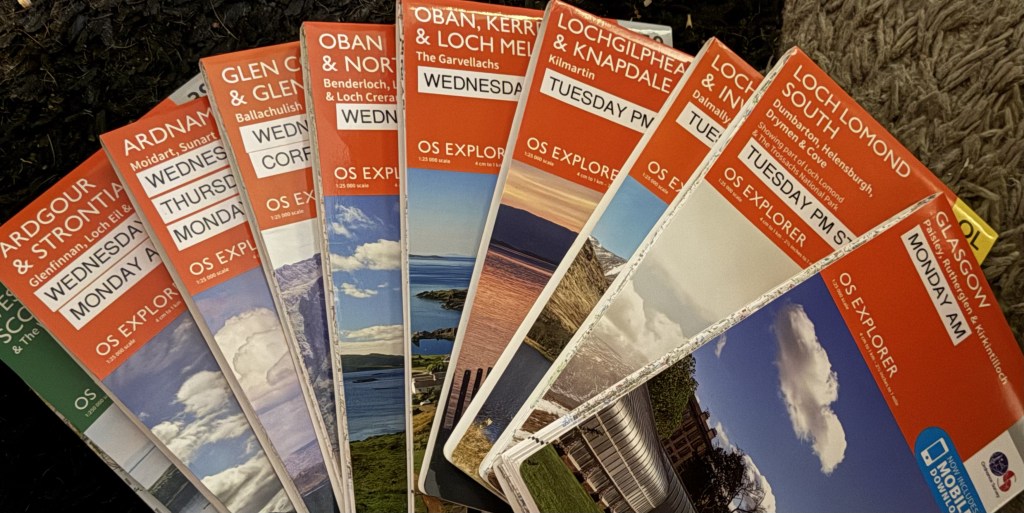
I had maps for Monday, Tuesday, Wednesday and Thursday, with routes, diversions and potential stopping points carefully considered.

Whether all this preparation was strictly necessary for a holiday involving a few days of cooking on a remote Scottish island is debatable.

But I’d thoroughly enjoyed putting it together.
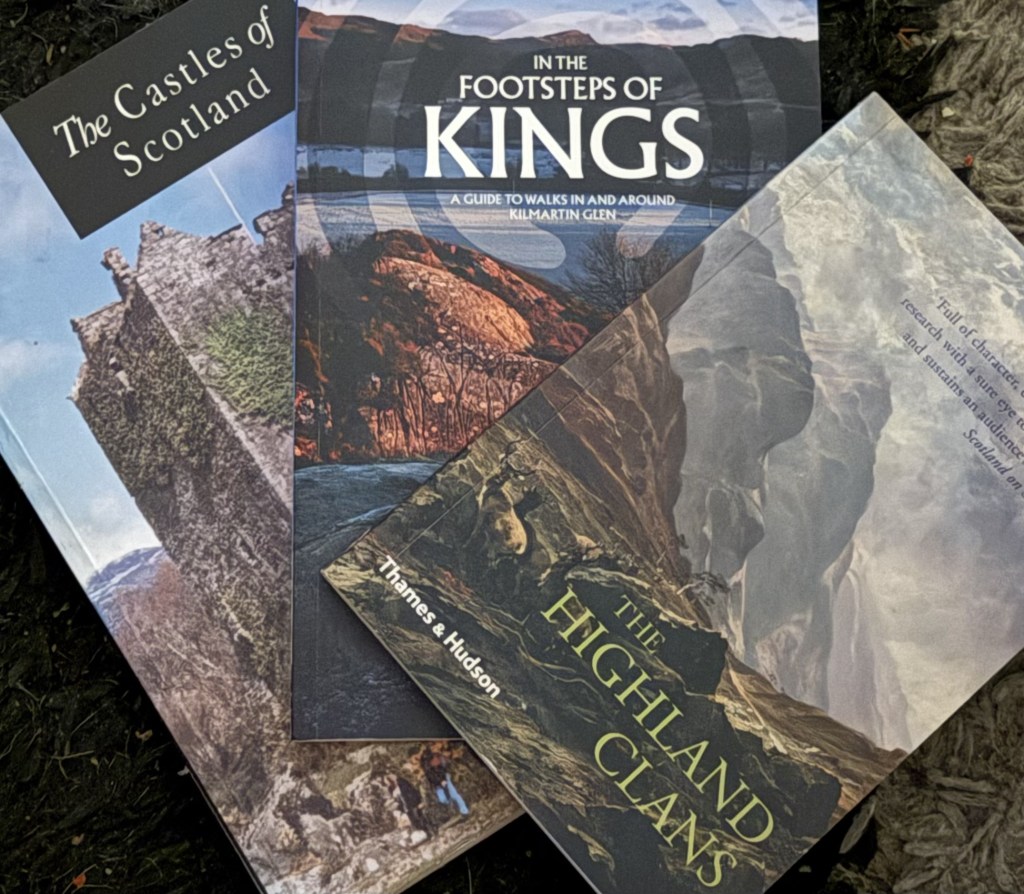
And if civilisation collapsed somewhere west of Fort William, I was reasonably confident I could navigate my way to the nearest prehistoric burial cairn to camp up for a few Millenia.

A Morning Worth Getting Up For

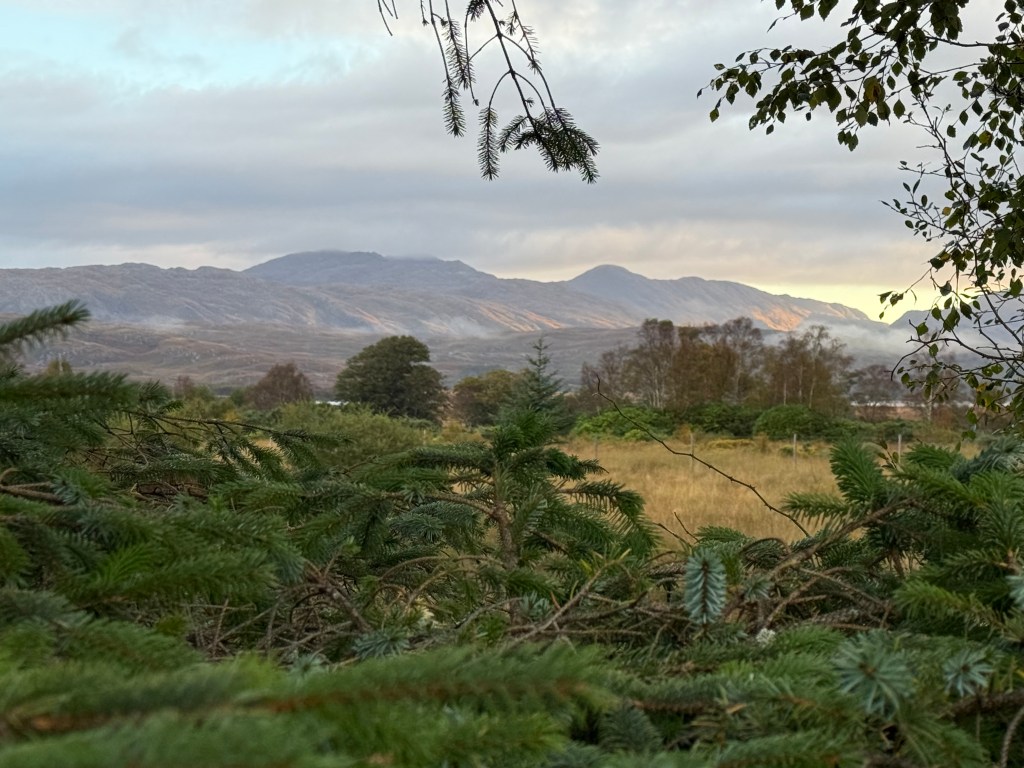
The morning view from Loch Shiel was a considerable improvement on the previous day’s rather enthusiastic rainfall. I went for a walk before breakfast, beyond the foreground of trees and cultivated ground, the hills stretched across the horizon beneath a wonderfully textured sky. Wisps of cloud clung to the higher slopes, while occasional breaks allowed the early light to pick out the folds and contours of the landscape.

It was the sort of view that makes you linger just a little longer before getting into the car.
The day’s principal objective was Ardnamurchan Lighthouse, situated at the most westerly point of mainland Britain.

Getting there involved driving through some exceptionally beautiful countryside, much of it along the sort of roads where passing another vehicle requires a degree of mutual understanding, occasional reversing and a willingness to accept that the person coming towards you might be considerably more confident than you are, but this was precisely why I’d allowed myself the extra days before the island adventure.

The journey was as much a part of the experience as the destination.

Along Loch Sunart – A Landscape With a Fiery Past

Heading west along the Ardnamurchan Peninsula, the scenery began to change once again.

Wooded slopes, sheltered stretches of water and little glimpses of the sea gradually gave way to a more rugged landscape. The road twisted around hillsides, occasionally opening onto magnificent views across Loch Sunart.
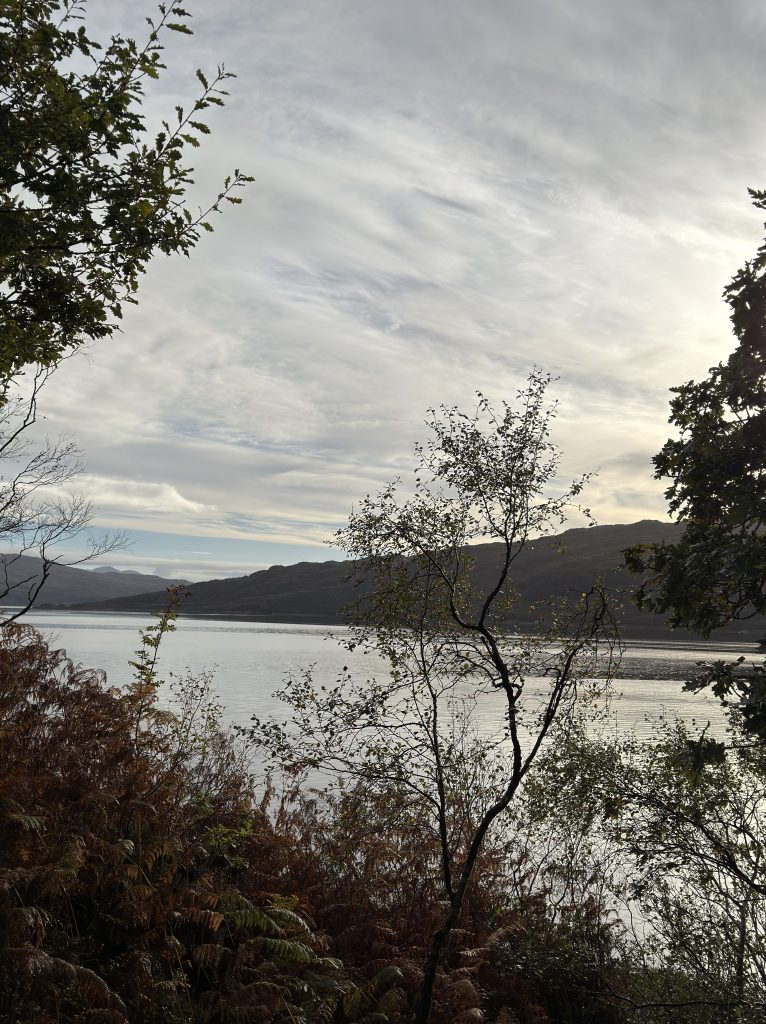
There is something rather special about this part of Scotland. It feels increasingly remote without ever becoming monotonous. Every bend seems to reveal another combination of mountains, water, woodland and rocky shoreline.

And there was another reason I’d been particularly interested in making this journey, I was about to drive through the remains of an enormous prehistoric volcano.

Well, prehistoric is rather understating matters.

Approximately 60 million years ago, during the early opening of the North Atlantic Ocean, Ardnamurchan was the site of substantial volcanic activity. As Greenland and Europe began moving apart, molten rock rose through the Earth’s crust, creating a vast volcanic complex. Over millions of years, erosion stripped away much of the original volcano, exposing the remarkable geological structures beneath.

Today, the western peninsula contains one of Britain’s most celebrated examples of a volcanic ring complex: overlapping, roughly circular arrangements of igneous rock formed deep beneath the ancient volcanic system. The landscape I was driving through wasn’t simply picturesque Highland scenery.

It was the deeply eroded plumbing of a volcano.

And after the previous day’s investigation into 5,000 years of human history, I was beginning to appreciate that Scotland could make even the Neolithic seem relatively recent.

Land of the Rings – Ardnamurchan’s Ancient Volcano

A stop at one of the geological viewpoints offered a particularly good opportunity to understand what I was looking at.
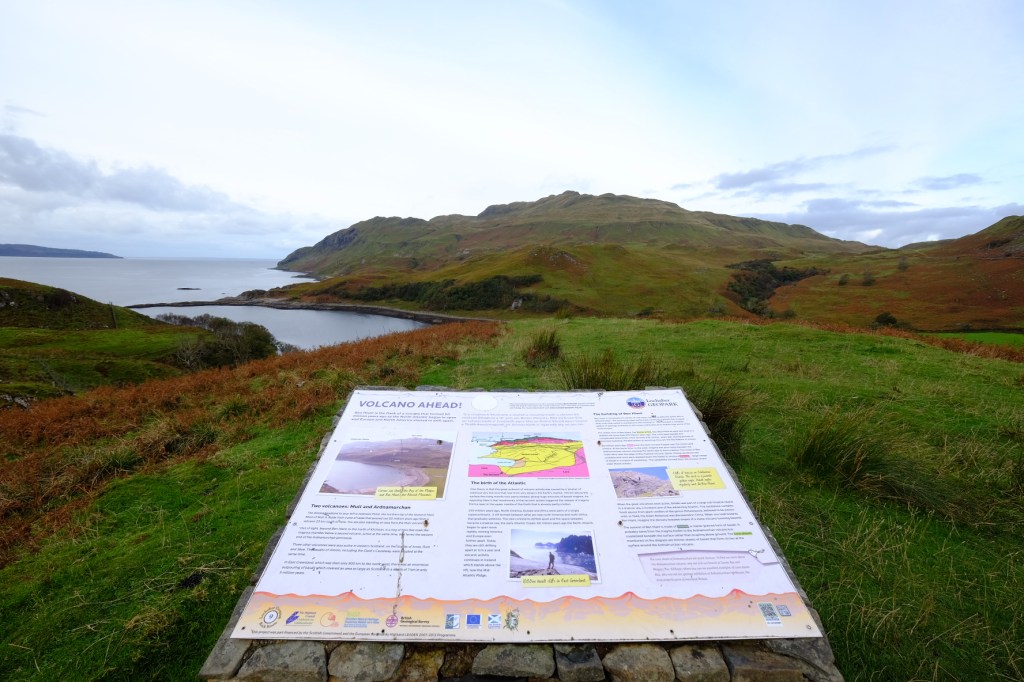
The information panel explained the origins of the surrounding mountains, including the overlapping volcanic centres that make Ardnamurchan internationally important to geologists. Much of the landscape’s distinctive shape is the result of resistant igneous rocks surviving while softer surrounding material was gradually worn away.

The great volcano itself disappeared long ago, but its underlying structures remain written across the hills, it was a stunning view, like all the views on this trip!
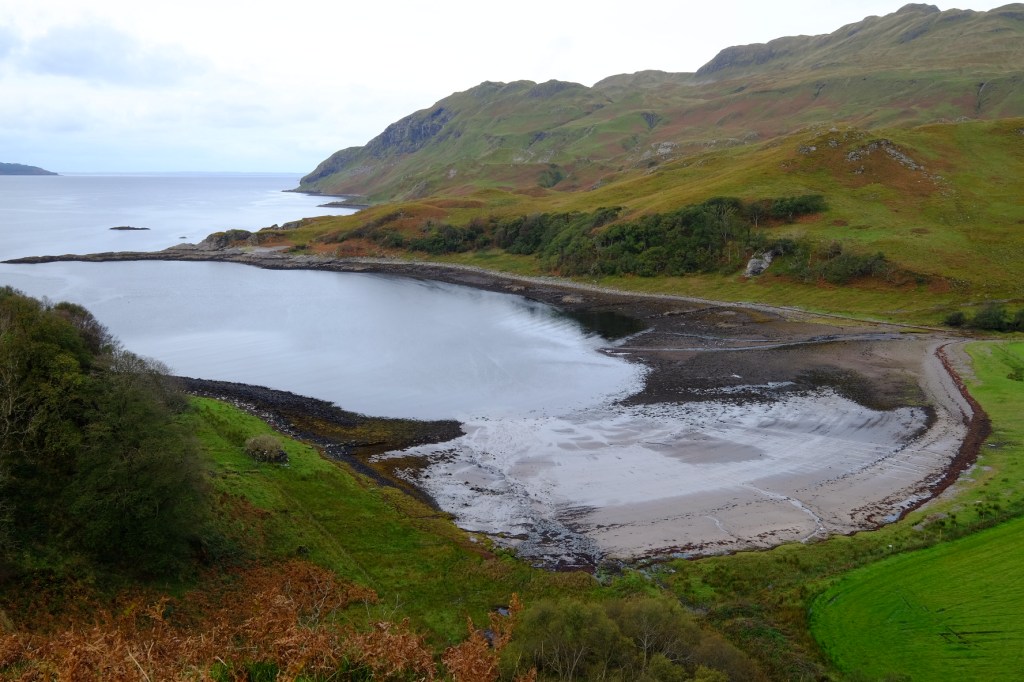
Looking out over the landscape, I found it extraordinary to imagine what this place must once have been like. Not quite the peaceful combination of grassy slopes, grazing animals and occasional passing cars that I was enjoying.

More molten rock, violent geological upheaval and generally rather poor conditions for a picnic!
And then there was another rather splendid discovery: a second information board highlighting the archaeological heritage of western Ardnamurchan.
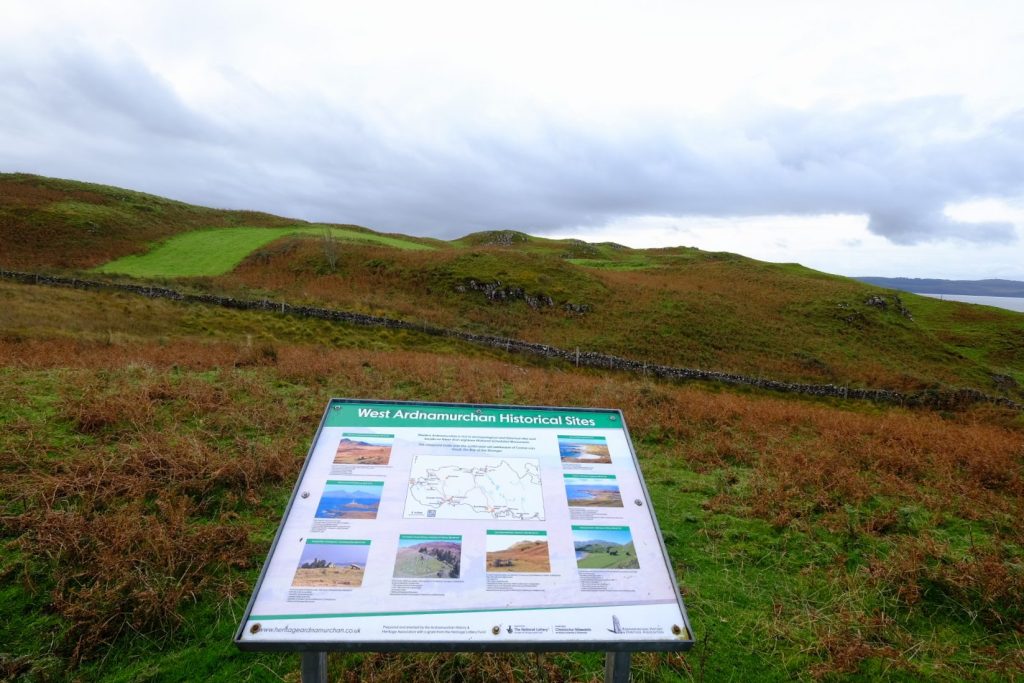
As well as its remarkable geology, this comparatively remote peninsula has evidence of human occupation stretching back thousands of years, including prehistoric remains, burial sites and later settlements.

Following my excursions around Kilmartin Glen, I was particularly pleased to discover that even here, among the remains of an ancient volcano, there were more archaeological possibilities waiting to be investigated, unfortunately, I did have somewhere to be at 4:00pm.

One has to draw the line somewhere.

Ardnamurchan Lighthouse – As Far West As You Can Go

Eventually, the road delivered me to Ardnamurchan Point, and what a place.

The landscape becomes increasingly exposed as you approach the headland. Trees give way to low vegetation, scattered rocks and open moorland, while the sea begins to dominate almost every direction.

Then, rising above the rocky coastline, stands the magnificent Ardnamurchan Lighthouse.
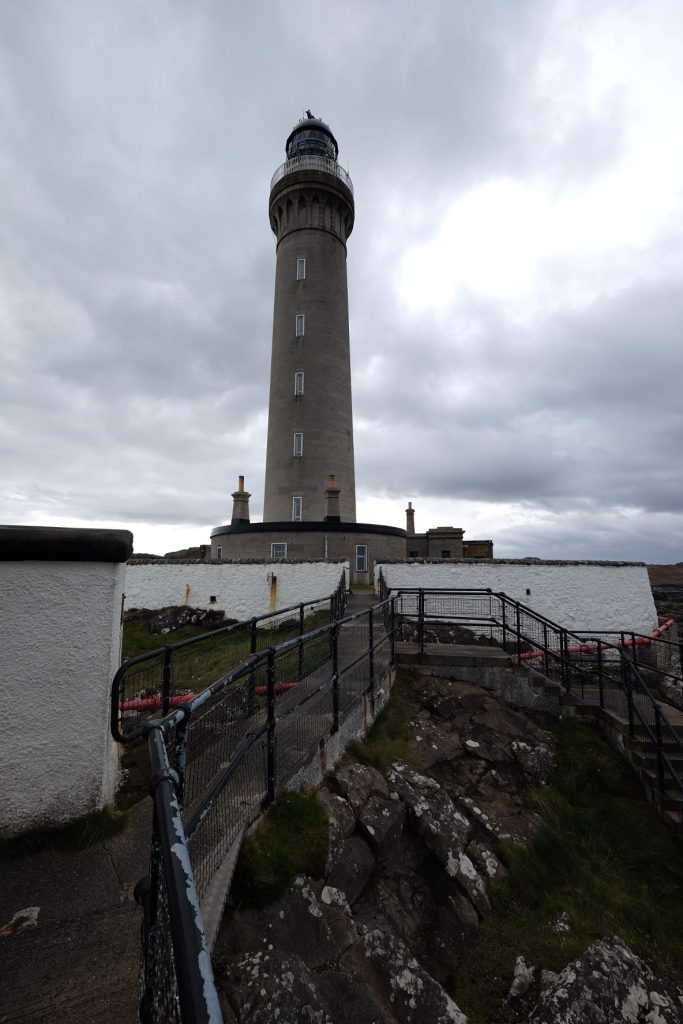
Completed in 1849, the lighthouse was designed by Alan Stevenson, a member of Scotland’s extraordinary lighthouse-building dynasty and uncle of the author Robert Louis Stevenson. The Stevenson family were responsible for designing many of Scotland’s most important lighthouses, often in extraordinarily difficult and dangerous locations.

Ardnamurchan’s tower stands approximately 35 metres high, constructed from granite quarried on the Isle of Mull. Its architectural design incorporates unusual Egyptian-inspired details, particularly visible around the lighthouse buildings and upper structure, its light was first exhibited on 5 October 1849, meaning my visit came almost exactly 177 years after it first began guiding mariners through these hazardous western waters.

The station’s early years were not without incident. In 1852, a severe storm brought a lightning strike that damaged the tower, shattered windows and tore away sections of the surrounding walls and access road. The lighthouse was eventually automated in 1988, bringing an end to the era of permanently stationed keepers.

Today it remains an operational aid to navigation, watching over one of the wildest stretches of Britain’s coastline, and geographically speaking, *I couldn’t drive much farther west without requiring a boat.

(*Source: Northern Lighthouse Board – Ardnamurchan Lighthouse.)

The View From the Edge

Of course, as impressive as the lighthouse itself is, the surrounding scenery provides an equally compelling reason to visit.
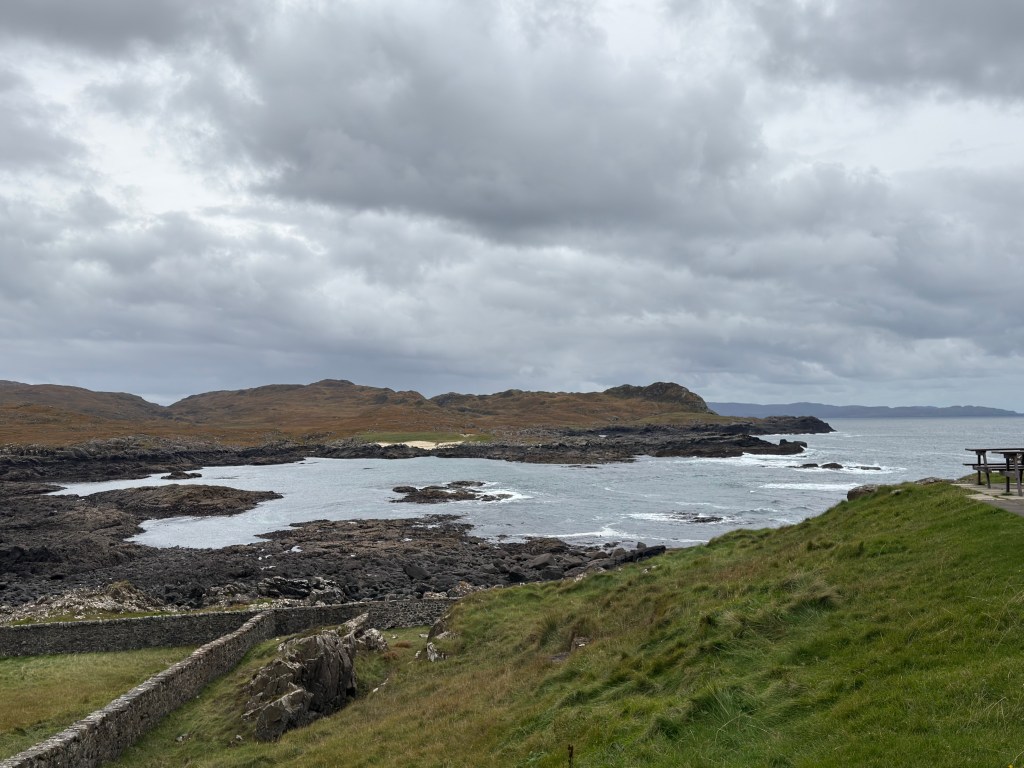
From Ardnamurchan Point, the views stretch across the waters of the Inner Hebrides towards the Small Isles and, in suitable conditions, beyond.

Muck, Eigg, Rum and the distant outline of Skye all form part of this remarkable western seascape.
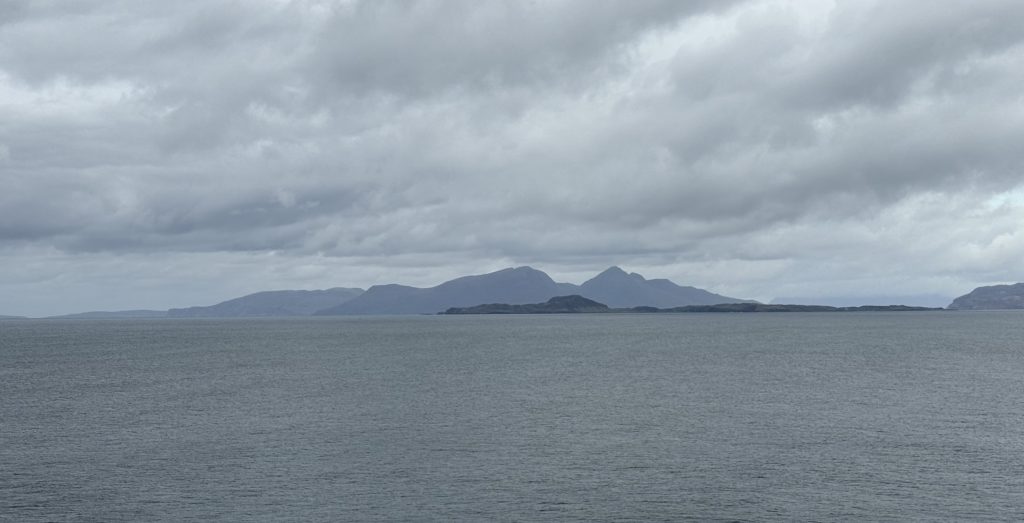
The weather was doing its usual Scottish best to provide a little of everything.

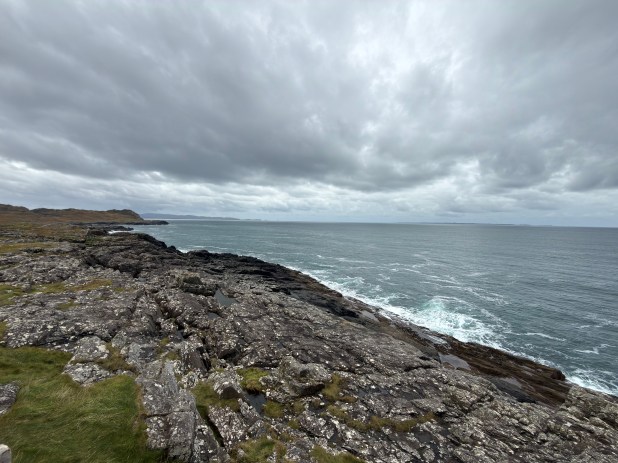
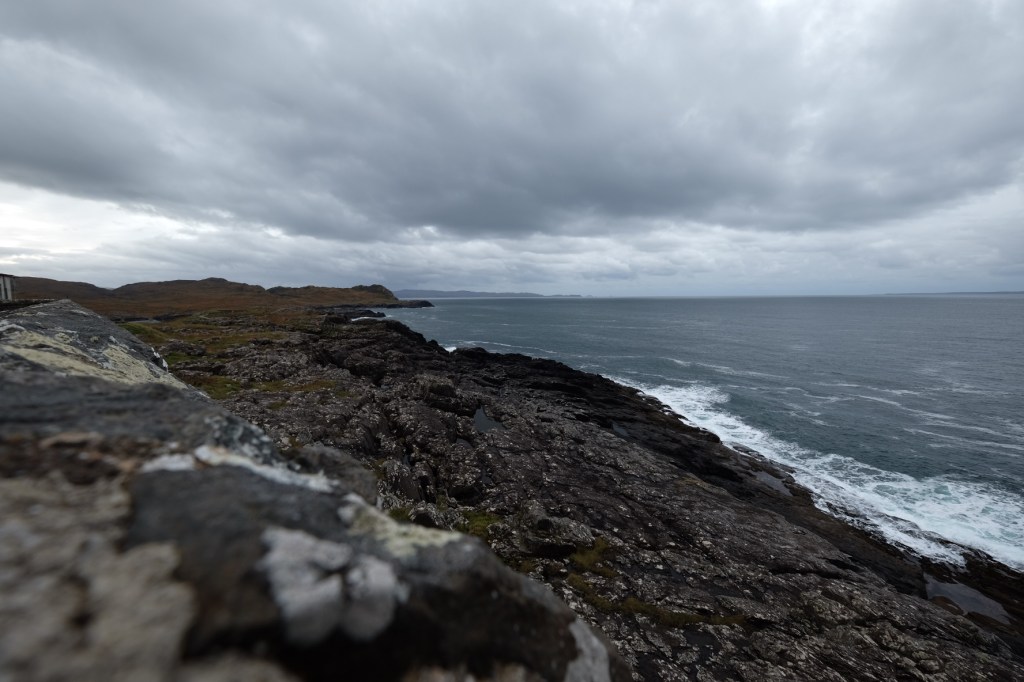
Great banks of cloud gathered over the Atlantic, occasionally allowing shafts of sunlight to illuminate the water. The sea appeared almost metallic beneath the grey sky, while the dark, jagged coastline offered an impressive reminder of the forces that had shaped this headland.
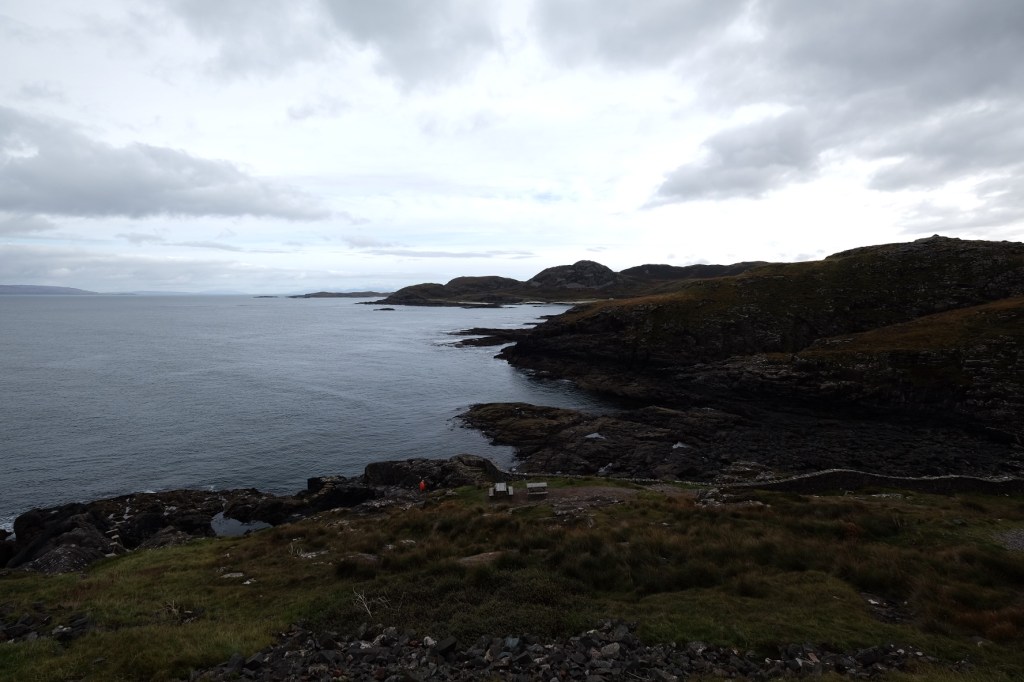
Standing there, I was struck by just how much history had passed through these waters.

For centuries, the western seaways were not barriers separating isolated communities but important routes connecting Scotland, Ireland, the Hebrides and Scandinavia.

Long before modern roads, these islands and coastal settlements were linked by boats carrying people, livestock, trade goods and occasionally considerably less welcome visitors.

Having spent the previous days exploring Viking history, medieval castles and the emergence of the early Scottish kingdoms, it was rather satisfying to look out across the very waters that had helped shape so much of that story.

A spectacular place.

Although perhaps not somewhere I’d particularly fancy being during a February gale.

An Enormous Red Foghorn

While exploring the lighthouse complex, I also encountered a wonderfully conspicuous piece of maritime engineering.
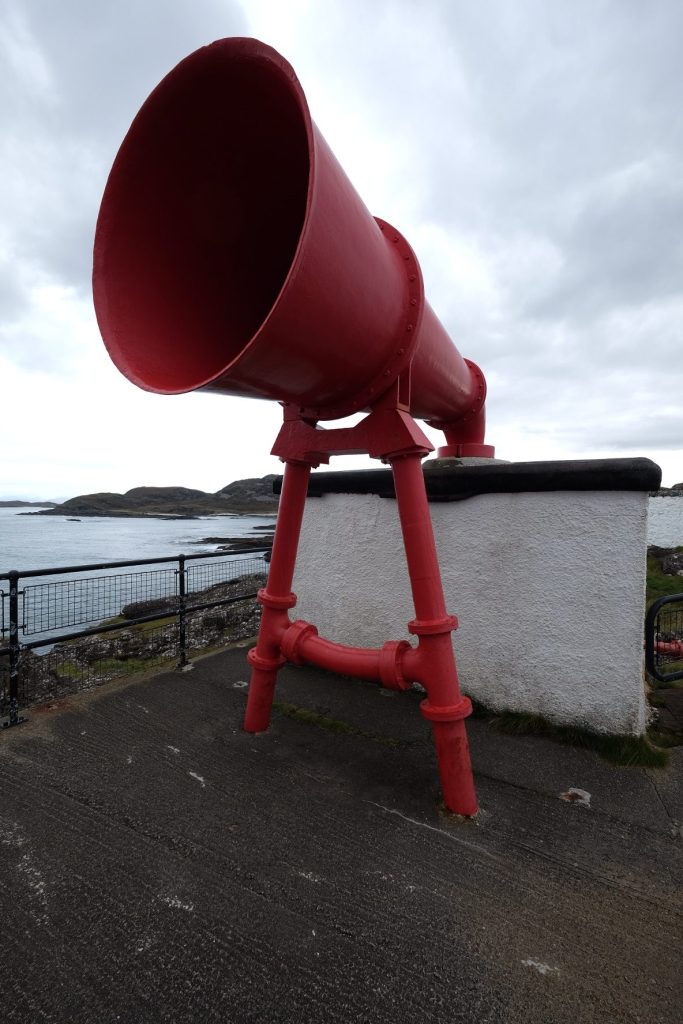
The great red horn is a reminder that even the most powerful lighthouse has its limitations. Before modern electronic navigation, fog signals were an essential means of warning vessels approaching dangerous coastlines when visibility was too poor for a light to be seen, and this particular piece of equipment was not exactly designed with subtlety in mind.

It looked rather like an oversized musical instrument constructed for someone with an exceptionally serious disagreement with the neighbours, I was quite relieved it wasn’t demonstrating its capabilities!

Between the remote setting, the engineering, the exposed coastline and the views towards the Hebrides, Ardnamurchan had thoroughly justified the drive.

But there was another place nearby that I’d been keen to see, and it involved rather more sand than I had expected to encounter in the Highlands.

Sanna Bay – An Unexpected Highland Paradise

Not far from Ardnamurchan Point lies Sanna Bay, a beautiful stretch of coastline renowned for its pale sand, dunes and remarkable views towards the Small Isles. The surrounding area forms part of the ancient volcanic landscape, and the contrast between the dark, rugged hills and the lighter coastal scenery is particularly striking.

There is something almost improbable about finding beaches like these so far north, in fact on a bright summer’s day, the photographs could easily be mistaken for somewhere considerably warmer.

The surrounding landscape, however, is unmistakably Scottish: open hills, exposed rock, sweeping skies and the ever-present possibility that the weather might change its mind without consulting anyone.
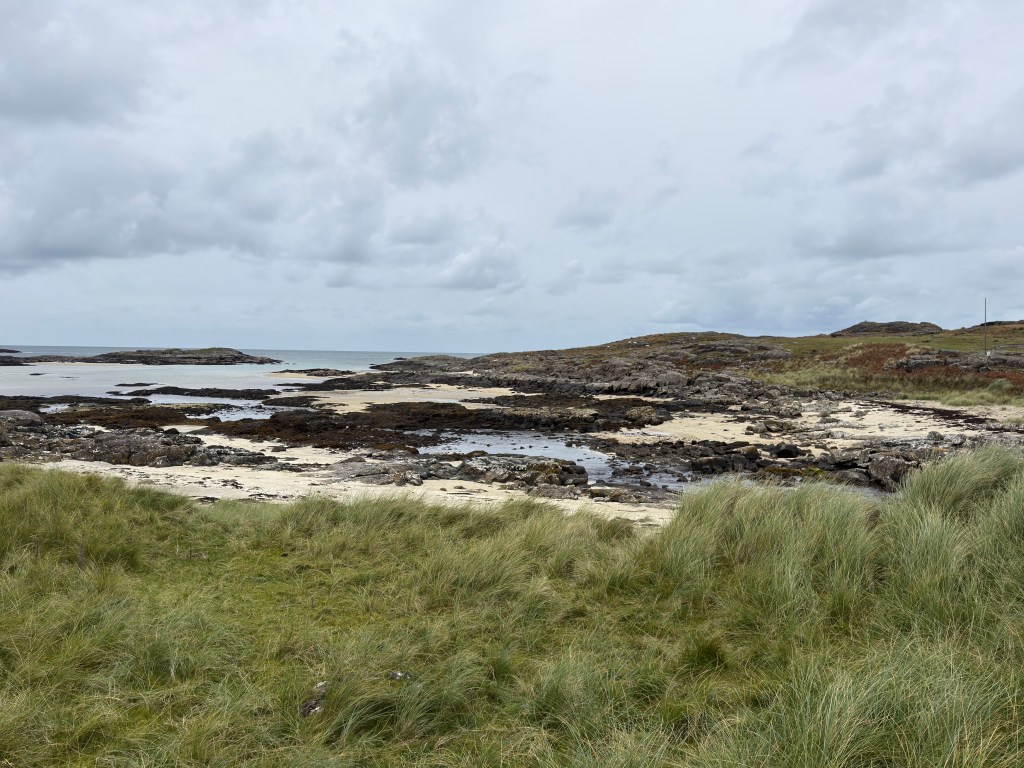
What I particularly enjoyed about this part of the journey was the sheer variety.

Within a relatively short distance, I’d encountered ancient volcanic structures, historic coastal settlements, magnificent island views, secluded bays and one of Britain’s most remarkable lighthouses.
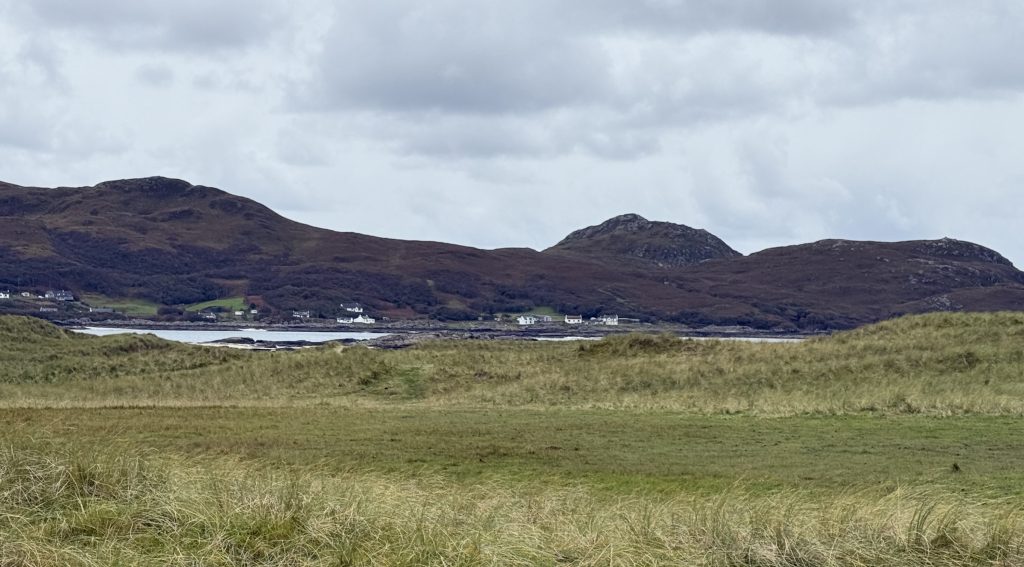
All on a Thursday morning, and all before lunch.

It was almost enough to make my extensive itinerary seem entirely reasonable.

The Return Journey – Priorities, Priorities

Unfortunately, time was now becoming a consideration. Kitchen in the Wild was due to begin at 4:00pm, and although I was thoroughly enjoying my explorations, I still had to retrace much of the peninsula before heading towards the Eilean Shona departure point.

The road back was every bit as enjoyable as the outward journey.

There is something rather wonderful about travelling the same Highland road in the opposite direction. Features you hadn’t noticed suddenly become obvious, familiar views take on an entirely different character, and occasionally the clouds part to reveal an entirely new landscape.

The sheltered waters of Loch Sunart gradually came back into view, its wooded slopes descending towards the shoreline, and somewhere along the way, I decided it was time for a cup of tea, not that I was particularly desperate for refreshment, you understand.

But I had spotted somewhere rather promising during my research.

An Excellent Discovery – The Lochview Tearoom

The Ardnamurchan Natural History Visitor Centre was an ideal place to break the return journey.

Situated near Glenborrodale, overlooking Loch Sunart, the centre celebrates the remarkable wildlife and natural environment of this remote peninsula.

Ardnamurchan is home to an extraordinary variety of species, including red deer, otters, pine martens, golden eagles and white-tailed sea eagles. Its ancient Atlantic oakwoods, sheltered lochs and rugged coastline provide some of the finest wildlife habitats in western Scotland. All thoroughly fascinating, of course, but my immediate attention was drawn to the Lochview Tearoom.

After several hours exploring windswept headlands, volcanic landscapes and historic maritime engineering, I felt I’d earned something considerably more civilised.

Tea.

And cake.

Specifically, an absolutely magnificent date, banana and walnut cake.

Moist, rich and wonderfully satisfying, with the natural sweetness of the fruit and the welcome texture of walnuts, it was exactly the sort of homemade cake that makes you reconsider whether a single slice is an adequate serving. It was delicious, that good I forgot to take a picture like I would usually do!

Indeed, had I not been expected elsewhere that afternoon, there was a reasonable chance I might have ordered another and spent the rest of the day investigating the establishment’s other baked offerings. A cup of tea, an excellent piece of cake and a beautiful Highland setting.

Sometimes the simplest stops turn out to be among the most enjoyable.

Suitably refreshed, it was time to resume the journey, I had an island to catch.

Towards Loch Moidart – The Final Miles
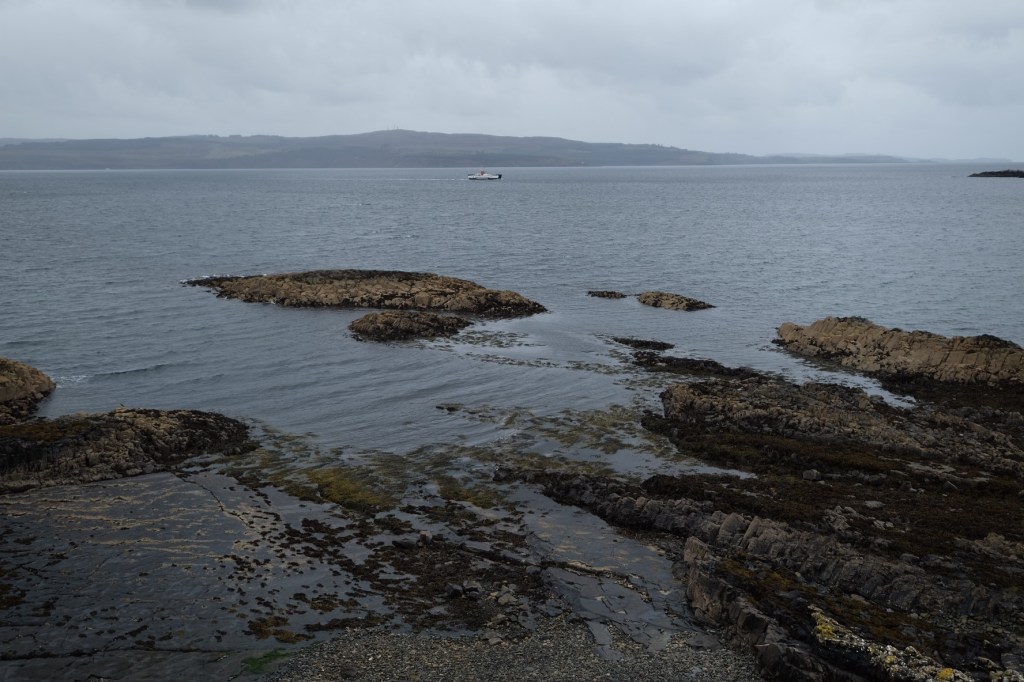
The remaining drive carried me away from the relative familiarity of Loch Sunart and towards the quieter roads leading to Loch Moidart, once again, the landscape changed.

Woodland gave way to open moorland, with rusty autumn bracken spreading across the hillsides. Occasional stretches of water appeared between the trees, while low mountains formed a seemingly endless succession of ridges along the horizon.
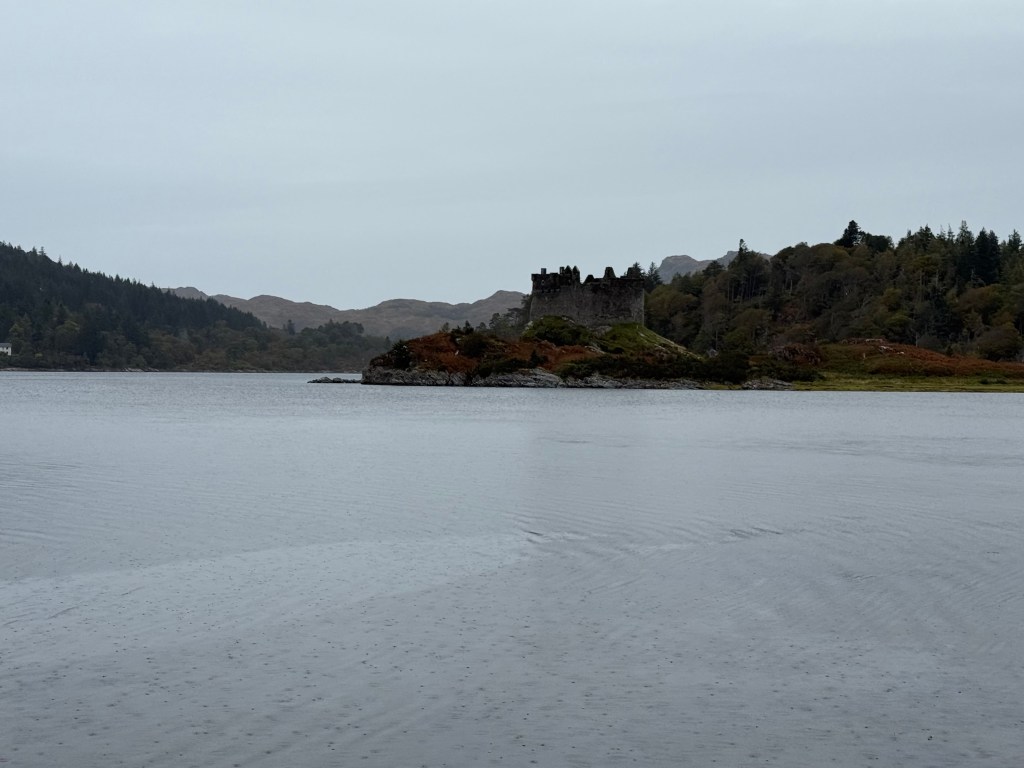
This was the Scotland I’d been hoping to find when I first began planning the journey. Not the grand tourist attractions or famous viewpoints, wonderful though those had been, but the quieter places in between. Little roads, isolated stretches of coastline and scenery that seems entirely unconcerned with whether anyone is there to admire it.

And somewhere ahead lay Eilean Shona.

The island that had started this entire adventure.

Nineteen Months Later – The Eilean Shona Jetty

Eventually, I arrived at the mainland departure point for Eilean Shona, near Dorlin on Loch Moidart, there was something wonderfully appropriate about the location. No bustling ferry terminal, enormous departure lounge or queue of cars waiting to board.

Just a small jetty, wonderfully peaceful surroundings and the waters of Loch Moidart stretching towards the island.
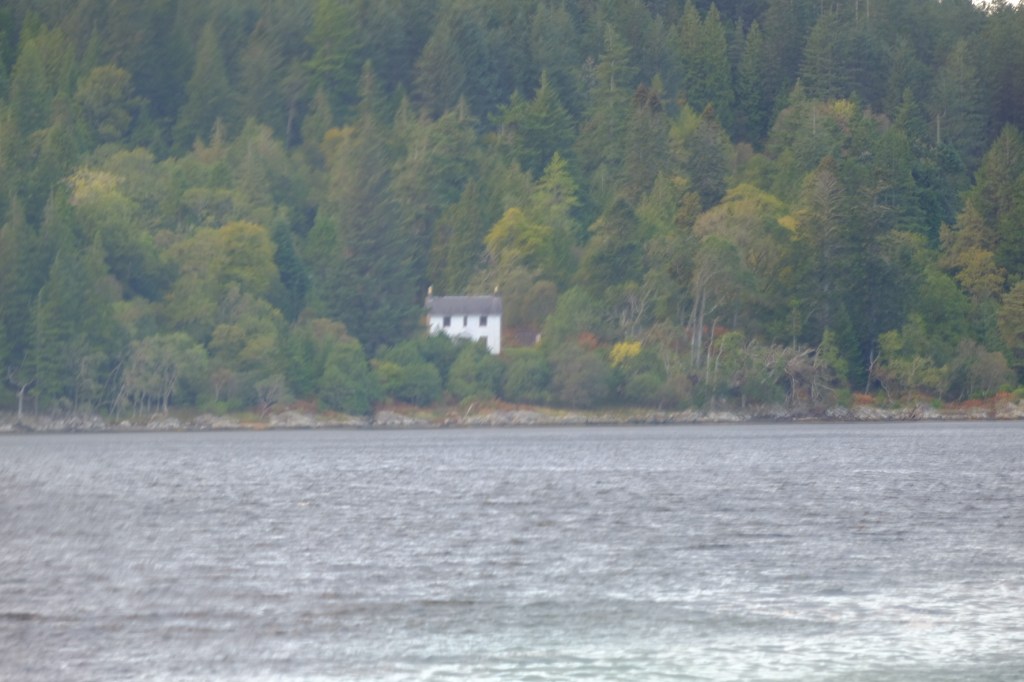
Eilean Shona is a private, car-free island of approximately 2,000 acres, with woodland, rocky coastline, sheltered beaches and a fascinating history of its own. Perhaps its most famous literary association is with J. M. Barrie, who rented the island in the 1920s. It is frequently associated with the imaginative world of Peter Pan, although the famous play itself predates Barrie’s visits.

The island’s great attraction is its relative isolation. Accessible by boat, without public roads or the usual trappings of modern tourism, it offers an opportunity to experience an increasingly rare combination of wilderness, tranquillity and genuine escape.

And for the next few days, it would also become the setting for something rather special.

Kitchen in the Wild.

The whole reason I’d started planning this adventure in the first place.

Espresso at the Jetty – The Outin Makes Another Appearance

Having arrived in good time, I found myself with a little while to wait before everyone gathered for the transfer, which presented an obvious opportunity. Out came the Outin portable espresso machine once again.

After its successful inaugural field test at Rest and Be Thankful, the little rechargeable device was rapidly establishing itself as one of my more inspired purchases. Water, a GRIND coffee capsule, a press of the button and a few moments later I had a freshly extracted espresso.

No café required, no electricity socket, no need to ask whether anyone had oat milk, just a decent coffee, a quiet Highland jetty and the prospect of finally reaching an island I’d been looking forward to visiting for nineteen months.

I was beginning to think this little machine might become a permanent travelling companion.

The Guests Begin to Arrive

Gradually, the quiet jetty began to acquire a little more activity. The other guests started arriving, bringing luggage, introductions and the unmistakable atmosphere of people who were about to embark upon something they had all been looking forward to. This was the moment when the trip began to feel quite different.

For the previous three days, I’d been travelling extensively, following my own itinerary and indulging whatever historical, geographical or culinary diversion happened to catch my attention.

Now I was meeting the people with whom I’d be sharing the next stage of the adventure, but there was one small complication.

I’m absolutely hopeless with names!

Faces? Usually fine.

Conversations? No problem.

But introduce me to several people in quick succession and I can almost guarantee that by the time the fourth person has told me their name, the first three have disappeared into some inaccessible filing cabinet within my brain. I can, apparently, retain obscure details about a sixth-century Scottish saint, the construction of a Victorian lighthouse and the geological origins of a 60-million-year-old volcano.

But remembering the name of someone I’ve just shaken hands with? Entirely different proposition.

Still, everyone seemed extremely enthusiastic, the introductions were underway and there was that lovely shared sense of anticipation which comes when a group of relative strangers gathers for a common adventure. After all, we had something rather important in common.

An appreciation of good food, beautiful surroundings and the opportunity to experience something a little out of the ordinary.

The Adventure I’d Actually Come For

Standing beside Loch Moidart, I found myself reflecting on just how much had happened since arriving in Scotland.

Glasgow’s extraordinary history, Bombay-inspired breakfasts, medieval cathedrals, ancient burial chambers, prehistoric animal carvings, standing stones, magnificent castles, Highland roads, excellent seafood, questionable lunch arrangements, an Italian sandwich that had more than compensated for them, and now a journey to the very western edge of mainland Britain.

I’d certainly made the most of those extra days, but this was where the original adventure truly began.

The maps had served their purpose. The guidebooks had been consulted, the diversions enjoyed and the hire car had transported me safely through an impressive selection of Scottish roads. Now it was time to leave all that behind.

Ahead lay several days of island life, exploring, eating and, I hoped, making some new friends. The boat would take us across Loch Moidart towards Eilean Shona, where the Kitchen in the Wild team was preparing to welcome us.

Nineteen months of waiting had finally come down to this.

One small jetty.

A gathering of enthusiastic strangers.

A collection of bags.

And one last espresso.

Kitchen in the Wild, Scotland 2026.

At last.

Although, before we departed, I really ought to have made another attempt at remembering everyone’s names…
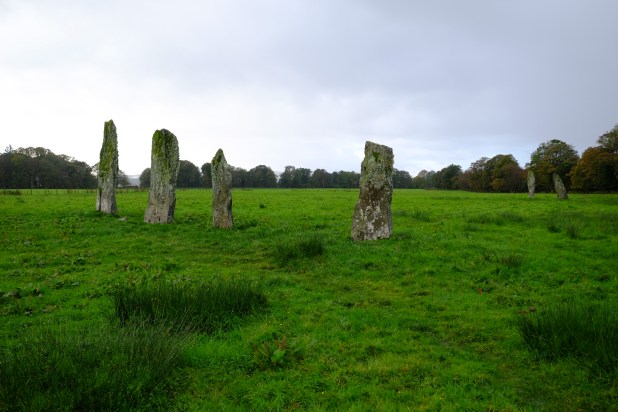
A Little Bombay Before Several Thousand Years of Scotland (Part 2)

Day Two – Bombay Breakfast, Vikings and the Road to Ancient Scotland

After a thoroughly enjoyable first evening in Glasgow, Tuesday morning arrived, and with it the prospect of finally putting my meticulously researched Scottish itinerary into action. First, however, there was the rather important matter of breakfast.

I’d already earmarked Dishoom, conveniently located around a 10-minute walk from the AC Hotel by Marriott. Their Bombay-inspired breakfast offering had caught my attention during my pre-trip research, and I thought it would make a splendid start to the day. I had purchased the book by the same title some time back and was thoroughly inspired by the stories within.

A little Indian influence in Scotland before heading off in search of prehistoric burial chambers, ancient standing stones and centuries of clan warfare. Why not?

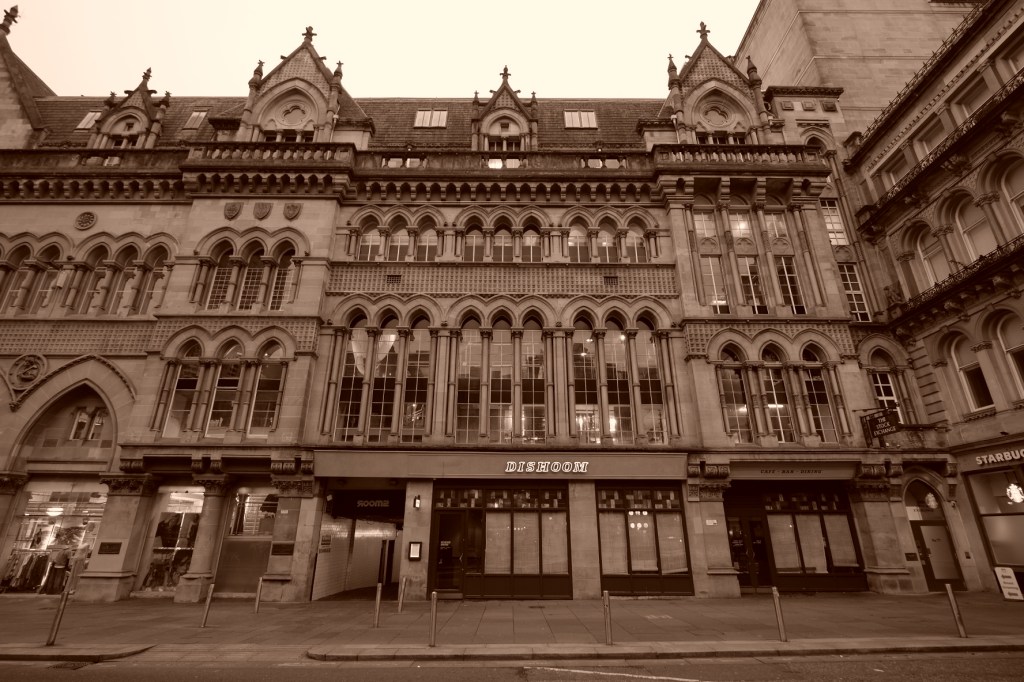
Dishoom occupies part of Glasgow’s magnificent former Stock Exchange building, an extraordinary piece of Victorian architecture that makes quite an impression before you’ve even stepped through the door.

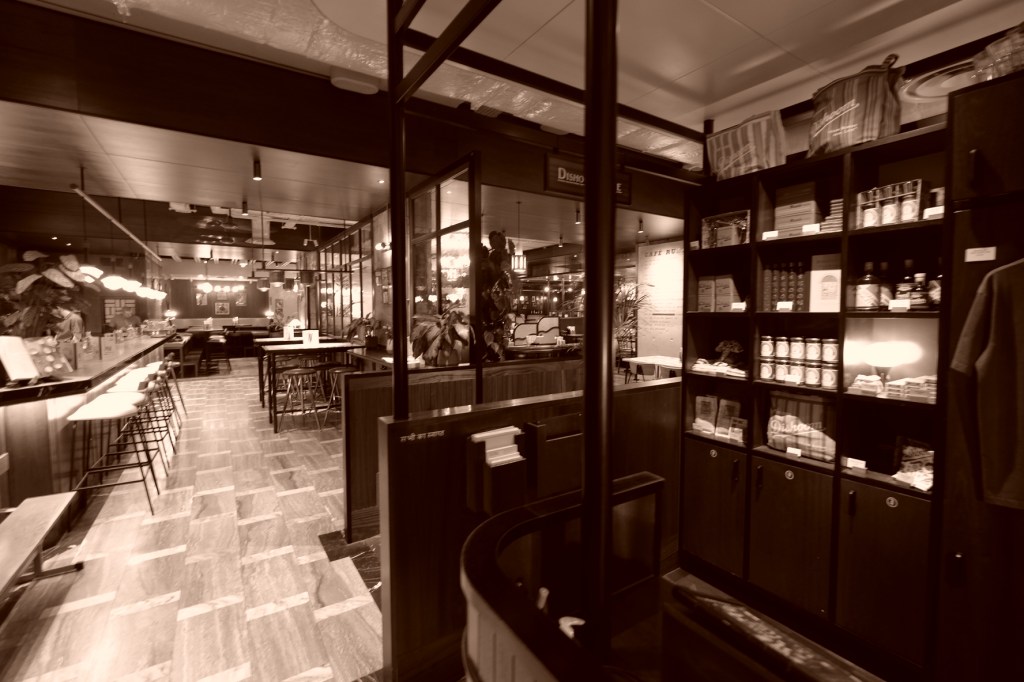
Inside, the atmosphere was warm and inviting, with its wonderfully eclectic mixture of old-fashioned furniture, patterned tables, framed photographs and the unmistakable character of a Bombay café.

Dishoom draws its inspiration from the Irani cafés that became such an important part of Bombay’s social and culinary history. Established largely by Persian immigrants, these were places where people from different communities and backgrounds could gather over tea, food and conversation. Once numerous, the original cafés have steadily declined in number, making Dishoom’s affectionate interpretation of them rather appealing. It certainly made a change from the usual hotel breakfast buffet.

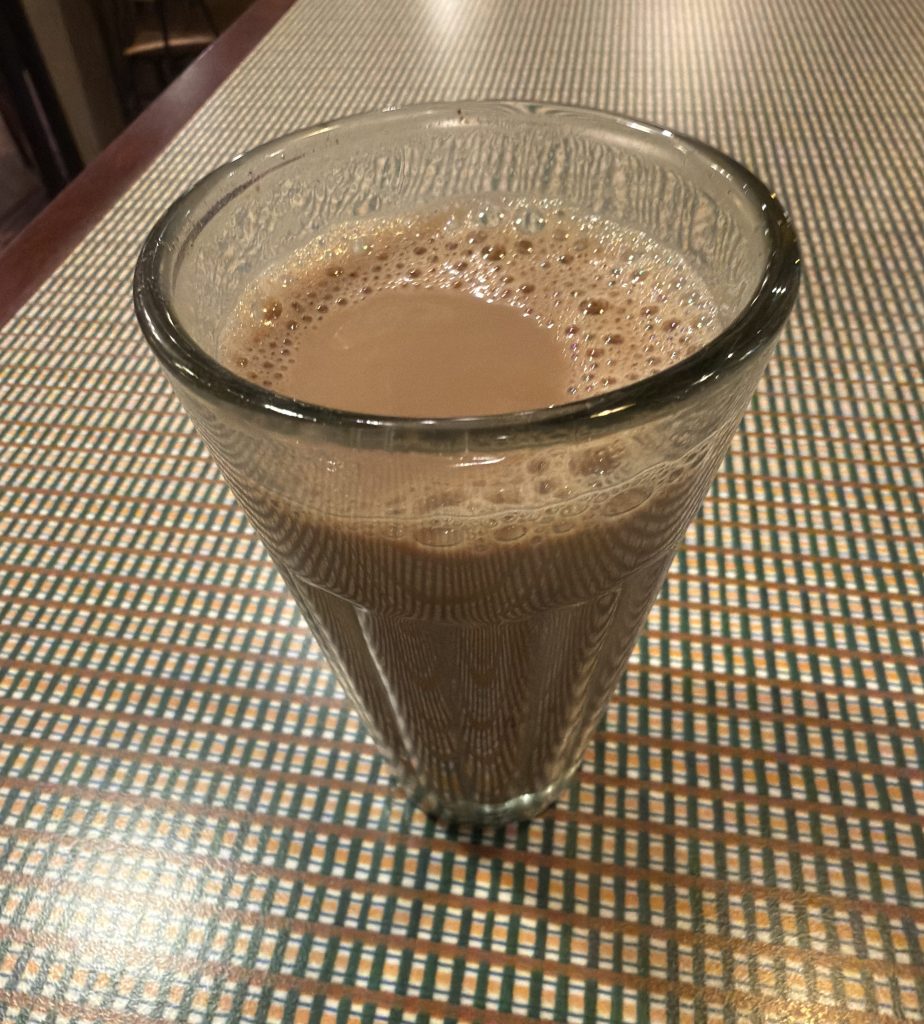
Naturally, there had to be chai.

Served in a simple glass, rich, warming and beautifully aromatic, it was just the thing to get the morning underway. There’s something wonderfully comforting about Indian chai, the combination of strong tea, milk, sweetness and warming spices producing a drink that feels considerably more indulgent than an ordinary cup of tea.

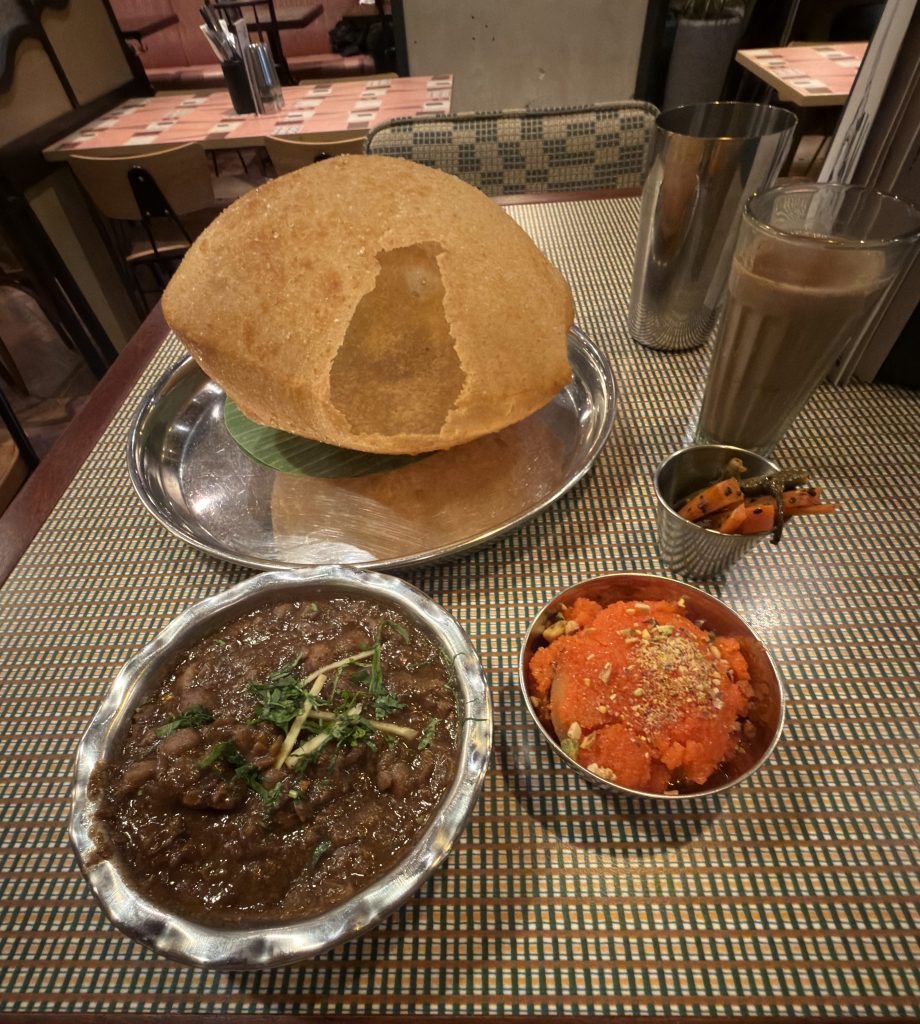
Breakfast itself was a wonderfully colourful affair. A richly spiced chickpea preparation, accompanied by a magnificent puffed puri, pickles and a portion of sweet halwa, Chole Puri Halwa, the chef’s favourite according to the menu.

The puri was quite a spectacle, arriving inflated like an edible balloon, its delicate golden shell practically demanding to be broken into.

The combination of savoury, spicy and sweet made for a rather interesting start to the day. A little of the chickpea curry scooped up with the bread, followed by something sweeter, another sip of chai, and suddenly the prospect of an ordinary bowl of cornflakes seemed deeply uninspiring.

Suitably fortified, it was time to turn my attention from Bombay to something rather older, as I was leaving a pristine paper cup was thrust in my hand, Chai to take-away, now that was service.

Glasgow Cathedral – Where the City’s Story Began

Suitably fortified by my rather splendid breakfast at Dishoom, it was time to check out of the hotel and get the adventure properly underway. A swift checkout was followed by the slightly less swift process of extracting the hire car from the multi-storey car park, whose narrow ramps and unforgiving concrete walls seemed designed to test both my driving skills and the limits of the rental insurance.

Car and driver eventually emerging unscathed, I set off for my next destination: Glasgow Cathedral.

This was somewhere I’d particularly wanted to explore. My pre-trip research into Scotland’s religious history, folklore and considerably darker past had revealed that Glasgow’s magnificent medieval cathedral had rather more stories to tell than its imposing architecture alone might suggest.

The cathedral is dedicated to St Kentigern, better known as St Mungo, Glasgow’s patron saint and a man whose story is an intriguing mixture of early Christianity, royal scandal and some fairly improbable miracles.

According to tradition, Mungo was born around the sixth century, the son of Princess Teneu (also known as Thenew), daughter of a British king, and a nobleman named Owain. His arrival into the world was apparently not universally celebrated. His mother, having become pregnant outside marriage, was condemned by her father and, according to later accounts, cast adrift in a boat without oars. Against considerable odds, she survived, eventually reaching the Firth of Forth, where Mungo was born.

Not perhaps the most conventional start to a distinguished ecclesiastical career.

The young Kentigern was subsequently raised under the protection of St Serf, traditionally associated with Culross, who is said to have given him the affectionate name Mungo, commonly interpreted as ‘dear one’.

He eventually travelled west, establishing a Christian community beside the Molendinar Burn, on the site associated with today’s cathedral. Around this early religious settlement, a community developed that would, over the centuries, become the great city of Glasgow.

But it’s the legends surrounding Mungo that make him particularly interesting.

His exploits are immortalised in Glasgow’s coat of arms, which features four rather unusual symbols: a bird, a tree, a bell and a fish carrying a ring in its mouth.

The bird represents a robin supposedly restored to life by the young Mungo after it had been killed by jealous fellow pupils. The tree recalls an occasion when he miraculously rekindled a sacred fire using a branch after the original flames had been extinguished. The bell is associated with his religious authority and a traditional story connecting it to Rome.

Then there’s the fish.

According to the legend, a queen of Strathclyde had lost a precious ring, which her suspicious husband subsequently demanded she produce. With her position becoming increasingly uncomfortable, she appealed to Mungo for assistance. He instructed a fish to be caught from the River Clyde, and there, rather conveniently, in the mouth of a salmon, was the missing ring.

A remarkable piece of divine intervention, although one suspects the salmon might have had a slightly different interpretation of events.

These stories survive largely through medieval religious biographies, most notably one written by Jocelin of Furness in the twelfth century, some 500 years after Mungo’s lifetime. They’re wonderful examples of Scotland’s early Christian folklore rather than events we can confidently establish as historical fact.

What is far more tangible is the magnificent cathedral itself.

Mungo is traditionally believed to have been buried here around AD 612, and his shrine became an important destination for medieval pilgrims. The great Gothic building we see today was developed largely during the twelfth and thirteenth centuries, with Bishop Jocelin initiating major expansion work in 1181.

Remarkably, Glasgow Cathedral is the only medieval cathedral on the Scottish mainland to have survived the Reformation with its principal structure intact, although its Catholic furnishings were subsequently removed.

So here I was, standing in a building whose origins stretched back to a sixth-century saint, whose supposed miracles still decorate the city’s official coat of arms, and whose final resting place helped give birth to Glasgow itself.

Not bad for a man whose career apparently began with resurrecting a robin.

And what a building it is.

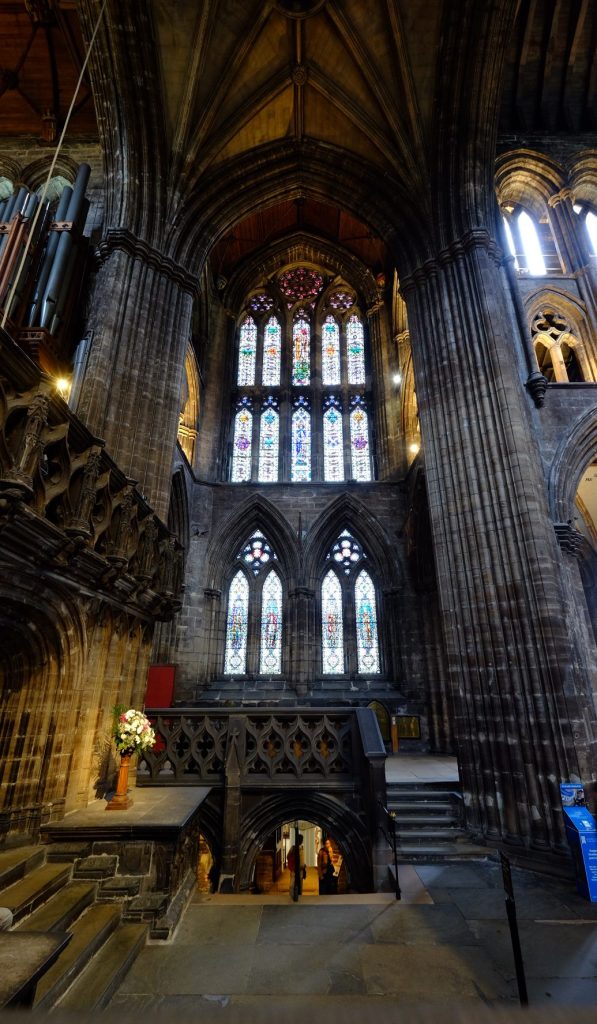
Stepping inside, your eyes are immediately drawn upwards. Great stone columns rise into pointed arches, intricate details emerge from the shadows and the sheer scale of the place makes you wonder quite how medieval craftsmen achieved such extraordinary results without the benefit of modern machinery.

What makes Glasgow Cathedral particularly remarkable is its survival. The Scottish Reformation of 1560 transformed the country’s religious landscape, bringing an end to papal authority and fundamentally changing the way people worshipped. Many medieval churches and cathedrals subsequently lost their furnishings, religious imagery and, in some cases, their very existence.

Glasgow, however, was fortunate. The cathedral survived substantially intact, although its Catholic furnishings and decoration did not escape the changes. Its continued use as a place of Protestant worship helped preserve one of Scotland’s finest examples of medieval Gothic architecture.

A rather impressive survivor, considering Scotland’s occasional enthusiasm for dismantling anything associated with the previous administration.

A Little Colour Amongst the Ancient Stones

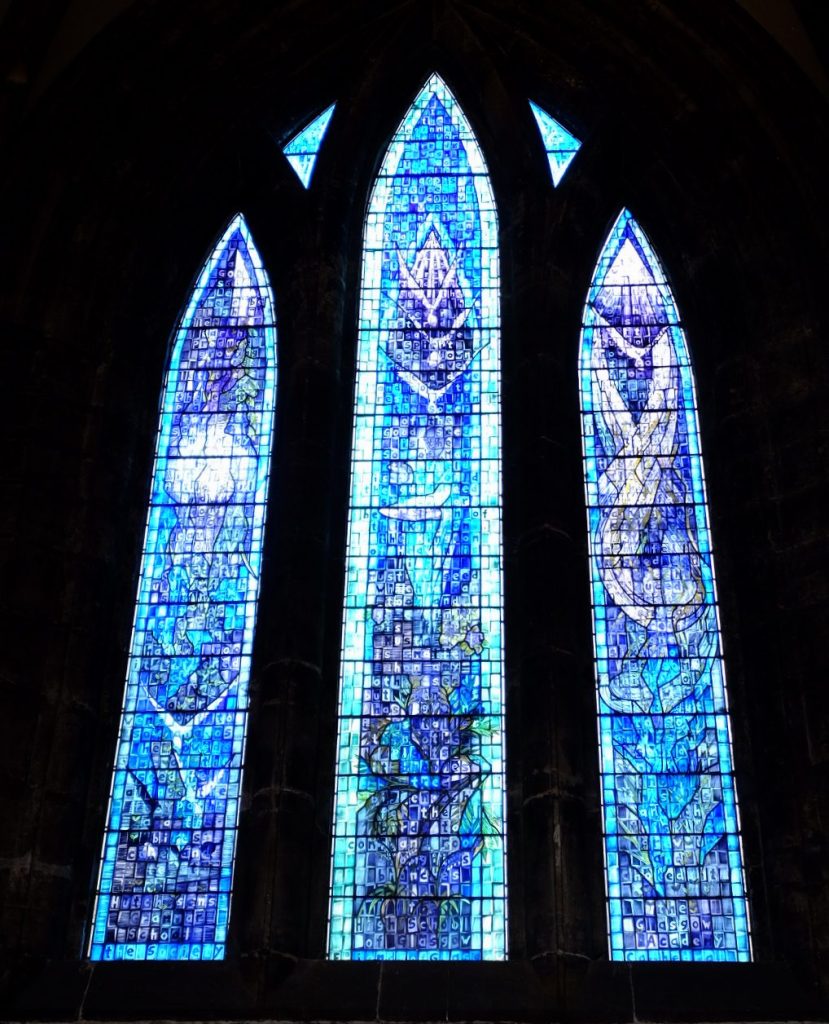
One of the things that particularly caught my attention was the stained glass. Set against centuries-old dark stonework, the extraordinary intensity of the colours creates an almost theatrical effect, especially when the light catches them.

Perhaps the most striking was a magnificent arrangement of brilliant blue windows, their modern design contrasting beautifully with the medieval architecture surrounding them.

Interestingly, much of the stained glass we see in Glasgow Cathedral today is relatively modern. The Reformation had swept away the medieval glazing, and although Victorian stained glass was introduced during the nineteenth century, much of this was subsequently replaced during the twentieth century.

The result is a fascinating combination of medieval craftsmanship and contemporary artistic expression, centuries apart but somehow entirely at home together.

I particularly liked the contrast. The building itself speaks of an age when faith was central to almost every aspect of daily life, while the windows demonstrate that even a cathedral approaching 900 years of age can accommodate something new.

Faith, Folklore and a Rather Dangerous Time to Be Different

My interest in Glasgow Cathedral wasn’t entirely architectural, however.

During the months leading up to this trip, I’d spent considerable time exploring Scotland’s darker religious history, particularly the relationship between Christianity, traditional folk beliefs and the persecution of those accused of witchcraft.

For centuries, Scotland’s communities had lived with a fascinating mixture of Christian teachings and much older beliefs. Fairies, healing charms, sacred wells, supernatural encounters and folk remedies were woven into everyday life, especially in rural communities. These weren’t necessarily regarded as contradictory beliefs by the people practising them. A person might attend church on Sunday and still seek assistance from a local healer, carry a protective charm or avoid a particular hillside after dark for fear of disturbing its otherworldly inhabitants.

Following the Reformation, however, religious authorities increasingly sought to regulate such practices, and the passing of Scotland’s Witchcraft Act in 1563 made witchcraft a capital offence.

The consequences could be devastating.

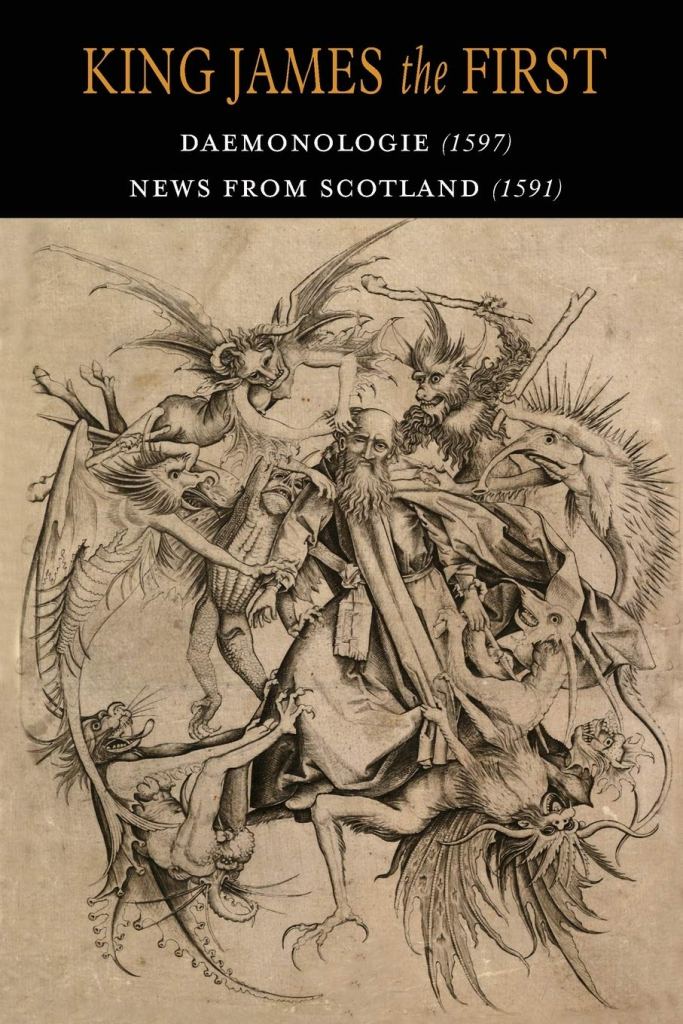
Scotland experienced several major periods of witch-hunting during the late sixteenth and seventeenth centuries. Accusations were frequently driven by local disputes, illness, misfortune, suspicion and fear, with women disproportionately represented among those prosecuted. Even King James VI developed something of an obsession with the subject, publishing his treatise Daemonologie in 1597, in which he argued for the reality of witchcraft and the need to suppress it.

An unfortunate time to fall out with the neighbours, particularly if your herbal remedies were more successful than the local physician’s.

Standing inside the cathedral, I found myself thinking about the extraordinary changes in belief that had taken place within these walls. The same building had witnessed medieval Catholic worship, the upheavals of the Reformation and the emergence of a very different religious Scotland.

And just outside, amongst the weathered gravestones, was a reminder that not everyone in sixteenth-century Glasgow was preoccupied with witches and the supernatural.

Some were attempting to drag medicine into the modern world.

Doctor Peter Low – A Man Ahead of His Time

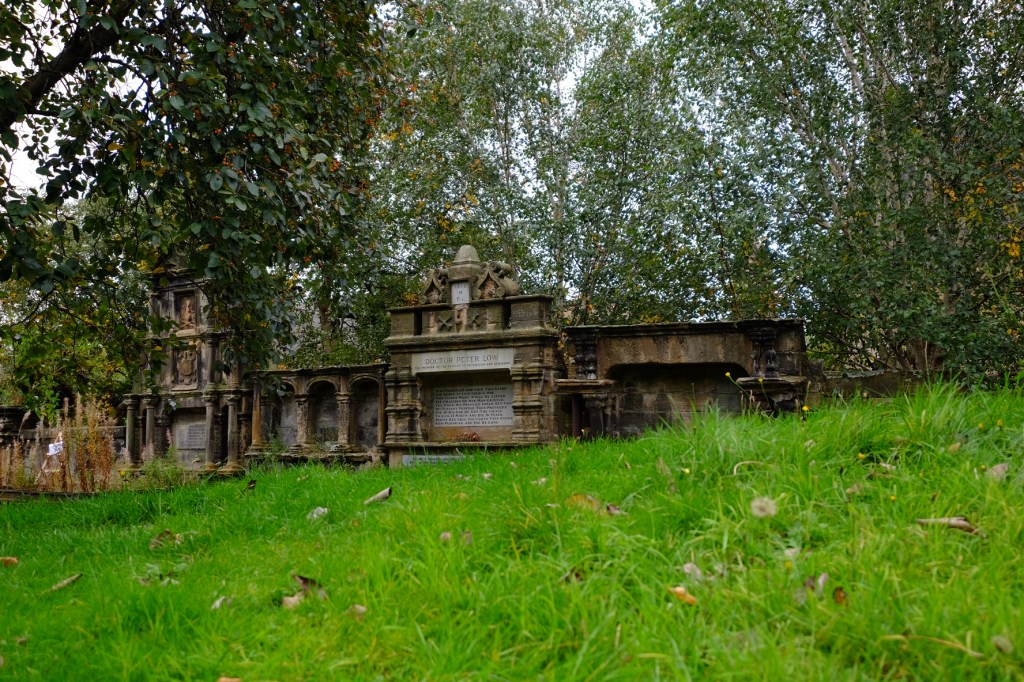
Among the monuments near the cathedral is an impressive memorial to Doctor Peter Low, a rather remarkable Scottish surgeon whose contribution to medicine deserves considerably wider recognition.

Born around the middle of the sixteenth century, Low spent time studying and practising surgery in France before eventually settling in Glasgow. In 1597 he published The Whole Course of Chirurgerie, an important surgical textbook that helped bring together contemporary medical and surgical knowledge in the English language.

Two years later, in 1599, he secured a royal charter from James VI establishing what would eventually become the Royal College of Physicians and Surgeons of Glasgow.

His ambition was to improve medical standards and ensure that those practising surgery and medicine were properly examined and qualified.

This was no small undertaking in an age when medical treatment could be something of a lottery, and the distinction between a trained practitioner, an enthusiastic barber and someone armed with a collection of questionable remedies wasn’t always reassuringly clear.

Low’s original organisation also had responsibility for examining and regulating practitioners, including surgeons and apothecaries, and its foundation represented an important step towards the professional medical institutions we recognise today.

His memorial is an intriguing survivor, tucked away amongst the older stones, and a reminder that Glasgow was developing a serious intellectual and scientific identity long before the Industrial Revolution transformed it into one of Britain’s great commercial cities.

What I particularly enjoyed was the historical contrast.

Here was a city in which religious authorities were grappling with witchcraft and supernatural beliefs while pioneering individuals such as Peter Low were simultaneously attempting to establish more rigorous standards in medicine.

Faith, fear, folklore and emerging science, all occupying much the same period of history.

Scotland in the sixteenth century was certainly never dull.

But fascinating as Glasgow had been, the clock was ticking. I still had an ambitious itinerary ahead of me, and after yesterday’s aviation-related disruption, I was determined to recover at least a little of my carefully prepared schedule.

It was time to leave the city behind.

Next stop, Dumbarton Rock, where the history was considerably older, the defences rather more imposing and the Vikings had once made themselves spectacularly unwelcome.

Leaving Glasgow – The Road to Dumbarton

With my exploration of Glasgow Cathedral complete, it was time to leave the city behind and begin the journey west.

The drive towards Dumbarton provided a fascinating transition. Glasgow’s imposing Victorian buildings, busy streets and industrial heritage gradually gave way to a more open landscape, with the River Clyde becoming an increasingly prominent feature.

For centuries, the Clyde was the lifeblood of Glasgow’s prosperity. Its banks were once lined with shipyards, engineering works and heavy industry, producing some of the finest ships in the world. At its peak, the river was synonymous with Scottish industrial ambition, its shipbuilders helping Glasgow earn its reputation as the Second City of the Empire.

But heading west, the industrial landscape begins to soften. The river broadens, the surrounding hills become increasingly prominent and the sense of approaching a rather different Scotland begins to take hold.

And then, rising dramatically from the landscape, comes Dumbarton Rock.

It’s difficult to miss.

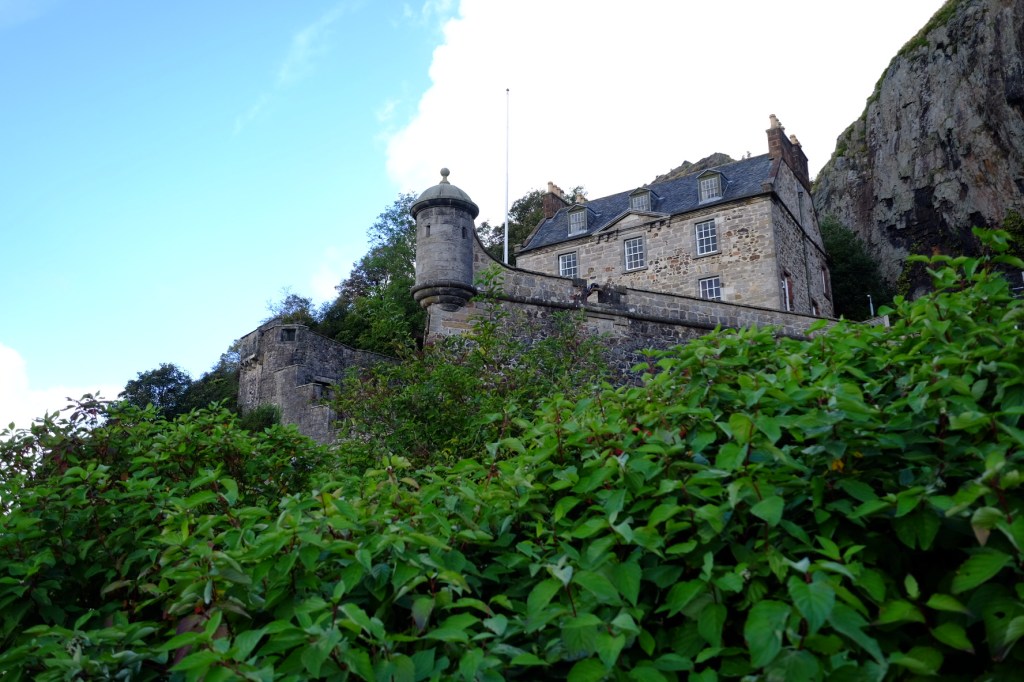
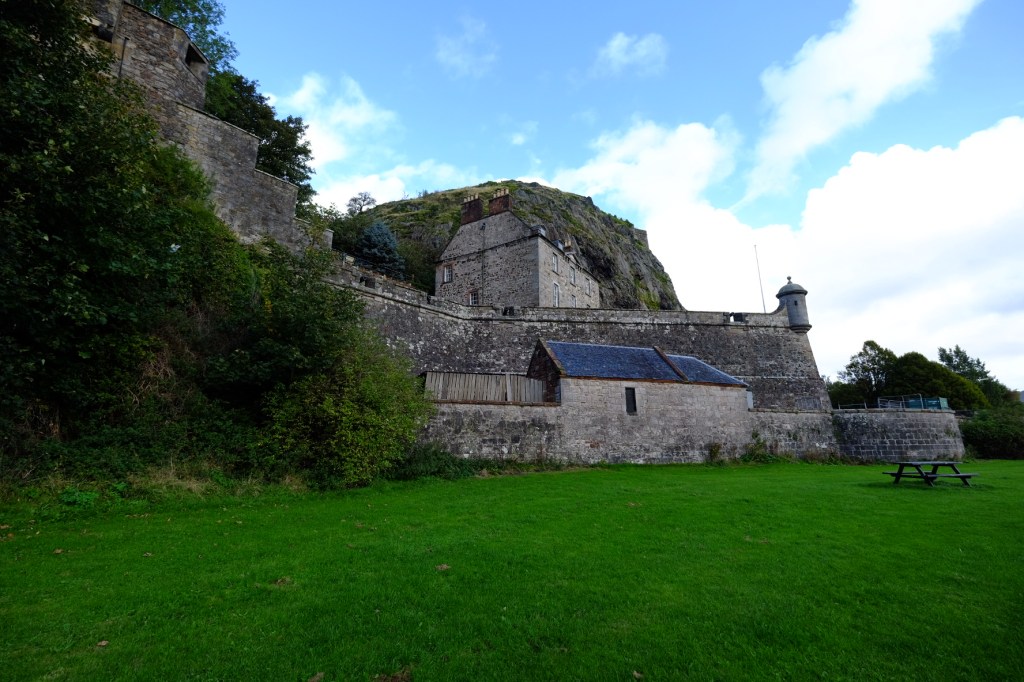
An enormous volcanic outcrop towering above the surrounding countryside, with the remains of one of Scotland’s most historically significant fortifications perched upon it.

Dumbarton Castle – Before Scotland Was Scotland

Dumbarton Rock is a remarkable place, and one I’d been particularly looking forward to photographing.

Long before the medieval castle was established, this great volcanic stronghold was known as Alt Clut, meaning ‘Rock of the Clyde’, and served as the principal fortified centre of the ancient Brittonic kingdom of Strathclyde.

Its position is extraordinary. Rising steeply above the confluence of the Rivers Clyde and Leven, the rock provided an almost naturally impregnable defensive position, commanding the surrounding landscape and an important route into Scotland’s interior.

In AD 870, however, even these formidable natural defences proved insufficient.

Viking forces led by Olaf and Ivar laid siege to Dumbarton Rock in an assault that reportedly lasted four months. Eventually the fortress fell, and according to contemporary Irish annals, the invaders returned to Dublin with an enormous quantity of treasure and captives, carried aboard a fleet said to number some 200 ships.

One can only imagine the reception committee.

The site subsequently became an important royal stronghold, with Alexander II developing the medieval castle during the thirteenth century as Scottish and Norwegian interests competed for influence along the western seaboard.

Its later history reads like a condensed account of Scotland’s political turbulence.

William Wallace was brought here following his capture in 1305 before being handed over to the English. In 1548, the five-year-old Mary, Queen of Scots, was sheltered within its defences before sailing to France. Then, in 1571, during the civil wars surrounding Mary’s reign, the castle was captured in an extraordinary night assault by Thomas Crawford of Jordanhill, whose men scaled the supposedly impregnable rock.

A Viking siege, medieval kings, William Wallace, Mary, Queen of Scots and an audacious military assault.

Not bad for one rather substantial lump of volcanic rock.

A Photographer’s Patience – Somewhat Tested

I was particularly keen to get a decent photograph of the castle, ideally capturing the great rock and its fortifications without too much modern-day interference.

Unfortunately, I wasn’t alone.

A group of people appeared to be conducting a dog-training session in precisely the area I had earmarked for my photographs.

Now, I have absolutely nothing against dogs. Or, for that matter, people training them. But I do have a particular dislike of people appearing in photographs of historic buildings, especially when I’m attempting to capture something that has stood for hundreds of years.

There’s something faintly irritating about composing a photograph of a magnificent medieval fortress, imagining Viking longships approaching along the Clyde, only to have someone in a fluorescent jacket wander into the foreground clutching a bag of dog treats.

Not quite the historical atmosphere I had in mind.

I spent a little time moving around, adjusting the composition and waiting patiently for suitable gaps in the canine activities.

Eventually, I managed to capture the views I wanted, although it did require rather more patience than I’d anticipated.

I suspect the Vikings had an easier time organising their invasion.

With Dumbarton duly photographed, it was time to continue the journey, there was, however, a small problem, I was getting hungry.

The Great Lunchtime Expedition – Or How Not to Find Lunch

I’d already identified a couple of potentially interesting places to stop for something to eat, so finding lunch shouldn’t have presented much of a challenge, famous last words!

The first was a Vietnamese establishment that had caught my attention during my research. I had visions of wonderfully fragrant broths, fresh herbs, perhaps a bánh mì with crisp pickled vegetables and a little chilli. Something light, interesting and full of flavour. Unfortunately, what I discovered bore rather little resemblance to the Vietnamese experience I’d been anticipating.

Burgers and baps appeared to be the order of the day.

Now, there’s absolutely nothing wrong with a decent burger, but when you’ve mentally prepared yourself for the flavours of Vietnam, a bap comes as something of an anticlimax, never mind, time for plan B.

The second establishment looked promising, and I approached with renewed optimism, only to discover that it was closed on Tuesdays, naturally, today was Tuesday.

Two attempts, no lunch!

For someone who’d spent months researching medieval castles, prehistoric monuments, Scottish folklore and the finer points of Highland clan warfare, my inability to locate a decent sandwich was becoming mildly embarrassing, clearly, the 55-page guide had overlooked something important.

Out came the phone for a little emergency culinary research, and before long I’d found something that looked considerably more promising. There was just one slight complication, it meant heading back towards Glasgow. Not exactly the most efficient use of a carefully constructed itinerary, but there are times when culinary considerations must take precedence over geographical common sense. Besides, I’d already lost Stirling Castle to yesterday’s fog. I wasn’t about to lose Tuesday’s lunch to a burger and a locked door.

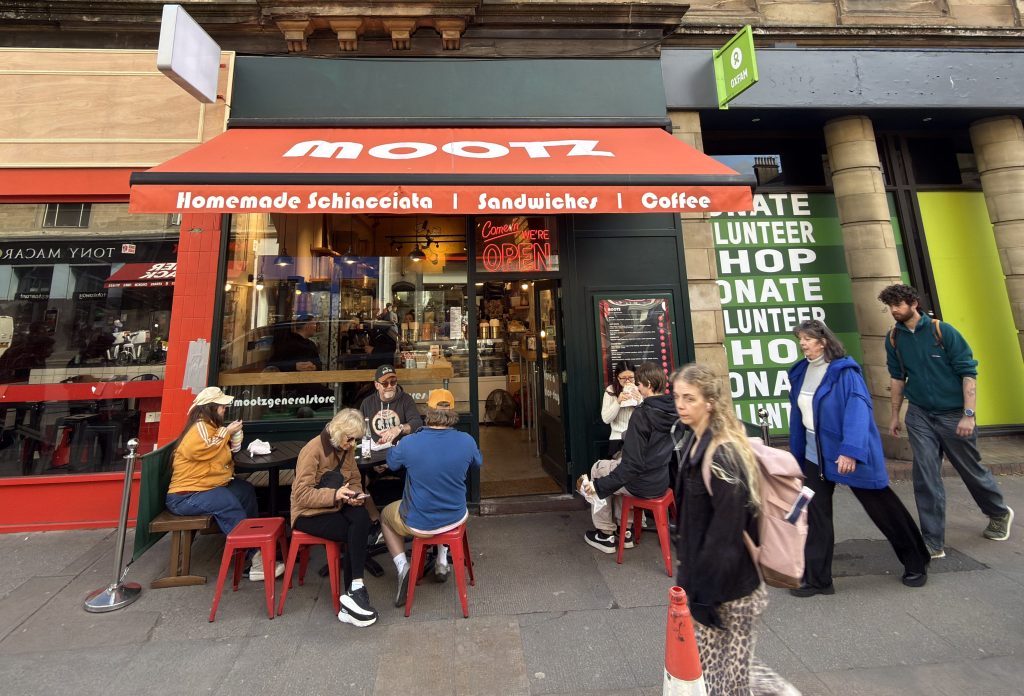
And that was how I discovered “Mootz”.

Mootz – Now That’s a Sandwich!

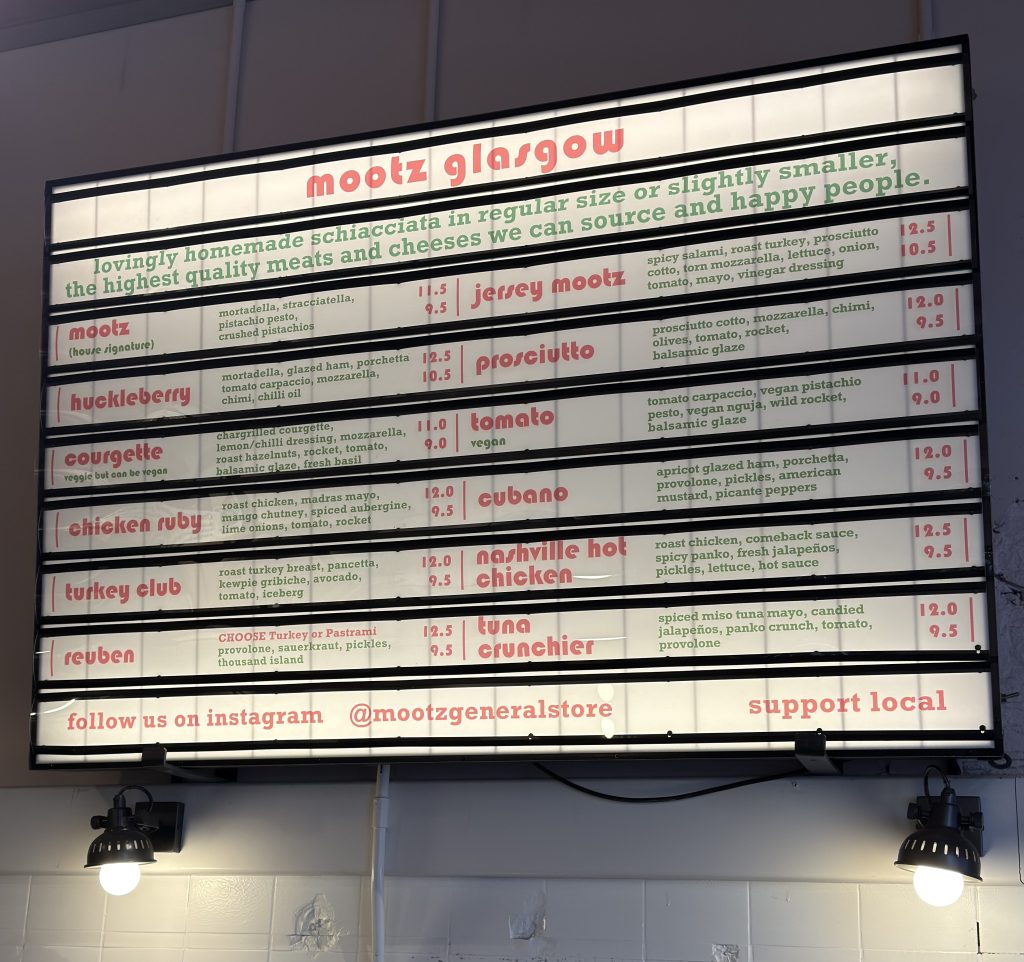
Mootz specialises in freshly prepared Italian “schiacciata” sandwiches, and one look at the menu suggested my little detour might prove rather worthwhile.

Schiacciata, originating in Tuscany, is a wonderful olive-oil-enriched flatbread, with a beautifully golden exterior and a light, airy interior. When made properly, it provides the perfect foundation for a generously filled Italian sandwich, and generous appeared to be something of a speciality here.

The menu was full of tempting combinations featuring mortadella, prosciutto, stracciatella, mozzarella, pistachio pesto and assorted other delicious ingredients.

The signature Mootz caught my attention: mortadella, stracciatella, pistachio pesto and crushed pistachios.

A beautifully simple combination, allowing the individual ingredients to shine. The richness of mortadella, the wonderfully creamy stracciatella and the distinctive nutty flavour of pistachio all wrapped in that magnificent bread.

It looked substantial, to say the least.

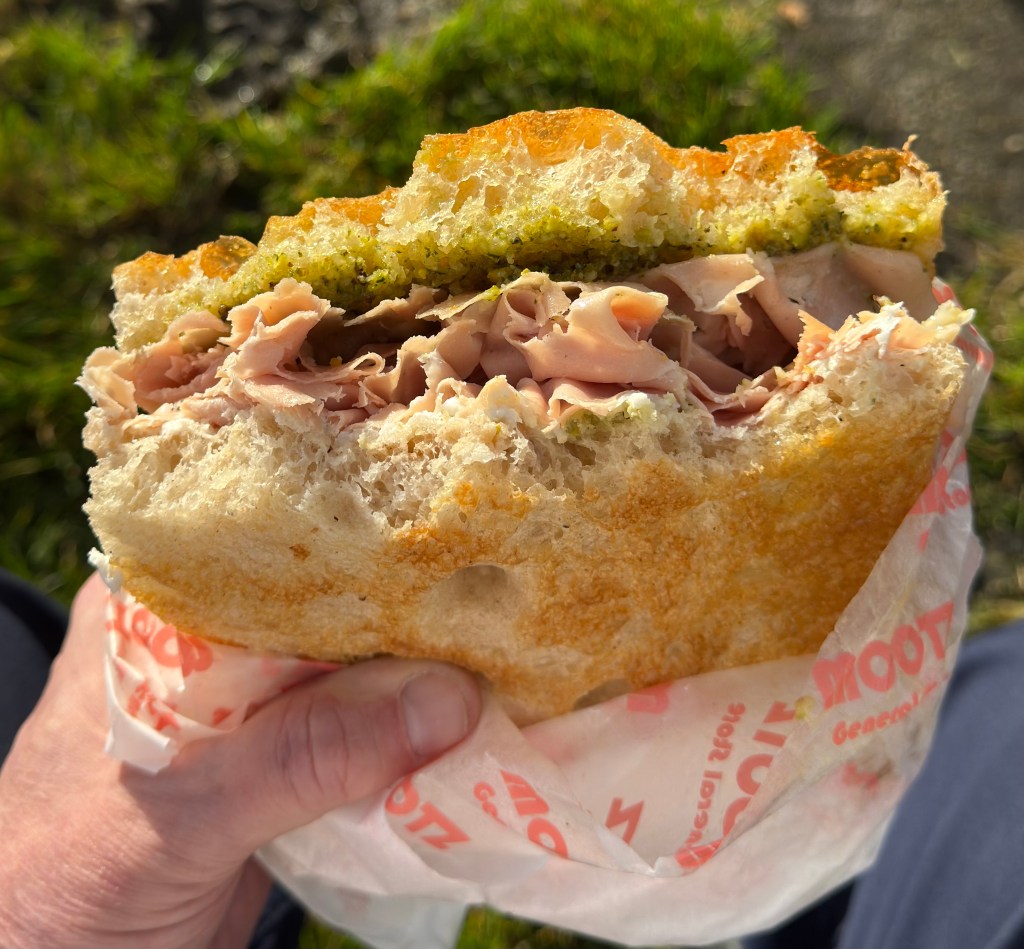
But, after considerable deliberation, I settled on the Huckleberry, a rather magnificent creation consisting of pistachio mortadella, apricot-glazed ham, porchetta, tomato carpaccio, mozzarella, chimichurri and chilli oil, all generously packed between two substantial slices of freshly baked schiacciata.

This wasn’t so much a sandwich as a carefully engineered construction project.

With my precious cargo safely aboard, it was time to leave Glasgow behind for the second time that day.

I had a particular destination in mind for lunch. Somewhere considerably more scenic than a city-centre pavement, and somewhere I could finally test another of my recent acquisitions.

My little portable espresso machine was about to earn its place in the luggage.

Loch Lomond – An Island with a History of Its Own

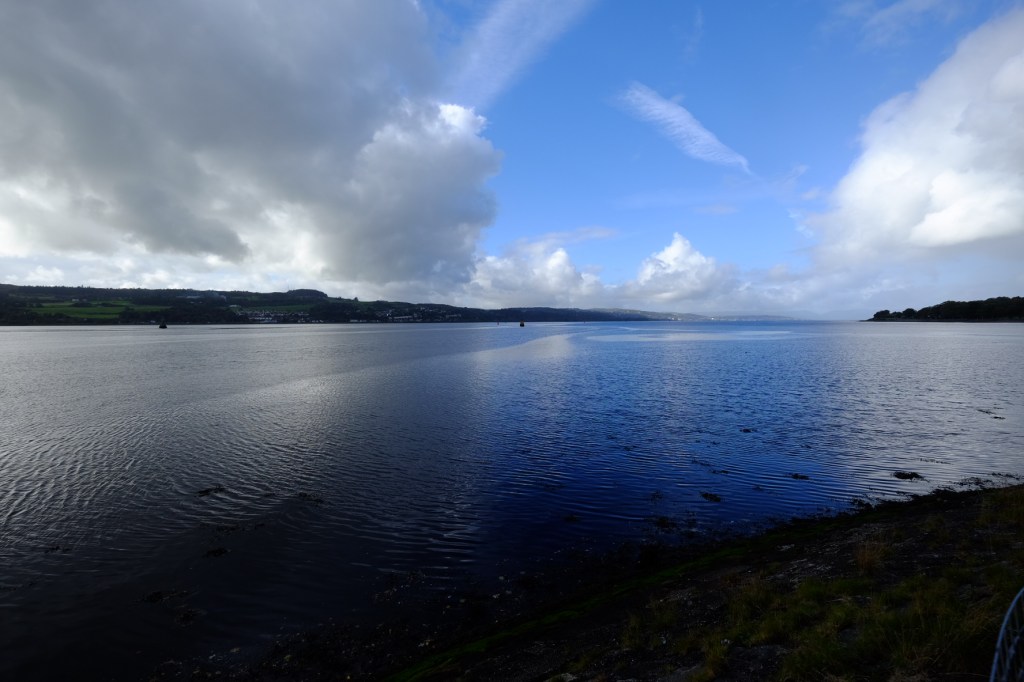
Heading north along the A82, the urban landscape gradually disappeared, replaced by wooded hillsides, distant mountains and increasingly impressive views across Loch Lomond.

The loch is the largest freshwater lake in Great Britain by surface area, extending for approximately 36 kilometres from its southern reaches towards the Highland mountains. Its character changes dramatically along its length. To the south, the water is broad and comparatively gentle, scattered with numerous islands, while farther north the mountains close in and the landscape takes on a much wilder appearance.

One island in particular had caught my attention during the pre-trip research.

Inchmurrin.

At approximately 120 hectares, Inchmurrin is the largest freshwater island in the British Isles, and, naturally, it has a rather interesting history.

Named after St Mirin, the early Christian saint associated with Paisley, the island was once an important possession of the Earls of Lennox. During the fourteenth century, a castle was established near its southern end, providing the powerful Lennox family with a secluded island stronghold. Its history became entangled with the political turbulence surrounding Scotland’s medieval aristocracy and the Stewart dynasty. The castle eventually fell into ruin, but its remains survive as another reminder that Scotland’s beautiful landscapes frequently conceal a more complicated past.

I rather liked the idea of an island within a loch, with its own castle, history and centuries of intrigue. And, of course, there was something particularly appropriate about encountering it while travelling towards another island altogether, Eilean Shona, where the culinary part of this adventure was still waiting for me.

But that was a few days away.

For now, I had lunch to consider, and the landscape was becoming increasingly spectacular.

Rest and Be Thankful – A Rather Appropriate Place for Lunch

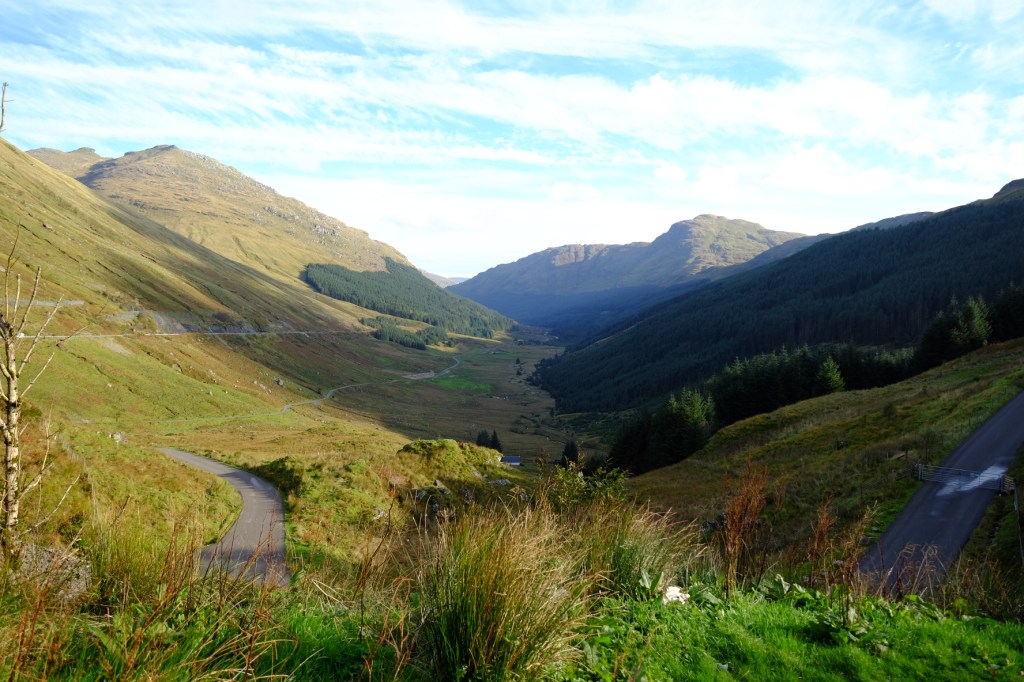
Continuing along Loch Lomond towards Tarbet, I turned left onto the A83, heading west into the magnificent landscape of the Arrochar Alps. Here the road begins to climb through Glen Croe, winding between imposing mountain slopes towards one of Scotland’s most wonderfully named locations: the Rest and Be Thankful.

The name originates from the eighteenth-century military road constructed through the glen as part of a wider network intended to improve military access through the Highlands.

The old route involved a considerable climb, and travellers reaching the summit were encouraged to stop and appreciate their achievement. An inscription commemorating repairs undertaken by the 93rd Regiment in 1768 helped preserve the wonderfully simple sentiment.

Rest and Be Thankful

Considering the view, it seemed only polite to comply. This was where I finally stopped for my rather delayed lunch.

Surrounded by towering mountains, with the dramatic sweep of Glen Croe stretching away below, I unwrapped my magnificent Mootz sandwich.

And what a setting I’d chosen.

The landscape was spectacular, with great banks of cloud drifting across the mountains, occasional bursts of sunlight illuminating the slopes and the ever-present possibility of the weather deciding to provide a little additional entertainment.

After two failed attempts to find lunch, an unscheduled return towards Glasgow and rather more driving than anticipated, the sandwich tasted all the better for the effort.

The combination of ingredients was inspired. Delicate, silky mortadella provided a lovely richness, complemented by the sweetness of the apricot-glazed ham and the deeper, savoury character of the porchetta. Fresh mozzarella brought a welcome creaminess, while the finely sliced tomato added moisture and a little acidity to balance the cured and roasted meats.

Then came the chimichurri, that wonderfully vibrant herb-based sauce, cutting through the richness with its fresh, garlicky sharpness, while the chilli oil delivered a gentle background warmth.

And holding this magnificent collection together was the schiacciata itself. Golden and lightly crisp on the outside, wonderfully soft and airy within, with that distinctive olive oil character that makes good Italian flatbread such a pleasure to eat.

It was an absolute triumph of contrasting flavours and textures: rich, sweet, savoury, creamy, fresh and just a little spicy, with each ingredient contributing something rather than simply competing for attention.

Sometimes the simplest things are the most enjoyable.

Although I wasn’t quite finished.

Espresso in the Wild – The Inaugural Field Test

Now came another important moment in the adventure.

The first proper outdoor test of my new Outin portable espresso machine.

I’d bought this clever little rechargeable device specifically for the trip, imagining freshly made espresso in some wonderfully remote Scottish setting. Now here I was, surrounded by Highland mountains, armed with my GRIND coffee capsules and absolutely no need to locate a coffee shop.

For those unfamiliar with it, the Outin is a compact battery-operated espresso maker capable of heating water and extracting coffee without requiring mains electricity. It accepts compatible capsules or ground coffee, making it particularly appealing for travelling, camping or finding yourself miles from the nearest decent café.

A little water, a capsule, a press of the button and the machine set about producing a proper espresso.

There’s something immensely satisfying about enjoying good coffee somewhere like this.

No queue, no barista asking for your name and, perhaps most importantly, no paper cup informing you that you’re having an inspirational day.

Just an Italian sandwich, freshly extracted espresso and one of the finest views Scotland could offer.

Civilisation, I decided, is more a state of mind than a geographical location, the name of the viewpoint seemed particularly appropriate.

After my slightly ridiculous lunchtime expedition, I was indeed resting, and extremely thankful.

The Road to Kilmartin – Lochs, Puffers and Five Thousand Years of History

With lunch finally enjoyed and the coffee experiment declared a success, it was time to pack away my little mobile coffee shop and continue west.

The road carried me deeper into Argyll, where the landscape seemed determined to become more spectacular around every corner. The towering mountains gradually softened into wooded hillsides, great stretches of water appeared between the trees, and the late afternoon sunshine was beginning to cast that wonderful golden light across the countryside.

I was also becoming increasingly aware that my camera was rather interfering with my carefully planned timetable. Every bend seemed to reveal another scene demanding attention.

Not that I was complaining.

A Brief Encounter with Loch Fyne

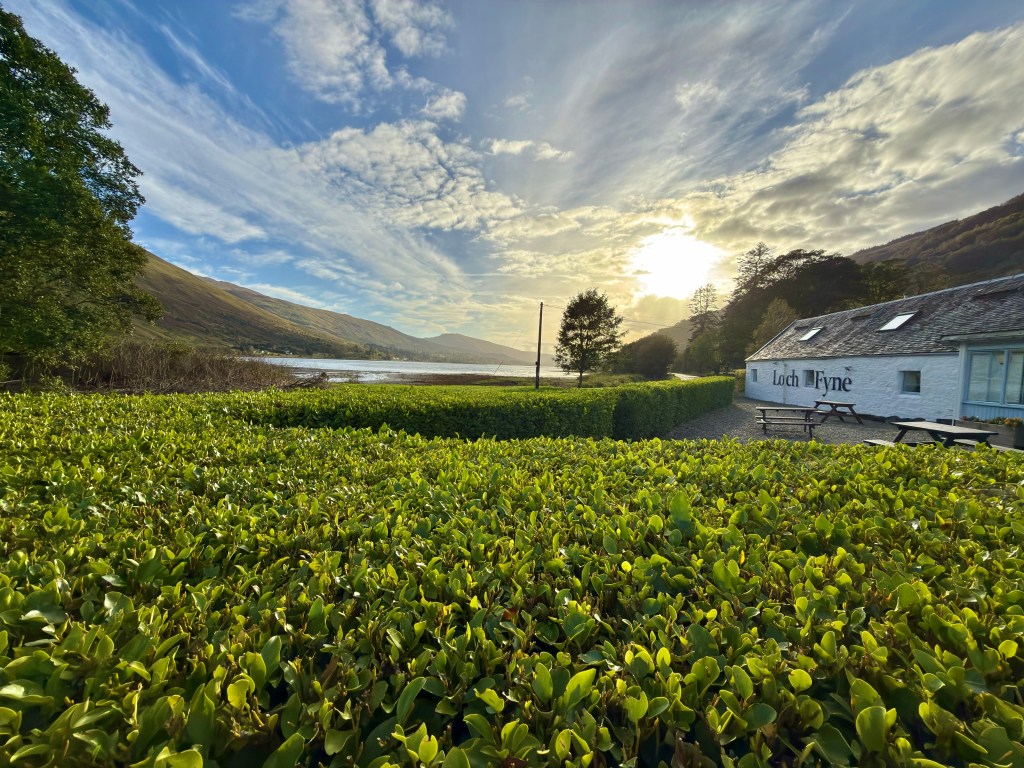
One particularly lovely stop was beside Loch Fyne, where I pulled in near the famous Loch Fyne Oyster Bar.

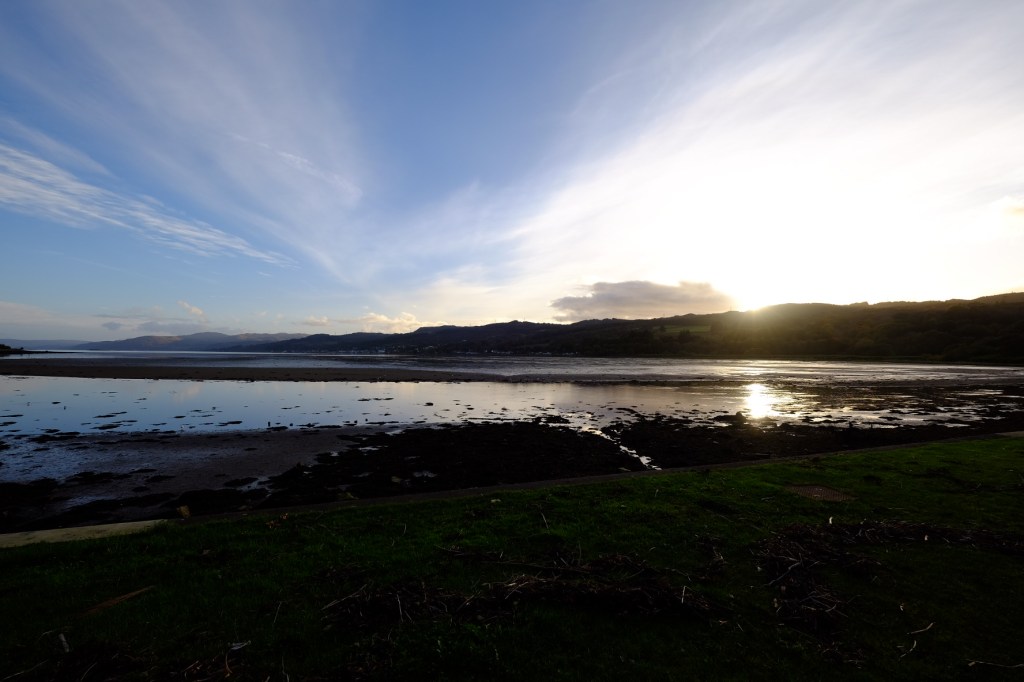
With the sun beginning to sink behind the surrounding hills, the view was magnificent. The loch stretched away into the distance, its waters reflecting the warm evening light, while great sweeps of cloud filled the sky overhead.

Loch Fyne is Scotland’s longest sea loch, extending for around 40 miles inland from the Sound of Bute. Its sheltered waters have long supported fishing and shellfish production, and its oysters are particularly celebrated.

The Loch Fyne Oyster Bar itself grew out of a small roadside business established in the late 1970s, helping bring the region’s exceptional seafood to a much wider audience.

Under different circumstances, this would have warranted a considerably longer investigation. Possibly involving oysters. Almost certainly involving something else from the menu.

Unfortunately, time was marching on, and having already travelled rather further than originally intended in pursuit of a sandwich, I thought it prudent not to embark on another culinary expedition.

A few photographs, a moment to enjoy the view, and I was on my way.

The Vital Spark – A Little Maritime Nostalgia

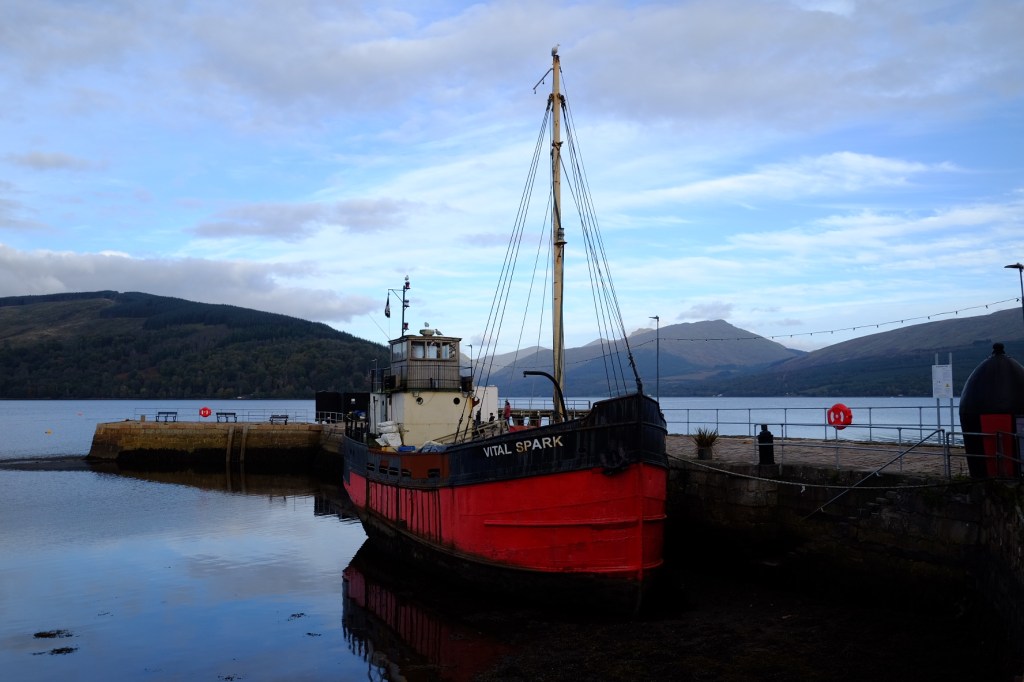
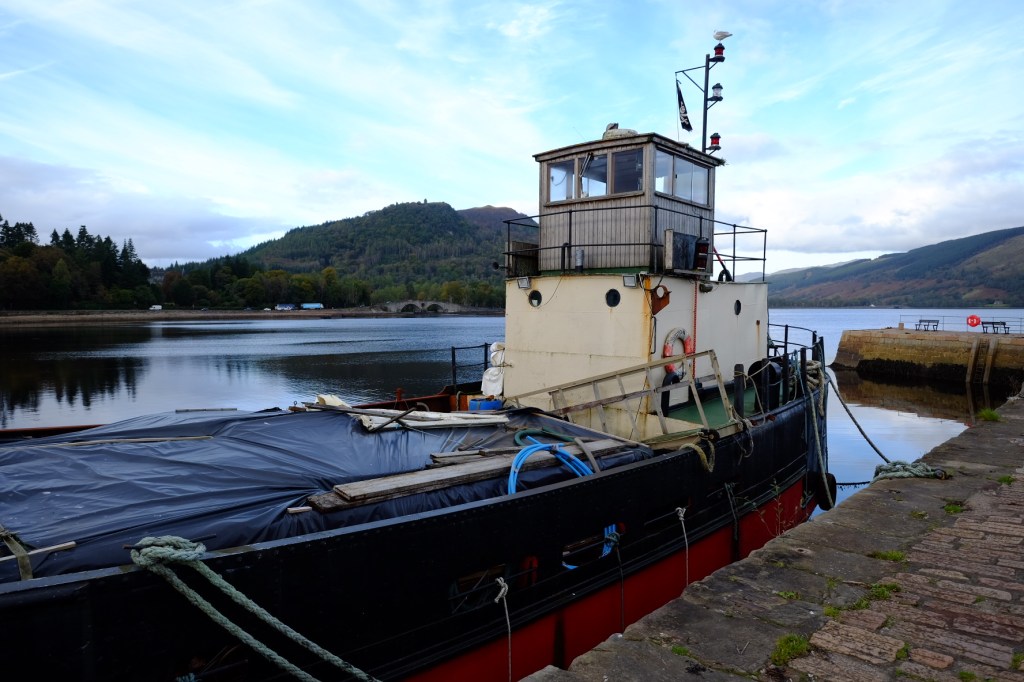
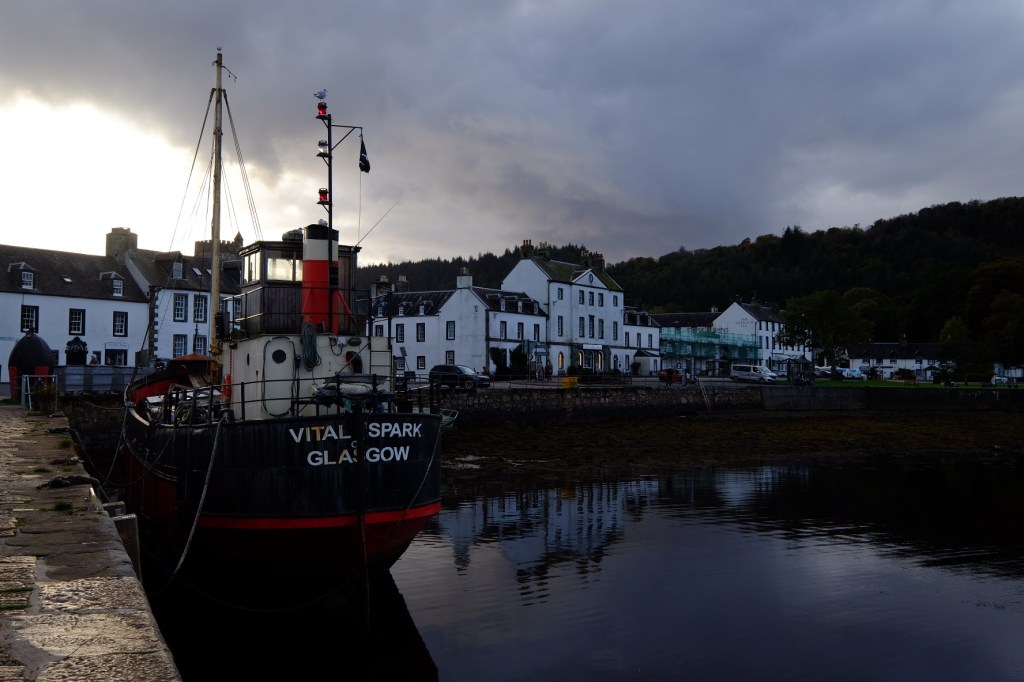
Continuing towards Inveraray, another unexpected photographic opportunity presented itself in the form of a wonderful old vessel named Vital Spark, her distinctive red-and-black hull standing out beautifully against the waters of Loch Fyne.

The name immediately evokes Scotland’s famous Clyde puffers, those sturdy little steam-powered cargo vessels that once carried essential supplies from the Clyde to the remote communities of the western Highlands and islands.

Coal, food, building materials, whisky barrels and almost anything else required by isolated settlements travelled aboard these remarkably versatile boats. Their shallow draught and flat bottoms allowed them to reach small harbours and even beach themselves where proper docking facilities were unavailable.

The puffers also became immortalised through Neil Munro’s fictional character Para Handy, the gloriously self-important skipper of the Vital Spark, whose adventures and frequent misunderstandings became a much-loved part of Scottish literature and television.

A captain whose confidence in his own abilities was, shall we say, not always entirely justified.

And this particular Vital Spark has quite a history of her own.

Built in 1944 as VIC 72, a wartime naval victualling vessel, she subsequently spent decades working as a cargo boat around Scotland’s western islands under several different names. Eventually brought to Inveraray in 2001, she was renamed Vital Spark in 2006 in honour of Neil Munro’s much-loved fictional puffer.

Although originally steam-powered, she was later converted to diesel, so she’s not quite the traditional steam puffer her appearance might suggest. Nevertheless, her working-boat character and distinctive profile make her a wonderful surviving reminder of the vessels that once provided a lifeline to Scotland’s remote coastal communities.

Not bad for a lady approaching her 82nd birthday.

There was something wonderfully atmospheric about her sitting quietly against the pier, with the wooded hills and calm waters of Loch Fyne providing a magnificent backdrop.

Quite how Para Handy would have coped with my increasingly revised itinerary is anyone’s guess, although I suspect he’d have found a perfectly reasonable explanation for every delay, preferably one that involved blaming somebody else.

And speaking of waterways, my next photographic diversion was waiting a little farther along the road.

Crinan – A Shortcut Through Scotland

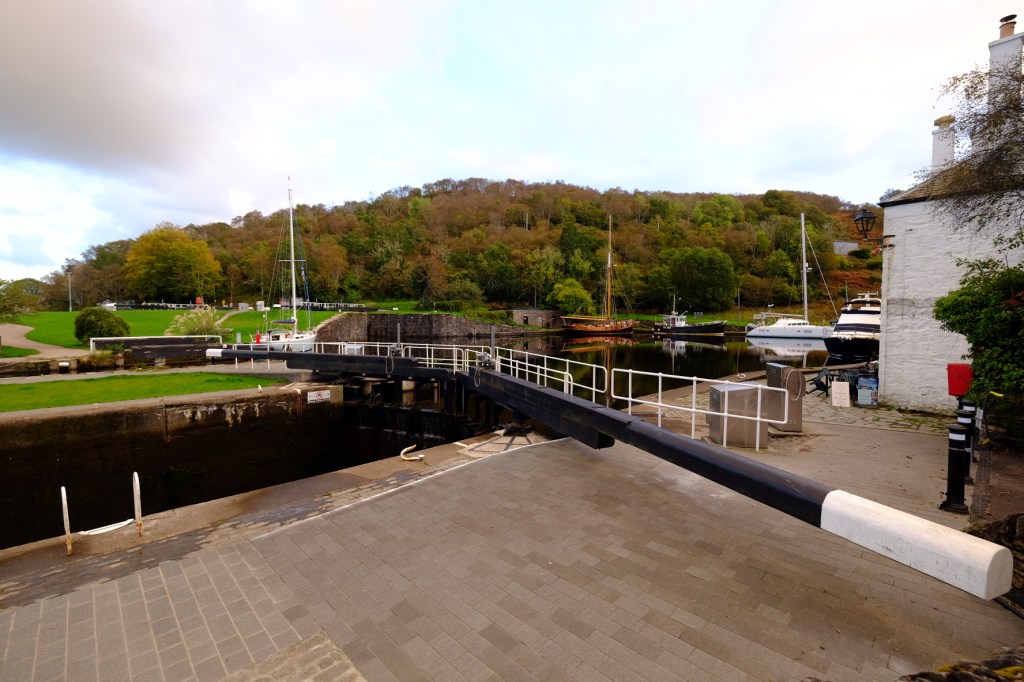
As the afternoon slipped towards evening, I made my way to Crinan, a beautiful little settlement overlooking the Sound of Jura and the western entrance to the Crinan Canal.

By now, the light was changing rapidly. The sky had taken on soft shades of gold and blue, the rocky shoreline was beautifully silhouetted against the water, and distant islands appeared almost suspended beneath the clouds.

It was the sort of scene that makes you forget you’ve been driving for most of the day.

The canal itself has a fascinating history. Designed by the great civil engineer John Rennie and opened in 1801, it provides a nine-mile navigable shortcut between Ardrishaig on Loch Fyne and Crinan on the Sound of Jura.

Before its construction, vessels travelling between the Clyde and the western islands faced the considerably longer and potentially hazardous journey around the Mull of Kintyre.

The canal, with its 15 locks, transformed that journey, becoming an important commercial route for fishing vessels, cargo boats and, later, the Clyde puffers.

Not surprisingly, it acquired the rather splendid description of Britain’s most beautiful shortcut.

Standing beside the quiet harbour, looking at the boats, old stonework and canal locks, it wasn’t particularly difficult to understand why.

There was a lovely stillness about the place. Boats rested in the sheltered basin, their masts rising against the wooded hills, while the old lock gates and surrounding buildings provided a glimpse of the canal’s working past.

After the bustle of Glasgow, the dog-training activities at Dumbarton and the unexpected lunchtime expedition, Crinan felt wonderfully peaceful.

I could easily have spent considerably longer here, exploring the shoreline and photographing the changing light, but there was one small problem.

I still hadn’t reached my hotel.

Kilmartin – At Last!

A short drive later, I finally arrived in Kilmartin.

And, almost on cue, the weather decided that I’d enjoyed quite enough sunshine for one day.

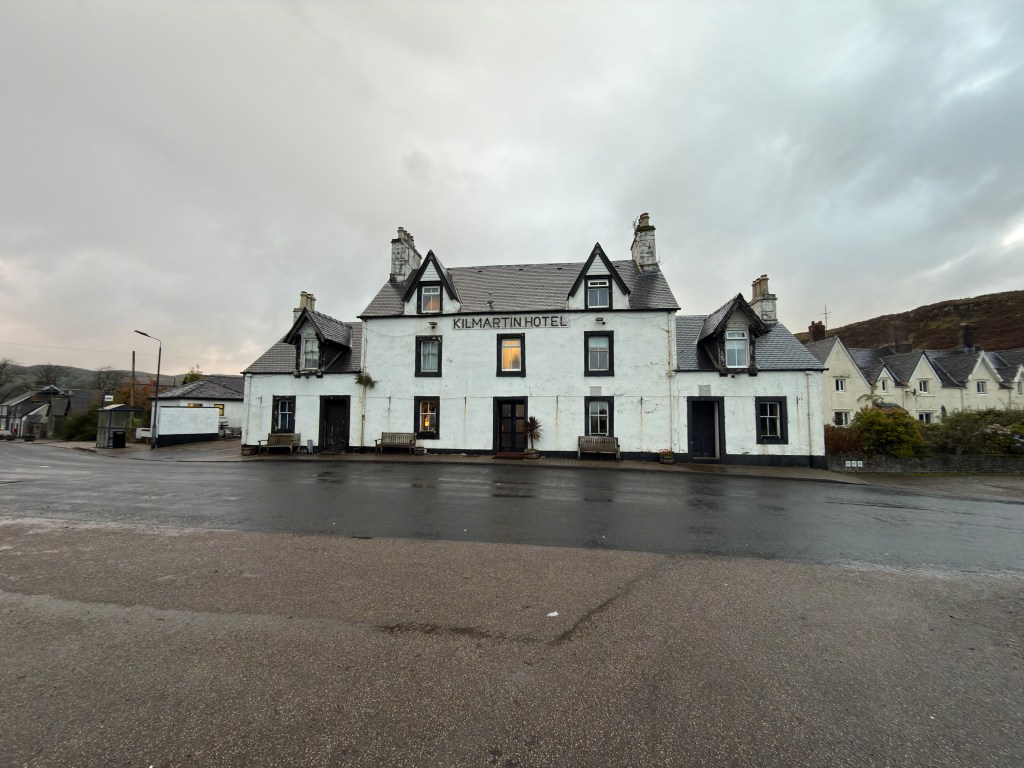
The sky had turned decidedly grey, the roads were wet, and there stood the wonderfully traditional white frontage of the Kilmartin Hotel, looking rather inviting after a long day’s travelling.

I’d made it.

The hotel sits in the heart of a landscape I’d spent months researching, surrounded by one of Britain’s most remarkable collections of prehistoric monuments. Within just a few miles are ancient burial cairns, standing stones, stone circles and mysterious cup-and-ring carvings, many dating back thousands of years.

There is also Dunadd, once an important royal centre of the Gaelic kingdom of Dál Riata, where a footprint carved into the rock is traditionally associated with the inauguration of early Scottish kings. From prehistoric ceremonial landscapes to the emergence of early Scottish kingship, an astonishing amount of history is concentrated in this relatively small corner of Argyll.

And here I was, finally in the middle of it.

After months of research, countless maps, historical investigations and enough printed material to suggest I was preparing a doctoral thesis rather than a holiday, the real exploration was about to begin.

There was, however, something rather satisfying about simply arriving.

Looking back over the day, I’d managed to squeeze in a Bombay-inspired breakfast, an extraordinary medieval cathedral, a pioneering surgeon, Viking invasions, a rather unsuccessful search for lunch, one magnificent Italian sandwich, an espresso overlooking the Highlands, Loch Fyne, a characterful old puffer and a beautiful evening beside the Crinan Canal.

Not bad for a Tuesday.

But the ancient stones, mysterious burial chambers and several thousand years of Scottish history would have to wait until morning. For now, I had a hotel to check into, a camera to put away and, quite possibly, a well-earned glass of something Scottish to contemplate.

Five thousand years of history weren’t going anywhere overnight.

At least, I sincerely hoped not.

………………… Until Next Time ………………. L8ers ………………………

From Farm to Table and Gallery to Gift—A Moroccan Day of Indulgence and Inspiration (Day 5)

I awoke and blinked into the golden Moroccan light, hardly believing it was already Wednesday, the last full day in Essaouira. Since stepping off the plane the previous Saturday, the world I’d left behind had melted away: work, customers, endless problem-solving, even the distant rumblings of the world economy, all had faded into irrelevance. This journey had done its magic, untangling the knots of daily life and filling the space with colour, flavour, and discovery.

Each sunrise brought new marvels, and I found myself immersed in the rhythms of Morocco, its vibrant markets, ancient traditions, and the intoxicating pulse of its cuisine. Guiding me through it all was Amanda: not just my personal guide and masterful chef, but a kindred spirit whose passion for Morocco’s culture and food opened doors I never knew existed. With every shared meal and story, I felt a sense of wonder grow, a reminder that travel, at its best, is a gentle awakening to beauty, friendship, and the joy of being fully present in the world.

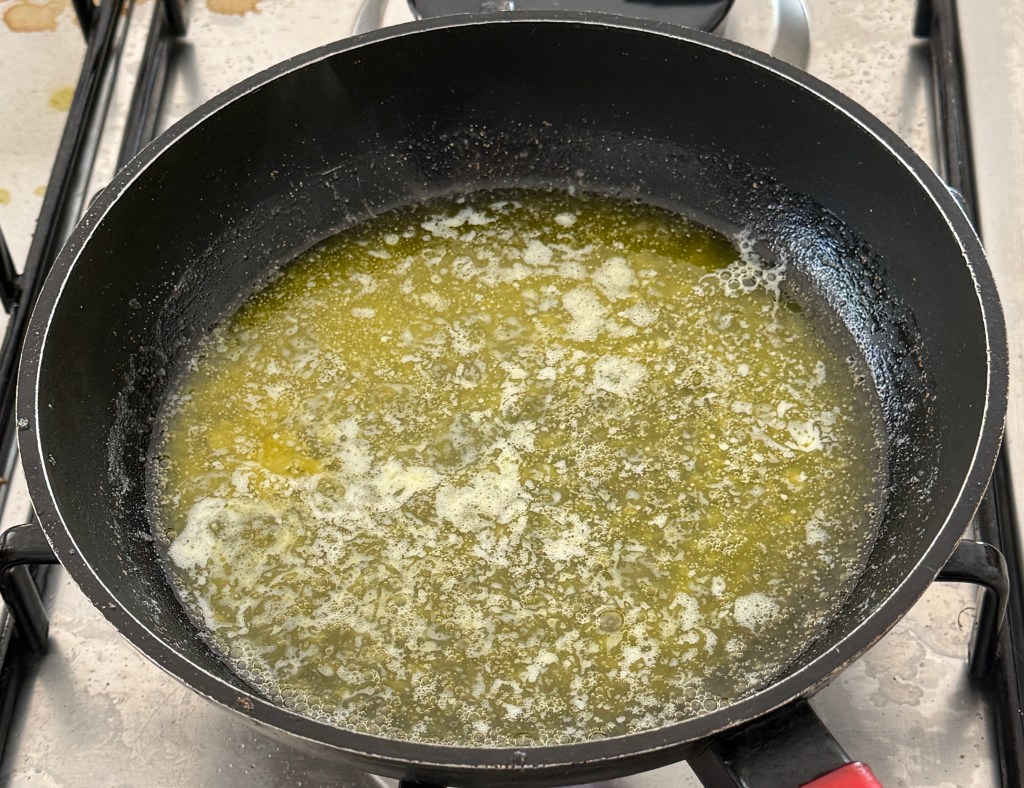
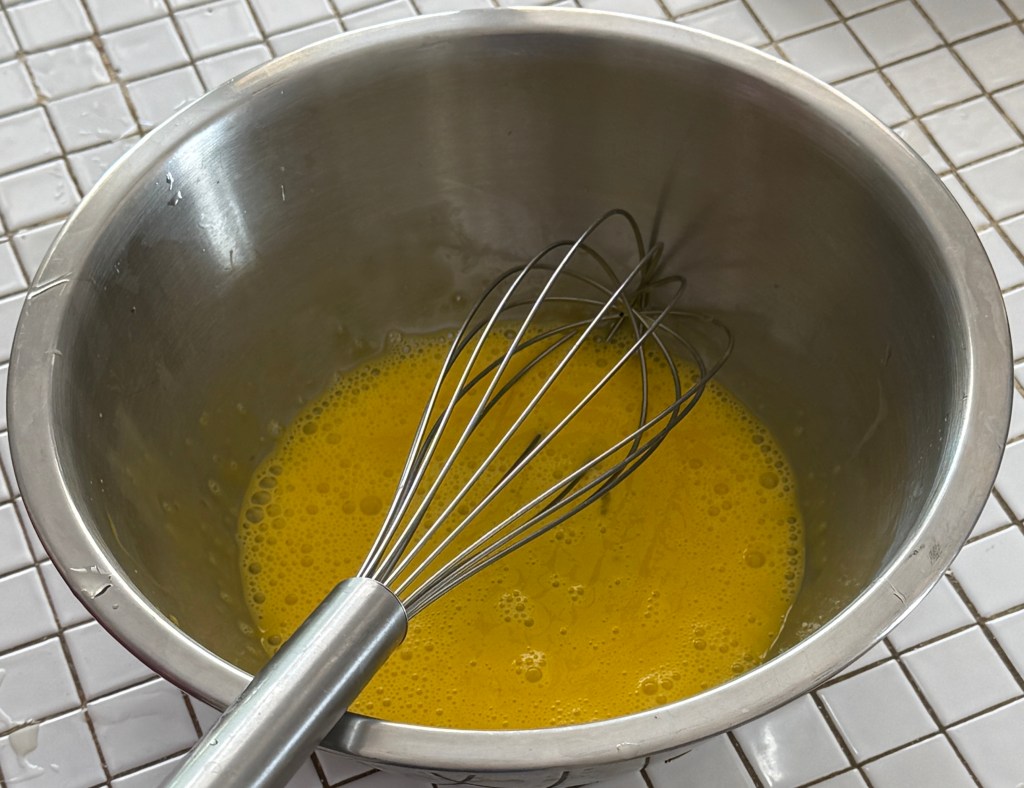
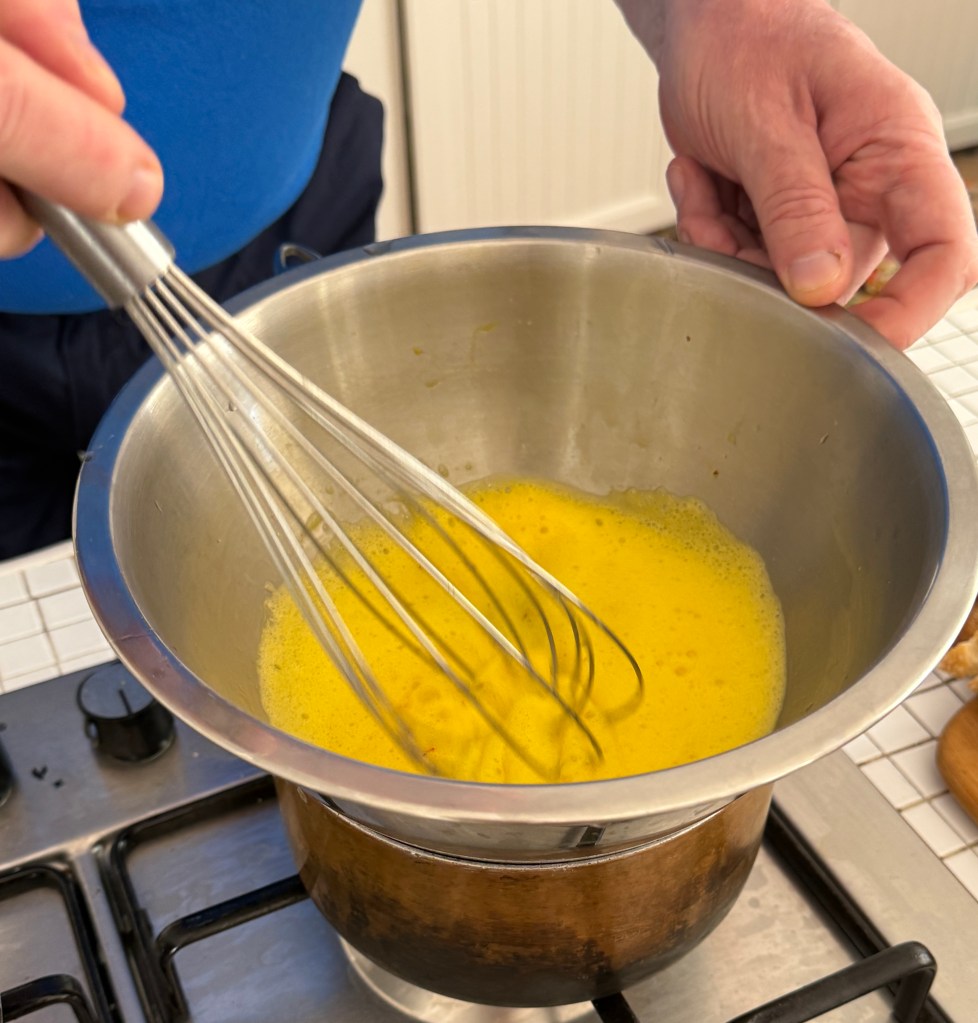
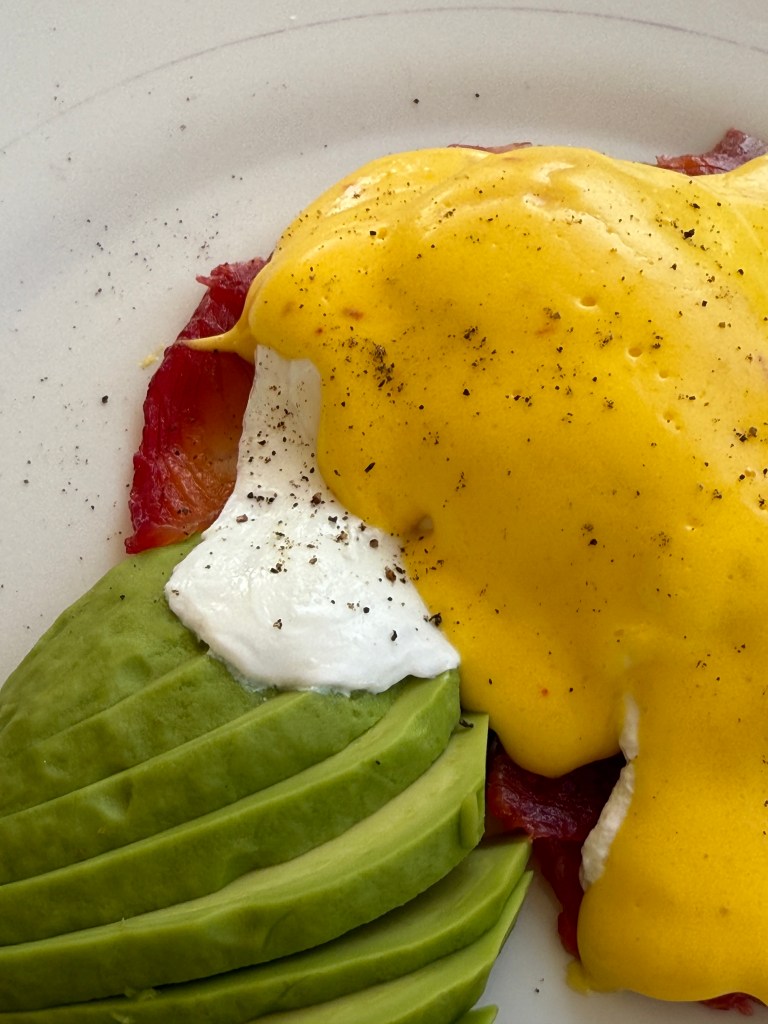
Making a rich saffron hollandaise is one of life’s true pleasures, luxurious, golden, and deeply satisfying. I’ve had the delight of whisking it to silkiness a few times before, most memorably at Rick Stein’s Cookery School in Padstow, where it crowned a beautiful ‘tronçon’ of turbot. This morning in Essaouira, the sauce would take centre stage once again. Earlier in the week, we had cured some trout in a vivid blend of beetroot, salt, and sugar, and now it was ready for its moment: breakfast as an event. Slices of the jewel-toned trout were paired with creamy avocado and a perfectly poached egg, all generously draped in that opulent saffron hollandaise and finished with a satisfying crack of fresh black pepper. Each bite was a celebration—of technique, of flavour, and of the sheer joy of starting the day with something extraordinary.

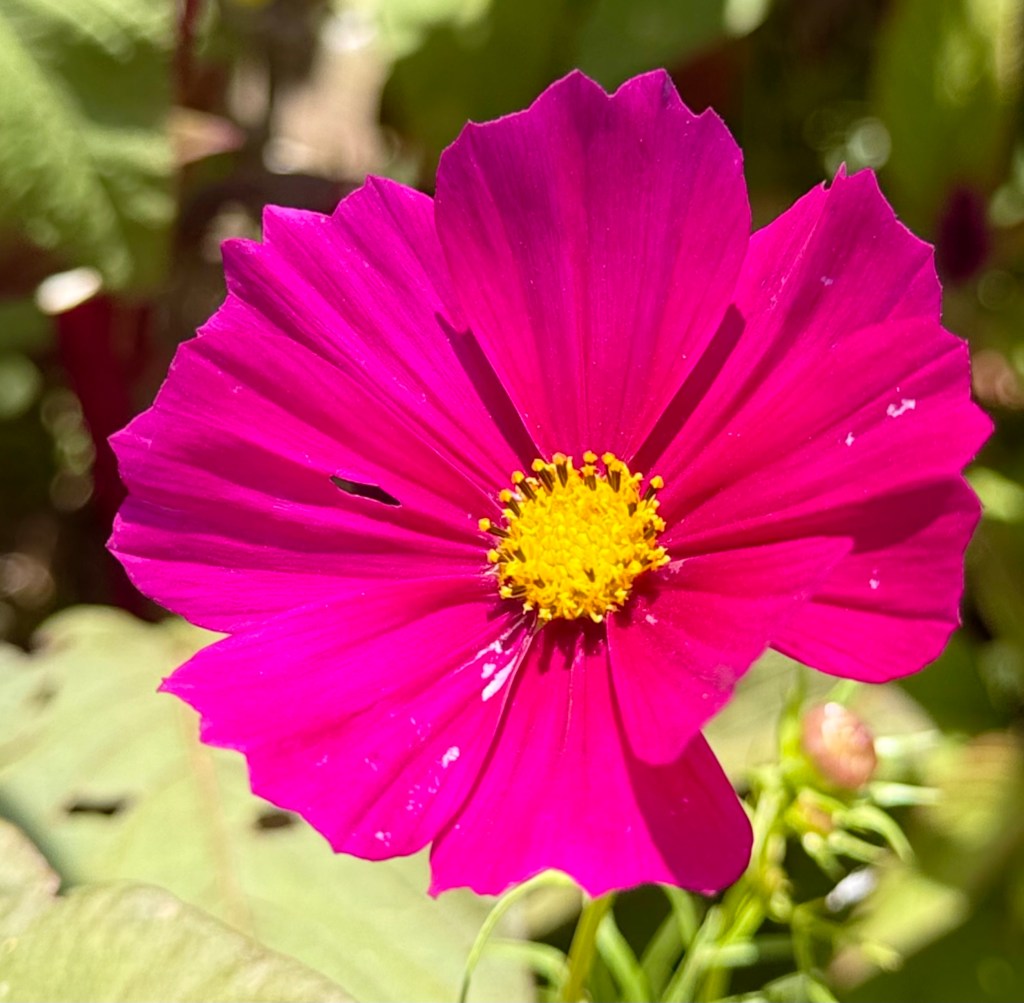
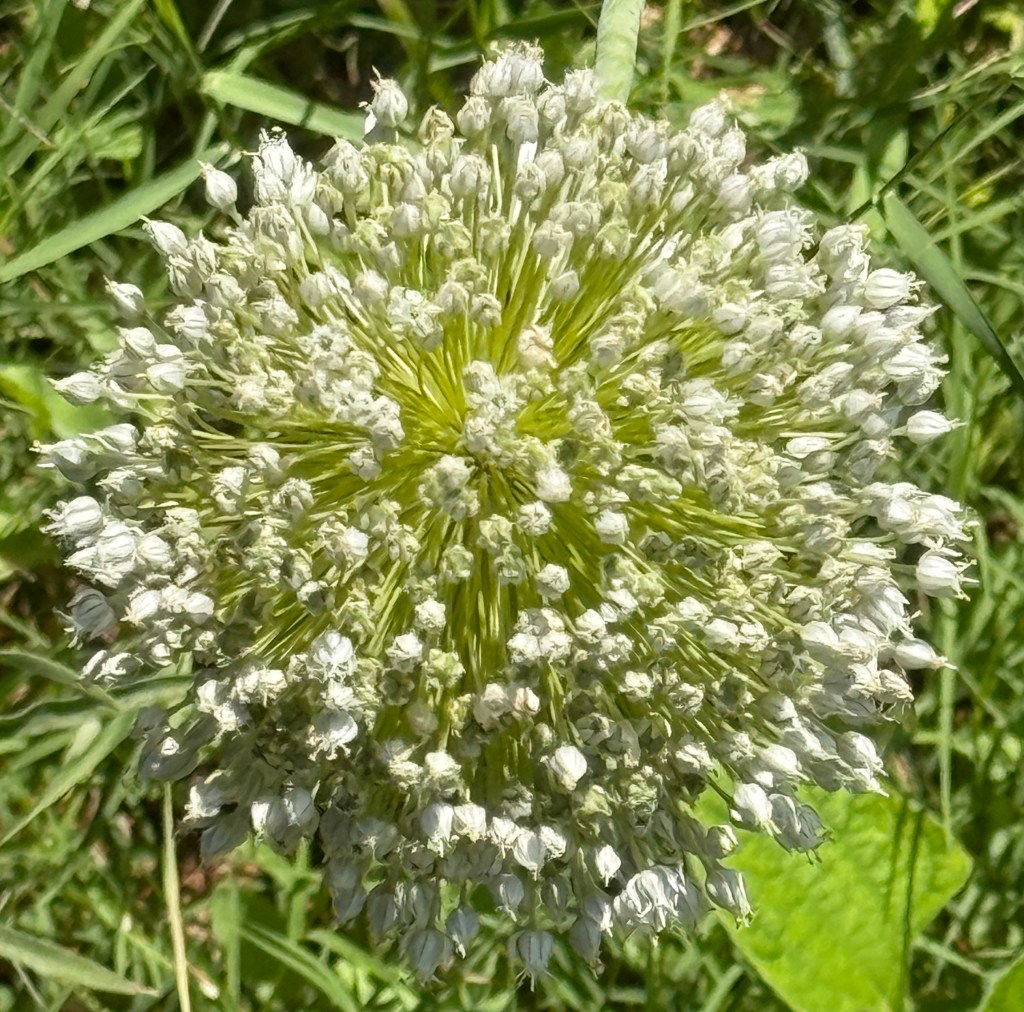
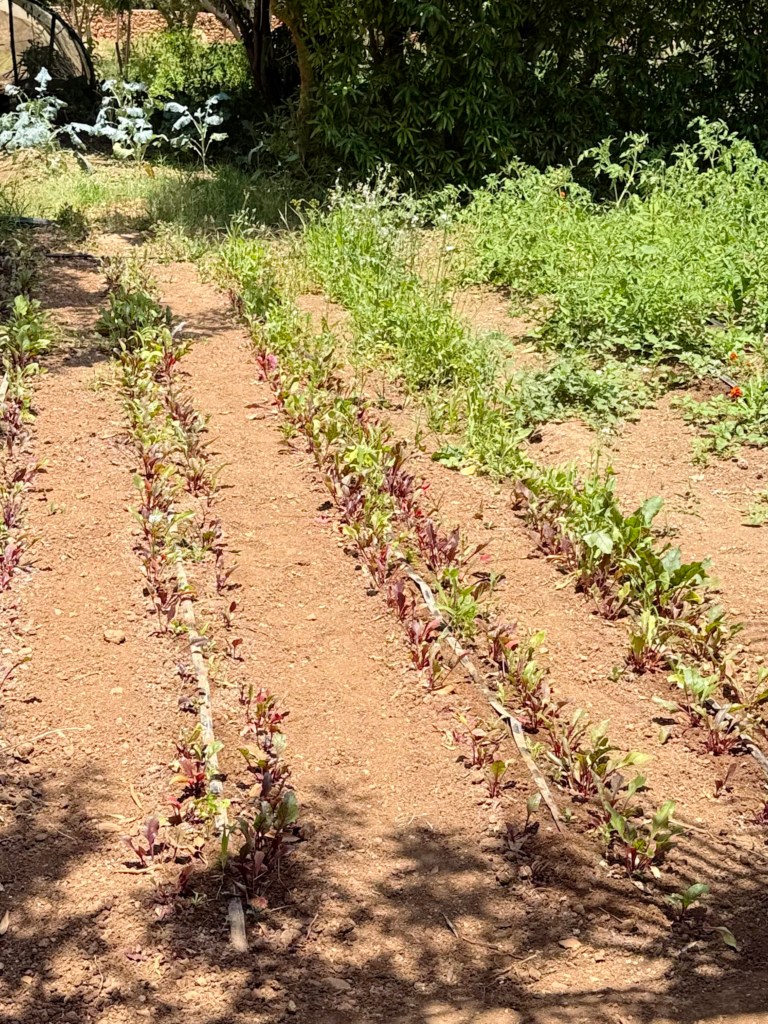
Way back in 2013, I found myself in Puglia, at Masseria Montenapoleone, an organic farm nestled in the sun-drenched heart of southern Italy. It was my very first cooking vacation and the spark that ignited countless culinary adventures to come. There, I learned the subtle art of using flowers not just for beauty, but to create a vibrant, bio-diverse environment: drawing the so-called “unwanted” plant eaters away from crops, while inviting in the pollinators and beneficial insects that keep nature in balance. Akal, here in Morocco, is very much a kindred spirit—an eco-farm that weaves flowers into every aspect of its philosophy. At Akal, the blooms aren’t just guardians of the fields; they’re also an integral part of the tasting experience, gracing the table and infusing the most imaginative, flavourful menus with colour and fragrance. Dining here is more than a meal—it’s a celebration of nature’s harmony, and a reminder of how the smallest details can transform the way we taste the world.

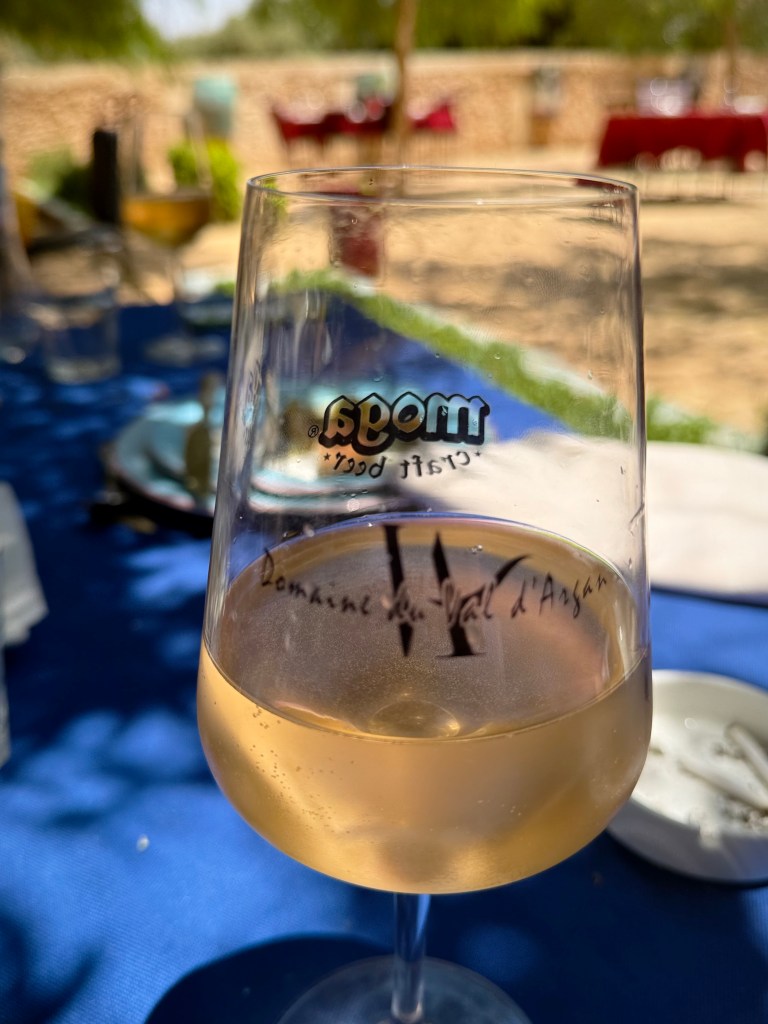
Our lunchtime destination was no more than 15 minutes drive, Domaine Du Val D’Argan. Domaine du Val d’Argan is a remarkable testament to vision, perseverance, and the unique character of Moroccan terroir. Founded by Charles Melia, a seasoned winemaker with deep roots in both France and Morocco, the vineyard sits just outside Essaouira, where the Atlantic winds sweep over limestone and clay soils, echoing the Rhône valley’s own mistral. What began as a retirement dream became a pioneering adventure: Melia cleared stony ground by hand, planted the first Rhône varietals, and patiently learned to coax vines to thrive on the edge of the desert, sheltering them from fierce sun and wind with natural methods and organic care.

Today, Val d’Argan is a landscape of lush vine rows bordered by sorghum and eucalyptus, where dromedaries still help tend the land and the cellar holds the promise of Morocco’s finest vintages. The wines—ranging from bright, aromatic whites to robust reds and elegant rosés—capture the sun, wind, and wild spirit of their setting. Visiting the domaine is more than a tasting; it’s an immersion in a story of resilience and passion, where every glass reflects not only the land’s bounty but also the quiet determination of its founder. This is a vineyard where French tradition and Moroccan landscape meet, yielding wines—and memories—that are truly one of a kind.

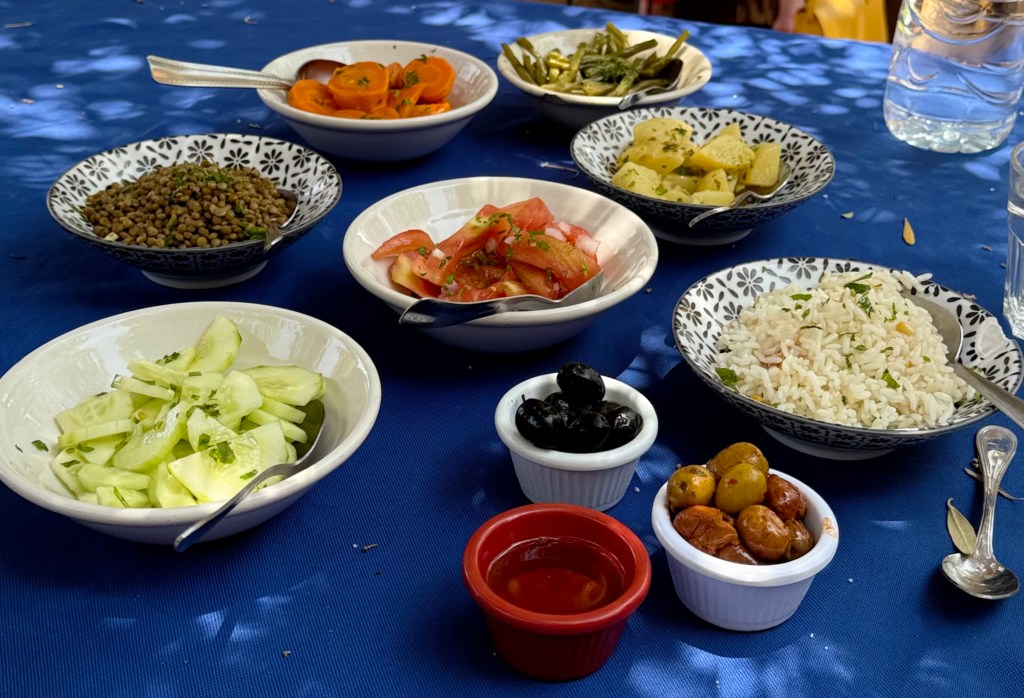
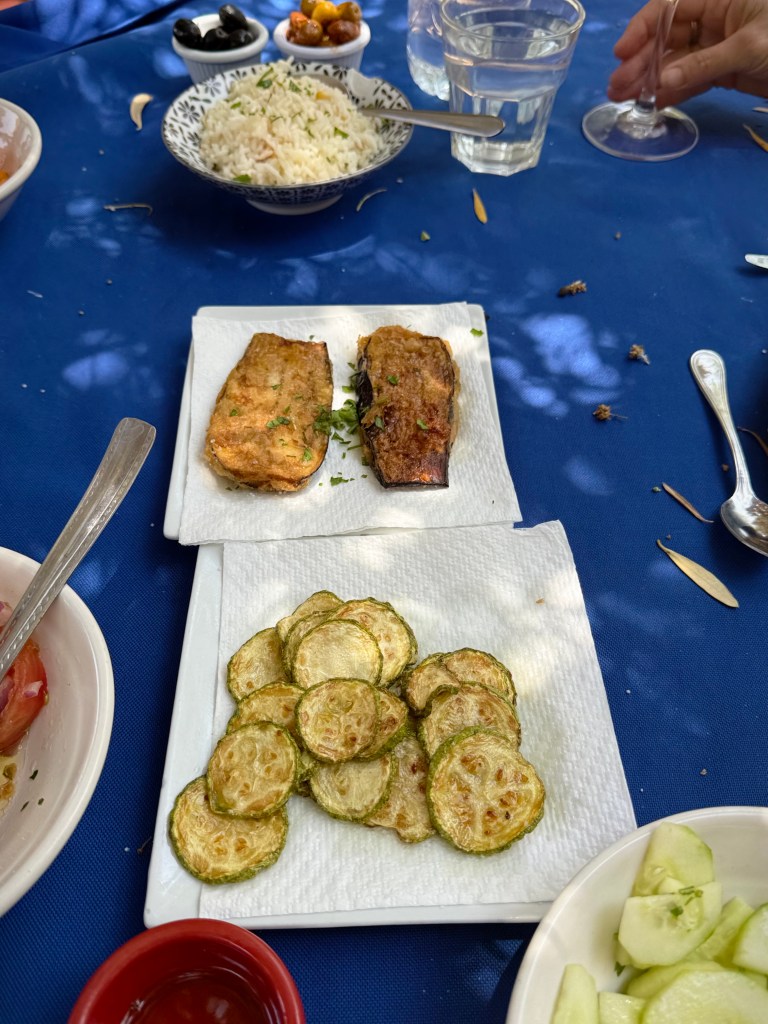
I found myself ‘in the moment’ once again, shaded beneath the branches of an ancient olive tree at Domaine du Val d’Argan. Plates of freshly prepared food appeared in a steady, generous procession, vivid salads bursting with local flavour, a fragrant tagine, and turkey roasted on kebab skewers, each dish a celebration of Moroccan abundance. Glasses of the estate’s wines flowed freely, each one a new discovery.

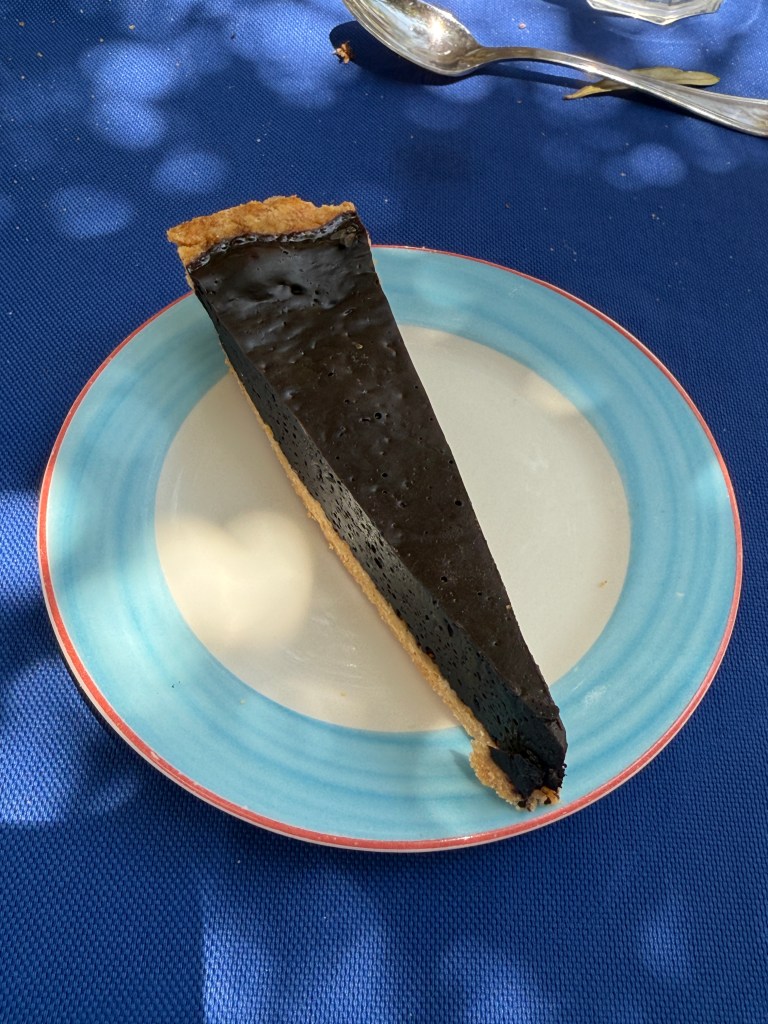
The “Gazelle de Mogador” in white, red, and rosé offered a taste of the Atlantic’s easy elegance, while the Val d’Argan range echoed the vineyard’s Rhône heritage, capturing the region’s sun and wind in every sip. Yet it was the Perle Grise that truly captured the spirit of the place for me, a wine as pale as morning light, delicately aromatic, with hints of citrus blossom and wild herbs, perfectly refreshing beneath the olive canopy. As the afternoon stretched on, a rich chocolate dessert arrived, rounding out a meal that was both relaxed and luxurious. At Domaine du Val d’Argan, the artistry of winemaking and the generosity of Moroccan hospitality come together in a setting as memorable as the wines themselves, a place where every glass tells a story, and every moment lingers long after the last sip. It was time to head back to Essaouira for some last minute exploration.

As we entered the medina, the air shimmered with the ethereal tones of a young man playing a handpan, his fingers coaxing otherworldly melodies from the spaceship-like drum that echoed off the ancient stone walls.

As the sun dips toward the Atlantic, the ancient medina of Essaouira began to pulse with an energy that is both timeless and electric, the unmistakable prelude to the Gnaoua World Music Festival. For a few magical days each year, the city’s labyrinthine alleys and windswept squares become a living stage, as hypnotic rhythms and haunting melodies spill from every doorway and rooftop. The air grows thick with the deep, trance-inducing thrum of the guembri, the metallic clatter of krakebs, and the soaring call-and-response of Gnaoua singers, their music weaving a spell that draws locals and travellers alike into its embrace.

Founded in 1998, the festival is a vibrant celebration of Gnaoua culture, descendants of West African slaves who brought with them a mystical musical tradition rooted in healing, spiritual trance, and communal memory. Over the years, the festival has blossomed into a global gathering, where Gnaoua masters share the stage with jazz virtuosos, blues legends, and musicians from every corner of the world. This fusion of sounds creates a heady, intoxicating atmosphere, where ancient African rhythms meet flamenco, reggae, rock, and Sufi chants, all under the open Moroccan sky.

The festival is more than a concert—it’s a living tapestry of history, spirituality, and artistic exchange. The music, once used in sacred rituals to heal and connect with the divine, now fills Essaouira’s medina with a sense of unity and celebration. For a few unforgettable nights, the city becomes a crossroads of cultures, a place where the boundaries between audience and performer, past and present, seem to dissolve in the intoxicating swirl of sound and spirit.

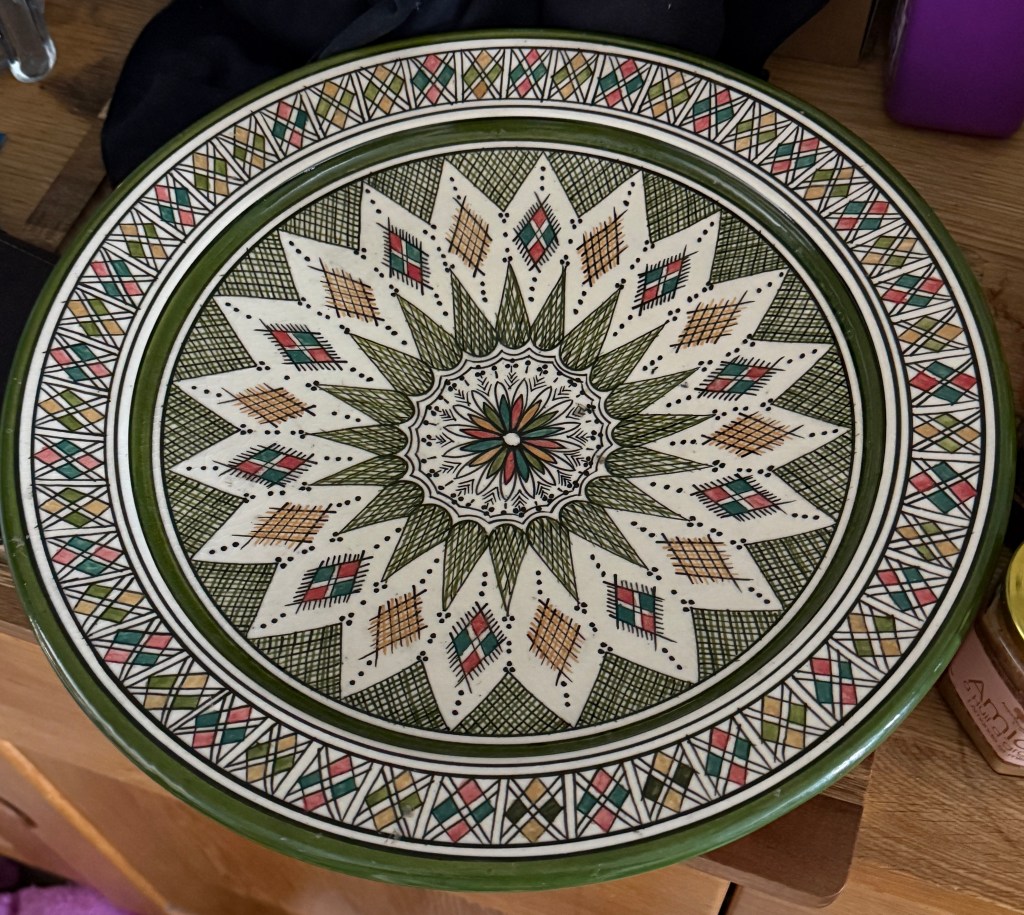
This stunning plate ( a present for my best friend and wife forever ), is a true testament to Moroccan artistry, its surface alive with intricate geometry and vibrant colour. Crafted in the traditional style of Fez, the design radiates from a central starburst, each petal meticulously hand-painted in shades of emerald green, saffron yellow, and soft rose. Delicate crosshatching and fine black lines create a mesmerizing lattice, while the outer border is woven with interlocking patterns that speak of centuries-old craftsmanship. The plate’s symmetry and precision are captivating, drawing the eye inward and inviting contemplation of the skill and patience required to create such a piece. More than just a vessel, it is a celebration of heritage, a beautiful reminder of Morocco’s rich ceramic traditions and the enduring allure of handmade work.

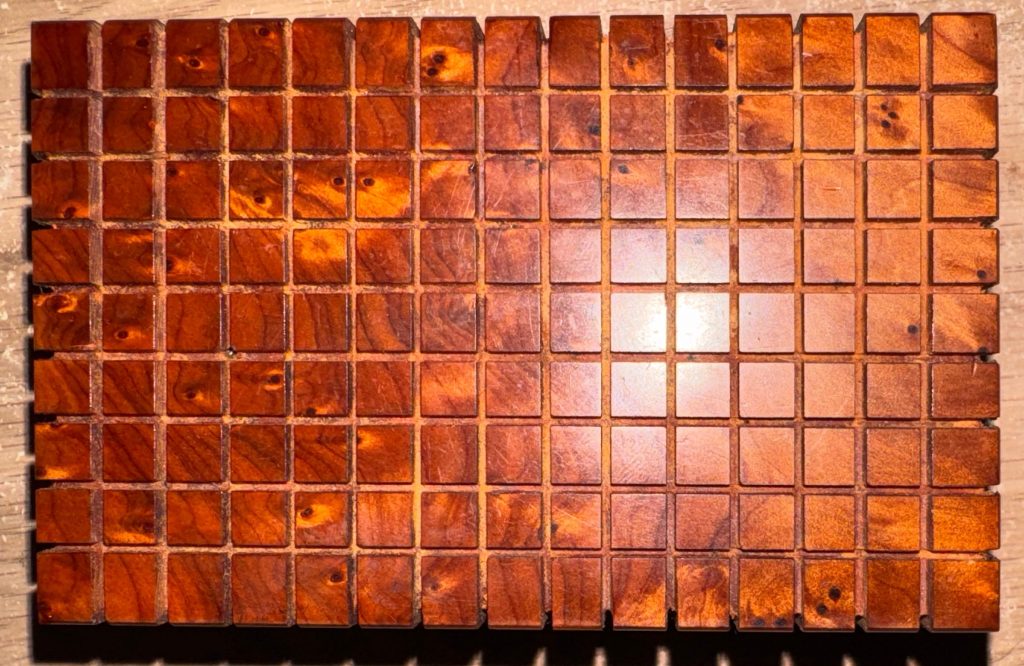
In the heart of Essaouira’s medina, you’ll often come across what locals call the “magic box”, a beautifully crafted container made from the region’s prized thuya wood. Native to Morocco’s coastal forests and especially abundant around Essaouira, ‘thuya’ wood is renowned for its rich, swirling grain, warm hue, and natural, cedar-like fragrance

Artisans here have honed their craft for generations, turning thuya burl into intricate puzzle boxes, lidded spheres, and inlaid treasures, each one polished to a satiny sheen and finished with lemon oil to enhance its natural luster. These boxes are more than just souvenirs; they’re a testament to Essaouira’s heritage of marquetry and woodworking, a tradition dating back to the 19th century when sultans commissioned decorative objects and furniture from the city’s master craftsmen.

Whether used to store spices, trinkets, or secrets, a thuya wood “magic box” from Essaouira is a piece of living history, fragrant, tactile, and always a little mysterious, as if it holds a story all its own. Our son loves his…
………………………………..Until Next Time………………………….L8ers

Eating Venice, And Generally Avoiding Crowds 3.

I woke up at 04:30 on Monday morning, the excitement of the day was probably flying around my head, beckoning me to get up and start exploring, I took a brief look out the window and went back to bed!

The daily routine repeated itself until departure, Venice is just a wonderful place to explore so I was determined to get as much out of my few days as possible, after putting so much time into planning things. A knock at the door just after 08:00, ‘buongiorno’, breakfast had arrived, perfecto. Fresh Croissant, various bread and conserves, ham and cheese and a Latte, it did the job, I was not in Venice for a ‘fry-up’!

The 1st day was going to be a real test, had my planning process worked, the timings, route etc. Test one was getting a weeks Vaporetto ticket at the local water bus stop, again, there were so many recommendations and comments on social media, I ignored them all, went up to the ticket machine, selected English, 7 Days, inserted the credit card, PIN code, and boom, le ticket arrivé, simples, next stop The Penny Guggenheim Collection for some arty education.

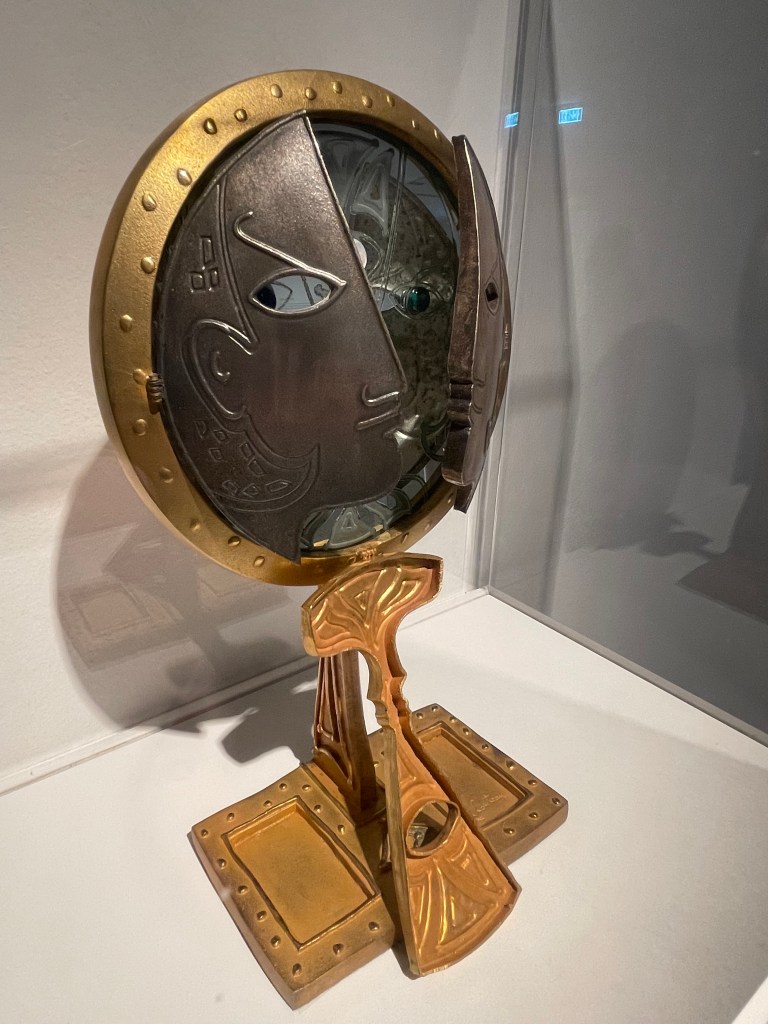
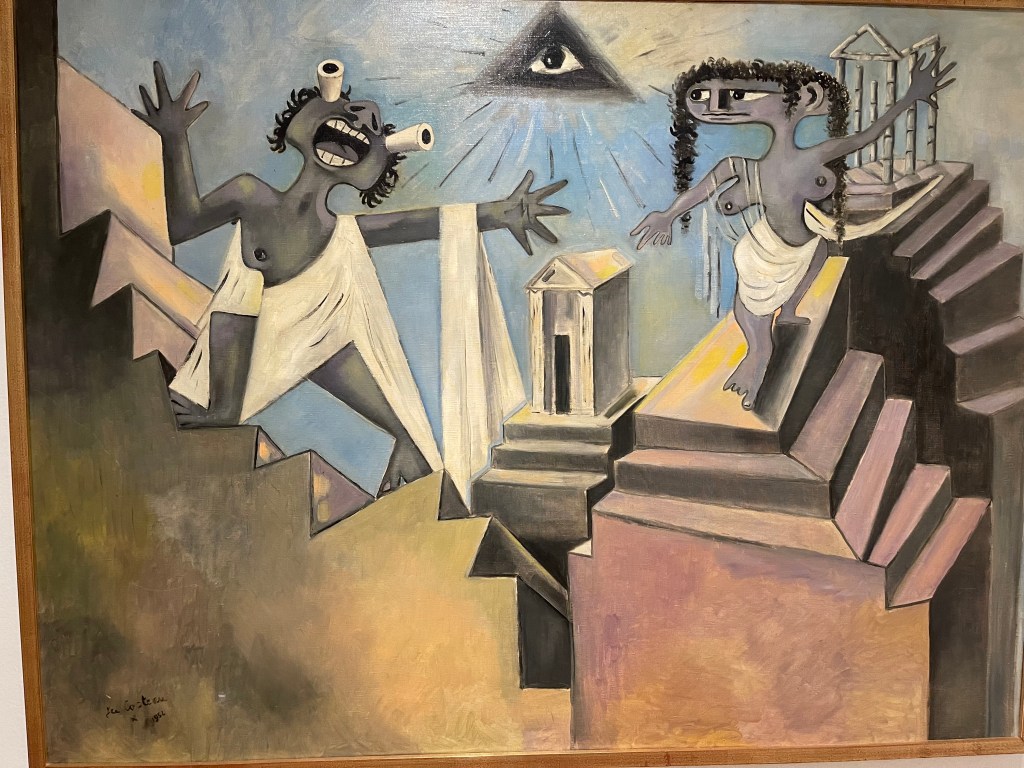
As well as a host of well known names such as Salvador Dali, Henri Laurens, Max Ernst and Pablo Picasso, a special exhibition was being presented, dedicated to Jean Maurice Eugène Clément Cocteau a french poet, playwright, novelist, designer, film director, visual artist and critic. He was one of the foremost artists of the surrealist, avant-garde, and Dadaist movements and an influential figure in early 20th century art, and a drug addict! The largest picture in the above gallery is one of his, as is the ‘interesting’ one below, Violinist, Study for a Poster for the Menton Music Festival circa 1920.

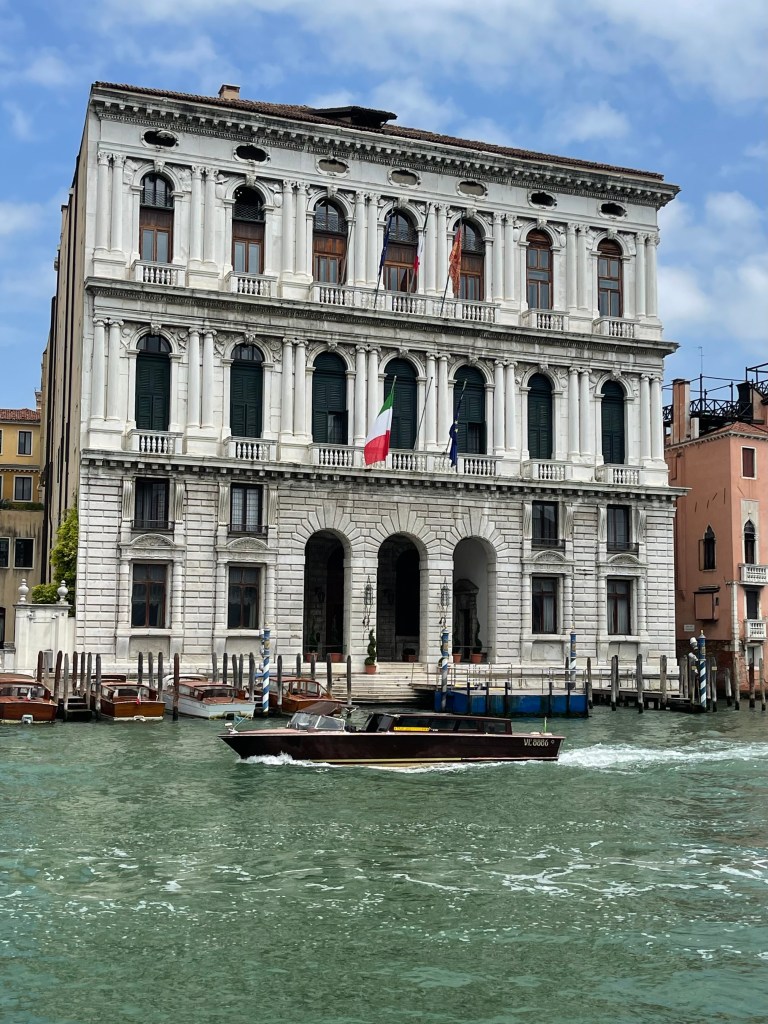
There is a lovely view of the Venice Prefect building ‘canal side’, and a delightful cafe selling homemade delights and serving coffee and tea, oh well, when in Venice.

Much of his work ‘didn’t do it for me’, but there were a few that seemed to be a route into his mind, probably during a drug ‘high’ in some cases, nonetheless I thoroughly enjoyed Penny’s collection and Jean Cocteau was definitely interesting, it’s really worth a visit if you are in Venice, I got a copy of the 257 page guide with the complete collection with pictures, as many are not on display.

During my research I had read a little about the famous Venetian ‘rowing boat’, the Gondoler. These magnificent craft are built by hand, without plans, from memory in a A Squero, a factory dedicated to their production and I was trying to arrange a visit, unfortunately they were so busy, they did not have time to allow a tour but I still made for Squero Di San Trovaso, an iconic location, and cicchetti stop, I was peckish! There is another Squero to the north of the city where you can also arrange a visit, but I found out too late, it’s more of a museum and restoration project though.

Continuing to plan, a trip to one of two Leonardo de Vinci exhibitions, via the Ponte dei Pugni, the ‘Bridge of Fists’ where disputes were settled by a ‘punch up’, I noticed at least three towers in Venice that had varying degrees of lean, fingers crossed they will be sorted before they lean to far and collapse!

Banksy has been to Venice, and managed to paint ‘The Migrant Child’ dated 2019, it’s going to be restored thanks to Italy’s culture ministry, its certainly a tourist stop for those in the know, located at ‘shhhh”, explore and find it yourself, it’s really very poignant.

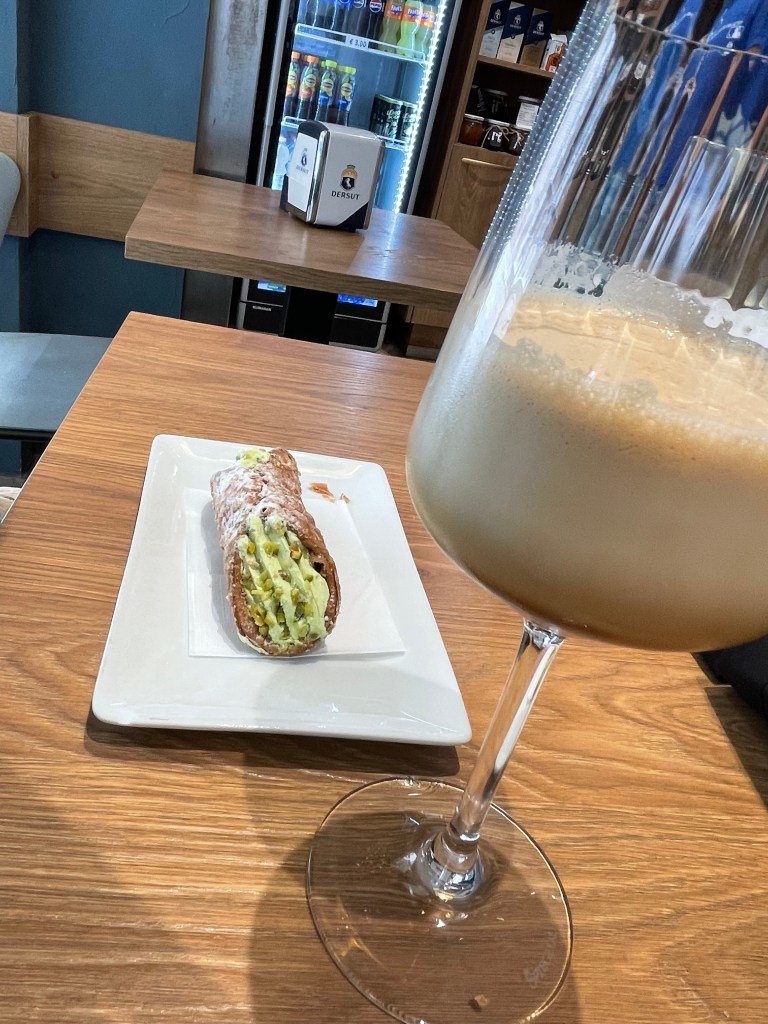
It was time for a quick pit stop before the next visit, Botegga del Caffé Dersut was right next to the Basilica Di Santa Maria Gloriosadei Frari and serves delicious cannoli and the most refreshing iced ‘shakerto’, chilled coffee in my case infused with cardamom, delicious.

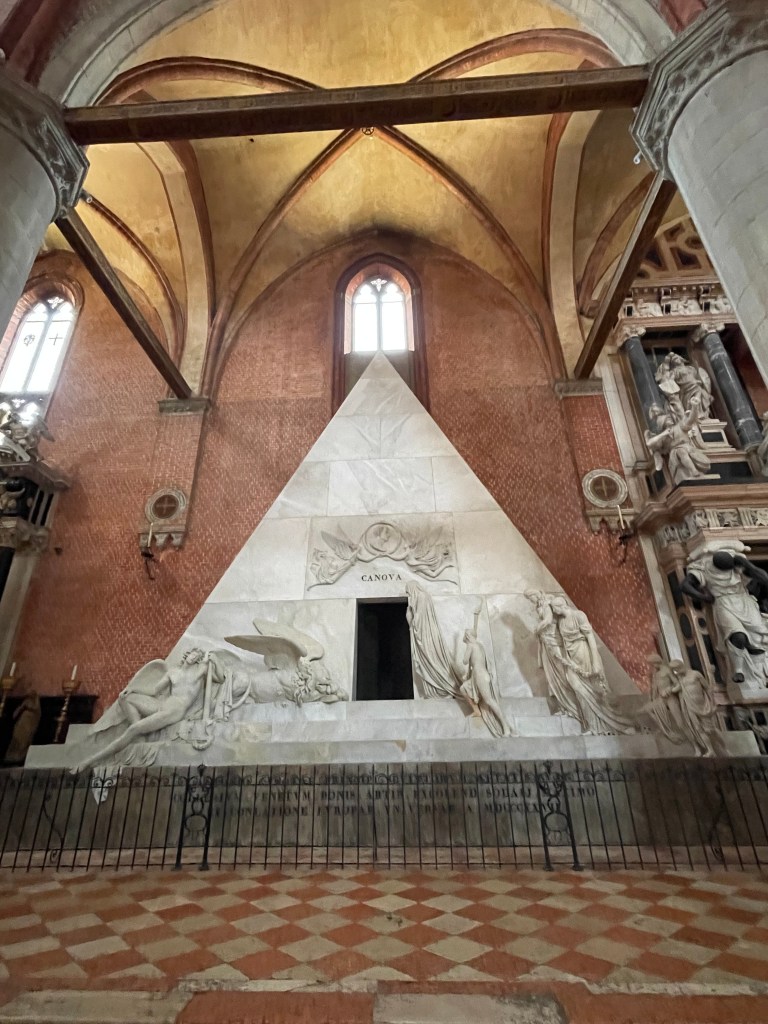
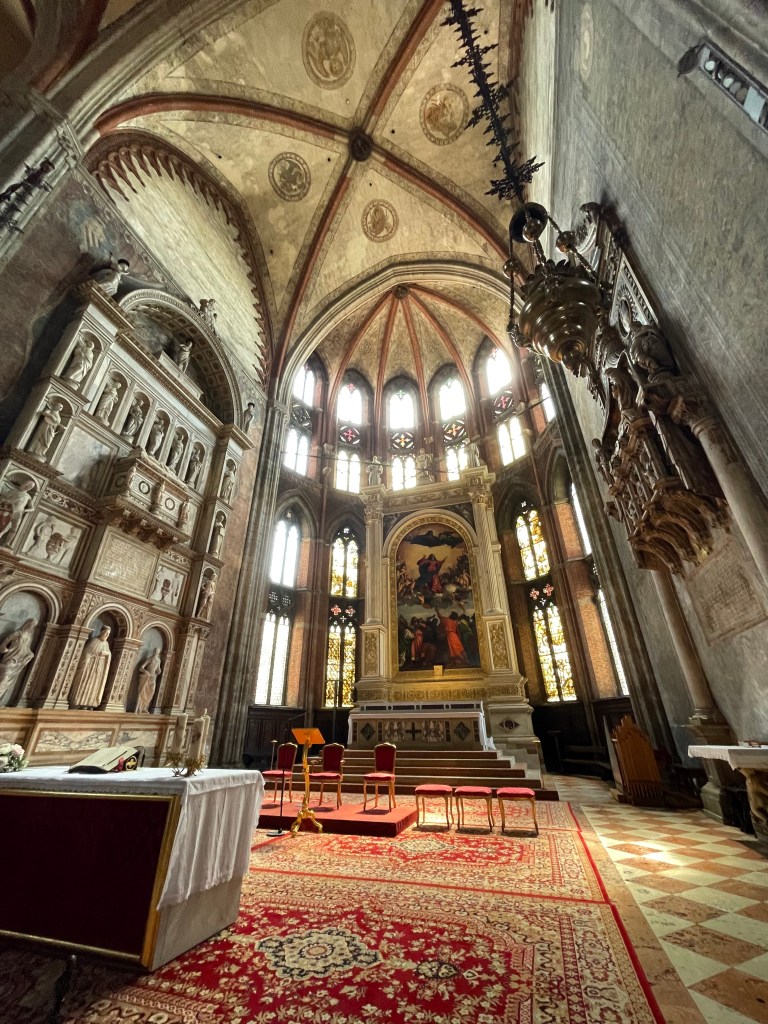
The Basilica was amazing, and almost completely empty which had been the theme throughout the day, I don’t do crowds, my better half has suspected I might be slightly ADHD and possibly OCD for many years, in more recent times I just prefer space and try to avoid confined areas and places that are crowded, luckily, so far, the day had been almost dreamy. Another guide to add to the collection and descriptions of the magnificent paintings, carvings and architecture, a stunning place to visit.

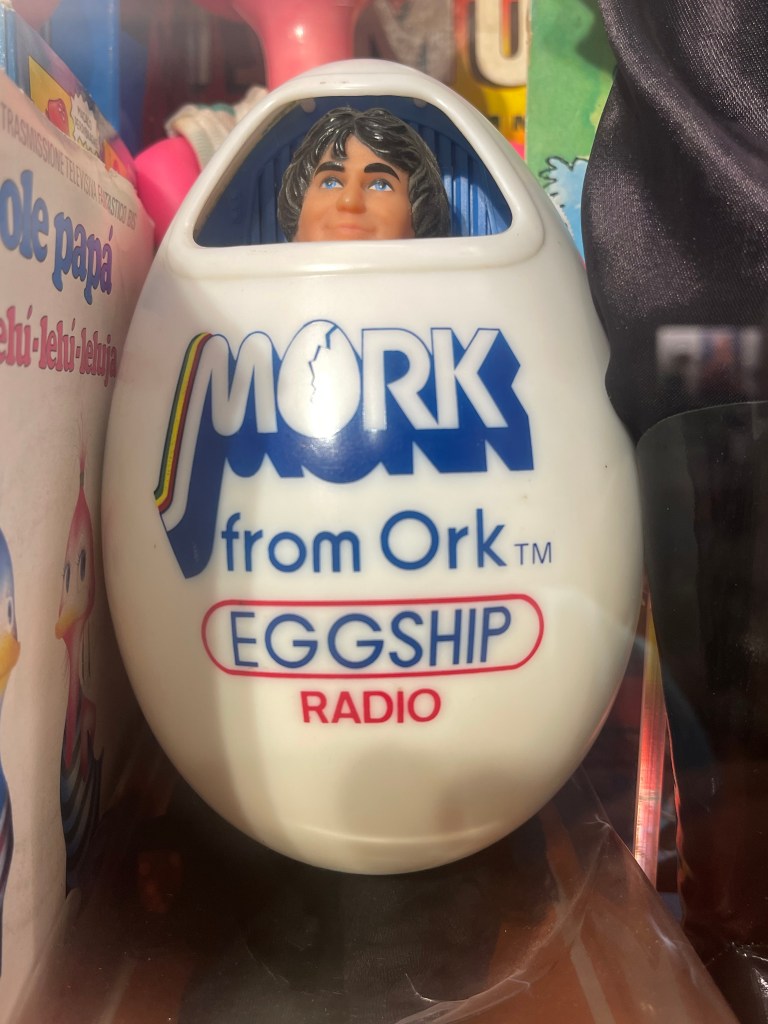
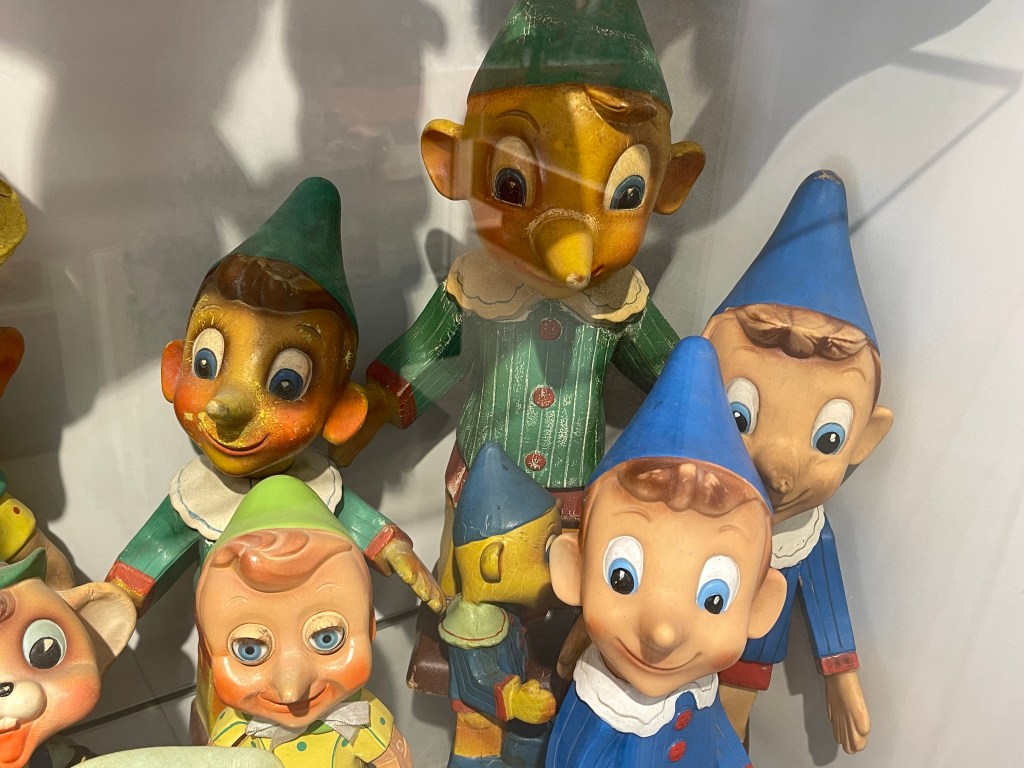
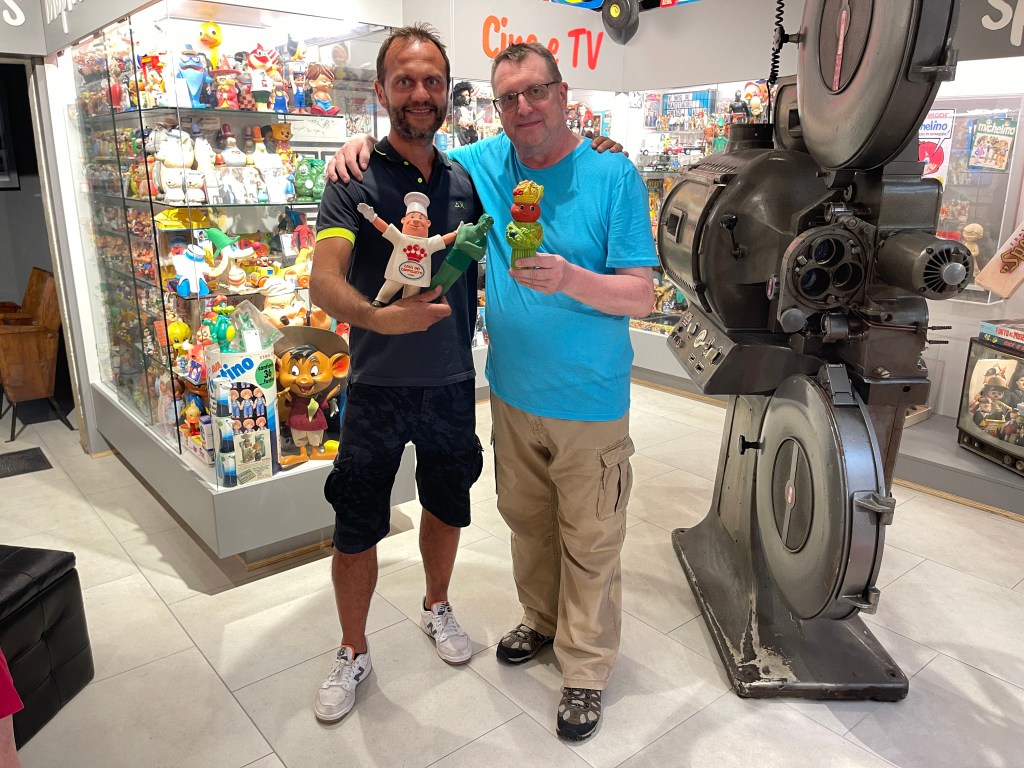
The last stop of the day was just brilliant, and certainly a ‘must do’ if you have even the slightest interest in the history of cartoons, cinema and the wonderment of the huge numbers of characters that have been created over the years, from Popeye to Pinocchio, Laurel and Hardy to Mork and Mindy the Venice Vintage Toys Museum contains over 5000 pieces, so many extremely rare, curated by the passionate Fabrizio Fontanella, what a place to finish the days touring.

I spent ages looking through the various cabinets and displays, being taken back to my childhood, black and white memories morphing into colour as technology developed, a few particularly caught my eye but one grabbed my attention.

My first ever international blog post was way back in June 2013, I had just come back from Masseria Montenapoleone in Puglia, southern Italy on my first week long cookery school. I was taught to cook real Italian food by the most amazing ‘nona’, she was just brilliant. In the picture I am making the original Tiramisu with the ‘proper’ biscuits. Now try and find them in the pictures above, the Tiramisu was perfect!

The day had been brilliant, the planning worked, timings were good and the Toy Museum had been an unexpected surprise taking me back to my first trip to Italy, to an amazing cookery school. Thank-you Fabrizio for taking the time to talk me through the exhibits, and removing some foodie ones for a photograph or two.

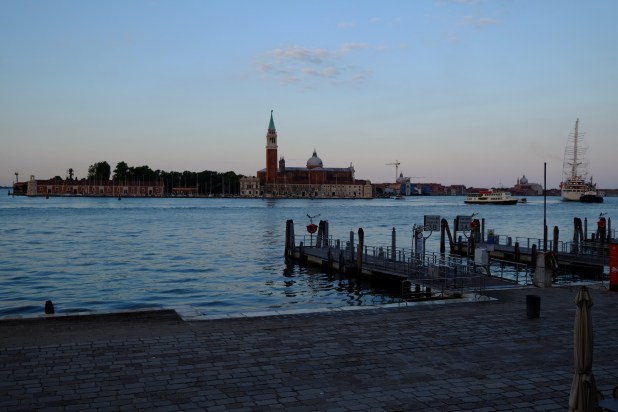
As I made my way back to the hotel, I notice another 80 degree tower!, I was convinced it had a slight lean. After a relax, refresh and change of clothes I was off to dinner at an iconic restaurant, featured in the film starring Jonnie Depp and Angelina Jolie, ‘The Tourist’, The Hotel Danieli. Unfortunately, it was too windy to eat on the terrace, but the dining room was opulent and views very pleasant looking out to the lagoon.

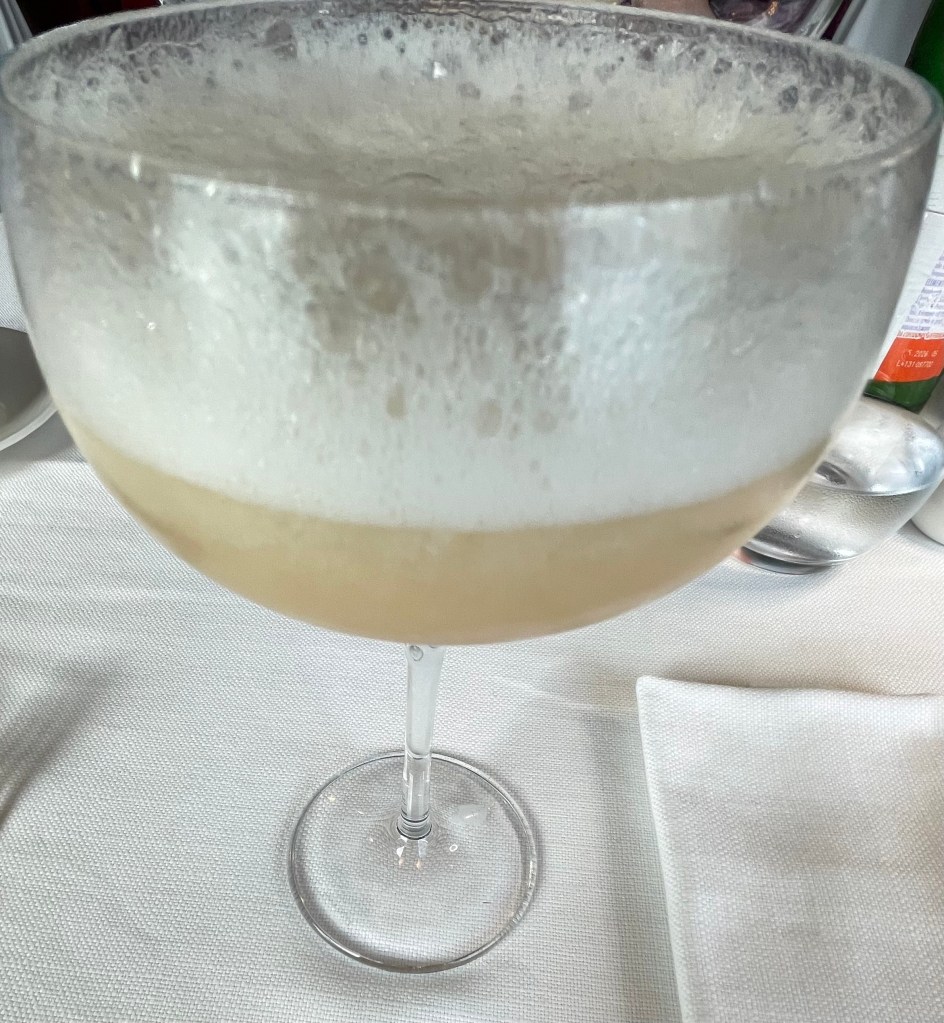
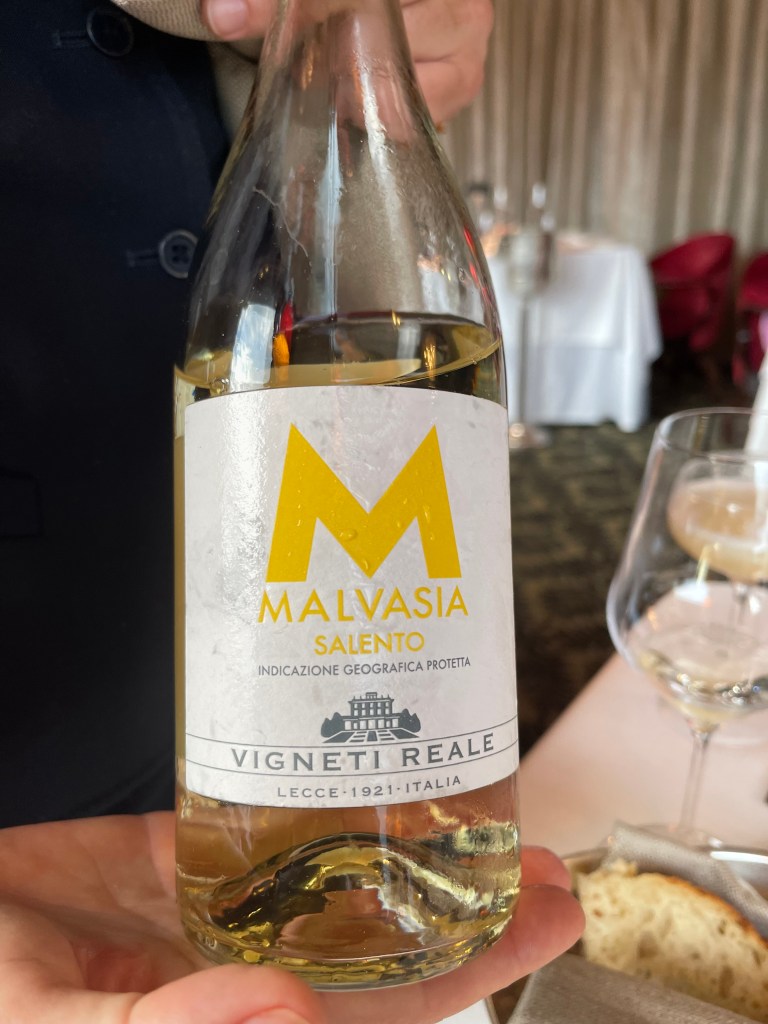
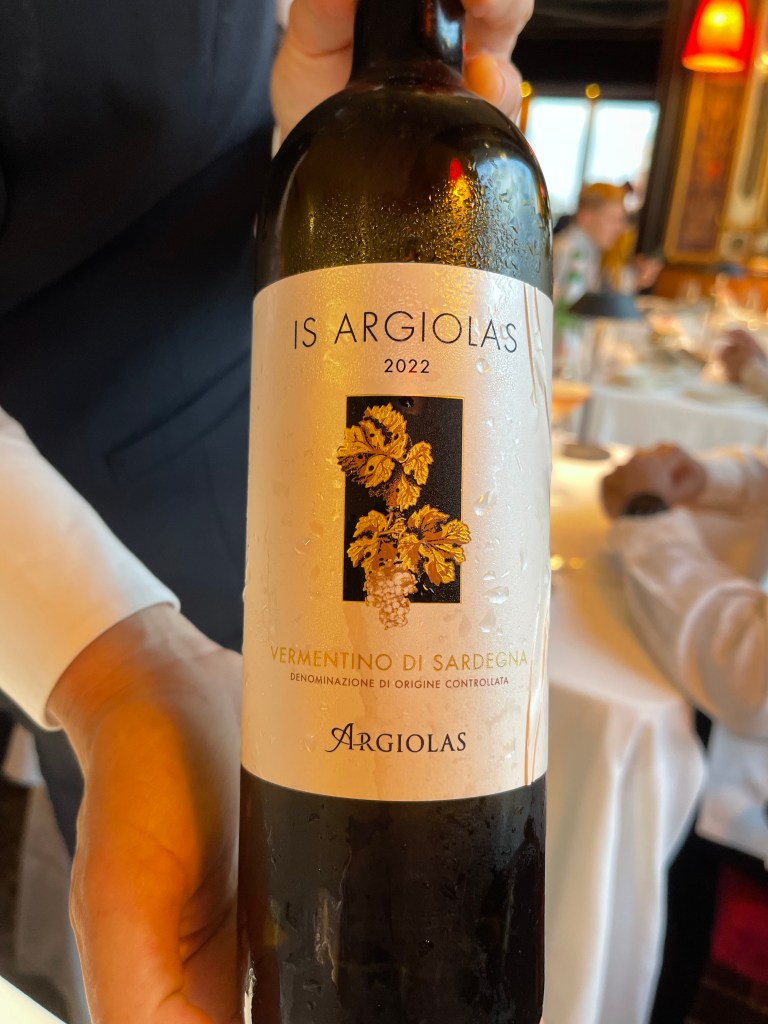
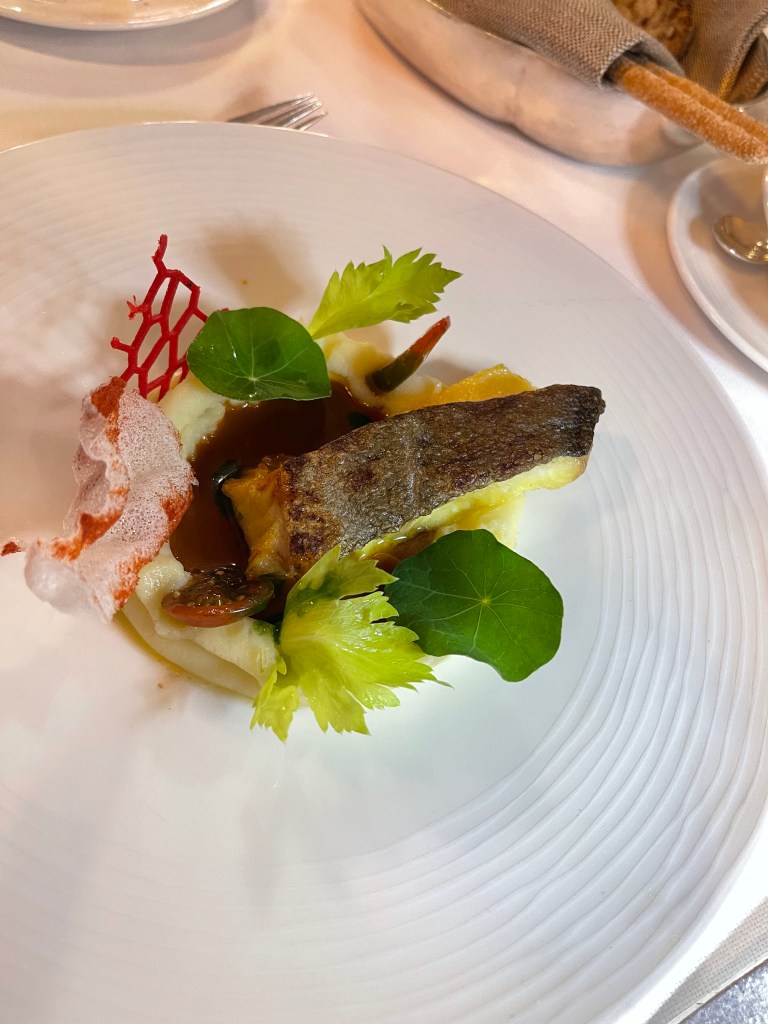
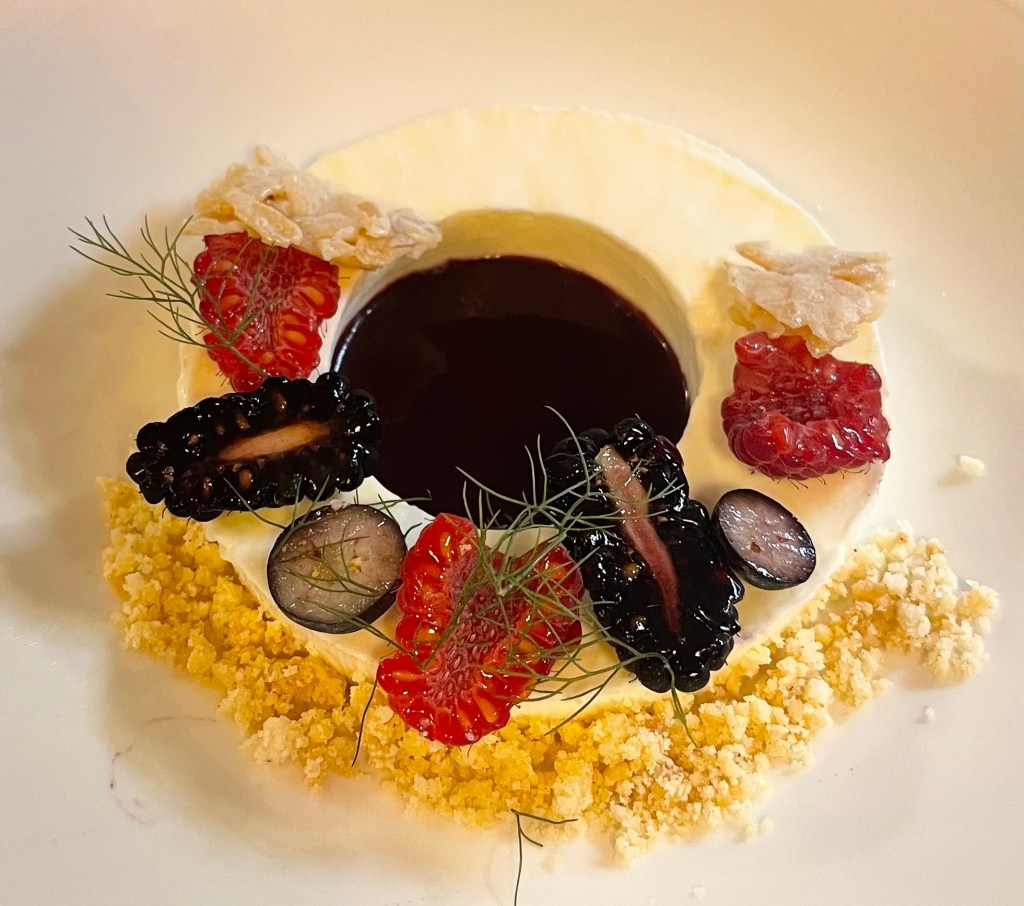
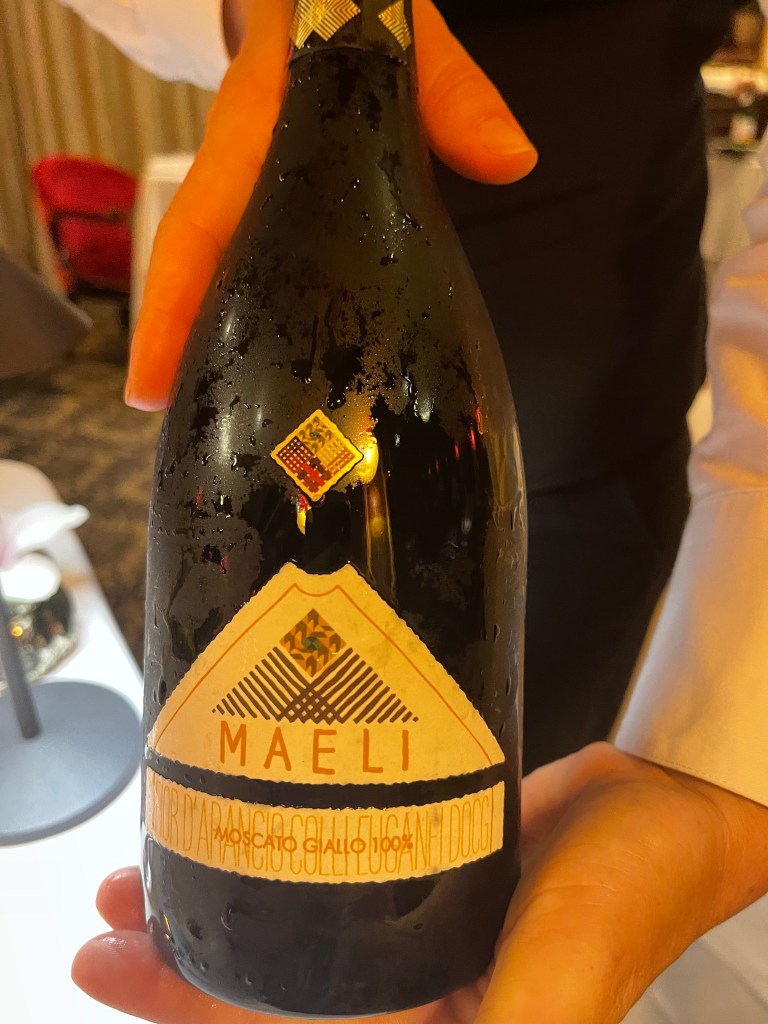
Impeccable service was obvious from the moment I arrived to the time I left, it would have been rude not to try a Bellini before starting the tasting menu and wine flight, which proved to be a delicious experience from start to finish.

Freshly made bread was really good, the Baccalà Mantecato delicate but flavourful, the Rissoto I felt could have done with another minute in the pan, it had a slight chalkiness to the texture, but it still tasted damn good, the Saffron Cod was a delight, the Panna Cotta perfectly wobbly and not rubbery or firm.

Day one had been a complete success, yes I was a tad tired (being polite here), I felt overwhelmed by the days adventure and walking back towards the hotel I noticed ‘that’ leaning tower in the night sky, tell me it’s not leaning slightly, maybe even more than slightly.

……………………. Until Next Time ………………. L8ers …………………..