It all started in March 2025 with an email landing in my inbox. The subject line? Kitchen in the Wild. Now, that got my attention.
I’d been on one of their adventures to Norway back in 2023 and had an absolute blast, so naturally, I was intrigued. But this one promised something rather special. An island off the west coast of Scotland, with none other than Nathan Outlaw, a chef with two Michelin stars, joining us as a special guest. Well, things were looking interesting already!
Apparently, it had taken the organisers 15 months to track down the perfect location, and from the description, it sounded as though they’d struck gold. Remote enough to escape the modern world, with no light pollution, meaning skies bursting with stars. Wildlife in abundance, a forager’s paradise and a fisherman’s heaven. Scallops, crabs, oysters and lobsters, all practically queuing up to be ‘thermidored’.
A remote Scottish island, spectacular scenery, incredible seafood and a two-Michelin-starred chef thrown into the mix. What could possibly go wrong?
Or, more to the point, where do I sign?
One year and seven months later, departure day had finally arrived. Of course, I’d hardly been sitting around twiddling my thumbs in the meantime. What started as a simple idea to add a few days of exploration before the main event had developed into something of a historical obsession, culminating in a professionally printed, full-colour guide running to more than 55 pages. Some people buy a guidebook. Apparently, I have to write my own.
Scotland, as I was discovering, has rather more to offer than spectacular scenery, whisky and the occasional deep-fried Mars bar. Beneath those beautiful Highland landscapes lies a history that is as fascinating as it is frequently bloody. Ancient kingdoms, warring clans, ruined castles, witchcraft, superstition and enough murder and betrayal to keep a television scriptwriter employed for life. I was hooked.
My research had taken me down several rather unexpected rabbit holes. There were the great Highland clans, particularly the Campbells, MacDonalds and Stewarts, whose centuries of feuding, shifting allegiances and occasional enthusiasm for slaughter had helped shape the Scotland we know today. Then came the darker world of witchcraft and folklore: accusations of sorcery, fairy beliefs, folk healers and the persecution of supposed witches. Following Scotland’s Witchcraft Act of 1563, such accusations could carry the death penalty. An unfortunate time to be a little eccentric, particularly if your neighbours didn’t like you.
But perhaps the most intriguing discovery was Kilmartin Glen in Argyll, an extraordinary landscape where the story of human settlement stretches back thousands of years. Here, long before the Highland clans were fighting over castles and territory, prehistoric communities were constructing elaborate burial cairns, carving mysterious cup-and-ring symbols into rock and raising enormous standing stones. Some of these monuments are around 5,000 years old, older even than Stonehenge’s famous stone circle. Their precise purpose, and whether particular alignments held ceremonial or astronomical significance, continues to fascinate archaeologists. Whatever the answers, our ancestors were clearly up to something rather more ambitious than simply finding somewhere to park a large rock.
The more I read, the longer my list of places to visit became. Castles appeared on the itinerary, followed by ancient burial grounds, standing stones and sites associated with Scotland’s darker folklore. Before long, my modest little detour had developed into a full-blown historical expedition. I had maps, routes, background notes and enough printed material to suggest I might be planning an archaeological dig rather than a culinary holiday.
And so, with the research complete, the guides printed and a hire car waiting in Glasgow, the first few days were all mapped out. I would be heading west, into Argyll, following a trail through centuries of Scottish history before eventually making my way towards the remote island and the culinary adventure that had started this whole thing.
First, though, there were a few castles to investigate, some ancient stones to ponder and several thousand years of history to catch up on.
Nathan Outlaw and the lobsters would have to wait.
Monday Morning – Best-Laid Plans
It was five o’clock on Monday morning. My intended 3:30 start had somehow passed me by, and I stirred to check the time. Today was the day. A 10:10 flight to Glasgow and the culmination of months of planning, research and anticipation. I was excited, although perhaps not quite as organised as my meticulously prepared itinerary might suggest!
Fortunately, the taxi arrived on time, and I was soon heading towards Heathrow, looking forward to a few days of independent exploration before joining a group of like-minded people whose common passion was food.
The journey, however, had other ideas.
Unusual fog conditions had apparently scattered aircraft and their respective crews far and wide, resulting in our eventual arrival at Glasgow Airport more than two hours behind schedule.
Not a major disaster, you might think. But I’d put together a rather ambitious timetable of places to visit, with Stirling Castle first on the list. By the time I’d collected the hire car, it was obvious that Stirling would have to wait. I had a dinner reservation that evening, and there are some things in life that simply cannot be compromised.
A change of plan was required. Fortunately, Glasgow was somewhere I’d wanted to explore anyway, and with a little rearranging, I could still make something of the afternoon.
Chocolate, Coffee and Other Essentials
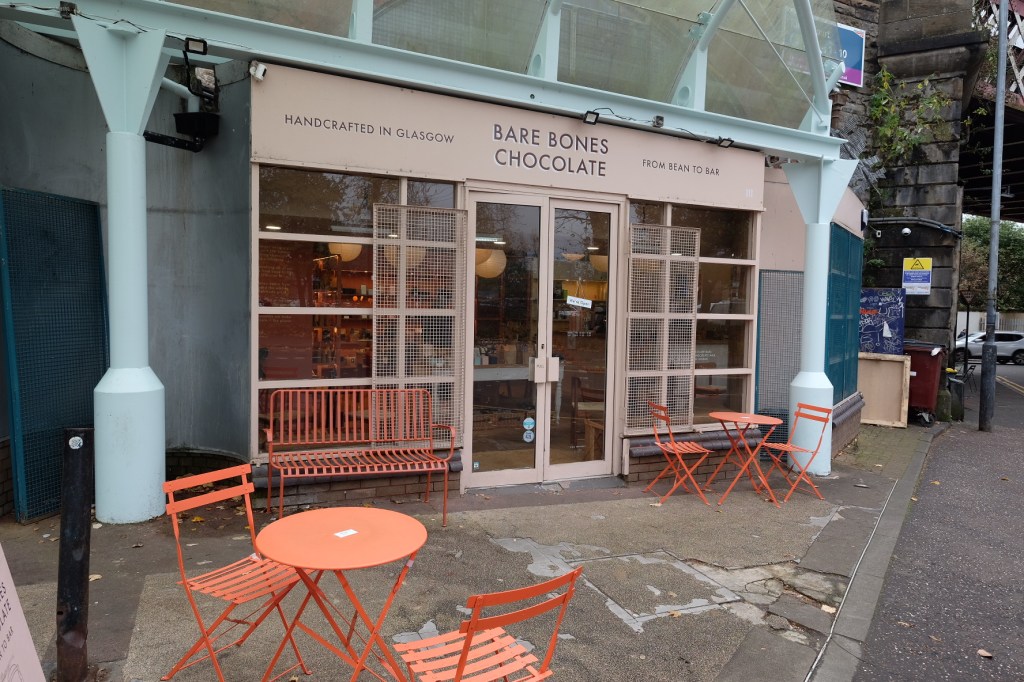
First on the revised itinerary was Bare Bones Chocolate, a small artisan chocolate maker in the heart of Glasgow that I’d first discovered watching Rick Stein on television. He’d visited their operation, been suitably impressed and subsequently cooked using their chocolate. Naturally, this warranted further investigation.
I’d already sampled some through mail order and was rather taken with it, so the opportunity to visit in person was too good to miss.
Founded by Cameron and Lara, Bare Bones is a fascinating little business built around a simple philosophy: exceptional chocolate begins with exceptional cacao, and the people who grow it deserve just as much consideration as those who eventually get to eat it.
Their approach is genuinely bean-to-bar, meaning they undertake the entire chocolate-making process themselves, starting with the raw cacao beans rather than buying in ready-made chocolate to melt down and repackage. Everything is produced in their Glasgow workshop in small batches of around 30kg, with an almost obsessive attention to detail.
Cameron, a mechanical engineer by background, has even modified and developed some of the equipment used in production, including a Giesen coffee roaster adapted specifically for cacao. There’s something wonderfully appealing about that level of dedication.
And then there’s the cacao itself.
Rather than blending beans from numerous unidentified sources to achieve a standardised chocolate flavour, Bare Bones celebrates single-origin cacao, allowing the distinctive characteristics of individual growing regions to shine through. Much like wine or speciality coffee, the variety of cacao, where it’s grown, the surrounding environment and how it’s fermented and dried all influence the finished flavour.
Take their Madagascan chocolate, for example. The beans originate in the Sambirano region in the northwest of Madagascar, where cacao grows beneath the shade of tropical fruit trees. The resulting 70% dark chocolate has distinctive fruity characteristics, with notes of raspberries, cherries and maple syrup.
Their Honduran milk chocolate, meanwhile, offers something quite different, with flavours reminiscent of raisins, fudge and double cream. Then there’s cacao from the Dominican Republic, where Bare Bones works with beans supplied through ÖKO Caribe, an organisation supporting farmers through agricultural training, improved growing practices and more stable prices.
This is chocolate with provenance, character and a story behind it, rather than simply a percentage printed on a wrapper.
The production process is equally interesting. After roasting, the beans are cracked, their outer husks removed and the remaining cacao nibs slowly ground with a little cocoa butter and sugar in a traditional stone grinder known as a melanger.
This process can take up to 72 hours, gradually refining the texture and mellowing some of the sharper flavours. The chocolate is then allowed to age for two or three weeks before being tempered, giving the finished bar that lovely glossy appearance and distinctive snap when broken.
Rather more involved than opening a large bag of chocolate buttons!
Environmental responsibility is also clearly part of their thinking. Their cacao is sourced from farms and cooperatives, with an emphasis on organically grown produce and relationships that recognise the importance of the growers. In Madagascar, for instance, the cooperative supplying their cacao has been involved in initiatives encouraging shade-grown cultivation, protecting the surrounding rainforest habitat and reducing soil erosion.
Even the packaging has been carefully considered. The colourful outer boxes are produced from recycled paper, including recycled coffee cups, while the inner wrappers are plant-based and compostable. All their packaging is designed to be recyclable or compostable after use.
I rather like that. If you’re going to produce something special, why not consider the whole journey, from the farmer growing the cacao to the wrapper left behind after you’ve thoroughly enjoyed the contents?
Another attraction, particularly for a dark chocolate enthusiast like myself, is their refreshingly short ingredient lists. No soya lecithin, vegetable fats or unnecessary additives, just carefully selected ingredients and a great deal of patience.
Dark chocolate also has another interesting attribute. Cocoa contains naturally occurring plant compounds called flavanols, which have been studied for their effects on blood vessel function and circulation. Although the quantity retained varies considerably depending on how chocolate is processed, I feel this provides an entirely reasonable scientific justification for enjoying a square or two of particularly good dark chocolate.
Possibly three. Best not to leave the research half-finished. There was, however, another reason for my interest.
For this adventure I’d acquired an Outin rechargeable portable espresso machine, a rather clever little battery-operated device capable of producing a very respectable espresso without the need for a kitchen, mains electricity or a barista. Perfect for a trip involving remote Scottish landscapes.
My plan was to pair some excellent single-origin chocolate with a freshly extracted espresso, preferably somewhere overlooking a magnificent Highland loch. I’d also packed some home-compostable Nespresso-compatible pods from GRIND, having enjoyed their coffee in the Heathrow business lounge earlier that morning.
Wilderness is all very well, but there’s absolutely no reason to lower one’s standards.
Glasgow – A City with a Rather Colourful Past
Chocolate interests satisfied, I continued exploring.
One of the things that had become apparent during my pre-trip research was just how much history lies beneath the surface of Glasgow. The city is perhaps better known for its industrial heritage, magnificent Victorian architecture and mercantile wealth, but dig a little deeper and there’s a considerably darker, and occasionally rather amusing, story waiting to be discovered.
Glasgow Cross was a particularly interesting place to start.
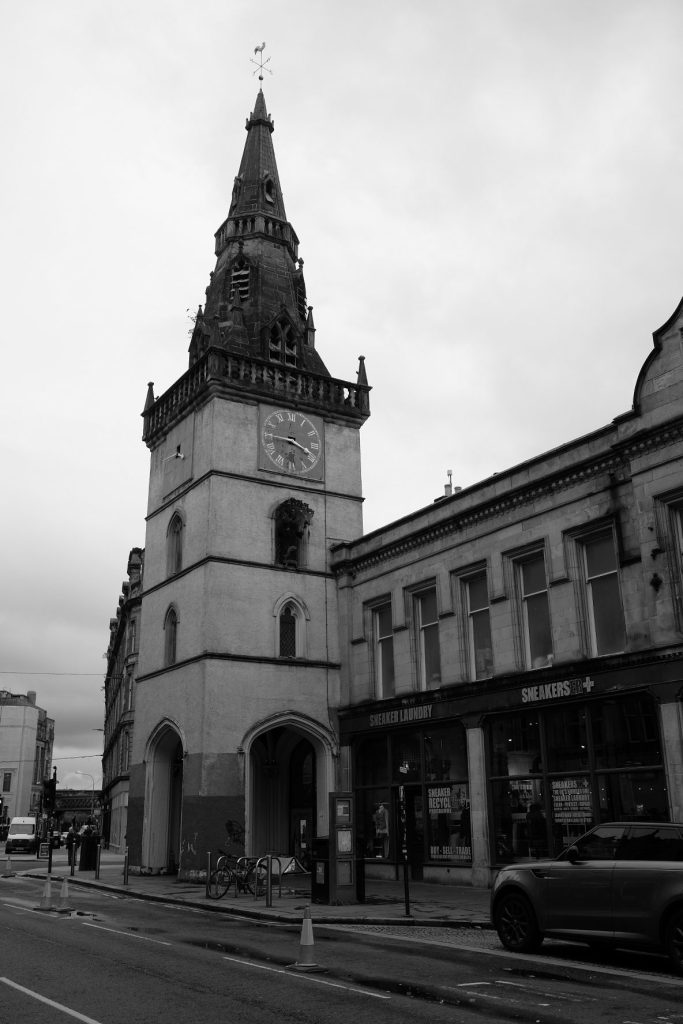
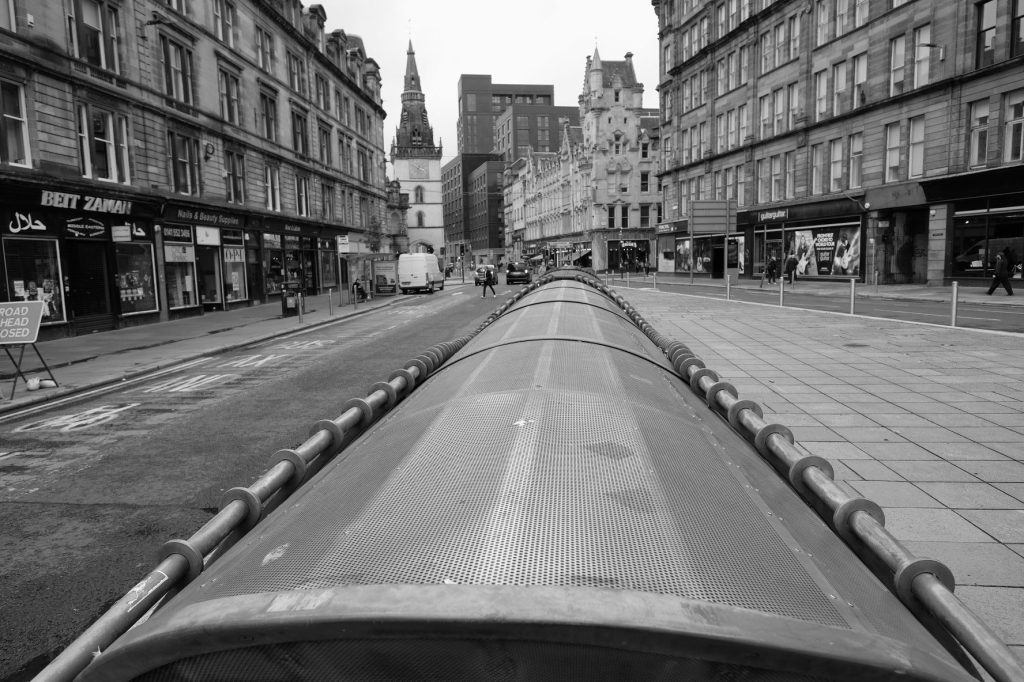
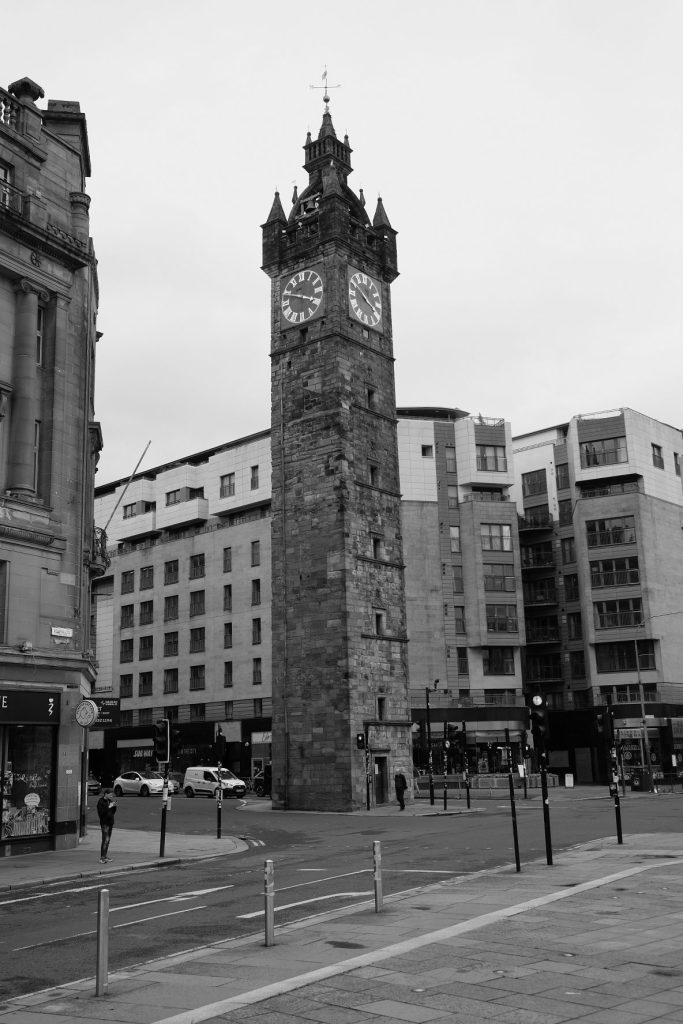
Dominating the junction stands the magnificent seven-storey Tolbooth Steeple, dating from the 1620s and now standing somewhat forlornly on its own. Originally, it formed part of a much larger building housing the Town Clerk’s office, council chambers, courts and city prison.
It was, in effect, the administrative and judicial heart of Glasgow, where civic decisions were made and justice dispensed. Sometimes rather enthusiastically.
Witches, thieves and murderers all passed through the Tolbooth’s judicial machinery, with public executions forming a particularly grim chapter in the city’s history.
Not everyone incarcerated there had an entirely miserable time, however.
The debtors apparently developed something resembling an exclusive gentlemen’s club, electing their own ‘provost’ and establishing rules governing their little community. They even attempted to prevent the jailer from admitting anyone they considered unsuitable.
One regulation from 1789 required prisoners fortunate enough to regain their freedom to treat their fellow inmates to a shilling’s worth of liquor.
Imagine being released from prison only to discover you still had to buy everyone a round before you could leave!
Outside the Tolbooth, the paved area known as the ‘plainstanes’ became a fashionable gathering place for Glasgow’s wealthy merchants, particularly the Tobacco Lords. These gentlemen, enriched by Glasgow’s transatlantic tobacco trade and its connections to the economy of slavery, were apparently rather fond of displaying their prosperity, parading around in scarlet cloaks, powdered wigs and carrying gold-topped canes.
Subtlety clearly wasn’t fashionable.
Glasgow Cross was also a major communications and transport hub, with stagecoaches arriving from Edinburgh and London, bringing travellers, newspapers and news from the wider world.
As Glasgow expanded westwards, the old Tolbooth gradually lost its importance. The remaining main building was finally demolished in 1921, leaving its extraordinary steeple standing alone, a reminder of the days when Glasgow Cross was the beating heart of the city.
A City That Wears Its Art on Its Walls
Wandering through the surrounding streets, something else caught my attention: Glasgow’s remarkable collection of street art.
Now, I appreciate that graffiti can be a divisive subject, but some of what I encountered was on an entirely different level. Huge, colourful murals occupied entire sides of buildings, transforming otherwise unremarkable streets and forgotten corners into an enormous open-air gallery.
What began as a Glasgow City Council initiative in 2008 to brighten neglected spaces developed into something considerably more ambitious, with the official City Centre Mural Trail launching in 2014.
Artists including Smug, Rogue One and Ejek have helped establish Glasgow as a city where art isn’t necessarily confined to galleries, museums or somewhere requiring an admission ticket.
One of the most striking examples is Smug’s extraordinary depiction of St Mungo, Glasgow’s patron saint, on High Street. The saint is portrayed as a modern-day figure holding a robin, a reference to one of the miracles traditionally associated with him.
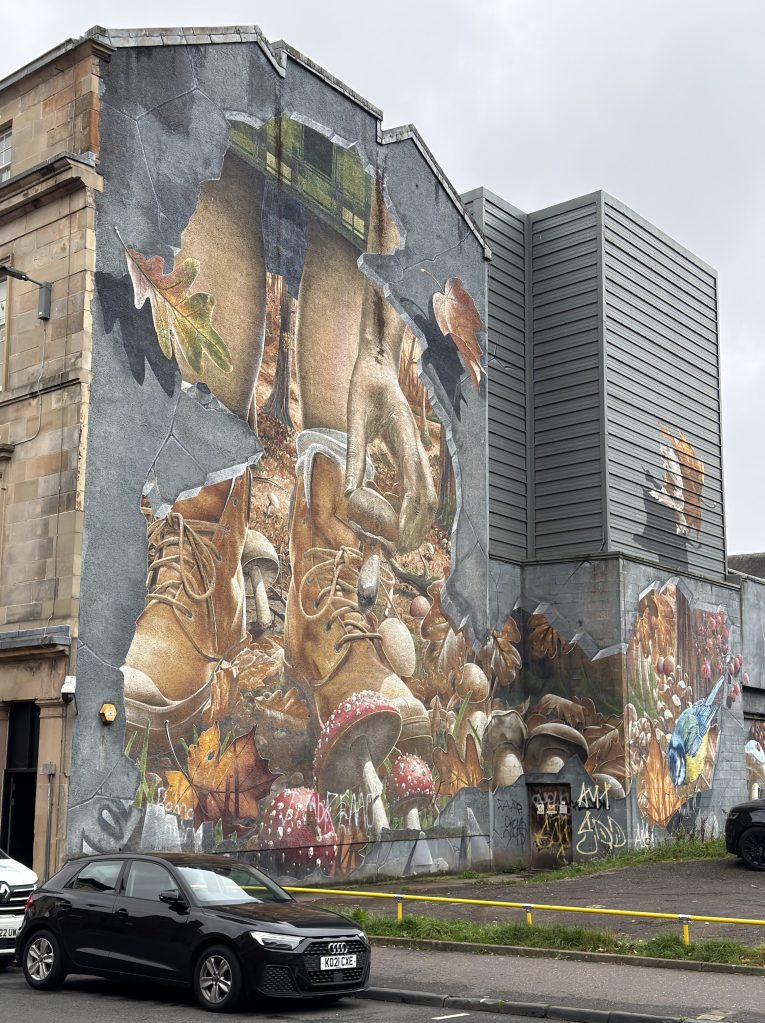
Elsewhere, an enormous girl peers through a magnifying glass on Mitchell Street, while a magnificent collection of Scottish wildlife occupies a building on Ingram Street.
There’s humour here, but also history and some powerful social commentary.
The Strathclyde University Wonderwall, covering more than 1,000 square metres, celebrates the university’s achievements, while another mural pays tribute to Charles Rennie Mackintosh, one of Glasgow’s most celebrated creative talents.
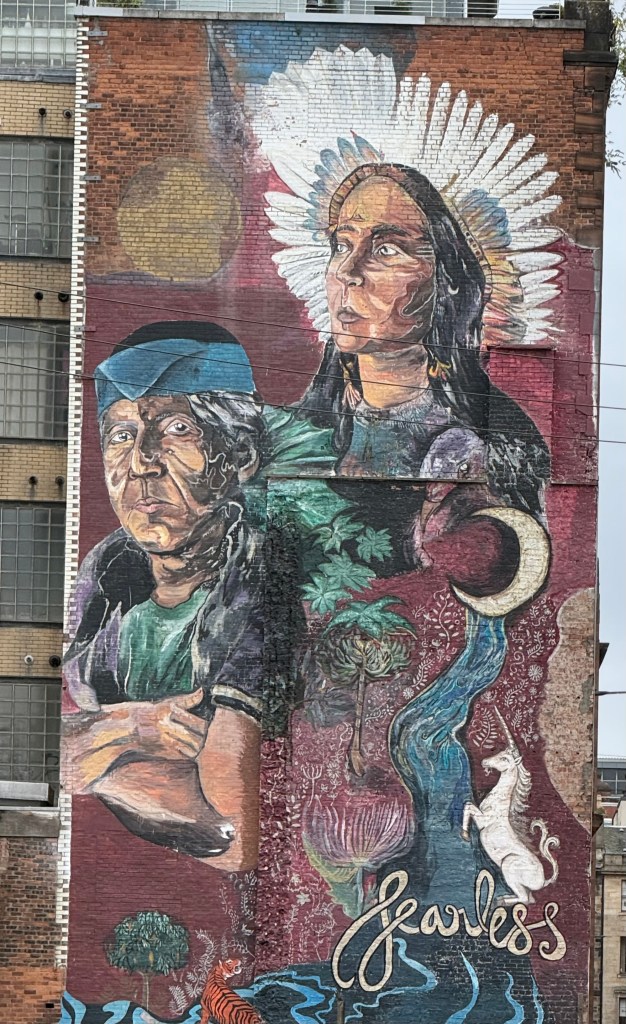
Other works carry a more contemporary message. Bow Down, Honour the Roots, created by the Fearless Collective during the COP26 climate conference in 2021, depicts Indigenous people from the Amazon alongside imagery celebrating cultural identity and environmental protection.
What I particularly enjoyed was the element of surprise. Turn a corner, wander down an unfamiliar street, and you might suddenly find yourself confronted by an enormous work of art.
Unlike the great Victorian buildings that have stood for generations, street art is constantly evolving. Murals appear, others disappear, buildings change and the city continues to reinvent itself.
There’s something rather wonderful about that.
From Ancient Glasgow to Modern Glasgow – and Dinner
Time was passing rather quickly, and I was discovering that Glasgow deserved considerably more attention than my hastily rearranged afternoon could possibly provide. It was definitely somewhere I wanted to return to. My research had already uncovered countless places beyond the usual visitor attractions, and I’d barely scratched the surface.
But enough sightseeing. It was time to eat.
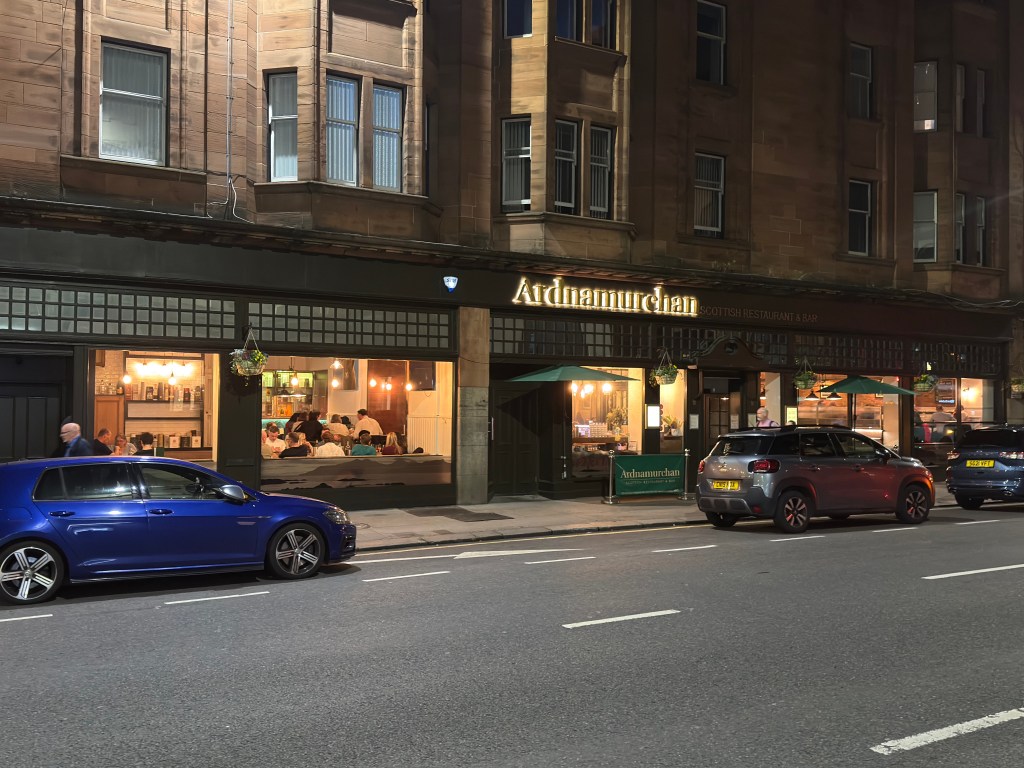
I’d booked a table at the highly recommended Ardnamurchan, a restaurant specialising in Scottish produce, and one whose menu I’d been examining with considerable enthusiasm for months. The walk there was pleasant, if slightly damp, and revealed yet another side of the city.
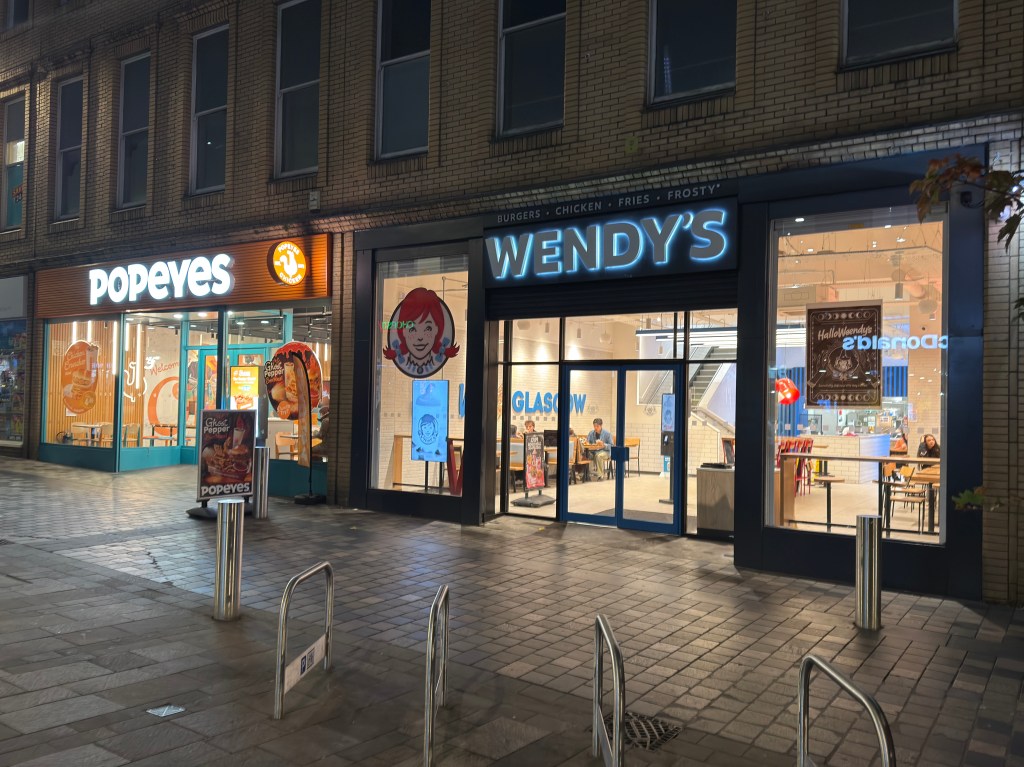
The weathered stone and historic architecture gradually gave way to a more contemporary Glasgow. Neon signs, unfamiliar brands and fast-food outlets competed for attention, sometimes with remarkably similar establishments positioned right next door to one another.
An interesting contrast to the world of powdered wigs, gold-topped canes and debtors demanding a farewell drink.
Ardnamurchan – A Taste of Scotland
Ardnamurchan celebrates traditional Scottish ingredients, showcasing the country’s exceptional natural larder, both animal and vegetable, with a particular emphasis on quality and provenance.
Having studied the menu for months, I was rather looking forward to this.
Stepping through the door, I was immediately encouraged by how busy it was. A Monday evening, and the restaurant was already buzzing. Always a promising sign.
The welcome was wonderfully warm, and the delicious aromas drifting from the kitchen immediately set me trying to identify what was being cooked.
I have a habit of mentally dissecting dishes before I’ve even seen them. A waft of something roasting, a hint of seafood, perhaps a reduction bubbling away somewhere. It’s rather like trying to read the menu through your nose.
Decisions made I settled down and started to think about the week ahead, the day had been delayed, Heathrow business lounge had been a godsend, filtering the masses waiting to escape was a respite and the facilities, food and drink had been exemplary, ‘GRIND’ coffee being of particular interest, I had some off their home-compostable Nespresso® compatible pods with my Outin expresso machine in my case.
Being a fond favourite of mine, Scallops was the obvious 1st choice, I did look at the other options
Settling down with the menu, I finally had a moment to reflect on the day.
It certainly hadn’t gone entirely to plan. Stirling Castle had been sacrificed to the aviation gods, and my carefully constructed itinerary had required some fairly rapid surgery. On the positive side, I’d discovered rather more of Glasgow than originally intended, acquired some excellent chocolate and made it to dinner in one piece.
Even Heathrow’s business lounge had played its part, providing a welcome refuge from the delayed departure, with excellent facilities, food and drink. The GRIND coffee had been a particular highlight, and I still had those pods tucked away ready for my portable espresso machine. But now there were more important decisions to make.
Being a particular favourite of mine, scallops were the obvious first choice. I did study the other starters, naturally, but sometimes the heart knows what it wants.
And mine was firmly set on the scallops.
Dinner, a Little Indulgence and Plans for Tomorrow
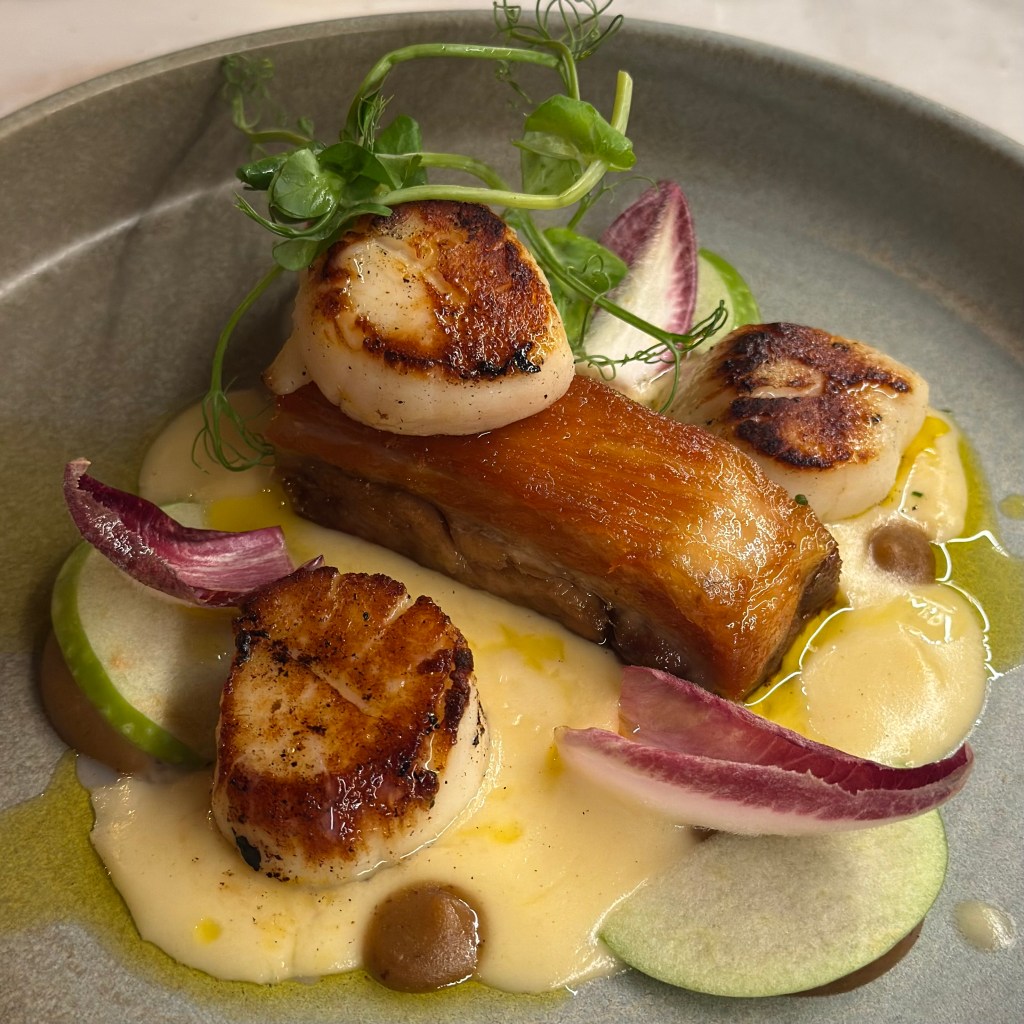
The menu was a wonderful celebration of Scotland’s natural larder, and choosing wasn’t entirely straightforward. The hand-dived Hebridean scallops were particularly tempting, paired on the menu with crisp pork belly, burnt apple chutney, fresh apple, pickled shallots and an Inch’s cider cream. A combination that seemed designed specifically to test my ability to resist ordering them.
For the main course, however, there was considerably less deliberation. Ardnamurchan Estate Wild Venison Pavé, served with redcurrant jus, buttered fondant potato, braised chicory, sweet mustard gel and carrot and apricot purée. Now that sounded rather special.
And when it arrived, it certainly looked the part.
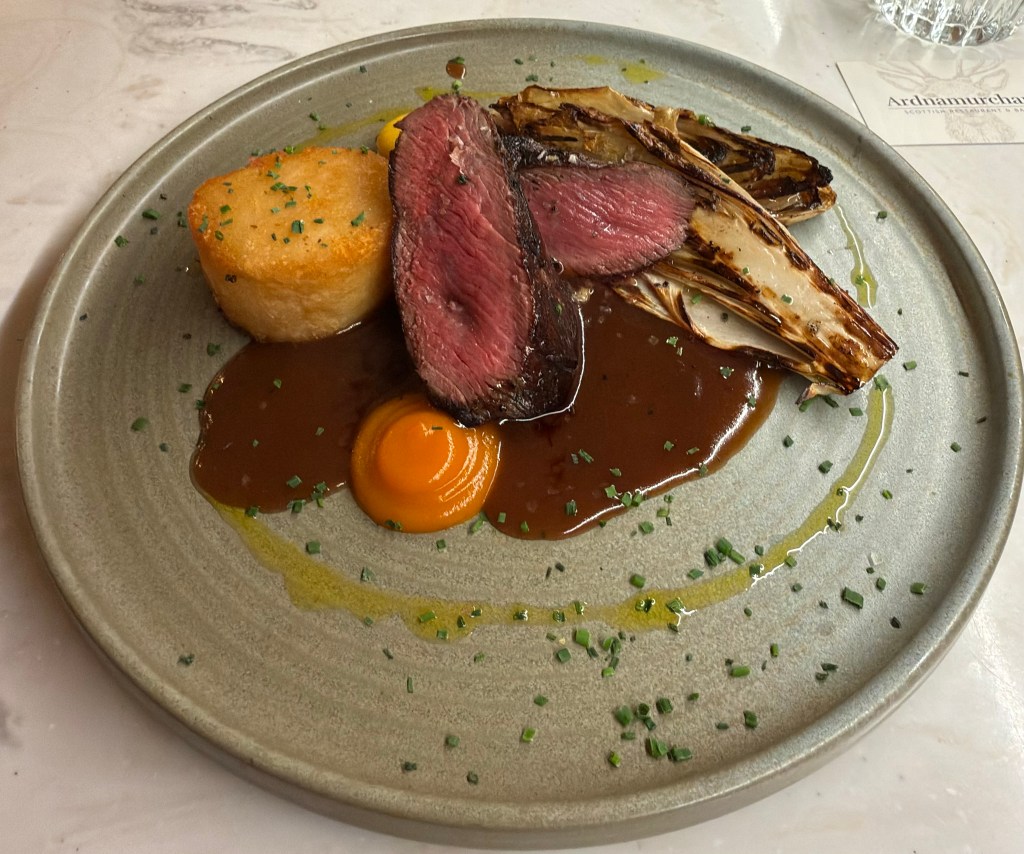
The venison was beautifully presented, generously portioned and cooked a magnificent pink, with a lovely caramelised exterior. The rich, glossy redcurrant jus brought everything together, while the sweetness of the carrot and apricot purée provided a welcome contrast to the game. The braised chicory offered a slightly bitter counterpoint, and that golden fondant potato, crisp on the outside and wonderfully soft within, was a little triumph in its own right.
A glass of red wine completed proceedings rather nicely.
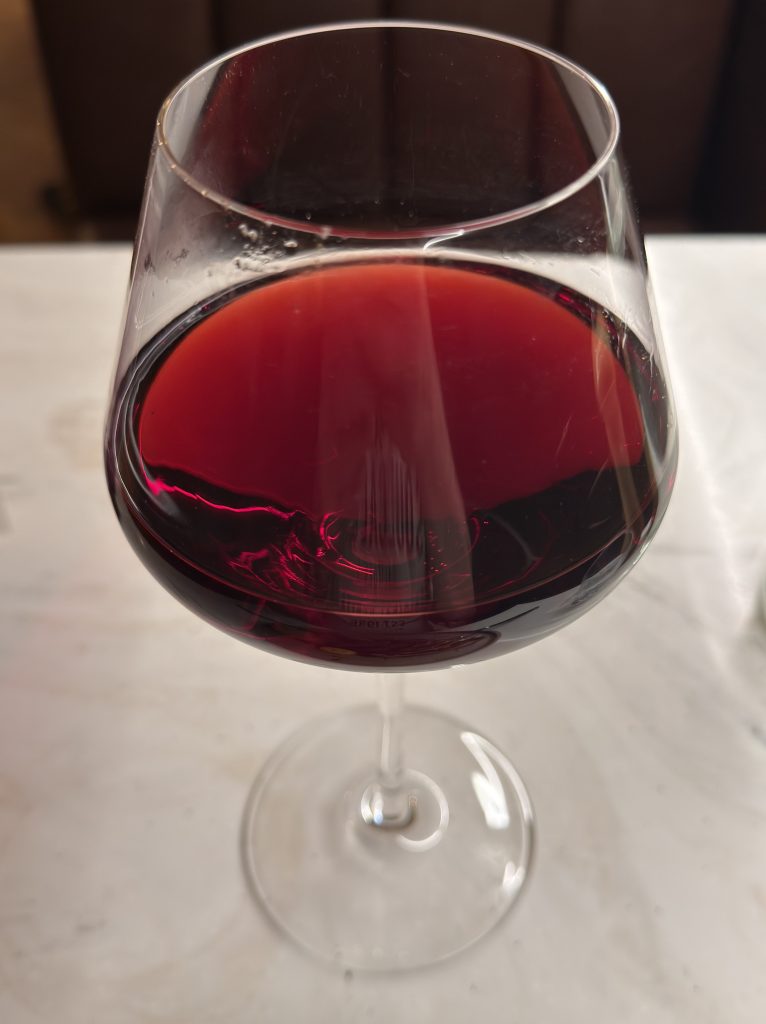
What a delightful way to end a day that had started rather earlier than intended and hadn’t exactly followed the carefully prepared script. The food was excellent, the atmosphere warm and welcoming, and Ardnamurchan had delivered precisely what I’d hoped for: wonderful Scottish ingredients treated with care, confidence and just enough imagination to make the experience memorable.
I left feeling very content indeed. Although, looking back at the dessert menu, I did notice something called Tablet Choc Ice, featuring homemade Scottish tablet, chocolate ice cream, popping candy and white chocolate. Perhaps a compelling reason for a return visit!
A Damp Walk and Tomorrow’s Adventure
The walk back to the AC Hotel by Marriott was pleasant, if a little damp. Glasgow’s streets glistened under the evening lights, and the city had taken on a rather different character from the bustling place I’d explored earlier in the day.
I was reflecting on just how much I’d enjoyed Glasgow. What had initially felt like a frustrating disruption to the itinerary had turned into a thoroughly enjoyable afternoon and evening. Sometimes the unexpected diversions are every bit as rewarding as the carefully planned destinations.
Tomorrow, however, was another matter.
The historical expedition I’d spent so many months researching was finally about to begin in earnest. There were ancient landscapes to explore, castles to discover and several thousand years of Scottish history waiting for my attention. With the hire car collected, my ridiculously comprehensive printed guides ready and the camera batteries charged, I was determined to make the most of the days ahead. But first, breakfast.
Hopefully, tomorrow’s itinerary would prove slightly more resilient than today’s.
And if not, at least I’d be starting it properly fed.
………………… Until next time ………………. L8ers …………………………..

