Rain, Rituals and 5,000 Years of Secrets (Part 3)

Day Three – Rain, Rituals and Five Thousand Years of Secrets

Kitchen in the Wild: The Long Way to Eilean Shona

A Rather Damp Start to Five Thousand Years of History

Wednesday morning, 6:30am.

I was wide awake, excited and ready to go. After months spent researching Scotland’s ancient past, and finally arriving in Kilmartin the previous evening, today was the day I’d been particularly looking forward to, first things first, however. A cup of tea.

Pulling back the curtains revealed that Scotland had thoughtfully arranged some traditional weather for the occasion.

It was absolutely pissing down!

Not a gentle Highland mist, nor the occasional romantic shower drifting across the glen. Proper, persistent rain. The sort that makes you question the wisdom of leaving a perfectly comfortable bed, particularly when your day’s itinerary involves wandering around wet fields looking at large rocks.

Still, I’d travelled several hundred miles, produced a professionally printed guide of more than 55 pages and spent countless evenings investigating ancient burial practices, mysterious standing stones, prehistoric migrations and the origins of early Scottish civilisation, I wasn’t about to be defeated by a bit of water.

Tea consumed, camera equipment gathered and waterproofs brought into service, it was time to go hunting stones.
Kilmartin Glen – Where Five Thousand Years of History Lie Beneath Your Feet

There is something quite extraordinary about Kilmartin Glen.

At first glance, it’s a beautiful stretch of Argyll countryside: rolling green fields, woodland, low hills and the occasional scattered farmhouse. But look a little closer and the landscape begins to reveal something altogether more remarkable.

Within a relatively small area lie hundreds of archaeological sites, including burial cairns, standing stones, stone circles, fortified settlements and mysterious rock carvings. Some date back more than 5,000 years. To put that into perspective, people were constructing ceremonial and burial monuments here during the Neolithic period, long before the Roman Empire existed and centuries before the great pyramids of Egypt were built.

And unlike an archaeological collection housed neatly behind glass in a museum, much of Kilmartin’s extraordinary history remains out in the landscape, where successive generations left their mark. You can walk between monuments, study enormous stones and, in some cases, peer into burial chambers constructed by communities whose names, languages and beliefs have long since disappeared.

The remarkable thing is that nobody left an instruction manual.

Archaeologists can learn a great deal from their tools, pottery, burial practices and surviving monuments, but precisely what many of their ceremonies meant, why particular locations were chosen and what significance they attached to certain arrangements of stones remains tantalisingly uncertain.

Which, naturally, makes the whole business considerably more intriguing.

Who Were These People, and Where Did They Come From?

One question had particularly occupied me during my pre-trip research.

Who exactly were the people responsible for constructing these extraordinary monuments?

Were they descendants of Scotland’s earliest hunter-gatherers? Had they arrived from elsewhere? And how did communities living in what we now regard as a relatively remote corner of Scotland come to share ideas, materials and artistic traditions with people living hundreds, sometimes thousands, of miles away?

Modern archaeology, particularly the extraordinary advances made through ancient DNA analysis, has begun to reveal a much more complicated picture.
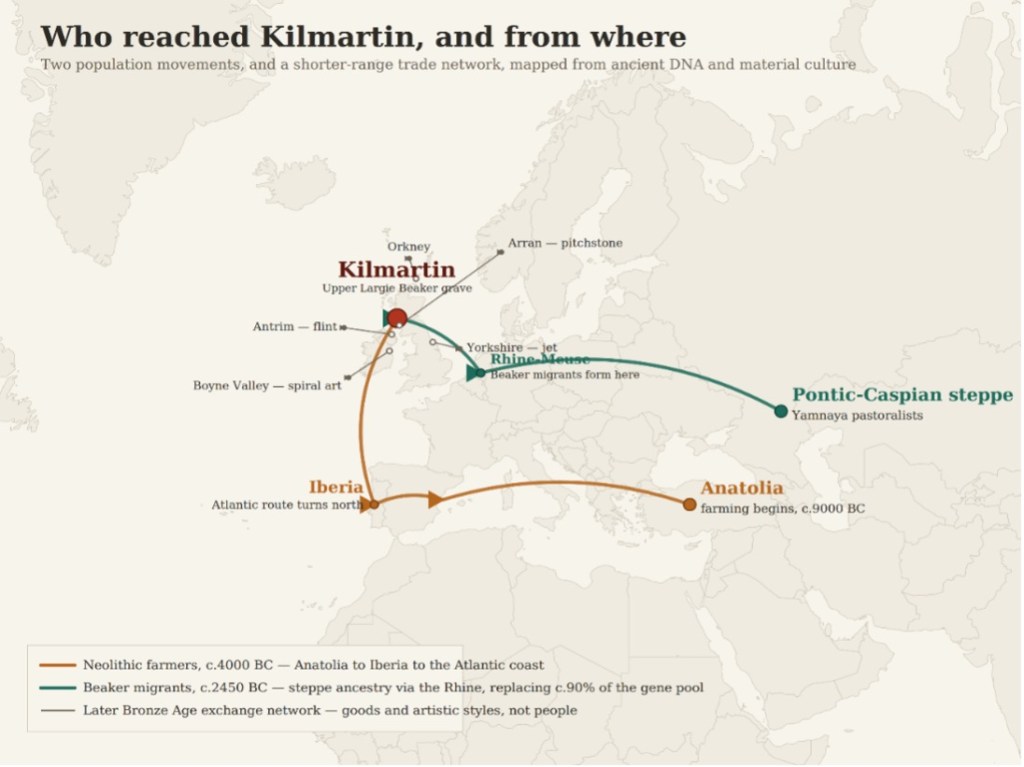
The first great transformation came around 4000 BC, with the arrival of Neolithic farming communities in Britain.

Their deeper ancestry can be traced to early farming populations originating in Anatolia, part of modern-day Turkey, from where agriculture gradually spread across Europe. One important route followed the Mediterranean and Atlantic seaboard through Iberia and western Europe before eventually reaching Britain.

These newcomers brought a fundamentally different way of life. Farming, domesticated animals, pottery and the construction of substantial ceremonial and burial monuments increasingly became part of a landscape previously occupied by communities dependent primarily upon hunting, fishing and gathering.

They also brought different ways of honouring their dead, some of which survive in the great stone monuments we’re still attempting to understand today, but that wasn’t the end of the story.

Around 2450 BC, Britain began experiencing another major population transformation associated with the arrival of people belonging to the Bell Beaker cultural phenomenon. These migrants had strong genetic connections with populations in north-western continental Europe, particularly around the Lower Rhine, and carried substantial ancestry ultimately derived from pastoralist populations of the Pontic-Caspian steppe.

And here’s where things become particularly interesting.

Ancient DNA research indicates that, over the centuries following their arrival, approximately 90% of Britain’s earlier Neolithic genetic ancestry was replaced. That’s an extraordinary demographic change. It doesn’t mean 90% of Kilmartin’s inhabitants suddenly vanished, but it does demonstrate just how profoundly migration altered the population of prehistoric Britain over successive generations.

The Beaker period also saw changing burial customs, including a greater emphasis on individual burials accompanied by carefully selected possessions, alongside developments in pottery, metalworking and wider material culture.

Suddenly, the landscape of Kilmartin begins to make considerably more sense, its monuments weren’t all constructed at once, nor necessarily by people sharing identical customs, ancestry or beliefs. The glen developed over many centuries, reflecting successive generations and changing ideas about life, death and remembrance.

And it wasn’t only people who travelled.

Prehistoric communities were connected through surprisingly extensive networks of exchange. Materials such as Arran pitchstone, Irish flint and Yorkshire jet moved considerable distances, while artistic ideas and symbolic traditions also spread between communities.

The remarkable spiral carvings associated with Ireland’s Boyne Valley, for example, form part of a much wider Atlantic prehistoric artistic tradition. Such connections don’t necessarily prove that the same people travelled between every location, but they demonstrate that these communities were far from isolated. The map brings these different strands together: two major population movements separated by around 1,500 years, followed by wider networks through which materials, skills and ideas circulated.

I found this particularly fascinating.

Here was a landscape that successive communities, living thousands of years apart, continued to recognise as somewhere important enough to bury their dead, construct monuments and leave their mark upon the stone.

What made this particular glen so significant?

That’s the question I’d come to explore.

And here I was, several thousand years later, standing in the Scottish rain with a camera, a printed guide and the considerable advantage of a hire car, at least I didn’t have to walk here from Anatolia!

Dunchraigaig Cairn – The Deer Beneath the Stone

One of the places I’d been particularly keen to explore was Dunchraigaig Cairn, a prehistoric burial monument that has yielded one of Scotland’s most remarkable archaeological discoveries.

And from a distance, it doesn’t exactly announce itself.
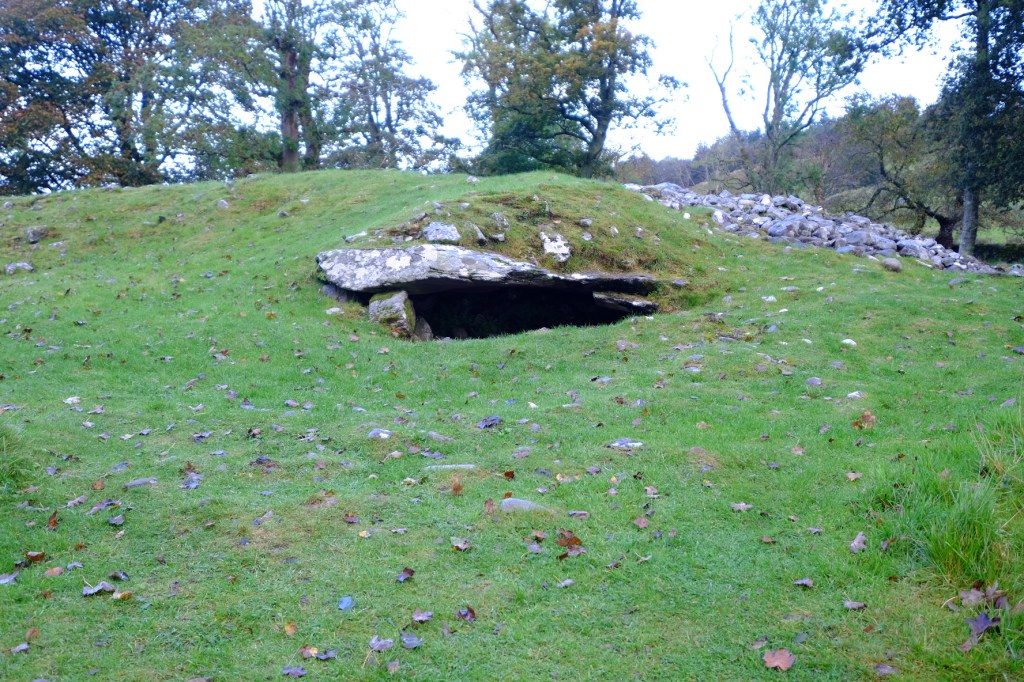
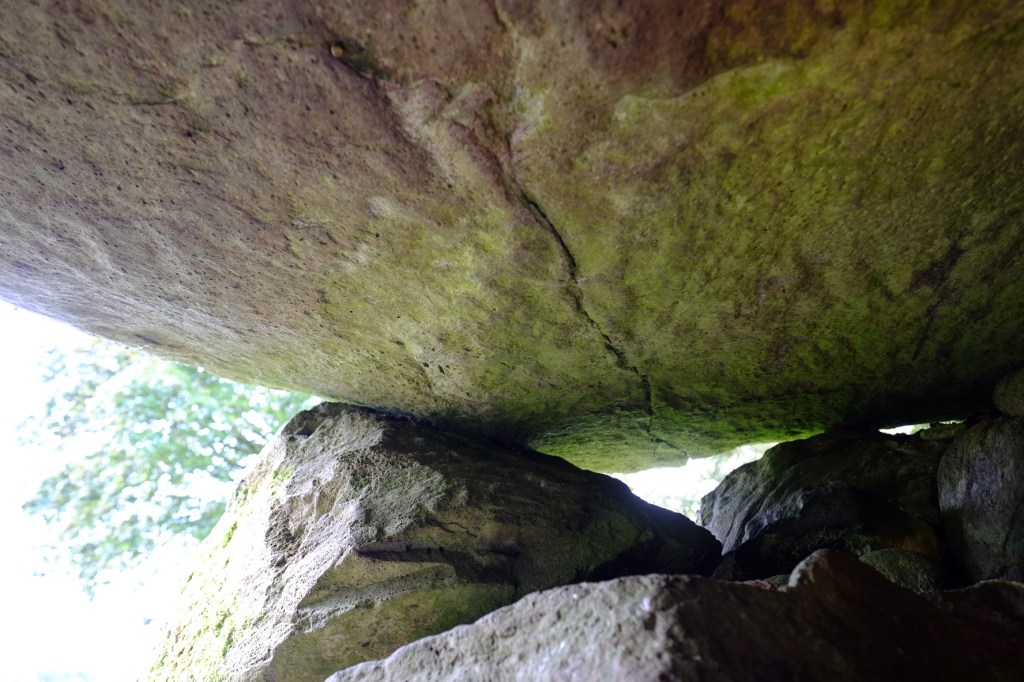
A low, grass-covered mound, scattered stones and a small opening beneath an enormous slab of rock. Without knowing its history, you might easily pass it by, yet concealed beneath that great capstone is something extraordinary.

In 2021, prehistoric animal carvings were identified on the underside of the capstone. Five figures, including two magnificent adult red deer stags, thought to date from the Early Bronze Age, around 4,000 years ago.

These are the earliest known prehistoric animal carvings discovered in Scotland.

What makes the find particularly unusual is that prehistoric Scottish rock art is overwhelmingly abstract. Cup marks, concentric rings and geometric arrangements are relatively familiar features of the landscape, but recognisable representations of animals are exceptionally rare.

Here, hidden beneath a burial monument, someone had taken the trouble to depict creatures that must have held some significance in their world.

And I was determined to see them.

This proved considerably more challenging than anticipated, especially with the considerable downpour and position of the markings meaning some body dexterity was required beyond normal human capability.

The entrance isn’t exactly designed with the comfort of modern visitors in mind, and photographing the underside of an enormous prehistoric stone while negotiating a confined space, damp rocks and a rather awkward camera angle requires a degree of physical improvisation.

Not to mention the fact that the carvings themselves are extraordinarily difficult to distinguish.
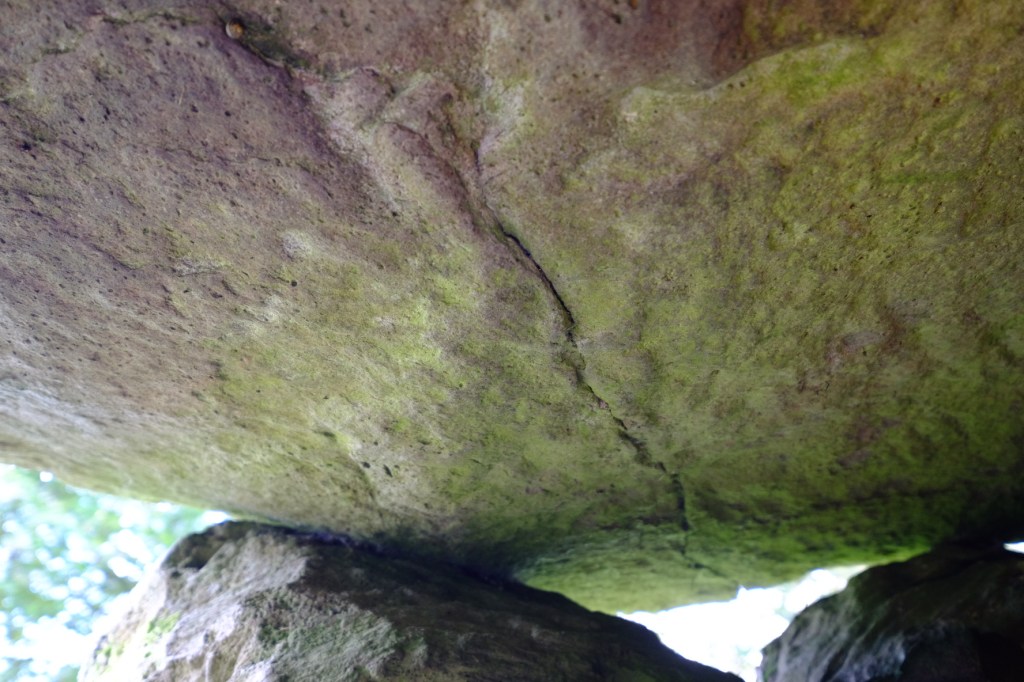
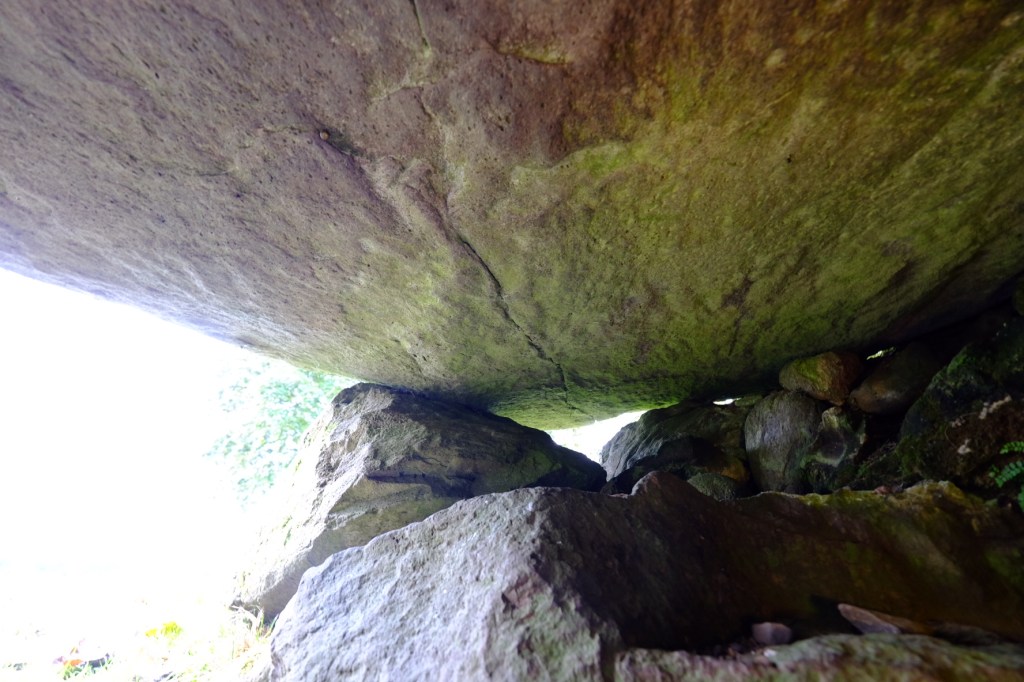
The figures were created by painstakingly pecking and working the stone’s surface. Thousands of years of weathering, however, have left their outlines so faint that ordinary photography struggles to reveal them.

Researchers subsequently used high-resolution 3D scanning and digital surface-enhancement techniques to identify and document the individual animals.

The most remarkable is a large red deer stag, affectionately nicknamed the Fabulous Stag, whose sweeping antlers and anatomical details reveal a surprisingly accomplished understanding of the animal.

Interestingly, the carvings are positioned so that the larger stags appear upside down when viewed from inside the burial chamber today. The precise circumstances in which they were created, and whether the stone was decorated before being incorporated into the monument, remain subjects of archaeological interpretation.

The discovery raises some fascinating questions.

Were these animals associated with hunting, social status, spiritual beliefs or something altogether different? Did they hold a particular significance for the people buried here?

We simply don’t know.

But imagine someone thousands of years ago, carefully working the image of a deer into this enormous slab of rock. Not a casual afternoon’s doodling, but a deliberate act requiring considerable time, skill and effort.

And here I was, around four millennia later, attempting to photograph the result with a digital camera while trying not to become permanently wedged beneath the monument.

Progress, of sorts.

My own photographs didn’t reveal the carvings quite as successfully as I’d hoped, so I’ve included a published archaeological reference image to illustrate what is actually concealed within the stone.

Comparing the two gives some idea of just how remarkable the discovery is. Without the benefit of specialist lighting and modern archaeological imaging, these ancient animals might easily have remained unnoticed.

Standing beside what initially appears to be little more than a collection of weathered rocks in a Scottish field, it’s extraordinary to think that someone left these images here thousands of years ago.

And that, perhaps, is what makes Kilmartin so captivating, the more closely you look, the more the landscape begins to reveal.

And I’d barely started hunting stones.

Nether Largie – Standing in the Company of Giants

My next encounter with Kilmartin’s prehistoric inhabitants was only a short distance away, at the Nether Largie Standing Stones.

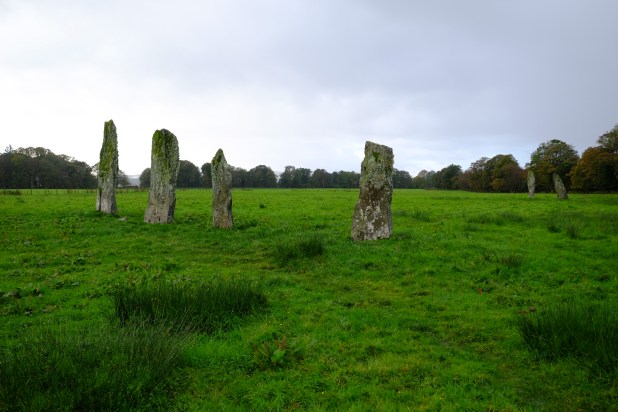
By now, the Scottish weather had begun to show a little mercy. The rain was easing, although the ground remained thoroughly saturated, and the surrounding fields had acquired that almost impossibly vivid shade of green that Scotland seems able to produce without the assistance of Photoshop.

And there, rising out of the grass, stood six enormous stones.

Four form an arrangement rather like a rough X, with another two standing slightly apart. Weathered, irregular and covered in extraordinary patches of moss and lichen, they command attention despite the apparent simplicity of their construction.
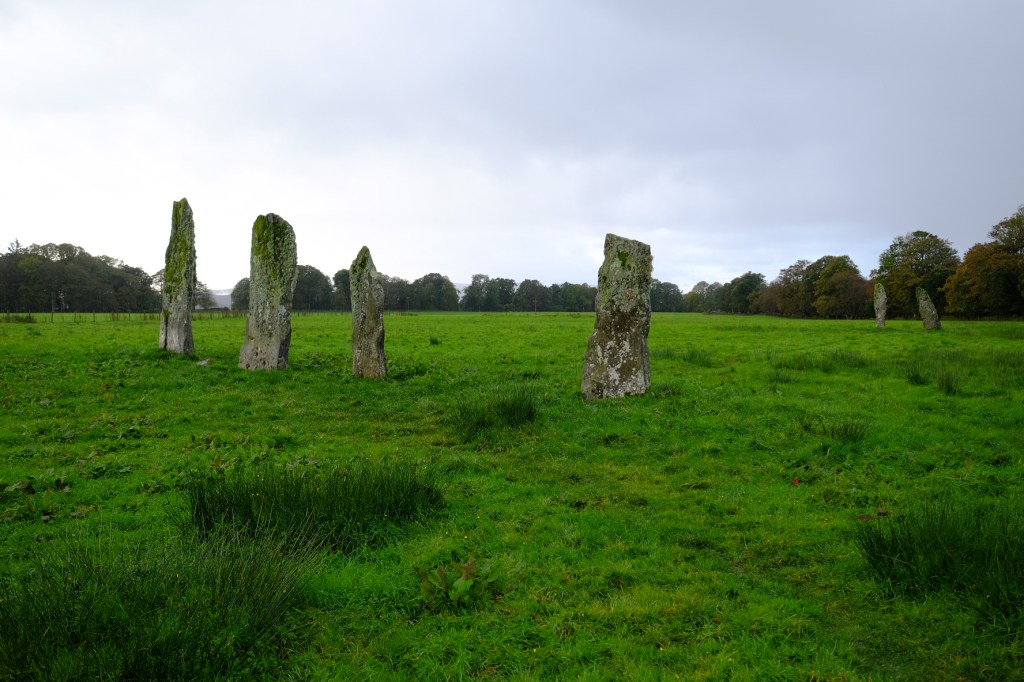
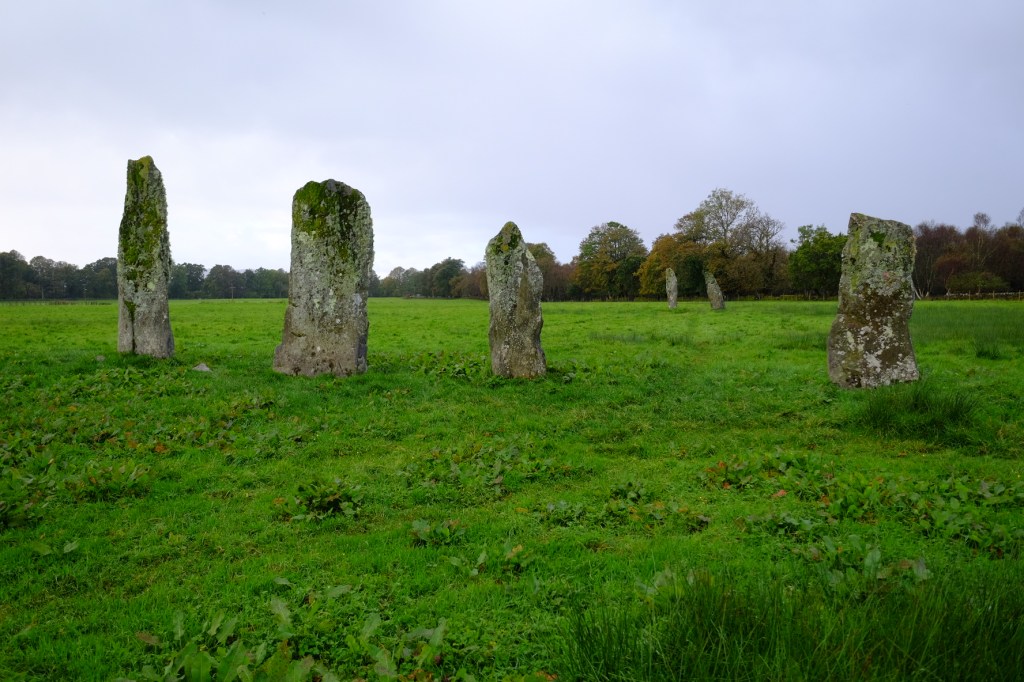
Thought to have been erected during the Middle Bronze Age, roughly 3,000 years ago, these monuments belong to a later chapter of Kilmartin’s prehistoric story than some of the great Neolithic ceremonial sites nearby.

Their precise purpose remains uncertain.

Were they territorial markers, gathering places or monuments associated with religious and ceremonial activities? Various astronomical alignments have also been proposed, although interpreting prehistoric intentions from arrangements of stone requires a certain amount of caution.

Whatever their purpose, somebody went to considerable trouble to select, transport and erect these massive slabs, long before the invention of anything resembling a convenient hydraulic lifting device.

And they weren’t simply left standing without further attention.

Ancient Marks – Leaving Something for Posterity

Moving closer to one of the larger stones, I became fascinated by its surface.

What appeared from a distance to be little more than weathered rock revealed a wonderfully complicated landscape of its own. Great colonies of pale grey lichen spread across the stone, contrasting with brilliant green moss clinging to its upper edges and crevices.

And then there were the small hollows.
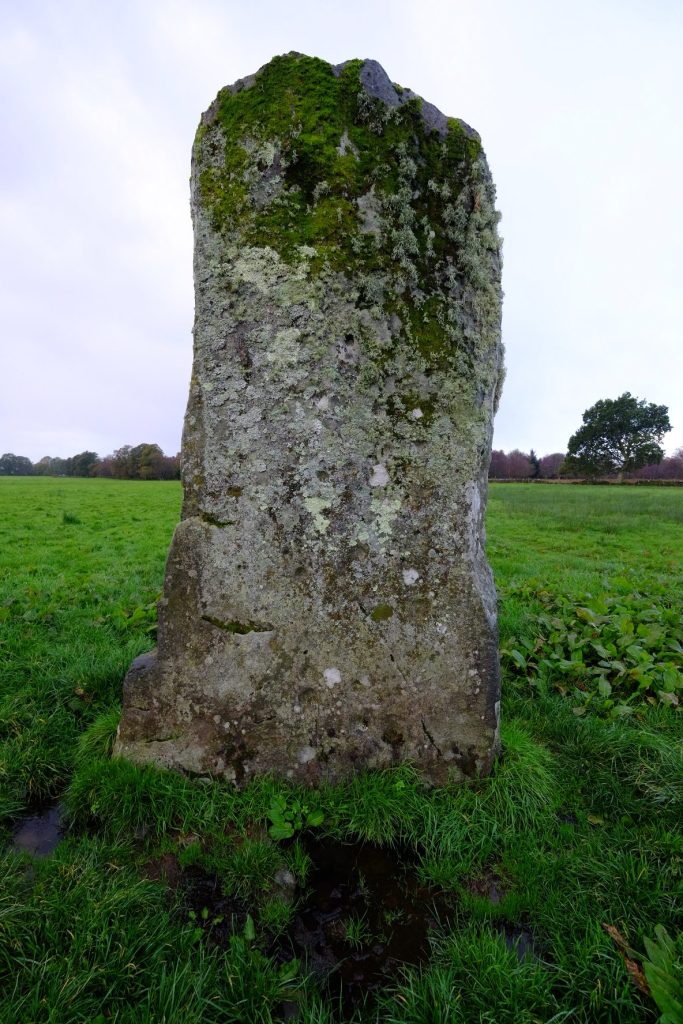
Some of the Nether Largie stones bear prehistoric carvings known as cup marks, occasionally accompanied by concentric rings. These were created by repeatedly striking or pecking the rock with a harder stone, gradually forming shallow depressions in its surface.

Simple enough in appearance, but their significance is anything but straightforward.

Similar carvings appear throughout prehistoric Britain and Ireland, particularly in landscapes associated with Neolithic and Bronze Age activity. Some are found on exposed rock surfaces, others on standing stones and burial monuments.

Were they symbolic representations of celestial bodies, markers of significant places, expressions of spiritual beliefs, or something entirely different?

Nobody knows for certain.

Not every hollow in an ancient stone is necessarily prehistoric artwork, of course. Natural weathering can produce remarkably convincing imitations. But the confirmed carvings at Nether Largie add another intriguing layer to an already extraordinary monument.

What particularly appealed to me was the contrast between the immense age of the stone and the delicate living organisms now covering its surface.
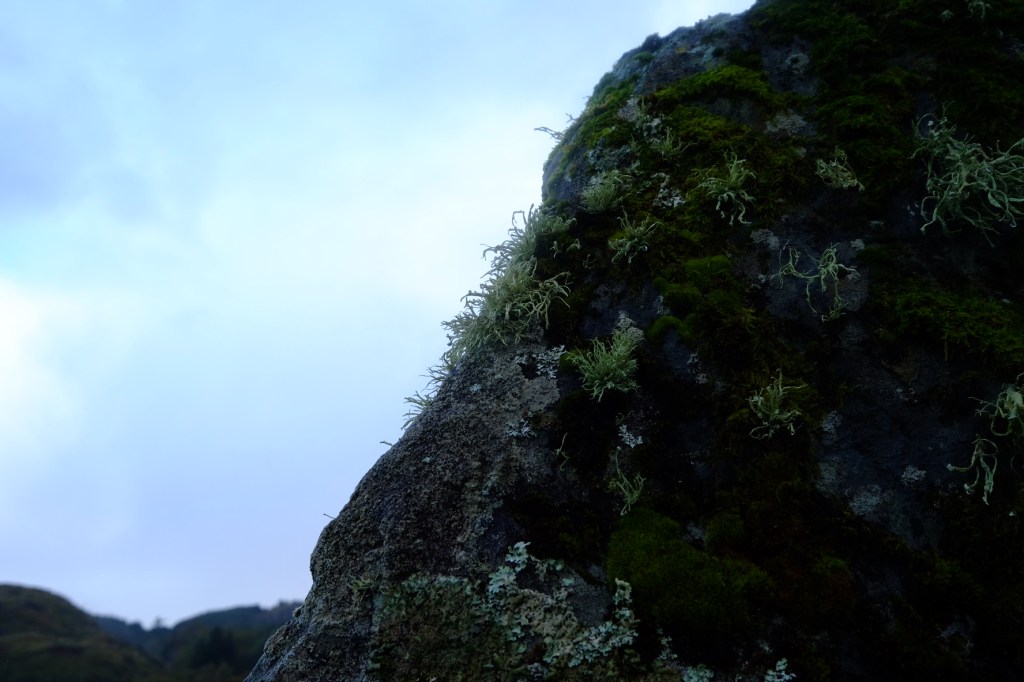
Thousands of years of human history, slowly being reclaimed by nature.

And considerably more successful than anything I’ve ever attempted to grow in the garden.

Looking out across the surrounding countryside, the setting itself was magnificent. Great green fields stretched towards distant hills, their upper slopes partially concealed beneath a low blanket of cloud.
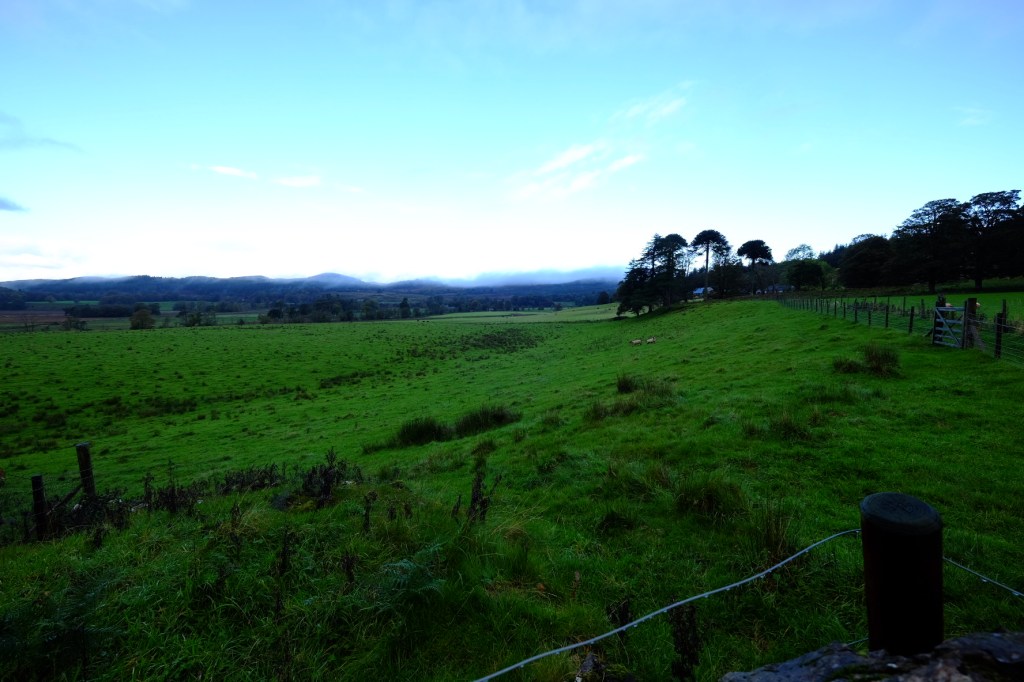
It was easy to understand why people might have considered this landscape special, even if the exact reasons behind their extraordinary monuments remain beyond our reach.

There was, however, something else nearby that I’d been particularly keen to explore.

And this one involved considerably more stones.

Temple Wood – A Circle of Life, Death and Mystery

A short distance from Nether Largie lies Temple Wood, one of the most fascinating prehistoric monuments in the glen.

At first sight, it appears to be a great circular arrangement of weathered stones emerging from a broad bed of rounded cobbles, with mature trees and beautiful countryside providing a wonderfully atmospheric backdrop.

But the site is considerably more complicated than it initially appears.
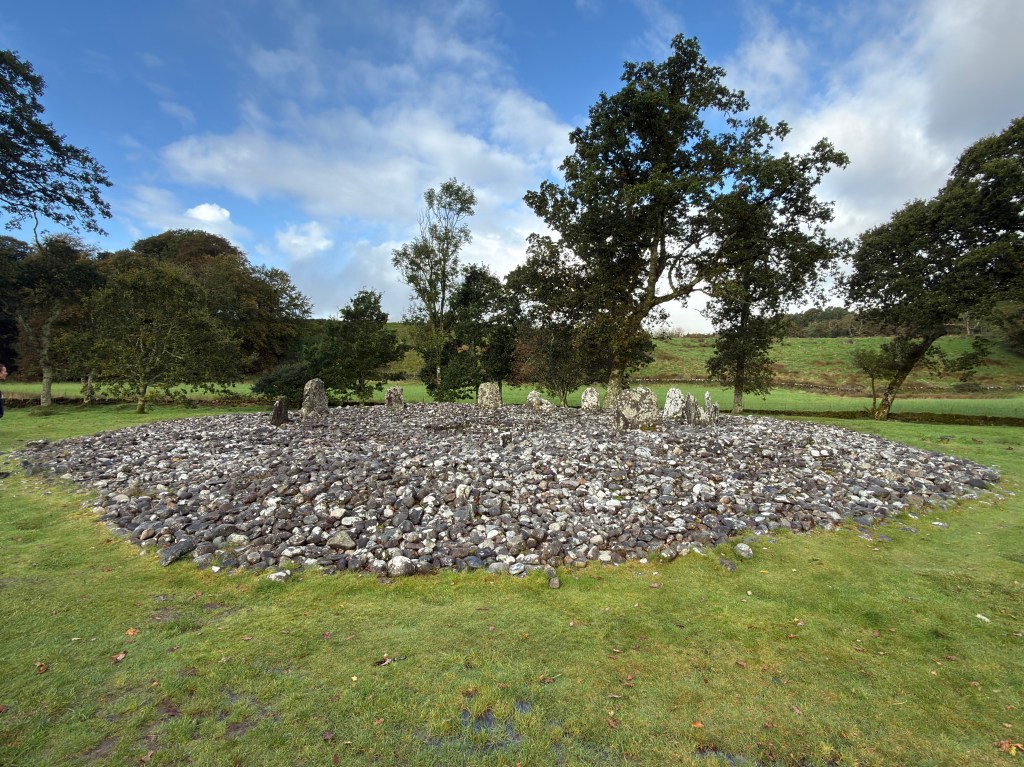
Temple Wood contains the remains of two prehistoric circles, commonly referred to as the northern and southern circles, whose development stretches across approximately two thousand years.

The earliest known activity began around 3500–3000 BC, when a circle of timber posts was constructed at the northern site. This was subsequently replaced, or at least partly replaced, by stone. Around 3000 BC, a larger oval arrangement of approximately 22 upright stones was established to the south-west.

What makes Temple Wood particularly interesting is that its purpose appears to have changed over time.

Initially associated with ceremonial activity, the southern circle was gradually modified. Low slabs were inserted between the standing stones, restricting physical access while still allowing people to see inside. Later, during the Bronze Age, burial cists were incorporated into and around the monument, and much of the circle was eventually filled with a great accumulation of stones.

In other words, what we see today isn’t simply an ancient stone circle.

It’s the surviving result of generations of activity, alteration and remembrance, with each successive community leaving something of its own behind.
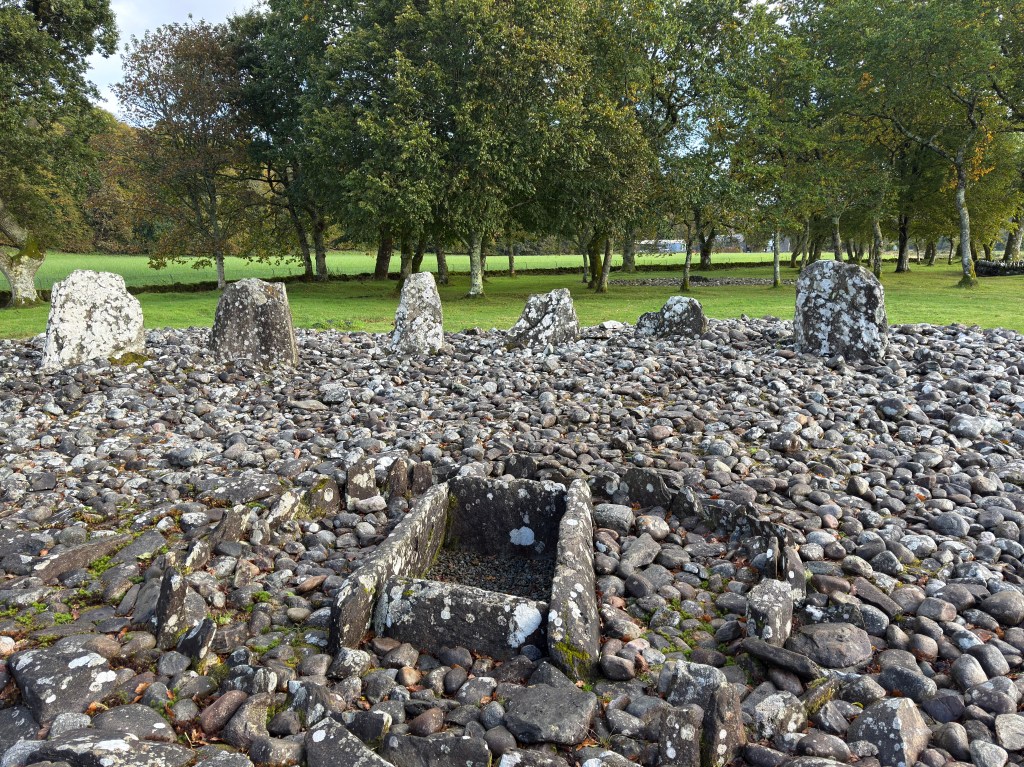
The exposed cist is particularly fascinating.

Essentially a small stone-built coffin, it provides a tangible connection with the funerary purpose the site eventually acquired. Excavations at Temple Wood revealed burial-related objects including pottery, flint arrowheads and mineral pigments such as red and yellow ochre.

Remarkably, the only surviving human remain recovered from within the southern circle was a child’s tooth.

A very small fragment of an individual life, preserved within an enormous monument constructed and modified over centuries.

There’s something rather moving about that.

Temple Wood also contains some extraordinary prehistoric artwork. One of its standing stones bears a carved spiral motif reminiscent of designs found in Irish passage-grave art, providing another intriguing connection with those wider Atlantic traditions discussed earlier.
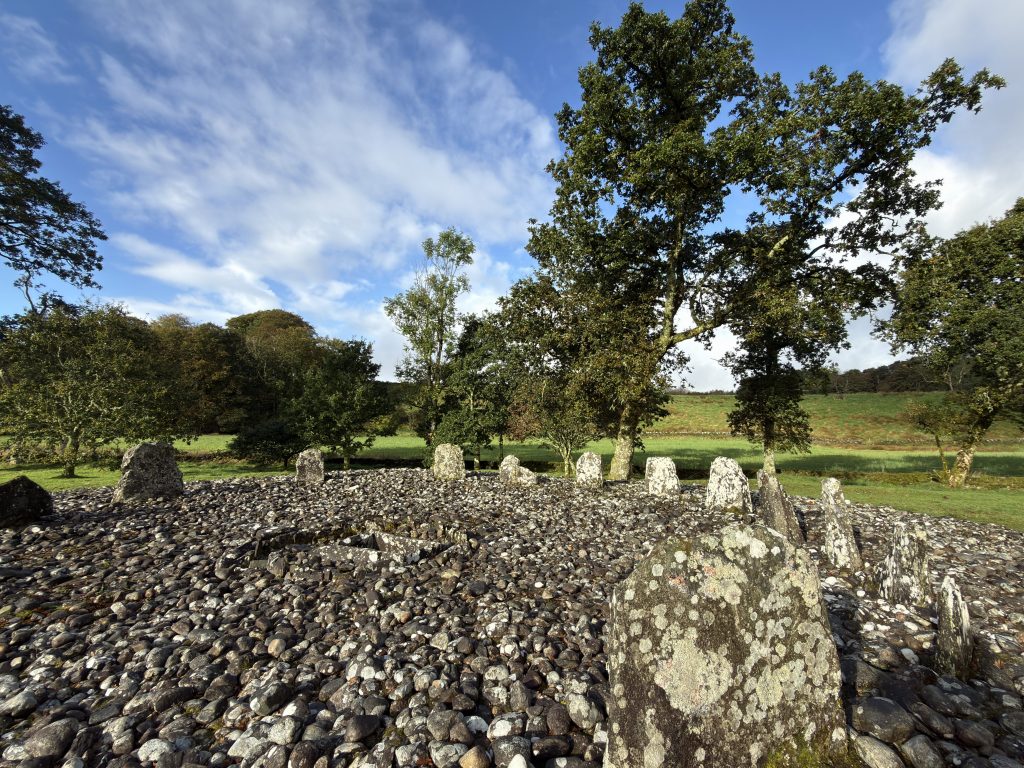
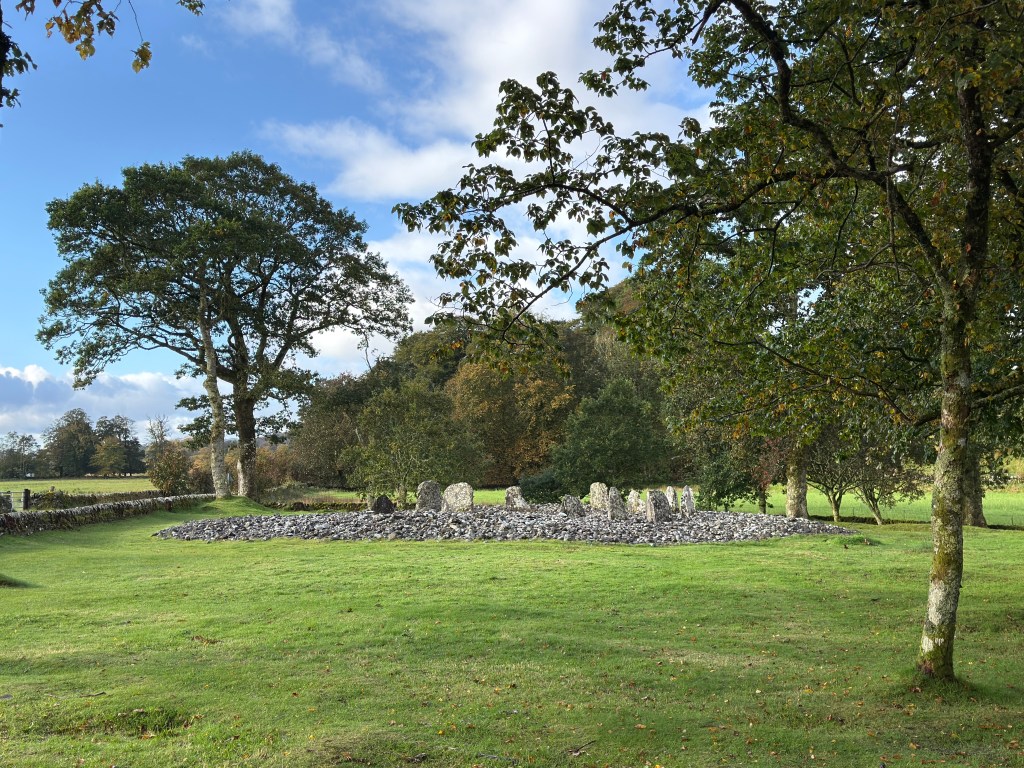
By now, the weather had undergone something of a transformation. The rain had given way to patches of blue sky, and sunlight was beginning to break through the clouds, illuminating the stones and surrounding trees. The change in atmosphere was wonderful. Here was a place that had witnessed thousands of years of human activity, whose builders had disappeared into prehistory, yet whose monument continued to command attention.

What ceremonies took place here? What did these stones represent to the people who first erected them? And why did successive generations continue to return?

We may never know all the answers.

But I suspect the people responsible would have been quietly pleased to discover that, five thousand years later, someone was still wandering around their creation, taking photographs and wondering what on earth they had been up to. My morning amongst the stones had been everything I’d hoped for.

It was, however, approaching the time when archaeology needed to make way for another important human tradition.

Lunch.

Oban – A Return to Civilisation, With Seafood

Leaving Kilmartin behind, I continued north towards Oban.

After a morning spent amongst burial chambers, standing stones and the remnants of prehistoric ceremonies, arriving in this bustling little harbour town felt like stepping forward several thousand years in one rather enjoyable journey. Often described as the Gateway to the Isles, Oban occupies a magnificent position on Scotland’s west coast, its sheltered bay providing an important departure point for ferries serving the Hebridean islands.

And there, crossing the water against a backdrop of distant hills and enormous billowing clouds, was one of Caledonian MacBrayne’s unmistakable ferries.
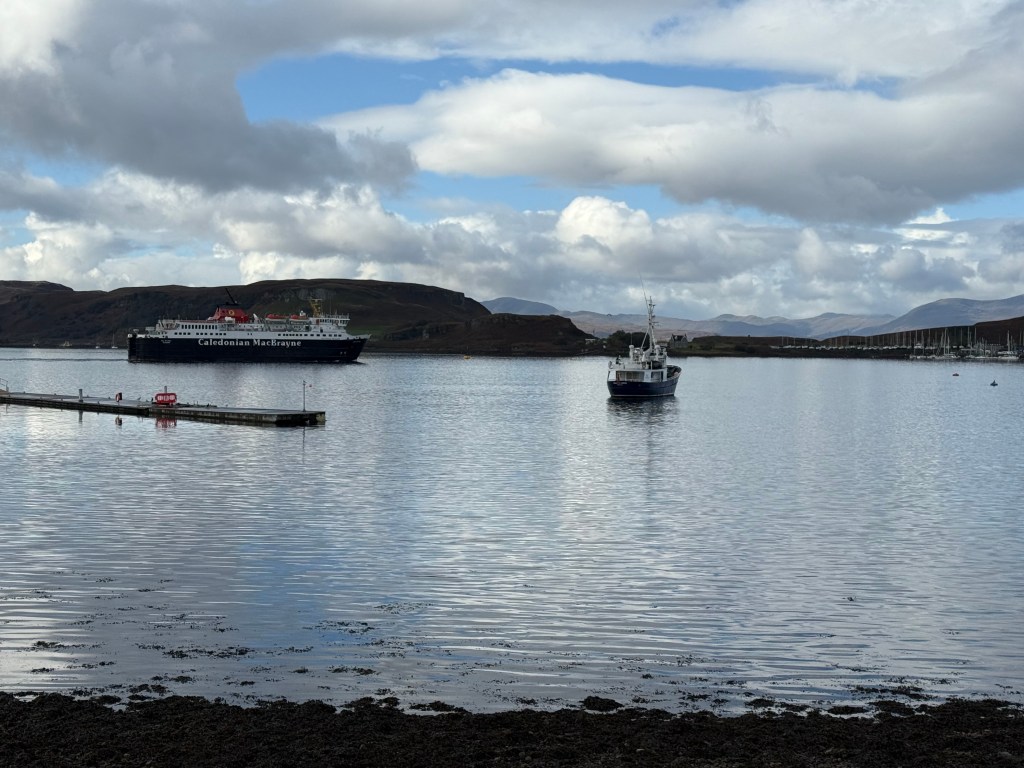
The harbour was a delightful mixture of working boats, pleasure craft and island ferries, with the surrounding hills providing a wonderfully dramatic setting. I spent some time wandering along the waterfront, taking in the atmosphere and enjoying the fact that, for once, the weather appeared to be cooperating.

Oban has long been associated with fishing, maritime trade and tourism, and there’s something particularly appealing about a town where the sea remains such an obvious part of everyday life. It also seemed an entirely appropriate place to investigate the local seafood.

Having devoted the morning to studying prehistoric burial practices, I thought a change of subject might be beneficial.

Ee-Usk – A Rather Welcome Lunch

After a morning spent exploring the resting places of Scotland’s prehistoric inhabitants, I decided it was time to concentrate on something considerably more appetising.

Lunch was at Ee-Usk, a seafood restaurant overlooking Oban’s bustling harbour. With the waters of the bay, fishing boats and ferries providing the backdrop, it seemed an entirely appropriate setting to sample some of Scotland’s wonderful seafood.

My choice was the oven-baked halibut, accompanied by creamed leeks and potato gratin.
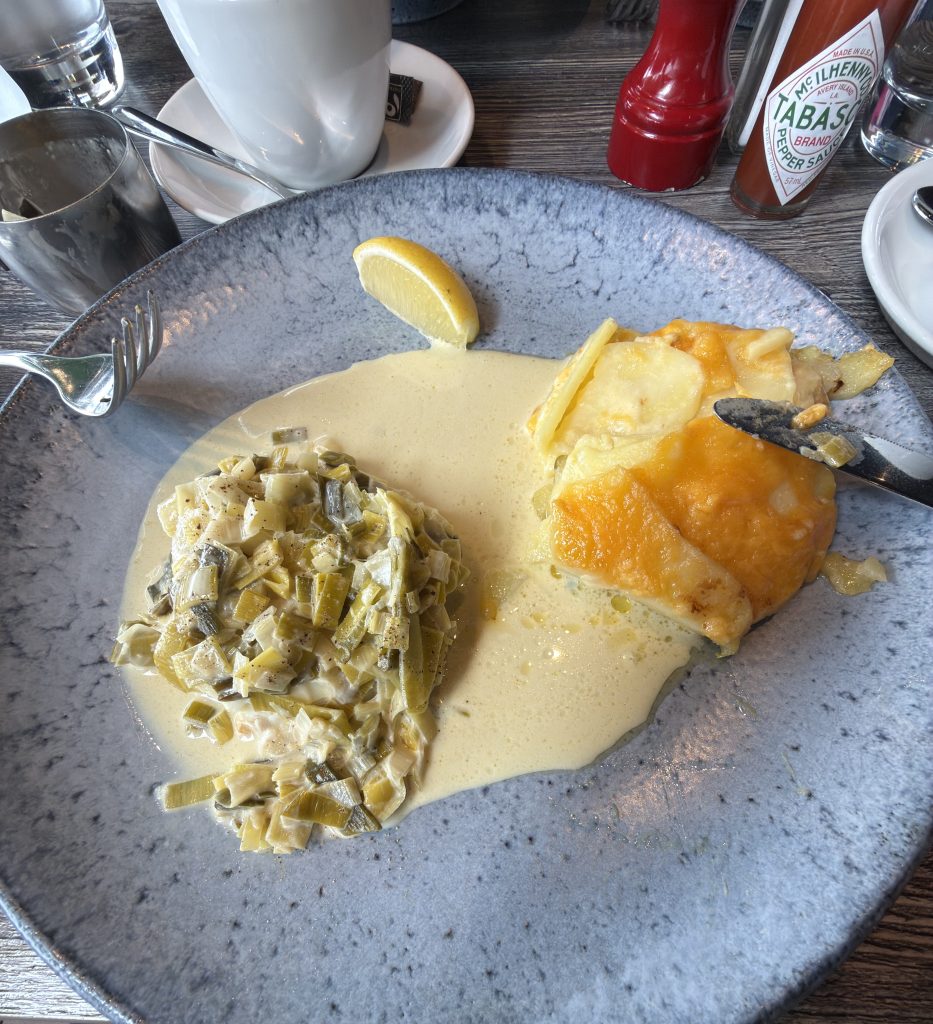
What arrived was a gloriously comforting plate of food. A generous fillet of halibut, its delicate white flesh beautifully cooked, accompanied by a substantial potato gratin with a golden, bubbling cheese topping. Alongside sat a generous helping of finely sliced leeks, softened in cream, with a rich, buttery sauce bringing everything together.

Halibut is a particularly lovely fish. Its firm, almost meaty texture allows it to retain its structure during cooking, yet when treated properly, the flesh separates into wonderfully moist, delicate flakes. Its flavour is mild and subtly sweet, making it an excellent partner for the richness of the accompanying cream.

The leeks provided their gentle onion sweetness, while the gratin contributed a welcome contrast of textures: a lightly golden surface giving way to soft layers of potato beneath. A squeeze of lemon cut through the richness beautifully.

This wasn’t food designed to challenge your understanding of modern gastronomy or leave you searching the plate for the principal ingredient. It was excellent produce, sympathetically cooked, generously served and thoroughly satisfying.

Exactly what I needed.

After spending the morning investigating how prehistoric communities honoured their dead, I was now paying considerably more attention to how the living should be fed.

And Ee-Usk had provided a rather compelling answer.

Oban – Whisky, Architecture and a Little Victorian Ambition

Suitably restored, I continued my wander around the town.

One of Oban’s most recognisable landmarks is its historic distillery, sitting remarkably close to the centre of town, with its distinctive chimney rising above the surrounding buildings.
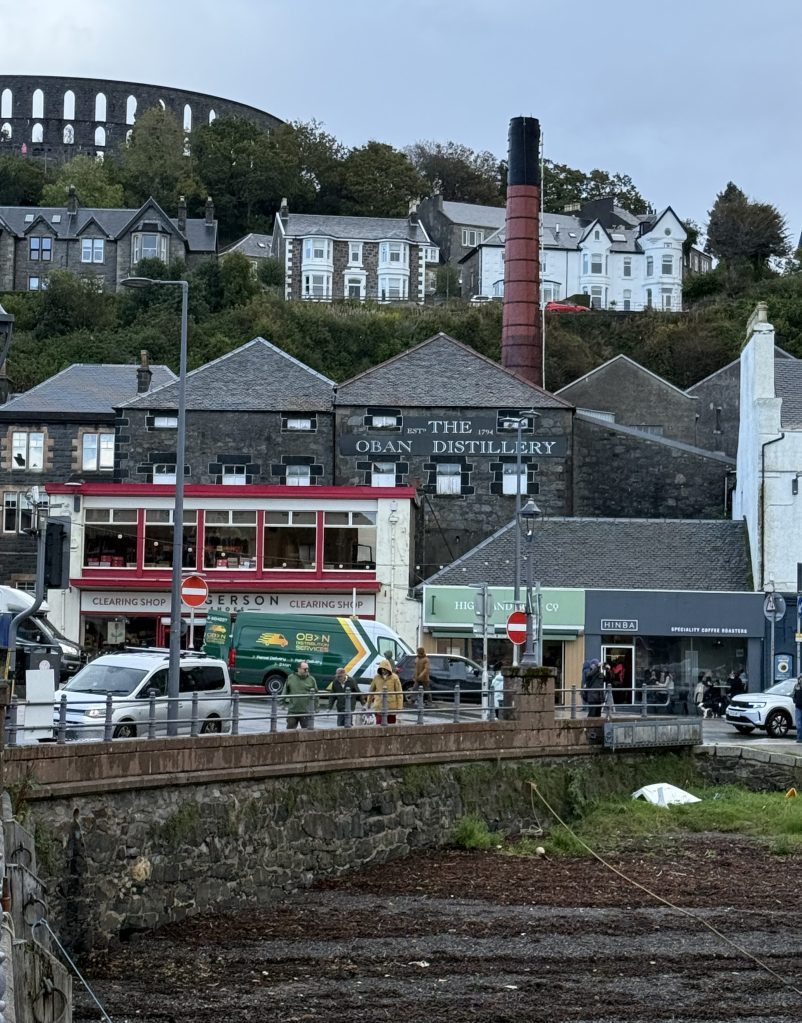
Established in 1794, Oban Distillery predates much of the modern town that subsequently developed around it.

It’s rather unusual to find a working malt whisky distillery occupying such a central position in a bustling coastal settlement, but the arrangement provides a wonderful reminder of the town’s commercial past. High above the distillery stands another of Oban’s most distinctive features: McCaig’s Tower.

Looking rather like somebody started constructing a Roman Colosseum on top of a Scottish hillside before deciding that the budget had become a little ambitious, the enormous circular structure was commissioned by local banker John Stuart McCaig during the 1890s.

His intention was partly to provide employment for local stonemasons during the quieter winter months, while also creating an enduring monument to his family. The original plans were rather grander than the structure that survives today, incorporating additional towers, galleries and commemorative statues.

McCaig died in 1902, and the ambitious project was never completed.

Nevertheless, what remains is one of Scotland’s more extraordinary Victorian follies, and undoubtedly gives Oban a skyline unlike almost anywhere else. An unfinished monument to personal ambition overlooking a town that had already given me an excellent lunch.

I rather liked the place, but it was time to continue north, as there was another historic structure waiting along the coast, and this one was perched on an island.

Castle Stalker – A Fortress, a Feud and a Rather Familiar Film Location

Continuing north from Oban along the coast towards Appin, the landscape became increasingly spectacular. The road passed between wooded slopes, tidal inlets and magnificent stretches of water, with distant mountains rising beyond the shoreline. And then, across the waters of Loch Laich, appeared one of the most photogenic castles in Scotland.
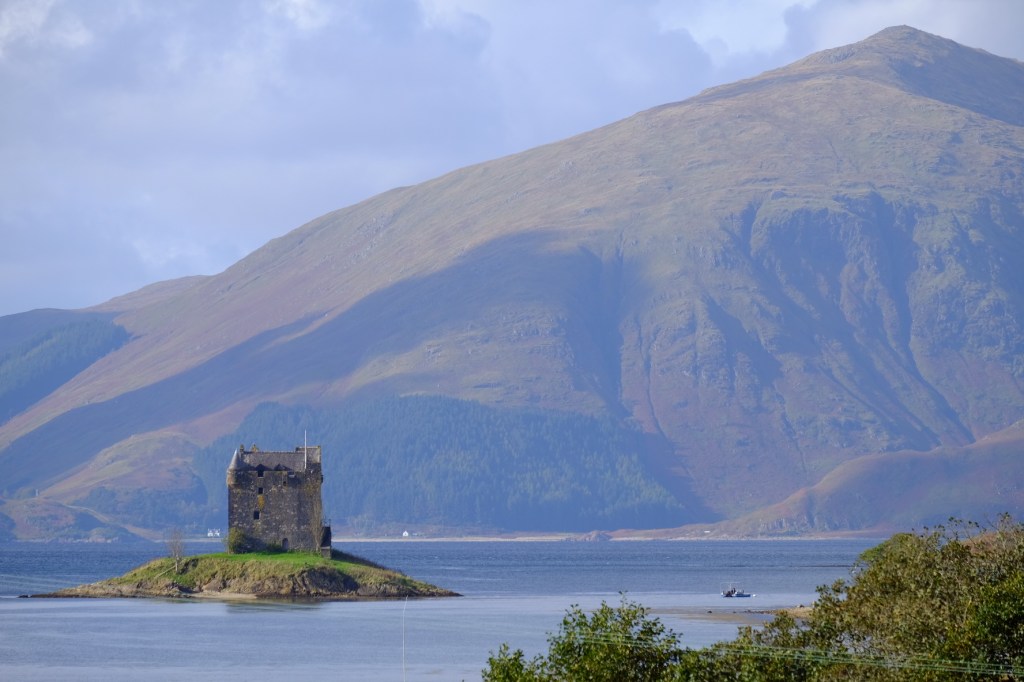
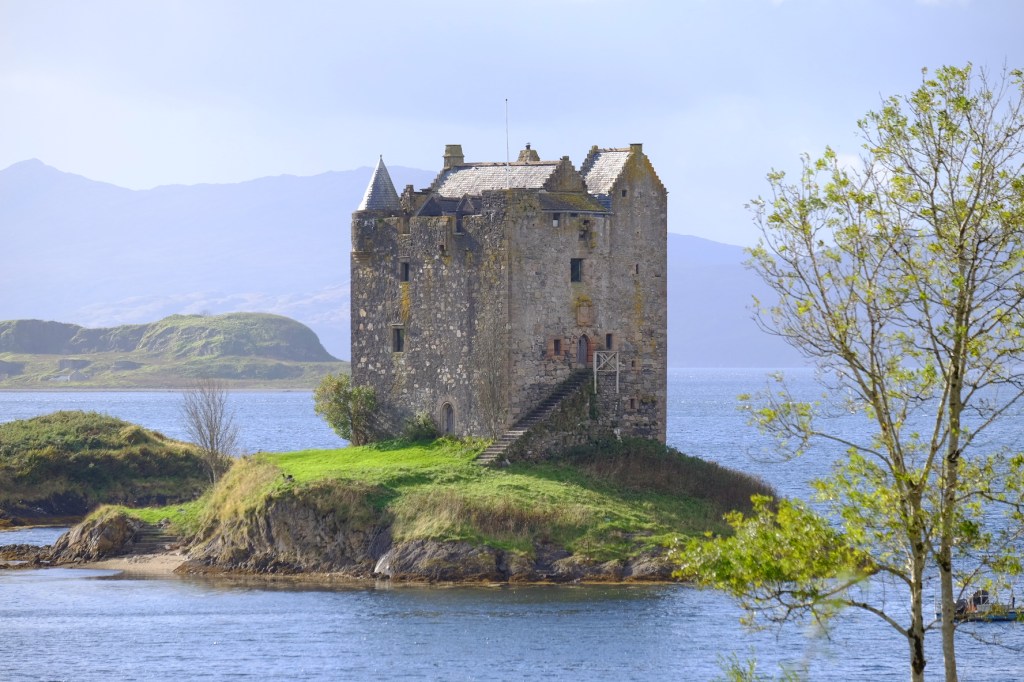
Castle Stalker stands on a tiny tidal island, its imposing stone tower rising above the water against a backdrop of forested hills and Highland mountains.

It’s one of those views that looks almost too perfectly Scottish to be real.

A medieval tower house, a small island, spectacular scenery and, on this particular afternoon, just enough changing sunlight to make the whole arrangement look as though somebody had organised the weather specifically for my camera. The castle’s origins are associated with the MacDougalls, who are believed to have established a small fortified structure here during the early fourteenth century.

The lands later passed to the Stewarts of Appin, and the present tower house is generally associated with Sir John Stewart of Lorn during the fifteenth century. Like so many Highland strongholds, its history is full of shifting loyalties, family rivalries, political intrigue and the occasional unfortunate disagreement settled with considerably more than a strongly worded letter.

One particularly dramatic episode concerns Sir John Stewart himself, who was fatally wounded outside Dunstaffnage Castle in 1463 by an adversary associated with the MacDougalls. According to the traditional account, he survived long enough to marry the mother of his son, thereby legitimising the child who would become the first chief of the Stewarts of Appin.

A wedding day that could hardly be described as going entirely according to plan.

Castle Stalker subsequently passed between the Stewarts and Campbells before eventually falling into disrepair. Thankfully, twentieth-century restoration secured its survival, leaving us with the wonderfully atmospheric building visible today. And if the castle looks vaguely familiar, there’s another reason. It appeared in the closing sequence of the 1975 film Monty Python and the Holy Grail, portraying the gloriously named “Castle Aaargh”.

A building with centuries of clan warfare, murder and political intrigue behind it, ultimately achieving additional fame thanks to a group of comedians searching for the Holy Grail.

History does occasionally have a rather wonderful sense of humour.
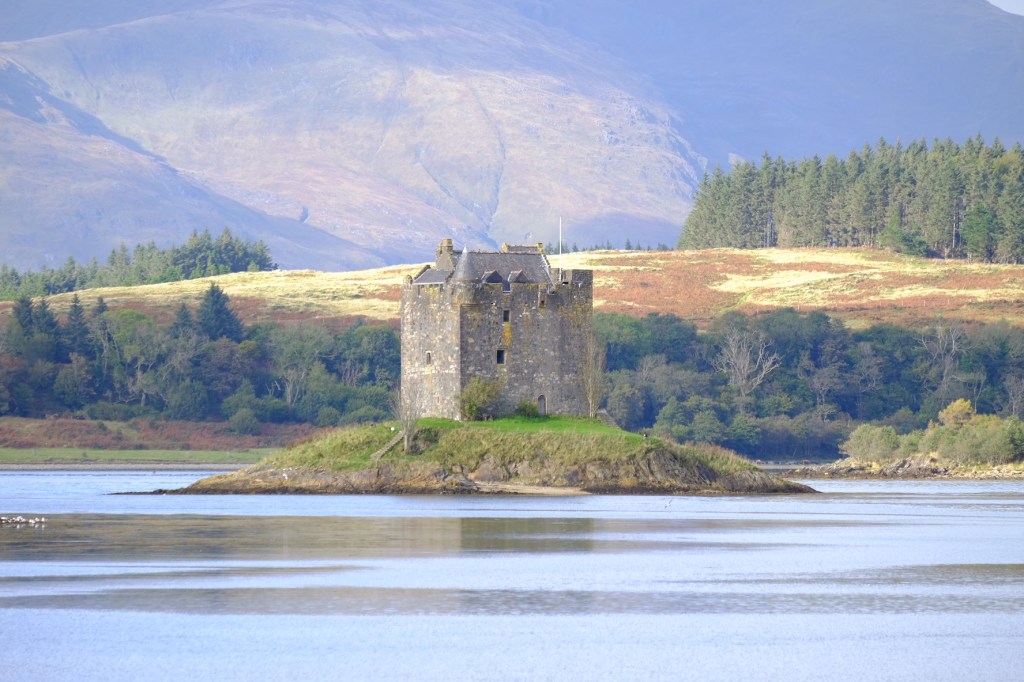
I spent a little time photographing the castle from the mainland, trying different compositions as the light shifted across the water and surrounding hills. The closer view reveals just how substantial the tower is, while the wider photograph captures what makes its setting so extraordinary. It was another of those places where the photograph almost takes itself.

Almost.

By now, I’d travelled from prehistoric burial monuments to a bustling harbour town and onwards to one of Scotland’s most evocative medieval castles, all in the space of a few hours.

And the day’s journey was far from over.

The road north was calling, and somewhere ahead lay the extraordinary landscapes of the western Highlands. Five thousand years of prehistory in the morning, fifteenth-century clan warfare in the afternoon.

Not bad for a Wednesday.

The Corran Ferry – Five Minutes to Another World

Leaving Castle Stalker behind, I continued north along the shores of Loch Linnhe towards the Corran Ferry. By now, the afternoon was moving on, and although I’d packed an extraordinary amount into the day, there was still some distance to cover before reaching my overnight accommodation in Acharacle.

The Corran Ferry provides a vital link between Nether Lochaber and Ardgour, carrying vehicles and passengers across the narrowest part of Loch Linnhe. The crossing itself is wonderfully short, approximately five minutes, but it saves drivers a lengthy diversion around the head of the loch via Fort William.

There’s something rather satisfying about driving straight onto a ferry, switching off the engine and allowing somebody else to take responsibility for forward progress, even if only for a few minutes. The route has provided a crossing between these shores for centuries. In earlier times, it formed part of the wider network of routes used by travellers, traders and cattle drovers moving through the western Highlands.

Today, it remains an essential connection for the communities of Ardnamurchan, Morvern and Ardgour, whose otherwise remote location makes the ferry considerably more important than its short journey might suggest.

And for me, it felt like crossing a threshold.

The busy roads and familiar trappings of civilisation were beginning to disappear, replaced by increasingly narrow stretches of tarmac, wooded hillsides and extraordinary glimpses of the surrounding mountains.

Scotland was becoming distinctly more Scottish.

Strontian – An Unexpected Contribution to the Periodic Table

Continuing west, the road eventually brought me to Strontian, a small village at the head of Loch Sunart. I’d included it in my route partly because of its history and partly because it provided a convenient point on the journey towards Acharacle. In fairness, there wasn’t a great deal happening to encourage an extended visit, but Strontian does have one rather extraordinary claim to fame.

It gave its name to a chemical element.

During the early eighteenth century, deposits of lead ore were discovered in the surrounding hills, prompting the development of a mining industry and the establishment of the village to accommodate its workers. In the late 1780s, scientists studying an unusual mineral associated with the mines discovered that it behaved differently from other substances then known to chemistry.

Further investigation established that it contained a previously unrecognised chemical element, subsequently named strontium after the village. The mineral itself became known as strontianite, while Sir Humphry Davy eventually isolated the metal in 1808. Rather impressively, this modest Highland settlement had managed to secure itself a permanent place on the periodic table.

Strontium compounds are perhaps best known today for producing the brilliant red colour in fireworks and signal flares. So, if you’ve ever admired a spectacular red firework illuminating the night sky, you can thank this little corner of Scotland for the name of the element responsible.

Sadly, Strontian itself wasn’t putting on anything quite so spectacular during my brief visit. other than a shop, cafe and public toilet so with no obvious reason to linger, I continued towards Acharacle, leaving the village to its rather distinguished scientific legacy.

Into Moidart – Where the Landscape Takes Over

The next stretch of the journey was beautiful.

The road wound westwards through woodland, past scattered houses and across an increasingly remote landscape. The mountains rose beyond the trees, their upper slopes disappearing beneath layers of cloud, while occasional breaks in the weather allowed the low evening sunlight to illuminate the hillsides.
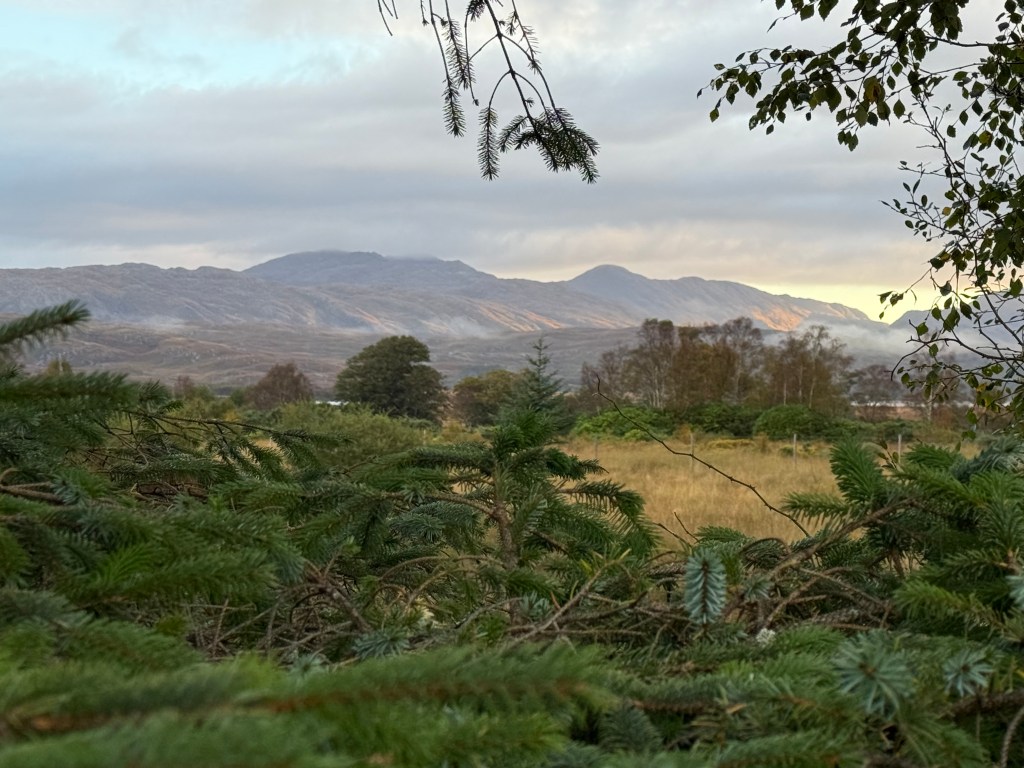
This was the Scotland I’d been imagining throughout those months of preparation.

Not simply magnificent scenery, but a landscape where geography had shaped centuries of human history. Mountains, sea lochs and narrow coastal approaches had influenced where people settled, traded, fought and constructed their strongholds.

And nowhere was that relationship more apparent than at my next photographic opportunity.

Castle Tioram – The Fortress Guarding Loch Moidart

I’d been particularly keen to catch sight of Castle Tioram, another remarkable medieval stronghold, standing on the tidal island of Eilean Tioram at the meeting of the River Shiel and Loch Moidart.

The location is extraordinary.

The castle occupies a rocky outcrop overlooking the waterways that once provided an important route between the sea and the settlements further inland. Its position allowed those controlling it to oversee movement through this strategically significant part of the western Highlands.
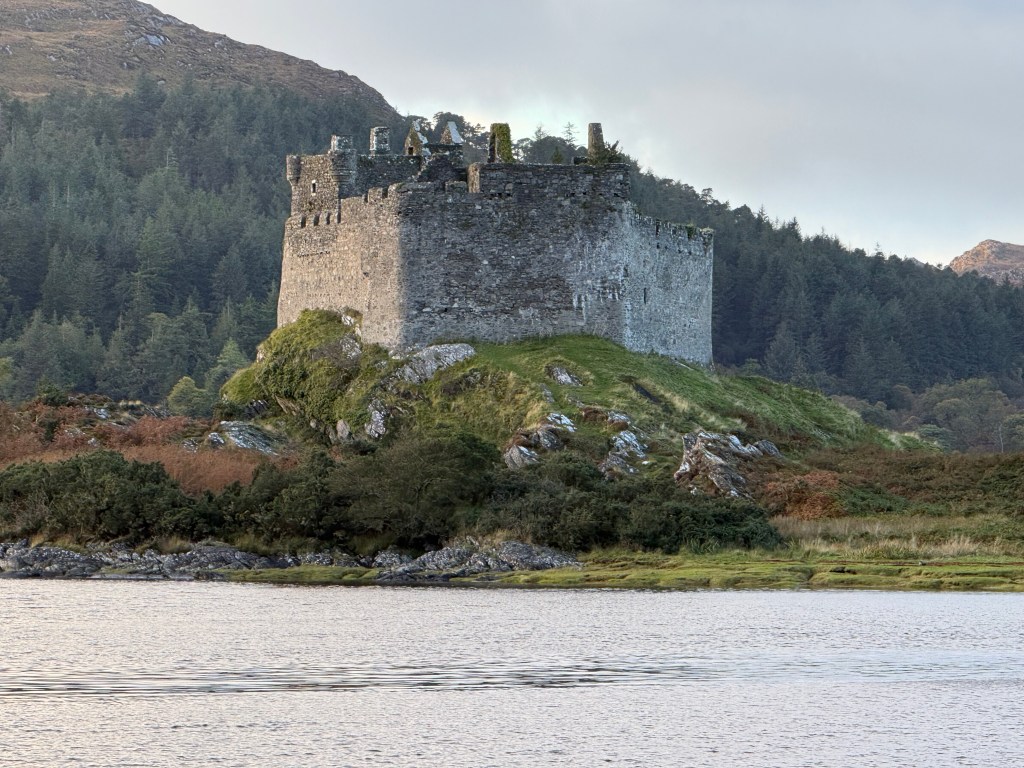
The surviving structure dates largely from the thirteenth century onwards and became one of the principal strongholds of the MacDonalds of Clanranald.

This was territory steeped in clan politics, shifting alliances and the recurring struggle for influence over the western Highlands and Islands.

Castle Tioram played a central role in that story for centuries, serving as a residence and administrative centre for the Clanranald chiefs. Its eventual abandonment is traditionally associated with the Jacobite rising of 1715, when Allan MacDonald of Clanranald is said to have set fire to the castle to prevent it falling into government hands.

The historical record confirms that the castle was burned in 1715, although, as with so many Highland stories, the circumstances have acquired a little additional colour through generations of retelling.

Today, its roofless walls and weathered stonework make it one of the most atmospheric ruins in the region. And there was another reason I found this particular castle so compelling. Beyond it lay Loch Moidart and Eilean Shona, the island that had been the real destination of this extraordinary journey from the beginning.

After months spent studying photographs, planning routes and imagining what lay ahead, I was finally approaching the place itself.

Although, before the island adventure could begin, there was still the small matter of finding somewhere to sleep.

Loch Shiel Hotel – Almost There

My destination for the evening was the Loch Shiel Hotel in Acharacle, a traditional Highland hotel close to the southern end of Loch Shiel. After a day that had begun in the pouring rain amongst prehistoric monuments, continued through Oban and its excellent seafood, and involved enough medieval castles to satisfy even the most enthusiastic student of Scottish history, I was more than ready to call it a day.

The hotel was perfectly situated for the next stage of the journey, and arriving in the fading evening light brought a welcome sense of having finally reached the western Highlands.

But the adventure was already beginning to take shape beyond the mainland.

The Advance Party – Kitchen in the Wild Gets Underway

One of the more exciting moments of the evening was catching sight of the advance party involved in preparing our forthcoming Kitchen in the Wild adventure.
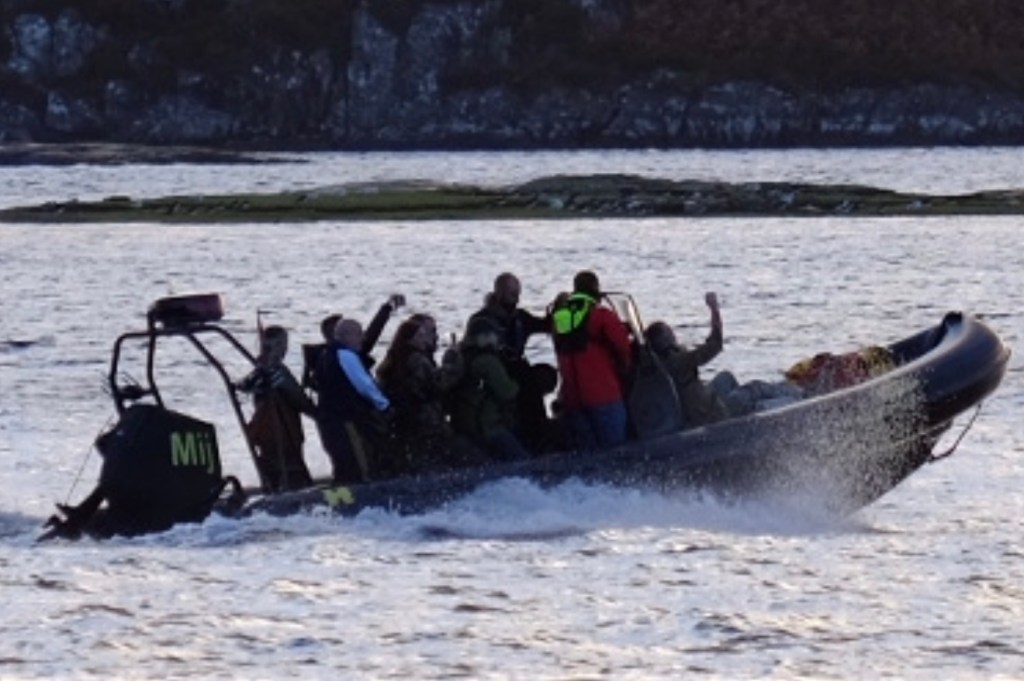
There they were, heading across the water, already engaged in the considerable business of getting everything ready for the main event, and what an event it promised to be.

Kitchen in the Wild had chosen Eilean Shona for its October 2026 Scottish adventure, bringing together a small group of food enthusiasts for several days of cooking, exploring and celebrating the extraordinary natural produce of Scotland’s west coast.

Joining host and chef Valentine Warner was special guest Nathan Outlaw, one of Britain’s most respected seafood chefs, whose two Michelin-starred restaurants in Port Isaac have established an exceptional reputation for allowing outstanding fish and shellfish to take centre stage.

The programme also included mixologist extraordinaire Nick Strangeway, co founder of the infamous St. John in London, Jon Spiteri and natural-history illustrator Anna Koska, alongside local guides and experts.

The prospect of exploring this remote island, surrounded by magnificent coastal scenery and an abundance of exceptional natural ingredients, had been occupying my thoughts ever since that original email landed in my inbox back in March 2025.

And now, seeing some of the team making their preparations, the whole thing suddenly felt very real indeed.

The anticipation was building.

Rather wonderfully, after travelling through thousands of years of Scottish history, I was now looking forward to something altogether more immediate.

What was for dinner?

And I suspected that, from this point onwards, things were going to become considerably more interesting.

The End of a Rather Extraordinary Wednesday

By the time I settled in at Loch Shiel Hotel for the evening, I had plenty to reflect upon.

I’d begun the day in Kilmartin, contemplating the lives and beliefs of people who had inhabited Scotland thousands of years before recorded history.

I’d crawled around beneath an ancient burial monument attempting to photograph prehistoric deer, wandered amongst enormous standing stones, explored a ceremonial landscape that had evolved over centuries and enjoyed an excellent seafood lunch overlooking Oban’s busy harbour.

Then came medieval strongholds, a ferry crossing, a village named after a chemical element and a magnificent drive through some of the finest scenery Scotland has to offer.

Not a bad day’s work.

And the weather, having started with what appeared to be a personal vendetta against my camera equipment, had eventually decided to cooperate. Kitchen in the Wild wasn’t due to begin until 4:30pm the following afternoon, which meant I still had the best part of Thursday to indulge my curiosity before joining everyone.

Naturally, I’d already planned how to fill it.

There was the small matter of a journey out to Ardnamurchan Lighthouse, perched at the most westerly point of mainland Britain, together with a few other places I’d earmarked during my research. After all, it would have been positively irresponsible to travel this far into the Highlands and not investigate a little further.

So, one more morning of exploration before exchanging the hire car and carefully printed itineraries for boats, island life, exceptional food and the company of a group of people who shared a common enthusiasm for all things edible. Nineteen months after that first email, the adventure I’d originally signed up for was almost upon me.

But first, there was a lighthouse to find.

And knowing Scotland, probably another opportunity to test the waterproofs.

…………………. Until Next Time ………….. L8ers …………….
A Little Bombay Before Several Thousand Years of Scotland (Part 2)

Day Two – Bombay Breakfast, Vikings and the Road to Ancient Scotland

After a thoroughly enjoyable first evening in Glasgow, Tuesday morning arrived, and with it the prospect of finally putting my meticulously researched Scottish itinerary into action. First, however, there was the rather important matter of breakfast.

I’d already earmarked Dishoom, conveniently located around a 10-minute walk from the AC Hotel by Marriott. Their Bombay-inspired breakfast offering had caught my attention during my pre-trip research, and I thought it would make a splendid start to the day. I had purchased the book by the same title some time back and was thoroughly inspired by the stories within.

A little Indian influence in Scotland before heading off in search of prehistoric burial chambers, ancient standing stones and centuries of clan warfare. Why not?

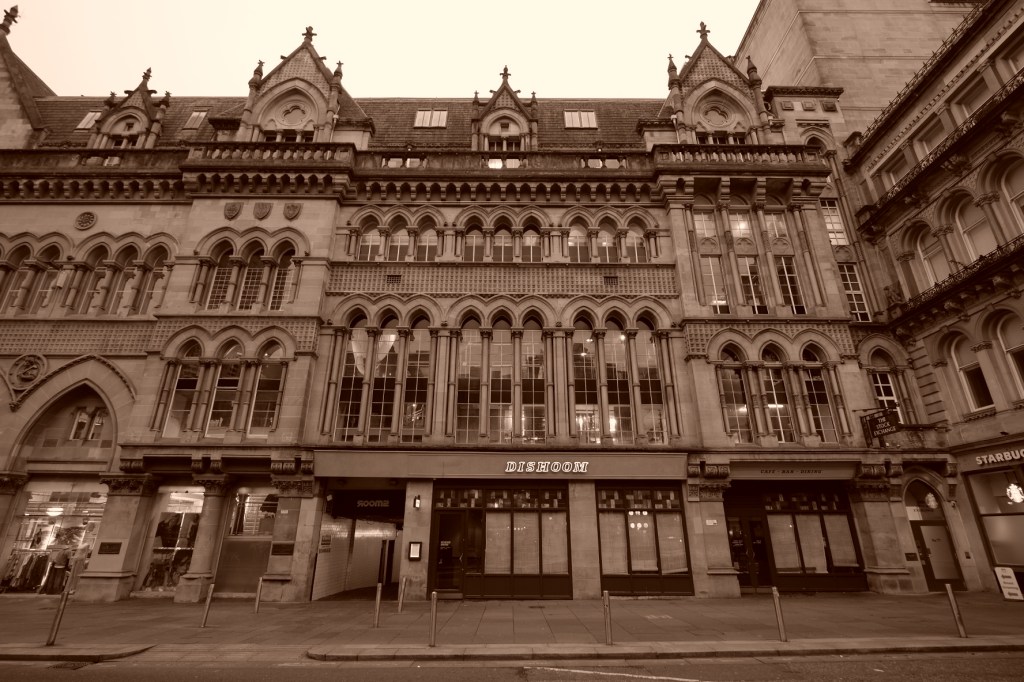
Dishoom occupies part of Glasgow’s magnificent former Stock Exchange building, an extraordinary piece of Victorian architecture that makes quite an impression before you’ve even stepped through the door.

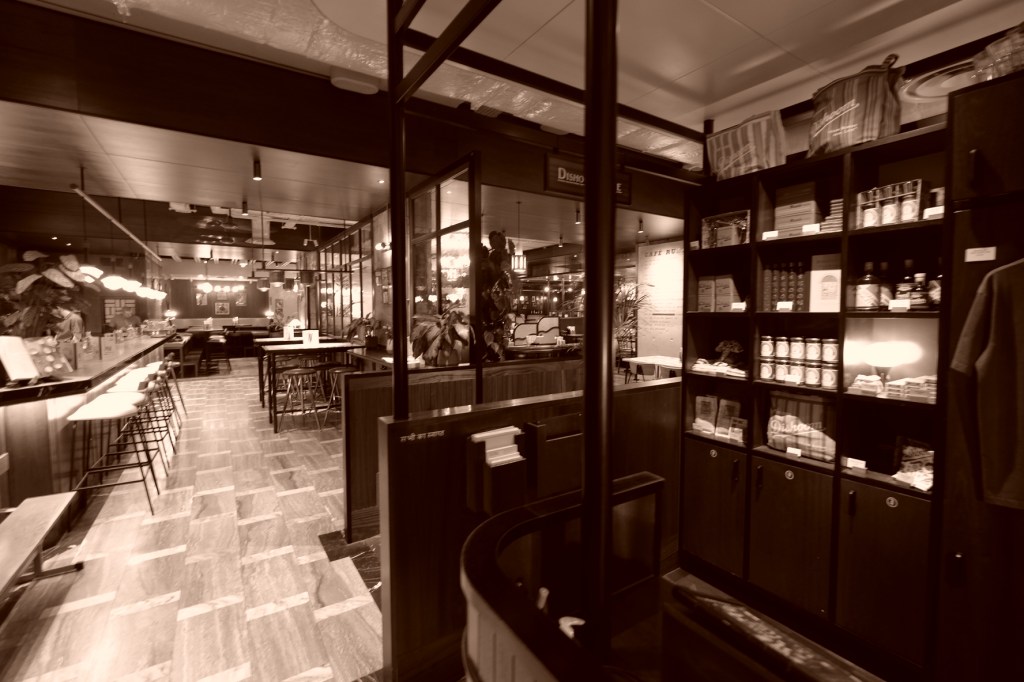
Inside, the atmosphere was warm and inviting, with its wonderfully eclectic mixture of old-fashioned furniture, patterned tables, framed photographs and the unmistakable character of a Bombay café.

Dishoom draws its inspiration from the Irani cafés that became such an important part of Bombay’s social and culinary history. Established largely by Persian immigrants, these were places where people from different communities and backgrounds could gather over tea, food and conversation. Once numerous, the original cafés have steadily declined in number, making Dishoom’s affectionate interpretation of them rather appealing. It certainly made a change from the usual hotel breakfast buffet.

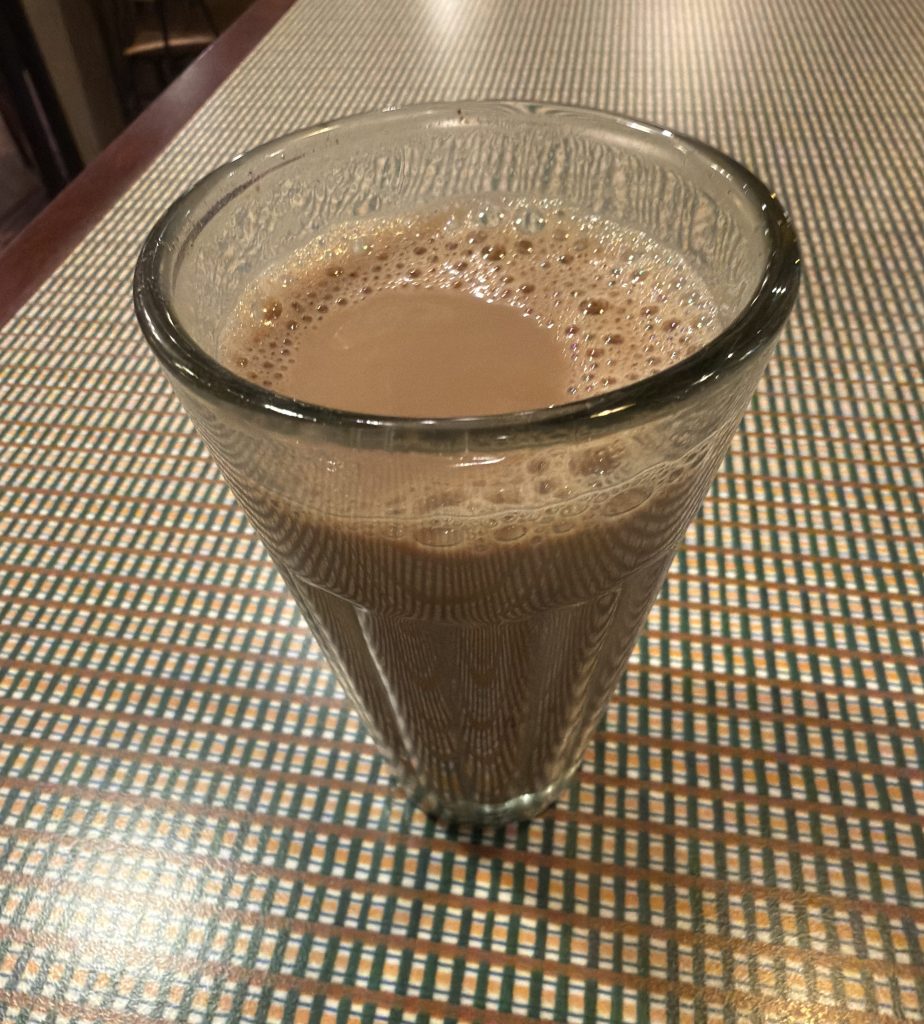
Naturally, there had to be chai.

Served in a simple glass, rich, warming and beautifully aromatic, it was just the thing to get the morning underway. There’s something wonderfully comforting about Indian chai, the combination of strong tea, milk, sweetness and warming spices producing a drink that feels considerably more indulgent than an ordinary cup of tea.

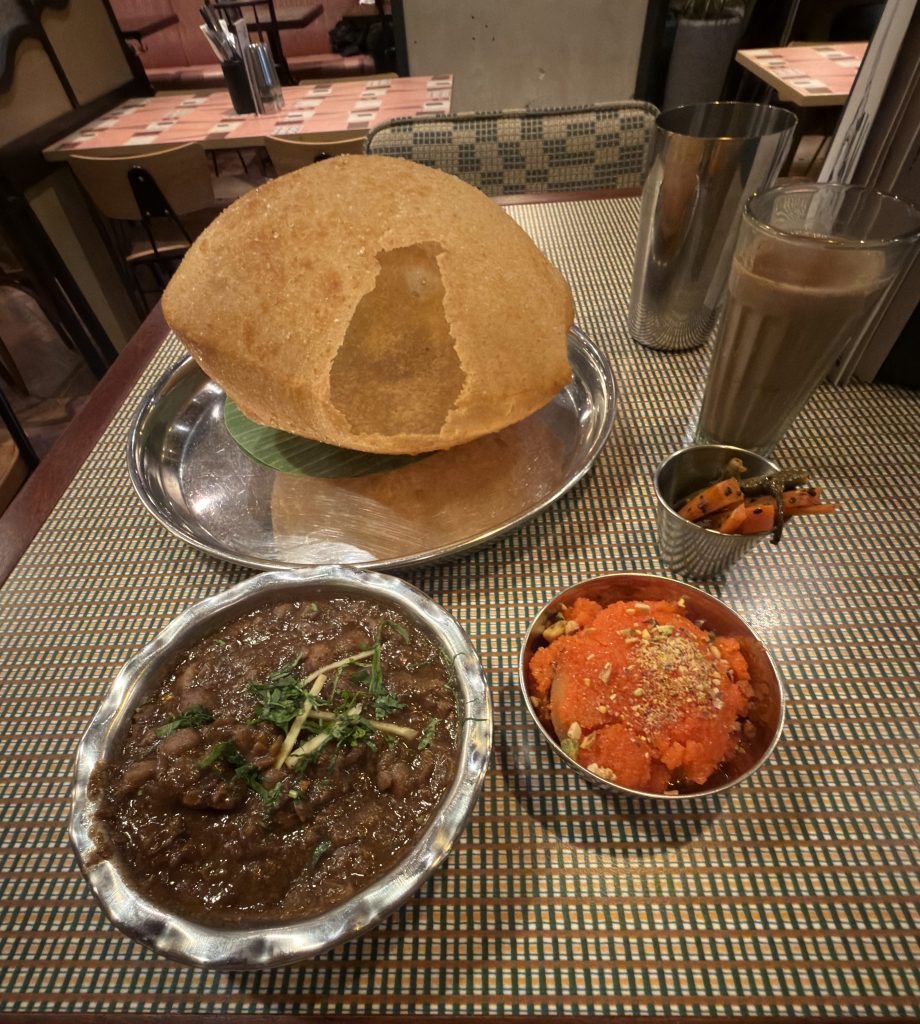
Breakfast itself was a wonderfully colourful affair. A richly spiced chickpea preparation, accompanied by a magnificent puffed puri, pickles and a portion of sweet halwa, Chole Puri Halwa, the chef’s favourite according to the menu.

The puri was quite a spectacle, arriving inflated like an edible balloon, its delicate golden shell practically demanding to be broken into.

The combination of savoury, spicy and sweet made for a rather interesting start to the day. A little of the chickpea curry scooped up with the bread, followed by something sweeter, another sip of chai, and suddenly the prospect of an ordinary bowl of cornflakes seemed deeply uninspiring.

Suitably fortified, it was time to turn my attention from Bombay to something rather older, as I was leaving a pristine paper cup was thrust in my hand, Chai to take-away, now that was service.

Glasgow Cathedral – Where the City’s Story Began

Suitably fortified by my rather splendid breakfast at Dishoom, it was time to check out of the hotel and get the adventure properly underway. A swift checkout was followed by the slightly less swift process of extracting the hire car from the multi-storey car park, whose narrow ramps and unforgiving concrete walls seemed designed to test both my driving skills and the limits of the rental insurance.

Car and driver eventually emerging unscathed, I set off for my next destination: Glasgow Cathedral.

This was somewhere I’d particularly wanted to explore. My pre-trip research into Scotland’s religious history, folklore and considerably darker past had revealed that Glasgow’s magnificent medieval cathedral had rather more stories to tell than its imposing architecture alone might suggest.

The cathedral is dedicated to St Kentigern, better known as St Mungo, Glasgow’s patron saint and a man whose story is an intriguing mixture of early Christianity, royal scandal and some fairly improbable miracles.

According to tradition, Mungo was born around the sixth century, the son of Princess Teneu (also known as Thenew), daughter of a British king, and a nobleman named Owain. His arrival into the world was apparently not universally celebrated. His mother, having become pregnant outside marriage, was condemned by her father and, according to later accounts, cast adrift in a boat without oars. Against considerable odds, she survived, eventually reaching the Firth of Forth, where Mungo was born.

Not perhaps the most conventional start to a distinguished ecclesiastical career.

The young Kentigern was subsequently raised under the protection of St Serf, traditionally associated with Culross, who is said to have given him the affectionate name Mungo, commonly interpreted as ‘dear one’.

He eventually travelled west, establishing a Christian community beside the Molendinar Burn, on the site associated with today’s cathedral. Around this early religious settlement, a community developed that would, over the centuries, become the great city of Glasgow.

But it’s the legends surrounding Mungo that make him particularly interesting.

His exploits are immortalised in Glasgow’s coat of arms, which features four rather unusual symbols: a bird, a tree, a bell and a fish carrying a ring in its mouth.

The bird represents a robin supposedly restored to life by the young Mungo after it had been killed by jealous fellow pupils. The tree recalls an occasion when he miraculously rekindled a sacred fire using a branch after the original flames had been extinguished. The bell is associated with his religious authority and a traditional story connecting it to Rome.

Then there’s the fish.

According to the legend, a queen of Strathclyde had lost a precious ring, which her suspicious husband subsequently demanded she produce. With her position becoming increasingly uncomfortable, she appealed to Mungo for assistance. He instructed a fish to be caught from the River Clyde, and there, rather conveniently, in the mouth of a salmon, was the missing ring.

A remarkable piece of divine intervention, although one suspects the salmon might have had a slightly different interpretation of events.

These stories survive largely through medieval religious biographies, most notably one written by Jocelin of Furness in the twelfth century, some 500 years after Mungo’s lifetime. They’re wonderful examples of Scotland’s early Christian folklore rather than events we can confidently establish as historical fact.

What is far more tangible is the magnificent cathedral itself.

Mungo is traditionally believed to have been buried here around AD 612, and his shrine became an important destination for medieval pilgrims. The great Gothic building we see today was developed largely during the twelfth and thirteenth centuries, with Bishop Jocelin initiating major expansion work in 1181.

Remarkably, Glasgow Cathedral is the only medieval cathedral on the Scottish mainland to have survived the Reformation with its principal structure intact, although its Catholic furnishings were subsequently removed.

So here I was, standing in a building whose origins stretched back to a sixth-century saint, whose supposed miracles still decorate the city’s official coat of arms, and whose final resting place helped give birth to Glasgow itself.

Not bad for a man whose career apparently began with resurrecting a robin.

And what a building it is.

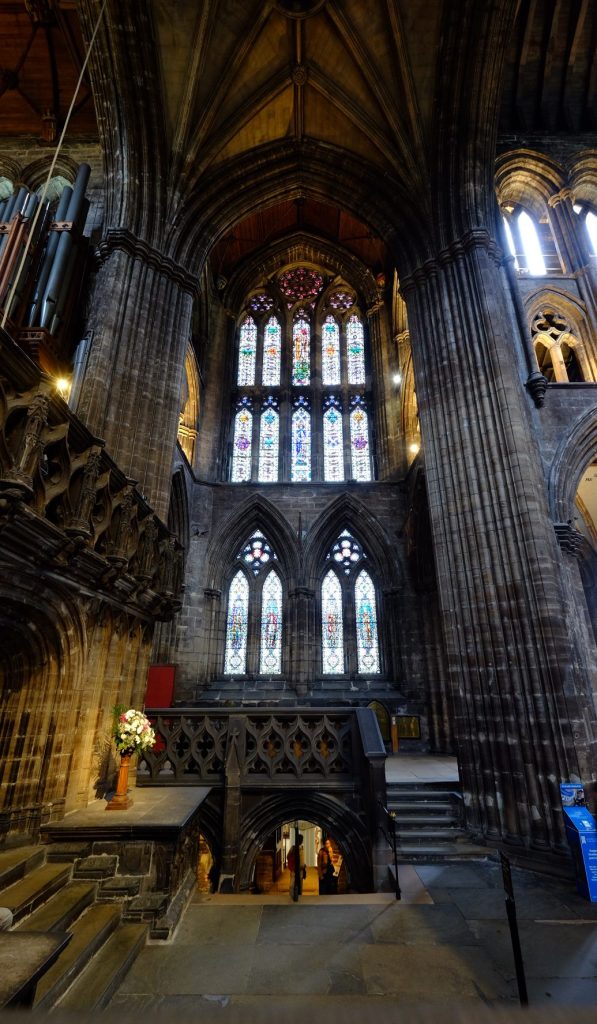
Stepping inside, your eyes are immediately drawn upwards. Great stone columns rise into pointed arches, intricate details emerge from the shadows and the sheer scale of the place makes you wonder quite how medieval craftsmen achieved such extraordinary results without the benefit of modern machinery.

What makes Glasgow Cathedral particularly remarkable is its survival. The Scottish Reformation of 1560 transformed the country’s religious landscape, bringing an end to papal authority and fundamentally changing the way people worshipped. Many medieval churches and cathedrals subsequently lost their furnishings, religious imagery and, in some cases, their very existence.

Glasgow, however, was fortunate. The cathedral survived substantially intact, although its Catholic furnishings and decoration did not escape the changes. Its continued use as a place of Protestant worship helped preserve one of Scotland’s finest examples of medieval Gothic architecture.

A rather impressive survivor, considering Scotland’s occasional enthusiasm for dismantling anything associated with the previous administration.

A Little Colour Amongst the Ancient Stones

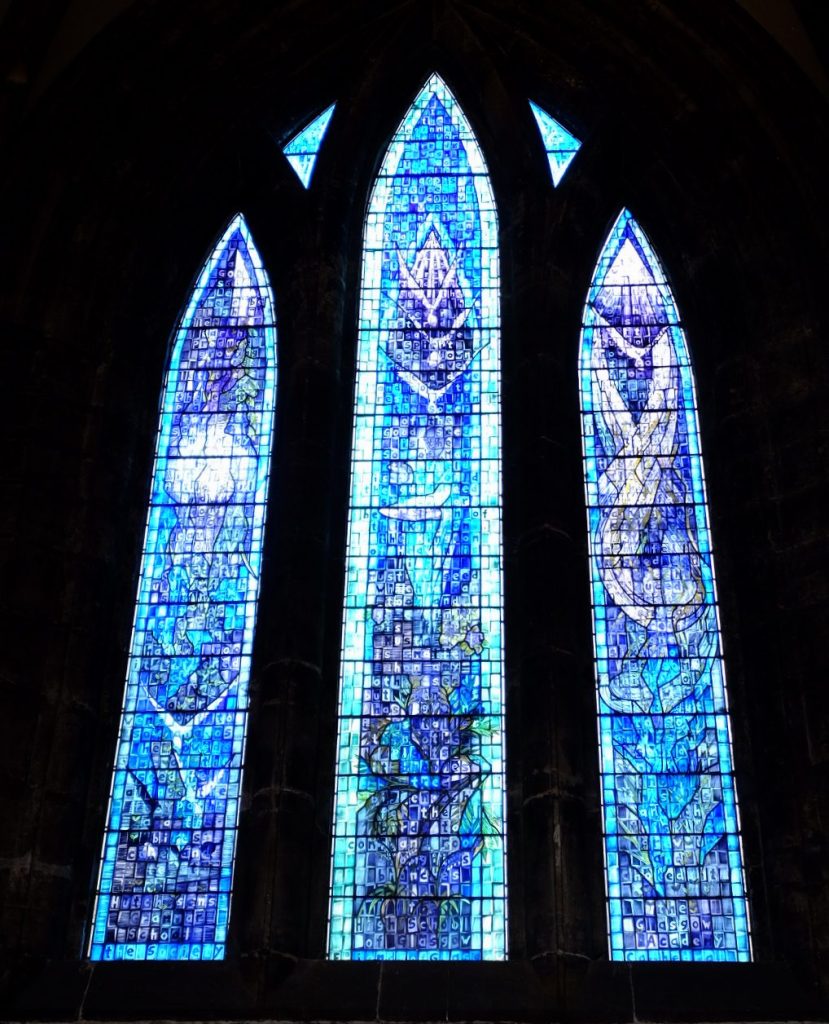
One of the things that particularly caught my attention was the stained glass. Set against centuries-old dark stonework, the extraordinary intensity of the colours creates an almost theatrical effect, especially when the light catches them.

Perhaps the most striking was a magnificent arrangement of brilliant blue windows, their modern design contrasting beautifully with the medieval architecture surrounding them.

Interestingly, much of the stained glass we see in Glasgow Cathedral today is relatively modern. The Reformation had swept away the medieval glazing, and although Victorian stained glass was introduced during the nineteenth century, much of this was subsequently replaced during the twentieth century.

The result is a fascinating combination of medieval craftsmanship and contemporary artistic expression, centuries apart but somehow entirely at home together.

I particularly liked the contrast. The building itself speaks of an age when faith was central to almost every aspect of daily life, while the windows demonstrate that even a cathedral approaching 900 years of age can accommodate something new.

Faith, Folklore and a Rather Dangerous Time to Be Different

My interest in Glasgow Cathedral wasn’t entirely architectural, however.

During the months leading up to this trip, I’d spent considerable time exploring Scotland’s darker religious history, particularly the relationship between Christianity, traditional folk beliefs and the persecution of those accused of witchcraft.

For centuries, Scotland’s communities had lived with a fascinating mixture of Christian teachings and much older beliefs. Fairies, healing charms, sacred wells, supernatural encounters and folk remedies were woven into everyday life, especially in rural communities. These weren’t necessarily regarded as contradictory beliefs by the people practising them. A person might attend church on Sunday and still seek assistance from a local healer, carry a protective charm or avoid a particular hillside after dark for fear of disturbing its otherworldly inhabitants.

Following the Reformation, however, religious authorities increasingly sought to regulate such practices, and the passing of Scotland’s Witchcraft Act in 1563 made witchcraft a capital offence.

The consequences could be devastating.

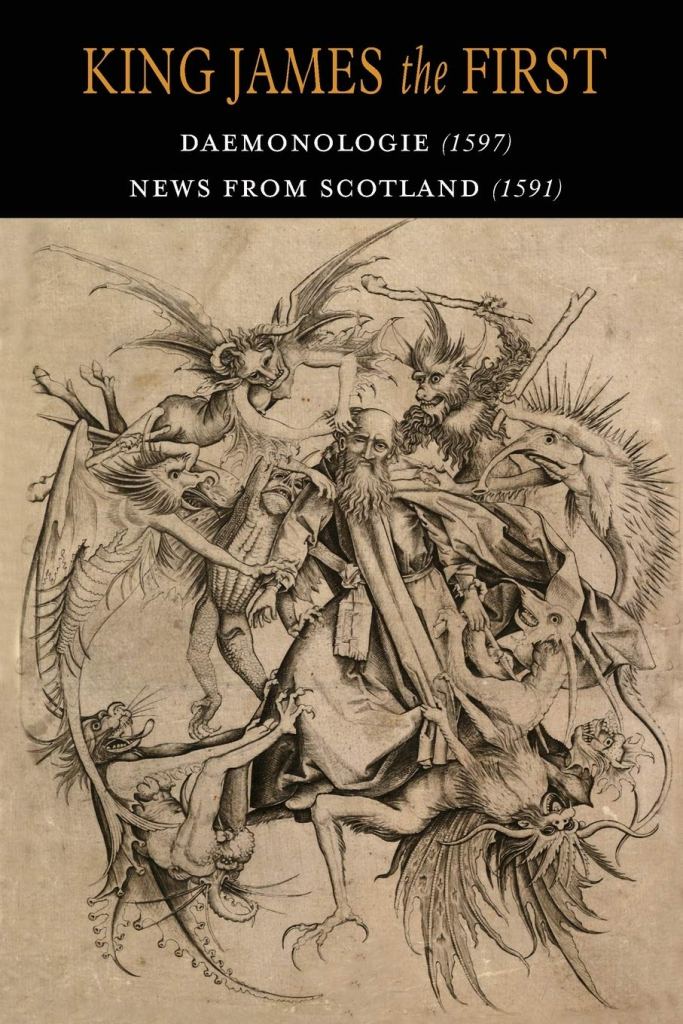
Scotland experienced several major periods of witch-hunting during the late sixteenth and seventeenth centuries. Accusations were frequently driven by local disputes, illness, misfortune, suspicion and fear, with women disproportionately represented among those prosecuted. Even King James VI developed something of an obsession with the subject, publishing his treatise Daemonologie in 1597, in which he argued for the reality of witchcraft and the need to suppress it.

An unfortunate time to fall out with the neighbours, particularly if your herbal remedies were more successful than the local physician’s.

Standing inside the cathedral, I found myself thinking about the extraordinary changes in belief that had taken place within these walls. The same building had witnessed medieval Catholic worship, the upheavals of the Reformation and the emergence of a very different religious Scotland.

And just outside, amongst the weathered gravestones, was a reminder that not everyone in sixteenth-century Glasgow was preoccupied with witches and the supernatural.

Some were attempting to drag medicine into the modern world.

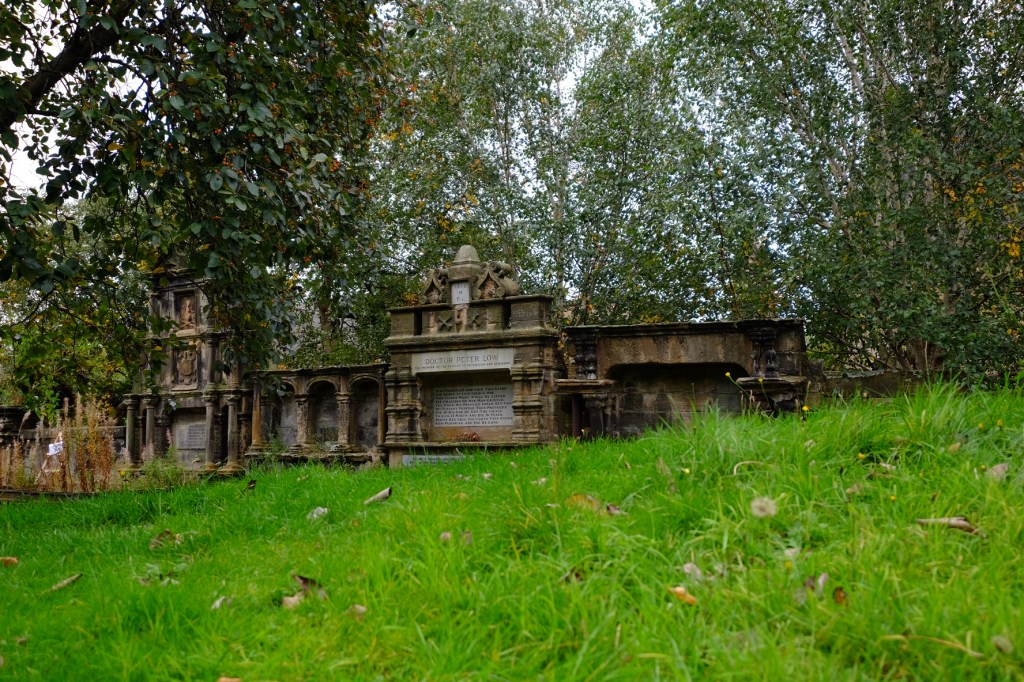
Doctor Peter Low – A Man Ahead of His Time

Among the monuments near the cathedral is an impressive memorial to Doctor Peter Low, a rather remarkable Scottish surgeon whose contribution to medicine deserves considerably wider recognition.

Born around the middle of the sixteenth century, Low spent time studying and practising surgery in France before eventually settling in Glasgow. In 1597 he published The Whole Course of Chirurgerie, an important surgical textbook that helped bring together contemporary medical and surgical knowledge in the English language.

Two years later, in 1599, he secured a royal charter from James VI establishing what would eventually become the Royal College of Physicians and Surgeons of Glasgow.

His ambition was to improve medical standards and ensure that those practising surgery and medicine were properly examined and qualified.

This was no small undertaking in an age when medical treatment could be something of a lottery, and the distinction between a trained practitioner, an enthusiastic barber and someone armed with a collection of questionable remedies wasn’t always reassuringly clear.

Low’s original organisation also had responsibility for examining and regulating practitioners, including surgeons and apothecaries, and its foundation represented an important step towards the professional medical institutions we recognise today.

His memorial is an intriguing survivor, tucked away amongst the older stones, and a reminder that Glasgow was developing a serious intellectual and scientific identity long before the Industrial Revolution transformed it into one of Britain’s great commercial cities.

What I particularly enjoyed was the historical contrast.

Here was a city in which religious authorities were grappling with witchcraft and supernatural beliefs while pioneering individuals such as Peter Low were simultaneously attempting to establish more rigorous standards in medicine.

Faith, fear, folklore and emerging science, all occupying much the same period of history.

Scotland in the sixteenth century was certainly never dull.

But fascinating as Glasgow had been, the clock was ticking. I still had an ambitious itinerary ahead of me, and after yesterday’s aviation-related disruption, I was determined to recover at least a little of my carefully prepared schedule.

It was time to leave the city behind.

Next stop, Dumbarton Rock, where the history was considerably older, the defences rather more imposing and the Vikings had once made themselves spectacularly unwelcome.

Leaving Glasgow – The Road to Dumbarton

With my exploration of Glasgow Cathedral complete, it was time to leave the city behind and begin the journey west.

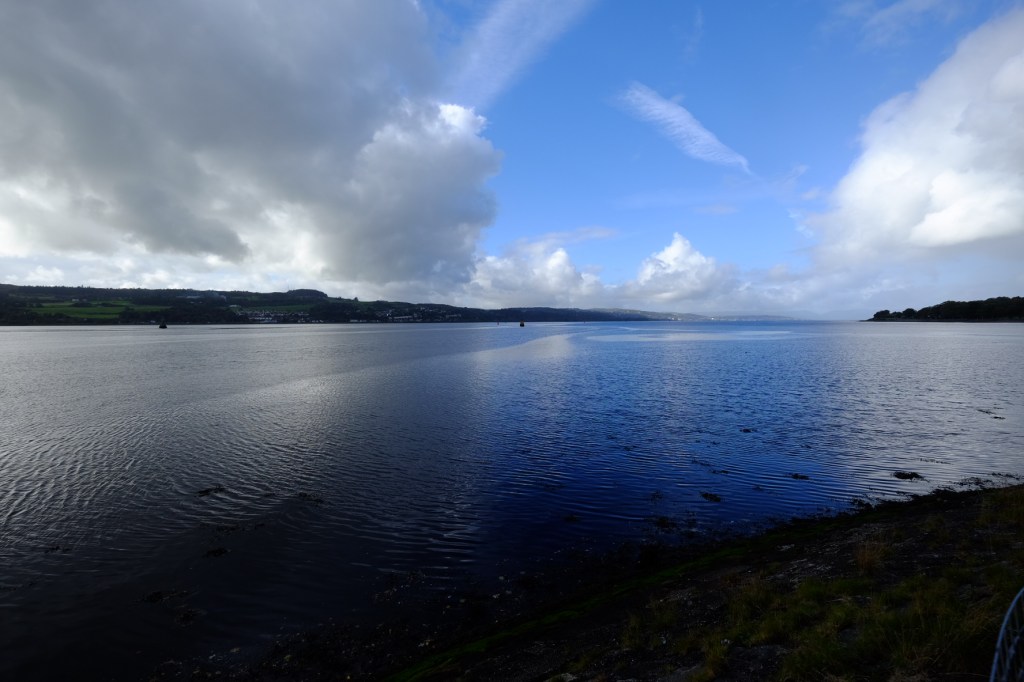
The drive towards Dumbarton provided a fascinating transition. Glasgow’s imposing Victorian buildings, busy streets and industrial heritage gradually gave way to a more open landscape, with the River Clyde becoming an increasingly prominent feature.

For centuries, the Clyde was the lifeblood of Glasgow’s prosperity. Its banks were once lined with shipyards, engineering works and heavy industry, producing some of the finest ships in the world. At its peak, the river was synonymous with Scottish industrial ambition, its shipbuilders helping Glasgow earn its reputation as the Second City of the Empire.

But heading west, the industrial landscape begins to soften. The river broadens, the surrounding hills become increasingly prominent and the sense of approaching a rather different Scotland begins to take hold.

And then, rising dramatically from the landscape, comes Dumbarton Rock.

It’s difficult to miss.

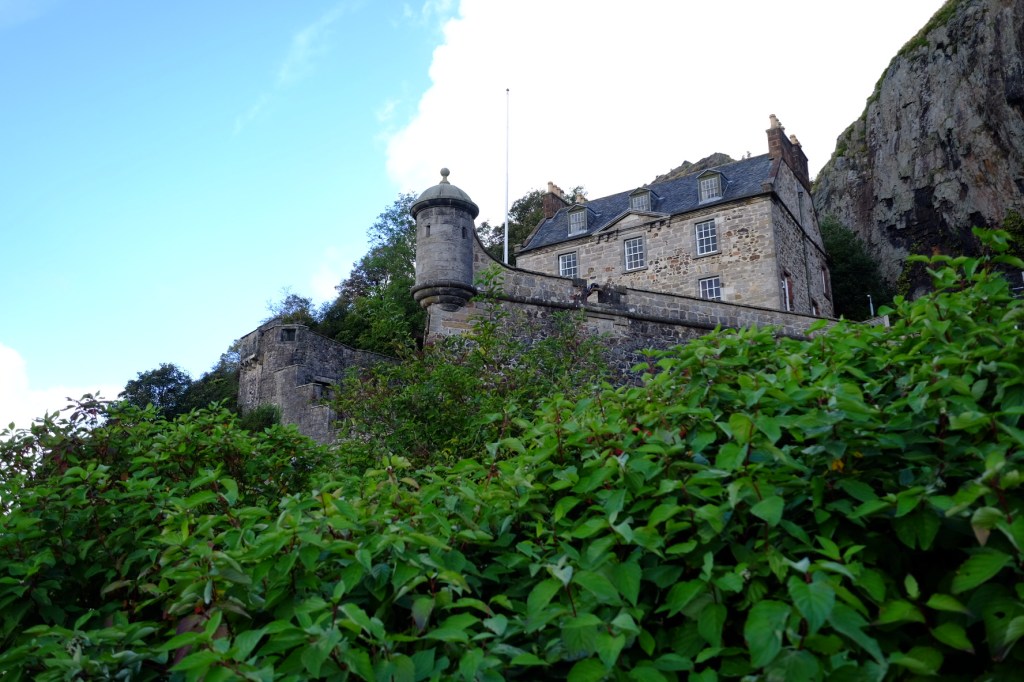
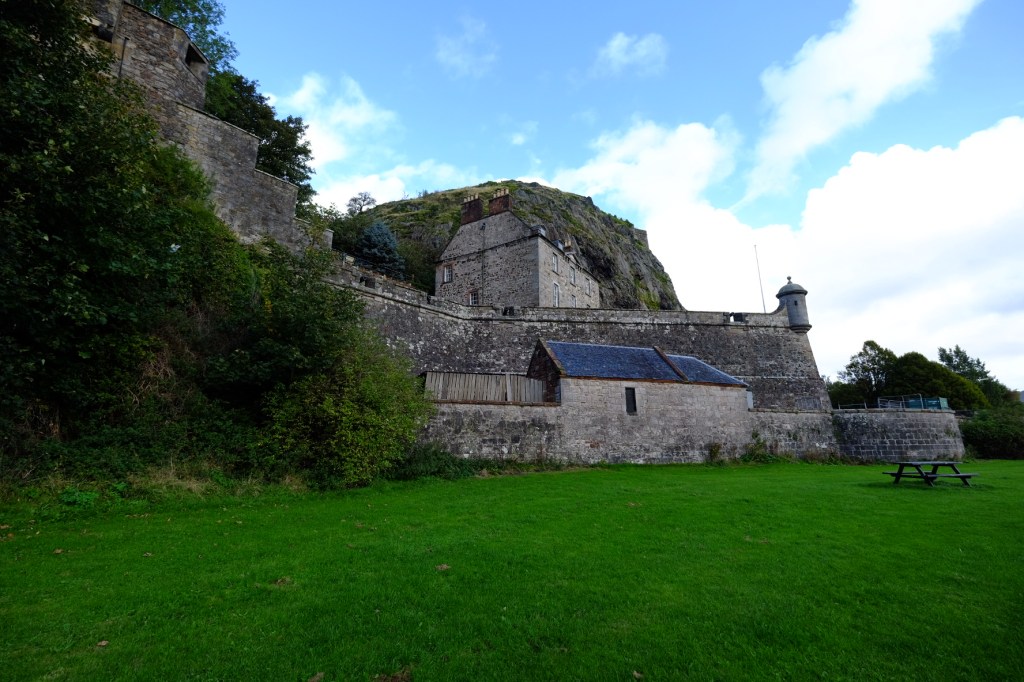
An enormous volcanic outcrop towering above the surrounding countryside, with the remains of one of Scotland’s most historically significant fortifications perched upon it.

Dumbarton Castle – Before Scotland Was Scotland

Dumbarton Rock is a remarkable place, and one I’d been particularly looking forward to photographing.

Long before the medieval castle was established, this great volcanic stronghold was known as Alt Clut, meaning ‘Rock of the Clyde’, and served as the principal fortified centre of the ancient Brittonic kingdom of Strathclyde.

Its position is extraordinary. Rising steeply above the confluence of the Rivers Clyde and Leven, the rock provided an almost naturally impregnable defensive position, commanding the surrounding landscape and an important route into Scotland’s interior.

In AD 870, however, even these formidable natural defences proved insufficient.

Viking forces led by Olaf and Ivar laid siege to Dumbarton Rock in an assault that reportedly lasted four months. Eventually the fortress fell, and according to contemporary Irish annals, the invaders returned to Dublin with an enormous quantity of treasure and captives, carried aboard a fleet said to number some 200 ships.

One can only imagine the reception committee.

The site subsequently became an important royal stronghold, with Alexander II developing the medieval castle during the thirteenth century as Scottish and Norwegian interests competed for influence along the western seaboard.

Its later history reads like a condensed account of Scotland’s political turbulence.

William Wallace was brought here following his capture in 1305 before being handed over to the English. In 1548, the five-year-old Mary, Queen of Scots, was sheltered within its defences before sailing to France. Then, in 1571, during the civil wars surrounding Mary’s reign, the castle was captured in an extraordinary night assault by Thomas Crawford of Jordanhill, whose men scaled the supposedly impregnable rock.

A Viking siege, medieval kings, William Wallace, Mary, Queen of Scots and an audacious military assault.

Not bad for one rather substantial lump of volcanic rock.

A Photographer’s Patience – Somewhat Tested

I was particularly keen to get a decent photograph of the castle, ideally capturing the great rock and its fortifications without too much modern-day interference.

Unfortunately, I wasn’t alone.

A group of people appeared to be conducting a dog-training session in precisely the area I had earmarked for my photographs.

Now, I have absolutely nothing against dogs. Or, for that matter, people training them. But I do have a particular dislike of people appearing in photographs of historic buildings, especially when I’m attempting to capture something that has stood for hundreds of years.

There’s something faintly irritating about composing a photograph of a magnificent medieval fortress, imagining Viking longships approaching along the Clyde, only to have someone in a fluorescent jacket wander into the foreground clutching a bag of dog treats.

Not quite the historical atmosphere I had in mind.

I spent a little time moving around, adjusting the composition and waiting patiently for suitable gaps in the canine activities.

Eventually, I managed to capture the views I wanted, although it did require rather more patience than I’d anticipated.

I suspect the Vikings had an easier time organising their invasion.

With Dumbarton duly photographed, it was time to continue the journey, there was, however, a small problem, I was getting hungry.

The Great Lunchtime Expedition – Or How Not to Find Lunch

I’d already identified a couple of potentially interesting places to stop for something to eat, so finding lunch shouldn’t have presented much of a challenge, famous last words!

The first was a Vietnamese establishment that had caught my attention during my research. I had visions of wonderfully fragrant broths, fresh herbs, perhaps a bánh mì with crisp pickled vegetables and a little chilli. Something light, interesting and full of flavour. Unfortunately, what I discovered bore rather little resemblance to the Vietnamese experience I’d been anticipating.

Burgers and baps appeared to be the order of the day.

Now, there’s absolutely nothing wrong with a decent burger, but when you’ve mentally prepared yourself for the flavours of Vietnam, a bap comes as something of an anticlimax, never mind, time for plan B.

The second establishment looked promising, and I approached with renewed optimism, only to discover that it was closed on Tuesdays, naturally, today was Tuesday.

Two attempts, no lunch!

For someone who’d spent months researching medieval castles, prehistoric monuments, Scottish folklore and the finer points of Highland clan warfare, my inability to locate a decent sandwich was becoming mildly embarrassing, clearly, the 55-page guide had overlooked something important.

Out came the phone for a little emergency culinary research, and before long I’d found something that looked considerably more promising. There was just one slight complication, it meant heading back towards Glasgow. Not exactly the most efficient use of a carefully constructed itinerary, but there are times when culinary considerations must take precedence over geographical common sense. Besides, I’d already lost Stirling Castle to yesterday’s fog. I wasn’t about to lose Tuesday’s lunch to a burger and a locked door.

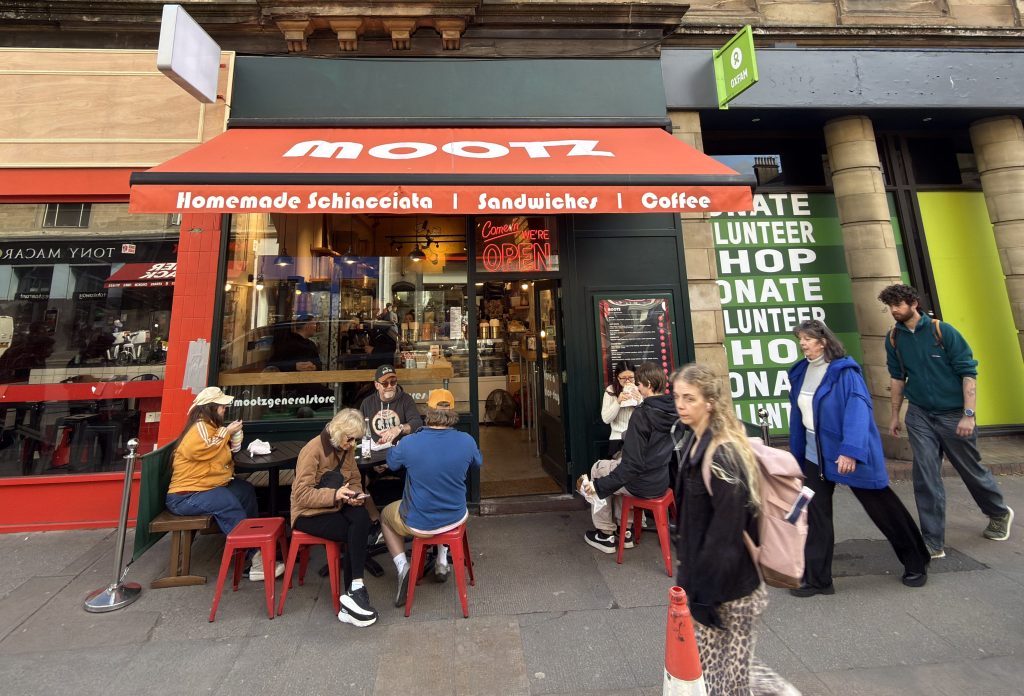
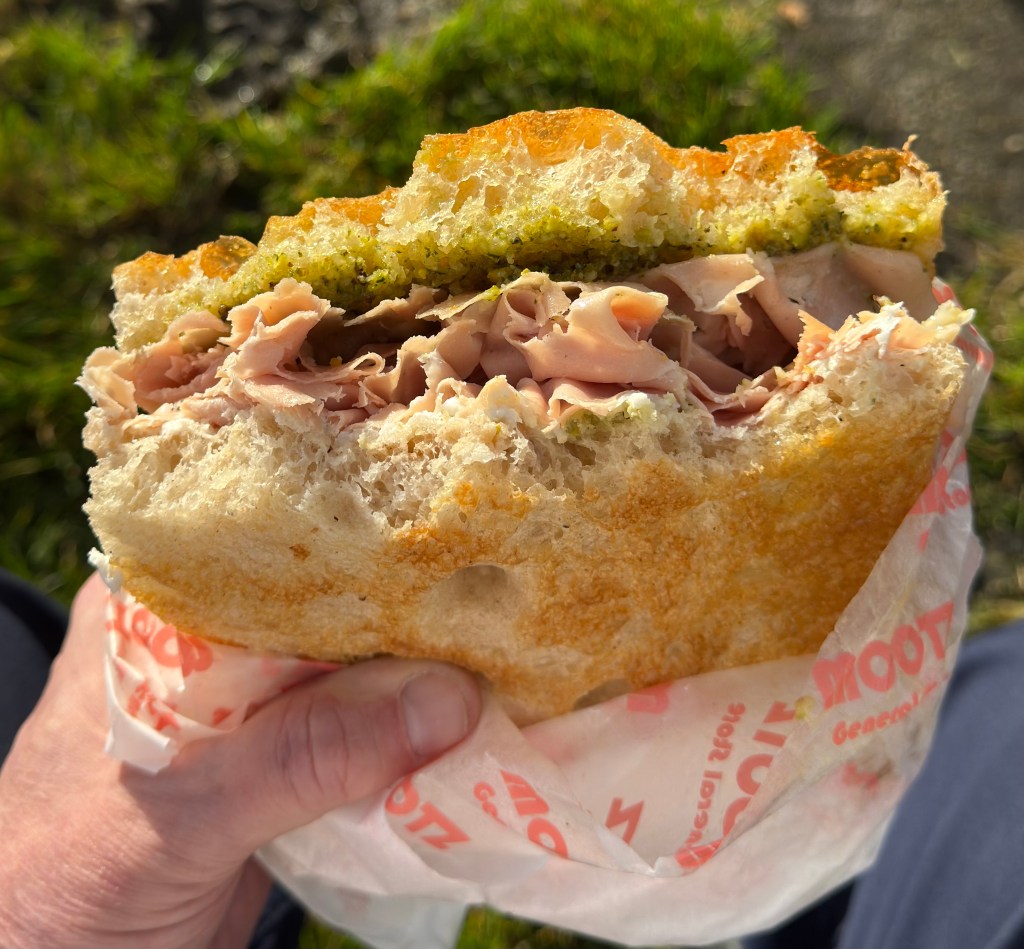
And that was how I discovered “Mootz”.

Mootz – Now That’s a Sandwich!

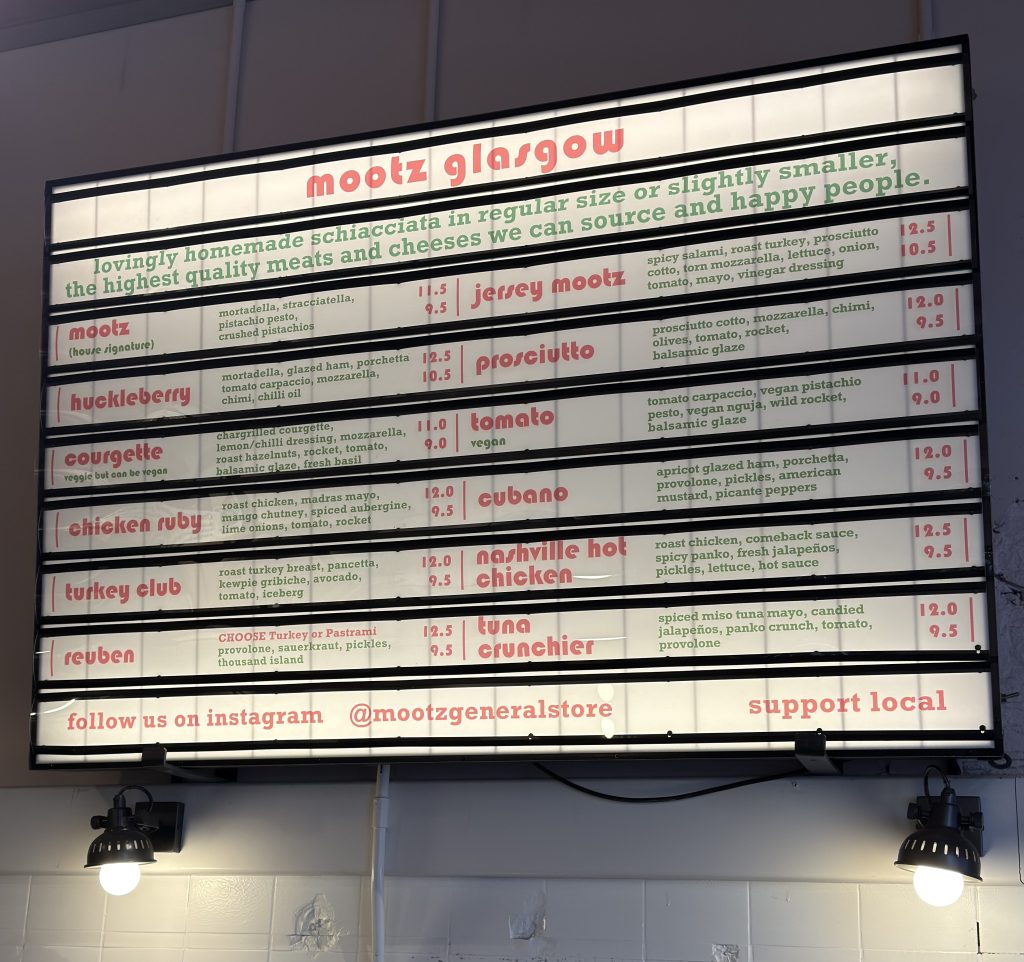
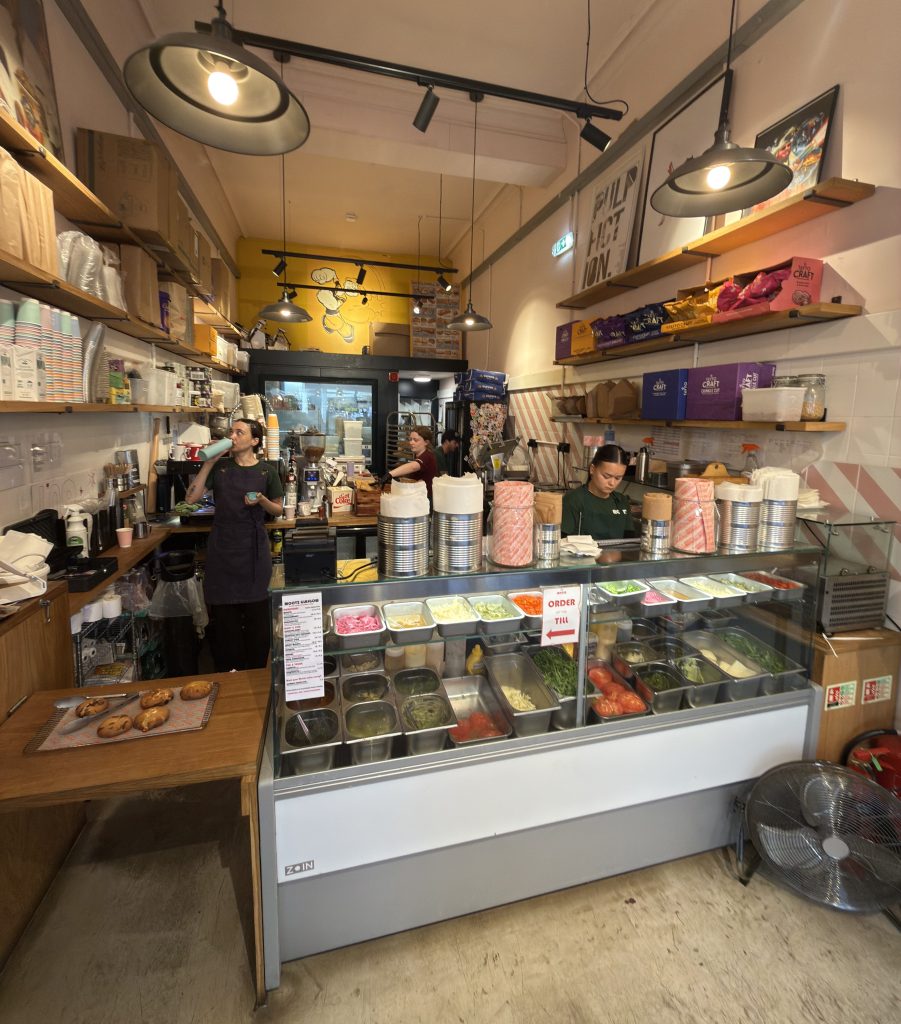
Mootz specialises in freshly prepared Italian “schiacciata” sandwiches, and one look at the menu suggested my little detour might prove rather worthwhile.

Schiacciata, originating in Tuscany, is a wonderful olive-oil-enriched flatbread, with a beautifully golden exterior and a light, airy interior. When made properly, it provides the perfect foundation for a generously filled Italian sandwich, and generous appeared to be something of a speciality here.

The menu was full of tempting combinations featuring mortadella, prosciutto, stracciatella, mozzarella, pistachio pesto and assorted other delicious ingredients.

The signature Mootz caught my attention: mortadella, stracciatella, pistachio pesto and crushed pistachios.

A beautifully simple combination, allowing the individual ingredients to shine. The richness of mortadella, the wonderfully creamy stracciatella and the distinctive nutty flavour of pistachio all wrapped in that magnificent bread.

It looked substantial, to say the least.

But, after considerable deliberation, I settled on the Huckleberry, a rather magnificent creation consisting of pistachio mortadella, apricot-glazed ham, porchetta, tomato carpaccio, mozzarella, chimichurri and chilli oil, all generously packed between two substantial slices of freshly baked schiacciata.

This wasn’t so much a sandwich as a carefully engineered construction project.

With my precious cargo safely aboard, it was time to leave Glasgow behind for the second time that day.

I had a particular destination in mind for lunch. Somewhere considerably more scenic than a city-centre pavement, and somewhere I could finally test another of my recent acquisitions.

My little portable espresso machine was about to earn its place in the luggage.

Loch Lomond – An Island with a History of Its Own

Heading north along the A82, the urban landscape gradually disappeared, replaced by wooded hillsides, distant mountains and increasingly impressive views across Loch Lomond.

The loch is the largest freshwater lake in Great Britain by surface area, extending for approximately 36 kilometres from its southern reaches towards the Highland mountains. Its character changes dramatically along its length. To the south, the water is broad and comparatively gentle, scattered with numerous islands, while farther north the mountains close in and the landscape takes on a much wilder appearance.

One island in particular had caught my attention during the pre-trip research.

Inchmurrin.

At approximately 120 hectares, Inchmurrin is the largest freshwater island in the British Isles, and, naturally, it has a rather interesting history.

Named after St Mirin, the early Christian saint associated with Paisley, the island was once an important possession of the Earls of Lennox. During the fourteenth century, a castle was established near its southern end, providing the powerful Lennox family with a secluded island stronghold. Its history became entangled with the political turbulence surrounding Scotland’s medieval aristocracy and the Stewart dynasty. The castle eventually fell into ruin, but its remains survive as another reminder that Scotland’s beautiful landscapes frequently conceal a more complicated past.

I rather liked the idea of an island within a loch, with its own castle, history and centuries of intrigue. And, of course, there was something particularly appropriate about encountering it while travelling towards another island altogether, Eilean Shona, where the culinary part of this adventure was still waiting for me.

But that was a few days away.

For now, I had lunch to consider, and the landscape was becoming increasingly spectacular.

Rest and Be Thankful – A Rather Appropriate Place for Lunch

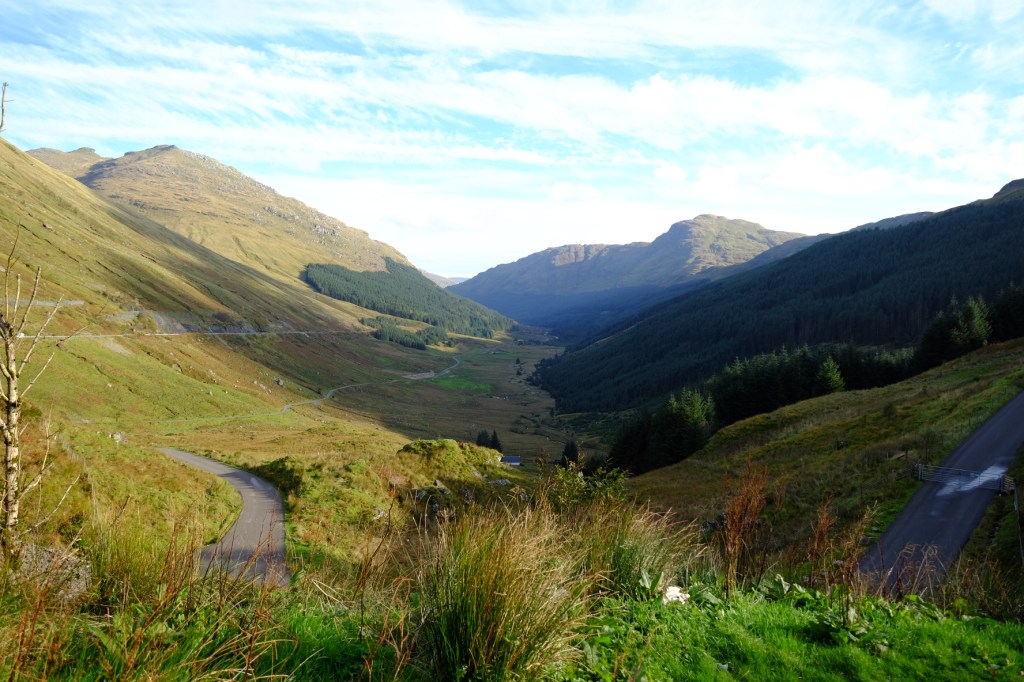
Continuing along Loch Lomond towards Tarbet, I turned left onto the A83, heading west into the magnificent landscape of the Arrochar Alps. Here the road begins to climb through Glen Croe, winding between imposing mountain slopes towards one of Scotland’s most wonderfully named locations: the Rest and Be Thankful.

The name originates from the eighteenth-century military road constructed through the glen as part of a wider network intended to improve military access through the Highlands.

The old route involved a considerable climb, and travellers reaching the summit were encouraged to stop and appreciate their achievement. An inscription commemorating repairs undertaken by the 93rd Regiment in 1768 helped preserve the wonderfully simple sentiment.

Rest and Be Thankful

Considering the view, it seemed only polite to comply. This was where I finally stopped for my rather delayed lunch.

Surrounded by towering mountains, with the dramatic sweep of Glen Croe stretching away below, I unwrapped my magnificent Mootz sandwich.

And what a setting I’d chosen.

The landscape was spectacular, with great banks of cloud drifting across the mountains, occasional bursts of sunlight illuminating the slopes and the ever-present possibility of the weather deciding to provide a little additional entertainment.

After two failed attempts to find lunch, an unscheduled return towards Glasgow and rather more driving than anticipated, the sandwich tasted all the better for the effort.

The combination of ingredients was inspired. Delicate, silky mortadella provided a lovely richness, complemented by the sweetness of the apricot-glazed ham and the deeper, savoury character of the porchetta. Fresh mozzarella brought a welcome creaminess, while the finely sliced tomato added moisture and a little acidity to balance the cured and roasted meats.

Then came the chimichurri, that wonderfully vibrant herb-based sauce, cutting through the richness with its fresh, garlicky sharpness, while the chilli oil delivered a gentle background warmth.

And holding this magnificent collection together was the schiacciata itself. Golden and lightly crisp on the outside, wonderfully soft and airy within, with that distinctive olive oil character that makes good Italian flatbread such a pleasure to eat.

It was an absolute triumph of contrasting flavours and textures: rich, sweet, savoury, creamy, fresh and just a little spicy, with each ingredient contributing something rather than simply competing for attention.

Sometimes the simplest things are the most enjoyable.

Although I wasn’t quite finished.

Espresso in the Wild – The Inaugural Field Test

Now came another important moment in the adventure.

The first proper outdoor test of my new Outin portable espresso machine.

I’d bought this clever little rechargeable device specifically for the trip, imagining freshly made espresso in some wonderfully remote Scottish setting. Now here I was, surrounded by Highland mountains, armed with my GRIND coffee capsules and absolutely no need to locate a coffee shop.

For those unfamiliar with it, the Outin is a compact battery-operated espresso maker capable of heating water and extracting coffee without requiring mains electricity. It accepts compatible capsules or ground coffee, making it particularly appealing for travelling, camping or finding yourself miles from the nearest decent café.

A little water, a capsule, a press of the button and the machine set about producing a proper espresso.

There’s something immensely satisfying about enjoying good coffee somewhere like this.

No queue, no barista asking for your name and, perhaps most importantly, no paper cup informing you that you’re having an inspirational day.

Just an Italian sandwich, freshly extracted espresso and one of the finest views Scotland could offer.

Civilisation, I decided, is more a state of mind than a geographical location, the name of the viewpoint seemed particularly appropriate.

After my slightly ridiculous lunchtime expedition, I was indeed resting, and extremely thankful.

The Road to Kilmartin – Lochs, Puffers and Five Thousand Years of History

With lunch finally enjoyed and the coffee experiment declared a success, it was time to pack away my little mobile coffee shop and continue west.

The road carried me deeper into Argyll, where the landscape seemed determined to become more spectacular around every corner. The towering mountains gradually softened into wooded hillsides, great stretches of water appeared between the trees, and the late afternoon sunshine was beginning to cast that wonderful golden light across the countryside.

I was also becoming increasingly aware that my camera was rather interfering with my carefully planned timetable. Every bend seemed to reveal another scene demanding attention.

Not that I was complaining.

A Brief Encounter with Loch Fyne

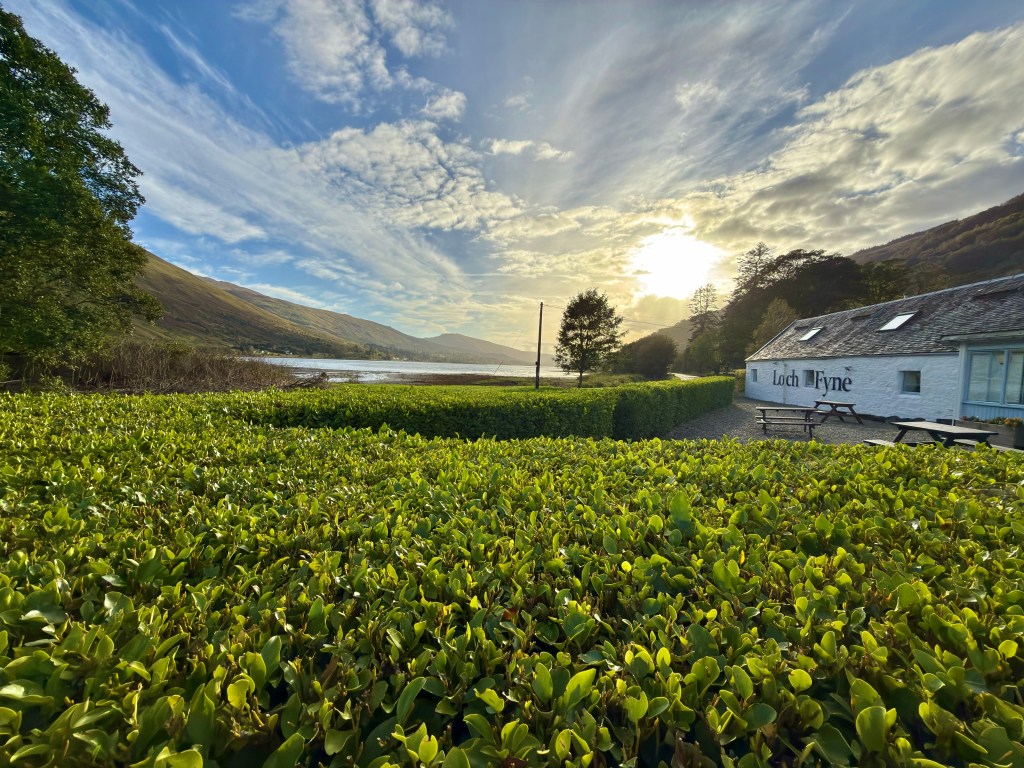
One particularly lovely stop was beside Loch Fyne, where I pulled in near the famous Loch Fyne Oyster Bar.

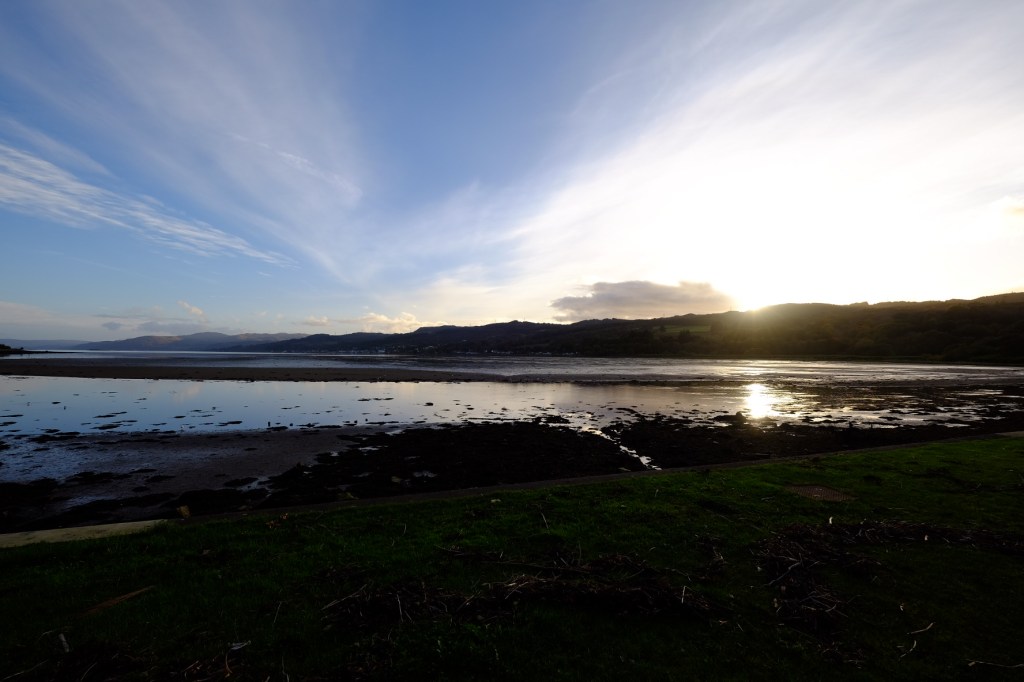
With the sun beginning to sink behind the surrounding hills, the view was magnificent. The loch stretched away into the distance, its waters reflecting the warm evening light, while great sweeps of cloud filled the sky overhead.

Loch Fyne is Scotland’s longest sea loch, extending for around 40 miles inland from the Sound of Bute. Its sheltered waters have long supported fishing and shellfish production, and its oysters are particularly celebrated.

The Loch Fyne Oyster Bar itself grew out of a small roadside business established in the late 1970s, helping bring the region’s exceptional seafood to a much wider audience.

Under different circumstances, this would have warranted a considerably longer investigation. Possibly involving oysters. Almost certainly involving something else from the menu.

Unfortunately, time was marching on, and having already travelled rather further than originally intended in pursuit of a sandwich, I thought it prudent not to embark on another culinary expedition.

A few photographs, a moment to enjoy the view, and I was on my way.

The Vital Spark – A Little Maritime Nostalgia

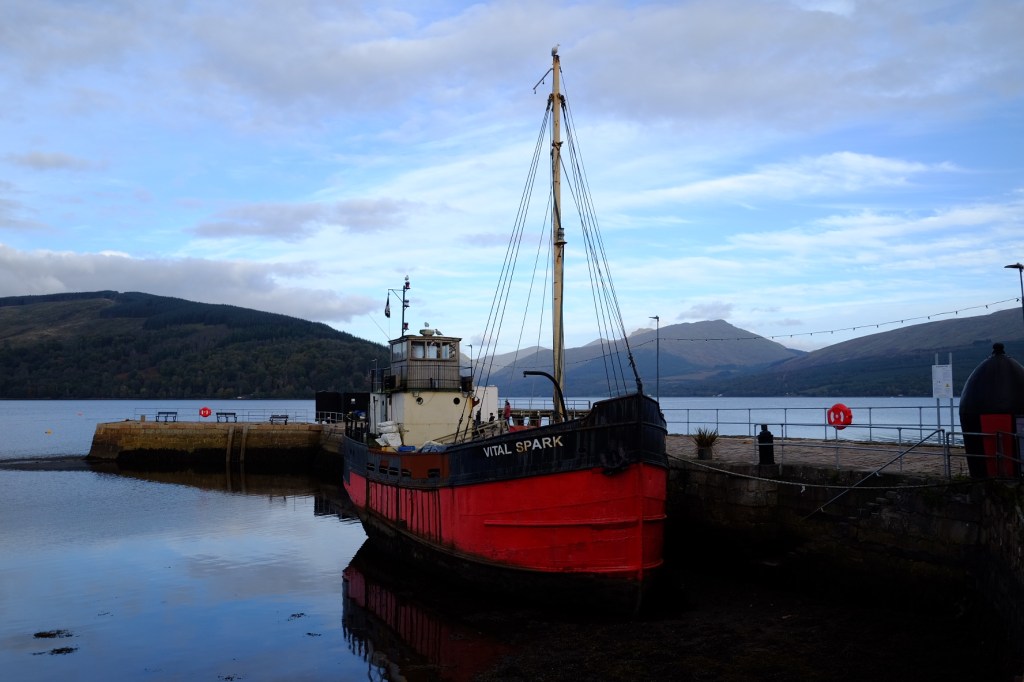
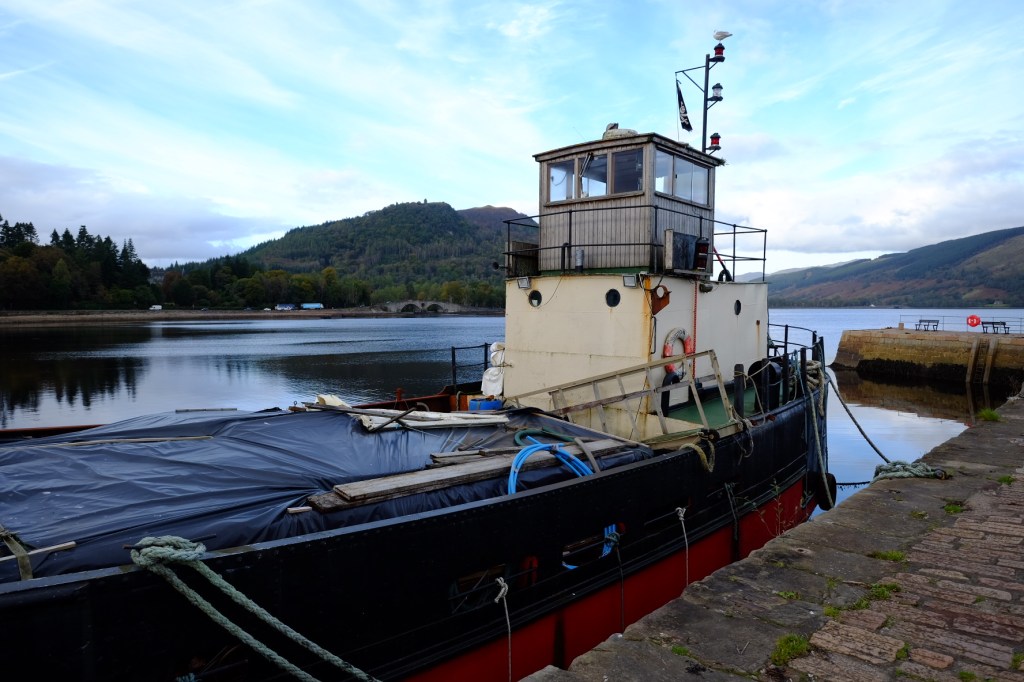
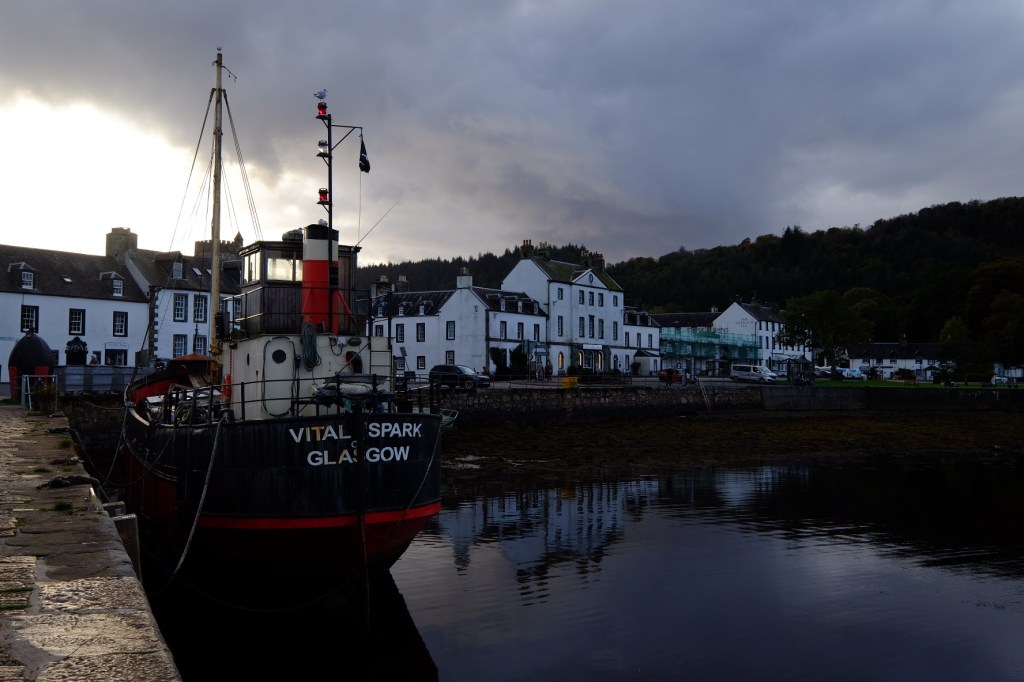
Continuing towards Inveraray, another unexpected photographic opportunity presented itself in the form of a wonderful old vessel named Vital Spark, her distinctive red-and-black hull standing out beautifully against the waters of Loch Fyne.

The name immediately evokes Scotland’s famous Clyde puffers, those sturdy little steam-powered cargo vessels that once carried essential supplies from the Clyde to the remote communities of the western Highlands and islands.

Coal, food, building materials, whisky barrels and almost anything else required by isolated settlements travelled aboard these remarkably versatile boats. Their shallow draught and flat bottoms allowed them to reach small harbours and even beach themselves where proper docking facilities were unavailable.

The puffers also became immortalised through Neil Munro’s fictional character Para Handy, the gloriously self-important skipper of the Vital Spark, whose adventures and frequent misunderstandings became a much-loved part of Scottish literature and television.

A captain whose confidence in his own abilities was, shall we say, not always entirely justified.

And this particular Vital Spark has quite a history of her own.

Built in 1944 as VIC 72, a wartime naval victualling vessel, she subsequently spent decades working as a cargo boat around Scotland’s western islands under several different names. Eventually brought to Inveraray in 2001, she was renamed Vital Spark in 2006 in honour of Neil Munro’s much-loved fictional puffer.

Although originally steam-powered, she was later converted to diesel, so she’s not quite the traditional steam puffer her appearance might suggest. Nevertheless, her working-boat character and distinctive profile make her a wonderful surviving reminder of the vessels that once provided a lifeline to Scotland’s remote coastal communities.

Not bad for a lady approaching her 82nd birthday.

There was something wonderfully atmospheric about her sitting quietly against the pier, with the wooded hills and calm waters of Loch Fyne providing a magnificent backdrop.

Quite how Para Handy would have coped with my increasingly revised itinerary is anyone’s guess, although I suspect he’d have found a perfectly reasonable explanation for every delay, preferably one that involved blaming somebody else.

And speaking of waterways, my next photographic diversion was waiting a little farther along the road.

Crinan – A Shortcut Through Scotland

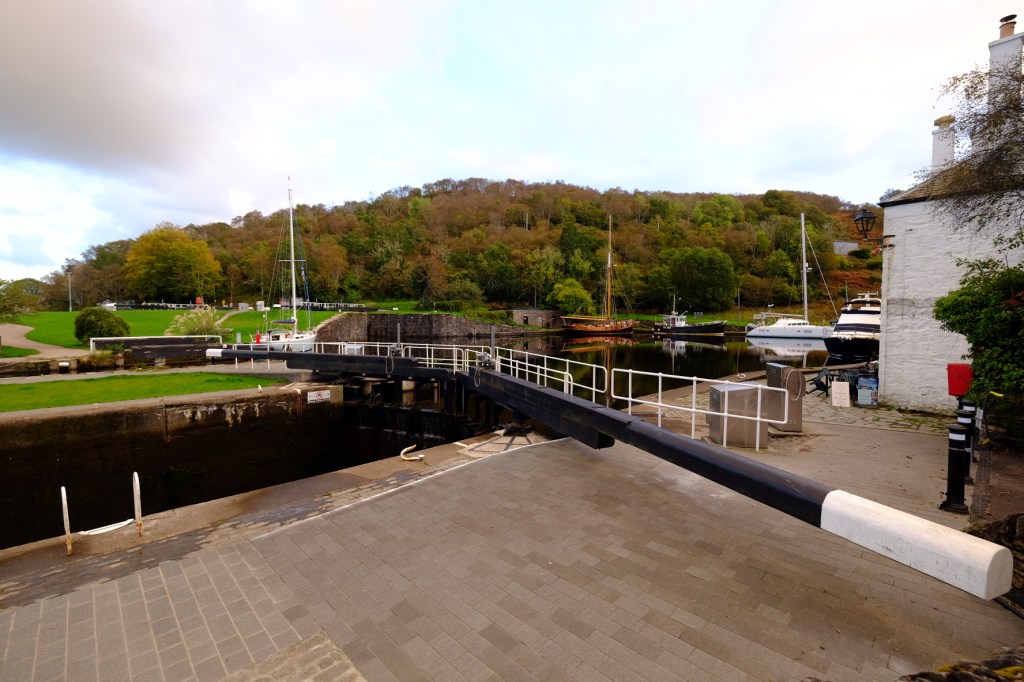
As the afternoon slipped towards evening, I made my way to Crinan, a beautiful little settlement overlooking the Sound of Jura and the western entrance to the Crinan Canal.

By now, the light was changing rapidly. The sky had taken on soft shades of gold and blue, the rocky shoreline was beautifully silhouetted against the water, and distant islands appeared almost suspended beneath the clouds.

It was the sort of scene that makes you forget you’ve been driving for most of the day.

The canal itself has a fascinating history. Designed by the great civil engineer John Rennie and opened in 1801, it provides a nine-mile navigable shortcut between Ardrishaig on Loch Fyne and Crinan on the Sound of Jura.

Before its construction, vessels travelling between the Clyde and the western islands faced the considerably longer and potentially hazardous journey around the Mull of Kintyre.

The canal, with its 15 locks, transformed that journey, becoming an important commercial route for fishing vessels, cargo boats and, later, the Clyde puffers.

Not surprisingly, it acquired the rather splendid description of Britain’s most beautiful shortcut.

Standing beside the quiet harbour, looking at the boats, old stonework and canal locks, it wasn’t particularly difficult to understand why.

There was a lovely stillness about the place. Boats rested in the sheltered basin, their masts rising against the wooded hills, while the old lock gates and surrounding buildings provided a glimpse of the canal’s working past.

After the bustle of Glasgow, the dog-training activities at Dumbarton and the unexpected lunchtime expedition, Crinan felt wonderfully peaceful.

I could easily have spent considerably longer here, exploring the shoreline and photographing the changing light, but there was one small problem.

I still hadn’t reached my hotel.

Kilmartin – At Last!

A short drive later, I finally arrived in Kilmartin.

And, almost on cue, the weather decided that I’d enjoyed quite enough sunshine for one day.

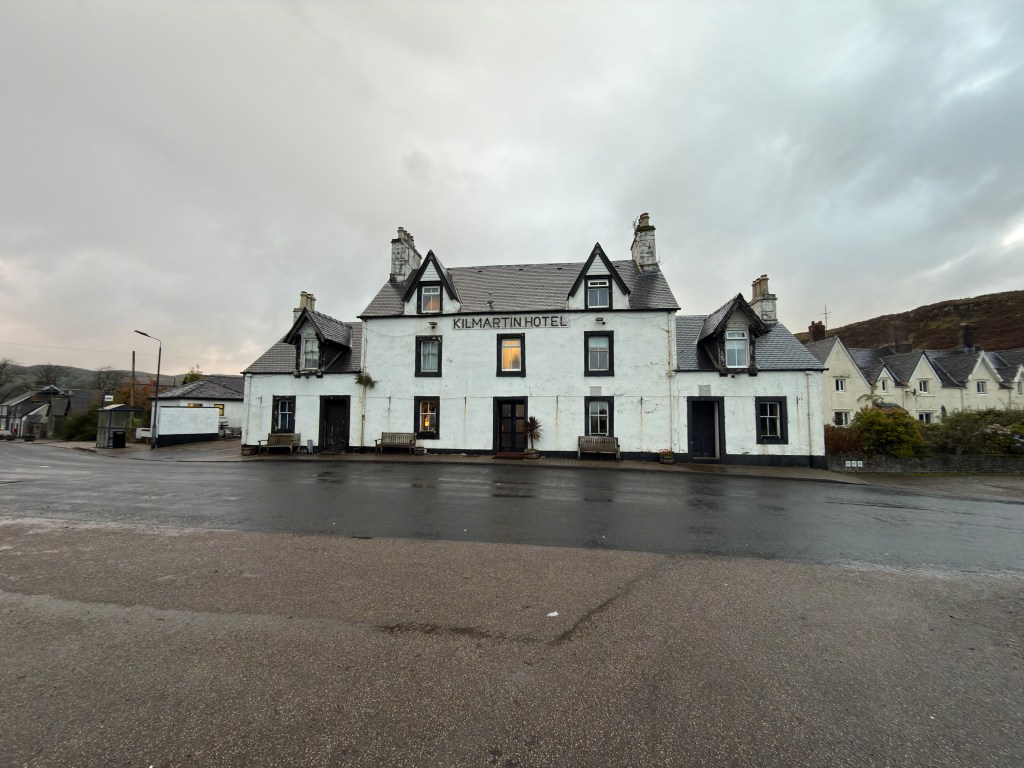
The sky had turned decidedly grey, the roads were wet, and there stood the wonderfully traditional white frontage of the Kilmartin Hotel, looking rather inviting after a long day’s travelling.

I’d made it.

The hotel sits in the heart of a landscape I’d spent months researching, surrounded by one of Britain’s most remarkable collections of prehistoric monuments. Within just a few miles are ancient burial cairns, standing stones, stone circles and mysterious cup-and-ring carvings, many dating back thousands of years.

There is also Dunadd, once an important royal centre of the Gaelic kingdom of Dál Riata, where a footprint carved into the rock is traditionally associated with the inauguration of early Scottish kings. From prehistoric ceremonial landscapes to the emergence of early Scottish kingship, an astonishing amount of history is concentrated in this relatively small corner of Argyll.

And here I was, finally in the middle of it.

After months of research, countless maps, historical investigations and enough printed material to suggest I was preparing a doctoral thesis rather than a holiday, the real exploration was about to begin.

There was, however, something rather satisfying about simply arriving.

Looking back over the day, I’d managed to squeeze in a Bombay-inspired breakfast, an extraordinary medieval cathedral, a pioneering surgeon, Viking invasions, a rather unsuccessful search for lunch, one magnificent Italian sandwich, an espresso overlooking the Highlands, Loch Fyne, a characterful old puffer and a beautiful evening beside the Crinan Canal.

Not bad for a Tuesday.

But the ancient stones, mysterious burial chambers and several thousand years of Scottish history would have to wait until morning. For now, I had a hotel to check into, a camera to put away and, quite possibly, a well-earned glass of something Scottish to contemplate.

Five thousand years of history weren’t going anywhere overnight.

At least, I sincerely hoped not.

………………… Until Next Time ………………. L8ers ………………………

Eating Venice, And Generally Avoiding Crowds 3.

I woke up at 04:30 on Monday morning, the excitement of the day was probably flying around my head, beckoning me to get up and start exploring, I took a brief look out the window and went back to bed!

The daily routine repeated itself until departure, Venice is just a wonderful place to explore so I was determined to get as much out of my few days as possible, after putting so much time into planning things. A knock at the door just after 08:00, ‘buongiorno’, breakfast had arrived, perfecto. Fresh Croissant, various bread and conserves, ham and cheese and a Latte, it did the job, I was not in Venice for a ‘fry-up’!

The 1st day was going to be a real test, had my planning process worked, the timings, route etc. Test one was getting a weeks Vaporetto ticket at the local water bus stop, again, there were so many recommendations and comments on social media, I ignored them all, went up to the ticket machine, selected English, 7 Days, inserted the credit card, PIN code, and boom, le ticket arrivé, simples, next stop The Penny Guggenheim Collection for some arty education.

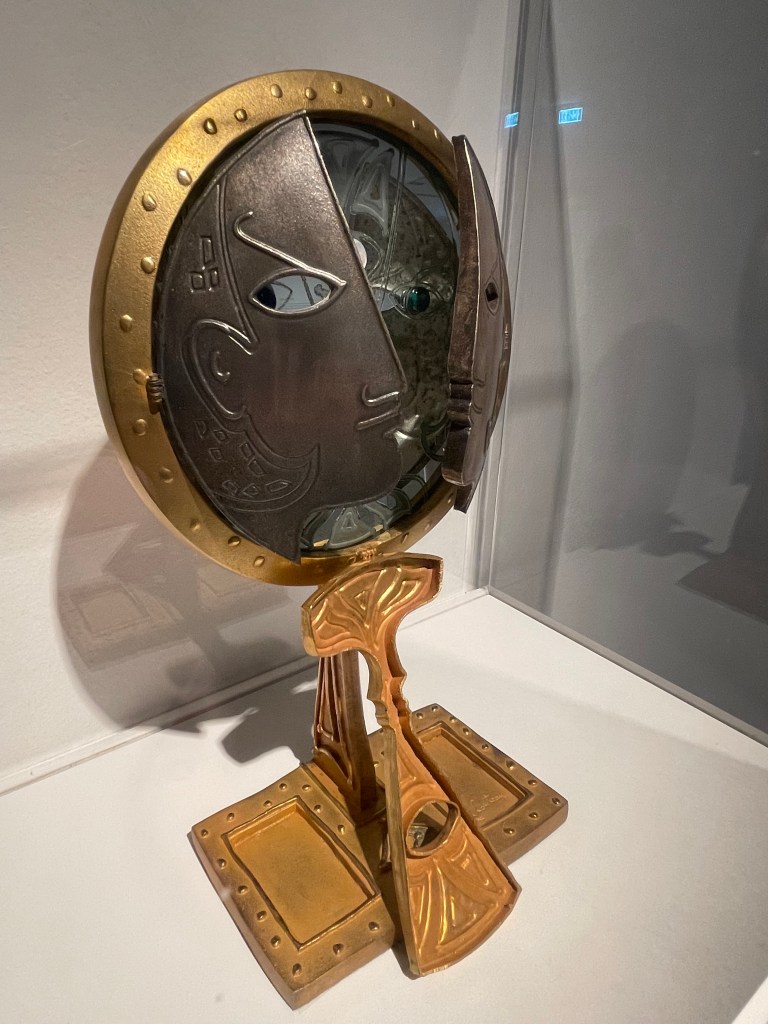
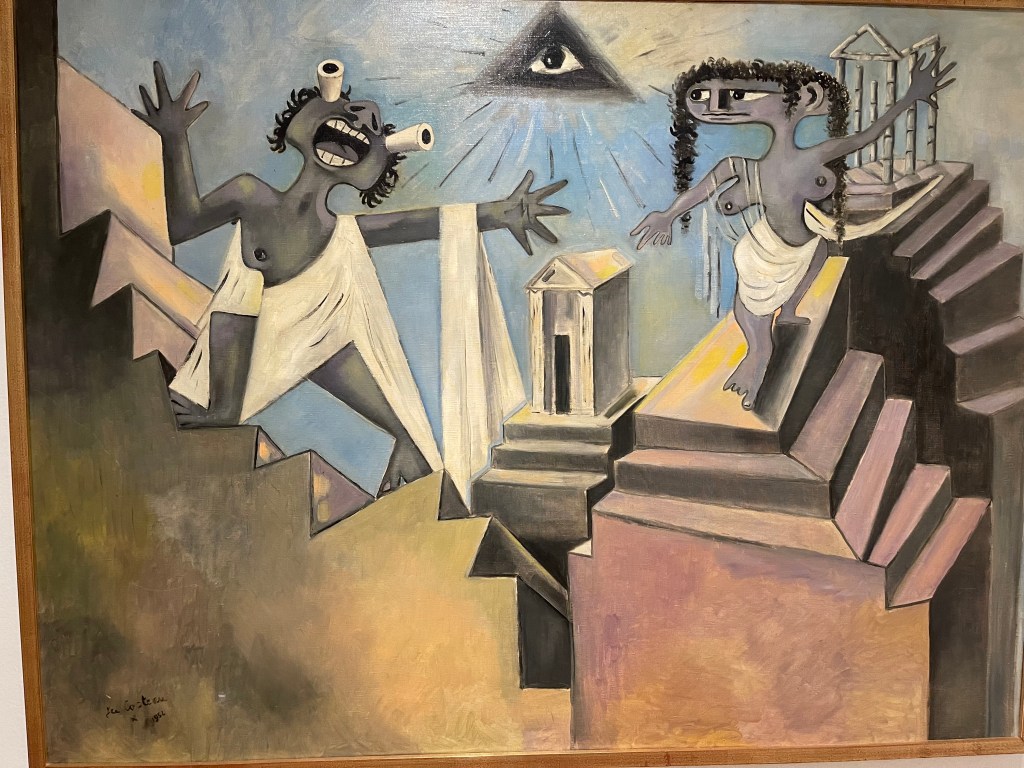
As well as a host of well known names such as Salvador Dali, Henri Laurens, Max Ernst and Pablo Picasso, a special exhibition was being presented, dedicated to Jean Maurice Eugène Clément Cocteau a french poet, playwright, novelist, designer, film director, visual artist and critic. He was one of the foremost artists of the surrealist, avant-garde, and Dadaist movements and an influential figure in early 20th century art, and a drug addict! The largest picture in the above gallery is one of his, as is the ‘interesting’ one below, Violinist, Study for a Poster for the Menton Music Festival circa 1920.

There is a lovely view of the Venice Prefect building ‘canal side’, and a delightful cafe selling homemade delights and serving coffee and tea, oh well, when in Venice.

Much of his work ‘didn’t do it for me’, but there were a few that seemed to be a route into his mind, probably during a drug ‘high’ in some cases, nonetheless I thoroughly enjoyed Penny’s collection and Jean Cocteau was definitely interesting, it’s really worth a visit if you are in Venice, I got a copy of the 257 page guide with the complete collection with pictures, as many are not on display.

During my research I had read a little about the famous Venetian ‘rowing boat’, the Gondoler. These magnificent craft are built by hand, without plans, from memory in a A Squero, a factory dedicated to their production and I was trying to arrange a visit, unfortunately they were so busy, they did not have time to allow a tour but I still made for Squero Di San Trovaso, an iconic location, and cicchetti stop, I was peckish! There is another Squero to the north of the city where you can also arrange a visit, but I found out too late, it’s more of a museum and restoration project though.

Continuing to plan, a trip to one of two Leonardo de Vinci exhibitions, via the Ponte dei Pugni, the ‘Bridge of Fists’ where disputes were settled by a ‘punch up’, I noticed at least three towers in Venice that had varying degrees of lean, fingers crossed they will be sorted before they lean to far and collapse!

Banksy has been to Venice, and managed to paint ‘The Migrant Child’ dated 2019, it’s going to be restored thanks to Italy’s culture ministry, its certainly a tourist stop for those in the know, located at ‘shhhh”, explore and find it yourself, it’s really very poignant.

It was time for a quick pit stop before the next visit, Botegga del Caffé Dersut was right next to the Basilica Di Santa Maria Gloriosadei Frari and serves delicious cannoli and the most refreshing iced ‘shakerto’, chilled coffee in my case infused with cardamom, delicious.

The Basilica was amazing, and almost completely empty which had been the theme throughout the day, I don’t do crowds, my better half has suspected I might be slightly ADHD and possibly OCD for many years, in more recent times I just prefer space and try to avoid confined areas and places that are crowded, luckily, so far, the day had been almost dreamy. Another guide to add to the collection and descriptions of the magnificent paintings, carvings and architecture, a stunning place to visit.

The last stop of the day was just brilliant, and certainly a ‘must do’ if you have even the slightest interest in the history of cartoons, cinema and the wonderment of the huge numbers of characters that have been created over the years, from Popeye to Pinocchio, Laurel and Hardy to Mork and Mindy the Venice Vintage Toys Museum contains over 5000 pieces, so many extremely rare, curated by the passionate Fabrizio Fontanella, what a place to finish the days touring.

I spent ages looking through the various cabinets and displays, being taken back to my childhood, black and white memories morphing into colour as technology developed, a few particularly caught my eye but one grabbed my attention.

My first ever international blog post was way back in June 2013, I had just come back from Masseria Montenapoleone in Puglia, southern Italy on my first week long cookery school. I was taught to cook real Italian food by the most amazing ‘nona’, she was just brilliant. In the picture I am making the original Tiramisu with the ‘proper’ biscuits. Now try and find them in the pictures above, the Tiramisu was perfect!

The day had been brilliant, the planning worked, timings were good and the Toy Museum had been an unexpected surprise taking me back to my first trip to Italy, to an amazing cookery school. Thank-you Fabrizio for taking the time to talk me through the exhibits, and removing some foodie ones for a photograph or two.

As I made my way back to the hotel, I notice another 80 degree tower!, I was convinced it had a slight lean. After a relax, refresh and change of clothes I was off to dinner at an iconic restaurant, featured in the film starring Jonnie Depp and Angelina Jolie, ‘The Tourist’, The Hotel Danieli. Unfortunately, it was too windy to eat on the terrace, but the dining room was opulent and views very pleasant looking out to the lagoon.

Impeccable service was obvious from the moment I arrived to the time I left, it would have been rude not to try a Bellini before starting the tasting menu and wine flight, which proved to be a delicious experience from start to finish.

Freshly made bread was really good, the Baccalà Mantecato delicate but flavourful, the Rissoto I felt could have done with another minute in the pan, it had a slight chalkiness to the texture, but it still tasted damn good, the Saffron Cod was a delight, the Panna Cotta perfectly wobbly and not rubbery or firm.

Day one had been a complete success, yes I was a tad tired (being polite here), I felt overwhelmed by the days adventure and walking back towards the hotel I noticed ‘that’ leaning tower in the night sky, tell me it’s not leaning slightly, maybe even more than slightly.

……………………. Until Next Time ………………. L8ers …………………..