Eilean Shona: Into the Woods, Over the Hills and Quite Possibly Beyond the Itinerary
Saturday 10 October – A Walk on the Wild Side
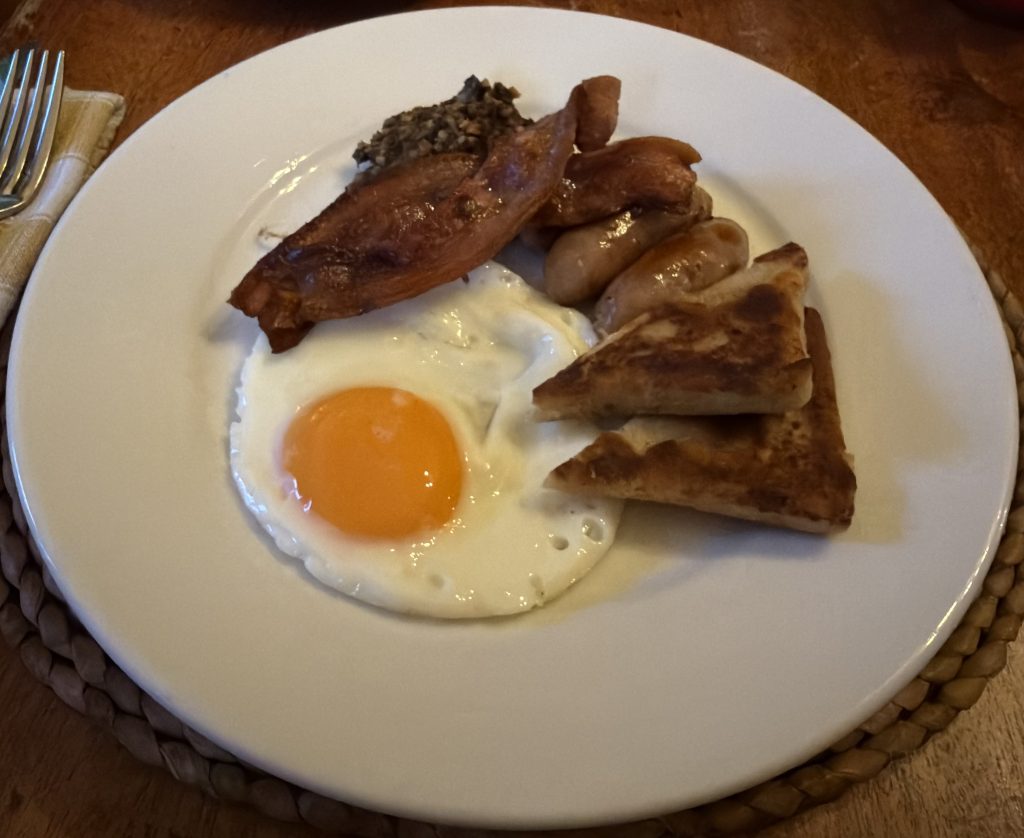
Saturday began with another splendid breakfast, this time the Scottish variety with Haggis and Tatty Scones, followed by the prospect of a little exercise.
The itinerary offered a choice: painting with Anna or a two-and-a-half-hour Saddle Walk. Having spent the previous morning discovering how much concentration Anna could extract from a small quantity of egg yolk and some powdered pigments, I decided it was time to exercise a different set of muscles.
I joined the walking group, with Matt Waterson and Sprout joining us too, which made for rather good company.
The itinerary said two and a half hours.
An important distinction, as it turned out, is that an itinerary is a statement of intent, not a legally binding guarantee.
Beyond the Main House
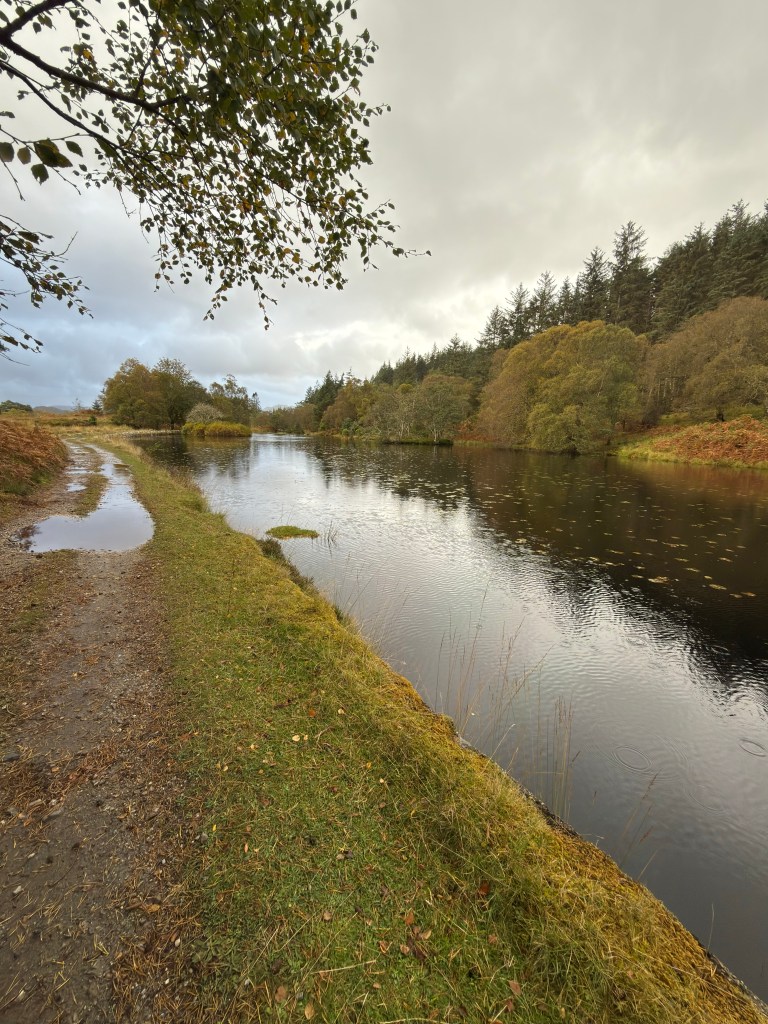
Setting off together, we soon discovered one of the remarkable things about Eilean Shona: how quickly its cultivated, inhabited landscape gives way to something altogether wilder. Around the main house, gardens, buildings and paths speak of generations of people shaping the island. Much of this historic setting forms part of Eilean Shona’s nationally recognised designed landscape. Beyond it, woodland and open hillside increasingly take charge.
The transition isn’t abrupt. It happens gradually, almost without you noticing. A comfortable track narrows, moss begins to claim everything that stays still long enough, and the trees close around you and there was plenty to admire: towering conifers, fallen trunks dissolving slowly back into the woodland floor, ferns and tussocks, and extraordinarily vivid greens wherever a little sunlight found its way through the canopy.
Some of the fallen trees looked as though they had been there for decades. They were now supporting an entirely new landscape of moss, fungi and young growth. Nothing in a woodland is particularly interested in being tidy.
I rather liked that.
And having Matt and Sprout along added another dimension. This wasn’t simply a collection of guests marching dutifully from one point on a map to another. There was conversation, shared curiosity, the inevitable interruptions for photographs, and the pleasure of exploring the island with people who were just as interested in what we encountered along the way.
Although, with Sprout in the party, I suspected the possibility of an entirely uneventful morning was already diminishing.
A Little More Than Just a Walk
Following the track farther into the island, our little expedition passed through a landscape that continually changed character. Dense, sheltered woodland would suddenly open into brighter patches of vegetation before closing around us again.
The ground was richly layered with moss, grasses, young trees and decaying timber. There was plenty to stop and examine, and the pace of the group allowed time to appreciate the smaller details rather than simply concentrating on reaching the next destination. A patch of lichen is no longer merely a patch of lichen. A fallen branch becomes a tiny ecosystem. A flower still blooming in October deserves a closer look.
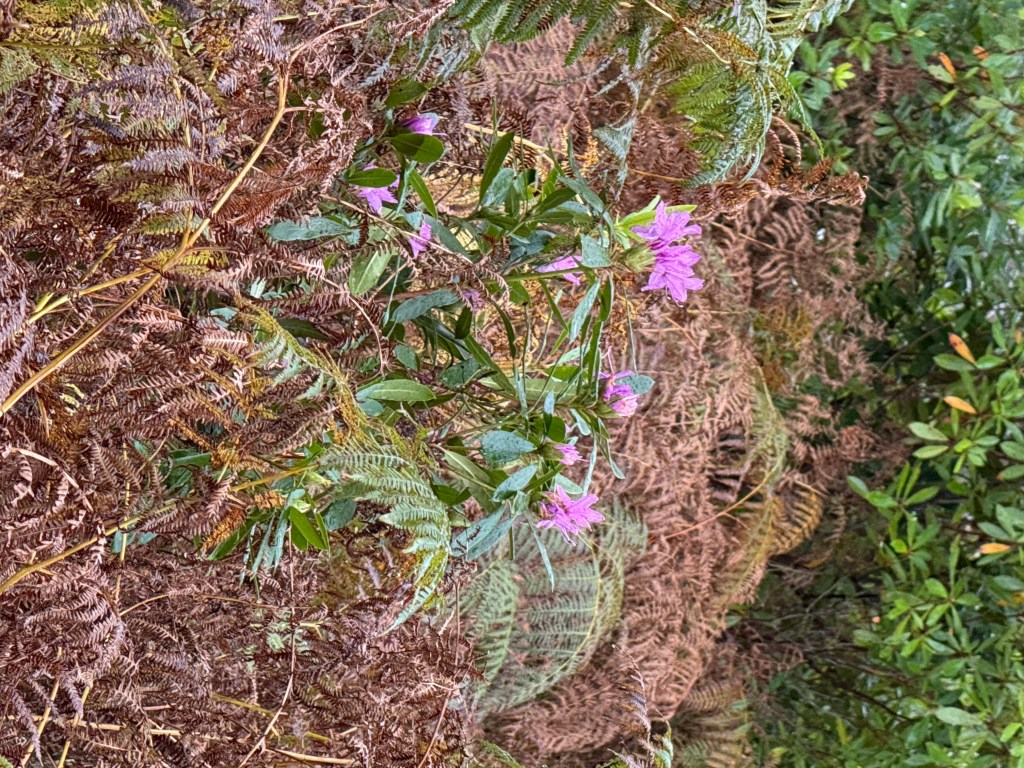
And, following Friday’s egg tempera session, I found myself noticing colours rather differently. Not simply green, but a dozen competing greens; the silvery cast of lichen, the warm copper of fading bracken, the dark reddish brown of damp bark, and those improbable flashes of pink and purple that appear where you least expect them.
Anna had a lot to answer for.
There was something rather lovely about the contrast, too. Here we were, with Matt and Sprout, two people whose professional lives involve creating and delivering extraordinary experiences, enjoying the simplest possible activity: wandering through the woods with the rest of us, looking at things, admittedly, the walking was about to become rather less simple.
The Old Schoolhouse – An Education of a Different Kind
By approximately 10.45 am, our walking group had reached the Old Schoolhouse area, one of the more intriguing corners of Eilean Shona. The name is entirely genuine. The Old Schoolhouse once served the island’s children, but these days its purpose is altogether more restful. One of the team at the Loch Shiel Hotel had mentioned her grandmother working at the school when the island had a more vibrant community some 100 years ago. Rather than being a forgotten building slowly surrendering to the undergrowth, it has been beautifully converted into one of the island’s holiday cottages.
And what a place to disappear to.
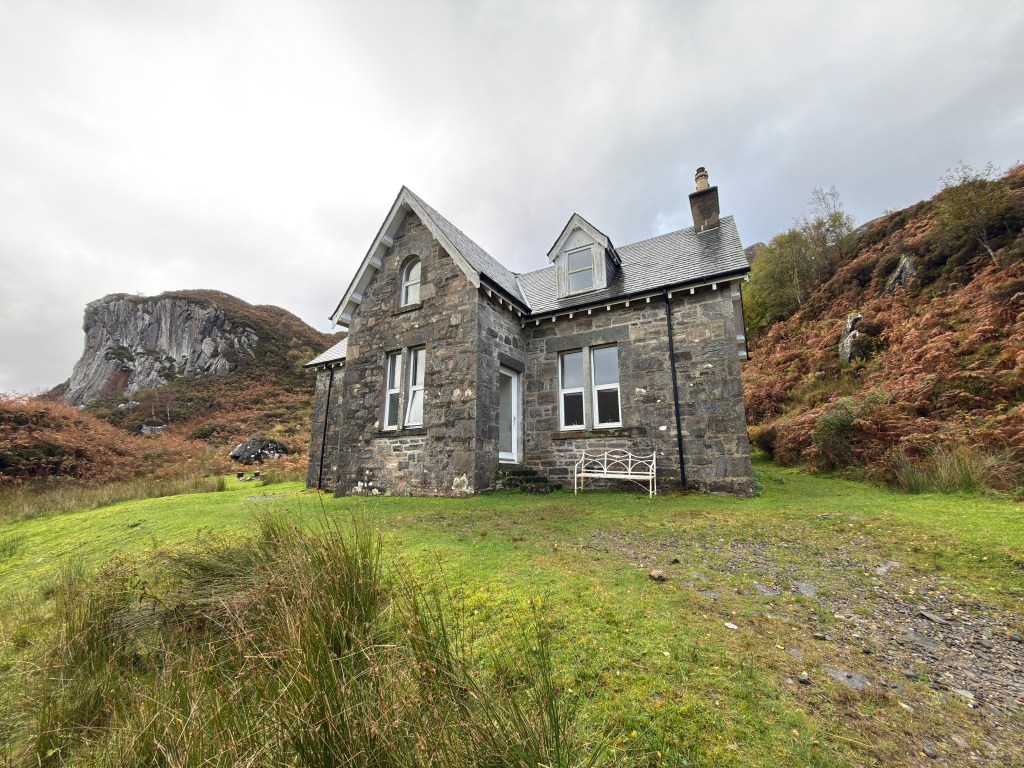
Situated in its own dramatic bay, more than a mile along the North Channel coastal path, the cottage sleeps four and offers an unusually appealing version of off-grid living.
No electricity, no flicking on a light switch, no casually checking whether the Wi-Fi has recovered. Instead, gas lamps provide the lighting, a gas fridge keeps provisions cool, a stove supplies heating and hot water, and drinking water comes from a filtered private spring.
There is even a Victorian roll-top bath with views towards the sea. A rather civilised way to escape civilisation, I thought. Although, given the choice, I would probably have ensured the bath was drawn before it became completely dark.
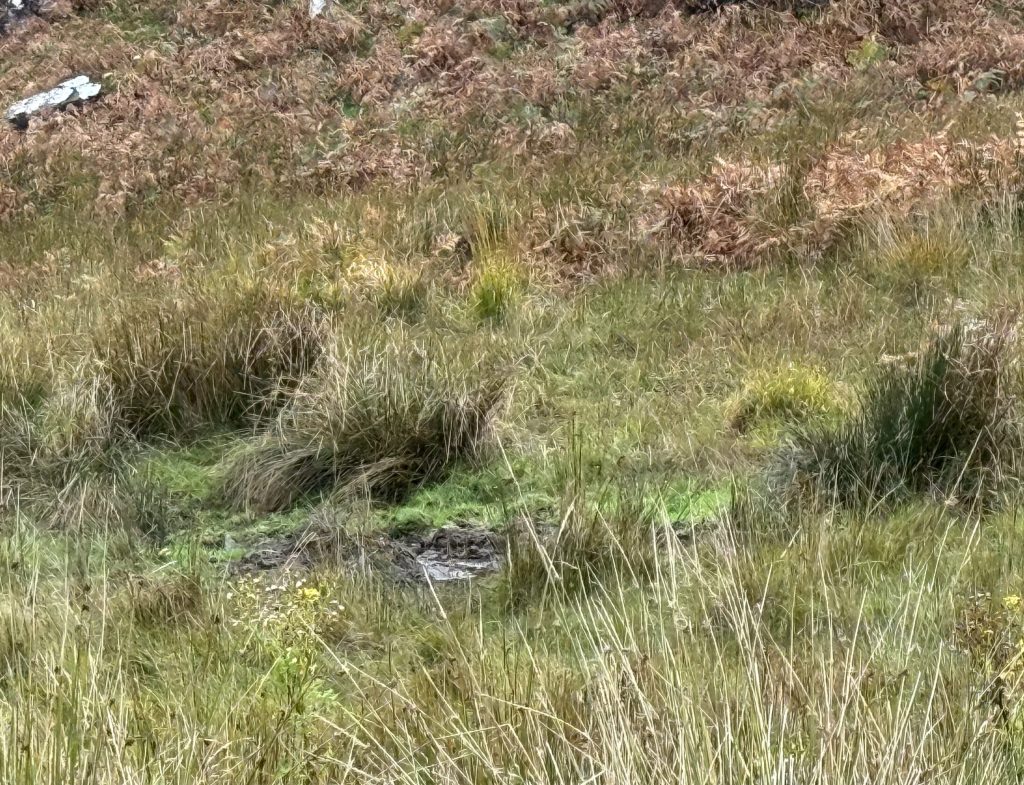
We were admiring this particular interpretation of island solitude when somebody noticed a small, rather unappealing muddy hollow nearby.
Fortunately, we had Matt with us.
What might otherwise have been dismissed as an especially unsuccessful bit of drainage was, he explained, a stag wallow.
During the autumn rut, red deer stags scrape out shallow depressions, urinate in them and roll around in the resulting mud, coating themselves in a potent mixture of earth, urine and their own scent. The smell helps advertise their presence and condition to hinds and competing males.
Essentially, the deer equivalent of getting dressed for a big night out.
Although I suspect the fragrance would struggle commercially, even with an expensive bottle, a suitably pretentious French name and a celebrity endorsement.
It was exactly the sort of discovery that made walking with Matt and Sprout so enjoyable. We weren’t simply covering ground; there was a running commentary on the wildlife, vegetation and small details of the landscape, frequently prompted by somebody spotting something the rest of us would have walked straight past.
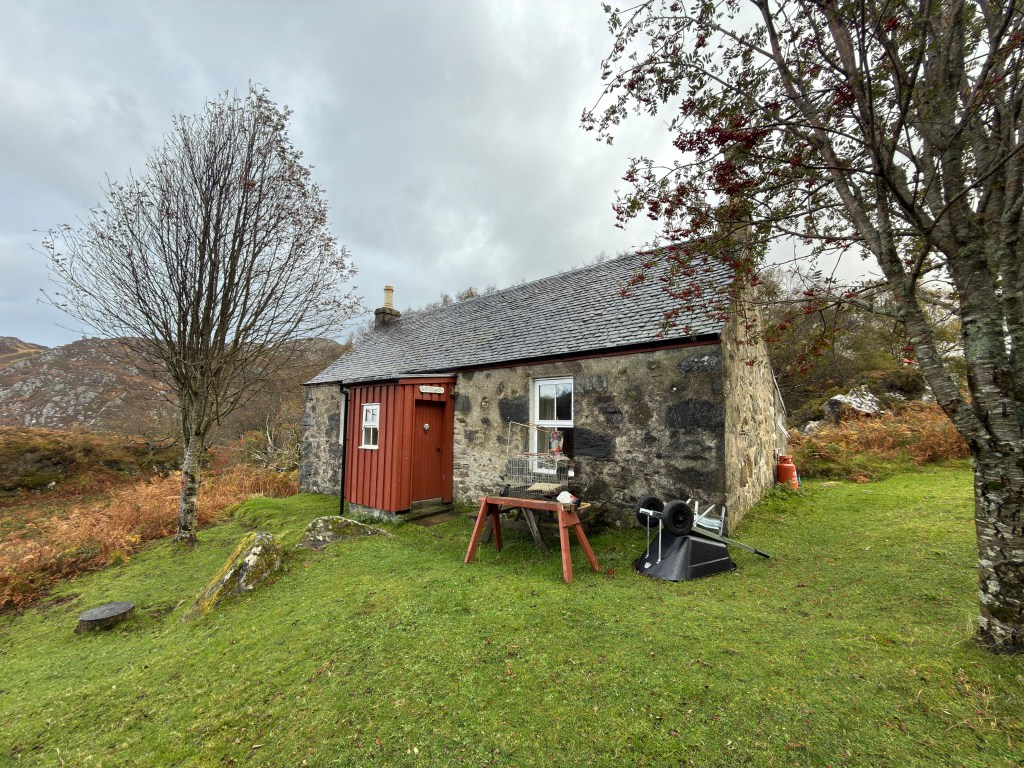
Eilean Shona has several cottages available to rent, each with its own character, and Shepherd’s Cottage, also along this stretch of the North Channel, offers another secluded, off-grid retreat. These are not abandoned remnants of a vanished island community, but places people deliberately seek out for the solitude, surroundings and wonderfully different pace of life.
The temptation to abandon the walk, install myself in a cottage and spend several days contemplating the view was considerable, but unfortunately, the morning’s itinerary had promised a two-and-a-half-hour Saddle Walk, and Matt and Sprout appeared to be taking that description rather more seriously than I had.
So onwards we went, leaving the cottages behind as the route carried us farther into the island.
The easy familiarity of the inhabited landscape was gradually giving way to something rougher and more expansive. Woodland, open ground and rising hills lay ahead, with considerably more of Eilean Shona still to discover.
And, as the photographs would eventually demonstrate, rather more climbing than the words pleasant morning walk had led me to anticipate.
Beyond the Schoolhouse – A Slight Difference of Pace
Leaving the cottages behind, we continued farther into the island, with Matt and Sprout accompanying the group and offering their considerable knowledge of the landscape along the way. By now, however, I was beginning to appreciate that there was a subtle difference between admiring a remote Scottish island and actually walking across a substantial portion of it.
My ankles, in particular, had developed some fairly strong opinions on the subject.
The paths rose and dipped through woodland, bracken and increasingly open ground. The scenery was magnificent, but the accumulated climbing was beginning to tell. I could still walk, certainly, but my pace was becoming rather more contemplative than athletic, which is a polite way of saying I was slowing everyone down.
Beyond the old schoolhouse, the rest of the group continued ahead with Sprout, while Matt kindly stayed with me. It was a thoughtful gesture, and one I greatly appreciated. There was no need to turn the morning into an endurance event, and Matt was excellent company. We carried on at a pace that allowed both the ankles and their increasingly argumentative owner to keep participating.
Besides, when you have somebody with Matt’s knowledge alongside you, slowing down is hardly a disadvantage.
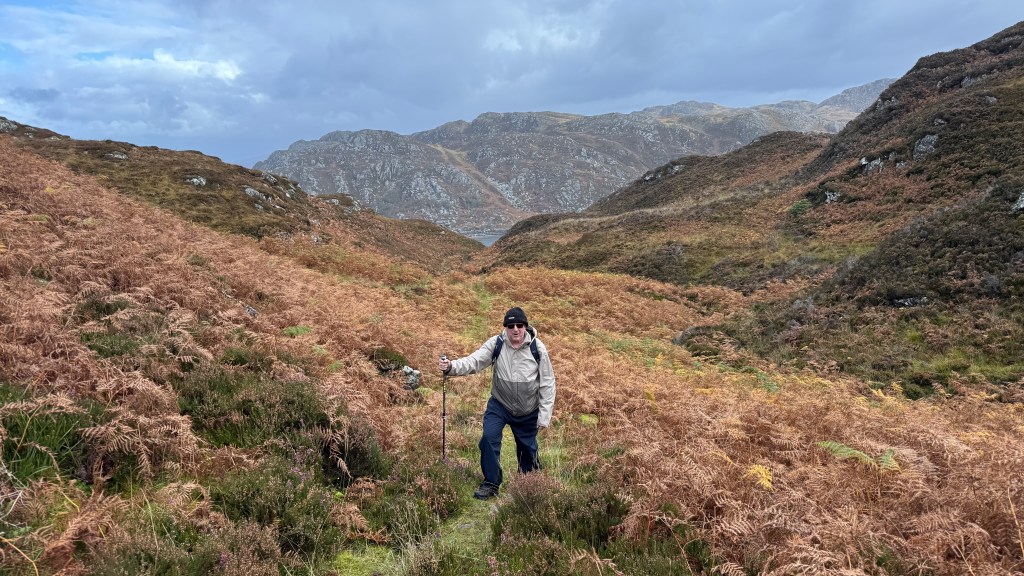
Up and Over the Saddle
The trees began to fall away as Matt and I continued climbing, giving way to rougher, more open ground. Bracken, heather and tussocky grass spread across the slopes, punctuated by exposed rock and the occasional stubborn little tree that appeared to have spent most of its life arguing with the prevailing wind.
This was the saddle walk, and at last I was beginning to understand the name.
The route carried us up through the lower hills towards the higher ground on the western side of the island. Behind us, the woodland and sheltered northern shoreline gradually disappeared from view. Ahead, the landscape opened into a wonderfully wild succession of ridges and shallow valleys.
It was magnificent, and it was also uphill.
Matt was wonderfully patient as I negotiated the uneven ground. My ankles were now expressing themselves in language that would have been quite inappropriate at the previous evening’s dinner, but stopping regularly had its compensations. Every few metres seemed to reveal another change in the landscape, another interesting plant, or a view that demanded a photograph.
The weather was also providing an impressive demonstration of Scottish efficiency.
Sunshine, cloud, rain and wind were all apparently available, sometimes within the same twenty minutes. One moment the autumn bracken glowed copper and gold; the next, dark clouds gathered over the ridges, before breaking apart to send shafts of sunlight sweeping across the hills.
There was no point trying to predict it. The island seemed determined to offer its entire meteorological repertoire before lunch, or what had originally been advertised as lunchtime.
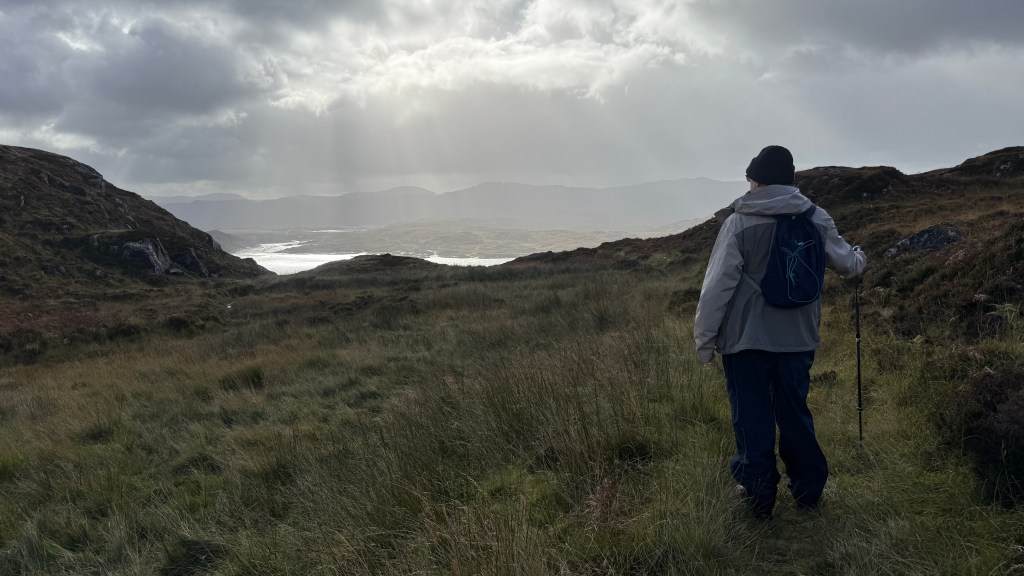
The High Point
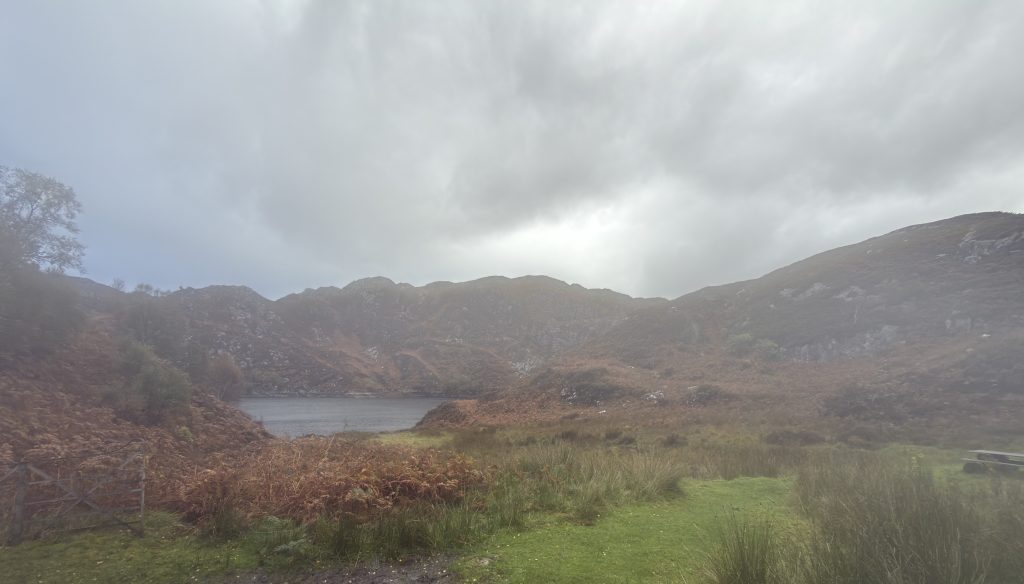
As we gained height, the views became increasingly expansive. The sheltered world of the gardens and cottages had given way to bare, undulating hills, with the waters surrounding Eilean Shona appearing and disappearing between the ridges.
And then came the real reward.
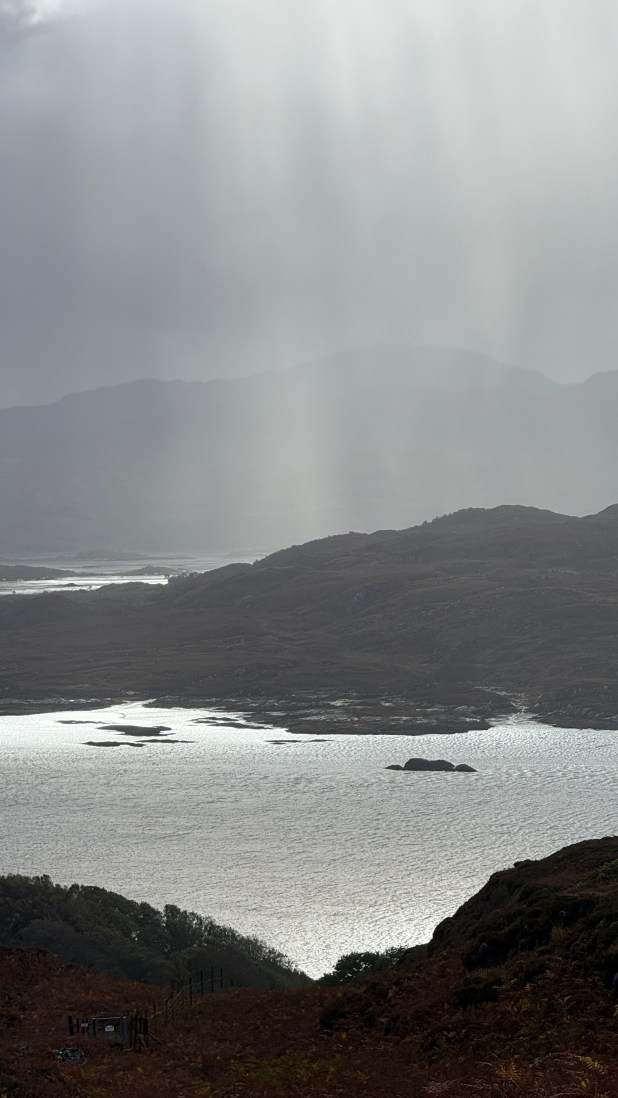
From the higher ground, we could look out across a remarkable landscape of islands, sea channels and distant mountains. The light was constantly changing: dark clouds softened the far hills into successive shades of grey, while occasional shafts of sunshine transformed the water into an almost blinding sheet of silver.
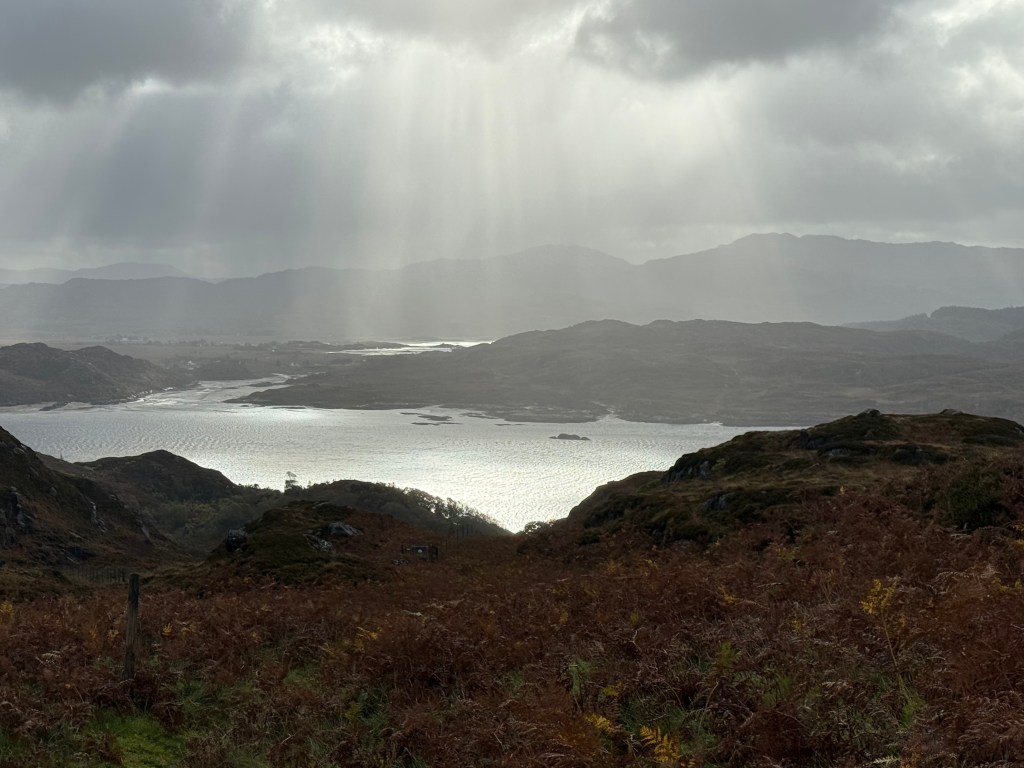
According to the GPS data recorded in my photographs, we reached our highest photographed point at approximately 12.28 pm, at 141 metres above sea level.
Not exactly Everest, admittedly!
But after climbing from the lower reaches of the island, over rough and occasionally unforgiving ground, it felt like a perfectly respectable achievement. My ankles certainly thought so. Matt and I stopped to appreciate the view. It was one of those moments when the journey, the effort and the landscape all come together, and you realise that being able to take your time is a privilege rather than a disadvantage.
The rest of the group had continued ahead with Sprout, but I was very glad not to have rushed this part of the island.
And, as my painstaking reconstruction of the route would subsequently reveal, reaching the highest point did not mean that all the climbing was over.
Eilean Shona had another little surprise in store.
A Little Sustenance on the Hillside
Before tackling the next stage, a short pause was called for. I had packed some organic dried mango for the journey, which now seemed an unusually inspired piece of forward planning. Sweet, chewy and wonderfully concentrated in flavour, it provided a welcome little burst of energy.
More entertainingly, the advance party had left Matt and me a tipple to enjoy along the way. A rather lovely mid-walk treat, and a reminder that although we were now proceeding at a more leisurely pace, we certainly hadn’t been forgotten. There was something wonderfully civilised about it. Sitting among the heather and bracken, admiring the view, sharing dried mango and enjoying a small drink thoughtfully left by our fellow walkers.
A sort of Highland drinks reception, albeit without the canapés, comfortable chairs or any obvious means of summoning a waiter.
And with a considerably more demanding journey to the cloakroom.
The pause was just what I needed. There is a particular pleasure in stopping somewhere like this, not because a guidebook has designated it a viewpoint, but because you’ve reached it under your own steam and can simply sit and absorb the place, Matt and I had certainly earned our refreshments.
What Goes Up Must Come Down. And Apparently Up Again.
Eventually, suitably fortified, we continued.
The route dropped away from the higher ground, winding through rough grass, bracken and patches of exposed rock. The descent offered some relief from the climbing, although my ankles were keen to point out that downhill walking presented an entirely different set of objections.
The landscape continued to reward every pause. Brown and copper-coloured hills rolled towards the water, the October light moving across them beneath an ever-changing sky. In places, the view stretched across Loch Moidart and the surrounding channels, the water catching the light between passing curtains of rain.
It felt wonderfully remote, yet there were occasional reminders that Eilean Shona had once supported a much more extensive community.
By approximately 1.03 pm, our photographs place us near another set of ruins, at around 52 metres above sea level. The remains sat quietly within a landscape that had long since grown around them, their stonework providing a small reminder of the people who had previously lived and worked on the island.
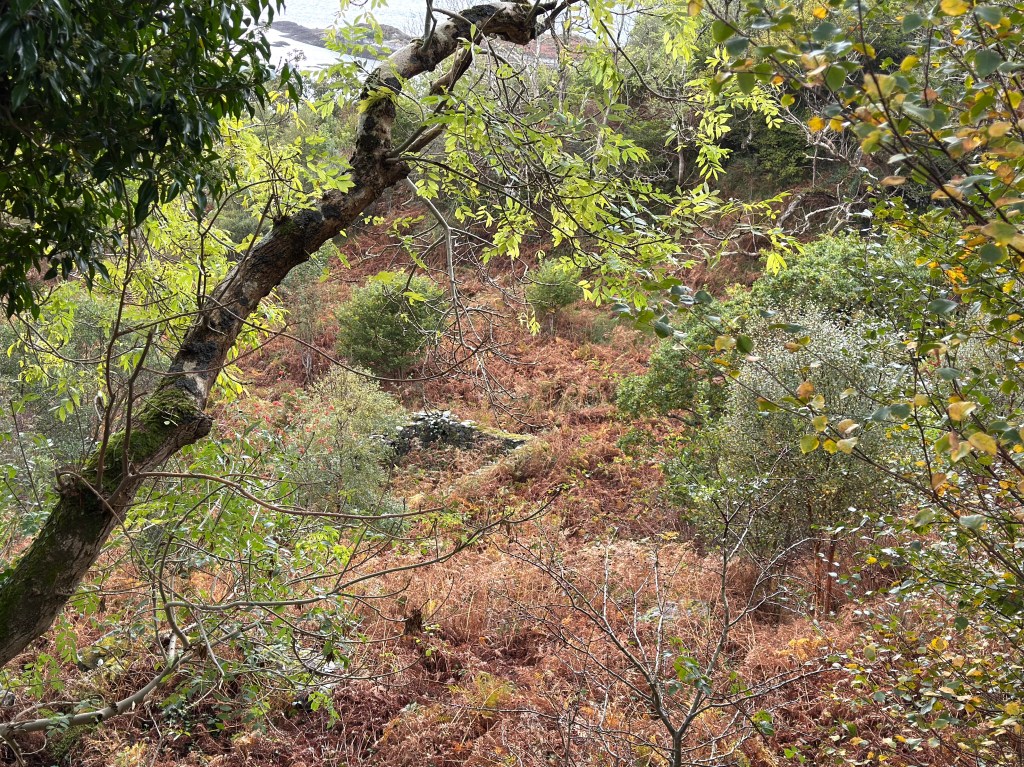
I found these traces of island life particularly affecting. A deserted building doesn’t necessarily tell you who lived there, what they did or why they eventually left, but it does make you wonder. These hills hadn’t always been somewhere for visitors to admire the scenery. For earlier generations, they were simply home.
There was, however, a more immediate matter requiring my attention, having descended so considerably, we now had to climb again.
I consulted neither the itinerary nor the GPS at this point. I felt that ignorance might be kinder.
The Second Climb
The return route involved another substantial ascent, something that would become all too apparent when I later examined the elevation data from my photographs as far from being a simple downhill amble back towards the main house, the route rose again to approximately 123 metres by 2.20 pm.
My ankles had not been consulted about this arrangement!
By now, the walking had settled into a slower rhythm. Matt remained excellent company, and his willingness to match my pace made all the difference. We could stop, look around, discuss whatever caught our attention and carry on when ready. There was no pressure to make the morning into anything other than an enjoyable exploration of an extraordinary island.
The weather, meanwhile, continued to alternate between breathtakingly beautiful and mildly threatening, sometimes managing both simultaneously. Shafts of sunlight broke through the clouds and illuminated distant water and hills, while the surrounding landscape remained under a heavy grey sky.
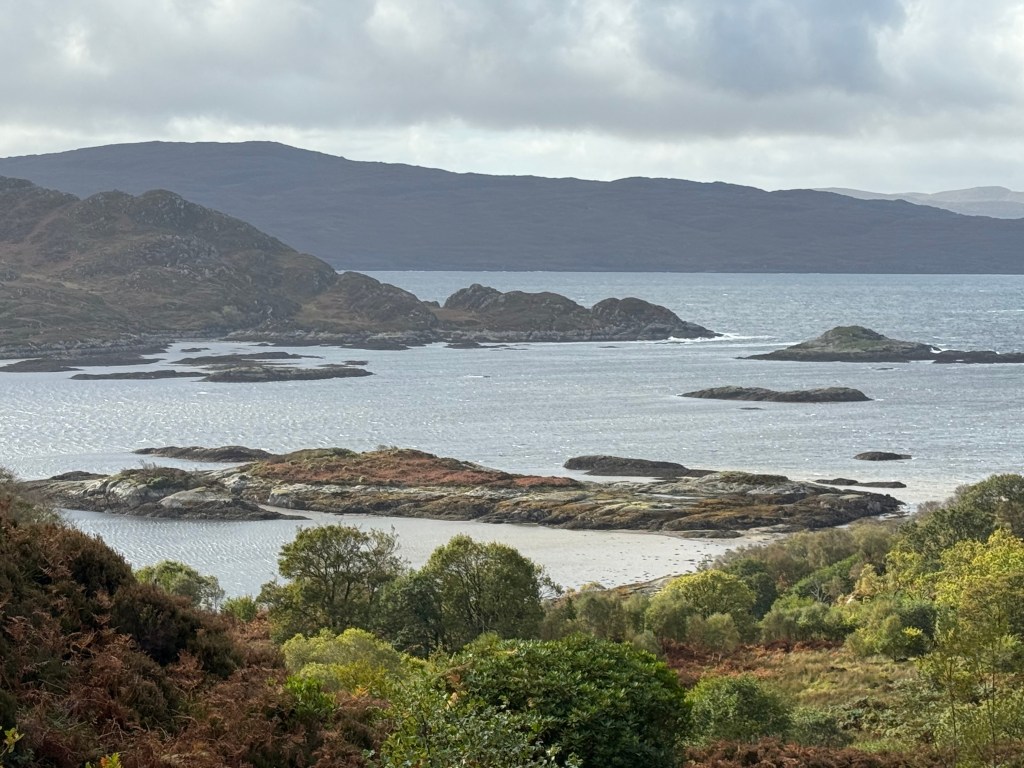
This was precisely the sort of scenery that had persuaded me to come to Eilean Shona in the first place. I might have preferred slightly more cooperative ankles, but one can’t have everything.
And there was something quietly satisfying about looking back across the ground we’d covered. The climb, the descent, the pauses and the unexpected second ascent were all becoming part of a much richer experience than the two-and-a-half-hour walk described on our itinerary. At some point, I suspected, Sprout and the others might begin wondering whether we’d decided to settle permanently on the hillside.
The good news was that we were finally making our way back towards the more sheltered, wooded part of the island.
The even better news was that I still had some dried mango left.
Back Into the Woods – An Entire World in Miniature
Eventually, the exposed hillside began to give way to the shelter of the trees.
It was quite a transformation. After the enormous skies, sweeping views and open, bracken-covered slopes of the saddle, the woodland felt almost intimate. The wind diminished, the light softened beneath the canopy, and the ground became a wonderfully intricate mixture of moss, fallen timber, ferns and countless shades of green.
Matt and I continued at our own pace, which by now was best described as unhurried, with occasional opportunities for negotiation. My ankles were still contributing fairly vigorously to those negotiations.
But the slower pace brought its own rewards. There was time to look properly at the extraordinary detail of the woodland rather than simply concentrating on where to put the next foot.
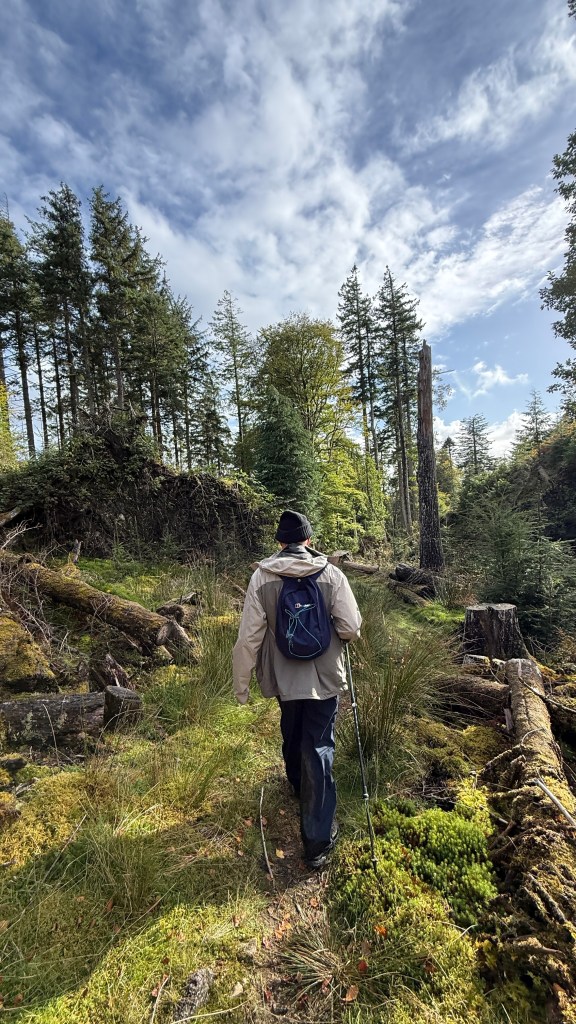
Lichen – A Rather Extraordinary Partnership
One of the most striking discoveries was the pale, intricately branching lichen growing amongst the trees.At first glance, it looked like something belonging beneath the sea: a miniature coral, perhaps, or an impossibly delicate collection of bleached underwater branches.
But lichen is something rather more interesting than an ordinary plant.
Most lichens are formed through a close association between a fungus and a photosynthetic partner — usually an alga, sometimes a cyanobacterium. The fungus provides structure and protection, while its partner captures energy through photosynthesis. It’s a remarkably successful arrangement, allowing lichens to colonise surfaces and survive conditions that many other organisms would find distinctly unappealing.
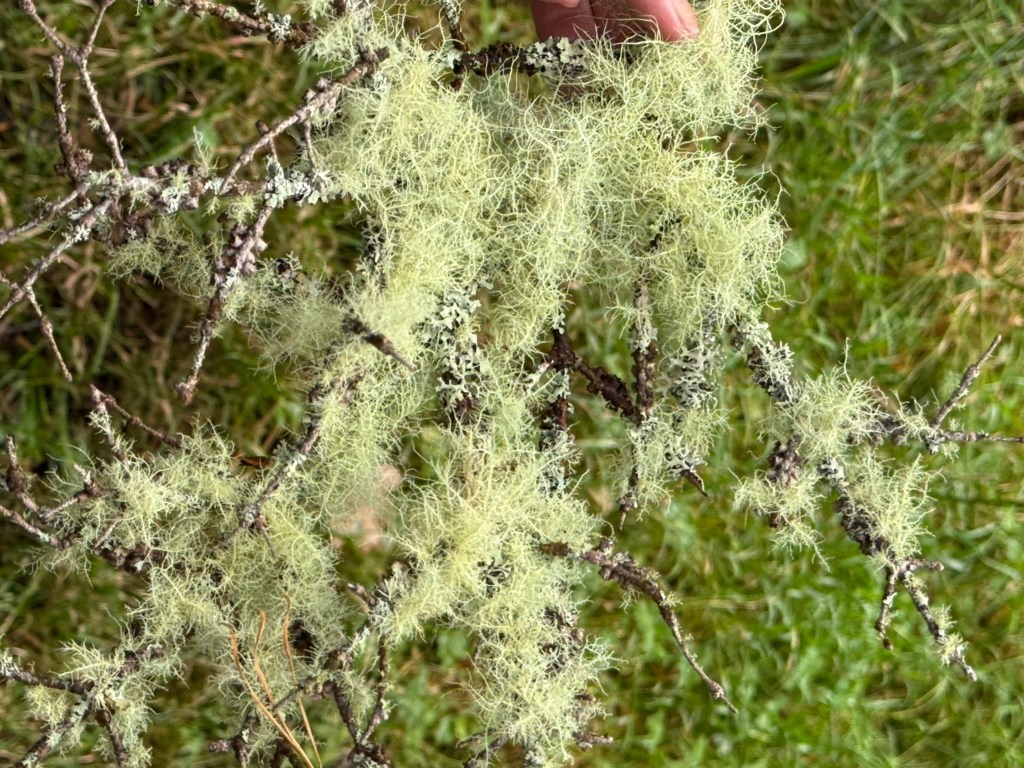
Their abundance gave the woodland an almost enchanted quality, pale strands and branching forms contrasting with the rich greens and browns of the surrounding vegetation. I wasn’t going to attempt a species identification from the photograph alone, but I was thoroughly captivated by its structure. It also seemed a particularly appropriate discovery during Kitchen in the Wild: an organism built around cooperation, with each partner contributing something rather important to the finished result.
A little like the kitchen team.
Although I suspect the lichen would be considerably less effective at producing an Earl Grey.
Silver Fir, Fallen Giants and the Art of Doing Nothing Quickly
Elsewhere, one of the island’s botanical labels identified a common silver fir, Abies alba.
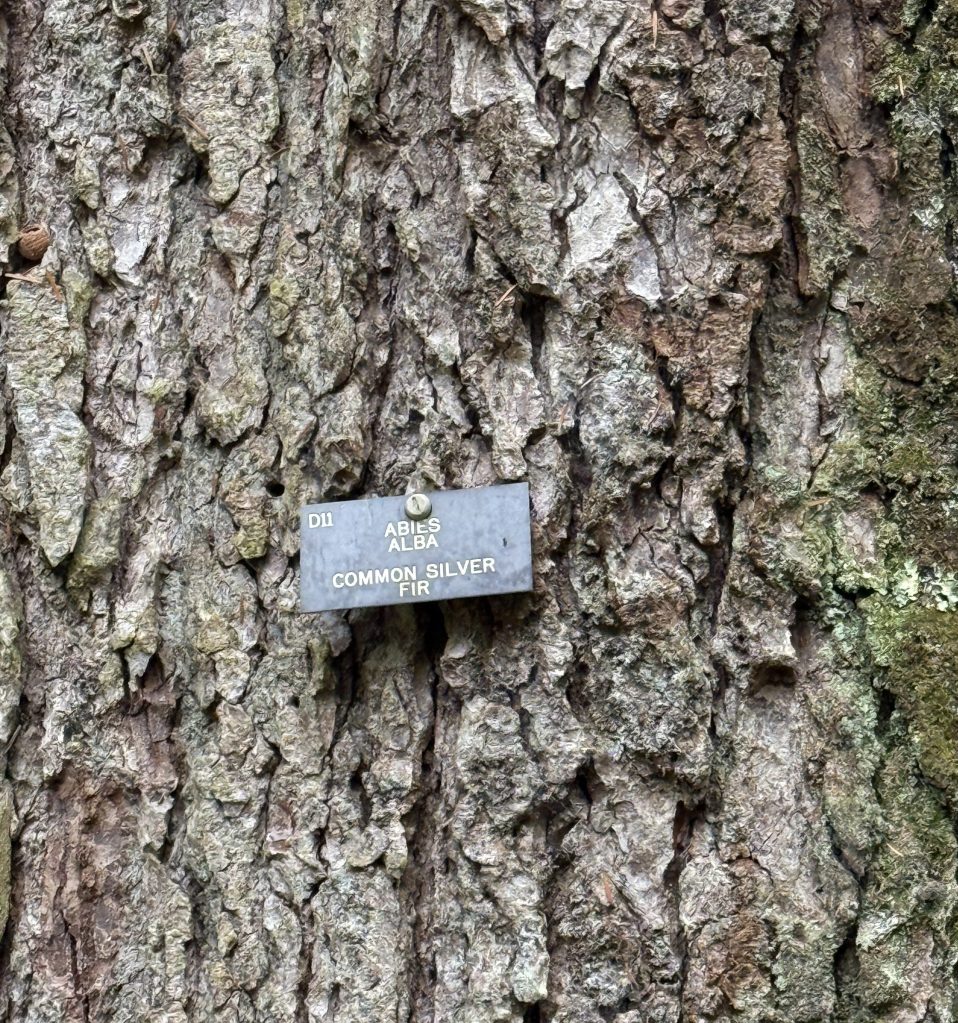
Native to the mountains of central and southern Europe, silver fir is one of the impressive conifers introduced into British gardens and estates. Its presence here was a reminder that Eilean Shona’s woodland is not simply an untouched wilderness, but part of a landscape influenced by generations of planting, cultivation and changing ideas about gardens and forestry.
And then there were the fallen trees.
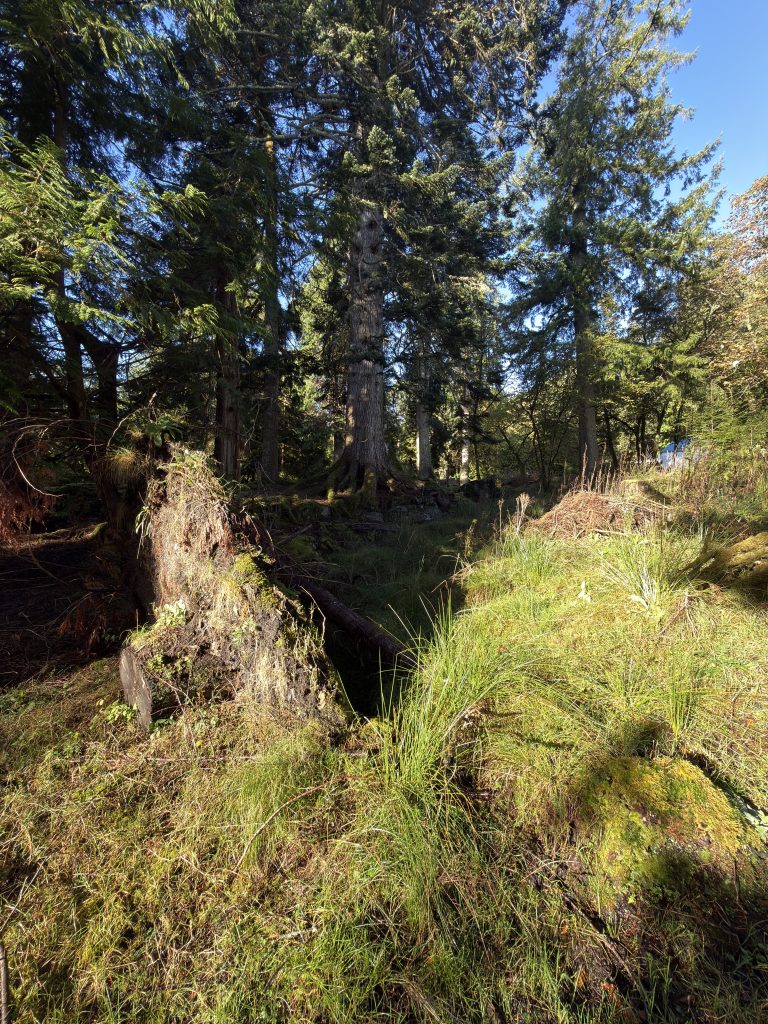
Some lay stretched across the woodland floor like great sleeping animals, their surfaces almost entirely enveloped in moss. Others had begun the long process of breaking down, supporting fungi, insects, young plants and an extraordinary diversity of smaller life. What might appear untidy in a carefully maintained garden is an essential part of a healthy woodland.
Deadwood isn’t really dead in an ecological sense. It provides shelter, nutrients and a remarkable variety of habitats as it gradually returns to the soil. There was something rather satisfying about that.
Nature recycling on a magnificent scale, without the need for three different coloured bins or a laminated council leaflet explaining which one to use.
Anna Had a Lot to Answer For
I couldn’t help noticing how differently I was looking at everything after the previous day’s egg-tempera workshop with Anna Koska. Before Friday, I might have described the woodland as green.
Now, after three hours being encouraged to look more carefully at colour, tone and the subtleties of the natural world, that description seemed hopelessly inadequate. There was the dark, almost blue-green of the conifers, the vivid emerald of fresh moss, the muted grey-green of lichen and the warm, rusty browns of fallen needles and decaying timber.
Even the light had its own colours, filtering through the canopy and illuminating small patches of vegetation while the surrounding woodland remained in shadow.
And then there were the mushrooms. Tucked amongst the moss, grasses and fallen leaves was a magnificent red-capped fungus, its brilliant scarlet surface punctuated by pale patches where the outer skin had been disturbed. It looked almost impossibly vivid against the muted colours of the forest floor.
A proper fairy-tale mushroom.
The sort that makes you half expect a small woodland creature to emerge from beneath it and enquire whether you’ve brought any biscuits.
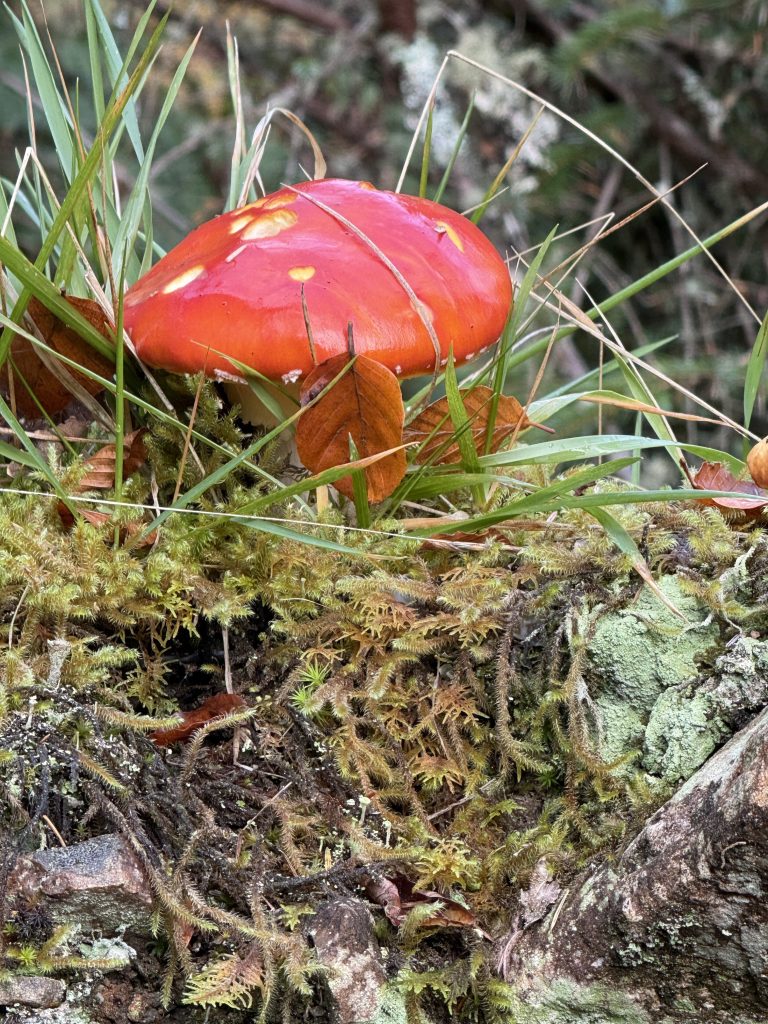
It was a wonderful reminder of just how much life exists at ground level, much of it easily missed when concentrating on where to put your feet. Fungi play an essential role in woodland ecosystems, breaking down organic material and, in many species, forming intricate mycorrhizal partnerships with trees and other plants, exchanging nutrients through networks hidden beneath the soil.
Rather more sophisticated than their apparently modest circumstances might suggest.
Naturally, I photographed this magnificent specimen rather than attempting to eat it. My ambitions for the day had already extended well beyond the itinerary, and accidentally poisoning myself seemed an unnecessary additional achievement.
Anna would undoubtedly have distinguished another forty-seven shades.
I was making progress, and while my own artistic achievements were unlikely to trouble the National Gallery any time soon, I was beginning to understand one of the most valuable lessons of her workshop: looking and observing are not necessarily the same thing.
Sometimes, slowing down reveals an extraordinary amount that would otherwise pass unnoticed, although, in fairness, my ankles had been advocating this philosophy for several hours.
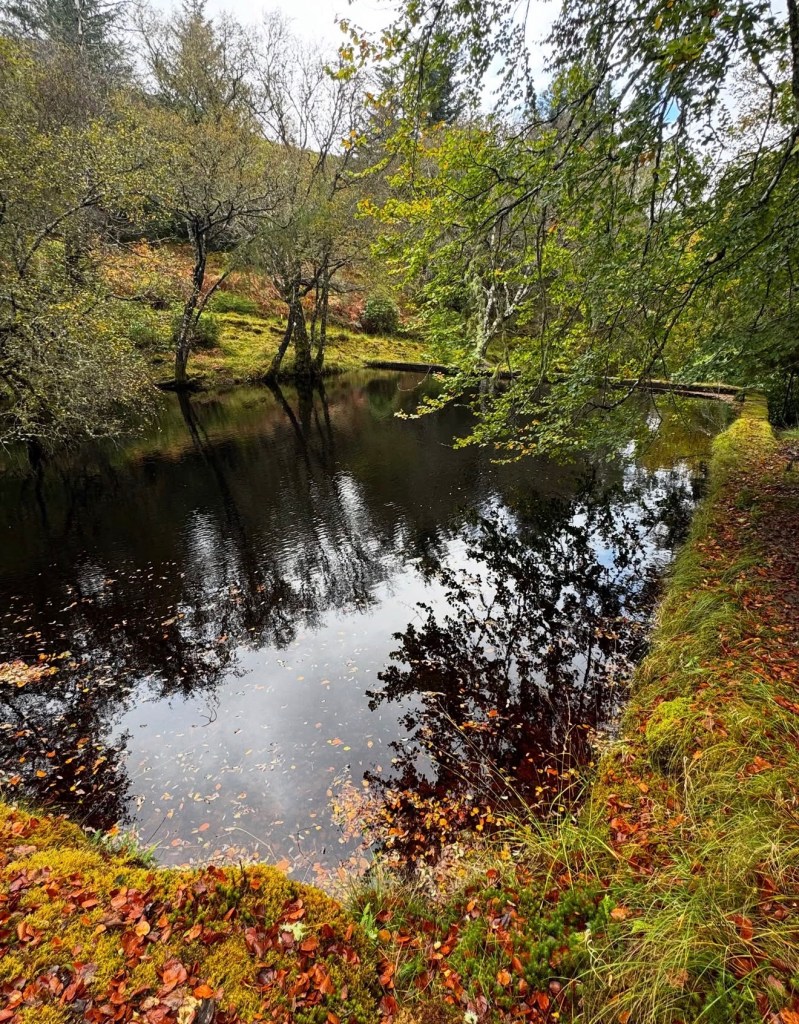
There was something particularly enjoyable about those final stretches. After the exposed heights of the saddle, the relative shelter of the trees was welcome, and the familiar signs of paths and cultivated woodland suggested that civilisation — or at least somewhere to sit down — was becoming a realistic prospect.
Matt remained excellent company throughout.
His willingness to stay with me when the rest of the group continued ahead with Sprout had made a considerable difference. What might otherwise have become a slightly miserable struggle to keep pace had instead turned into an opportunity to explore the island more thoughtfully, with someone whose knowledge and appreciation of the landscape added enormously to the experience.
I was genuinely grateful.
And somewhere amongst the hills, I had also acquired a rather better understanding of what constitutes a two-and-a-half-hour walk, apparently, the answer depends quite considerably on whose ankles are involved.
The Route – A Picture Worth Several Thousand Steps
Back home, I subsequently spent hours working through the original photographs, extracting their GPS coordinates, timestamps and recorded elevations, and plotting them against an Ordnance Survey map.
The result was a three-part reconstruction of our route: the photographic positions, the underlying island geography and the elevation profile.
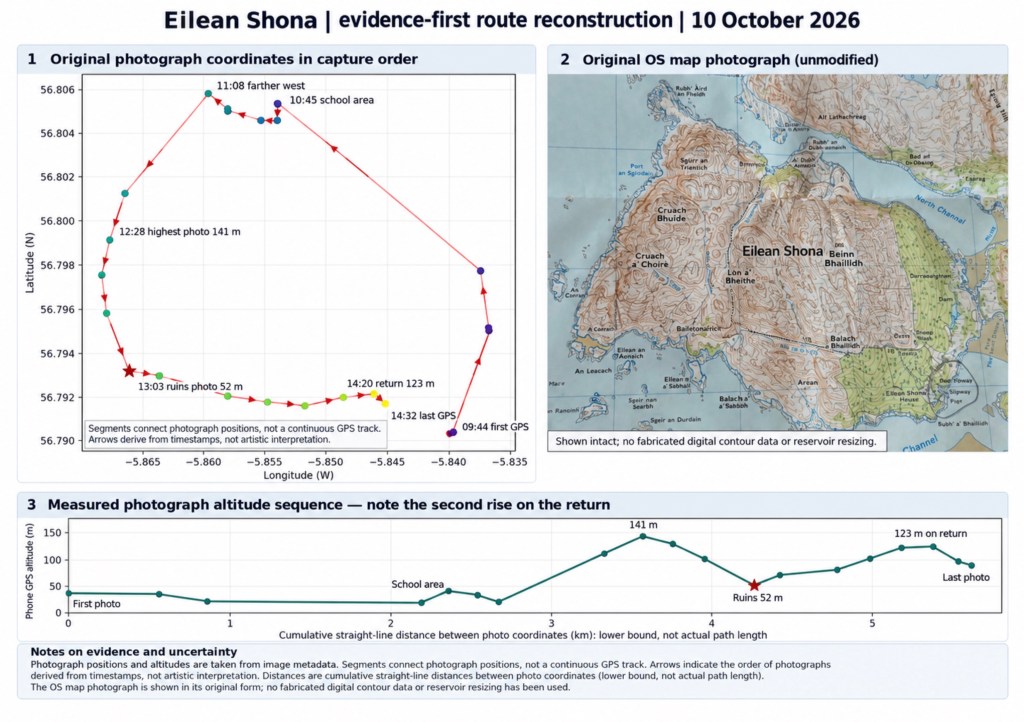
It is worth emphasising that this wasn’t a continuous recording from a dedicated GPS device, I totally forgot I had a app on my phone that could have made the above a lot quicker, and simpler to produce! The plotted points were taken from individual photographs, and the lines between them illustrate their sequence rather than claiming to reproduce every twist and turn of the paths.
Nevertheless, the recorded elevations tell a particularly revealing story.
We climbed to approximately 141 metres at 12:28 pm, descended towards the ruins to around 52 metres by 1:03 pm, and subsequently climbed again to approximately 123 metres at 2:20 pm.
A second ascent on the return journey, I feel that point deserves to be recorded for posterity.
The final GPS-tagged photograph in the reconstruction was taken at approximately 2:32 pm, making it clear just how much the morning’s exploration had expanded beyond the scheduled two-and-a-half-hour activity, I am rather pleased with the finished graphic.
Partly because it provides a useful geographical record of an extraordinary walk, and partly because I can now produce documentary evidence whenever anybody suggests that I’d merely been out for a gentle stroll.
My ankles are considering having it framed.
An Island Worth Exploring Slowly
What a wonderful experience it had been.
From the Old Schoolhouse and its beautifully secluded cottages to the extraordinary rituals of the rutting stags; from sheltered woodland to the open heights of the saddle, with its magnificent views across the surrounding waters; and then back again through an entirely different world of lichen, moss and towering trees. All made richer by the company, first of our walking group with Sprout and Matt, and later by Matt’s kindness in accompanying me at my own pace, sharing his extensive knowledge on the way.
It had been a reminder of something rather important, you don’t necessarily experience more by travelling faster.
Sometimes, the most memorable discoveries happen when you’re obliged to slow down, look around and appreciate what’s directly in front of you, an encouraging thought.
Although by this stage I was also looking forward to appreciating something considerably more immediate.
A comfortable chair.
And possibly a large cup of Earl Grey tea.
Preferably delivered without requiring another ascent of 123 metres.
Back to Civilisation. And Earl Grey.
Returning to the main house after our extended exploration of Eilean Shona, I was pleased to discover that civilisation remained exactly where we had left it, and more importantly, so did the tea.
There is something particularly comforting about returning from several hours of hills, woodland, boggy ground and increasingly vocal ankles to a handsome Scottish country house, especially when somebody (thanks Sprout) is prepared to produce a cup of Earl Grey without requiring you to demonstrate any further physical competence.
The Kitchen in the Wild team seemed pleased to see me back.
Or possibly relieved.
Either way, I considered my return a considerable success, and there was little time to dwell on my athletic achievements, because the afternoon had another treat in store.
Nathan Outlaw – An Afternoon in the Kitchen
At 2.30 pm, the itinerary promised a demonstration from Nathan Outlaw. After the morning’s exertions, sitting down and watching somebody else do something extraordinarily skilful seemed an excellent arrangement, and Nathan had established a demonstration station in the main house, complete with a tartan-covered work surface, cooking equipment and a copy of his book latest book, On Fish.
Outside, the island’s scenery provided the backdrop. Inside, we had one of Britain’s most accomplished seafood chefs showing us how to prepare and cook beautiful fish and shellfish.
Not a bad way to spend a Saturday afternoon.
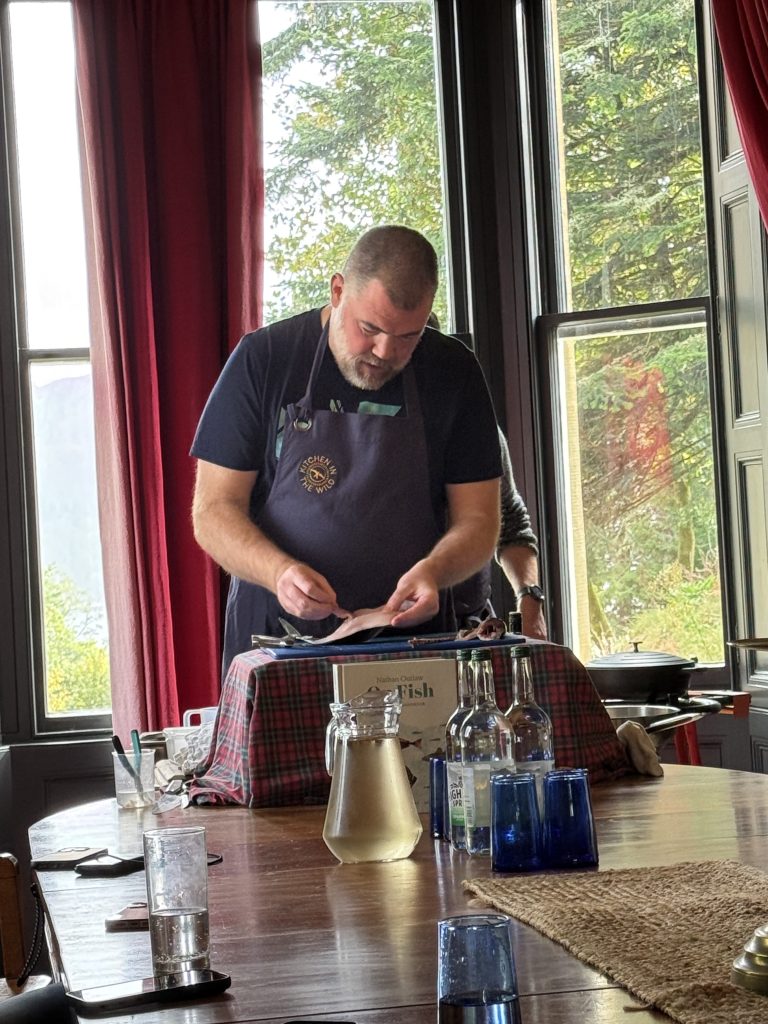
Nathan’s career has been built around a profound understanding of seafood, and what makes him especially engaging is the way he communicates that knowledge. He is precise about technique, but never makes it seem unnecessarily complicated. The emphasis is on understanding the ingredient, respecting its qualities and knowing when to stop interfering.
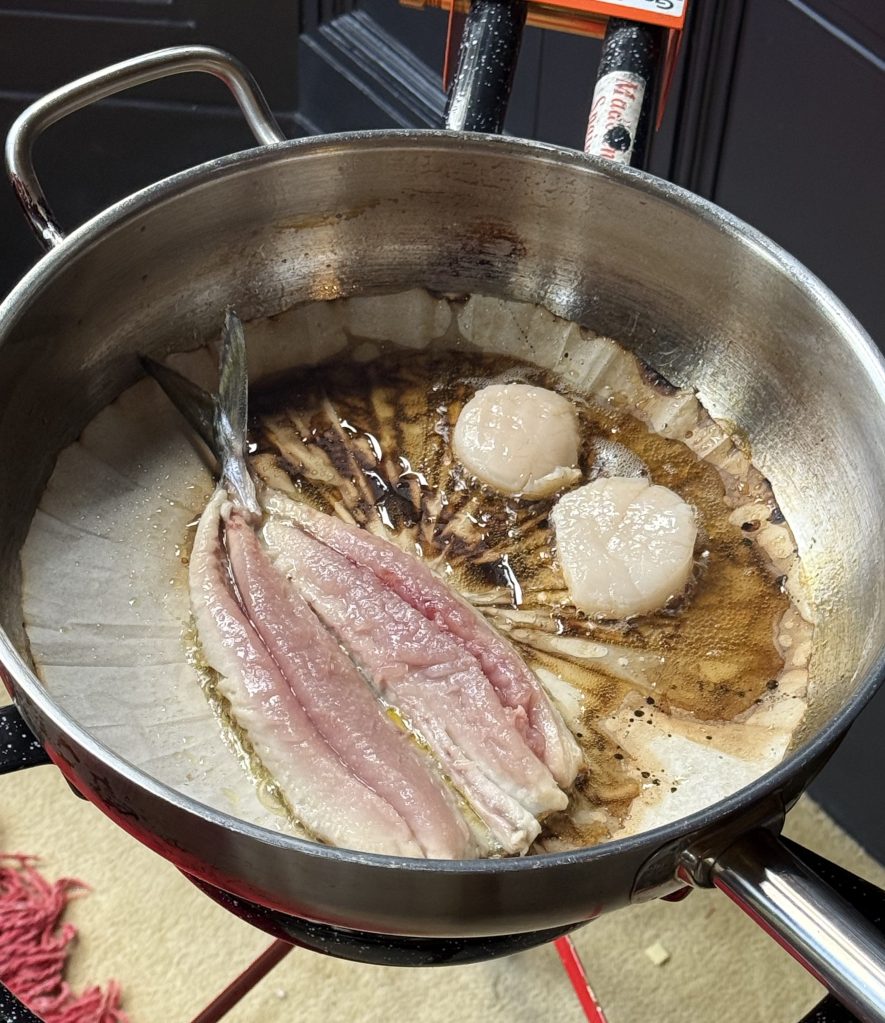
There was mackerel, scallops and oysters to examine, prepare and discuss, along with the construction of a nage — essentially an aromatic cooking liquor or light broth, often used with fish and shellfish, which allows their flavour to remain central rather than burying it beneath an unnecessarily elaborate sauce.
Watching an experienced chef work at close quarters is fascinating. Movements that appear quite casual are anything but. Knife angles, timing, temperature and the handling of delicate ingredients all reflect years of repetition and accumulated understanding.
The mackerel was particularly interesting. An oily fish with bags of character, it rewards freshness and careful handling. Nathan demonstrated the preparation before cooking it, and the resulting fish, opened out and beautifully coloured, looked rather magnificent.
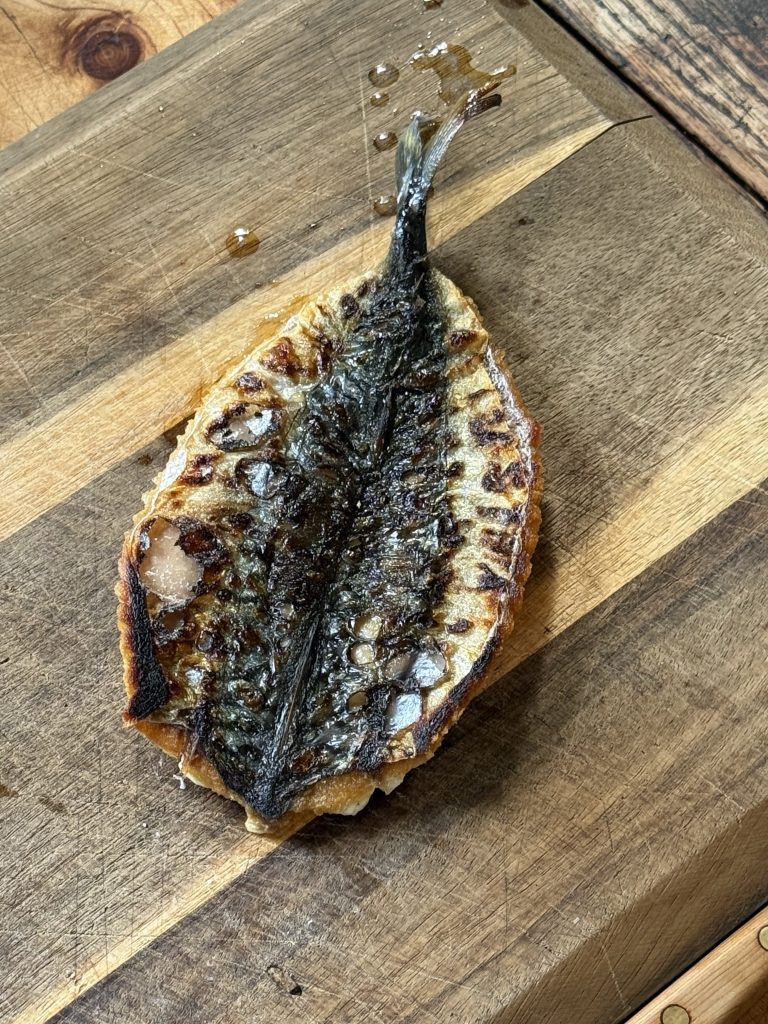
The scallops and oysters brought their own considerations. Scallops require remarkably little cooking when they are good, while oysters offer a whole range of possibilities beyond simply opening the shell and adding a squeeze of lemon.
As the questions came from around the table, Nathan explained what he was doing and, equally importantly, why.
I had originally come to Kitchen in the Wild for the food, of course, but opportunities like this were a significant part of its appeal. There is a considerable difference between enjoying an excellent dish in a restaurant and being able to sit a few feet away from the person responsible, watching the decisions that make it excellent in the first place.
And all without having to do the washing-up.
My Earl Grey was coming along very nicely.
Questions, Answers and the Island Pub
Saturday evening’s programme took us to the Village Hall, where Val had arranged a conversation with Nathan before dinner.
The venue had been transformed into something resembling the most appealing private island pub imaginable: timber walls, fairy lights, hanging stars, comfortable chairs, a glowing wood-burning stove and, naturally, a bar.
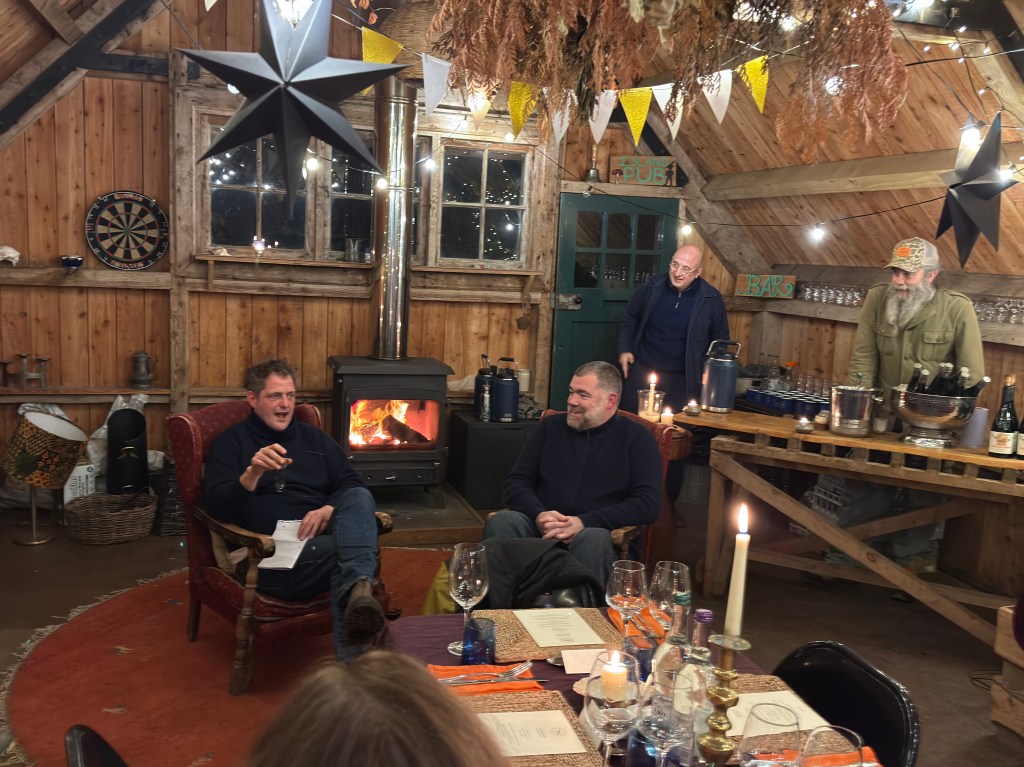
At 7.15 pm, Val led the Q&A with Nathan. It was a chance to hear more about the experiences, decisions and philosophy behind his cooking, away from the bustle of a professional kitchen.
The atmosphere was relaxed and informal, with Nathan speaking about his work and answering questions from the group. There is something rather special about having this kind of access to somebody operating at his level: no stage, no great separation between chef and audience, just an engaging conversation amongst people who genuinely care about food.
The real charm of Kitchen in the Wild was becoming increasingly apparent. These weren’t simply a series of celebrity appearances or restaurant meals transplanted to a remote island. The people involved were spending time with us, sharing their knowledge and enjoying the company, and, in between all that accumulated culinary expertise, somebody generally remembered that I might appreciate another cup of tea.
A highly civilised operation.
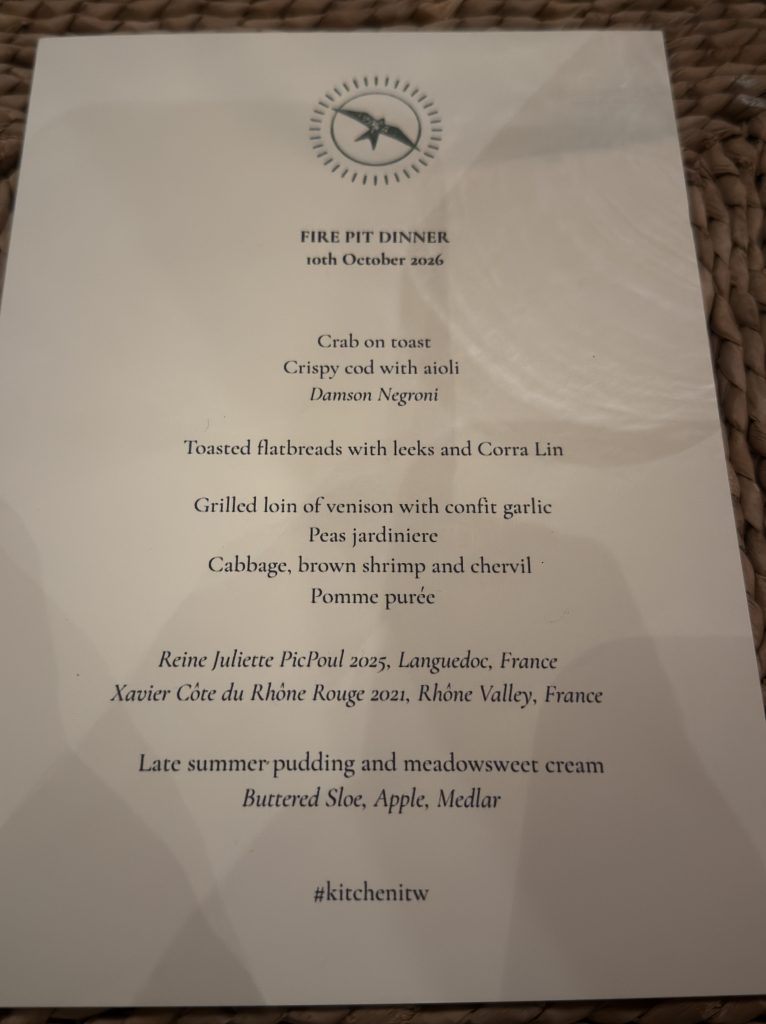
Nick Strangeway – A Negroni With an Island Accent
Of course, Saturday evening also meant another appearance from Nick Strangeway.
Nick’s contribution to Kitchen in the Wild went considerably further than supplying something pleasant to drink. His knowledge of spirits, botanicals, flavour and cocktail history brought an entirely different dimension to the experience, with drinks designed to complement the food rather than compete with it.
Tonight’s opening act was a Damson Negroni.
A traditional Negroni is built around gin, Campari and sweet vermouth, balancing bitterness, sweetness, aromatics and alcohol. Bringing damson into that arrangement introduces the dark-fruit character and tartness of a British autumn.
A rather appropriate drink for an October evening on a Scottish island.
I suspect the quality of Nick’s cocktails was also contributing to the general enthusiasm for the evening’s programme. It is remarkable how animated an audience can become when their education includes a well-made aperitif.
Dinner cooked on the Fire Pit
By 8.15 pm, it was time for the evening’s principal event: the Fire Pit Dinner.
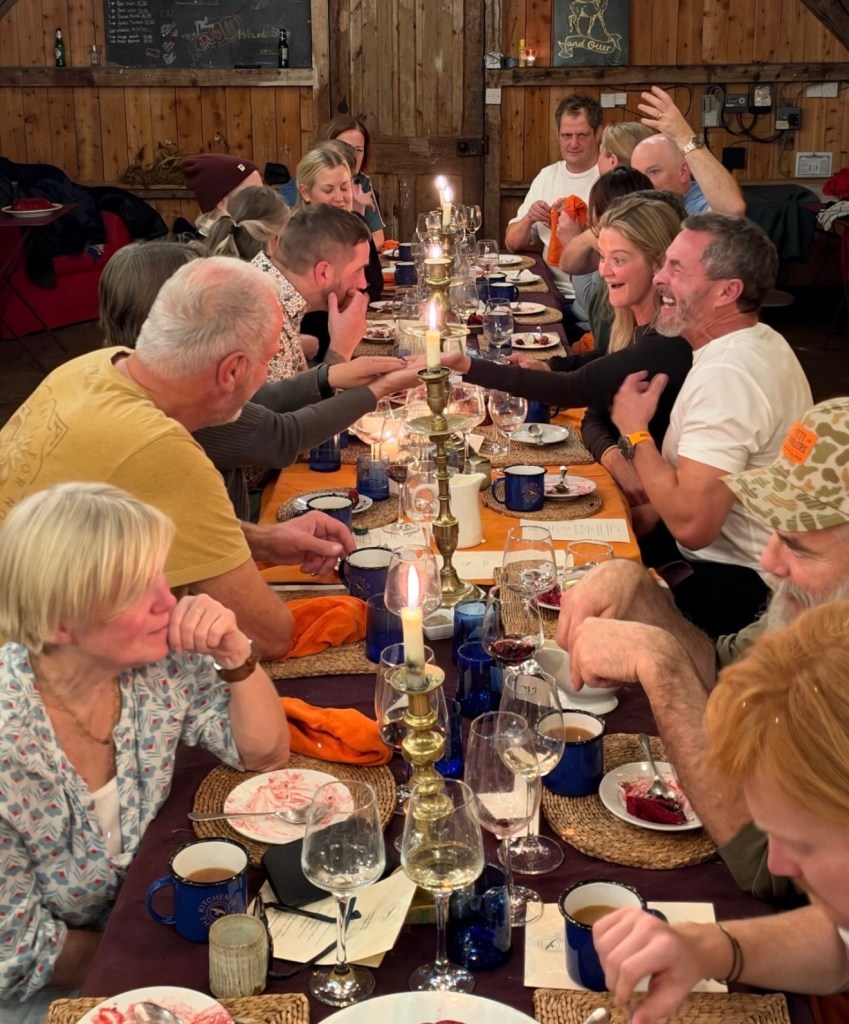
The Village Hall had taken on a wonderful warmth. Candles flickered along the tables, the stove was glowing, conversation flowed and the extraordinary team behind Kitchen in the Wild had been busy creating dinner for us.
Outside, the cooking arrangements centred around the fire pit, bringing an additional dimension to the meal: the smell of woodsmoke, the elemental pleasure of cooking over fire and the unmistakable sense that this was not going to be an entirely conventional dinner party.
The work required to make all of this appear effortless should not be underestimated. While the headline names were quite rightly attracting our attention, a talented group of supporting chefs, organisers and island staff were working away to ensure that everything arrived beautifully prepared, properly timed and with the sort of relaxed hospitality that takes a tremendous amount of effort to achieve.
They were magnificent.
We began with crab on toast and crispy cod with aioli, accompanied by Nick’s Damson Negroni.
An excellent opening pair: the natural sweetness of crab against crisp toast, followed by the contrast of crunchy cod and garlicky aioli.Simple descriptions, but the sort of food where the quality of the ingredients and the care taken over their preparation make all the difference.
Then came toasted flatbreads with leeks and Corra Linn, a Scottish cheese made by Errington Cheese in Lanarkshire. Produced from sheep’s milk, Corra Linn has a firm texture and a rich, complex character that makes it particularly good in this sort of preparation, where warmth brings its flavours to the fore.
Leeks, cheese and freshly toasted flatbread. There are moments when culinary sophistication and the basic human desire for something warm, savoury and delicious achieve perfect alignment.
This was one of them.
Venison, Fire and a Very Proper Dinner
The centrepiece was grilled loin of venison with confit garlic, accompanied by peas jardinière, cabbage with brown shrimp and chervil, and pomme purée.
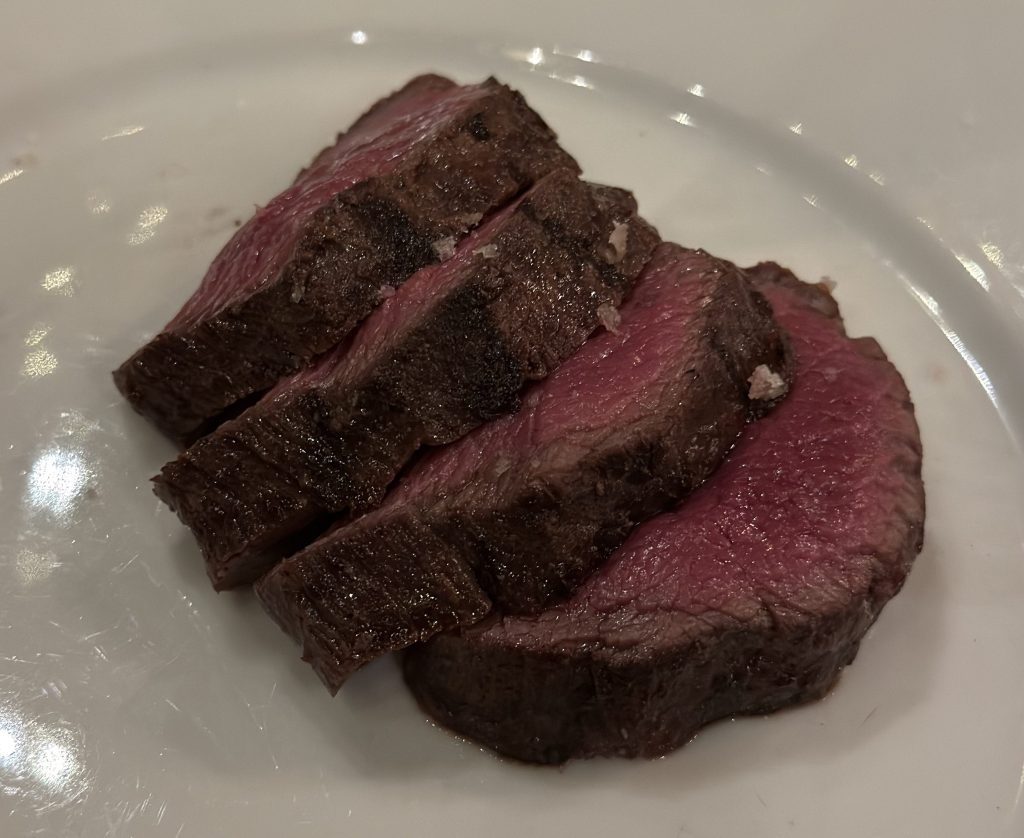
The venison was beautifully cooked, with a deeply coloured exterior and a wonderfully pink centre. Rich and full-flavoured, it was exactly the sort of meat that benefits from cooking over fire, where a little char and smoke enhance rather than overwhelm its character.
And it was served generously, with the accompaniments brought together on the plate.
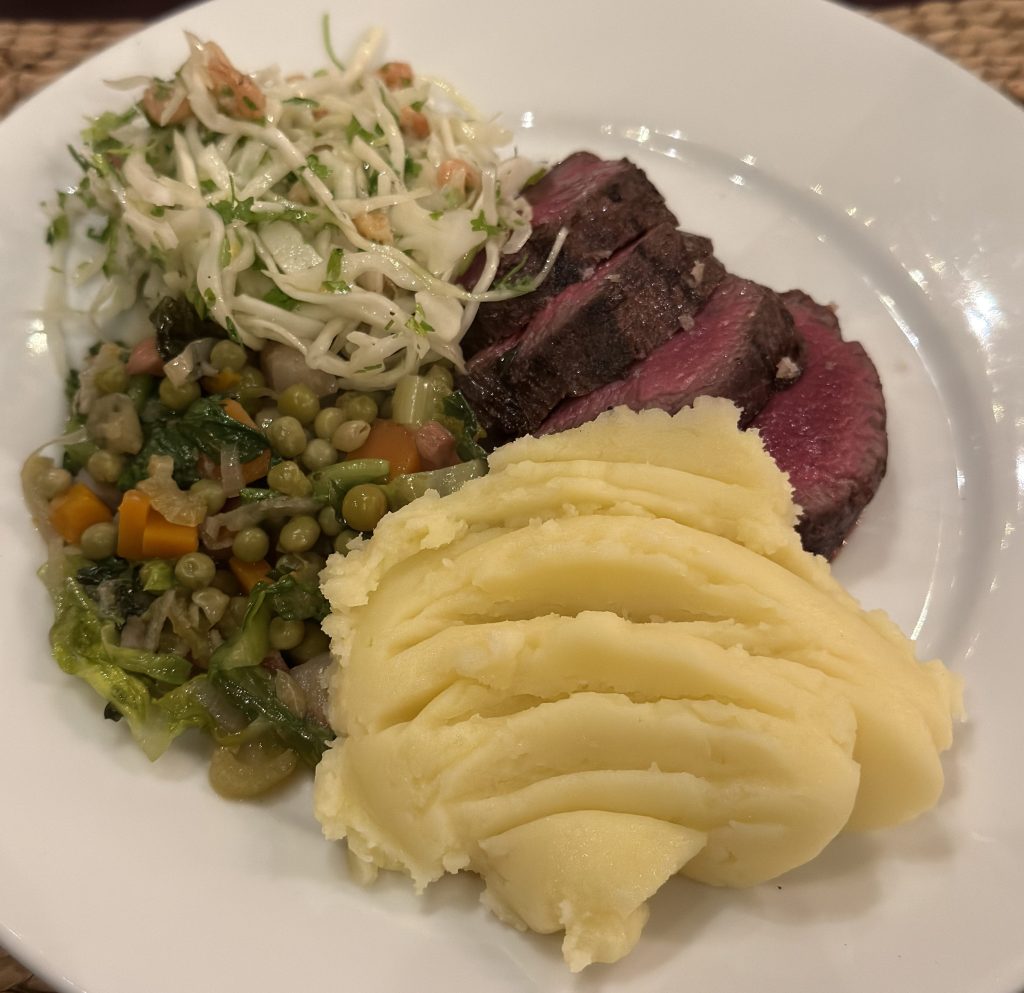
The peas jardinière brought a lovely mixture of vegetables, colour and freshness. The cabbage with brown shrimp and chervil was a particularly interesting accompaniment, combining sweet, delicate shrimp with the gentle brassica character of the cabbage and the fresh, faintly aniseed note of chervil.
And then there was the pomme purée. Beautifully smooth, rich and buttery, presented in generous folds that suggested nobody involved had suddenly become concerned about the nutritional implications of dinner.
Quite right, too.
The wines listed for the evening were a Reine Juliette Picpoul 2025 from Languedoc and a Xavier Côtes du Rhône Rouge 2021 — a thoughtful pairing of contrasting styles for a menu moving from seafood and cheese to richly flavoured venison.
Around us, the conversation and laughter continued, and it was lovely to see everyone enjoying themselves after a day that had taken us in several rather different directions.
A Rather Spectacular Pudding
Just when we had reached the stage where a sensible person might have considered stopping, pudding appeared.
Late summer pudding with meadowsweet cream.
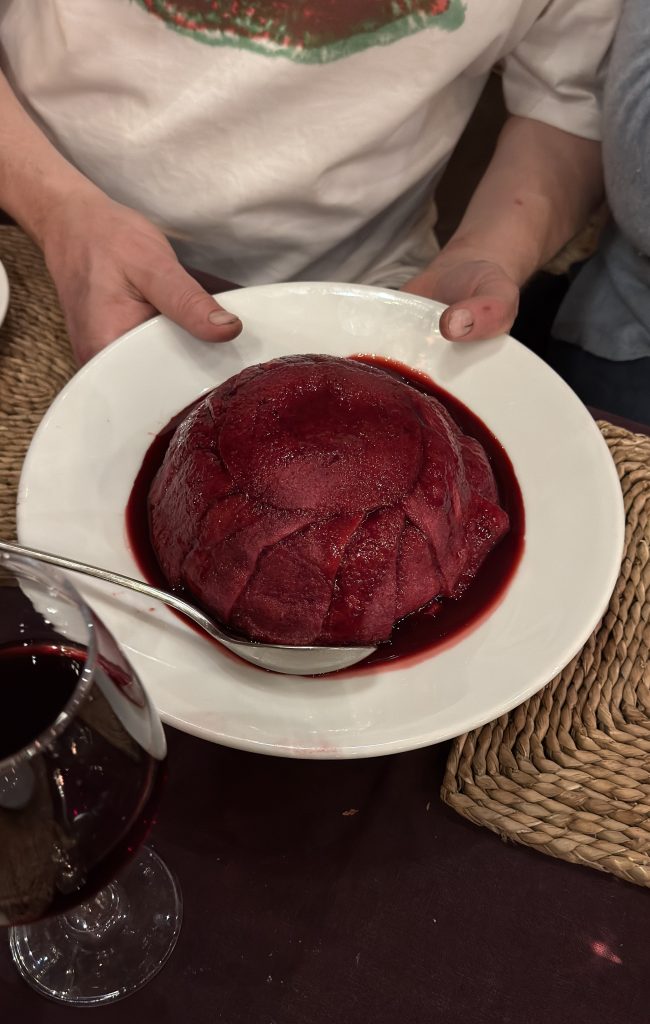
The pudding was a glorious, deeply coloured dome of fruit-soaked bread, surrounded by its own dark berry juices. A wonderful celebration of the tail end of the fruit season, although its appearance suggested the berries had mounted a particularly successful takeover.
The meadowsweet cream was an inspired accompaniment. Meadowsweet is an aromatic wild plant with a distinctive, sweet fragrance often described as having notes reminiscent of almond, honey and vanilla. Using it in cream gives an otherwise familiar British pudding a subtle connection to the surrounding landscape.
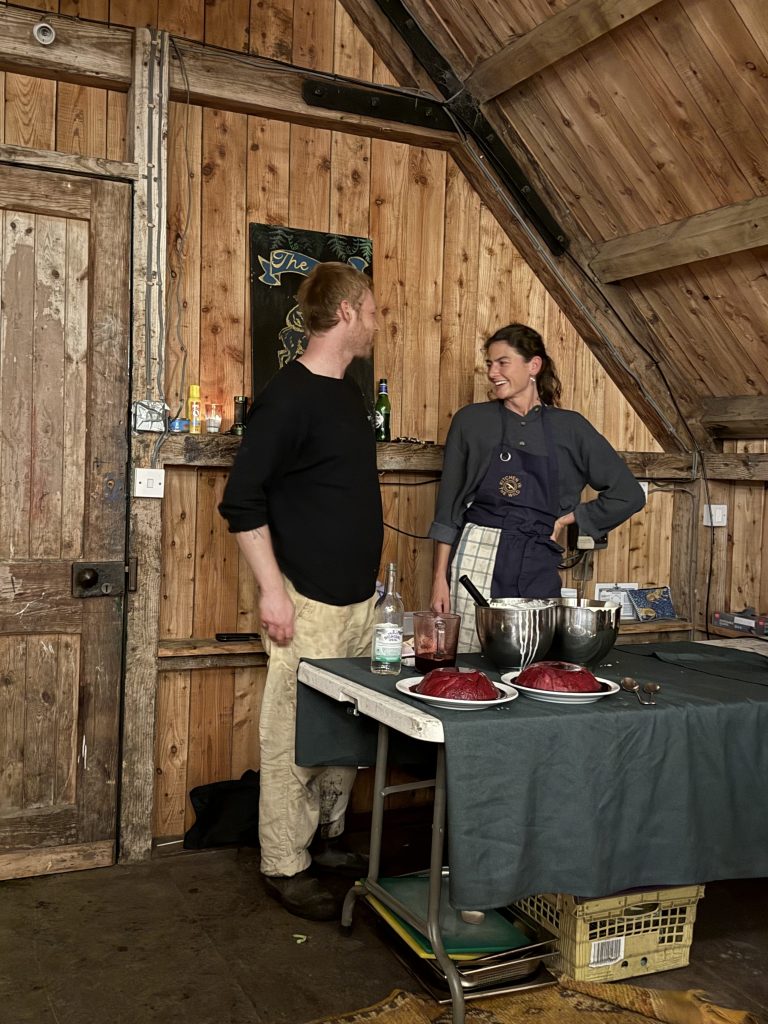
To complete the evening, Nick had devised a drink entitled Buttered Sloe, Apple, Medlar.
Sloe, apple and medlar are wonderfully evocative autumn flavours, and the name alone suggested the sort of comforting, orchard-inspired concoction that belongs beside a fire as the weather outside remembers it is October in the Highlands.
By this stage I was perfectly content to let the professionals continue demonstrating their considerable talents while I concentrated on appreciating the results.
It had been quite a day.
We’d climbed hills, discovered extraordinary landscapes, learned from one of Britain’s finest seafood chefs, enjoyed a fascinating conversation with Nathan, benefited from Nick’s considerable liquid expertise and finished with a remarkable dinner.
All supported by the people working tirelessly behind the scenes to make Kitchen in the Wild feel so wonderfully relaxed.
The itinerary had described the morning’s excursion as a two-and-a-half-hour walk, but I was beginning to think it was wise not to take any of its descriptions too literally.
And there were still two more days to go.
…………….. Until Next Time ………… L8ers ………………

