
 The last time I cooked Monkfish was in 2015, whilst in France at the French House Party Cookery School. Having checked back, Médallions de Lotte Safrantées, Arlequin du Jardin was on the menu, Medallions of Monkfish with Saffron & Seasonal Vegetables, you can see the results below. Our teacher was a Michelin starred Chef, I have the pleasure of his company again this year in May, very exciting.
 Being the start of the new year, trying to find some ‘healthier’ lighter dishes has been on the agenda which can be difficult when the weather is cold and blustery, nights draw in quickly and the tendency is to focus on Stews, Casseroles which are heartier and more fulfilling.
Inspiration came from Rick Stein and his ‘Long Weekends’ programs, Monkfish Fritters with Cumin, Garlic and Pimentón which in the book accompanying the series, looked very tasty. Ricks’ version is positioned as a starter, with a Mustard Mayonnaise, as this was to be a main course I came up with a Mushroom, Mustard and Madeira Sauce (with Parsley), and added some Potatoes Fried in Olive Oil. The ingredients are in the heading picture, Monkfish was £29Kg from my local supplier so you may wish to pick another fish such as Cod or Pollack which is cheaper. You need about 150 – 20o grams per person.
 Whichever Fish you decide to use, it needs marinating for at least 2 hours. Smoked Paprika, Garlic, Sherry Vinegar, Oregano, Cumin, Pepper and Salt along with a bit of water make up the marinade, Spanish Flavours which add a delicious piquancy.
Whilst the Fish is soaking up the flavours you can start work on the potatoes, I used some ‘New Potatoes’ boiled in their skins and left to cool before gently peeling and slicing.
 You can also work on the sauce beforehand, frying some thinly sliced button mushrooms in Olive Oil and a little butter before adding a small amount of Vegetable Stock Cube and a dash of water to dissolve it. The sauce was a ‘cook by andaza’ or estimation, something taught to me by Sumayya Usmani who wrote the very successful cookery book ‘Under the Tamarind Tree’. I had the great pleasure to attend a couple of her day courses, great fun and a real insight into the foods of Pakistan and the lesser known parts of ‘Middle Earth’.
I added a ‘slurp’ of White Wine and let it reduce, then a ‘dollop’ of Grain Mustard, a ‘tad’ of Dijon Mustard followed by a ‘glug’ of Madeira, tasting as I progressed, then some seasoning. This continued until the flavour was correct, finally some Double Cream and more seasoning. Job done the sauce was covered and put to once side whilst the rest of the dish was completed. Now that would be an interesting cookery book!!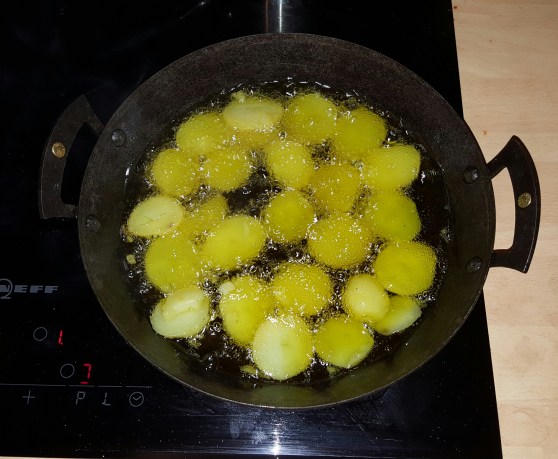 The Potatoes had cooled and skins removed, boiling with the skins on definitely imparts a better favour and is my preferred technique for mash as well as fried. I used Olive Oil from Puglia, Organic and great value for money from Riverford Organic, and delivery is free if ordered with a Veg box!
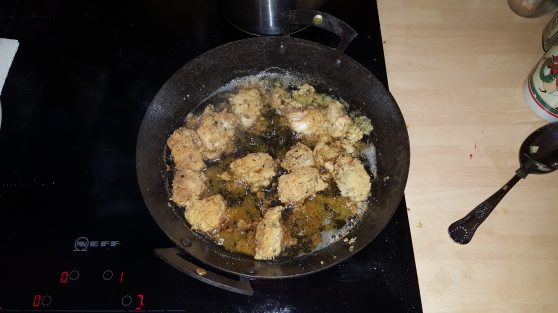 Almost done, The Fish needs draining and dredging in Semolina before frying in the Olive Oil. You may have noticed I have only used one pan for this recipe, my new friend the Netherton Prospector which is doing a great job. I also have a frying pan from Netherton Foundry which will be put to use very soon!
This bit IS a bit tricky, and may need some practise. The Semolina seems to have a habit of falling off, I think the temperature of the fat was a bit too low as the second batch were much better. As there is no ‘glue’ involved such as egg and flour we are relying on moisture and pure determination!
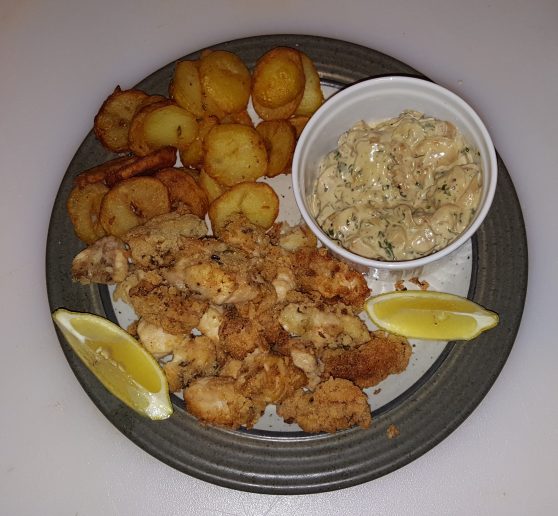 Yes, I know I need to work on my presentation a lot (unlike my previous attempt at the top of the page), but the meal was very tasty indeed. I opted to serve the sauce in a ramekin as it was a bit neater, it really worked with the Monkfish (the bosses words, not mine). This dish is easy to make, very very tasty and quite light, and could be served with a salad of Red Onion and Tomatoes if you can get some decent ones with a bit of flavour this time of year.
So there we have it, the 1st healthy post of the year, I will do the review of The Woodspeen I previously mentioned next time, it was awesome value for money with a Michelin Star and the food was just fab.
……………………………Until next time……………………L8ers…

 It’s been an interesting few weeks as the year slowly draws to a close, and I have managed to eat in some really good restaurants as my work takes me from Norfolk to Cornwall and back home again to Newbury.
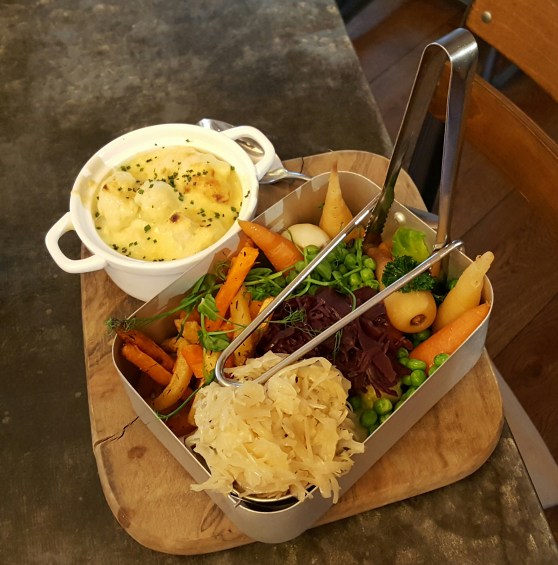 So back to the food, in no particular order the 1st award goes to
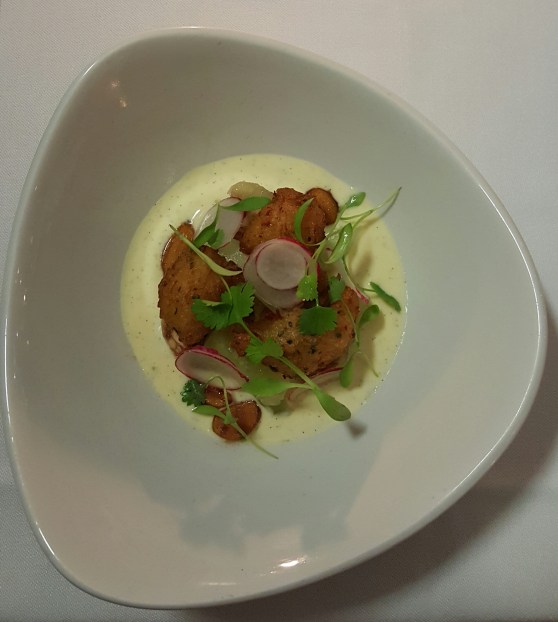 The next dish was a surprise, Satay Chicken & Crab, Vanilla Lime Custard, Spiced Peanuts and Cucumber served at the
 Next, it was a trip to ‘
 Still ‘Hooked’! I was a bit extravagant with the main. I should explain that my employer does not pay for all these meals, I get a small daily subsidy when I am travelling which would cover a typical meal, but I choose to use the opportunity to ‘invest’ my own cash in something a bit more extravagent, in this case 1/2 a Lobster!, Crevettes, Scallops, Frites, home made Tartare Sauce, and a fresh dressed salad. It was stunning, sweet, perfectly cooked and well worth the investment.
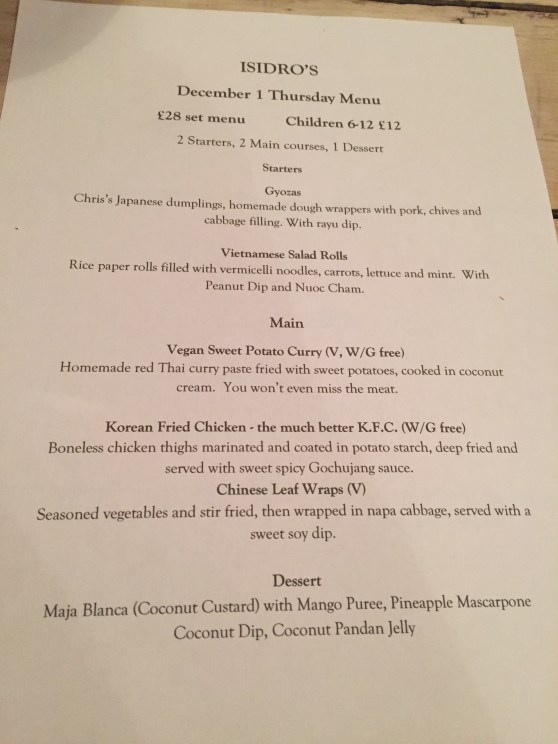 Now for the star performer, not that the others were bad, they were all excellent and I would have no hesitation is recommending them but Isidro’s is something a bit special.
 The menu consisted of 5 Courses (well 6 actually, the Filipino spring rolls above were an extra surprise), not rushed, beautifully presented, packed full of flavour and not ‘tuned’ to english tastes (chilli is chilli).
 Never had Japanese Gyoza’s before, they were a triumph perfectly cooked, melt in the mouth and just delicious.
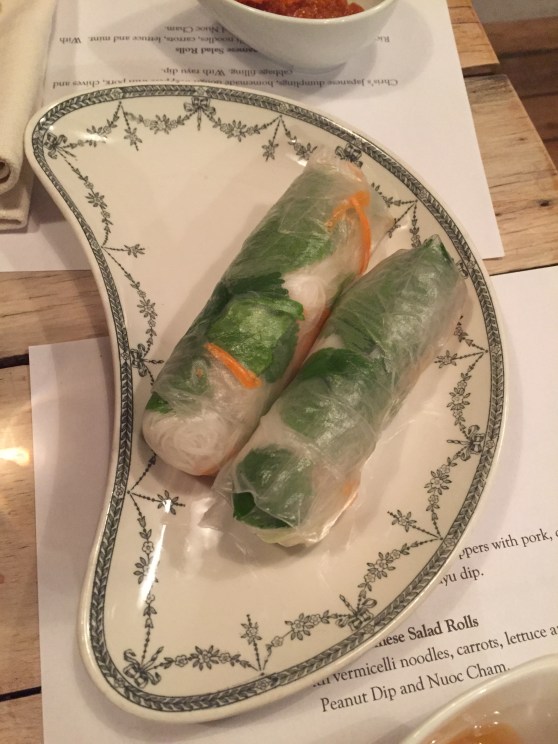 The Vietnamese Salad Rolls were just as tasty, one had already been eaten before I remembered to capture the moment, served with a proper Peanut sauce and Nuoc Cham, this food was not out of jars or tins and it just kept coming (but at a nice steady pace).
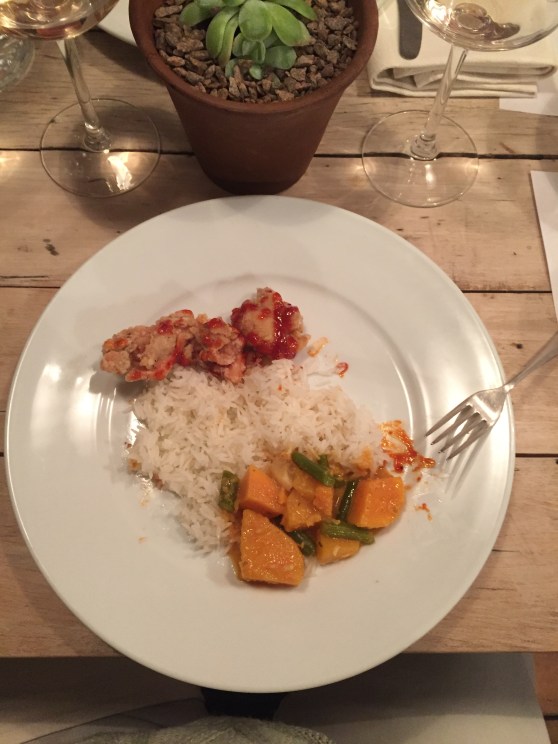 So, I don’t ‘get’ Sweet Potato, it just seems wrong and is something I steer clear of with a passion. Not tonight as one of the mains was a Sweet Potato Red Thai Curry, damn it was sooooo good. The other main for us meat eaters was KFC (Korean Fried Chicken). Now I have made this myself, a recipe from Judy Joo’s book with Gochujang Sauce, this put mine to shame so I will be speaking to them and gaining some clues as to how they cook theirs, it was brilliant.
 Dessert was finally here and we just had enough room to eat it, light, tasty fragrant Pandan, Coconut, Pineapple, Marscapone and Mango Puree, which arrived after I took the picture above.

 It’s been a tough week, mostly due to a nasty virus and being off food which for a ‘foodie’ is somewhat challenging. Our induction hob recently gave up on us, and it has taken some time to get a new one sorted, we’ve been using a portable gas stove with those ‘hair spray like’ blue cylinders in the interim which has been interesting!
 Another reason for picking this recipe is that I wanted to try a new pan I had just purchased from
 Once you have browned the Beef to seal, put to one side and start work on the Onion and Carrot, I added a small leek to my dish as I had one that needed using up and thought it would add another dimension and increase our 5 a day intake.
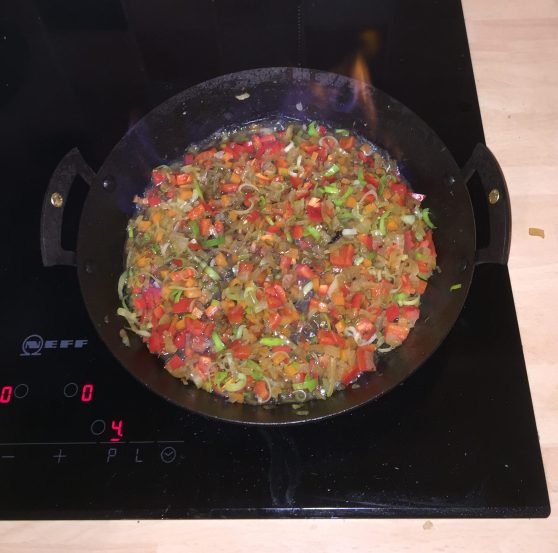 The vegetables need a decent glug of Cognac, 150ml if you are cooking for 6 – 8 people. I did vary the recipe slightly, the leeks were not in the original, and I used one of those long sweet peppers usually stuffed which I finely chopped, and also a teaspoon of sweet pimentón to the mix.
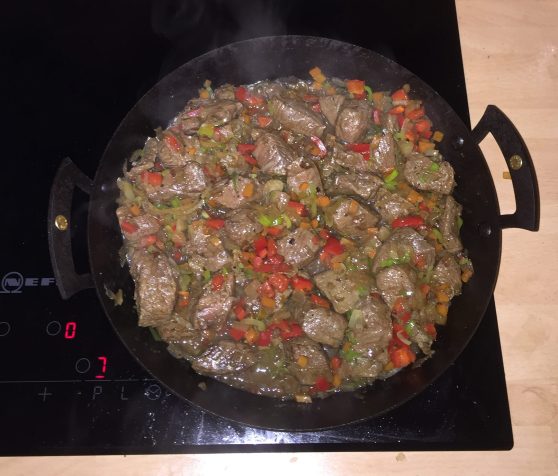 Add the Beef to the Vegetable mixture and carefully mix, the Sukalki is going to be braising for 3 – 3 1/2 hours slowly, once you have added some Beef stock to the pan. To accompany the dish I decided to prepare some ‘rustic’ Garlic Bread. Largish ‘chunks’ of bread, rough cut Garlic, LOTS of Olive Oil and seasoned well with Maldon Sea Salt and Pepper.
 The smells that were coming out of the kitchen were making both me and the boss very hungry. I hadn’t eaten much during the week due to the bug so I was really looking to eating something simple but wholesome and hopefully tasty.
 Towards the end of the braising, you need to add some Potatoes, a waxy variety that does not break up. This, to me is always a bit of challenge as potatoes don’t obey the instructions in cookery books and the cooking time depends on so many variables. Mine were sliced about 5 c.m. thick and needed a good 45 – 50 minutes to get to a point of perfect, just soft. Finally some Pea’s are added at the end to finish things off.


 If you ask anyone who has followed the TV food series ‘Great British Menu” over the years despite the 100’s of great dishes presented to the judging panel consisting of Pru Leith, Oliver Peyton and Matthew Fort, there is probably ONLY ONE dish that everyone remembers, ‘Stargazy Pie’.
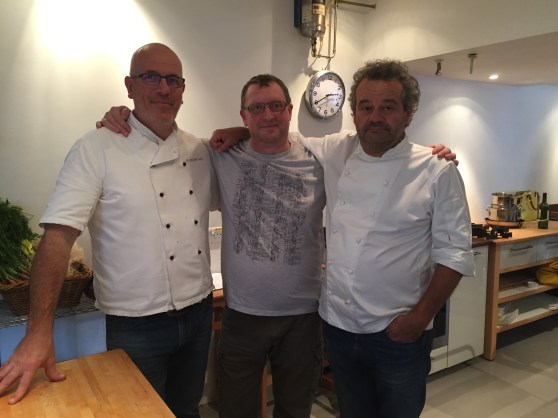
 ‘Does anyone not eat meet’? started the banter as we took advantage of the Sourdough and Brioche toast prepared by Richard Bertinets’ able team, I was back at the Bertinet Cookery School in Bath for the 5th time, it’s VERY good and the range of different guest Chef’s, convivial nature of the location, and limited number of attendees make for an excellent experience. Mark Hix was our tutor for the day and everyone was bubbling with excitement as to what we were going to cook.
 After a demonstration of handling Partridge, removing the legs, taking the crown off, removing the thighbone from the legs and starting a game broth we quickly prepared the ‘Far Breton’, an amazing dessert made with Prunes steeped in spiced Rum, a speciality of Normandy.
 Dessert done, we focussed on the rest of what was going to be a very special lunch for us all. Mark explained his philosophy of using everything in his cooking method, and providing some fascinating facts as to how much produce that could be used to good effect, ends on the scrap heap.
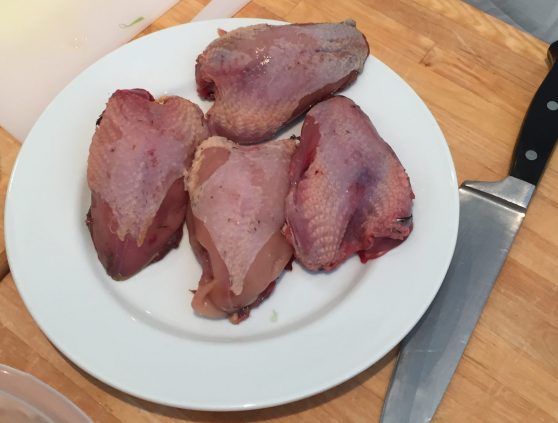 Having had the demonstration earlier it was now our turn to prepare the partridge, Mark gave us a quick repeat of the process again and we all set to the task in hand, slicing and cutting within a few minutes we all proudly had our crowns prepared and more flavour in the Broth pot.
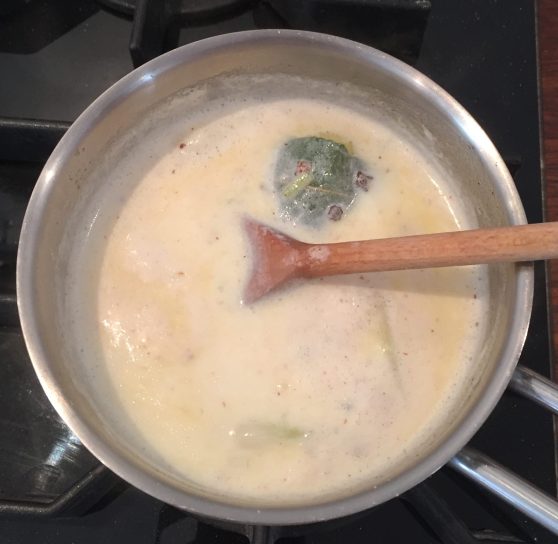 Our Roasted Partridge was going to sit on ‘Yorkshire Toast’. You will have to go on the course and hope Mark shows you how to prepare it, think of Bread Sauce fried in breadcrumbs! I now have three of his books and the recipe is not in any of them so I feel kind of honoured to have learnt something that is not mainstream, and tastes seriously good.
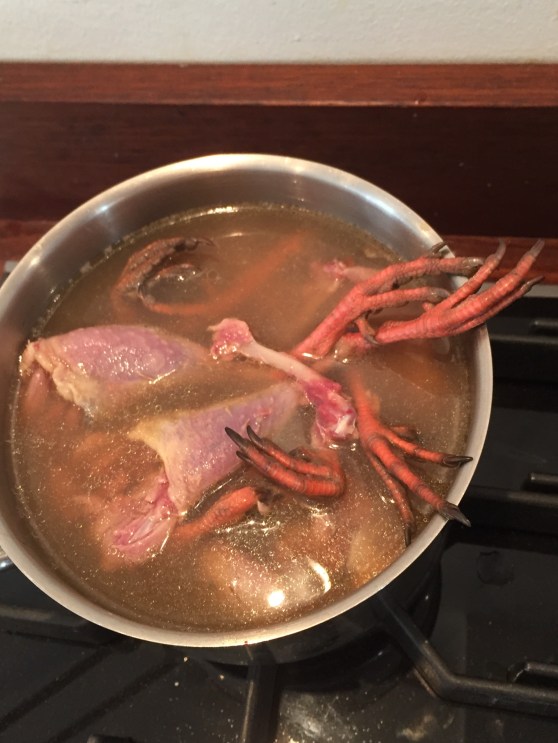 No apologies for some of the pictures, all the processes we went through ensured we wasted nothing and continually added flavour as much as possible. Remember the Partridge legs I mentioned earlier, that we removed and took out the thigh bone. They needed poaching for about 15 minutes so they also went into the Broth pot. They were then going into a mixture of Buttermilk and spices before being floured and frying to crisp up.
 There is always a break or two during the cookery school sessions, and the ‘Bertinet Girls’ produce some amazing delights to whet the tastebuds. As these beauties came out the oven the room filled with the smell of chocolate and fudge, and as we drank Coffee and Tea they were demolished in minutes!
 The Partridge legs cooked and dried, then got the Buttermilk treatment with some added spices. The legs are often ignored or wasted, we were going to have them as a tasty snack, dipped in a Membrillo sauce which we made later in the session.
 Our menu for the day was going to be;
 I didn’t manage to get a ‘pretty’ picture of the Partridge legs as they were gone in seconds, Richard fried them and presented them ‘chef style’ on a plate. Dipped in the Membrillo sauce they were absolutely delish, washed down with some wine which started to flow for those that wanted as we neared dinner.
 As we finished the various courses, the table was prepared for lunch by Richards’ team. He epitomises a ‘convivial’ lunch, long table, wine, and the result is a party like atmosphere despite the fact we had all been on our feet for several hours, listening intently to Marks wisdom as we prepared our gourmet menu.
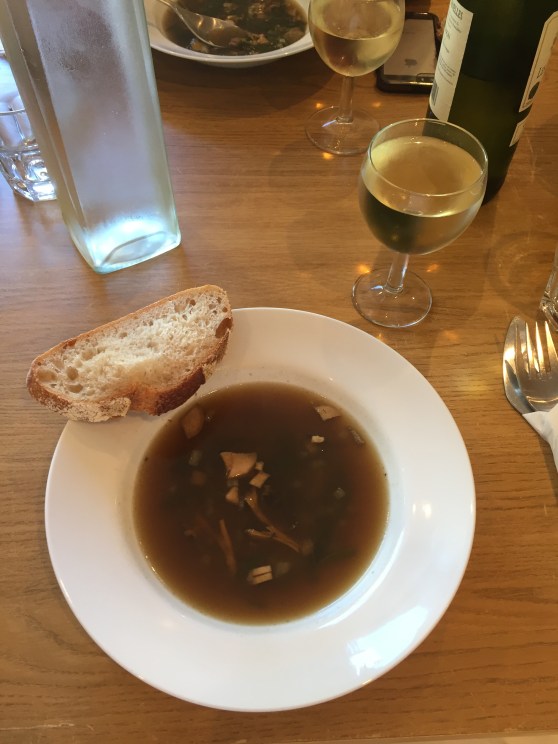 The Partridge broth was completed by adding the ‘garnish’ and served by the lovely team that support Richard, Fionn and Co., who work tirelessly making coffee and tea, cakes and helping clear up and making the day go so smoothly. It was just amazing, full of flavour, texture from the Mushrooms and Celery, and supported by lots of fresh homemade Bertinet bread.
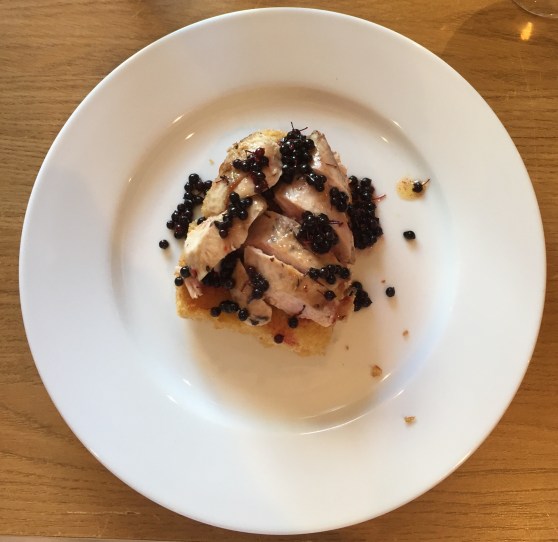 Next was the Partridge on ‘Yorkshire Toast’ with Elderberries. At the start of the day we had a debate on whether Game was popular with the students, several found Game Ok, some not so keen and part of the experience was to prove that when cooked properly, it was delightful. Guess what? It was Bl@@dy delicious both succulent and tender, lovely flavour and enhanced by the Yorkshire Toast and Elderberries, we all complemented the Chefs in the kitchen and patted ourselves on the back, the party was in full swing.

 I need to start this quick blog with an apology! Some time ago (last year), the lovely people at Steenbergs sent me a sample box which included a small jar of
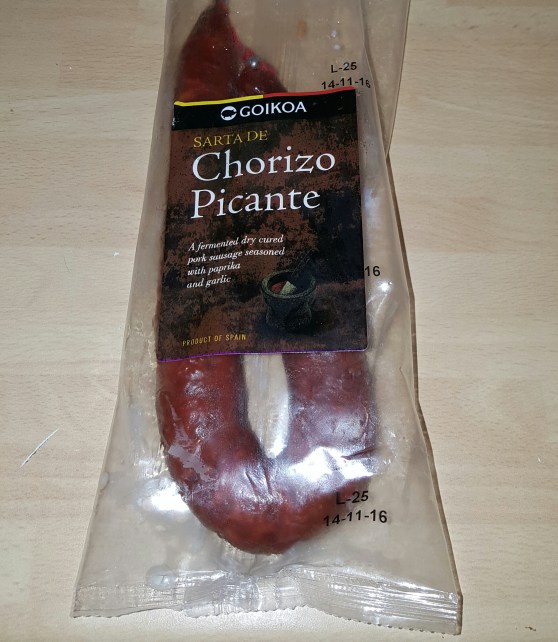 So the 1st stage (for me), was to get some Olive Oil into a pan and start to fry the
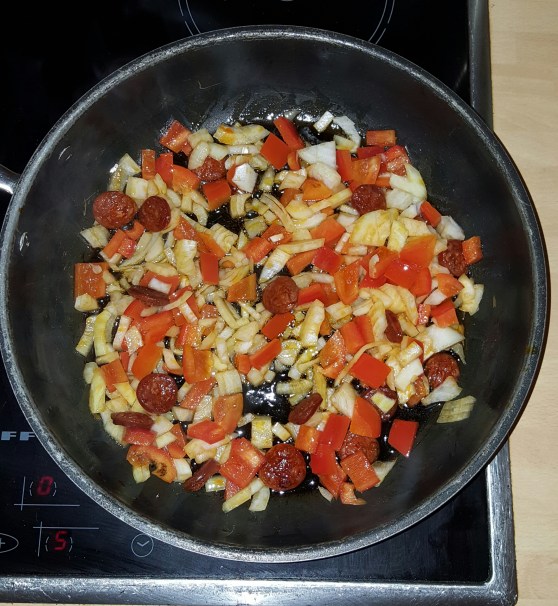 Now add the chopped Pepper and fry for a couple of minutes then the Onion. You can see the Red Chorizo flavour doing its stuff on the Onions above. You want to soften things so allow about 5 – 8 minutes for this stage on a medium heat. The next few stages (in my humble opinion), are where you need to take a lot of care with the timing.
 For me, the knack with this dish is to make sure each element is cooked to its best, but nothing is overcooked, we have Chicken, Prawns and Rice which all cook for different times to get right and so some thought needs to go into what we do and when.
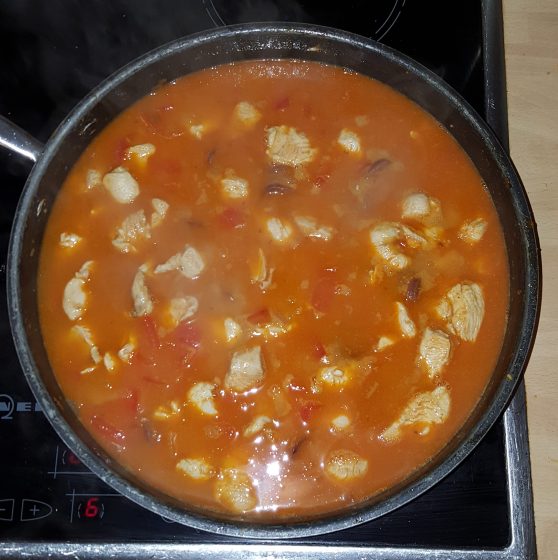 Now add the Rice, stir a bit, then add the Chicken Stock and mix again. Check for seasoning at this point, mine needed some more salt, taste again and check it’s right. DON’T mix anymore from now on. We want to be as original as possible, apparently the finished dish should have ‘holes’ in the surface and a crispy base (I didn’t manage this and suspect I could have used a higher heat), stirring will prevent this from happening and you could end up with mushy Rice.
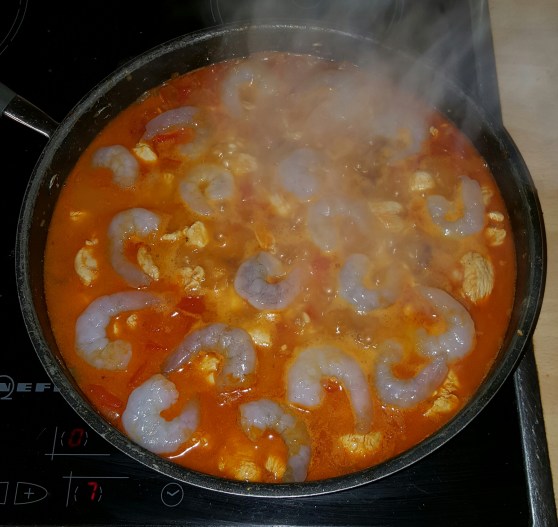 Finally, add the prawns and push them down slightly so they are as covered as much as possible, the heat needs to be reduced to a medium simmer at this point so the Rice can ‘sponge’ up the stock and other flavours, if you remember the Rice only needed 18 minutes to cook so at this point, I needed another 14 minutes for the dish to be ready.
 When the 14 minutes is up turn off the heat, cover the dish with tea towels and leave for another 5 minutes and get your plates etc. ready. You can see the final results above, I forgot to take a ‘piccy’ of the plated results as it was just too tasty to leave alone!!
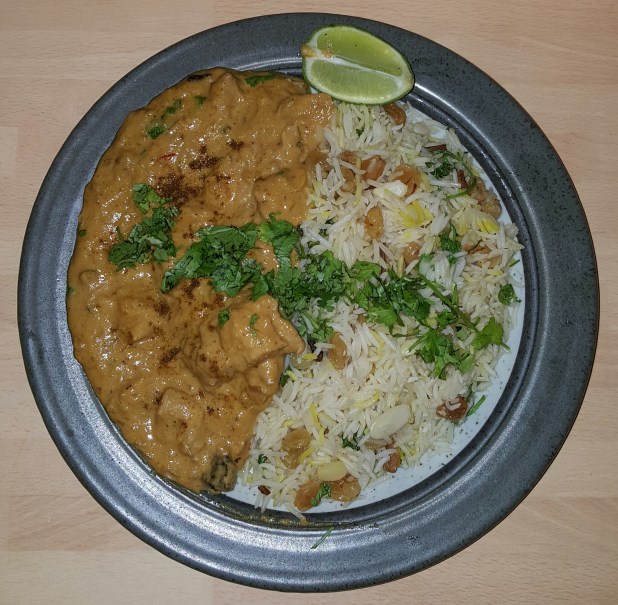
 I love food, or should I say I love food that has character, flavour and maybe a story behind it, as it makes things much more interesting. The area of Southern Asia covers a huge expanse, and includes the likes of India, Pakistan, Bangladesh and Nepal, and its resulting rich and diverse culture and cuisine. There is a mountain of history that defines these distinct areas and that has developed over the years and influenced some of the food that we have become familiar with, including
 Onions seem to form the basis of many dishes that come from the region of Southern Asia and the Korma is no different. Now, I really hate Korma or should I say Chicken Korma, I suspect because of the dishes I have tasted are either from a take-away (once), or one someone close to me has made (I suspect from a Jar, Shhh) again once, I did not like either of them!
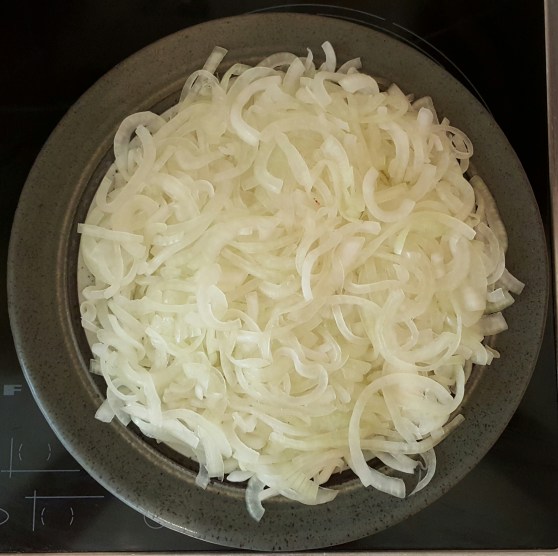 Back to the Onions as there are two different ways they need to be dealt with, sliced and given a liberal salting, and chopping finely. Above you can see above a considerable amount of onions sitting in the colander, once salted and left for at least 30 minutes, the amount of water that gets extracted is quite significant in the picture below. The Onions need to be fried (use a deep fat frier on about 160 degree’s) until golden brown, then drained very well and blitzed with some water to create an Onion Puree. The salting process helps remove much of the water but be careful as there will be a lot of spitting when you put the Onions into the Oil.
 Once completed the aroma is slightly sweet, pungent and just yum, you can see my effort above. I suspect many of the Korma’s in restaurants and in jars have sugar added to provide the sweetness, this recipe has no added sugar (I have just checked two well known sauce brands on the internet and yes, they both have quite a lot of added sugar)!
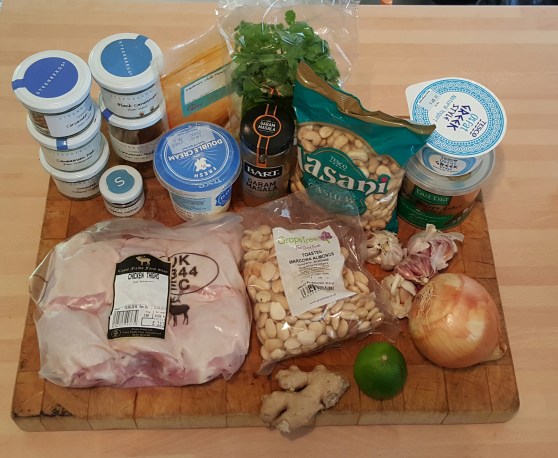
 The other core elements that make this dish ‘sing’ include Black and Green Cardamom, Ground White Pepper, Kashmiri Chilli, Cloves, Cinnamon and Ground Coriander Seeds. To add to the this, a puree of both Almonds and Cashew Nuts are needed along with Saffron, (I used Afghanistan Saffron which comes from a village co-operative encouraged to stop growing drugs, that’s got to be good). The majority of my spices come from
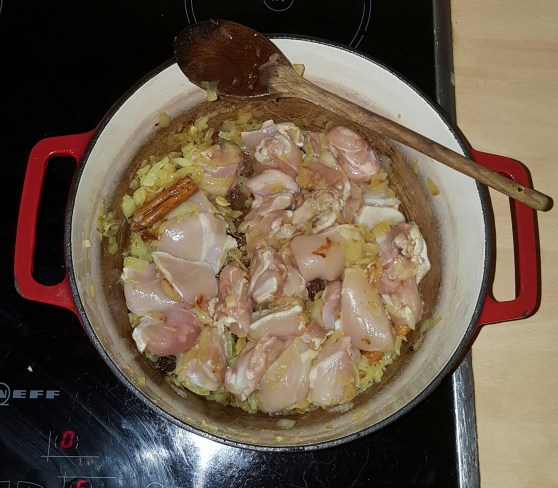 I had a ‘debate’ with my partner of 27 of so years on the Chicken cut, and I stood my ground (typical obstinate bloke I her you say). I had a pack of Chicken Thighs which would be perfect, but I was battling against Breast Meat which my partner wanted to go with.
 I will admit to cheating a bit with the Rice, and used a couple of packets of the ‘quick cook’ variety but with some added ingredients. Golden Raisins which had been steeped in Earl Grey Tea for a least an hour, some cloves, a little broken Cinnamon stick, a few crushed Green Cardamon pods and a light sprinkling of the Saffron Water, finally some chopped Coriander and a few flaked Almonds, the whole lot goes in the Microwave for 2-3 mins (yes a Microwave)!
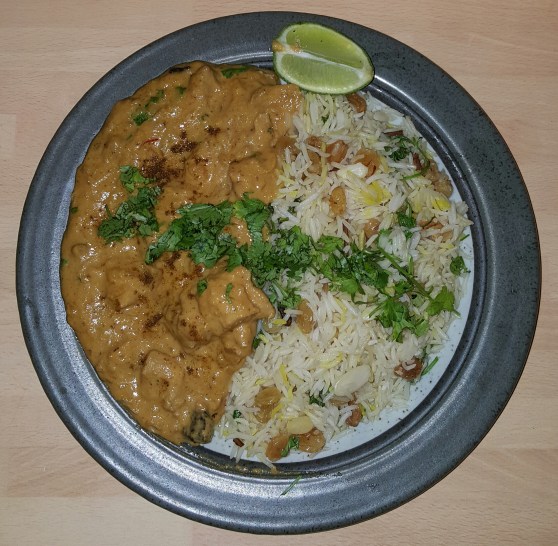 So, the Korma hating critic was gobsmacked, this was bl@@dy amazing with deep flavours, a slight nuttiness but not too much, sweet but not sweet (the Onion puree I guess), this was just sublime. The Kashmiri and Ginger (I didn’t mention the Ginger so you do need the book to recreate this 🙂 providing some heat long with the White Pepper.

 The usual disclaimer as this is a review, I paid full price for this course and received no incentives to publish this review, what you read is what you get, now onto the serious stuff!
 A bit of research and I had found a likely candidate at the cooking school I use the most (in the U.K.), Richard Bertinet in Bath. It’s a great setup on 2 floors so sometimes 2 different courses can be run at the same time, I had already attended more than 3 courses previously and all had been fantastic so the risk was minimal.
 We took the train to Bath, and Taxi to the School as it’s a very steep walk and we needed our energy for cooking! On arrival we were greeted with massive smiles and a very warm welcome by Fionn who helps manage everything behind the scenes at Bertinets’ and is brilliantly organised, and our tutor for the day Jenny Chandler.
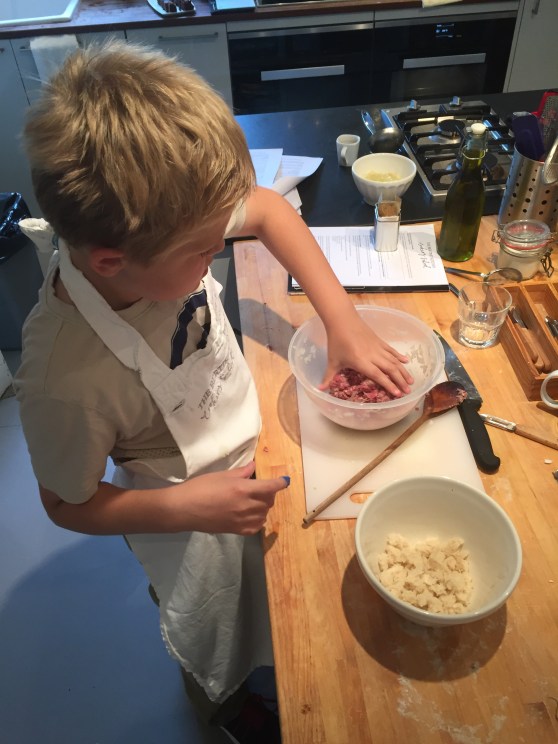 There were 2 other children on the course, I think the parents were more nervous than the kids but we all got on really well as we started to understand what was going to happen for the next few hours, it’s a ‘proper’ cooking course but aimed at little ones.
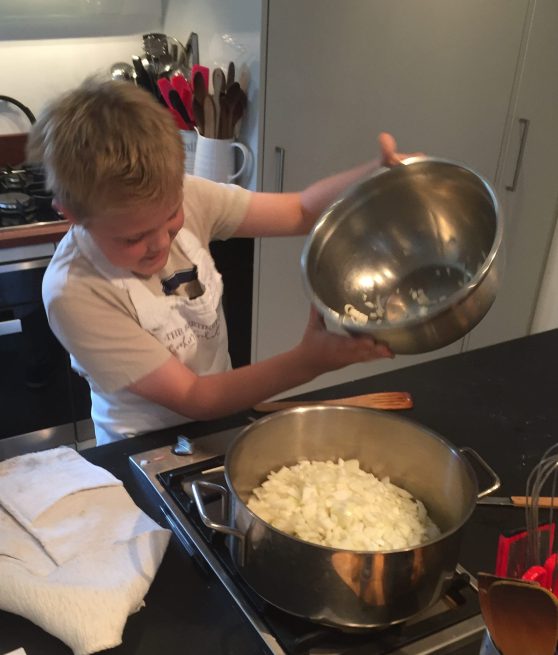
 The next item on the agenda was a Chowder, blimey that’s quite advanced for adults let alone children at 10 years of age, this is where the knife skills were introduced. Jenny carefully explained how to use a knife to SAFELY cut Onions which were needed for the Chowder. Chop, chop, chop and soon the Onions were slowly frying in the pan as explanations about how to cook them correctly, to translucent stage!!
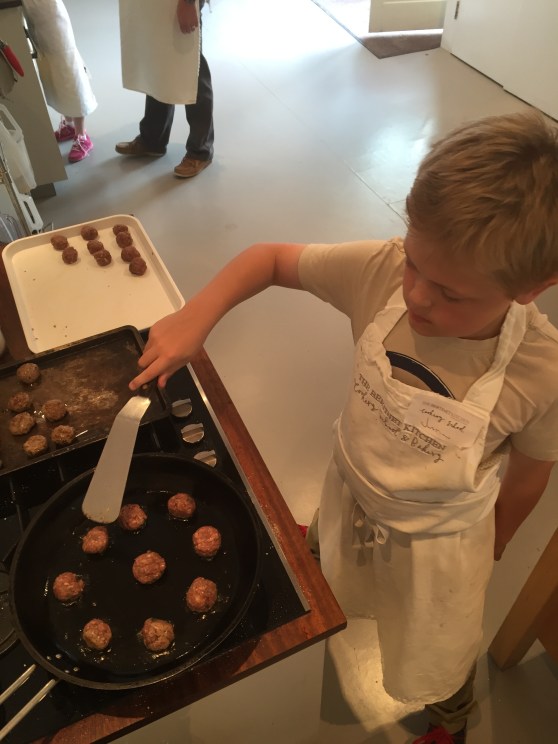 Meatballs were next, three different versions were produced showing how the same basic recipe could be used to make dishes with completely different flavours, at the same time, the method of testing before cooking a whole batch enabled seasoning to be introduced to ensure the end result tasted correct.
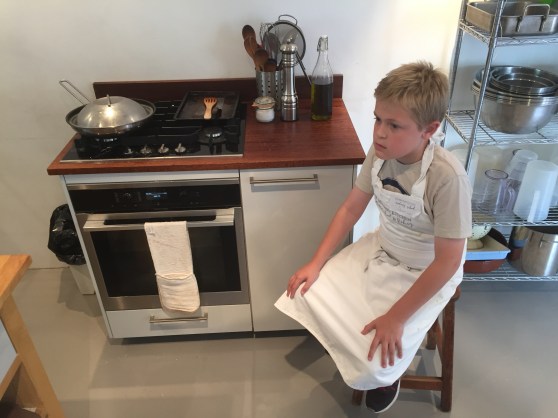 The school is very very well laid out with lots of room, each person having their own cooking station and stool to rest their weary feet if needed, and enough knives, bowls etc to go round so no one was left out.
 I have to say that I think the adults enjoyed the cookery as much as the 3 children, it was quite hard work for all of us, concentrating on Jenny’s instruction and helping from time to time where needed.

 I will admit from the start that whilst this dish tasted amazing it needed at least another hours cooking, so allow a good 6 hours for this beautiful dish, voted
 With the weather cooling slightly something warm and fragrant was in order, so looking at various cookery books,
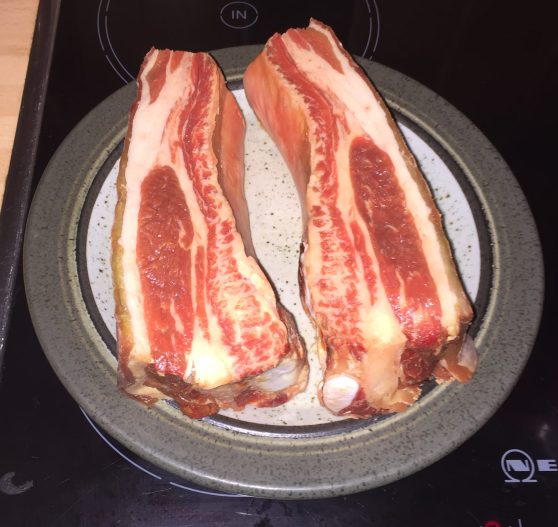 The Beef Short Ribs are BIG! I took the time to put some colour on them first, giving them a burst of heat on each side before starting on the rest of the process. I think next time I cook this dish I will try Ox Cheek which is a great cut of meat for slow braising and has slightly less fat content, and is easier to handle 🙂
 There are quite a few ingredients in this dish and the Star Anise, Cardamon, Cloves are fried in a little oil to release their flavour, before adding a single ‘bashed’ Lemongrass shoot. Then the spice mix is added and fried for a few minutes, finally add the Beef, Coconut Milk, Tamarind some water, Palm Sugar and
 Kerisik is ground Coconut that has been fried until golden brown and can be made using desiccated Coconut if you cannot find fresh, again there are lots of references on the web, you can see my 1st attempt below.
 Kaffir Lime leaves are also added, I could not find mine so used some lime zest instead. The whole lot now cooks and cooks and cooks, this is a low and slow dish. There are several stages to the process which I had somehow missed (they are in the Rendang Wiki link above), the 1st stage is easy as you can see above. After approximately 3 1/2 hours, the mixture had reduced and I saw the Oil on the surface and this is where I went wrong, as I removed it, rather than letting the dish carry on cooking allowing for more evaporation, colourisation, and the flavours penetrating the meat.
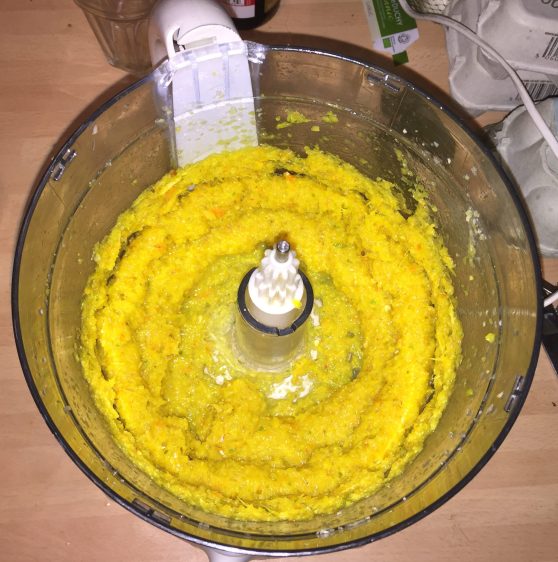
 You can still see lots of moisture above, the dish should be much dryer but I now know for next time. I also think that using the food processor was a bad idea, as pounding in a pestle and mortar would have produced a better textured spice paste, but cooking is about learning so some more things to remember and lessons learnt.

 So there you have it, it almost worked if only I had left the dish cooking for longer until the meat was darker and the moisture evaporated completely. My attempt would not have won the CNN best dish award but it was still very tasty and the meat tender, the Rice with Pandan was a great addition.

 The stunning
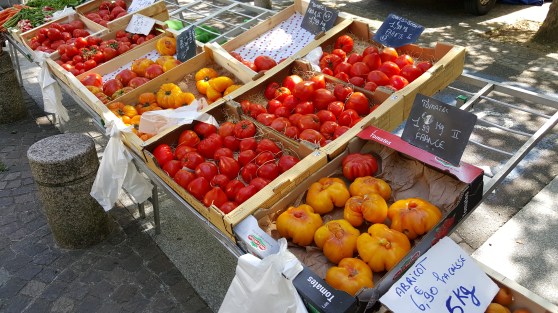 There is a SERIOUS amount of cooking on this course and it is excellent value for money, preparing and eating local French traditional cuisine, three courses, with local cheese and copious quantities of wine to wash things down twice a day, and don’t forget the breakfast, you don’t go hungry.
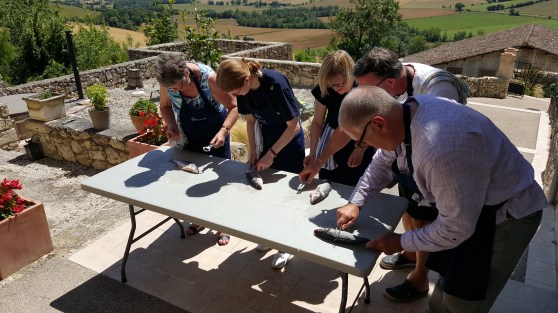 There were 8 of us on the course, here we have left to right Julia (From Tasmania!), Elena and her mum Judith, David (the chef/host) and John, in the kitchen were two friends from St. Petersburg (Russia), the attendees come from all over the world, in this case everyone but Elena had attended at least one previous course, some more than one which demonstrates how good the Gascony Cookery School really is. This was a session on gutting, de-scaling and filleting fish, we were all very comfortable and confident by the end of the week.
 We had a comprehensive agenda starting most days with breakfast at 8:30, and cooking starting at 9:00. The times are really important, there was a lot to get through and we could not afford to get behind as we would not have anything to eat.
 So would I recommend this school, hell yeah it’s awesome. My second visit was just like the 1st which is difficult to describe as you HAVE to experience it for yourself. Just to be clear, I paid full price and have received no incentives for this review, it’s me, what I think and as good as a description of the experience I can give.

 A course like this needs excellent ingredients, seafood HAS to be fresh and ours was no exception. The planning that goes into ensuring the right products are available is not easy, especially when the school location is in the middle of nowhere!
 It was not just about preparing Fish and Crustaceans, the stunning Crab Tart required a very delicate
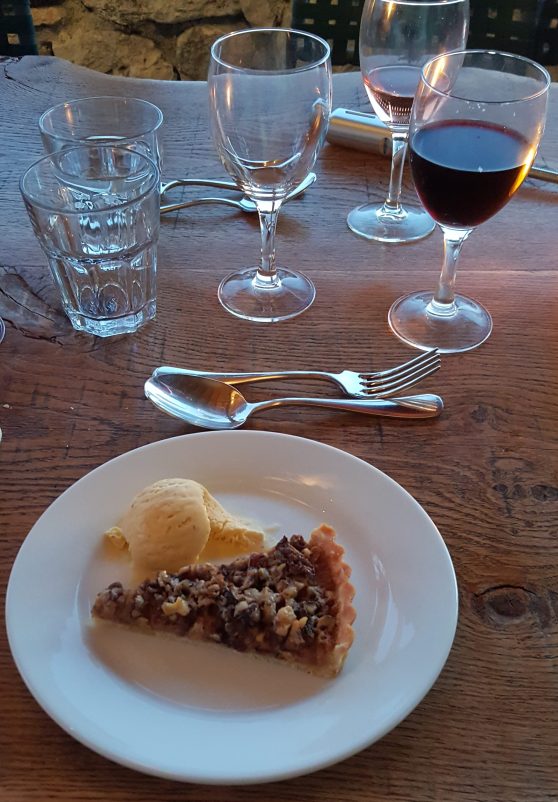 Just as difficult, I think even more so was the

 It was finally here! The date of a ‘Bread Baking’ course I had booked many months ago, getting in a class with Richard Bertinet seems to require at least 6 months planning, which in many ways says that this guy is in demand, and he could be very good!
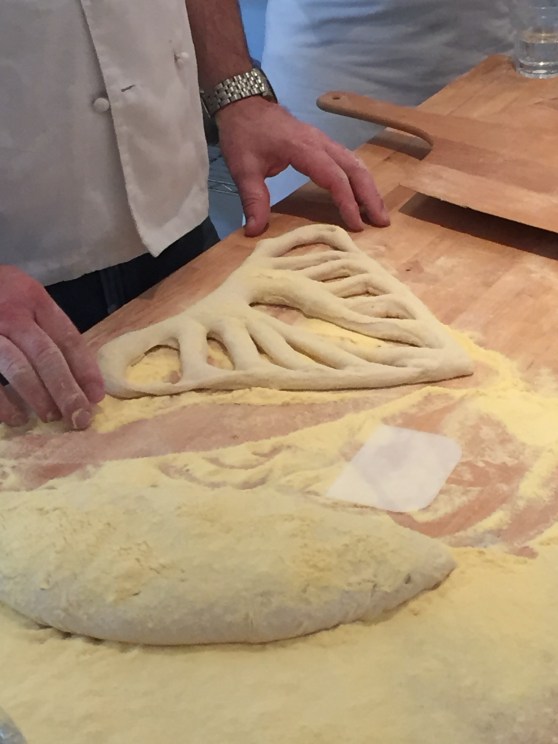 This is not a course for the fainthearted, it’s hard work but we were continually refreshed by his team of excellent helpers, on hand to make Tea/Coffee and provide nibbles during the break, which was were well received.
 If you want to learn the techniques of a master and fancy bread then book this course, it’s a must do for anyone keen on understanding and practising how to produce awesome loaves, time after time. I am looking forward to my next time at Richards’ cookery school, with my nine year old at a class for youngsters.
 I wasn’t going to blog this dish, I was battling with it, as maybe it was too simple. After the taste test it had to be done, it was delicious and involves a few techniques and
 The ingredients are for two hungry adults (and a spare spear or two for junior opp to try!). Thinking of presentation, having a triangular pattern on the plate seemed a nice idea, so 3 bundles of 3 asparagus spears, tightly wrapped in Pancetta started this feast off.
 Earlier in the afternoon I had made some Dough with my son, and although it had not worked out quite as planned, we got it into the oven and baked some bread, this was to go with the Asparagus, it’s a French passion, bread is part of the meal not a course to start things off!! (it was delicious ;-))

